
Microinverter, battery, or complete kit: which one do you need?
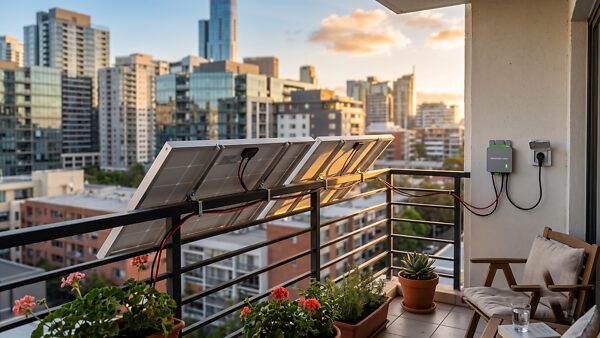
The term balcony solar kit actually covers three quite different product families, and mixing them up is the most common buying mistake. Knowing which one fits your situation matters more than comparing prices at first.
A standalone microinverter ($200 to $370) is the basic building block: it converts the direct current from your panels into standard household AC and feeds it in through an outlet. Without a battery, any energy you don't consume the moment it's produced simply flows back onto the grid, and whether that surplus is credited at all depends entirely on your utility's net metering policy. It's the cheapest option, but also the least profitable if nobody is home during the day.
A plug-and-play balcony battery ($450 to $2,300) adds storage: it captures midday energy and releases it in the evening, when the household actually consumes it. This is the segment that has moved fastest since 2025, with increasingly clever models, even though most of it remains imported from Europe and Asia rather than sold through mainstream US retail.
Finally, a complete kit bundles panels and a microinverter (sometimes a battery too) in a single box, aimed at anyone who owns no equipment yet. It's the most direct entry point, at a higher upfront price. Before buying, check with your local utility whether a plug-in system needs an interconnection agreement or net metering enrollment: rules differ widely from one state, and sometimes one utility, to the next.
Our selection criteria
To rank the models in this comparison, we relied on five criteria that genuinely matter in daily use, beyond the spec sheet alone.
- Ease of installation: plugs into a standard outlet, no electrician needed, under an hour.
- Power and solar input: number of MPPT trackers and peak power accepted, so several panels facing different directions don't lose output.
- Storage and expandability: native capacity and the option to add modules later, without replacing everything.
- Smart control: app, zero-export mode, AI optimization based on electricity rates.
- Price-to-value ratio: price against capacity and power genuinely useful day to day.
We draw on manufacturer spec sheets, available user feedback and, where relevant, our own measurements of real usable capacity on the power stations in our catalog.
The comparison: 6 balcony solar kits side by side
Here are the six kits selected for this comparison, from bare microinverters to complete kits with panels, including storage batteries. Prices reflect what we've observed from US listings; stock on some of these still-niche imports can fluctuate.
| Product | Type | Inverter power | Storage | Price observed |
|---|---|---|---|---|
| Bluetti Balcony Solar System A80P | Complete kit (panels included) | 600/800 W | No (optional) | ≈ $1,159 |
| EcoFlow Stream Microinverter | Standalone microinverter | 800 W | No | ≈ $369 |
| Zendure SolarFlow 800 | Hybrid microinverter | 800 W | Expandable to 11.52 kWh | ≈ $202 |
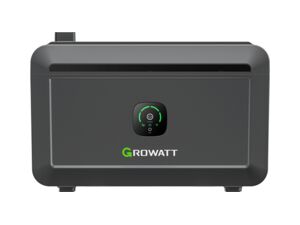
| Growatt NOAH 2000 | DC-coupled battery | 800 W (via dedicated microinverter) | 2,048 Wh, expandable to 8,192 Wh | ≈ $450 |
| Anker Solix Solarbank 3 E2700 Pro | Smart integrated battery | 1,200 W bidirectional | 2,688 Wh, expandable to 16 kWh | ≈ $1,214 |
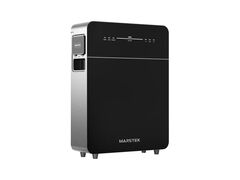
| Marstek Venus E 3.0 | AC-coupled add-on battery | 2.5 kW bidirectional | 5,120 Wh, expandable to 15.36 kWh | ≈ $2,308 |
This table gives you the overview; the following sections detail our pick for each type of buyer.
The best complete kit to start with nothing
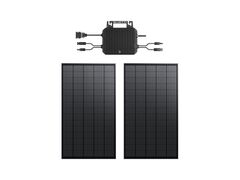
If you don't own any panels yet, the Bluetti Balcony Solar System A80P gets straight to the point: two flexible 255 W panels and an A80P microinverter (adjustable to 600 or 800 W) in the same box, for a peak output of 510 Wp. Fitting everything to a railing takes around thirty minutes, no electrician required, with real-time monitoring through the Bluetti app.
The flexible panels tolerate a slight curve, a real advantage on a rounded railing where a rigid panel simply won't sit flat. The trade-off: this kit doesn't include a battery, so any energy you don't use at the moment it's produced flows back onto the grid, credited or not depending on your utility. Bluetti sells a separate storage module (D100S + B210, 2,150 Wh) for anyone who wants to add storage later.
The cheapest microinverter to get started
Already have panels, or want the lowest possible starting price? A standalone microinverter is all you need. Two models compete in this entry segment.
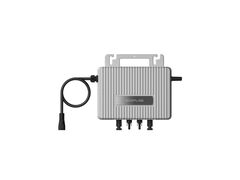
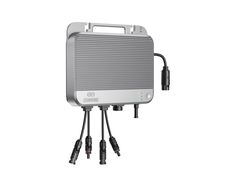
The EcoFlow Stream (≈ $369) stands out with an IP67 rating (rare on this type of device, rated for temporary immersion), a start-up threshold as low as 3 W that lets it squeeze out energy early in the morning, and a 10-year warranty. The Zendure SolarFlow 800 (≈ $202) plays a different card: it's hybrid, ready to run a Zendure battery (AB1000, AB2000) the day you want to add storage, without swapping the microinverter itself. Both accept 1,200 W of panels across 2 MPPT trackers and plug into a standard outlet in around fifteen minutes.
The best smart balcony battery
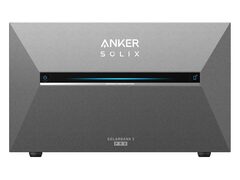
To turn a balcony into a genuine energy reserve, the Anker Solix Solarbank 3 E2700 Pro (≈ $1,214) is our top pick. Its 2,688 Wh LiFePO4 pack stores midday energy to release it in the evening, with 4 MPPT trackers (up to 3,600 W input) that accept panels facing different directions without losing output.
What really sets it apart is Anker Intelligence, a built-in AI that learns the household's consumption habits and decides on its own when to store, release or export power, for a genuine zero-waste mode paired with a smart meter. Capacity expands up to 16 kWh with additional modules, letting you scale up without replacing anything. The price remains a real investment to pay off over several years, but it's currently one of the most polished systems on the balcony solar market.
The best value for money in storage
Tighter budget? The Growatt NOAH 2000 (≈ $450) remains a safe bet, backed by an excellent capacity-to-price ratio: 2,048 Wh of LiFePO4, expandable to 8,192 Wh by stacking up to 4 modules, with 2 MPPT trackers accepting 1,800 W of panels. Its IP66 rating and built-in heating film keep it reliable down to -4 °F (-20 °C), a real advantage for an exposed balcony in winter.
One thing worth knowing: the NOAH 2000 runs in DC coupling, meaning it sits between the panels and a dedicated microinverter (Growatt's own NEO 800M-X, among others), rather than on the AC output like most of its rivals. Distribution has historically been strongest in Germany, so double-check current US availability before ordering.
Already have panels? Add storage without starting over
Already have a solar installation with an inverter in place, and just want to stop wasting the surplus you produce during the day? The Marstek Venus E 3.0 (≈ $2,308) is built for exactly this case: an AC-coupled battery that plugs into a dedicated outlet without touching your existing setup.
Its 5,120 Wh (expandable to 15.36 kWh by combining 3 units) is managed through an app offering an AI mode tuned to time-of-use electricity rates, with claimed annual savings that depend heavily on your local rate structure. A 2.5 kVA backup output can even keep the lights or fridge running during an outage. The one catch: it doesn't work as a first system, you need panels and an inverter already installed upstream.
Our verdict: which balcony solar kit fits your profile?
There isn't a single 'best' balcony solar kit, only a best choice for your starting point.
- You own nothing yet and want a turnkey solution: the Bluetti A80P, panels included.
- You already have panels and want the lowest price: a standalone microinverter, EcoFlow Stream or Zendure SolarFlow 800.
- You want to maximize long-term payback: a smart battery like the Anker Solix Solarbank 3 E2700 Pro.
- Your budget is tight but you still want storage: the Growatt NOAH 2000.
- You already have a working installation: the Marstek Venus E 3.0 as an add-on.
Whichever you choose, remember that sun exposure remains the number one factor in profitability, well ahead of the brand: a south-facing balcony with no shading will always outperform a top-tier system that's poorly positioned. And before ordering, always confirm your utility's interconnection and net metering rules: unlike in much of Europe, there's no single US standard, and what's allowed on a simple outlet plug-in varies widely by state.