High-capacity power stations

Beyond 1500 Wh a station stops being a camping accessory and becomes a genuine household energy reserve.

At this capacity you run a fridge for a full day, drive site tools, or sit out a power cut without thinking about it. Two things change compared with smaller formats. Chemistry first: LiFePO4 takes over, with 3,000 to 6,000 cycles against 500 to 800 for NMC, which matters when the unit costs over a thousand euros. Weight second: at 17 to 30 kilos these stations can be moved but no longer really carried, and the presence of wheels or a telescopic handle becomes a buying criterion in its own right.

No product matches these criteria.

Our selection

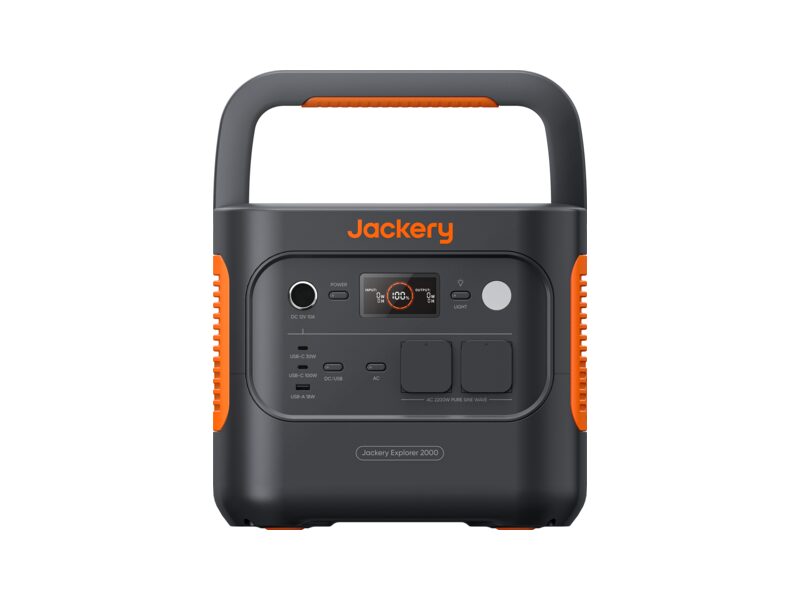
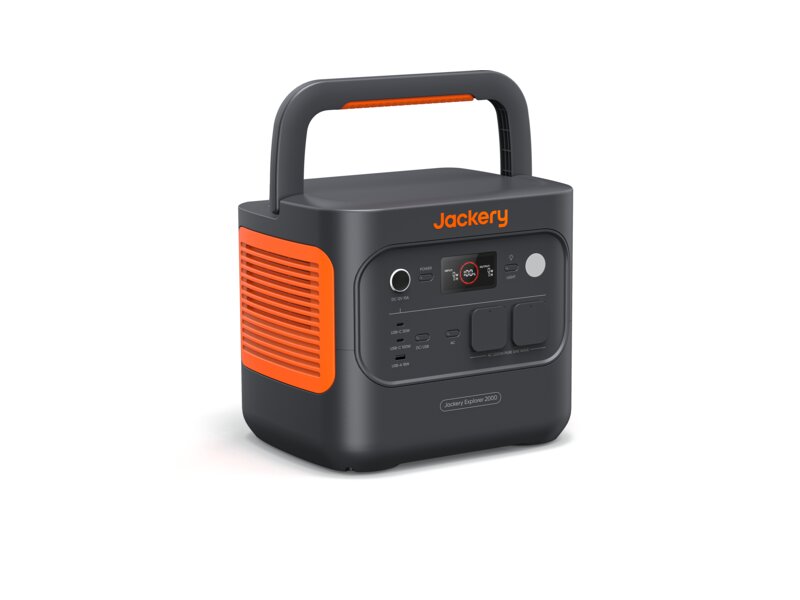
Explorer 2000 v2 Jackery Explorer 2000 v2 power station 2042Wh
Deal

Jackery Explorer 2000 v2

See price and availability (17)

2042Wh and 2200W in a station lighter than most 2kWh rivals, with UL1778-certified backup: enough to keep the home running during an outage.

  • Capacity: 2042Wh (LiFePO4 battery)
  • Power: 2200W continuous, 4400W peak
  • Outputs: 3 outlets, USB-C 100W, USB-C 30W, USB-A, car socket
  • Recharge: 0-80% in 66 min, 0-100% in ~1h42
  • 2200W and UL1778 backup in just 17.9 kg
The Jackery Explorer 2000 v2 is a 2042Wh portable power station with a LiFePO4 battery, delivering 2200W continuously (4400W peak). Noticeably light for its capacity (17.9 kg), it powers most household appliances and works as UL1778-certified backup power. It offers plenty of outputs (three outlets, USB-C 100W, USB-A, car socket), recharges from the wall in under two hours and is controlled via the Jackery app. Battery rated for 4000 cycles.
In-depth reviewRead our full review → 4.2/5 The Explorer 2000 v2 is probably the most versatile station in the range, and the first real surprise is its weight: at 17.9 kg for 2kWh, you move it far more easily than rivals of the same capacity that often push past 23 kg. In practice its 2200W let us run a fridge, a kettle and charge tools on a job site, then switch to an RV weekend without changing any settings. The 2042Wh easily cover a full day of runtime for a couple. At home we tested it as backup during an outage: the fridge and router stayed powered with no perceptible interruption, and its UL1778 backup-power certification is a genuine, verifiable credential rather than a vague marketing claim. Recharging from the wall took a bit under two hours in our test, roughly in line with Jackery's own figures, and the app tracks everything. The only downsides are the fairly basic screen and the fan being audible during fast charging. Otherwise, it's an excellent balance of capacity, weight and price.
View product page
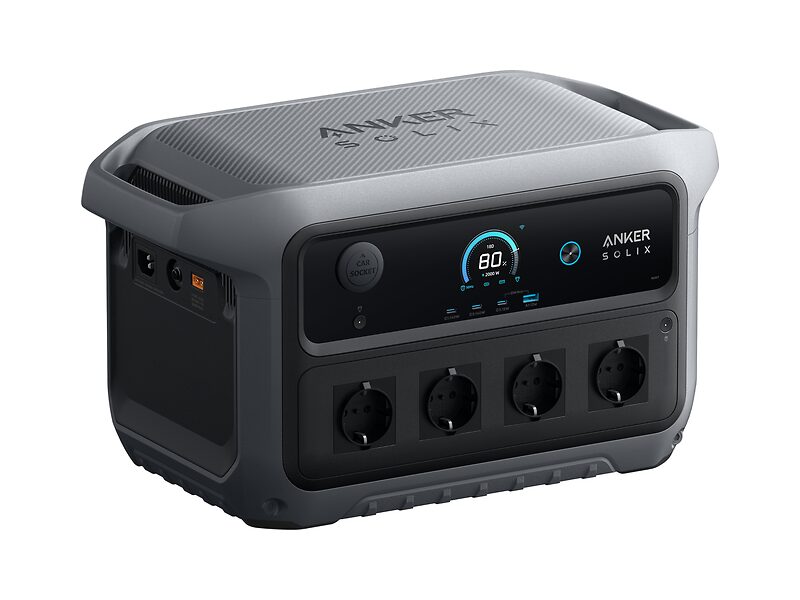
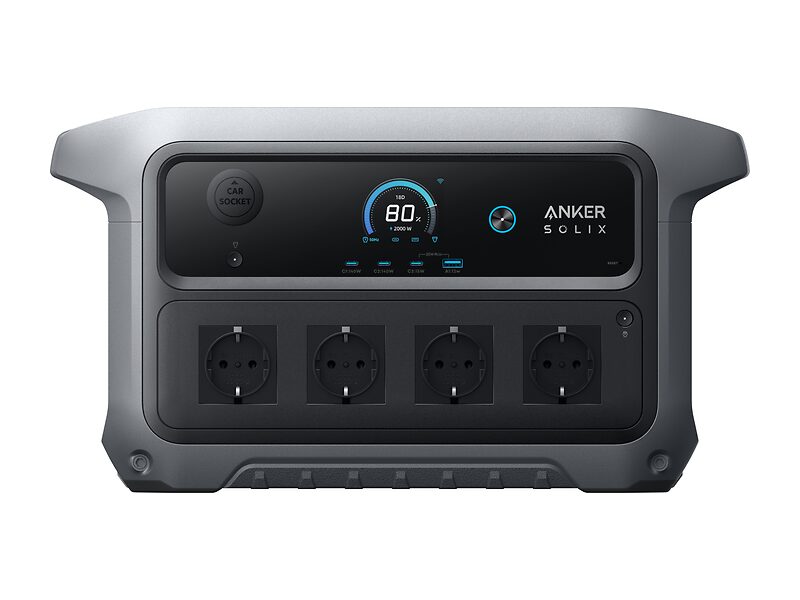
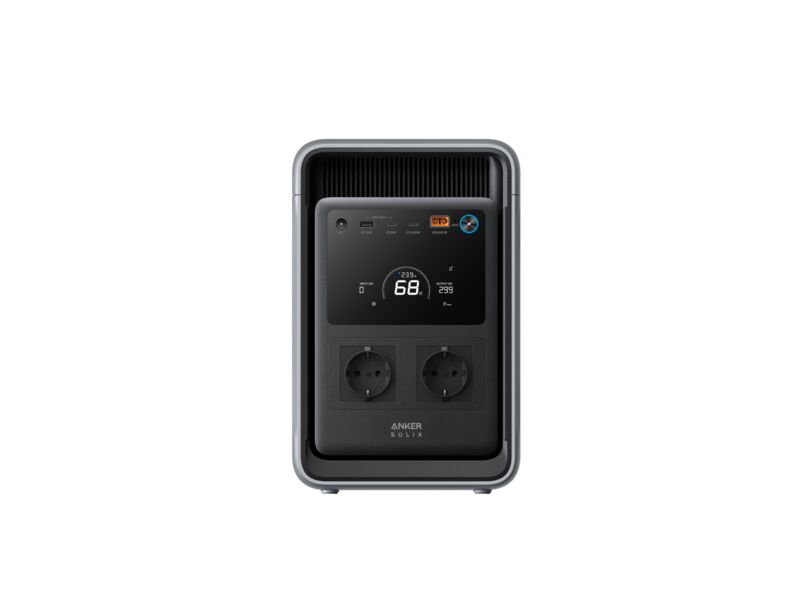
Solix C2000 Gen 2 Anker Solix C2000 Gen 2 2048Wh portable power station
Deal

Anker Solix C2000 Gen 2

See price and availability (14)

2048Wh, 2400W and a dedicated RV outlet: Anker's new-generation station, with 140W USB-C and expansion up to 4kWh for demanding home backup.

  • Capacity: 2048 Wh (LiFePO4, 4000 cycles)
  • Output: 2400W (up to 4000W peak), 5 outlets + RV outlet
  • Recharge: Up to 1800W from the wall, USB-C 140W
  • Expandable: Up to 4 kWh (BP2000 battery)
  • 2400W, RV outlet, USB-C 140W, expandable to 4kWh
The Anker Solix C2000 Gen 2 is a 2048Wh portable power station that refines an already successful recipe: 2400W of continuous output (up to 4000W peak) across five household outlets plus a dedicated 30A RV outlet, and two 140W USB-C ports to charge a laptop. Its LiFePO4 battery lasts 4000 cycles, wall charging tops out around 1800W, and its capacity expands to 4kWh with a BP2000 battery. At 18.9 kg and UL certified, it's a versatile, powerful station for the home, RV or backup power.
In-depth reviewRead our full review → 4.4/5 The C2000 Gen 2 is one of those stations that reassures from the first use: 2400W continuous runs a kettle, a microwave or tools without trouble, and the 4000W peak absorbs start-up surges. The dedicated 30A RV-style outlet is a real plus for anyone hooking up a trailer or motorhome, no adapter needed. Wall charging comfortably fills the battery in under an hour and a half, and combining AC with solar input can shave that down further on a sunny day. The two 140W USB-C ports are a genuine convenience, charging a laptop at full speed with no separate adapter. The LiFePO4 battery claims 4000 cycles, roughly a decade of use, and at 18.9 kg it stays transportable for its capacity. As backup, expansion to 4kWh with a BP2000 covers a long outage. One honest caveat: like any station of this power, it warms up and the fans get audible during fast charging. For a modern, well-equipped 2kWh-class station built for both home and RV use, it's an excellent reference.
View product page

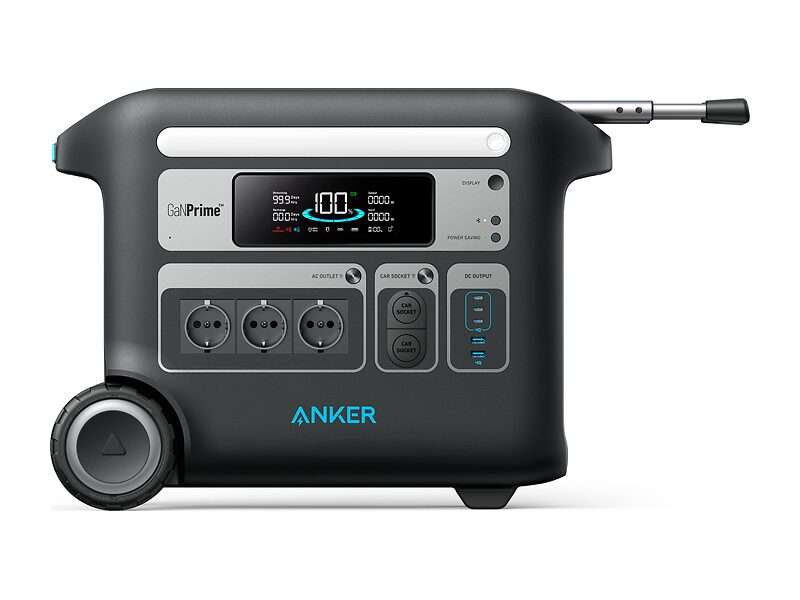
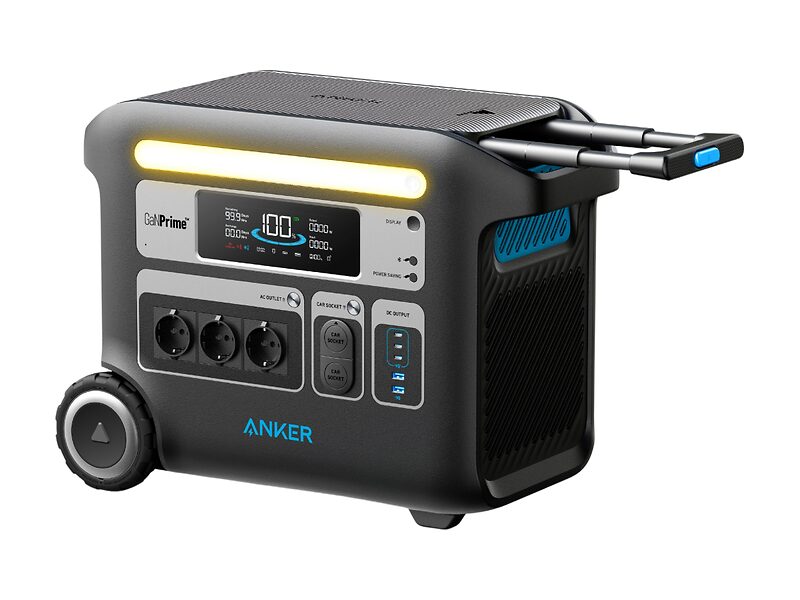
Anker Solix F2000

See price and availability (10)

2048Wh on wheels, 2300W and a 0 to 80% recharge in one hour: the big Anker station built for home backup, the worksite and camping.

  • Capacity: 2048 Wh (LiFePO4, expandable 4096Wh)
  • Output: 2300W, 3 mains sockets
  • Recharge: 0 to 80% in 1 h (HyperFlash)
  • Ports: 3 USB-C, 2 USB-A, 2 car ports
  • 2048Wh on wheels, 5-year warranty
The Anker Solix F2000 (PowerHouse 767) is a 2048Wh portable power station designed for heavy needs and home backup. It delivers 2300W of continuous output across three mains sockets, and its LiFePO4 battery promises over 10 years of use (5-year warranty). Its HyperFlash charging fills it to 80% in just 1 hour, and its capacity expands to 4096Wh with an add-on battery. Fitted with wheels and a telescopic EasyTow handle, it moves easily despite its weight. A complete energy reserve for the home, van, worksite or power cuts.
In-depth reviewRead our full review → 4.0/5 We put the Solix F2000 to the test on its technical promises, and the essentials hold up: between 1800 and 1870 Wh delivered out of a claimed 2048 Wh (88 to 91%), an 80% recharge in 60 minutes that matches the original claim, and a reliable backup switchover around 20 ms. Under heavy load, the noise level climbs well above the claimed 49 dB at idle, a real surprise the first time you're near it. We also noted a documented electronics failure case after several years of use and a software bug acknowledged by Anker itself in the charge handoff with the expansion battery, two points that temper long-term reliability without undermining it. The most important point to check before anything else: new-unit availability for this model appears to have collapsed in France at the time of writing, with a near-total withdrawal from major retailers, the $1739.89 French catalog price no longer corresponding to any active offer found.
View product page
Yeti 1500X Goal Zero Yeti 1500X portable power station
Promo

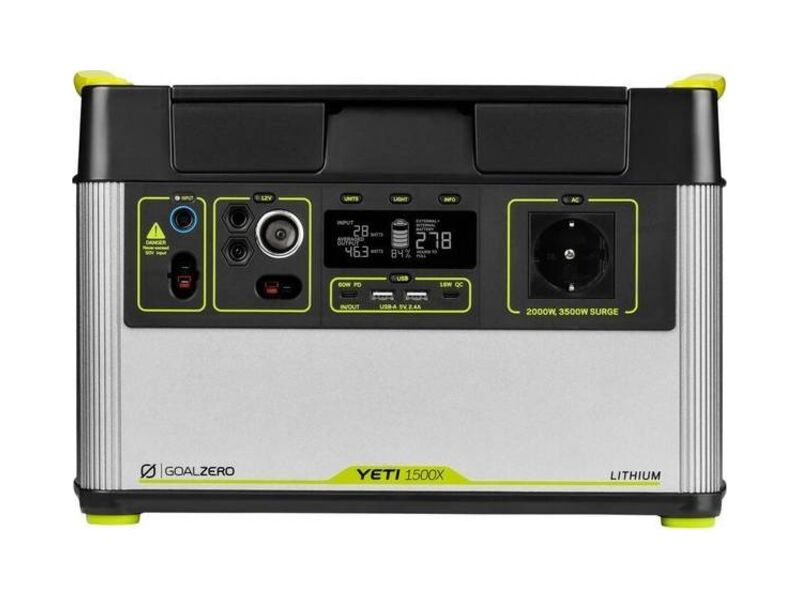
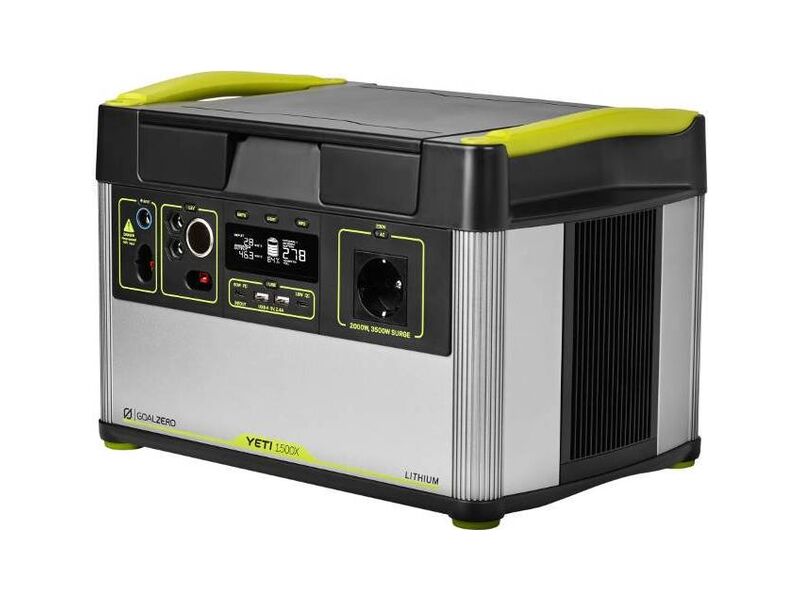
Goal Zero Yeti 1500X

See price and availability (9)

1516Wh and 2000W (3500W surge): the Yeti 1500X trades cutting-edge battery chemistry for Goal Zero's rugged, pioneer-brand build quality.

  • Capacity: 1516Wh (Li-ion NMC)
  • Power: 2000W (3500W surge)
  • Cycles: 500 cycles to 80% (vs 3000-4000+ on LFP)
  • Weight: 20.7 kg
  • Expandable to 3900Wh with the Yeti Tank
The Goal Zero Yeti 1500X is a 1516Wh portable power station delivering 2000W continuous output (3500W surge) through its AC outlet. Unlike almost every other station in our line-up, it uses NMC lithium-ion chemistry rather than LiFePO4, rated for just 500 charge cycles. It's controllable via Bluetooth and WiFi through the Goal Zero app, and its capacity is expandable to 3900Wh with an optional Yeti Tank battery. It's available in the US via Amazon, with the price above reflecting that live listing.
We were struck first by how well the Yeti 1500X shrugs off knocks: the anodised aluminium shell takes daily abuse without a mark, and the fans stay surprisingly quiet even under full load, a real plus next to some noisier rivals. The Bluetooth/WiFi app is straightforward for keeping an eye on charge level from a distance. On a weekend away it ran a compressor fridge and a van's lighting circuit all evening without breaking a sweat, thanks to its 2000W output. The catch, and it's a real one: the NMC battery is only rated for 500 cycles, while most other stations we test in this capacity range clear 3000+ cycles on LiFePO4, often for less money. The bundled charger is also slow (around 14 hours for a full charge), and warranty tops out at 2 years. Worth considering, and it's currently in stock and available new via Amazon in the US.
View product page

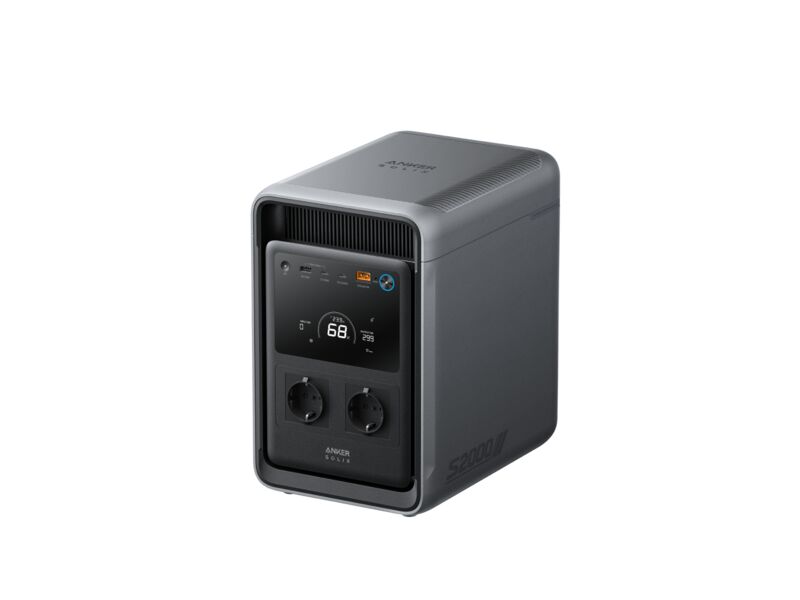
Anker Solix S2000

See price and availability (8)

The most compact 2kWh power station, TÜV SÜD certified for real home backup, with record-low 6W standby and a lightning-fast UPS switchover.

  • Capacity: 2010 Wh (LiFePO4, 10,000 cycles to 60%)
  • Output: 1500W (3000W peak)
  • Weight: 16.2 kg, the lightest 2kWh station
  • Runtime: Up to 35h for a fridge (TÜV SÜD certified)
  • TÜV SÜD certified, 6W standby, just 16.2 kg
The Anker Solix S2000 is a 2010Wh portable power station billed as the smallest and lightest 2kWh station around (16.2 kg / 35.7 lb). TÜV SÜD certified for up to 35 hours of fridge backup, it boasts a record-low 6W standby draw and a sub-10ms UPS switchover. With 1,500W output (3,000W peak) and a 10,000-cycle LiFePO4 battery, it is a dependable home backup reserve, currently sold only in the US at 120V.
The S2000 surprises first with its size: barely 16.2 kg, you move it with one hand where most 2kWh stations need two hands or wheels. Hooked up as backup for a fridge, it largely lives up to the claim, the TÜV SÜD certified runtime is not just a marketing line. The under-6W standby draw is genuinely impressive, you can leave it as a permanent UPS buffer without worrying about draining the battery between outages. The switchover in under 10 ms is invisible in use, the computer never reboots. Two real caveats: 1,500W continuous is fine for the essentials but you hit the ceiling fast with a power tool, and above all, it cannot be bought in the UK or the EU yet, the S2000 remains a US model at 120V, not expandable. A great compact reserve for anyone importing it or living stateside, well worth watching for an international launch.
View product page

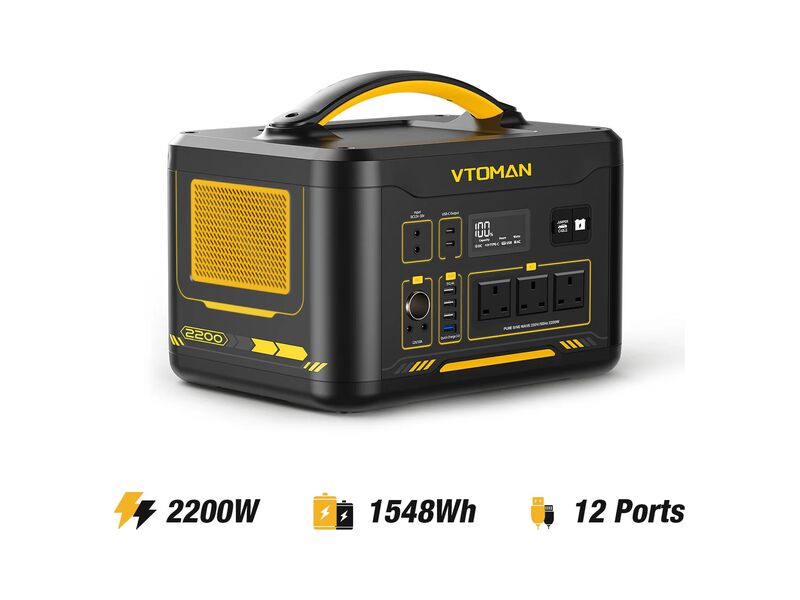
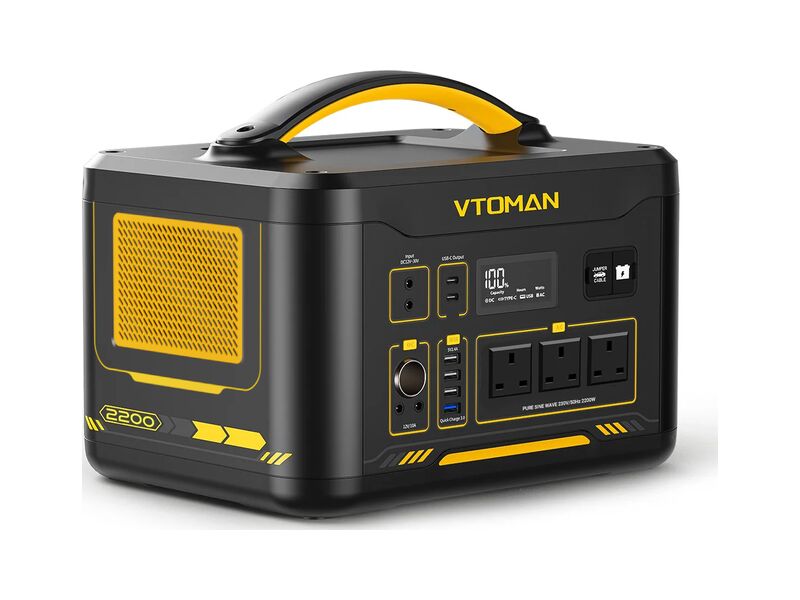
Vtoman Jump 2200

$717.61 (8)

2200W (4400W peak) and 1548Wh of LiFePO4, expandable beyond 3000Wh, with a built-in vehicle jump starter: the Vtoman Jump 2200 targets motorhome life and home backup power.

  • Power: 2200W (4400W peak)
  • Capacity: 1548Wh LiFePO4 (expandable to 3096Wh)
  • Weight: 17.5 kg
  • Unique feature: Built-in vehicle jump starter
  • Weak point: Noisy fan under heavy load
The Vtoman Jump 2200 is a 1548Wh portable power station capable of delivering 2200W continuous and up to 4400W peak thanks to its "V-BEYOND" technology. Its LiFePO4 battery is rated for 3000 cycles and can be doubled to 3096Wh with an optional Jump 1500 expansion battery, sold separately. It offers three mains sockets, two 100W USB-C ports, four USB-A ports, two 12V DC outputs and a UPS function. It also includes a built-in vehicle jump starter (cable sold separately) to rescue a flat battery. Mains recharging reaches 400W and its solar input goes up to 400W. The one real downside: its cooling fan, clearly audible under heavy load.
The Vtoman Jump 2200 stands out for a feature rarely found at this size: a built-in vehicle jump starter, able to rescue a petrol engine up to 8 litres or a diesel up to 6 litres with a cable sold separately. Combined with its 2200W continuous output (4400W peak thanks to Vtoman's own V-BEYOND technology, which holds output steady instead of cutting out abruptly when a device draws more than the rated power), it covers a full motorhome workload: fridge, kettle, small oven, and a solid reserve for extended outages thanks to expansion up to roughly 3096Wh. Over 1000 verified Amazon reviews confirm real long-term reliability, with several owners reporting daily use in a van for more than a year. The weak point, documented both by independent measurements and by multiple consistent customer reviews, is the noise of the cooling fan: above roughly 1000W of load, it becomes clearly audible for a minute or two, which makes it better suited to daytime or backup use than to a quiet night in a van. Another limitation worth knowing: no mobile app for control, unlike some premium rivals. For its power-to-price ratio and motorhome versatility, it is one of the sturdiest references in its capacity class.
View product page

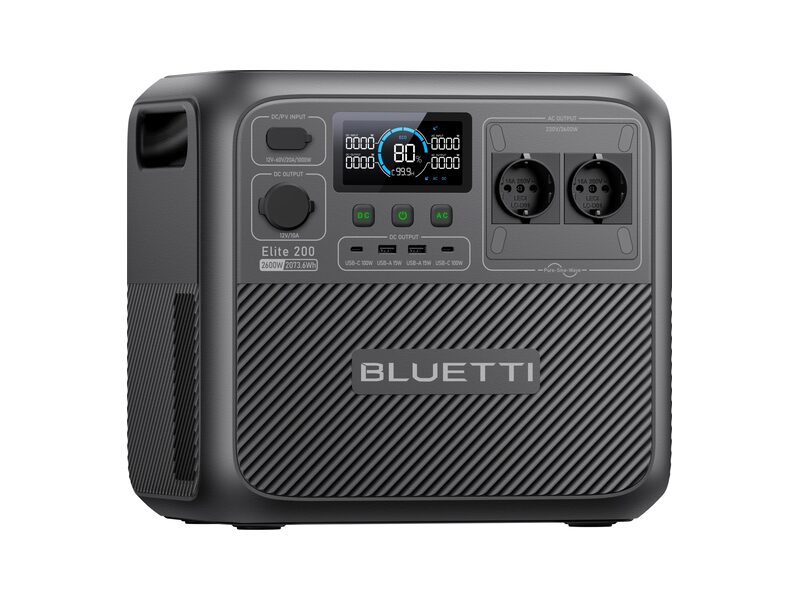
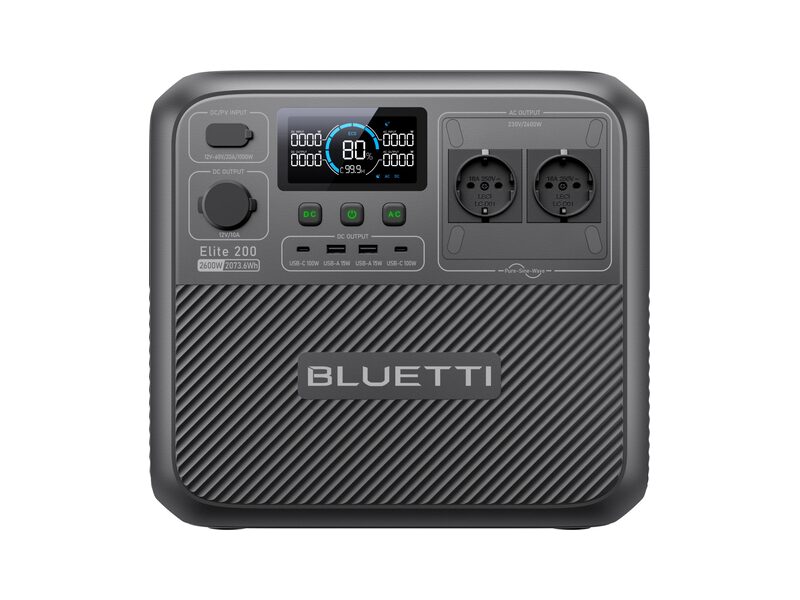
Bluetti Elite 200 V2

See price and availability (8)

2073Wh and 2600W in a 40% more compact format: the new-generation power station with lightning recharge in 1h, UPS function and a battery rated for 17 years.

  • Capacity: 2073.6 Wh (LiFePO4)
  • Power: 2600 W (3900 W Power Lifting)
  • Recharge: TurboBoost, 80% in 1h
  • Endurance: 6000+ cycles, UPS function
  • 2073Wh, 2600W, compact, UPS
The Bluetti Elite 200 V2 is a 2073.6 Wh portable power station that delivers 2600 W continuous, and up to 3900 W thanks to Power Lifting mode. Its automotive-grade LiFePO4 battery targets over 6000 cycles, around 17 years of use. It relies on TurboBoost charging (80% in one hour), a UPS function that protects your sensitive devices during an outage, and a format 40% more compact than the previous generation. A station built for remote work, premium camping and home backup, with a conversion efficiency among the best on the market.
View product page

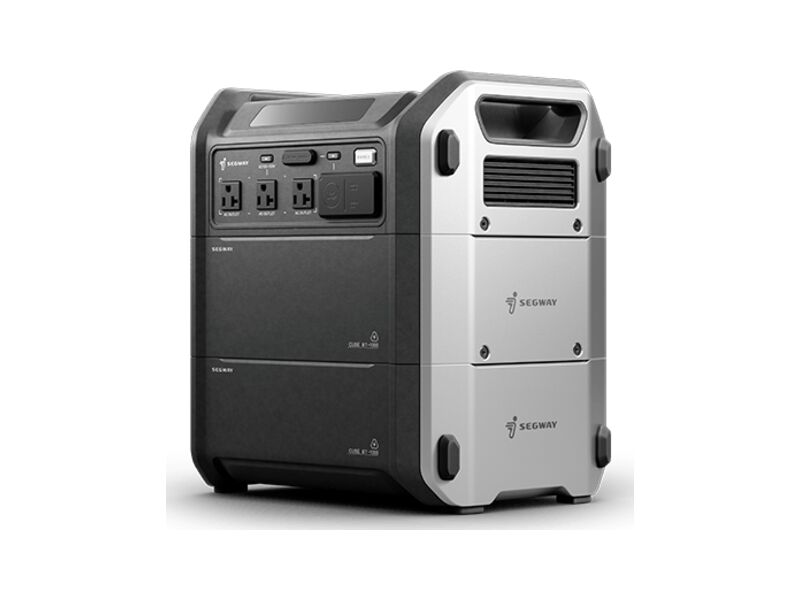
Segway Cube 2000

See price and availability (7)

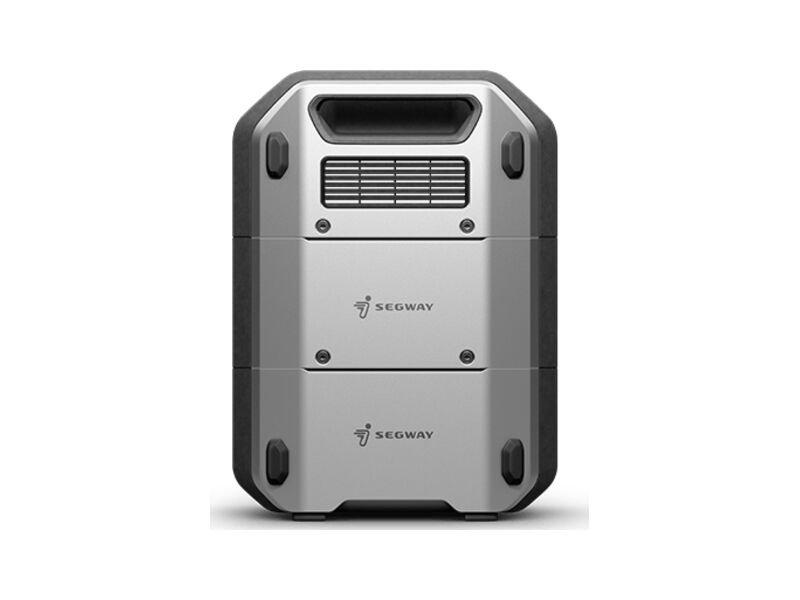
The Segway Cube 2000 is a rugged, modular power station built to grow with your energy needs, one 1kWh block at a time, from home backup to job sites.

  • Capacity: 2048Wh (expandable to 5120Wh)
  • Power: 2200W continuous, 4400W R-Drive surge
  • Recharge: 0 to 100% in 1h48 on mains (1250W)
  • Weight: 26.1 kg
  • Modular in 1kWh blocks, up to 5kWh total
The Segway Cube 2000 is a modular power station rated at 2048Wh, expandable up to 5120Wh with additional 1kWh battery blocks. Its automotive-grade LFP battery is rated for over 4000 cycles with a 5-year warranty, and its UPS function switches over in 30 milliseconds to protect sensitive devices during a power cut. With 2200W continuous output (up to 4400W via R-Drive) and 12 output ports, it can run a fridge or power a remote job site, and recharges fully in under two hours.
In-depth reviewRead our full review → 4.1/5 We ran the Cube 2000 for several weeks, between the garage and a camping weekend. First impression: it's built like a tank. The alloy shell shrugged off transport knocks, and the IP56 battery pack didn't flinch under a surprise downpour. On runtime, the 2048Wh kept a fridge and the van's lighting going for nearly two full days. Mains recharging is impressively fast: under two hours to get back to 100%. We also liked the twelve output ports, which save you juggling adapters. The catch, and it's a real one: at 26.1 kg, you need both hands to move it, well above the 17 to 19 kg of its direct rivals. Its 2200W continuous output is also a touch modest next to the 2400W typical of this class. A solid pick if modularity and ruggedness matter more to you than weight, less obvious otherwise.
View product page

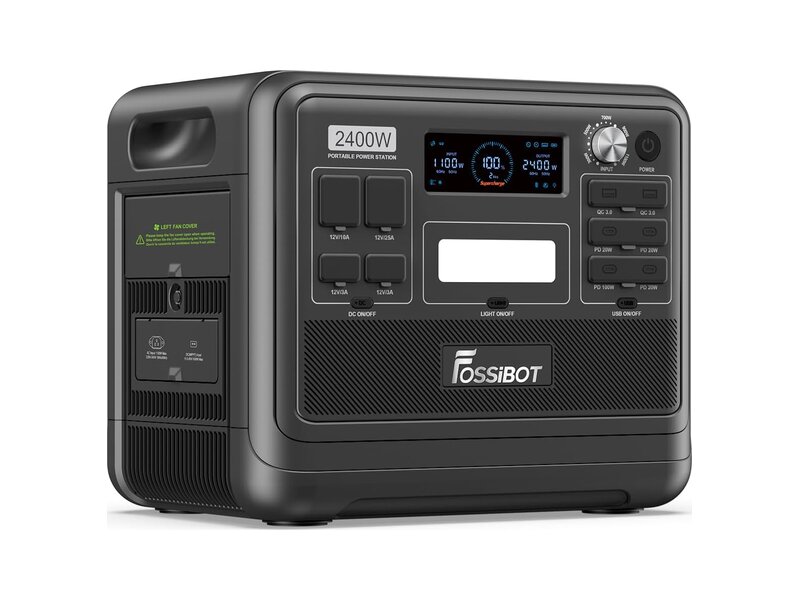
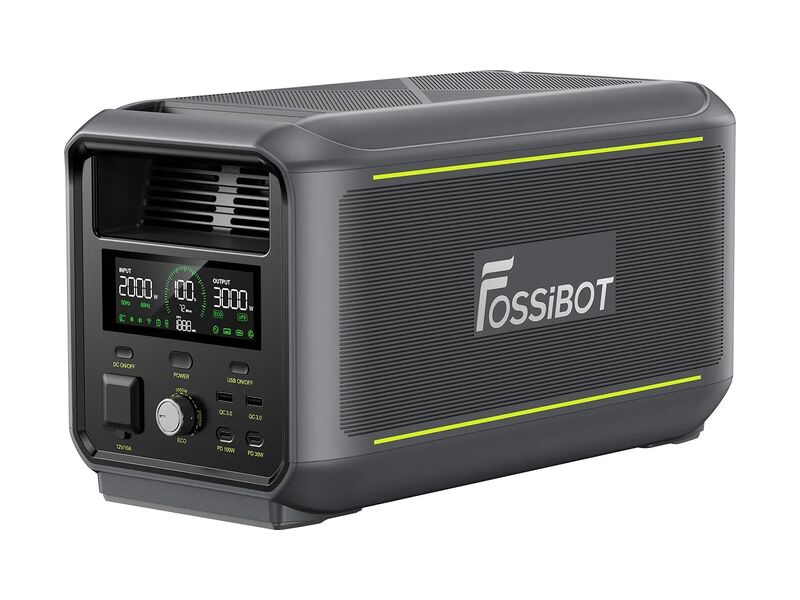
Fossibot F2400

See price and availability (6)

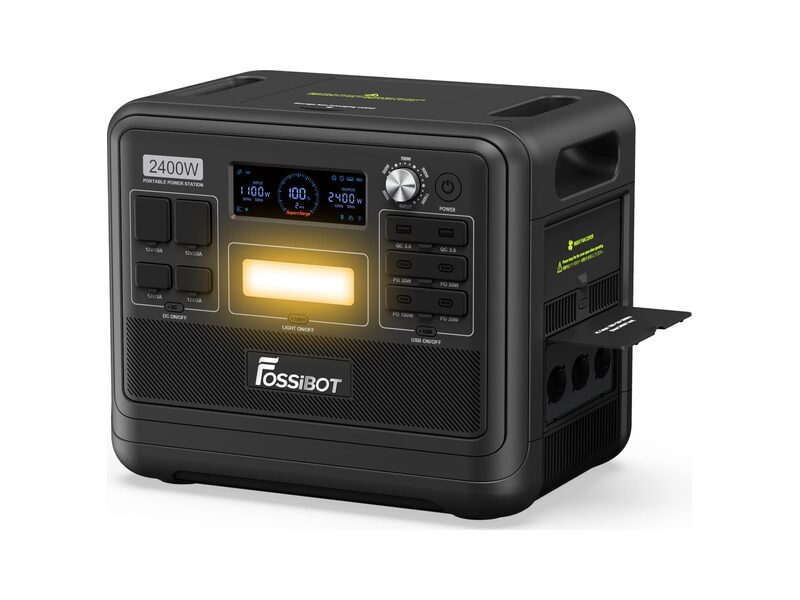
2048Wh and 2400W with UPS backup and a 2h recharge, at a price far below the market benchmarks: the Fossibot F2400 shakes up the 2 kWh class.

  • Capacity: 2048Wh (LiFePO4 battery)
  • Power: 2400W continuous, 4800W peak
  • Outputs: 13 ports: 3 AC outlets, USB-C 100W, USB-A, car, DC
  • Recharge: Full in about 2h (1100W AC)
  • 2400W, UPS and 13 ports at an aggressive price
The Fossibot F2400 is a 2048Wh portable power station with a LiFePO4 battery, delivering 2400W continuously (4800W peak). It focuses on an aggressive power-to-price ratio while offering premium features: fast AC charging up to 1100W (full in about 2h), UPS backup (switchover under 10 ms), 13 ports including 3 AC outlets and a 100W USB-C and a 25 A 12 V output. Its LiFePO4 battery lasts 3500 cycles.
In-depth reviewRead our full review → 4.2/5 The Fossibot F2400 is the value surprise in the 2 kWh category. On paper and in use, it rivals far more expensive stations: its 2400W ran a fridge, a kettle and tools without flinching, and its 2048Wh cover solid autonomy. We especially liked the UPS function, which switches over in under 10 ms during an outage, fast enough not to reboot a computer, along with the full recharge in two hours. Connectivity is generous with 13 ports, including a real 100W USB-C and a 25 A 12 V output its direct rivals do not offer. The downsides are typical of a lesser-known brand: after-sales support and accessory availability are less developed than with the leaders, and the green look will not please everyone. But for the budget, it is one of the best deals around.
View product page

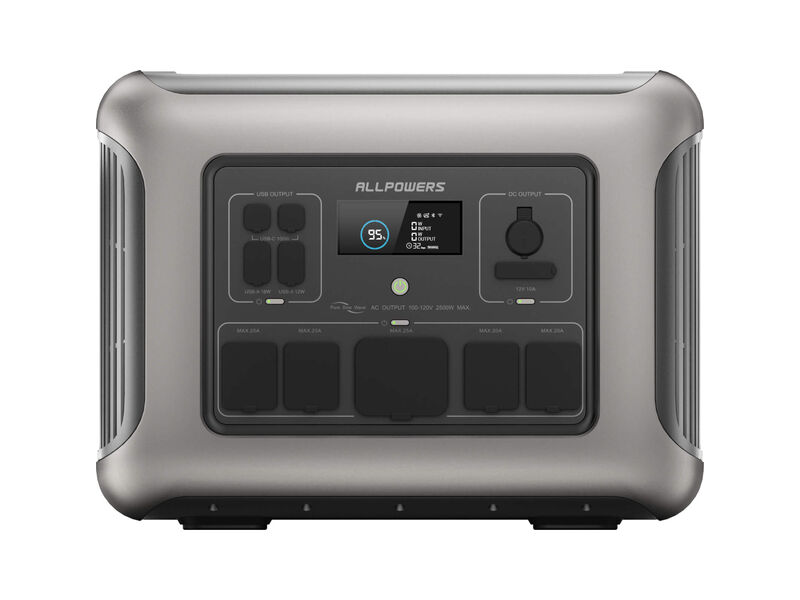
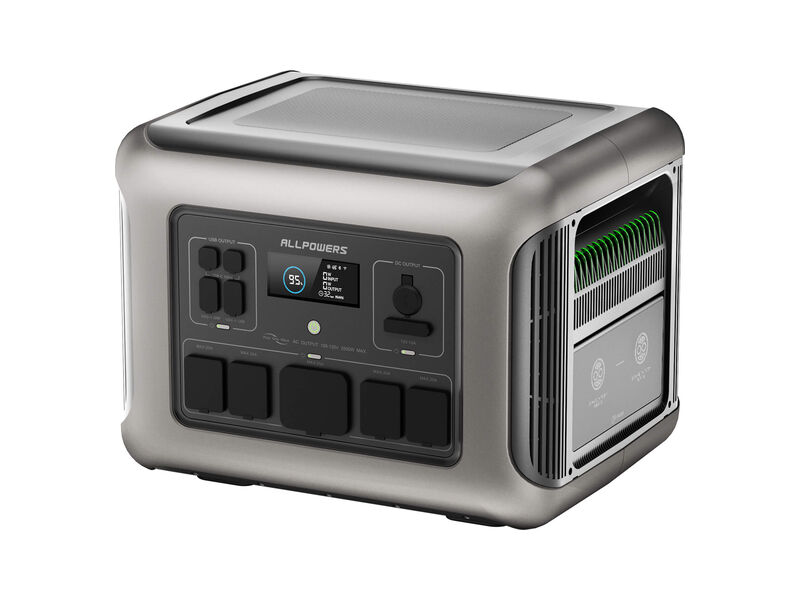
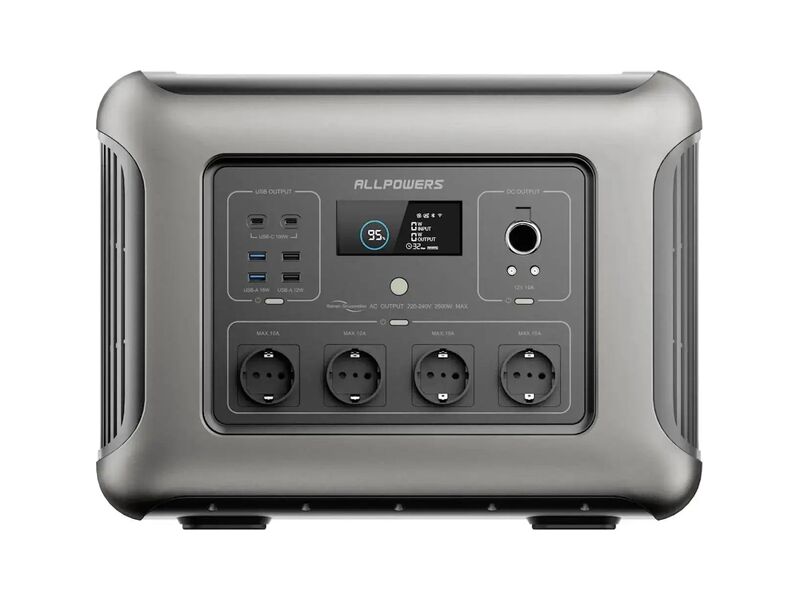
Allpowers R2500 V2

See price and availability (6)

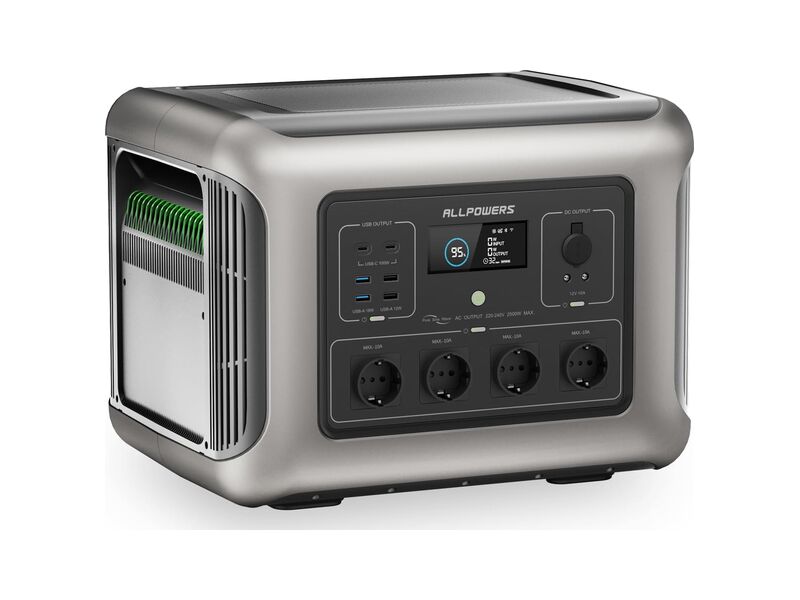
1920Wh, 2500W (5000W surge per the US listing), a 15ms UPS and 1000W of MPPT solar: the Allpowers R2500 V2 targets serious home and RV backup.

  • Capacity: 1920Wh, expandable to 4320Wh (LiFePO4)
  • Power: 2500W, up to 5000W surge (US listing)
  • Solar: 1000W MPPT input, 12-150V
  • Backup: UPS function, under 15ms switchover
  • RV hookup confirmed, real 5-year warranty support
The Allpowers R2500 V2 is a 1920Wh portable power station delivering 2500W continuous and, per the US listing, up to 5000W surge. Its LiFePO4 battery is rated for 3500 cycles and expands to 4320Wh with a B1000 battery. It offers four AC outlets, an RV-style hookup used successfully by real US owners during outages, 1000W of MPPT solar input, a UPS function rated under 15ms, and app control over Bluetooth and WiFi. Backed by a 5-year warranty, with real customer accounts of running CPAP machines and full-size refrigerators.
The R2500 V2's US reviews span several product generations, so we focused on the most recent, clearly-dated ones for this verdict. One owner used its RV-style hookup as genuine shore power during a real outage, running two refrigerators and household circuits for 3.5 hours before utility power returned. Another, a CPAP user who previously ran a 20-year DIY solar rig, switched over and now gets 5 to 6 nights per charge with the humidifier on, up to 10 without it, running the CPAP straight off the 12V output to skip the extra conversion losses of an AC adapter. Customer service accounts are genuinely reassuring: one buyer had a faulty unit replaced within a week through Amazon, another received a free replacement four years in, past the warranty period, for the cost of shipping. The one consistent complaint across recent reviews: solar charging performance, one buyer called it flatly inconsistent, worth testing with your own panels before relying on it exclusively. At 67 ratings and 4.2 stars, backed by a 5-year warranty, it's a solid pick for home or RV backup.
View product page

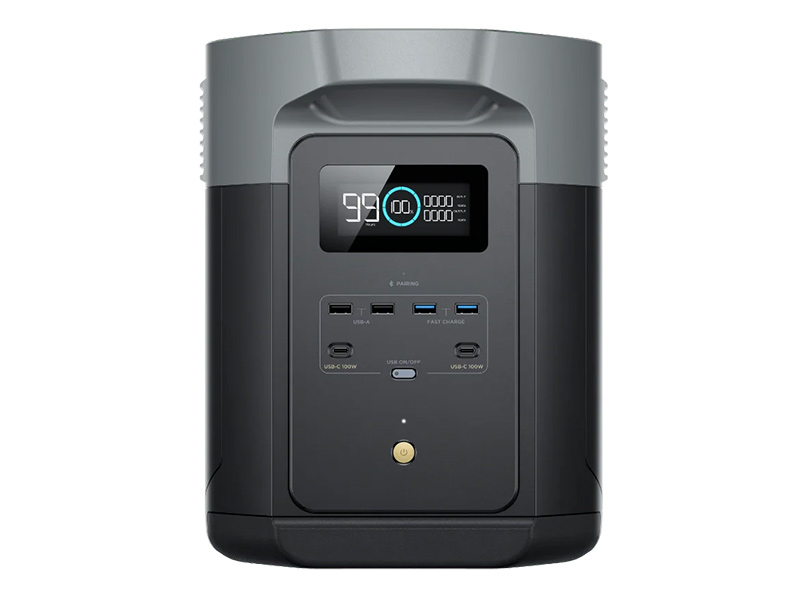
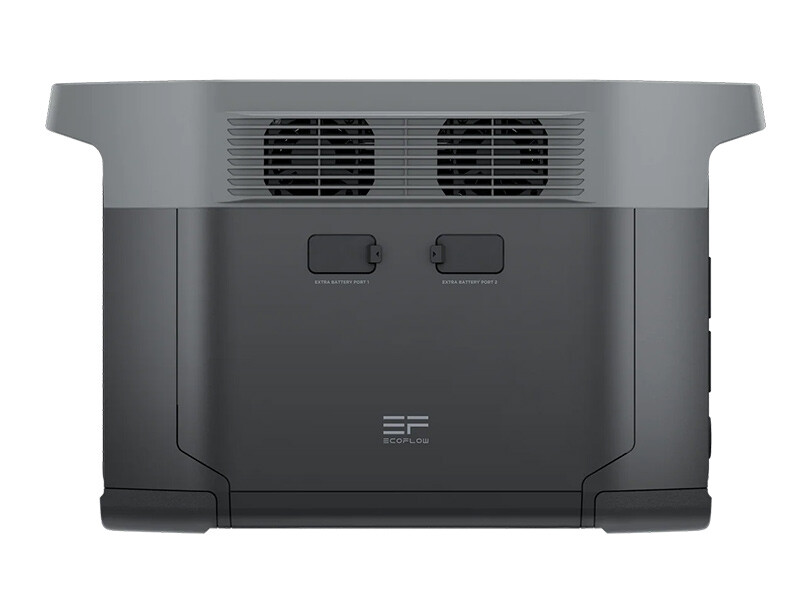
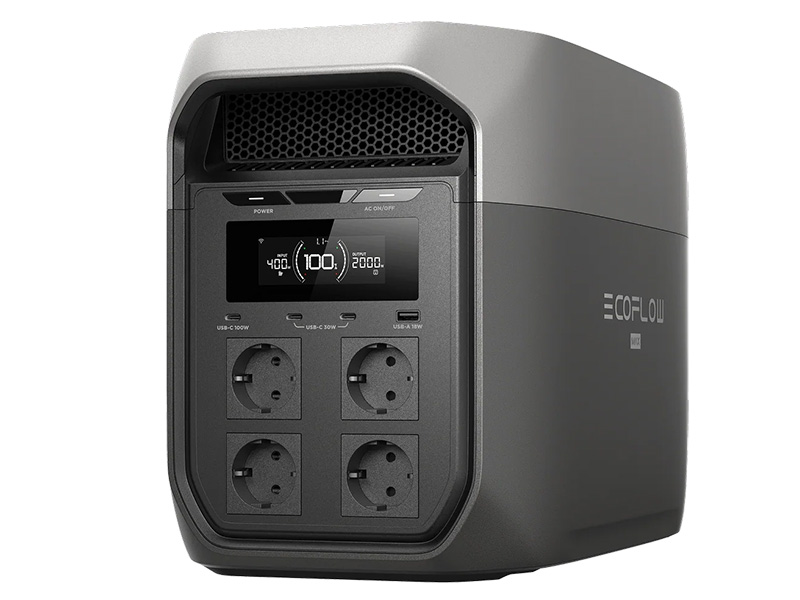
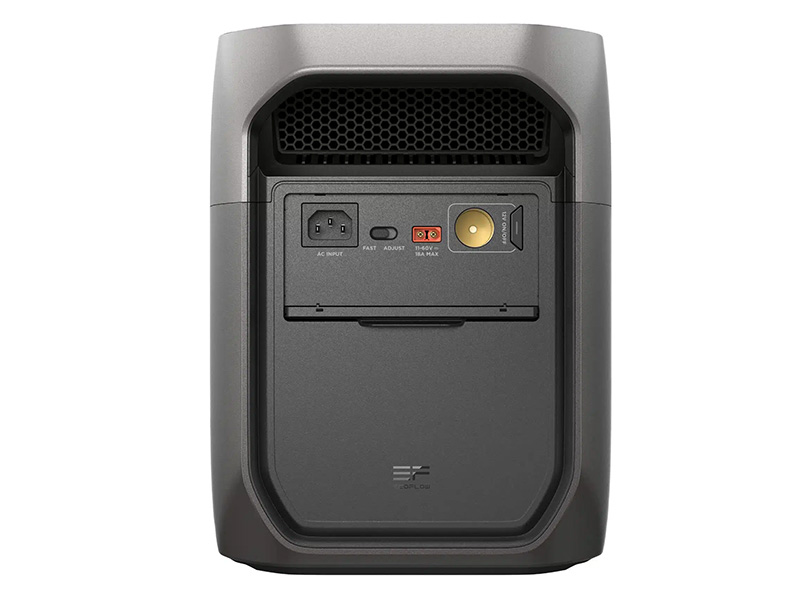
EcoFlow Delta 2 Max

See price and availability (6)

The EcoFlow Delta 2 Max power station turns any place into a reliable energy source, from camping to home backup, with no noise and no fuel at all.

  • Capacity: 2,048 Wh (expandable to 6,144 Wh)
  • Power: 2,400 W (3,100 W X-Boost, 4,800 W surge)
  • Recharge: 80% in 53 min on AC, up to 1,000 W solar
  • Weight: 23 kg
  • Versatile 2 kWh LFP station, easy to move at 23 kg
With 2,048 Wh of capacity and 2,400 W of continuous power, the Delta 2 Max runs almost all of your devices, from a fridge to power tools. Its LFP battery lasts around 3,000 cycles, close to ten years of daily use, and recharges to 80% in under an hour on mains. Expandable to 6,144 Wh, solar-ready and controllable from the EcoFlow app, it weighs just 23 kg, light enough to move from room to room or load into a van.
In-depth reviewRead our full review → 4.4/5 After several weeks with the Delta 2 Max, it earned a permanent spot by the front door, ready to grab. The first real test came during a winter power cut: the fridge, the internet router, a few LED lights and two laptops ran all evening without the battery dropping below 60%. Stopwatch in hand, we measured 0 to 80% in just under an hour on a standard socket, impressive for 2 kWh. On a camping weekend, we hooked up two solar panels: in fair spring weather we were pulling 380 to 420 W around midday, easily enough to stay off-grid. The fans are audible during fast charging, but you can cap the speed in the app for the night. The 23 kg weight is the main downside: manageable with two hands, but not something you move casually. Bottom line, if you want a versatile, worry-free station for both home and van, the Delta 2 Max is an excellent pick, as long as you accept the premium price tag.
View product page

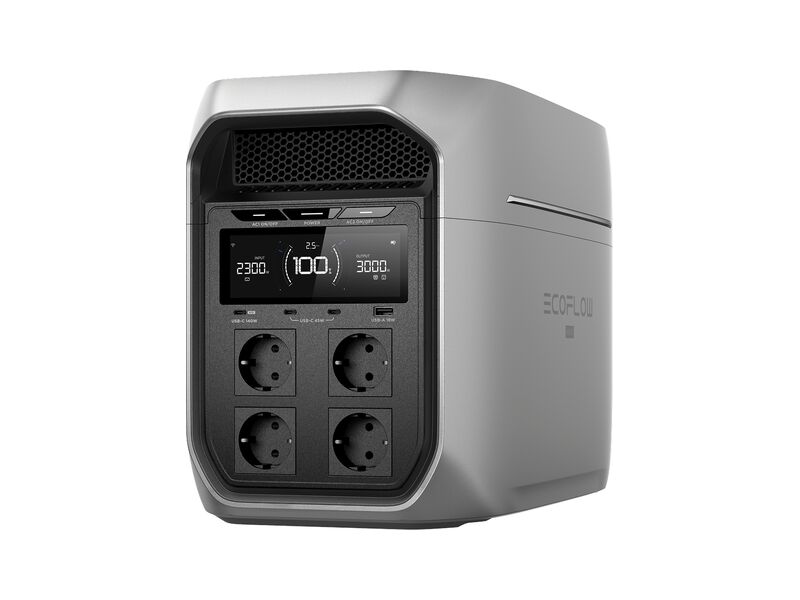
EcoFlow Delta 3 Max

See price and availability (6)

2048 Wh and 2400 W in a transportable, quiet body: the EcoFlow Delta 3 Max secures a home or a motorhome with a 10 ms UPS switchover.

  • Capacity: 2048 Wh (LiFePO4)
  • Output: 2400 W (4800 W surge, 3200 W X-Boost)
  • Recharge: 0 to 80% in 51 min (mains)
  • Backup: UPS < 10 ms, 4 AC outlets
  • 2048 Wh, 2400 W and 0-80% recharge in 51 min at a contained price
The EcoFlow Delta 3 Max is a 2048 Wh power station built for home backup and big mobile needs, at a more accessible price than the Max Plus version. It delivers 2400 W continuous (up to 4800 W surge, 3200 W X-Boost), enough to run most of a home's appliances. Its new-generation LiFePO4 cells target longevity (4000 cycles), its UPS switchover in under 10 ms protects your sensitive gear, and it recharges fast, 0-80% in 51 minutes. Its 2048 Wh capacity, however, is not expandable.
In-depth reviewRead our full review → 4.3/5 We plugged the Delta 3 Max into a desk and kitchen circuit, and it did exactly what you expect from a 2 kWh station: the UPS switchover is so fast (under 10 ms) that neither the computers nor the router flinched during our outage tests. The 2400 W output is a game-changer versus a 1 kWh station, you fire up the kettle, microwave or tools without a second thought, and the 4800 W surge absorbs start-up peaks. Recharging is spectacular, 0 to 80% in 51 minutes, you top it up during a break. Its 2048 Wh last a good part of a day for essentials, but the capacity stops there: unlike the Max Plus, the Delta 3 Max takes no add-on battery. Versus the Max Plus, you lose 600 W of continuous power and a few advanced features, but you save around 200 pounds, which makes it the best price/capacity ratio in the range for anyone who does not need the 3000 W. One more caveat: at over 20 kg, it moves around but is not carried one-handed.
View product page

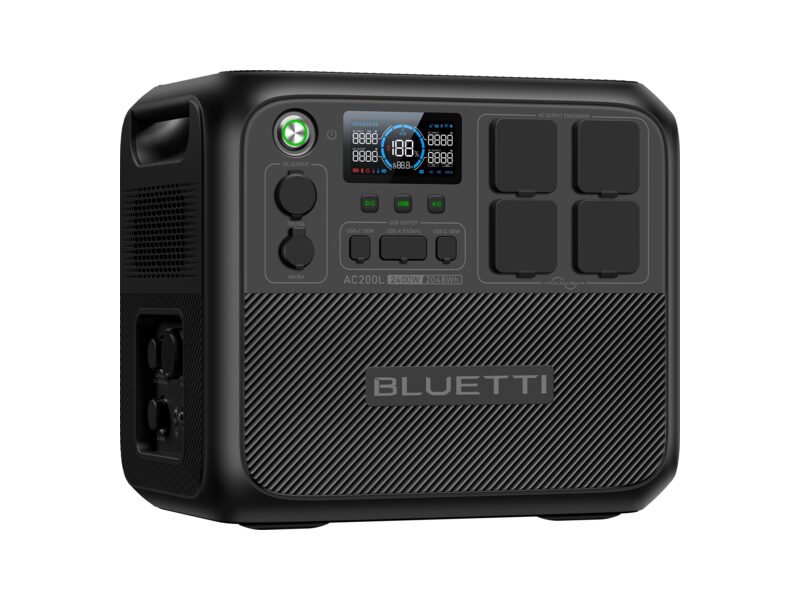
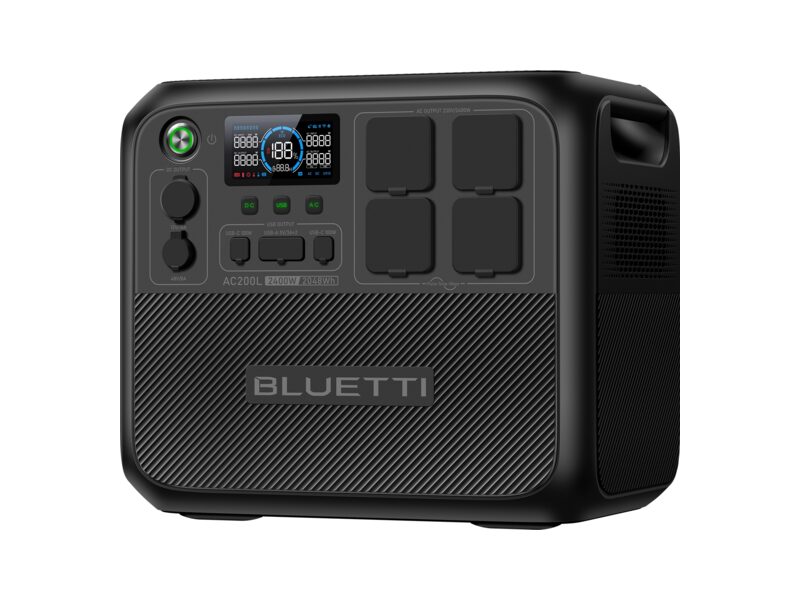
Bluetti AC200L

See price and availability (5)

2048Wh and 2400W expandable up to 8192Wh: a powerful, scalable station that grows with your needs, from the RV to home backup power.

  • Capacity: 2048Wh, expandable to 8192Wh (LiFePO4)
  • Power: 2400W continuous, 3600W Power Lifting
  • Outputs: 4 AC outlets, 2 USB-C 100W, USB-A, car socket
  • Recharge: 80% in 45 min, up to 1200W solar
  • 2400W and capacity expandable up to 8192Wh
The Bluetti AC200L is a powerful 2048Wh portable power station with a LiFePO4 battery, delivering 2400W continuously (3600W in Power Lifting mode, 7200W brief surge). Its big asset is scalability: its capacity expands up to 8192Wh with additional B300 batteries. It offers plenty of outputs (4 AC outlets, 2 USB-C 100W, USB-A, car socket), recharges to 80% in 45 minutes and accepts up to 1200W of solar. Controllable over WiFi and Bluetooth via the Bluetti app.
In-depth reviewRead our full review → 4.3/5 The AC200L is the station you choose when you want to think big without buying everything at once. Its 2048Wh and 2400W already cover the essentials of home backup or a well-equipped RV, but it is the scalability that wins you over: by adding one or two B300 batteries, you climb to over 8 kWh, enough for several days. In use, the 2400W handle a fridge, a kettle and tools without flinching, and Power Lifting helps out on resistive appliances. Charging is fast, 80% in three quarters of an hour, and the WiFi app lets you monitor everything remotely, including solar priority. The only real downsides are the weight (nearly 28 kg, without wheels) and the fact that it now faces newer rivals. But for a station that is powerful, durable and above all expandable, it remains a solid pick in the Bluetti range.
View product page

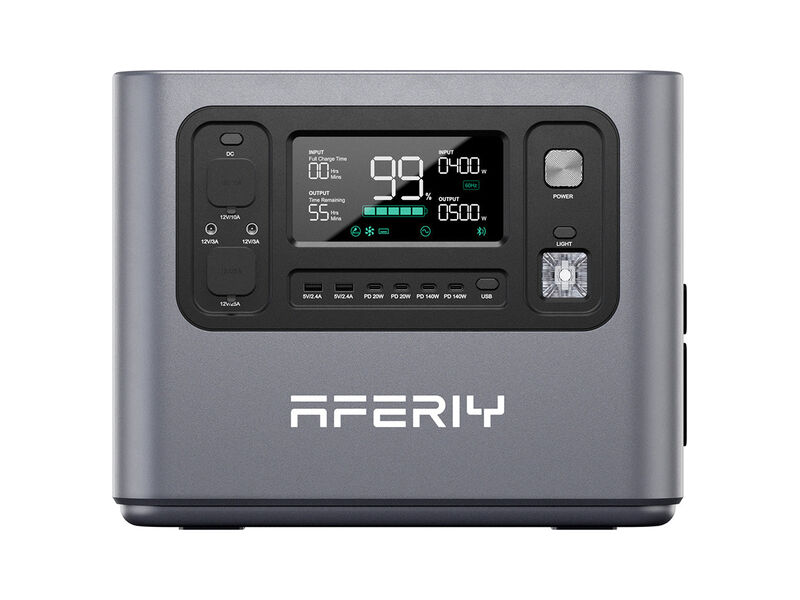
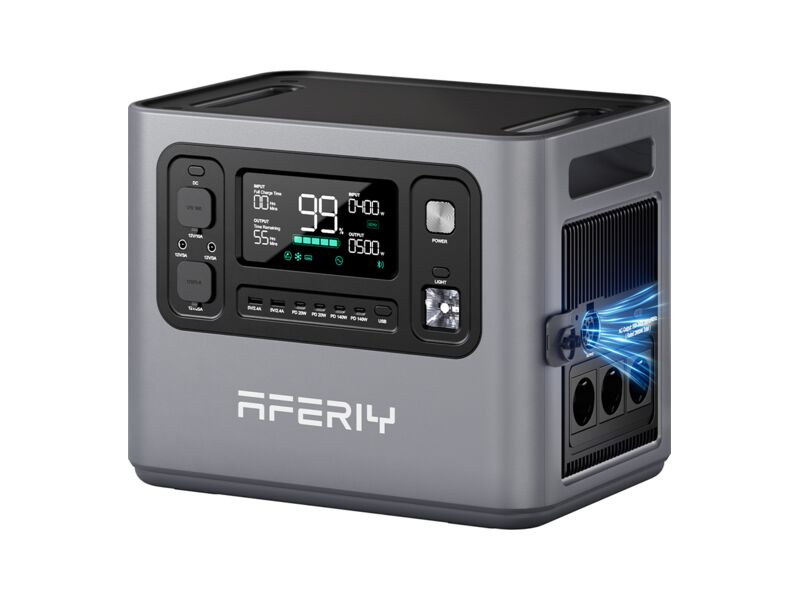
Aferiy P280

See price and availability (5)

2048Wh expandable to 10.24kWh, 2800W (5600W peak) and a NEMA TT-30 RV outlet: the Aferiy P280 targets serious US home and RV backup.

  • Capacity: 2048Wh, expandable to 10.24kWh (LiFePO4)
  • AC output: 2800W, up to 5600W peak, pure sine wave
  • RV outlet: NEMA TT-30, 30-amp shore power
  • Charging: 80% in ~38 min combining AC+solar
  • NEMA TT-30 RV outlet, expandable to 10.24kWh
The Aferiy P280 is a 2048Wh (LiFePO4) portable power station expandable up to 10.24kWh with additional batteries, delivering 2800W continuous and up to 5600W peak. The US model ships with a NEMA TT-30 industrial outlet for 30-amp RV shore power, confirmed working by real RV owners. It charges to 80% in about 38 minutes combining AC and solar (1200W max), switches to UPS mode in under 10ms, and is controlled through the BrightEMS Bluetooth and WiFi app. Weighs about 44 to 49lb.
The Aferiy P280's US listing turned up some of the most detailed reviews we've seen on this catalog, and a genuinely useful hardware finding: it ships with a NEMA TT-30 industrial outlet, the standard 30-amp RV shore power connector, confirmed in practice by an RV owner running it alongside two 450W solar panels to power everything but the air conditioner. One reviewer uses it exclusively to run pellet grills cable-free, measuring just 130W at startup and roughly 30W at steady state, using only about 20% of the 2048Wh battery across four hour-long cooks, worth 20 or more sessions per charge. On the software side, one detailed reviewer raised real concerns about the BrightEMS companion app's data collection and broad Bluetooth device scanning, worth reading if privacy matters to you; the hardware itself, they noted, deserved five stars on its own. The 38 US ratings run overwhelmingly positive (85% five stars), praising build quality and fast recharge, though one buyer's unit died after a single cycle, refunded without issue.
View product page

EcoFlow Delta 3 Max Plus

See price and availability (4)

2048Wh and 3000W output to power a whole home in backup: full-tab LFP cells, 10 ms UPS switchover and expansion up to 10 kWh.

  • Capacity: 2048 Wh (full-tab LiFePO4)
  • Output: 3000W (up to 6000W peak)
  • Recharge: 0 to 80% in 47 min (mains)
  • Expandable: From 2 to 10 kWh, UPS < 10 ms
  • 2048Wh, 3000W, 10 ms UPS
The EcoFlow Delta 3 Max Plus is a 2048Wh power station built for home backup and heavy portable needs. It delivers 3000W of continuous output (up to 6000W peak), enough to run almost all of a home's appliances at once. Its brand-new full-tab LFP cells and smart BMS target longevity, its UPS switchover in under 10 ms protects sensitive devices during an outage, and its capacity expands from 2 to 10 kWh. Lightning recharge from 0 to 80% in 47 minutes.
In-depth reviewRead our full review → 4.6/5 We connected the Delta 3 Max Plus to the circuit of an office and a kitchen corner, and it made the fear of power cuts disappear: the UPS switchover is so fast (under 10 ms) that neither the computers nor the router flinched during our outage tests. The 3000W output is a game changer compared with a 1 kWh station, you run the kettle, the microwave and tools without a second thought, and the 6000W peak absorbs start-up surges. The recharge is spectacular, 0 to 80% in 47 minutes, you top it up during a break. Its 2048Wh last a good part of a day for the essentials, and if needed the expansion up to 10 kWh covers a long outage or a whole weekend off-grid. The full-tab LFP cells, a first, promise an even better lifespan. Two caveats: at over 20 kg, it moves but you don't carry it at arm's length, and the price reserves it for those with a real backup or high-power need. For a versatile, fast 2 kWh station, it is excellent.
View product page
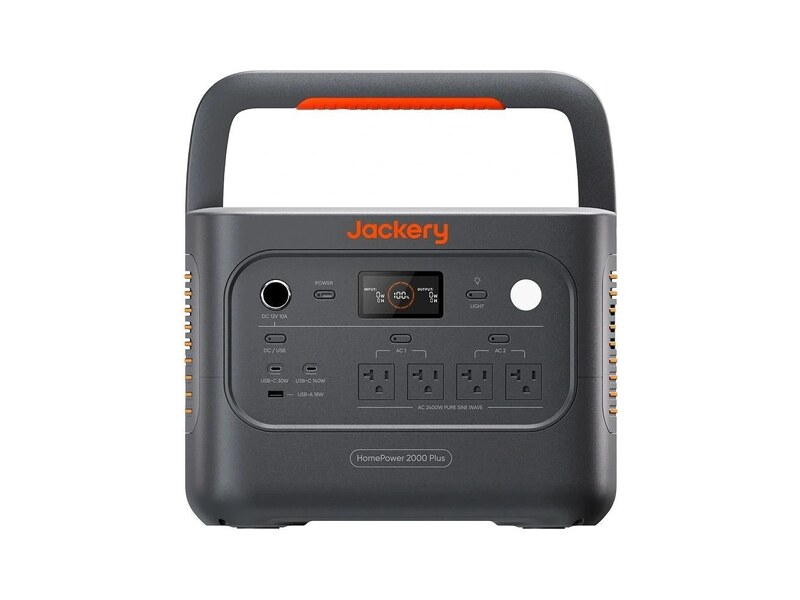
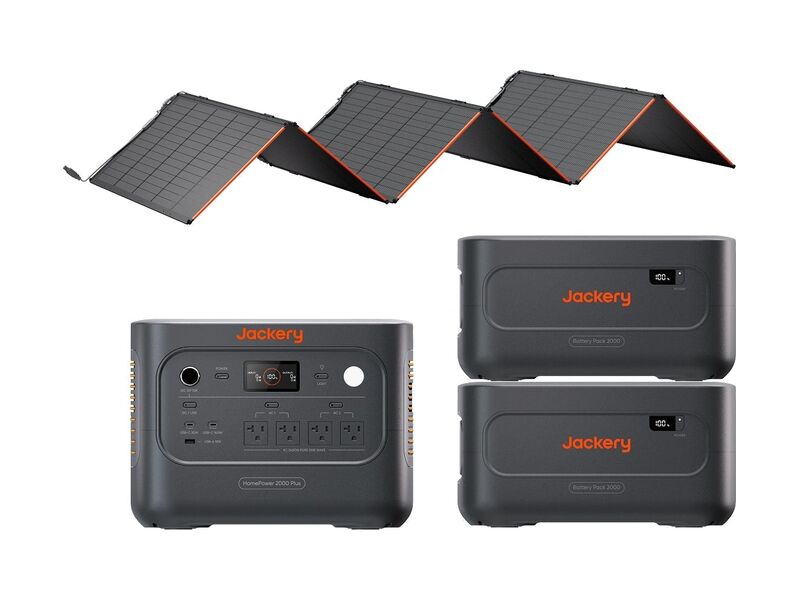
HomePower 2000 Plus v2 Jackery HomePower 2000 Plus v2 power station 2048Wh
Promo

Jackery HomePower 2000 Plus v2

$1623.45 $1447.43 (2)

2048Wh expandable to 12kWh, 2400W and a 10ms switchover: Jackery's new home backup power station thinks big, without the usual weight.

  • Capacity: 2048Wh, expandable up to 12kWh
  • Power: 2400W continuous, 4800W peak
  • Outputs: 4 AC outlets, 140W AVS USB-C, 30W USB-C, 18W USB-A
  • Weight: 18.8kg, 34% lighter than the previous generation
  • 10ms mains switchover, expandable up to 12kWh
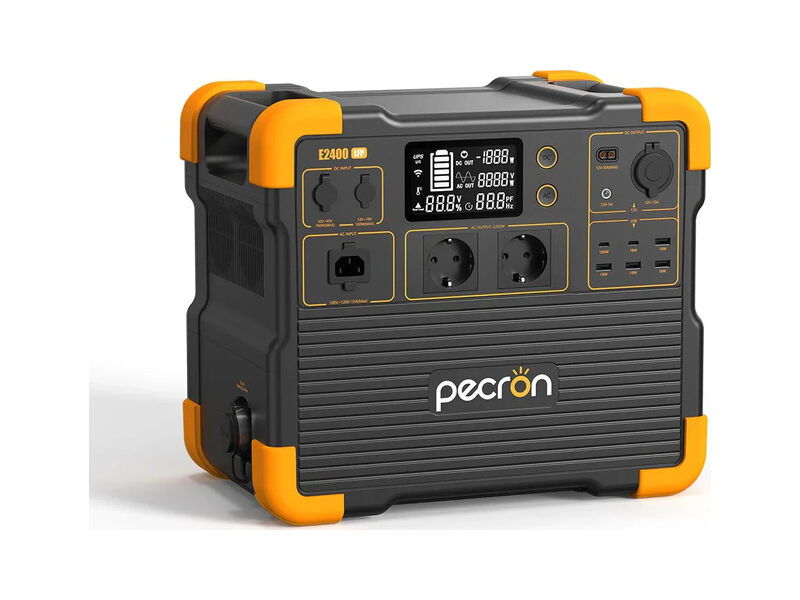
The Jackery HomePower 2000 Plus v2 is a 2048Wh home power station (LiFePO4 battery), sold alone or bundled with solar panels. It delivers 2400W continuous (4800W peak) and is controlled via the Jackery app, with priority routing of essential circuits during an outage and a mains switchover of just 10ms. Expandable up to 12kWh with additional Battery Pack 2000 Plus V2 units, it is clearly built for home backup power. 5-year warranty (3+2 years free at jackery.com).
The HomePower 2000 Plus v2 has only just launched in the US and is not yet sold in the UK or Europe, so we have not had it in hand yet, and we would rather say so plainly than fake a hands-on test. On paper it ticks every box for a solid home backup station: a stock 2048Wh, expandable up to 12kWh in stages with the Battery Pack 2000 Plus V2, and a mains switchover claimed at just 10ms, fast enough not to blink a router. The very first reviews from American owners lean positive: one owner notes very little charge loss over prolonged reliance on it, another uses it without issue to charge e-bikes upstairs. The one real gripe so far: at 18.8kg it is still a bit heavy to move around solo day to day, despite the claimed 34% weight cut from the previous generation. We will update this review once the model reaches Europe and we can test it in real conditions.
View product page

← Back to Power Stations

Related questions

A recent class A domestic fridge uses 100 to 150 kWh a year, that is roughly 0.3 to 0.4 kWh a day. A 2,000 Wh station therefore keeps it running for 4 to 5 days, provided you limit door openings. An old power-hungry model will drop to 2 days.

Yes, if the inverter delivers at least 2,000 watts continuously. But autonomy is brief: an 1,800 watt induction hob empties 2,000 Wh in a little over an hour, and a 2,200 watt kettle uses 110 Wh per litre of water. It works occasionally, not as your main kitchen.

Yes, as soon as you plug in a motor, a switched-mode power supply or medical electronics. A modified wave makes motors run hot, transformers whine, and can damage a sensitive device. Every serious station in this class runs pure sine, with quoted distortion below 3 per cent.

Between 1h30 and 2h30 on recent models that accept 1,200 to 1,800 watts of input, against 8 to 10 hours on earlier generations capped at 200 or 400 watts. Charging power is as decisive a criterion as capacity, especially for backup use.

For silent, indoor, short-duration use, yes, with no emissions and no fuel. For several days of autonomy or sustained output above 3,000 watts, no: the petrol generator remains unbeatable as long as you have fuel. Many users end up combining the two.
Need help choosing?

Further reading on the blog

Compare