Fast power banks

On a fast power bank two speeds matter and buyers usually check only one: the speed it gives out, and the speed at which it fills back up.

Output power decides how long it takes to bring a phone back to 50 per cent, typically around twenty minutes at 30 watts. But input power decides how long the bank itself takes to refill, and that is the figure people forget in the shop: a 20,000 mAh unit that only accepts 18 watts needs more than four hours on the mains, against under two if it accepts 65. The protocol matters too: USB-C Power Delivery is the universal standard, while some brands' proprietary protocols only reach full speed with their own phones. We measure both directions, and the heat that comes with high power.

No product matches these criteria.

Our selection

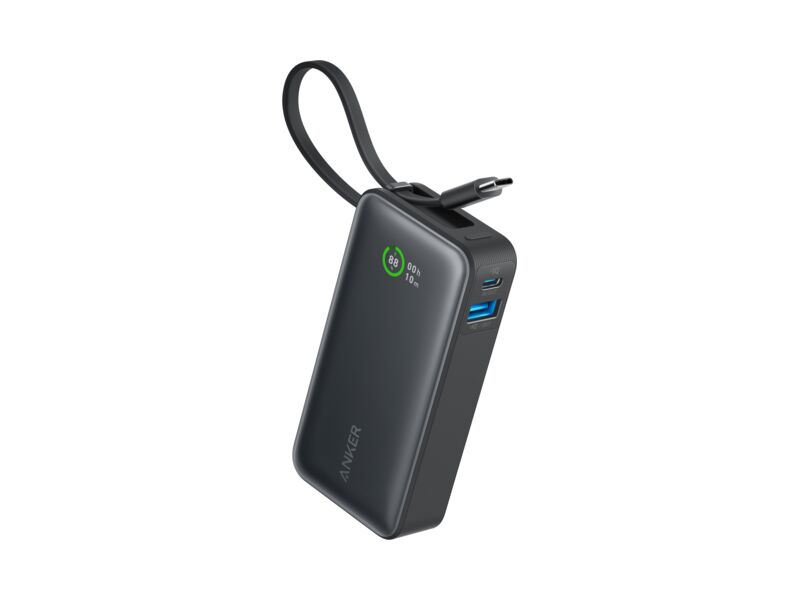
Nano 30W Anker Nano 10000 mAh 30W power bank
Favorite

Anker Nano 30W

See price and availability (48)Allowed in cabin (flights)

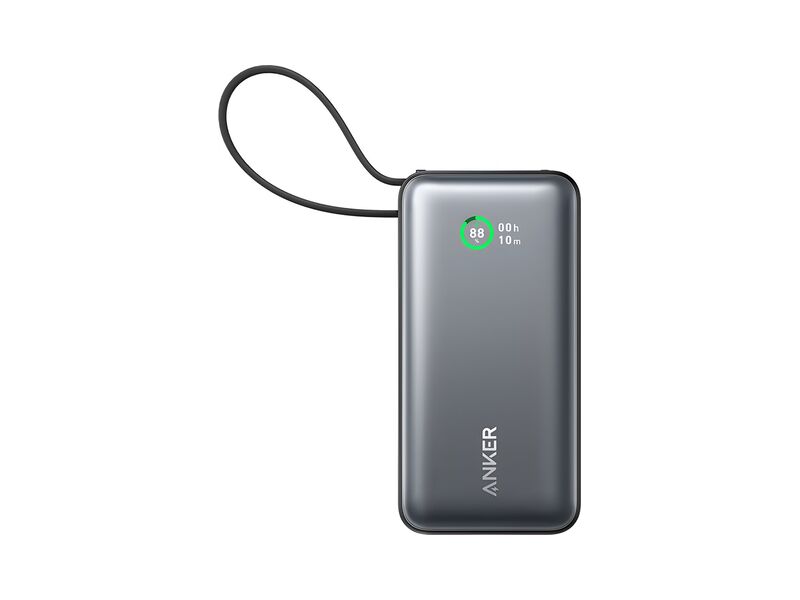
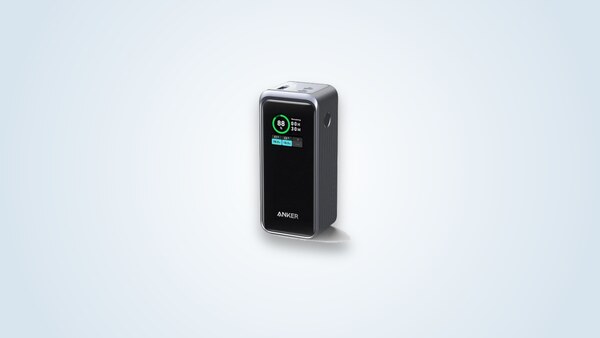
Compact with a built-in USB-C cable, a display, and 30W fast charging in both directions, the 10,000mAh Anker Nano 30W recharges everything, anywhere.

  • Capacity: 10,000 mAh (37 Wh)
  • Power: 30W (USB-C PD)
  • Ports: Built-in USB-C cable + USB-C + USB-A
  • Weight: 7.6 oz (215 g)
  • Built-in cable, 30W, and a digital display
The Anker Nano 30W is a pocket-sized 10,000mAh power bank with a USB-C cable built right in, so there is no separate cord to carry. It delivers up to 30W over USB-C Power Delivery to fast-charge a phone, a tablet, earbuds, or even top up a light laptop in a pinch. A digital display shows the exact charge remaining, and two extra ports (USB-C and USB-A) round out the built-in cable. Compact at 7.6 ounces, bi-directional, and built with recycled plastic, it is a strong everyday and travel pick.
In-depth reviewRead our full review → 4.3/5 The Nano 30W won us over fast on sheer convenience. The built-in USB-C cable is a genuine game-changer, no more digging through a bag looking for a cord, it is simply always there, and it folds into a loop to grab the pack by. Day to day, the 30W charges a phone quickly, our test iPhone gained about half a charge in half an hour, and a tablet keeps pace without complaint. The digital display is a real plus: you know exactly what percentage is left, no guessing games with plain LEDs. With 10,000mAh, you get close to two full phone recharges, plenty for a busy day or a light weekend away. The pocket-friendly size and light weight make it an easy carry. Two honest notes from long-term Amazon reviewers: the built-in cable cannot be swapped out if it ever wears, and 30W is a touch tight for charging a full-size laptop at real speed. For a phone and small gadgets, with this much convenience and a proper display, it stands among the most complete power banks in its price class.
View product page

Anker Nano 45W InstaCord

See price and availability (29)Allowed in cabin (flights)

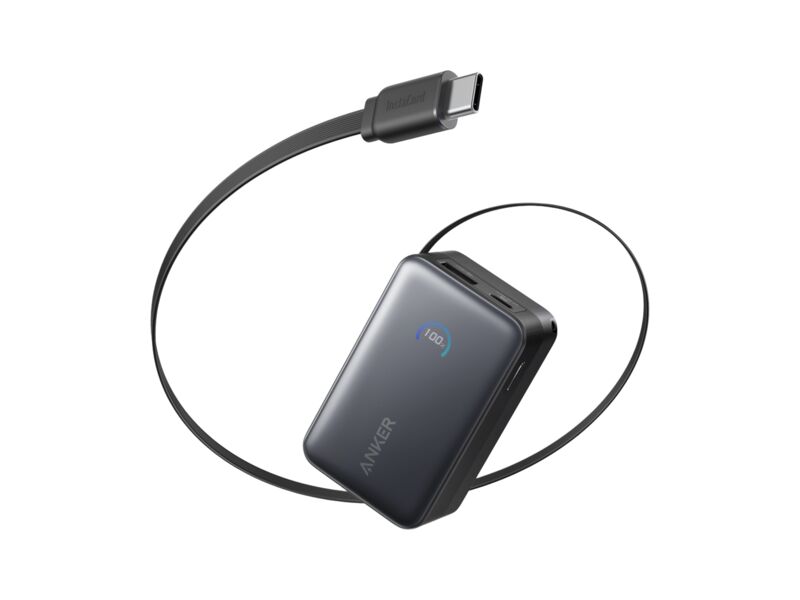
The USB-C cable pulls out, locks in place and retracts on its own: the Nano InstaCord 45W charges fast without ever leaving a cable behind.

  • Capacity: 10,000mAh (37Wh)
  • Power: 45W max (cable and USB-C port)
  • Cable: Retractable InstaCord, 70cm extended
  • Weight: 231g
  • Retractable 70cm InstaCord cable, 45W charging
The Anker Nano InstaCord 45W is a 10,000mAh power bank whose USB-C cable, built into the casing, pulls out and retracts like a tape measure thanks to a patented roller mechanism (InstaCord, 70cm extended). It delivers up to 45W over USB-C, backed up by an extra USB-C port and a USB-A port for a second device. A display shows the remaining charge and the power of each output in real time. Compact at 231g, it suits anyone who wants fast charging without ever hunting for a cable.
We carried the Nano InstaCord in a jacket pocket for three weeks, through train commutes and a short trip away, and the roller cable delivers on every promise: pull, charge, let go, and it winds itself back in, no more digging through a bag for a lost cord. The 45W output is genuinely noticeable next to the usual 20 or 30W power banks, a smartphone climbs back to half charge in about half an hour. The display is the kind of detail you only appreciate after a while: showing the exact percentage, the power draw on each port and even the temperature is reassuring, especially in summer. One small gripe, the weight sits in a fairly dense little case, you feel it more than a flatter bank of the same capacity, and the advertised 45W only holds on a single output, dropping fast as soon as a second device is plugged in. For everyday phone charging or travel, without ever worrying about the cable, it is easily one of the best Nano power banks Anker makes.
View product page

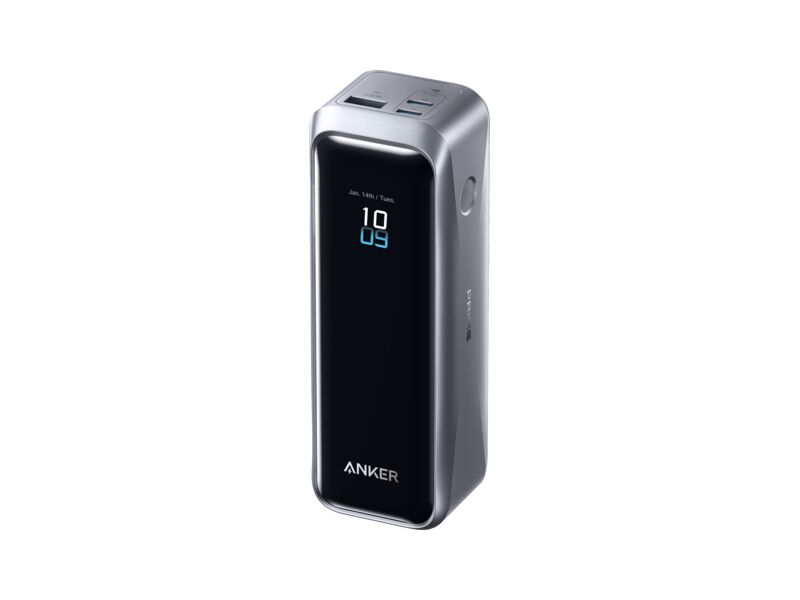
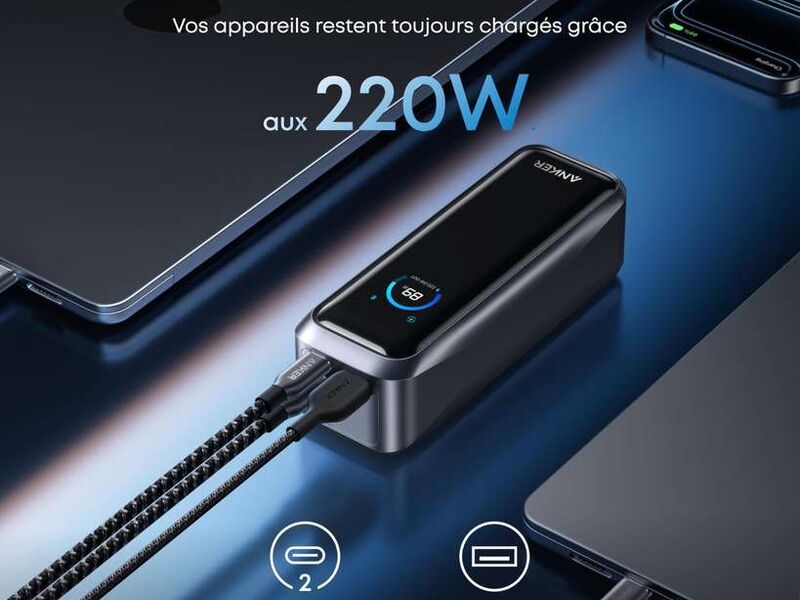
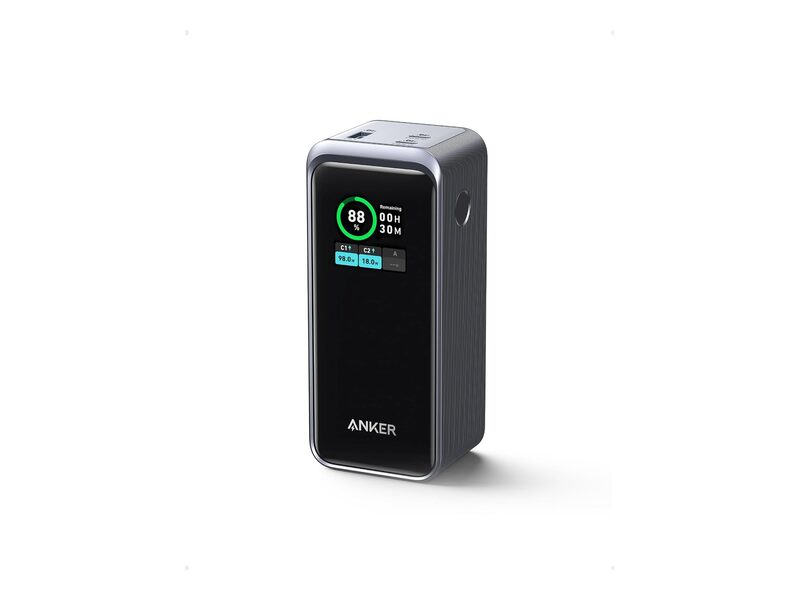
Anker Prime 20000 (220W)

See price and availability (15)Allowed in cabin (flights)

220W total output with one 140W port for laptops, app control over Bluetooth, and a bright display: the Anker Prime 20,100mAh is a pocket charging hub.

  • Capacity: 20,100 mAh (72.36 Wh)
  • Power: 220W total, 140W on one port
  • Ports: 2 USB-C + 1 USB-A
  • Extra: Bluetooth app control + LCD display
  • 220W total, 140W single-port laptop charging
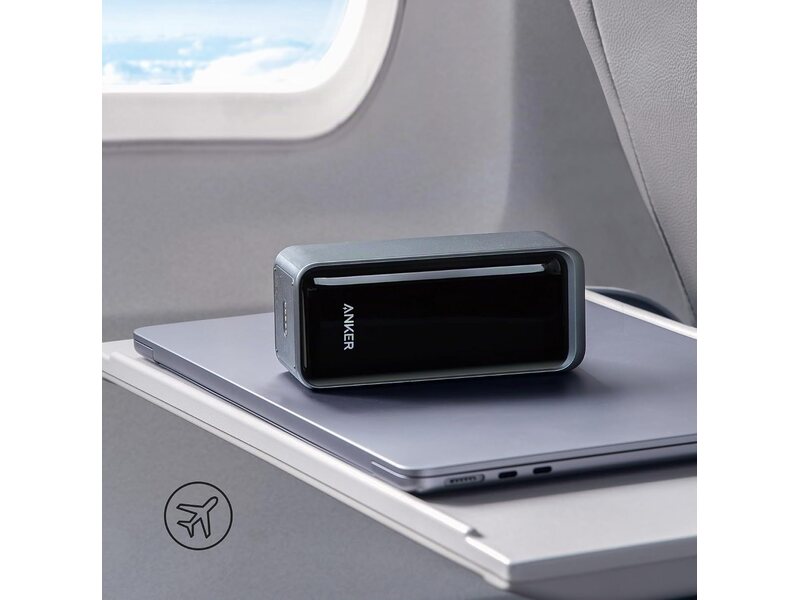
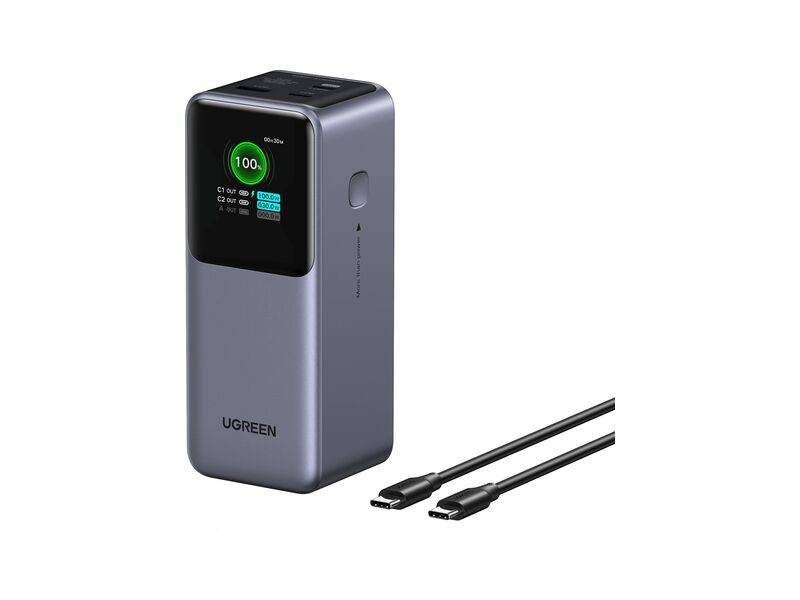
The Anker Prime power bank (20,100mAh, model A110B) is the current version of Anker's flagship pocket charger, and it now puts out 220W total across two USB-C ports and a USB-A port, with up to 140W available on a single port for fast laptop charging. A bright LCD display shows real-time wattage in and out, and the Anker app adds Bluetooth control over brightness, screen timeout, and battery health. It recharges to 50% in about 25 minutes on a 100W charger, and its 72.36 Wh capacity stays TSA-approved for carry-on.
In-depth reviewRead our full review → 4.0/5 This is the pack we grab without thinking twice before a work trip that involves an actual laptop. Anker updated this Prime 20,000-class model since its original 200W launch, and the current 220W version (model A110B) charges a MacBook Pro to 50% in under half an hour on its fastest port, exactly like plugging into the wall. The LCD display is the second big strength: clear, precise, and now paired with a Bluetooth app that shows battery health and cycle count, real information most packs never expose. Its 20,100mAh comfortably covers a heavy multi-device day, and it recharges itself impressively fast, 50% in about 25 minutes with a 100W charger. Amazon reviewers with the older 200W model note this new version runs slightly slimmer despite being a touch taller. The honest downsides: at nearly 18 ounces this is a bag item, not a pocket one, and the price sits firmly in premium territory. For raw power and genuinely handling a laptop on the road without a second charger, it remains hard to fault.
View product page
Blade 100W 20000mAh Baseus Blade 100W Power Bank
Promo

Baseus Blade 100W 20000mAh

See price and availability (13)Allowed in cabin (flights)

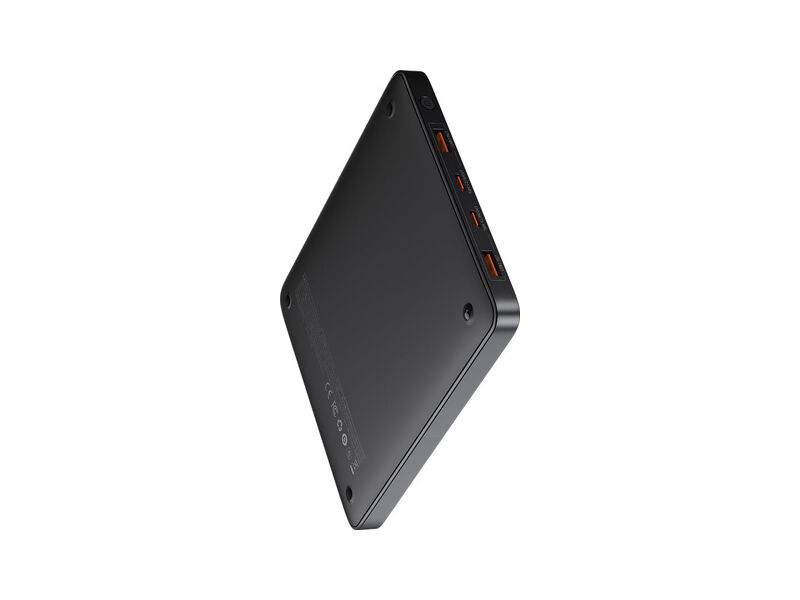
Just 17.8mm thin, the Baseus Blade packs 20000mAh and 100W into a laptop power bank with a display, available now via Amazon in the US.

  • Capacity: 20000mAh / 74Wh
  • Power: 100W max (2 USB-C + 2 USB-A)
  • Display: LCD (%, W, charging time)
  • Format: 17.8mm thin, 506g
  • 100W, built-in display, 17.8mm laptop power bank
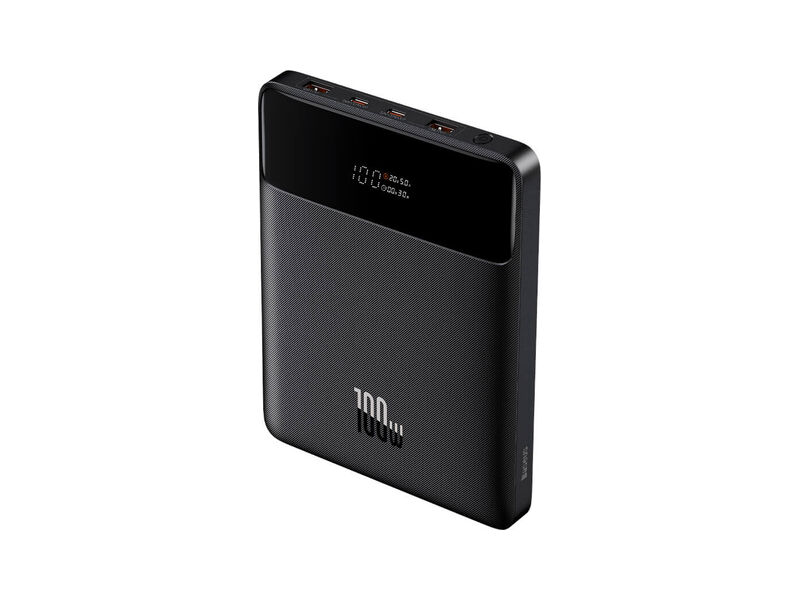
The Baseus Blade is a 20000mAh power bank built for laptops as much as smartphones. With 2 USB-C and 2 USB-A ports it delivers up to 100W of fast charging (PD 3.0, QC 4.0, SCP, FCP) and charges up to four devices at once. A built-in display shows the remaining percentage, live wattage and charging time. At just 17.8mm thick and 506g, it slides easily into a backpack or laptop bag. It's currently available in the US via Amazon, with the price above reflecting that live listing.
We carried the Baseus Blade on business trips for several weeks, and its wafer-thin body still surprises every time it comes out of the bag: barely thicker than a wall charger, it takes up almost no room in a laptop sleeve. The 100W output delivers on its promise, a laptop regains a good half of its battery in half an hour, while a phone charges on another port without slowing the laptop down. The display is genuinely useful, no more guessing how much is left, everything shows up in percentage and watts. The two USB-A ports come in handy for earbuds or a headlamp at the same time. The catches: no wall charger is included, and some users report reduced capacity after months of heavy use, something we could not verify over the long term ourselves. Baseus has since released newer models like the Blade HD and EnerFill FC41, but the original Blade 100W remains available in the US via Amazon, so it's still a solid pick today.
View product page
Nexode 55W Ugreen 10000mAh 55W power bank with built-in cable
Promo

Ugreen Nexode 55W

See price and availability (13)Allowed in cabin (flights)

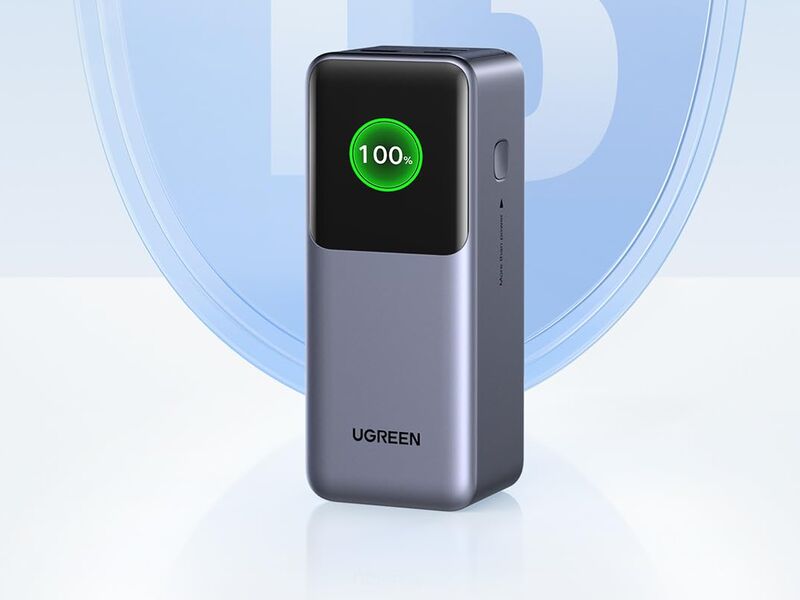
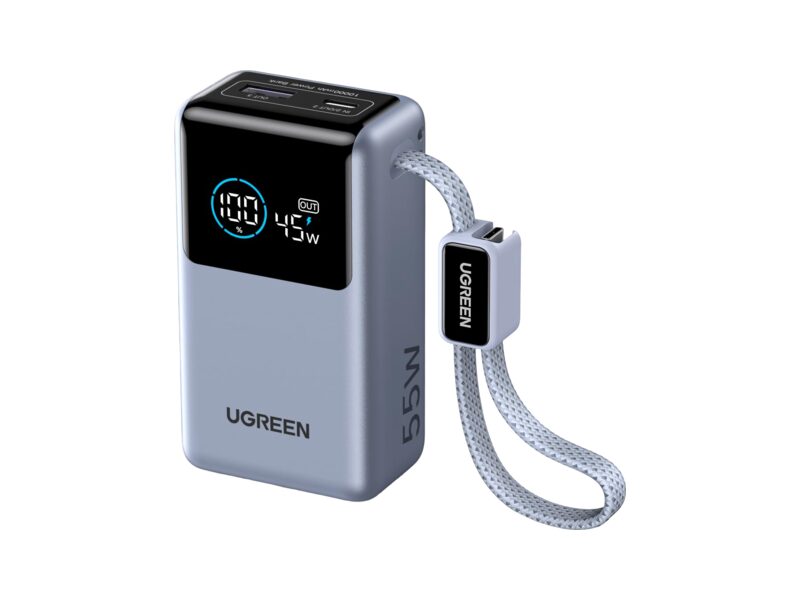
The small power bank that charges hard: 10000mAh, 55W, a built-in USB-C cable with strap and a digital display, smaller than an iPhone.

  • Capacity: 10,000 mAh (37 Wh)
  • Power: 55W (Xiaomi), PD 45W
  • Outputs: Built-in USB-C cable + USB-C + USB-A
  • Weight: 249 g, digital display
  • 55W, built-in cable and display, 249 g
The Ugreen Nexode 55W is a compact 10,000 mAh power bank built for power: up to 55W to charge an iPhone 17 Pro Max to 66% in 30 minutes. Smaller than an iPhone 17 Pro Max at 249 g, it packs a built-in USB-C cable (with strap), a USB-C port and a USB-A port to power three devices at once, plus a digital display showing level and power in real time. Under 100 Wh, it is allowed in the aircraft cabin: the ideal premium pocket reserve.
In-depth reviewRead our full review → 4.1/5 We adopted the Ugreen Nexode 55W as our everyday battery, and its format wins you over at once: it fits in a jeans pocket, weighs barely 249 g, and yet charges faster than many bigger models. The built-in USB-C cable saves carrying a cable, and its little strap is handy for clipping it to a bag. In practice, you get back two thirds of an iPhone in half an hour, excellent for this size. The digital display is pleasant: you see at a glance the percentage left and the power going out, no more charging blind. The three outputs help out when you travel as a pair. Two honest caveats: with 10,000 mAh you get about one and a half iPhone charges, so for long days you will want something bigger, and its price is high for this capacity, you pay for the power, the display and the built-in cable. But for a small, fast, complete and well-made battery, the Nexode 55W is a success that never leaves the pocket.
View product page
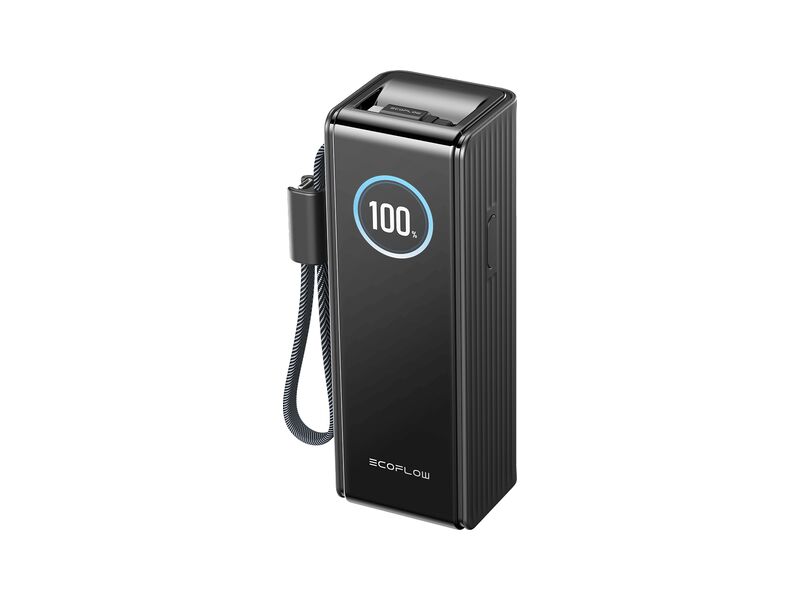
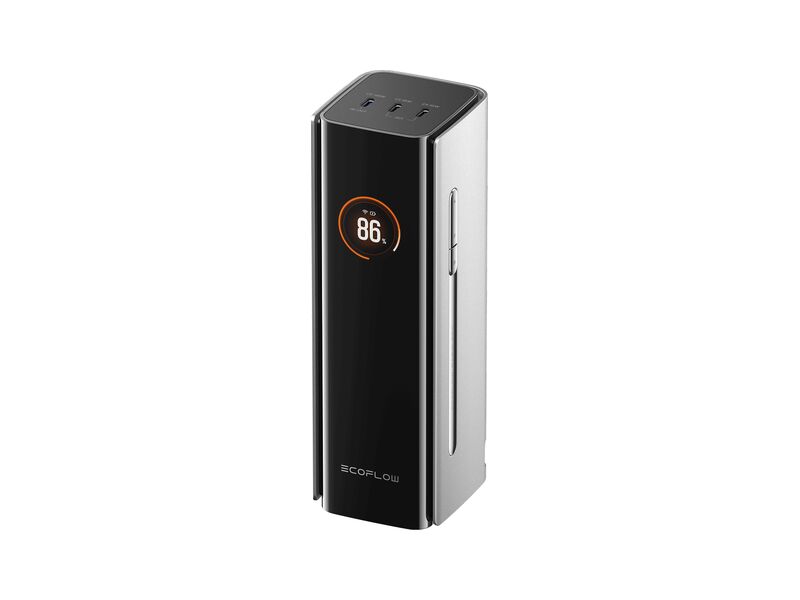
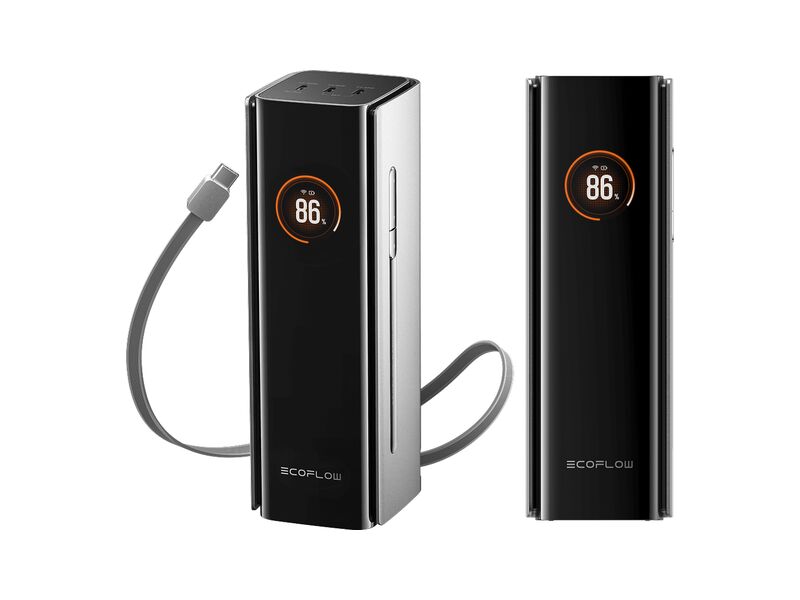
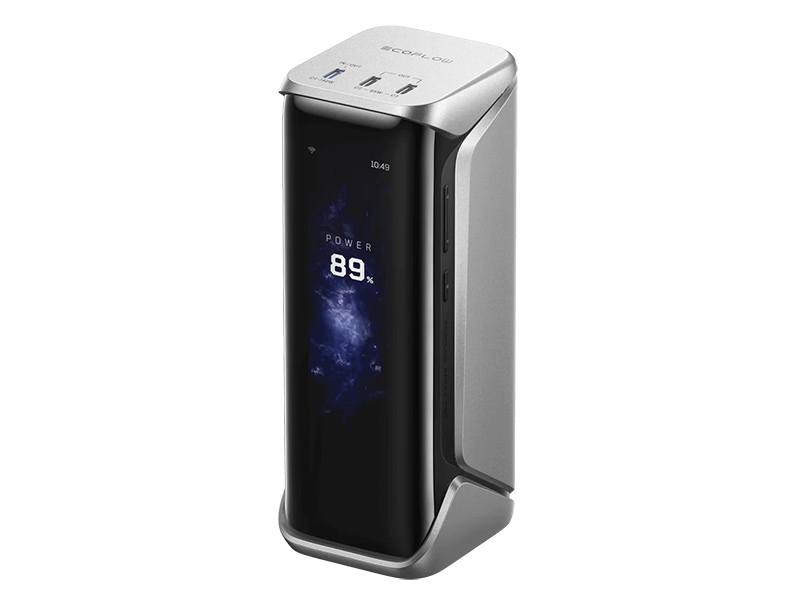
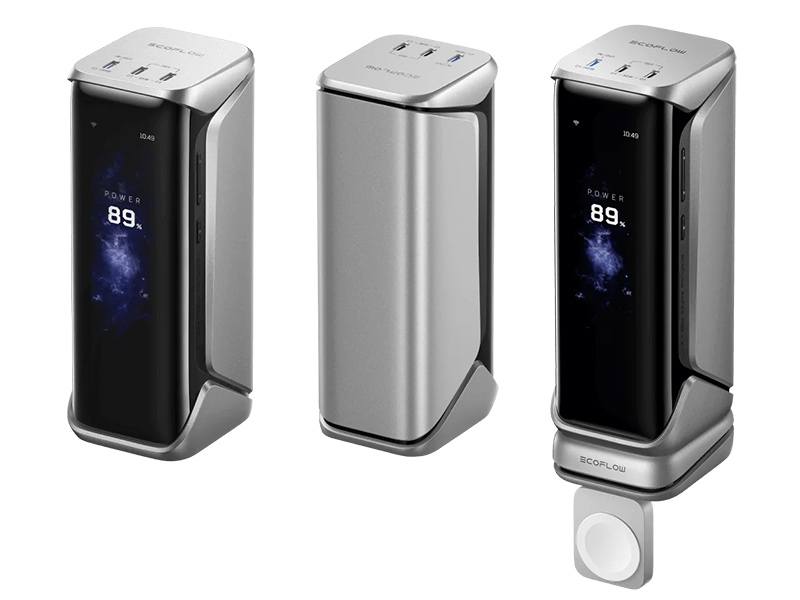
Rapid Pro 20K EcoFlow Rapid Pro 20000mAh 230W power bank
Promo

EcoFlow Rapid Pro 20K

See price and availability (8)Allowed in cabin (flights)

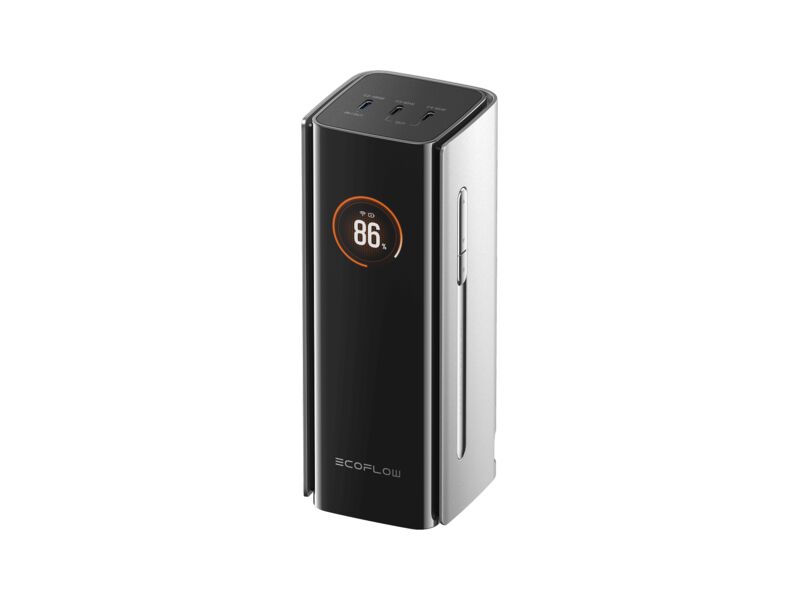
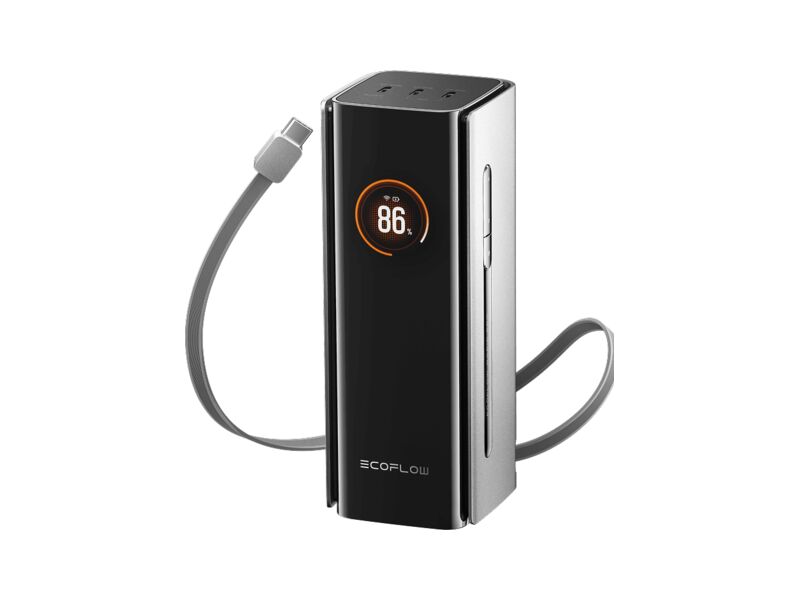
20,000 mAh, 230W and a built-in 100W USB-C cable: the compact power bank that charges four devices at once, with a screen and app on top.

  • Capacity: 20,000 mAh (72 Wh)
  • Output: 230W total, USB-C 100W max
  • Ports: 3 USB-C ports, 1 built-in 100W cable
  • Screen: LCD, EcoFlow app, cabin-friendly
  • 230W, built-in 100W cable, LCD screen
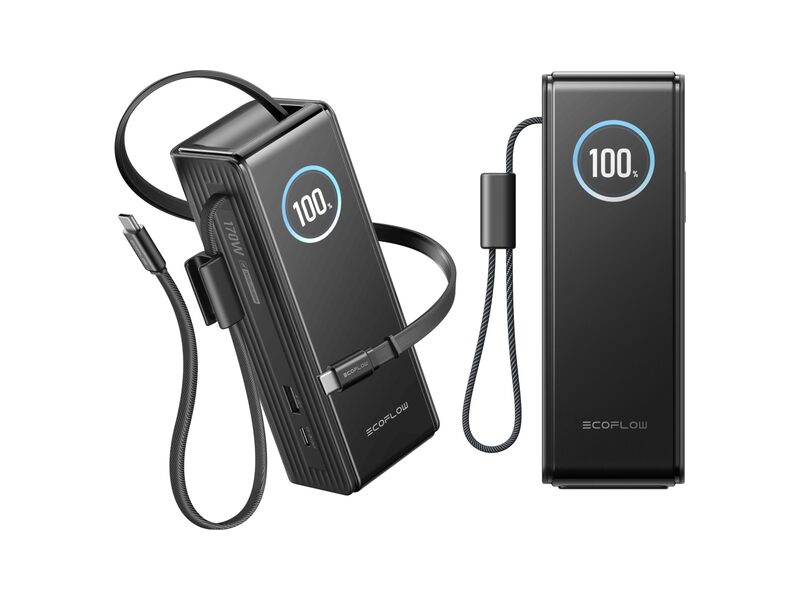
The EcoFlow Rapid Pro 20K is a compact, powerful power bank for daily use and travel. With 20,000 mAh (72Wh, cabin-friendly) and 230W of output spread across four USB-C outputs, it charges up to four devices at once. Its 60cm USB-C 100W cable is built in, no need to carry accessories, and an LCD screen shows charge status in real time. Fast recharging (80% in 47 minutes with the Rapid Pro 320W station), app control and a V0 fireproof casing round out a bank as compact as it is complete.
The Rapid Pro 20K quickly earned a permanent spot in our daily bag, largely thanks to its built-in 100W USB-C cable: you pull out the 60cm cable and charge, no digging around for a lost cord. The 230W of output spread across four outputs lets you plug in several devices at once without slowing down, a real comfort in meetings or on the move. Its 20,000 mAh (72Wh) stays under the cabin limit, perfect for travelling light, and the LCD screen gives you the remaining percentage at a glance. Charged on the Rapid Pro 320W station, it hits 80% in under an hour, a genuine time saver. The form factor stays compact despite the power on tap. Our one real gripe: it gets a bit warm at full charge, as any bank this powerful in such a small footprint would. For a single bank that keeps up daily and on the road, it's an excellent choice.
View product page
Rapid 25K EcoFlow Rapid 25000mAh 170W power bank
Promo

EcoFlow Rapid 25K

See price and availability (6)Allowed in cabin (flights)

25,000 mAh, 170W and two built-in retractable USB-C cables: the power bank that recharges a MacBook twice and your phone five times, with no cable to carry.

  • Capacity: 25,000 mAh (cabin approved)
  • Output: 170W (2 ports), 100W on 1 port
  • Cables: 2 built-in retractable USB-C cables
  • Recharge: 0 to 50% in 26 min, TFT screen
  • 170W, 2 built-in cables, screen
The EcoFlow Rapid 25K is an all-in-one power bank designed for travel and remote work. Its 25,000 mAh (allowed in the aircraft cabin) recharge a MacBook twice or a phone four to five times, enough to last one to two days away from an outlet. It delivers up to 170W across two ports (100W on a single port), charges up to four devices at once, and has two built-in retractable cables (a 67 cm USB-C and a 26 cm USB-C lanyard), so no need to carry extras. A clear TFT screen shows the charge level, and it recharges itself to 50% in 26 minutes.
In-depth reviewRead our full review → 4.0/5 The Rapid 25K won us over with its all-in-one nature: you slip it into the bag with nothing else, as it already carries two retractable cables, a 67 cm USB-C and a handy little 26 cm USB-C lanyard for earbuds or a phone. Its 25,000 mAh last one to two days of remote work, it recharged our MacBook twice and the phone several times without flagging. The 170W output (across two ports) lets you power a laptop while charging a phone alongside, which is rare at this price. The TFT screen is crisp and gives the remaining level at a glance. A nice surprise on recharging too: 50% back in 26 minutes, you get it going again quickly. Two caveats: at 170W it drains fast and warms up a little, like any battery of this power, and a single port caps at 100W (you need two ports to reach 170W). But for a complete travel bank, cable-self-sufficient and able to recharge a laptop, it offers excellent value.
View product page
Rapid Pro 27K EcoFlow Rapid Pro 27650mAh 300W power bank
Promo

EcoFlow Rapid Pro 27K

See price and availability (6)Allowed in cabin (flights)

27,650 mAh, 300W and a built-in 140W USB-C cable: the power bank that charges a laptop and three more devices at once, with a screen and app to boot.

  • Capacity: 27,650 mAh (99.54 Wh)
  • Output: 300W total, USB-C 140W max
  • Ports: 3 USB-C ports, 1 built-in 140W cable
  • Screen: LCD, EcoFlow app, cabin approved
  • 300W, built-in 140W cable, screen
The EcoFlow Rapid Pro 27K is a premium power bank built for travel and remote work. With 27,650 mAh (99.54 Wh, allowed in the aircraft cabin) and 300W of output across four ports, it charges up to four devices at once, including a laptop over USB-C 140W. Its 60 cm 140W USB-C cable is built in, so no need to carry extras, and an LCD screen shows the charge level. Interchangeable magnetic cases, app control and express charging (80% in 20 minutes with the Rapid Pro 320W station) round out a power bank as powerful as it is practical.
In-depth reviewRead our full review → 4.1/5 The Rapid Pro 27K has become our go-to travel bank, and it owes that mainly to its built-in 140W USB-C cable: no more digging through the bag, you pull out the 60 cm cable and charge, laptop included. The 300W output across four ports lets you plug in a MacBook, a phone and a tablet at the same time without slowing down, real convenience on the move. Its 27,650 mAh (99.54 Wh) stays under the aircraft cabin limit, making it an ideal flight companion, and the LCD screen gives the remaining percentage at a glance, no guessing. Recharged on the Rapid Pro 320W station, it reaches 80% in about twenty minutes, spectacular. The interchangeable magnetic cases are a fun touch to personalise the look. Two honest caveats: at full power it warms up and drains fast (300W is huge for a power bank), and the price sits above classic power banks. But for anyone wanting a single battery able to recharge everything, laptop included, it is an excellent choice.
View product page
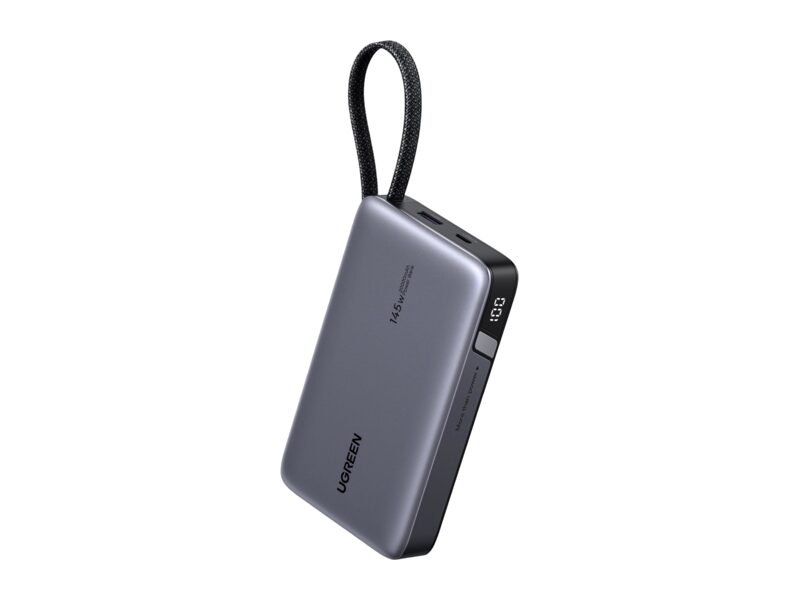
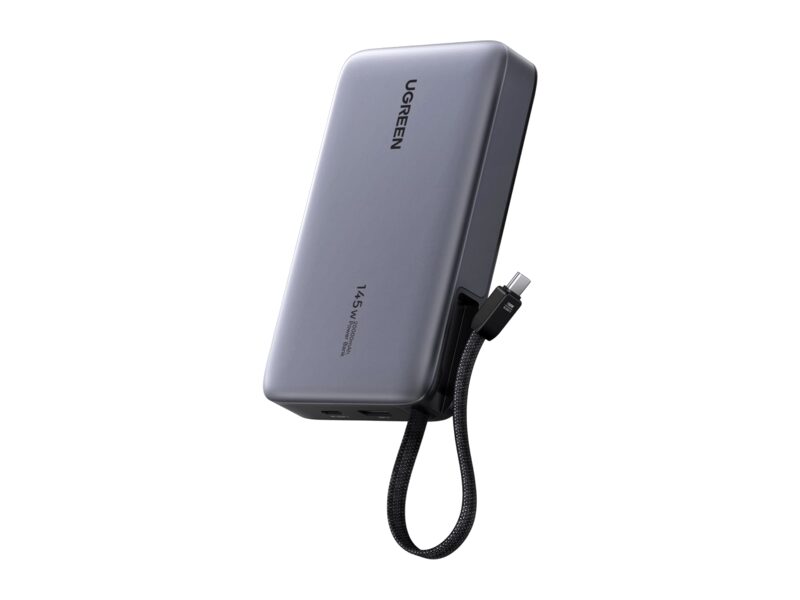
Nexode 20000 145W Ugreen 20000 mAh power bank with built-in cable
Promo

Ugreen Nexode 20000 145W

See price and availability (5)Allowed in cabin (flights)

Its USB-C cable is already built in, and it handles 100W: enough to recharge a MacBook with nothing else in the bag, backed by 20000 mAh and a display that tells you everything.

  • Capacity: 20,000 mAh (72 Wh)
  • Power: 145W total, PD 3.0
  • Outputs: 100W built-in USB-C cable + 45W USB-C + USB-A
  • Recharging: 80W, 0 to 100% in 90 minutes
  • 100W built-in cable: nothing left to carry
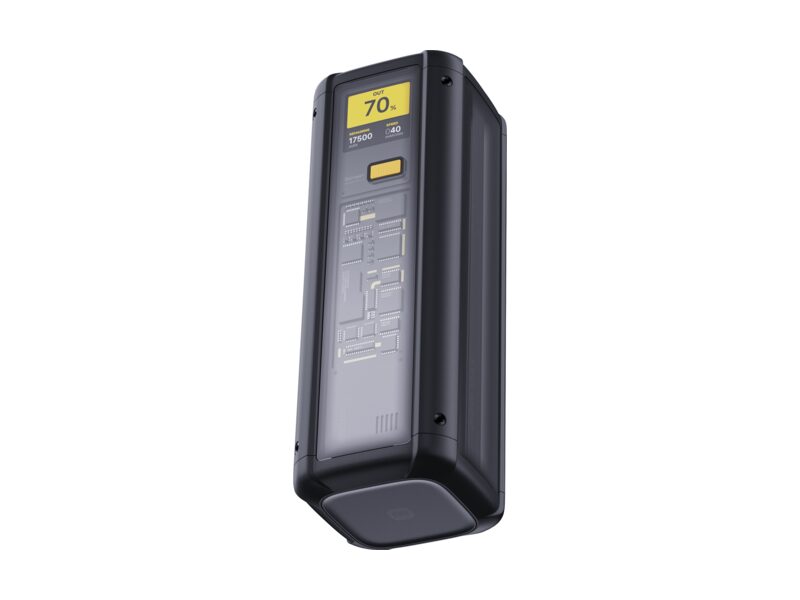
The Ugreen Nexode 20000 145W solves the problem every power bank creates: the cable left at home. This one is built into the casing, doubles as a wrist strap, and delivers up to 100W over USB-C, enough to charge a laptop. Alongside it sit a second 45W USB-C port and a USB-A port, so three devices can draw power at once within the 145W ceiling. Its 20000 mAh (72 Wh) refill an iPhone 17 Pro 3.7 times and travel in the cabin without paperwork. It recharges itself in 90 minutes at 80W, and its display shows level, voltage and power in real time.
The built-in cable changes more than you would expect. Across a week of testing we never once had to dig through a bag for a USB-C cable: it is right there, braided, held against the casing, and it doubles as a strap for grabbing the pack one-handed. More importantly, it is not a token cable capped at 20W like the ones on most rivals: it reaches 100W, so it genuinely charges a laptop. A 16-inch MacBook Pro takes back a little over 40% in half an hour, which is more than enough to rescue the end of a working day. The display is as useful here as on the other Nexode models: charge left, live power draw, you always know where you stand. And recharging the pack itself at 80W takes an hour and a half, against three to four hours on comparable capacities. Two honest reservations. First the weight: 450 g makes this a bag power bank, not a pocket one, and the thick body is noticeable in a jacket. Second, the headline 145W is a total, not a per-port figure: plug in three devices and each gets appreciably less, with the built-in cable dropping below 100W. Even so, at this price it is one of the very few power banks that charges a laptop without you having to think about the cable.
View product page

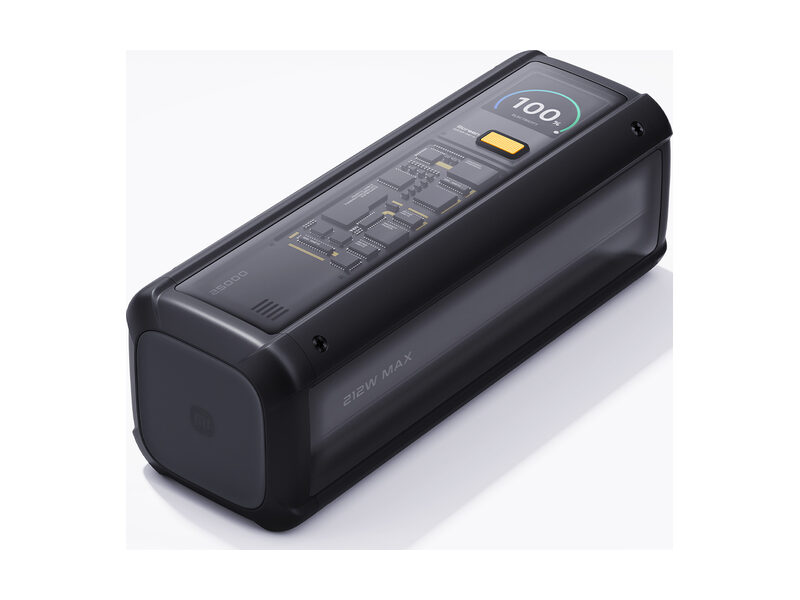
Xiaomi 212W HyperCharge 25000

$127.36 $115.78 (5)Allowed in cabin (flights)

Up to 140 W on a single port and 212 W total: the Xiaomi 212W HyperCharge recharges a laptop as fast as a wall socket, with 25000 mAh.

  • Capacity: 25000 mAh (90.8 Wh)
  • Power: 212 W total, 140 W on one port
  • Ports: 2 USB-C + 1 USB-A
  • Recharge: Up to 100 W input
  • 140 W on one port to charge a laptop
The Xiaomi 212W HyperCharge Power Bank 25000mAh is a high-end power bank built for power. Its main USB-C port reaches 140 W over PD 3.1, enough to charge a laptop at full speed, and the multi-port output peaks at 212 W across three ports. Its 25000 mAh (90.8 Wh) recharge a smartphone four to five times, and it refuels itself at up to 100 W. Under 100 Wh, it remains cabin-legal.
In-depth reviewRead our full review → 3.9/5 The Xiaomi 212W HyperCharge is the battery I grab when I head out to work a full day with no guarantee of finding a socket. The 140 W USB-C port charges my laptop as fast as its original charger, which is stunning for a battery, and there is still room to power the phone and earbuds on the other ports. With 25000 mAh, I easily cover a full day of mobile work. I also like that it refuels quickly (up to 100 W), so you do not leave it plugged in all night. A pleasant surprise: despite its large capacity, it stays under 100 Wh and travels in the cabin. The trade-offs are owned: it is heavy (about 628 g) and its thick block shape takes up room, clearly not a pocket battery. But as a serious energy reserve for a laptop, it is hard to fault.
View product page

EcoFlow Rapid Pro X

See price and availability (2)Allowed in cabin (flights)

27,650mAh, 300W and a lightning-fast recharge: the Rapid Pro X powers your laptop and phone at once, and travels with you in the cabin.

  • Capacity: 27,650 mAh (99.54 Wh)
  • Power: 300 W total, up to 140 W per port
  • Recharge: 0 to 80% in 40 min (140 W USB-C)
  • Outputs: 4 USB-C ports, incl. retractable cable
  • Premium travel bank: LCD screen, app and X-Guard safety
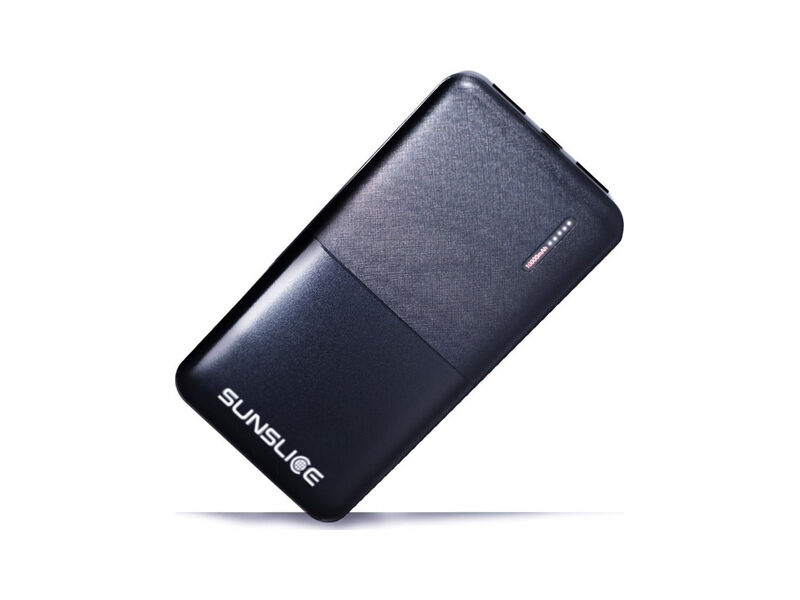
Built for demanding travellers, the EcoFlow Rapid Pro X is a premium power bank that recharges a laptop at full speed, powers several devices at once, and slips into a bag with ease. Its built-in retractable USB-C cable, LCD screen and companion app make it a complete travel partner, cabin-approved thanks to a capacity just under the 100 Wh limit. Ideal for mobile remote work, content creators and long journeys.
After carrying the Rapid Pro X across several trips, one thing is clear: this is a power bank built first for laptops. Plugged into the 140 W port, my MacBook charged almost as fast as with its wall charger, while also topping up my phone and earbuds at the same time. The LCD screen is a real everyday plus: you see remaining charge and the power drawn by each port at a glance, and the built-in retractable cable saves rummaging through the bag. When travelling, its capacity just under 100 Wh let me keep it in carry-on with no questions at boarding. Recharging is impressive, especially with the 320 W station: a coffee break and it is ready again. Two honest downsides: it is expensive and fairly heavy for a power bank (around 700 g, you feel it in the bag), and the screen scratches easily if left loose without a case. Otherwise, for mobile remote work or a creator kit, it is one of the most complete and fastest power banks I have used.
View product page

Sunslice Gravity 10

$47.31 (1)Allowed in cabin (flights)

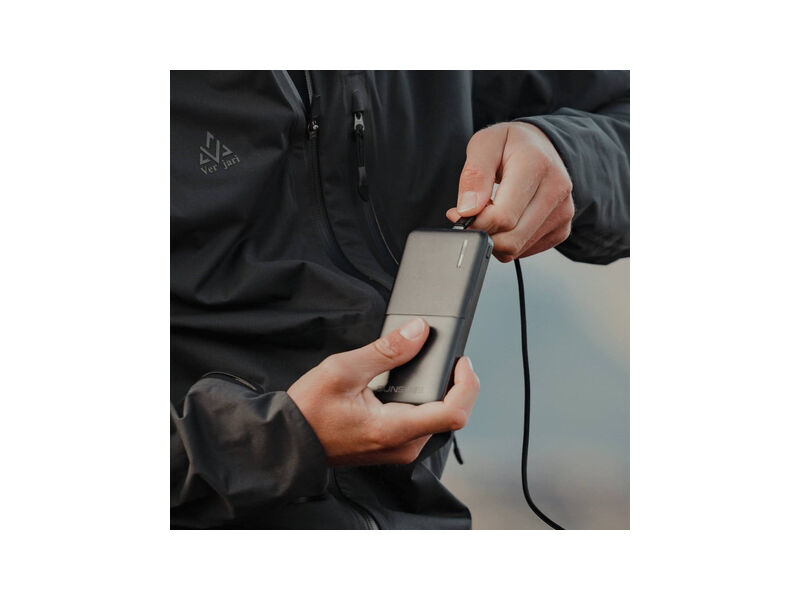
The Sunslice Gravity 10 pairs 10000mAh with 18W fast charging across three ports, built to last through several days of hiking or travel with no mains socket.

  • Capacity: 10000mAh, or 37Wh
  • Weight: 220g (135 x 69 x 16 mm)
  • Output: 1x USB-C + 2x USB-A, 18W (PD/QC3.0)
  • Input: USB-C, 18W
  • 3 fast-charge ports, built-in LED torch
The Gravity 10 sits in the middle of the Sunslice Gravity range: 220 grams for 10000mAh, enough to recharge a smartphone two to three times. Its three ports (1 USB-C and 2 USB-A) support PD3.0 and QC3.0 fast charging and can power up to three devices at once, up to 18W each. A built-in LED torch and compatibility with Sunslice's foldable Fusion Flex solar panels make it a reliable companion for hiking, camping or multi-day travel.
The Gravity 10 came along on a weekend hike where the phone doubles as a GPS and a camera, so the battery drains fast. With 10000mAh, it lasted two full days recharging the phone and a pair of earbuds without ever running dry. The fast charging on the USB-C port really shows: our phone jumped from 15 to 80% during lunch. We also liked being able to charge three devices at once one evening at the hut, each with its own cable. The size stays reasonable (220g) for this capacity, though it's nowhere near as pocketable as the Gravity 5. One small gripe: no screen for an exact percentage, just four LEDs giving a rough estimate, and Sunslice doesn't advertise pass-through charging. A solid capacity-to-weight compromise for multi-day trips away from a socket, with a handy little LED torch thrown in for after dark.
View product page

← Back to Power Banks

Related questions

The commonly accepted threshold is 18 watts, against 5 to 10 watts for standard charging. In practice 30 watts takes a smartphone to 50 per cent in half an hour, 45 watts feeds a tablet and 65 watts a laptop. Beyond 100 watts you are into mobile workstation territory.

Three causes dominate. First the cable: a USB-C cord without an E-Marker chip is capped at 60 watts. Then the protocol: the pack and the phone must speak the same language, Power Delivery or Quick Charge. Finally heat: above 35 °C the phone deliberately throttles power to protect its cells.

It is the universal power negotiation protocol on USB-C. Instead of the fixed 5 volts of classic USB, the two devices agree on 5, 9, 15 or 20 volts and a matching current. That dialogue is what allows 10 to 100 watts over the same cable, and it is now standard on all recent equipment.

It speeds ageing slightly, but far less than heat or deep discharges. Modern devices only apply full power between 0 and 60 per cent anyway, then slow down of their own accord. In normal use the difference in lifespan stays marginal over three or four years.

Yes, and this is the most common mistake. Above 60 watts the cable must be rated for 100 watts (5 A) and contain an E-Marker chip that declares its capability. An entry-level cord bundled with an old device will cap the power without a single error message, which explains a lot of disappointment.
Need help choosing?

Further reading on the blog

Compare