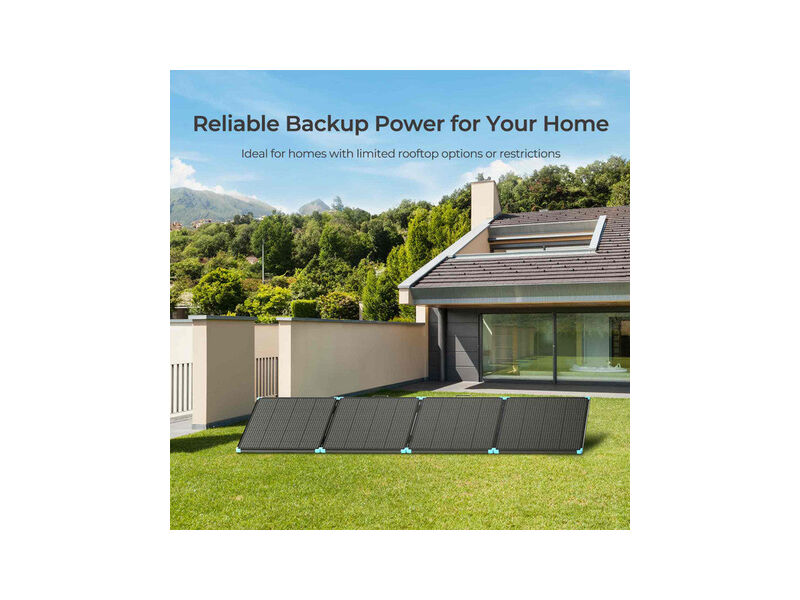
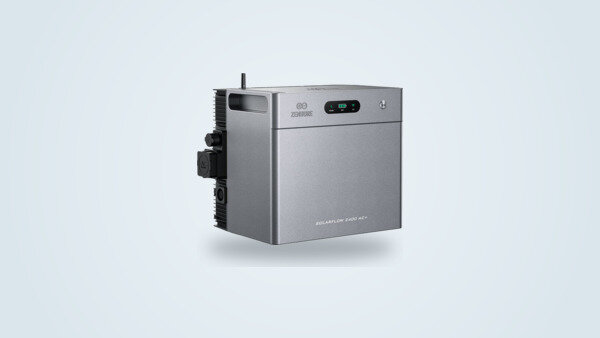
Solar panels, equipment & kits

Discover in this part of our shop, our top picks of the best photovoltaic panels and other solar equipment in 2026.

Whether camping, on a sailboat, for your home, in a motorhome, or hiking far from civilisation, when you need to power your devices, solar energy can be one of the best solutions. As today's range of solar and photovoltaic panels is huge, we have decided to offer you our selection of the best solar equipment, after testing several dozen, whether flexible panels, rigid or foldable panels, 12V or 24V batteries for solar kits, or other related equipment.
Discover the current top solar equipment and photovoltaic panels: · 103 products

I - Portable solar panels

To hang on your backpack or to put where you want, one of the most practical ways to enjoy solar energy is the portable solar panel, which is foldable, lightweight and takes up very little space. Discover our selection of portable photovoltaic panels.
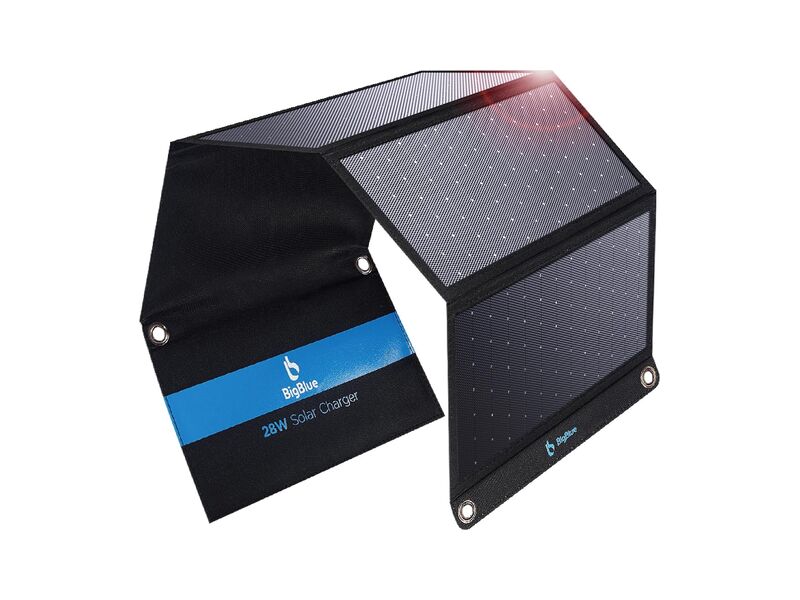
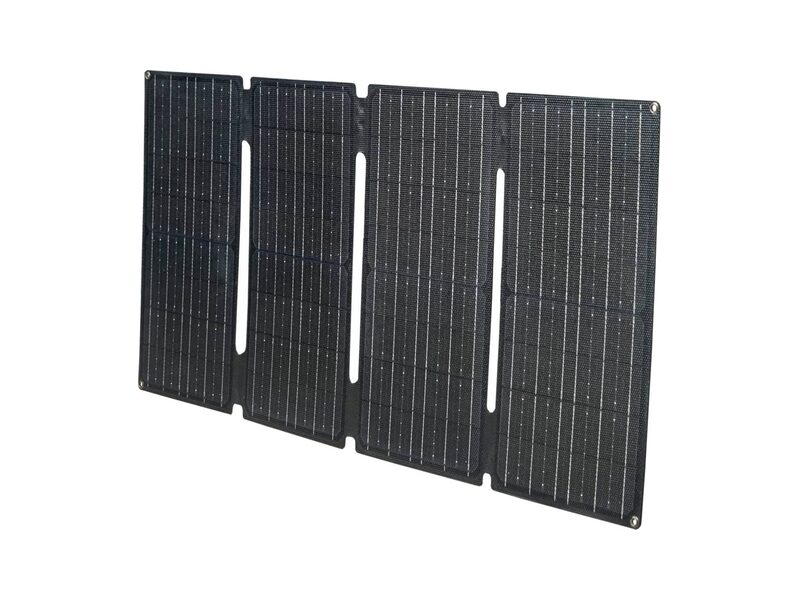
28W BigBlue 28W foldable solar charger
Sale

BigBlue 28W

See price and availability (48)

A panel that folds into your pack and charges three devices at once in the sun: high-efficiency cells, three USB ports, and real weather resistance.

  • Power: 28W
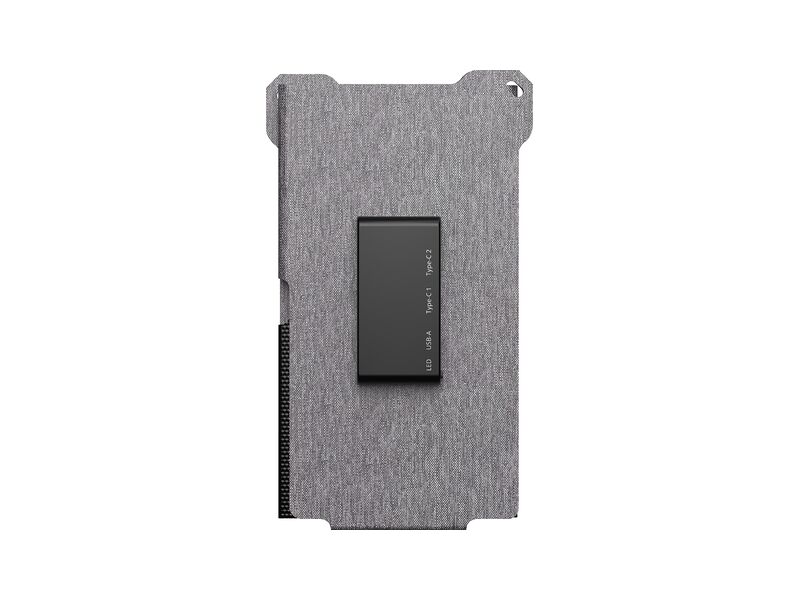
  • Ports: 3 (2 USB-C + 1 USB-A), 5V/4.8A combined
  • Cells: Monocrystalline N-type (~25%)
  • Resistance: IP44 (rain, splashes)
  • Charges 3 devices at once, high-efficiency cells
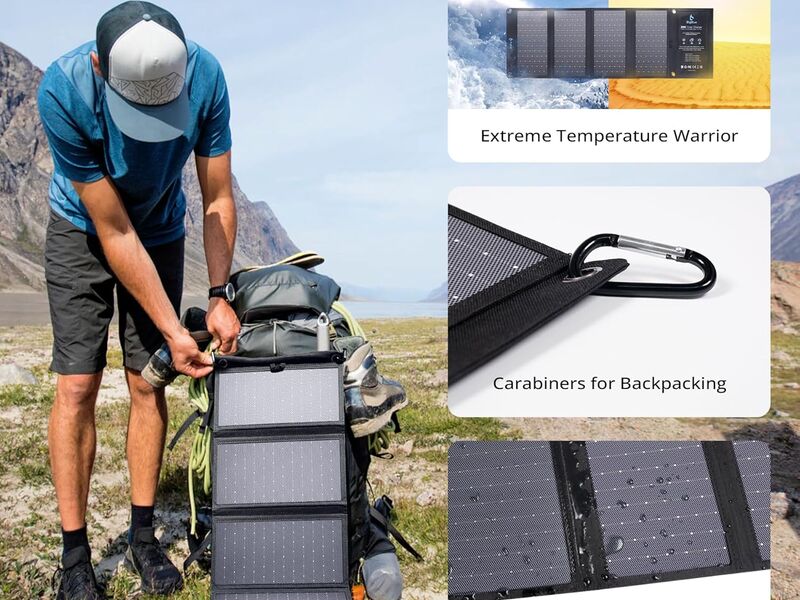
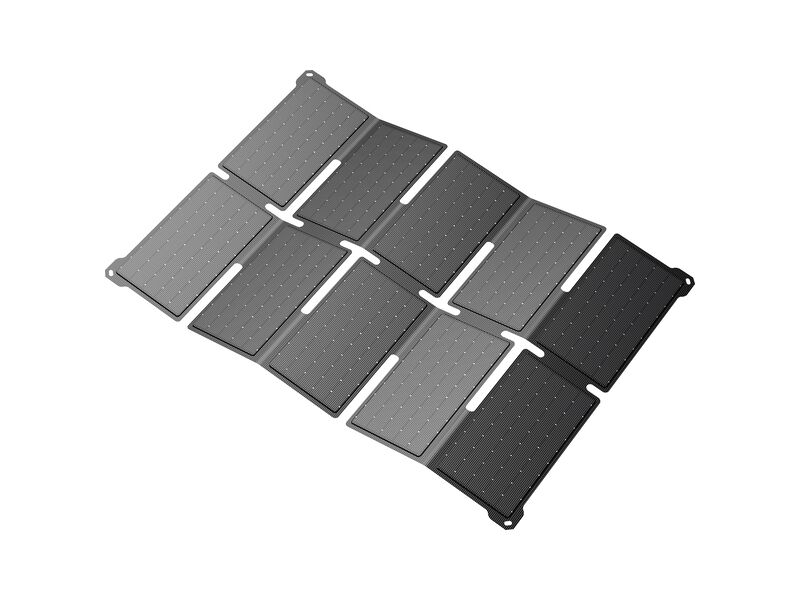
The BigBlue 28W is a foldable solar charger built for hiking, backpacking, and emergency kits. Its monocrystalline N-type cells convert around 25% of sunlight into power, among the best for a panel this size. Three ports, two USB-C and one USB-A, deliver up to 5V/4.8A combined, enough to charge a phone, a power bank, and earbuds at once. Light and IP44 splash resistant, it folds to roughly the size of a hardcover book and clips onto a pack with the included carabiners. Note: it has no battery, it only produces power in direct sunlight.
In-depth reviewRead our full review → 3.7/5 The BigBlue 28W is the kind of gear you toss in a pack without a second thought and end up relying on daily. On a multi-day backpacking trip, clipped to the outside of a pack with the included carabiners, it kept a power bank topped off in full sun, often at a speed close to a wall outlet. Having three ports matters more than it sounds: one afternoon it charged a phone and a headlamp battery at the same time with no real slowdown. The N-type cells hold up better than budget panels once a few clouds roll in, they keep producing rather than stalling out. Build quality is solid, reinforced fabric, sturdy stitching, and it folds down small enough for a side pocket. Two honest caveats: there is no battery inside, so pair it with a power bank to actually store the energy, and like any panel, output drops fast once it is in the shade or angled away from the sun. For a dependable, affordable way to keep devices charged off the grid, it is easy to recommend.
View product page

Allpowers Solax SE200

See price and availability (24)

Foldable, IP68 waterproof and up to 25% efficient, the Allpowers Solax SE200 solar panel charges power stations anywhere, at $139 on Amazon.com.

  • Power: 200 W
  • Efficiency: 23 to 25%
  • Cells: Monocrystalline
  • Rating: IP68 waterproof
  • 23-25% efficiency, foldable, IP68, 2,015 Amazon ratings
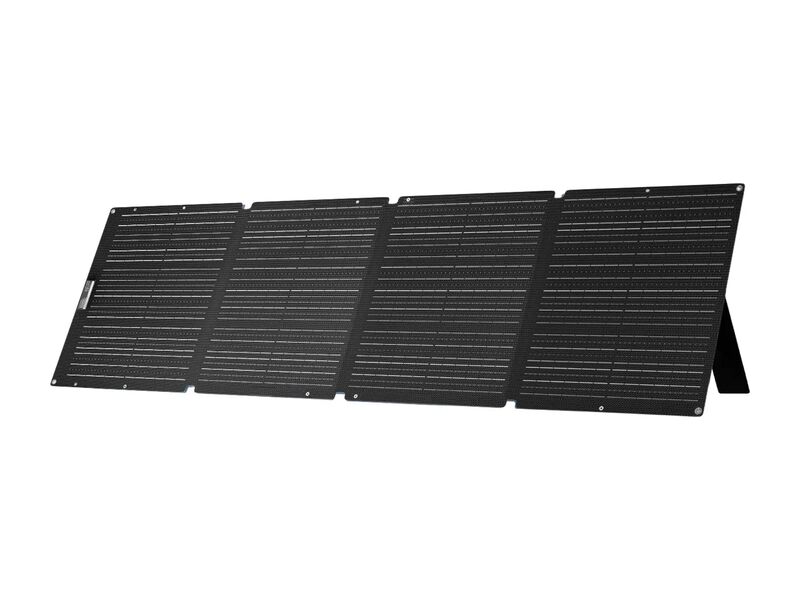
The Allpowers Solax SE200 delivers 200W from high-efficiency monocrystalline cells rated 23 to 25%. Foldable with adjustable kickstands, it deploys in seconds to recharge a power station while camping, in a van or during an outage, and its IP68 rating handles rain and dust. On Amazon.com, this exact panel is a well-established listing with 2,015 ratings across its size range and real buyers logging output from under 40W to over 300W depending on conditions and station. Compatible with most power stations on the market.
With over 2,000 ratings on Amazon.com and a real track record going back years, the Solax SE200 is one of the more battle-tested portable panels in its price range, and real owner reports paint an honest picture. Output varies a lot by conditions and connected station, as it does with any portable panel: some buyers report 120 to 140W in good sun, in line with the usual 60 to 70% of rated peak, while a few report struggling to clear 35 to 40W and needed Allpowers support to swap a defective unit, which the company did. The foldable kickstand design draws consistent praise for being genuinely field-ready, and the parallel wiring (rather than series) is a real plus if part of the panel ends up in shade. At $139, discounted from $189, it undercuts many rivals with similar efficiency claims by a wide margin. Two honest notes from real buyers: unfolded it is a genuinely large panel at over six feet long, and the included adapters do not fit every station out of the box, so check your station's input before ordering. For the price, it remains easy to recommend.
View product page

Allpowers Solax SE60

See price and availability (24)

60W of light, foldable solar power: the Allpowers Solax SE60 recharges phones, power banks and small stations, at $59.55 on Amazon.com.

  • Power: 60 W (monocrystalline)
  • Efficiency: Up to 25%
  • Ports: USB-A, USB-C, DC
  • Format: Foldable, about 3 lbs
  • 60W foldable, 25% efficiency, 3 USB/DC ports
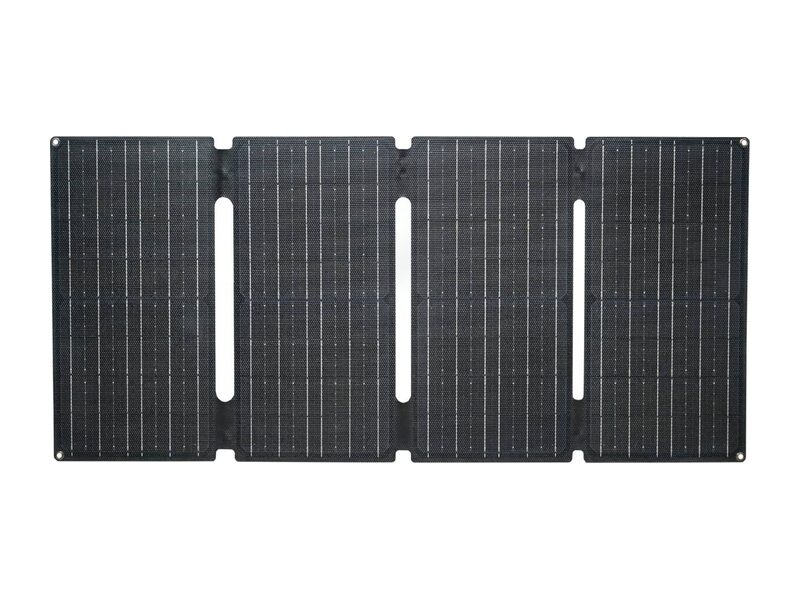
The Allpowers Solax SE60 is a 60W portable solar panel built for mobility, with monocrystalline cells rated up to 25% efficiency. Foldable and light at about 3 pounds, it slips into a backpack and deploys in seconds to recharge a phone, power bank or small station in the sun. On Amazon.com, the exact same listing sold as the 200W SE200 shares a combined 2,015-rating history at 4.2 stars, and this smaller 60W size is currently in stock at $59.55.
The SE60 shares its Amazon listing and review history with the larger SE200, so its 4.2-star average across 2,015 ratings reflects the whole Allpowers Solax panel line rather than this size alone, worth knowing going in. That said, the story real buyers tell fits the smaller panel well: light, genuinely pocketable at about three pounds, and enough to keep a phone or small power bank topped up through a day outdoors. One Amazon reviewer testing a similar small panel logged around 50 watts of real output at midday in decent sun, a strong result for this class. USB-A, USB-C and DC ports cover most small devices without extra adapters, and the IP68 build shrugs off a light shower. Keep expectations realistic, as with any small panel: 60 watts is meant for topping off phones, power banks and compact stations, not quickly refilling anything larger, and output drops fast the moment a cloud or shadow crosses it. At $59.55, discounted from $65.99, it is an easy, low-cost way to add real solar charging to a hiking or camping kit.
View product page

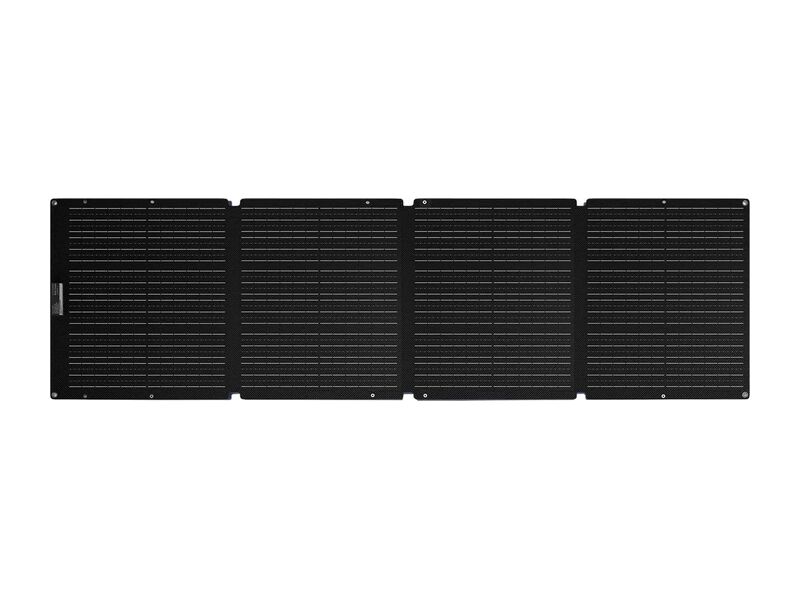
Allpowers SP029 Solar Panel 140W

See price and availability (11)

Four panels, 140 watts and an MC4 output rated for 25 amps: enough to refill a power station over a day, then fold the whole thing under your arm.

  • Output: 140 W, cells rated at 22 % efficiency
  • Main connector: MC4 up to 25 A, 10 A DC port
  • Direct outputs: 2 USB 5 V/2.4 A and 18 V/3 A
  • Format: 4 folding panels, 4.49 kg, stand included
  • The 25 A MC4 fits almost every power station
The SP029 is the big foldable in the Allpowers range, the one aimed at refilling a power station rather than rescuing a phone. Its four panels deliver 140 watts through an MC4 connector rated for up to 25 amps, the standard that almost every solar generator on the market expects. Two 5 V/2.4 A USB ports and an 18 V DC socket round things off, so you can power a phone or a laptop directly without going through a battery. At 4.49 kilos it stays portable, and the built-in stand lets you tilt it towards the sun.
The SP029 has a very clear place in the Allpowers line-up: it is the panel you buy when you already own a power station and want to refill it without a petrol generator. The advertised 140 watts is a laboratory peak figure, and in real use you should expect 90 to 110 watts on a good summer day, less as soon as the sun drops or the sky hazes over. That is the industry norm rather than a flaw specific to this model, but it is worth knowing before planning your day around it. The real argument lies elsewhere: the MC4 output accepts 25 amps, which makes it compatible with almost every solar generator sold today, and the bundled cable kit covers Anderson plugs, common DC barrel connectors and crocodile clips for a car battery. The two USB ports and the 18 V socket also let you use it on its own, without a station, which not every competitor offers. The four panels unfold to a little over a metre sixty, so you need space and reasonably flat ground, and the 4.5 kilos make themselves felt on a rucksack, even if they remain reasonable for the deployed area. The product is easy to sum up: solid and versatile, without being the best performer or the best finished in its category. For the money, it is a very coherent companion to a power station.
View product page

View all 30 Portable solar panels →

II - Fixed solar panels

Unlike the photovoltaic panels presented in the previous category, the solar panels presented below are not intended to be moved, but to be fixed on the roof of a house or permanently installed on an isolated site.
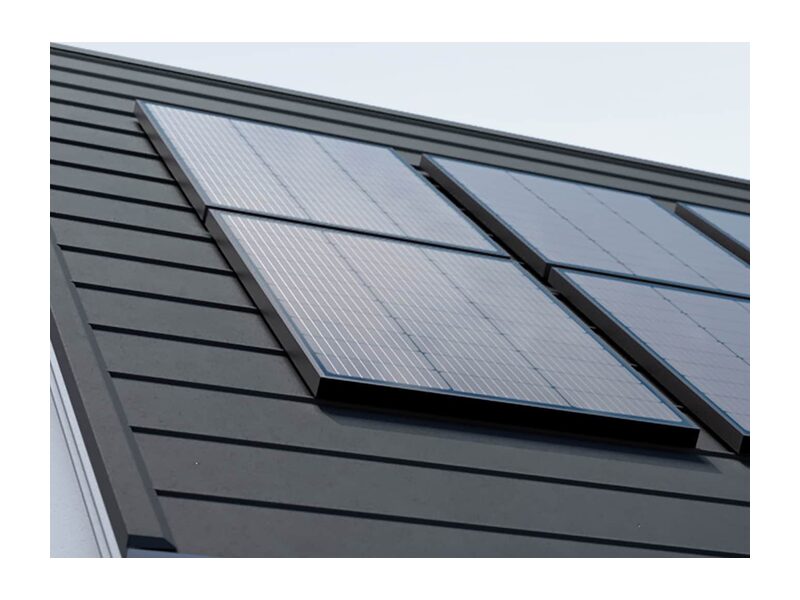
Rigid solar panel 100W (x2) EcoFlow 100 W rigid solar panel 2-pack
Promo

EcoFlow Rigid solar panel 100W (x2)

See price and availability (10)

Two 100 W rigid panels to mount once and forget: 23% efficiency, IP68 tempered glass and mounting feet supplied to equip a van or a roof.

  • Power: 2 x 100 W (200 W total)
  • Efficiency: 23% (monocrystalline cells)
  • Output: 17.1 V / 5.9 A, MC4 connectors
  • Durability: IP68, tempered glass, high winds
  • 2-pack of IP68 rigid panels, mounting feet included
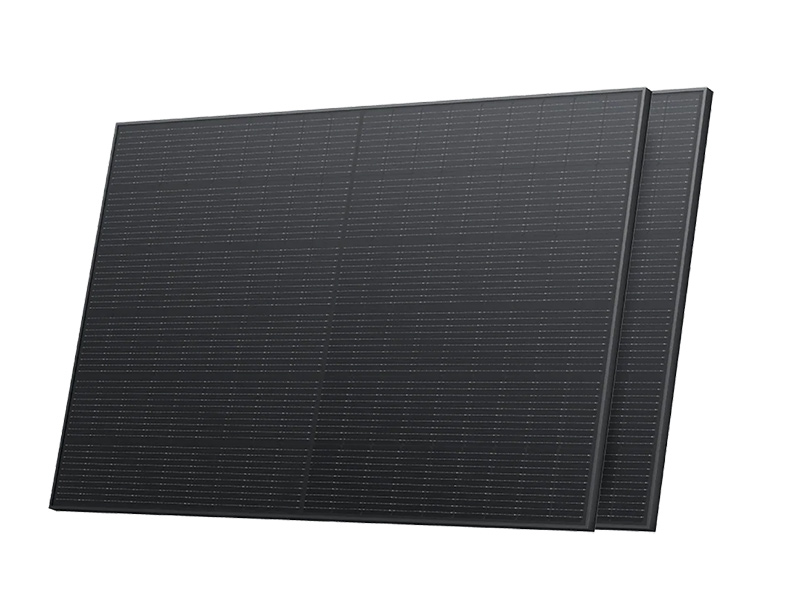
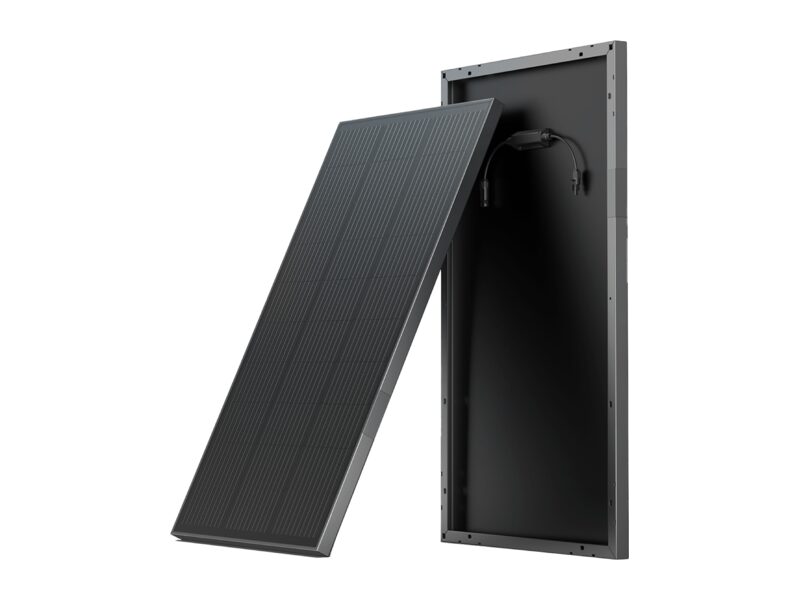
The EcoFlow 2-pack of 100 W rigid solar panels is for those who want a permanent installation rather than a panel to unfold every day. Its monocrystalline cells reach 23% efficiency, protected by tempered glass and durable IP68-certified lamination able to take rain, dust, high winds and snow. Each panel delivers 17.1 V / 5.9 A over MC4 connectors, and the included mounting feet let you angle it on a van roof, a shed or a terrace. A solid 200 W foundation to feed a portable power station day after day.
We fitted this pair of EcoFlow rigid panels to the roof of a converted van, and it is exactly the kind of product you forget about once installed, in the best sense. Mounting is simple thanks to the supplied feet: you screw them down, set the angle, plug in the MC4 leads, and you are done. The build inspires confidence, with a solid frame and tempered glass that did not flinch after a winter of rain, frost and gusts. In full June sun, the two panels gave us output very close to the advertised 200 W, enough to fill a 1 kWh station over the day without thinking about it. The real advantage over a folding panel is consistency: no need to set the panel out each morning or bring it in at night, production starts at sunrise. Two honest caveats: at 6.2 kg each, you need a support and a roof able to take them, and the lack of a built-in kickstand means you depend on the mount for tilt. For a fixed installation on a van, cabin or garden shed, this is an excellent starting point.
View product page

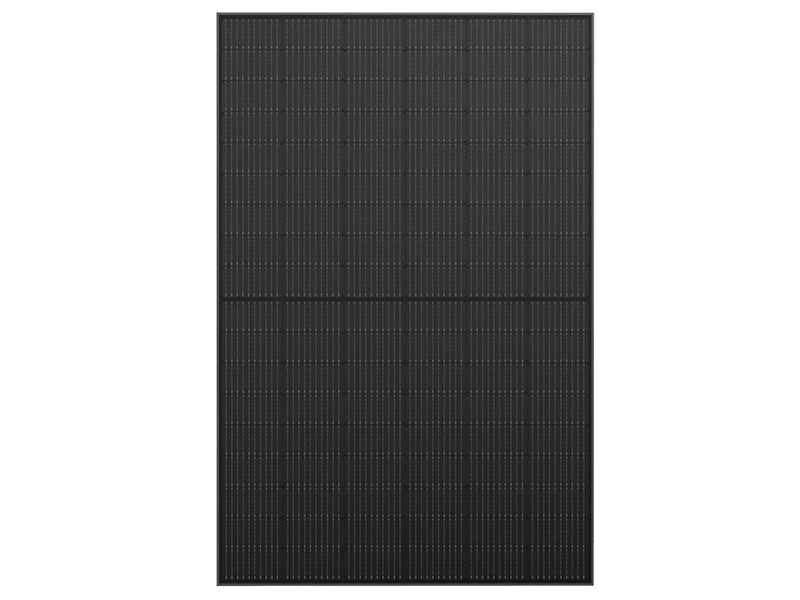
EcoFlow Rigid Solar Panel 400W (x2)

See price and availability (4)

Fit two EcoFlow 400W rigid solar panels at home or on your RV: 23% efficiency, IP68 rating and long-lasting weather resistance built to last.

  • Power: 400W per panel (x2 included)
  • Efficiency: 23%, monocrystalline cells
  • Waterproofing: IP68
  • Weight: 21.8 kg per panel
  • 23% efficiency, IP68 rated, withstands 209 km/h winds
Sold as a pack of two panels, the EcoFlow 400W rigid solar kit uses monocrystalline cells rated at 23% efficiency to charge your PV system, RV or EcoFlow Power Kit faster. Its anti-corrosion aluminium frame and IP68 rating let it withstand winds up to 209 km/h and 551 kg of snow per square metre. A durable solution built for a fixed install on a roof, wall or outdoor structure, backed by up to a 10-year warranty.
We tested these rigid panels mounted flat on a garden shed roof, in an area that is not exactly known for constant sunshine. Result: even under a hazy sky, output stays decent, and as soon as the sun breaks through, current climbs fast thanks to EcoFlow's claimed 23% efficiency. What catches you off guard on unboxing is the weight: each panel is close to 22 kg, so handling one alone once it is up on a roof or fence is not an option. Installation itself is straightforward if you have done some DIY before: pre-drilled holes, a sturdy rigid aluminium frame, a reliable solar connector on the back. Small downside: neither the mounting feet nor the XT60i cable needed to plug directly into an EcoFlow power station are included, so budget for those separately. Over time, the IP68 rating is genuinely reassuring: rain, salt spray, frost, none of it seems to dent performance across the seasons. For a fixed, long-term install this is a very solid pick; for daily portable use, EcoFlow's foldable panels are the better fit.
View product page

Renogy ShadowFlux 200W

See price and availability (3)

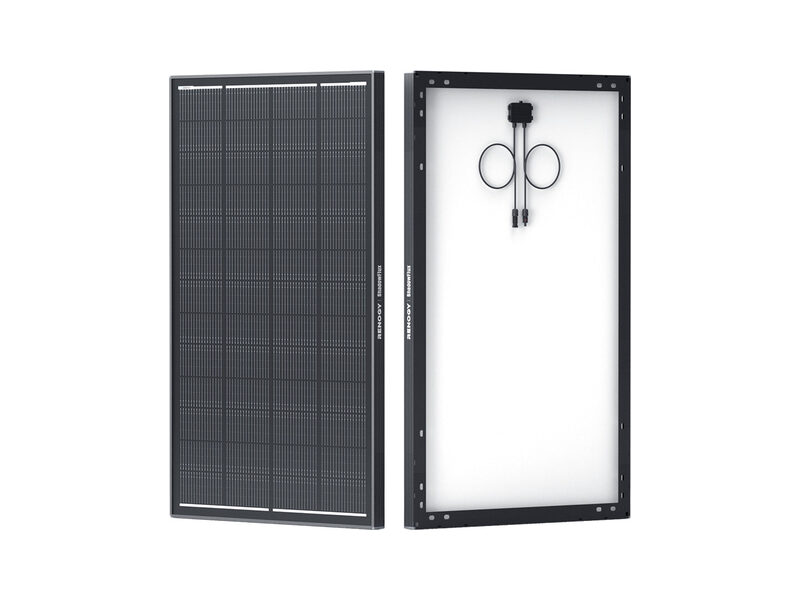
A roof vent, an aerial, a branch: on a campervan roof, partial shade is expensive. This panel is built to keep producing when part of its surface is covered.

  • Power: 200 W, N-type cells (25% efficiency)
  • Anti-shading: 28 bypass diodes, up to 85% more output in shade
  • Module efficiency: 20.7%
  • Format: 1262 x 764 x 30 mm, 10.81 kg
  • Keeps producing when part of the panel is covered
On a conventional panel, a single shaded cell drags down its whole string: that is the structural weakness of solar on a cluttered roof. The Renogy ShadowFlux splits the module into 28 sections, each protected by its own bypass diode, where an ordinary panel has three. Renogy claims up to 85% more output under partial shade. The rest follows: N-type cells at 25% efficiency, 16 busbars, 20.7% module efficiency, IP67 rating and 10.81 kg for 1262 x 764 mm, a more compact format than the average 200 W panel.
Partial shade is the problem you discover after fitting, never before. On a van roof there is always a vent, an aerial or a rack casting a shadow at some point in the day, and on a conventional panel that shadow does not cost you the covered area: it collapses the entire cell string involved. That is exactly what this ShadowFlux tackles, with 28 bypass diodes instead of the usual three. Each zone keeps working on its own account. The claimed 85% gain obviously applies in the manufacturer's best case, but the principle is sound and checkable: the finer the electrical subdivision, the less a local shadow penalises the whole. The rest of the spec sheet holds up, with N-type cells that age better than PERC and a format 7% more compact than the average 200 W, which matters when fitting three panels between two roof vents. Two reservations: the materials warranty runs five years where some rivals offer ten or twelve, and 10.8 kg on a van roof calls for proper bonding or serious brackets. If your roof is completely clear, a standard panel will do just as well for less.
View product page

Renogy 16BB 175W Panel

See price and availability (3)

The same watts on less roof. N-type cells at 25% efficiency and 16 busbars, in a shorter format than the average 175 W panel.

  • Power: 175 W at 12 V, N-type cells (25% efficiency)
  • Module efficiency: 20.6%
  • Footprint: 1110 x 764 x 30 mm, 7 to 10% less than typical 175 W panels
  • Weight: 9.6 kg
  • The best watts-per-centimetre-of-roof ratio in our selection
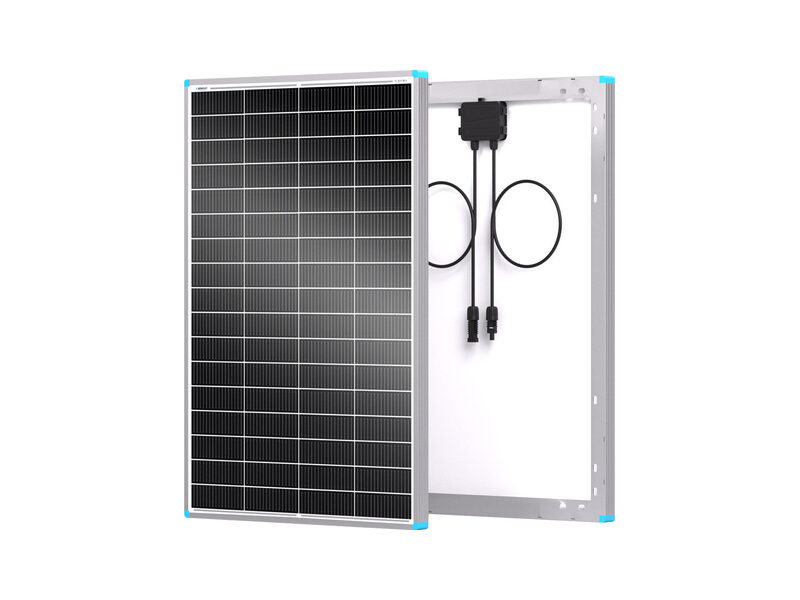
On a van roof the constraint is almost never budget: it is space. The Renogy 16BB 175 W answers exactly that, with a 1110 x 764 mm format quoted 7 to 10% more compact than other panels of the same rating, for 9.6 kg. The density comes from N-type cells at 25% efficiency, a newer generation than PERC, and from 16 busbars that cut resistive losses. Module efficiency 20.6%, 175 W at 20.88 V, IP67-rated MC4 connectors.
When fitting out a van you do not think in pounds per watt but in watts per metre of roof. Between vents, rack and aerial, usable area is counted in centimetres, and that is where this 175 W stands out: Renogy quotes 7 to 10% less area than other panels of the same rating, which can be enough to fit a third module where two looked like the limit. The gain comes from N-type cells, more efficient than PERC for a given area, and from 16 busbars collecting current at more points. Two secondary benefits deserve a mention: N-type degrades more slowly over time, and it loses less efficiency as the panel heats up, which is daily life on a summer roof. At this price that is a rare performance-to-footprint ratio. The only limit is positioning: without the anti-shading subdivision of its bigger ShadowFlux sibling, it remains vulnerable to a cast shadow, like any conventional panel. Clear roof, it is the best pick in our selection; cluttered roof, look at the ShadowFlux.
View product page

View all 8 Fixed solar panels →

III - Plug and play solar batteries

Want to store your solar power without touching a single wire? These all-in-one batteries have their own inverter built in and plug straight into a wall socket or your existing panels, no electrician and no separate charge controller needed. App control, modular expansion, backup power in a blackout: here's our selection of the best plug and play solar storage systems.
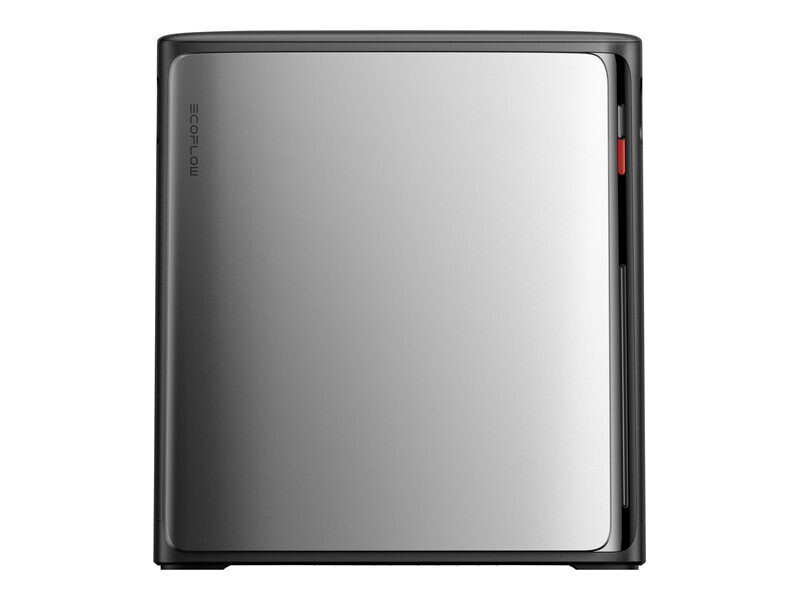
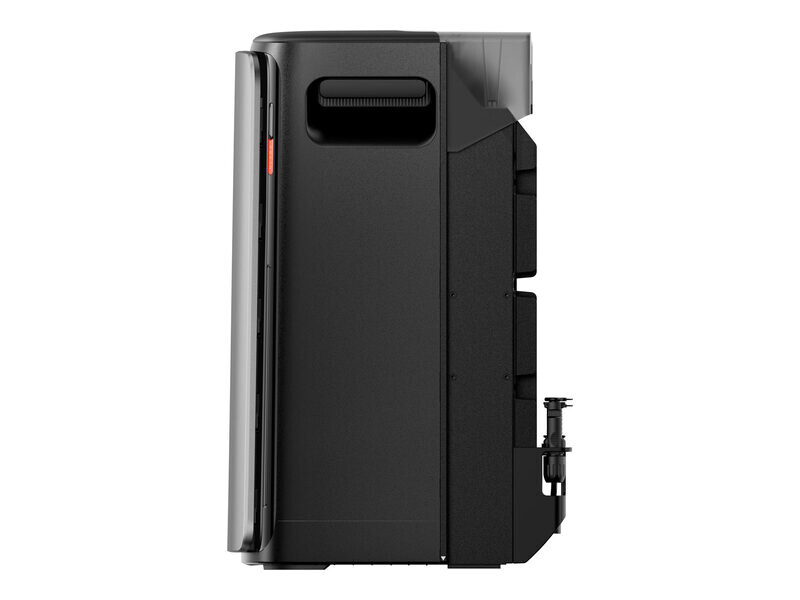
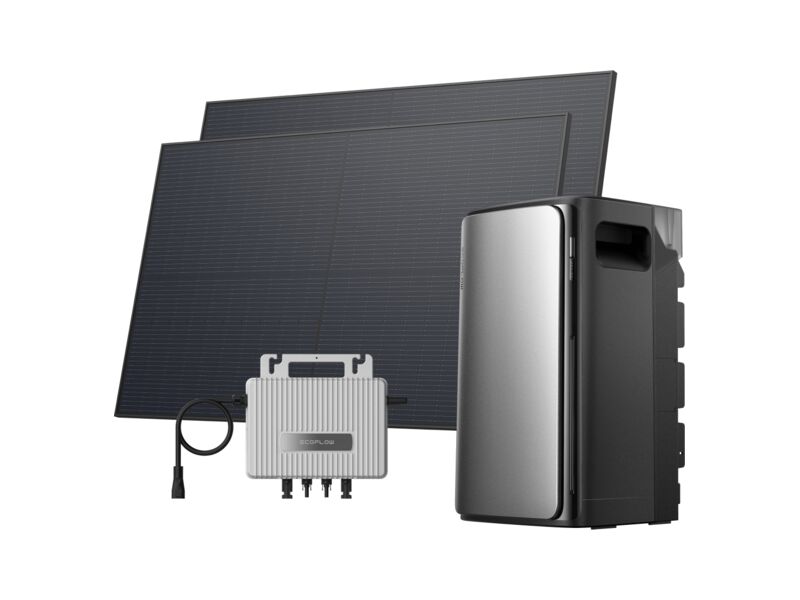
Stream Ultra X EcoFlow Stream Ultra X 3.84 kWh balcony solar storage system
Promo

EcoFlow Stream Ultra X

$2029.65 $1758.85 (13)

3.84 kWh of LiFePO4, a built-in hybrid inverter and up to 1200 W on its own outlets: the EcoFlow Stream Ultra X is the flagship of balcony solar storage.

  • Capacity: 3.84 kWh (LiFePO4)
  • Output: 1200 W (2 AC outlets) + 800 W grid, 2300 W pass-through
  • Solar: 4 MPPT, up to 2000 W
  • All weather: IP65, self-heating to -4 °F (-20 °C)
  • Battery + built-in inverter, microinverter included
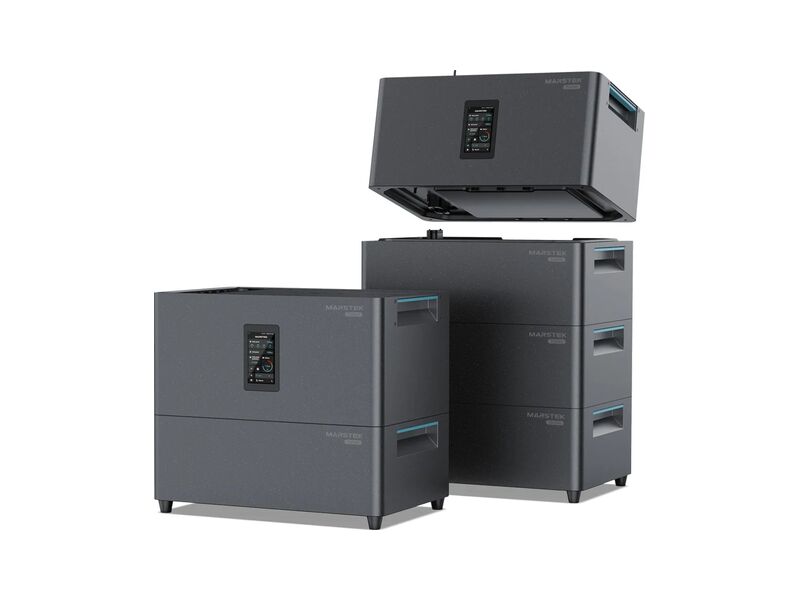
The EcoFlow Stream Ultra X is an all-in-one balcony solar storage system built to maximise self-consumption. It combines a 3.84 kWh LiFePO4 battery, a built-in hybrid inverter and four MPPT solar inputs (up to 2000 W of panels). It stores energy generated during the day to release it in the evening: up to 800 W fed back into the home grid, and up to 1200 W straight from its two AC outlets (2300 W of connected appliances while the grid is available). IP65 rated with self-heating down to -4 °F (-20 °C), it installs outdoors and is controlled by app. The microinverter is included.
In-depth reviewRead our full review → 4.3/5 The Stream Ultra X is the most accomplished balcony storage system to date. Where most systems settle for a battery module wired to a hub, EcoFlow packs everything into one box: 3.84 kWh of LiFePO4 cells, a hybrid inverter, four MPPT controllers and even two AC outlets. In practice, you plug in your panels (up to 2000 W), store the day's surplus and release it in the evening, either fed back into the grid (800 W, within balcony limits) or straight to its outlets at up to 1200 W during an outage (2300 W of connected appliances while the grid is available). The IP65 housing and self-heating down to -4 °F (-20 °C) allow year-round outdoor installation, and the app control is thorough. Two reservations: at 39 kg, plan a solid mount and a two-person install, and its price places it firmly at the premium end of balcony solar. But for anyone who wants to maximise self-consumption without stacking boxes, it is a very convincing proposition.
View product page

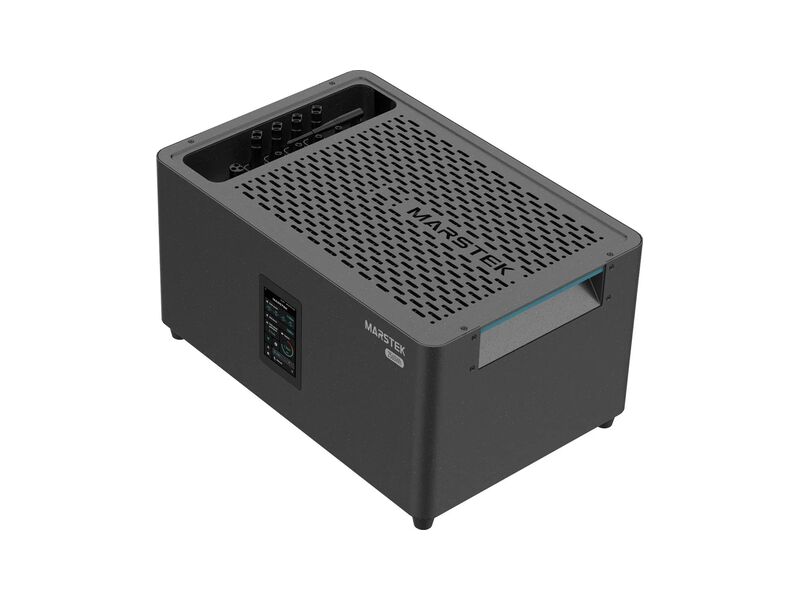
Marstek Jupiter C Plus

$811.05 (9)

2560 Wh, 4 MPPT and 2400 W of solar input in DC coupling: Marstek's plug-and-play balcony battery expandable to 10240 Wh.

  • Capacity: 2560 Wh (LiFePO4), expandable to 10240 Wh
  • Solar: 4 MPPT, up to 2400 W input, 99.8% efficiency
  • Coupling: DC, with built-in 800 W micro-inverter
  • All-weather: IP65, works from -4 °F to 140 °F (-20 °C to +60 °C)
  • 4 MPPT, 2400 W solar input, fair price
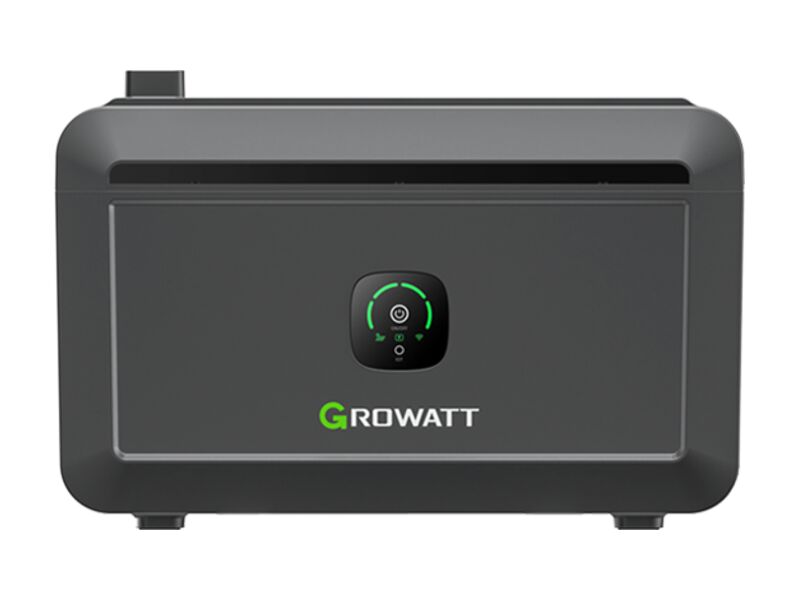
The Marstek Jupiter C Plus is a DC-coupled balcony solar storage battery that sits between the panels and a compatible micro-inverter. Its 4 independent MPPT trackers accept up to 2400 W of panels, with a claimed conversion efficiency of 99.8%. Its 2560 Wh LiFePO4 battery is IP65 rated and expands up to 10240 Wh with additional modules. Plug-and-play installation, control via the Marstek app, 10-year warranty.
In-depth reviewRead our full review → 3.6/5 The Jupiter C Plus shares its base capacity figure (2560 Wh) and several specs with Marstek's own Venus C, a separate AC-coupled model rather than this DC-coupled one: the two are easy to mix up, but they aren't the same unit. In practice, it's a serious balcony battery: its 4 MPPT trackers and 2400 W of solar input let you wire up to 4 panels without worrying much about partial shading, and the HD touchscreen makes initial setup far easier than a phone app alone. Several users report solid compatibility with Shelly Pro 3EM meters and Germany's Ecotracker, plus a responsive support team when the initial pairing gets stuck. Our main reservation concerns availability outside Germany: at the time of writing, there's still no official store or established retailer in France, Italy or Spain, which means going through a third-party Amazon seller at a noticeably higher price than in Germany. For anyone able to order directly from the manufacturer, the value for money remains among the best in the category.
View product page

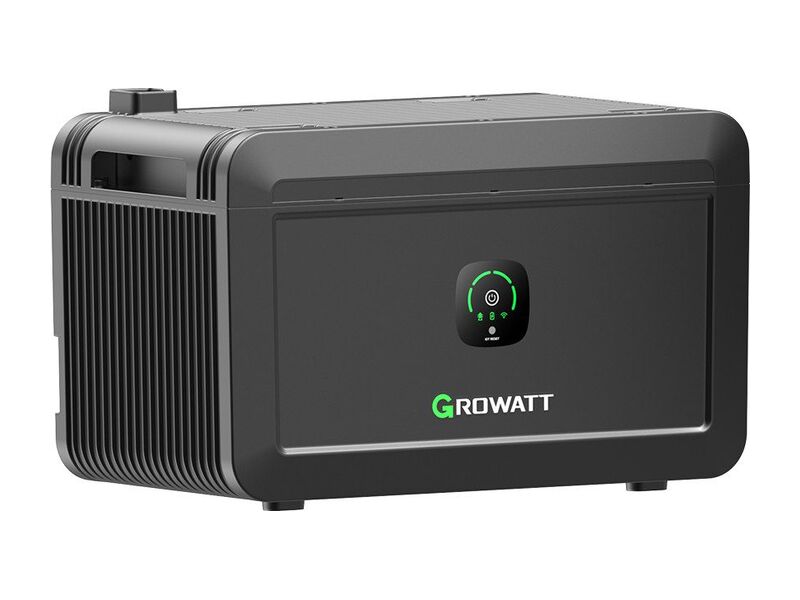
Growatt NOAH 2000

$925.19 $450.44 (9)

2048 Wh, 2 MPPT and 1800 W of DC-coupled solar input: one of Europe's best-selling plug-and-play balcony batteries, expandable to 8192 Wh.

  • Capacity: 2048 Wh (LiFePO4), expandable to 8192 Wh
  • Solar: 2 MPPT, up to 1800 W input, 99% efficiency
  • Coupling: DC, between panels and microinverter
  • All weather: IP66, heating film down to -4 °F (-20 °C)
  • One of Europe's best-selling plug-and-play balcony batteries
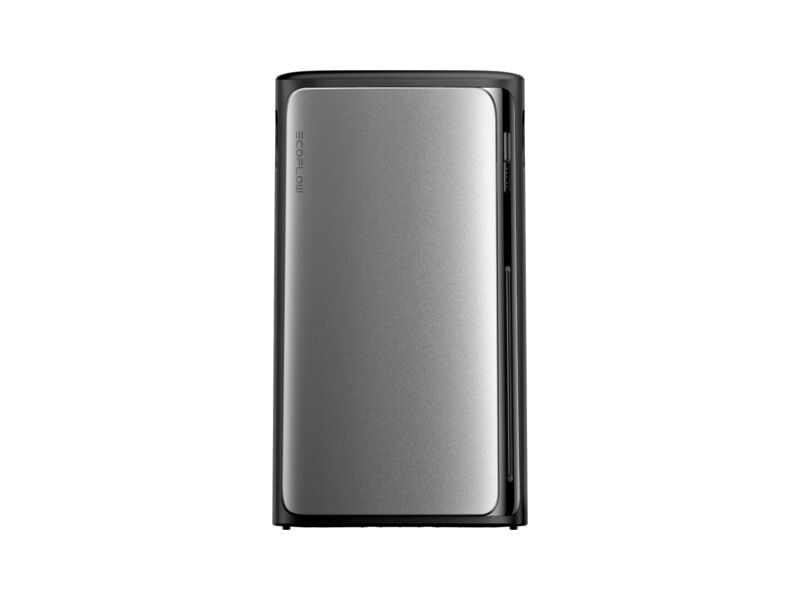
The Growatt NOAH 2000 is a balcony solar storage battery in DC coupling, sitting between the panels and a microinverter rather than on the AC output. Its 2 MPPT controllers accept up to 1800 W of panels, with a stated 99% MPPT efficiency. Its 2048 Wh LiFePO4 battery is IP66 rated, with a built-in heating film for operation down to -4 °F (-20 °C), and extends up to 8192 Wh by stacking 4 modules. Plug-and-play installation, controlled over Wi-Fi and Bluetooth, backed by a 10-year warranty: it is one of the most established and best-selling balcony batteries on the European market.
In-depth reviewRead our full review → 3.6/5 The NOAH 2000 owes its popularity to a simple pitch: a reliable, well-built balcony battery, at a price that stays competitive thanks to frequent promotions. Its DC coupling (between the panels and a microinverter) rather than AC output is less common than with rivals, but works well once understood: it needs a compatible microinverter downstream, with Growatt offering its own NEO 800M-X for this purpose. The 2 MPPT controllers and the stated 99% conversion efficiency make the NOAH 2000 a technically solid choice, and the built-in heating film is a real plus in winter. Our main reservation concerns availability: at the time of writing, the product remains distributed primarily in Germany through specialised retailers, with still-limited presence in other European markets. For anyone with access to a reliable retailer, it is a safe bet in balcony storage.
View product page
Stream AC Pro EcoFlow Stream AC Pro AC expansion battery for solar kits
Promo

EcoFlow Stream AC Pro

$1217.25 $946.45 (8)

1920 Wh and up to 2300 W of AC output: the plug-and-play expansion battery compatible with any microinverter on the market.

  • Capacity: 1920 Wh (LiFePO4), expandable to 11.52 kWh
  • Output: 1200 W (2 AC outlets), 2300 W with two units, 800 W to grid
  • Compatibility: 100% of microinverters on the market
  • All weather: IP65, self-heating battery down to -4 °F (-20 °C)
  • Plug-and-play expansion battery, no MPPT or inverter to manage
The EcoFlow Stream AC Pro is the pure battery variant of the STREAM range, with no MPPT or built-in inverter, designed to add storage to a balcony solar setup that already has a microinverter in place. It connects purely over AC, making it compatible with virtually any microinverter on the market. Its 1920 Wh LiFePO4 battery exchanges up to 1200 W with the installation, with grid feed-in capped at 800 W. IP65 rated with a self-heating battery down to -4 °F (-20 °C), it is controlled through the EcoFlow app, with an AI assistant and off-peak tariff scheduling. Expandable to 11.52 kWh by pairing it with a Stream Ultra, Pro or Max.
The Stream AC Pro fills a real gap: a simple expansion battery, with no MPPT or built-in inverter, for anyone who already has a solar microinverter in place. It connects over AC, which makes it compatible with almost any existing setup, unlike systems that impose their own solar regulation. The 2300 W its outlets accept while the grid is available easily handle power-hungry appliances, and integration into the STREAM ecosystem (Ultra, Pro, Max) lets you build an installation that grows over time. Off-peak tariff scheduling and the app's AI assistant remain strong points shared across the whole range. Our one reservation: availability remains limited in some markets at the time of writing. For anyone wanting to add storage to an existing solar setup without complexity, this is a solid option.
View product page

View all 32 Plug and play solar batteries →

IV - Solar kit batteries

For a solar kit you build yourself, panels, charge controller and inverter chosen separately, the battery is what decides everything: its chemistry sets the cycle count, and its usable capacity is never the one printed on the label. Here's our selection of LiFePO4, Gel and AGM batteries for solar kits.
Power Queen 100Ah LiFePO4 battery

See price and availability (10)

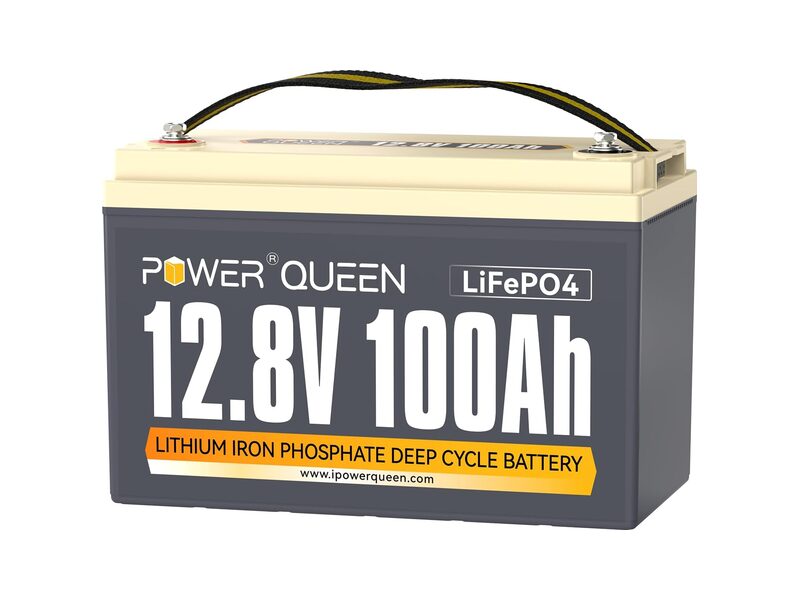
1280Wh of reliable, light lithium: the 12V 100Ah LiFePO4 battery that replaces lead, lasts thousands of cycles and unlocks the runtime of a motorhome, boat or solar kit.

  • Capacity: 12V 100Ah (1280 Wh, LiFePO4)
  • Cycles: 4000 to 15000 cycles
  • Protection: 100A BMS, low temperature
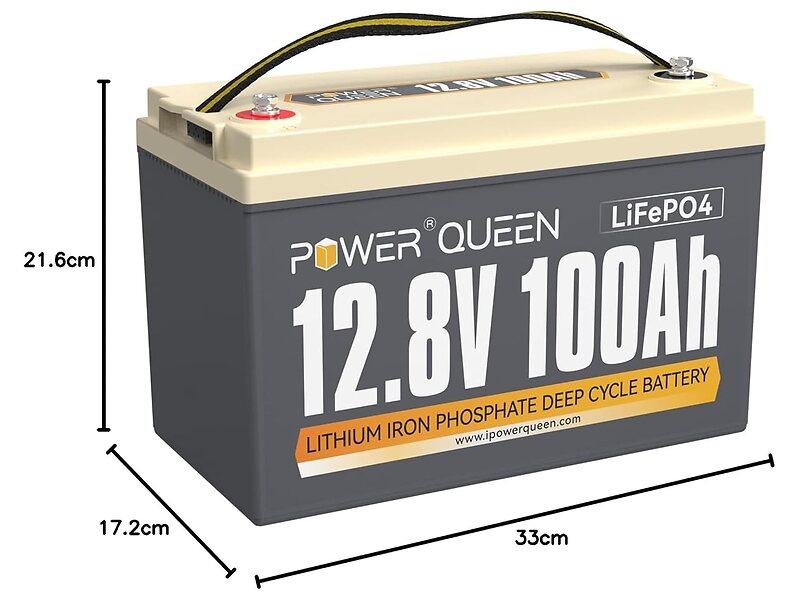
  • Dimensions: 329 x 172 x 214 mm
  • 1280Wh LiFePO4, 100A BMS, long life
The Power Queen 12V 100Ah is a lithium iron phosphate (LiFePO4) battery of 1280 Wh built for off-grid independence. Far lighter and more durable than a lead-acid or gel battery, it offers 4000 to 15000 cycles depending on depth of discharge and can be discharged to 100% without damage. Its built-in 100A BMS protects against overcharge, deep discharge, short circuit and overcurrent, with a low-temperature protection that cuts charging in the cold. Perfect for the motorhome, caravan, boat, electric outboard or an off-grid solar system.
The Power Queen 100Ah holds up very well against pricier batteries. Fitted in a motorhome in place of an old lead-acid battery, the difference in runtime is obvious: you actually use nearly all of the 1280 Wh, whereas lead does not tolerate deep discharges. The weight saving is welcome, and the built-in BMS is reassuring day to day against overcharge and short circuits. The low-temperature protection is a real plus to avoid damaging the cells in winter. We use it both to power a fridge, lighting and a pump in a van, and to store the output of a small solar kit. Two honest caveats: the 100A BMS limits discharge current, which is enough for most uses but may restrict a very powerful inverter, and like any LiFePO4, charging below 32°F (0°C) is not advised (hence the protection). To replace lead with reliable lithium without breaking the bank, it is excellent value.
View product page
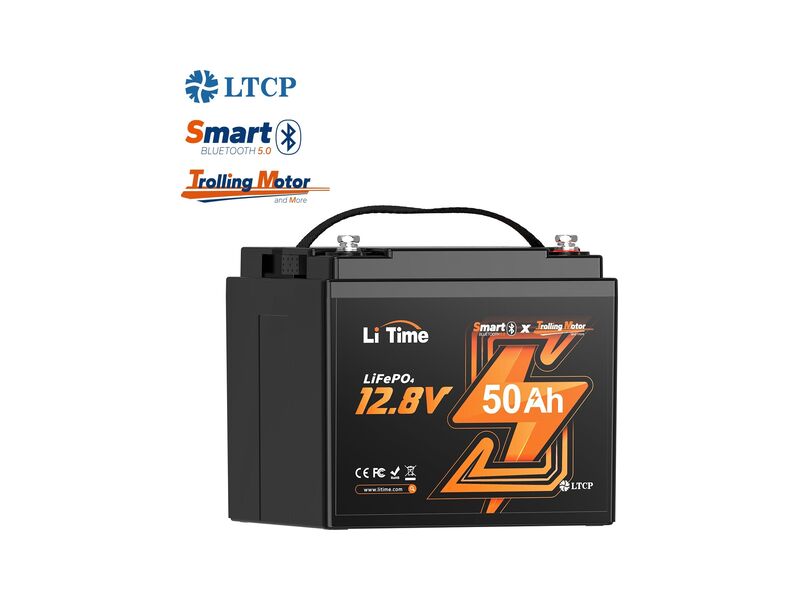
50Ah LiFePO4 Bluetooth Battery LiTime 12V 50Ah LiFePO4 Bluetooth battery for trolling motors
Sale

LiTime 50Ah LiFePO4 Bluetooth Battery

$289.99 $239.99 (9)

640Wh of compact lithium with Bluetooth monitoring: the LiTime 12V 50Ah replaces lead-acid on a trolling motor, an RV, or a solar setup, no compromise.

  • Capacity: 12V 50Ah (640Wh, LiFePO4)
  • BMS: 50A, low-temperature protection
  • Cycles: 4000 cycles at 100% DOD
  • Connectivity: Bluetooth 5.0, LiTime app
  • 640Wh compact, Bluetooth 5.0, IP65 rated
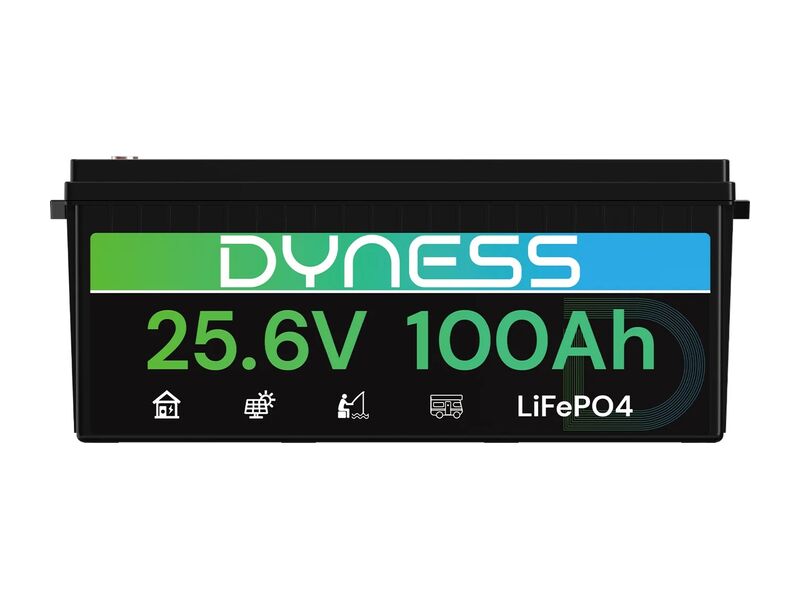
The LiTime 12V 50Ah LiFePO4 is a lithium iron phosphate battery with 640Wh of capacity, built to replace a lead-acid battery on a trolling motor, in an RV, or in a small solar setup. Its 50A BMS guards against overcharge, deep discharge, short circuits, and overheating, with an automatic cutoff in cold weather. Built-in Bluetooth 5.0 lets you track charge level, voltage, and current in real time from the LiTime app, even across several batteries wired in series or parallel.
We swapped this LiTime 12V 50Ah in for an old lead-acid battery on a small trolling motor setup, and the difference shows immediately: half the weight, and you can genuinely run the 640Wh down without worrying about damaging it, unlike lead-acid. The Bluetooth is well done, pairing via the QR code on the case is instant, and the app clearly shows voltage, current, and charge level, handy for keeping tabs on the battery without pulling out a multimeter. The automatic cold-weather cutoff gave peace of mind on a late-fall outing, though like any LiFePO4 battery, it is best to avoid charging it below freezing. Our one real gripe: the M8 bolt terminals need the right lugs, worth planning for before you install it. For a boat, an RV, or a small solar kit, it clearly beats a lead-acid battery of the same size.
View product page
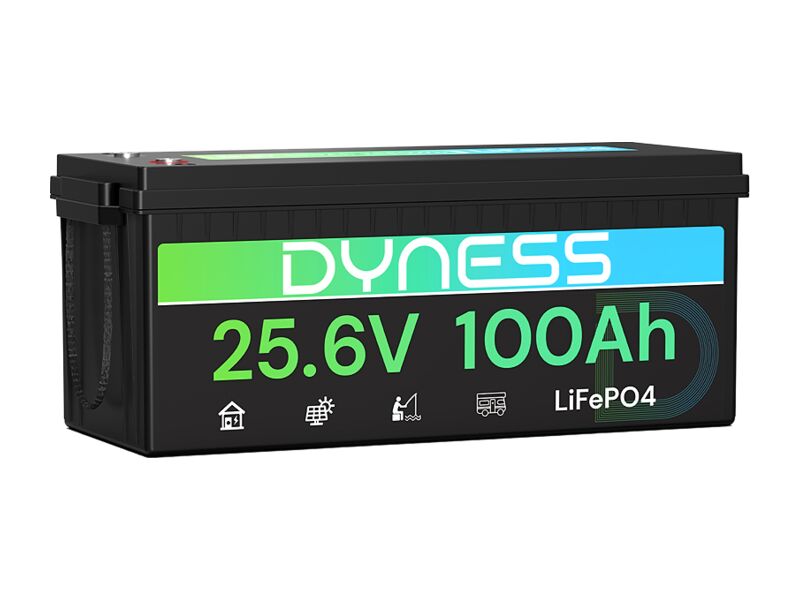
24V 100Ah LiFePO4 Battery Dyness 24V 100Ah Lithium Battery 2560Wh
Promo

Dyness 24V 100Ah LiFePO4 Battery

See price and availability (5)

The Dyness 24V 100Ah replaces two 12V batteries wired in series, with a 100A BMS and cold-weather protection for any solar kit, RV or boat.

  • Capacity: 100Ah / 2560Wh (24V LiFePO4)
  • BMS: 100A continuous, 300A/s surge
  • Protection: Low-temperature down to -4 °F (-20 °C)
  • Weight: 19.3 kg (531 x 206 x 217 mm)
  • Replaces 2x 12V batteries, 30% more space
The Dyness 24V 100Ah LiFePO4 battery stores 2560Wh and replaces two 12V 100Ah batteries wired in series: half the wiring and 30% more free space in the battery compartment. Its 100A BMS protects against overcharge, short circuits and extreme cold, with safe discharge down to -4 °F (-20 °C). Built for 24V solar kits, RVs, boats or trolling motors, it expands up to 20.48kWh in a 4P2S setup, backed by a 5-year warranty.
We fitted this Dyness 24V 100Ah in place of two ageing 12V batteries wired in series inside a solar kit on a converted van, and the space saved is obvious straight away: one single block, two terminals, half the wiring. Mounted on a 24V trolling motor, it holds up through a full day on the water without flinching, even in cool weather. The 100A BMS copes well with the current draw at motor start-up, and the low-temperature protection is reassuring for outdoor winter storage. The one real downside: this base model has no Bluetooth, unlike the BT version in the range, so there is no way to track the state of charge from a phone, something a few buyers only notice after skimming the listing. Dyness support was responsive when another buyer ran into a delivery issue, which says something good about the brand. For the price, well under its direct rivals at the same capacity, it is a safe bet for anyone who does not need remote monitoring.
View product page

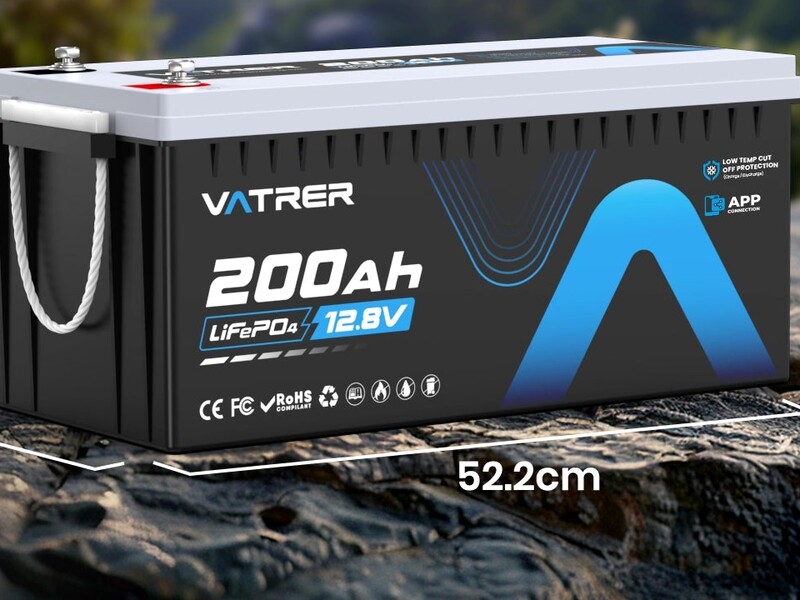
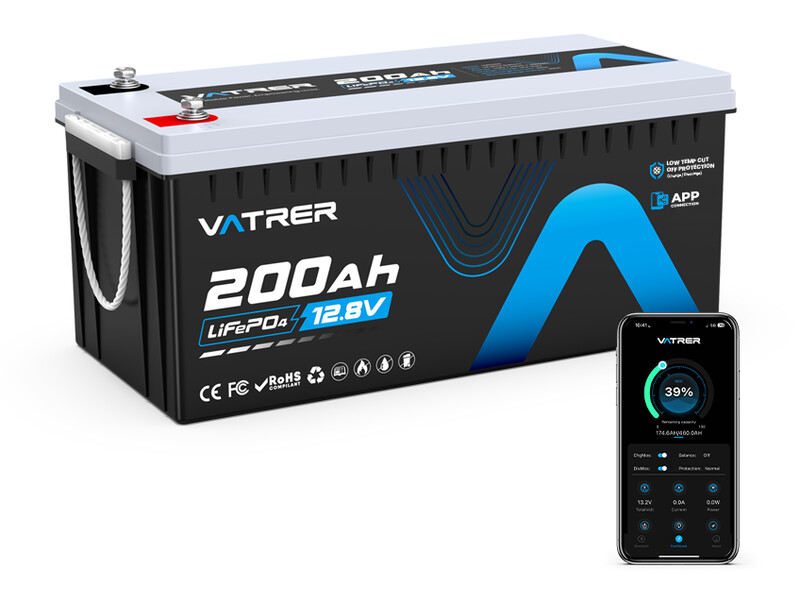
Vatrer Power 200Ah LiFePO4 Bluetooth Battery

$490.64 (4)

A compact 200Ah lithium battery with Bluetooth control and an IP65 rating, built to give a van, boat or solar kit a solid, reliable power reserve.

  • Capacity: 200 Ah / 2560 Wh (12.8V LiFePO4)
  • BMS: 200A smart, IP65
  • Cycles: 5000+ rated cycles
  • Weight: 22 kg (522 x 240 x 218 mm)
  • Bluetooth, 200A BMS, IP65 and 5-year warranty
The Vatrer Power 200Ah Bluetooth is a 12.8V LiFePO4 lithium battery built for off-grid independence. Its smart 200A BMS guards against overcharge, deep discharge, overcurrent and short circuits, and its IP65 rating keeps it reliable in damp environments. The Bluetooth app lets you track charge level, voltage, current and temperature in real time from a smartphone. With 2560Wh of usable energy and a 5-year warranty, it is a solid lead-acid replacement for a van, boat or solar kit.
Fitted in place of an old lead-acid battery in a converted van, the Vatrer Power 200Ah makes the difference in usable range obvious straight away: you actually get to use nearly all of the rated 2560Wh, unlike lead-acid, which never tolerated a full discharge. The Bluetooth app is genuinely handy day to day for checking the charge level without opening the battery locker, though its range is limited to a few metres, so you need to stay fairly close for a reliable connection. The 200A BMS is reassuring when running a beefy inverter, and the IP65 rating held up well over an extended stint on a boat, with no trace of moisture inside the battery box. At 22 kg it stays manageable between two people, a world away from an equivalent lead-acid unit. The one real downside: like any LiFePO4 battery without self-heating, charging is best avoided in very cold weather, worth planning around for winter use in the mountains. For the price, it is a safe bet for switching over to lithium.
View product page

View all 9 Solar kit batteries →

V - Microinverters

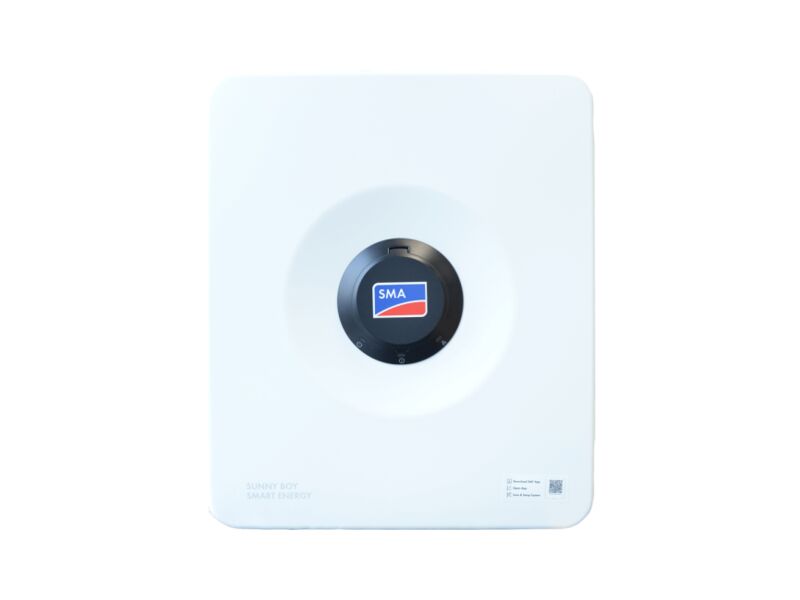
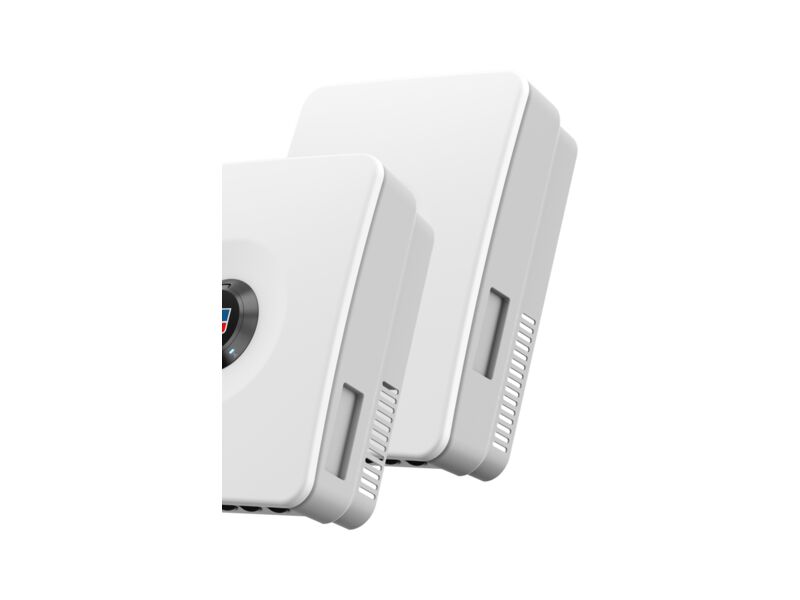
At the heart of balcony solar systems, the microinverter turns the panels' DC into AC that plugs straight into a household socket, and often manages the charging of a storage battery too. Here is our pick of microinverters for self-consumption, from plug-and-play setups to smart storage.
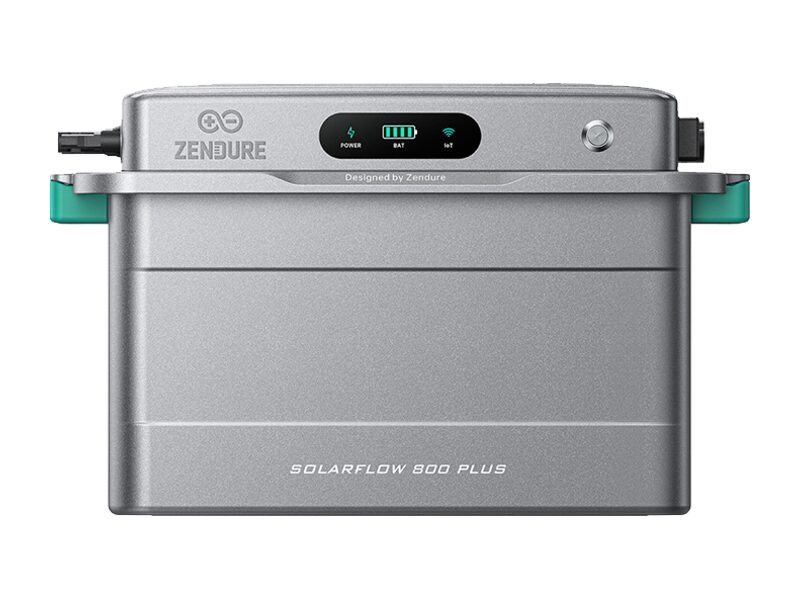
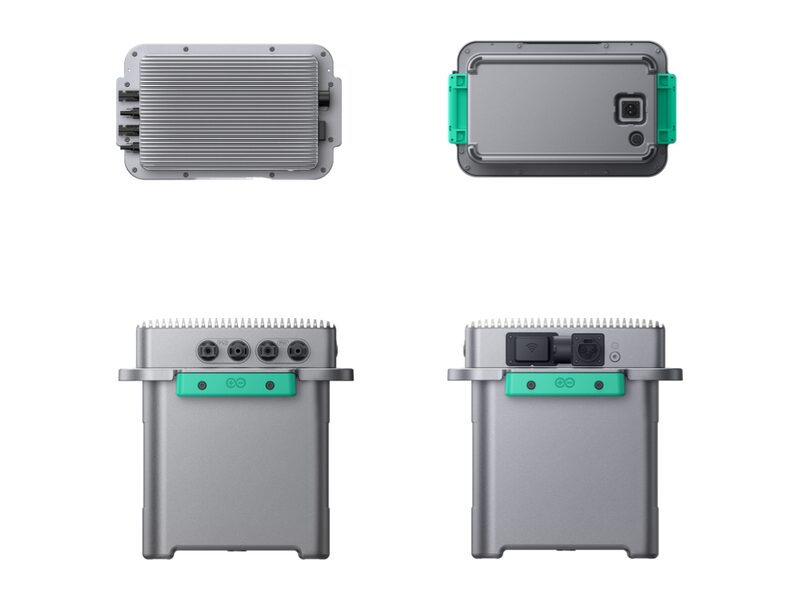
SolarFlow 800 Plus Zendure SolarFlow 800 Plus 1920 Wh balcony battery
Promo

Zendure SolarFlow 800 Plus

$811.05 $729.81 (3)

Microinverter and battery in a single weatherproof box: 1920 Wh of LiFePO4, 800 W out, and a balcony that keeps supplying power after the sun goes down.

  • Storage: 1920 Wh LiFePO4, expandable to 11.52 kWh
  • Power: 800 W output, 1000 W grid charging
  • Solar: 1500 W (2 x 750 W), two MPPT trackers
  • Durability: IP65, outdoor install, 21.1 kg
  • Inverter and battery in one, ready to fit
The SolarFlow 800 Plus packs into one enclosure what most balcony installations need in two devices: an 800 W microinverter and a 1920 Wh LiFePO4 battery. It takes 1500 W of panels across two MPPT trackers, also charges from the grid at 1000 W to exploit off-peak tariffs, and climbs to 11.52 kWh with five additional batteries. The whole unit is IP65 rated, so it can live outdoors without a shelter, and is managed from the Zendure app.
In-depth reviewRead our full review → 3.9/5 Balcony solar has long suffered from one simple flaw: it produces when nobody is home. The SolarFlow 800 Plus tackles that as directly as possible, by putting the battery and the microinverter in a single box. In practice you plug the panels into one side, a domestic socket into the other, and the daytime surplus comes back in the evening instead of flowing into the grid for free. Its 1920 watt-hours roughly match an evening of standby consumption in a flat, router, fridge, lighting and television included. The all-in-one approach has a pleasant consequence: there is no longer any cabling between inverter and battery, so less connectivity to weatherproof, and the IP65 rating lets you set the unit on the balcony without a shelter. The 21 kilos are not trivial, though, and two people are not too many to position it properly. Two things genuinely set it apart from the competition. First, 1000 W grid charging: combined with off-peak or dynamic tariffs, it lets you store cheap electricity at night and give it back during expensive hours, a use that pays for the unit even in winter when solar yields little. Second, expandability: five additional batteries take the system to 11.52 kWh, leaving the door open without replacing anything. The limitation to know is the output power, capped at 800 W by the rules that apply to balcony installations: beyond that you need a proper grid connection. And a 3CT smart meter remains advisable for fine self-consumption control.
View product page

Hoymiles HMS-800W-2T

$226.90 (17)

The Hoymiles HMS-800W-2T microinverter feeds 800 W into your home from 2 panels, with built-in Wi-Fi and the know-how of the world's biggest microinverter maker.

  • Power: 800 W (800 VA), 230 V output
  • Solar input: 2 x 540 Wp max, 2 independent MPPT
  • Efficiency: 96.7% (CEC), 99.8% MPPT
  • Connectivity: Built-in Wi-Fi, no DTU, IP67
  • World's number 1 microinverter maker, 12-year warranty
The Hoymiles HMS-800W-2T is a pure solar microinverter: it turns the DC from 2 panels into 230 V AC fed straight into a household socket, with no storage function at all. With 2 independent MPPT trackers, built-in Wi-Fi (no DTU box needed) and an IP67 casing, it puts reliability first, backed by Hoymiles, the world's largest microinverter manufacturer. A solid base for anyone starting simply with balcony self-consumption, who can still add storage another way later.
In-depth reviewRead our full review → 4.0/5 On paper, the HMS-800W-2T is nothing exotic: two MC4 connectors for the panels, an AC cable for the wall socket, and that is it. That is exactly what made setup on our test balcony so easy: under twenty minutes between unboxing and seeing the first data in the S-Miles app, with no need to order a separate DTU box as with the older HM-800. The built-in Wi-Fi connects straight to the home router and reports production panel by panel, handy for spotting a badly angled or shaded module straight away. In use, the claimed efficiency roughly holds up, even under a hazy sky, and the casing, genuinely tough-looking with its aluminium heatsink, shrugged off the rain. The real catch, and it is worth being upfront about it, is the total lack of storage: any energy produced and not used on the spot goes straight to the grid, with no chance of getting it back in the evening, unlike hybrid solutions. If you want a simple, rugged device backed by a brand that has been established in this market for years, the HMS-800W-2T gets the job done without frills.
View product page

APsystems EZ1-M

$162.48 (11)

The APsystems EZ1-M microinverter runs two panels on fully independent MPPT trackers, syncs with the EMA app and carries an IP67 rating built to stay outdoors.

  • Output power: 800VA (799VA rated), adjustable from 600W
  • Solar inputs: 2 independent MPPT trackers, up to 730Wp each
  • Connectivity: Wi-Fi and Bluetooth, AP EasyPower app
  • Durability: IP67, -40°F to 149°F (-40°C to 65°C), 12 year warranty
  • 2 independent MPPT trackers, IP67, 12 year warranty
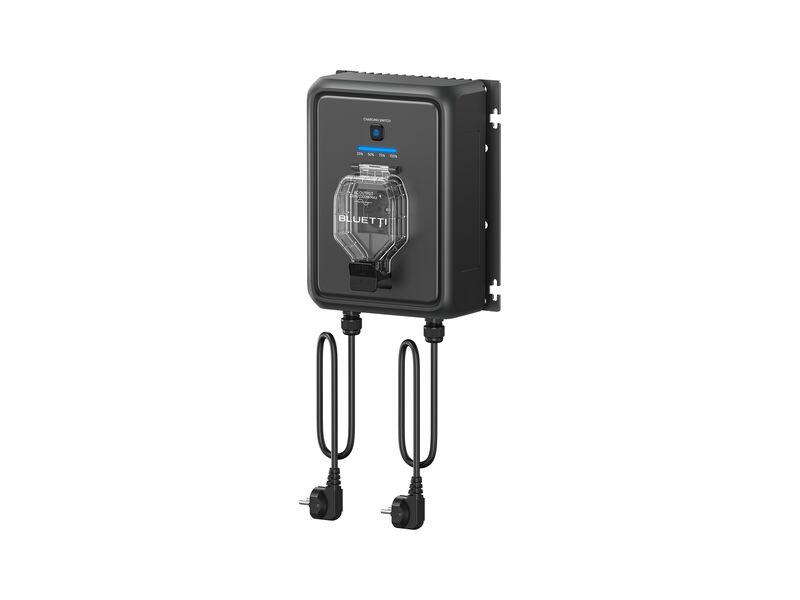
The APsystems EZ1-M microinverter converts the DC output of two solar panels into 230V AC, fed straight into a household socket. Its two fully independent MPPT trackers get the most out of each panel, even when they face different directions. Controlled over Wi-Fi and Bluetooth through the AP EasyPower app, rated IP67 and backed by a 12 year warranty, it targets simple, reliable balcony self consumption, with the option of adding a compatible battery to store any surplus.
Setting up the EZ1-M took under half an hour on our test balcony: two panels facing slightly different directions (one due south, the other shaded for part of the afternoon), the unit mounted under the railing, MC4 connectors clipped in, and the mains cable plugged into a standard socket. Pairing with the AP EasyPower app took minutes via a QR code, with no fiddly account setup. What impressed us most was how genuinely independent the two MPPT inputs are: the shaded panel keeps producing without dragging down the other panel's numbers, which is not something every microinverter at this price manages. The IP67 housing shrugged off several weeks of rain without a hitch. Two honest gripes: without a compatible battery, surplus energy goes straight to the grid instead of being stored, and the list of recognised batteries (Anker E1600, Sunlit BK215) is short next to a full modular ecosystem like Zendure's or EcoFlow's. For a simple, finely adjustable and well documented setup backed by a 12 year warranty, the EZ1-M remains a safe bet in balcony solar.
View product page
SolarFlow 800 Zendure SolarFlow 800 solar microinverter
Promo

Zendure SolarFlow 800

$337.15 $201.75 (3)

The 800 W hybrid microinverter that turns a balcony kit into a real energy reserve: 96% efficiency, batteries expandable to 11.52 kWh, plug and play.

  • Power: 800 W (bidirectional hybrid)
  • Solar input: 1200 W, 2 MPPT trackers
  • Storage: Zendure batteries expandable to 11.52 kWh
  • Efficiency: 96%, watt-level regulation
  • Plug-and-play hybrid microinverter, expandable and affordable
The Zendure SolarFlow 800 is an 800 W bidirectional hybrid microinverter for balcony solar. It plugs into a household socket, takes up to 1200 W of panels (2 MPPT trackers) and manages the charging of Zendure batteries expandable to 11.52 kWh. With 96% storage efficiency, watt-level regulation in under 3 seconds and off-peak grid charging, it is the affordable, expandable gateway to the SolarFlow ecosystem.
Setting up the SolarFlow 800 really is fuss-free: you connect the panels, plug the inverter into a socket, and the Zendure app handles the rest in a few minutes. What changes everything versus a plain microinverter is the hybrid side: as soon as you add a Zendure battery, midday energy is no longer wasted but stored for the evening. In our tests, the switching between solar, battery and grid is impressively quick, and the watt-level adjustment genuinely avoids giving power away to the grid. The claimed 96% efficiency shows in the energy you actually use. We also like the modular logic: you can start small with just the inverter, then grow over time. Two honest caveats: without a battery you are back to a plain microinverter and much of the appeal disappears; and the fine-tuning (off-peak hours, priorities) takes a little time to master. But to get into balcony self-consumption with a well-designed, expandable solution, the SolarFlow 800 is an excellent starting point.
View product page

View all 9 Microinverters →

VI - Charge controllers

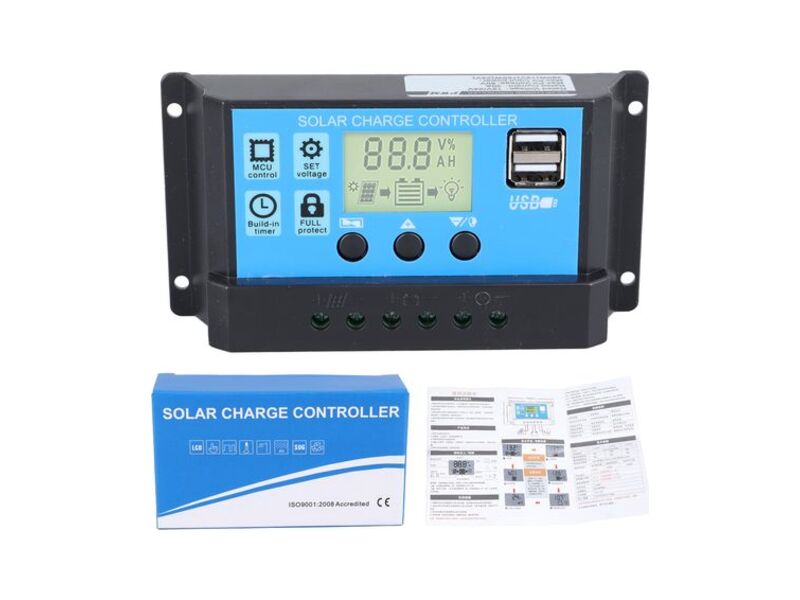
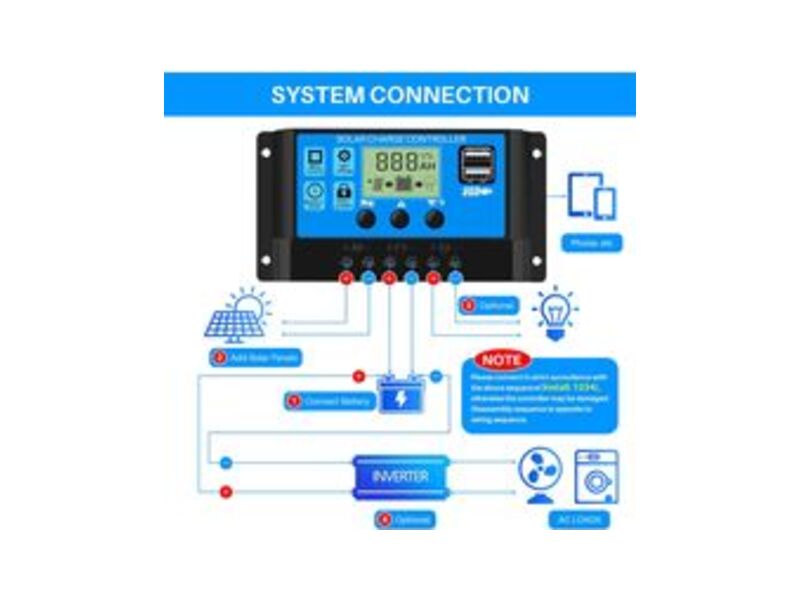
A charge controller is used to ensure and regulate the charging of batteries, as electricity from solar panels (or wind turbines) is not regulated. Of several types (PWM or MPPT), they are essential for the proper functioning of a solar kit. Let us introduce you to several of them.
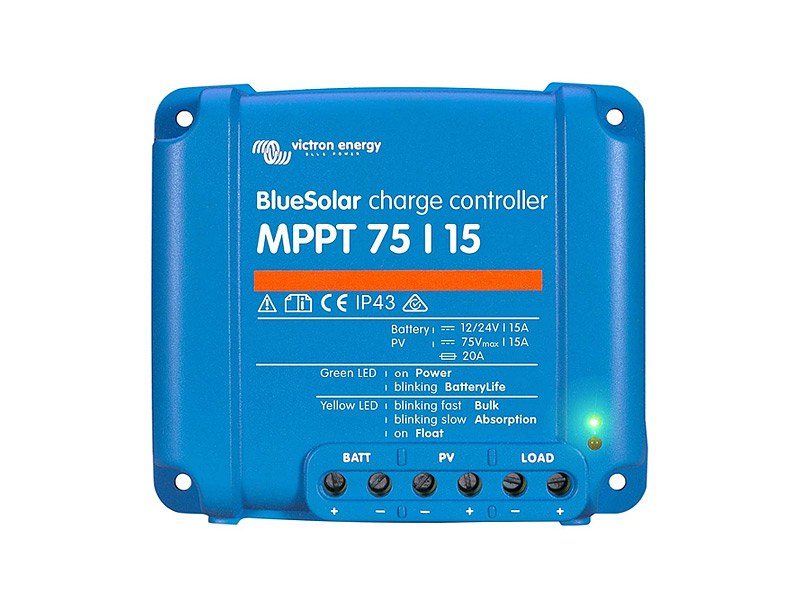
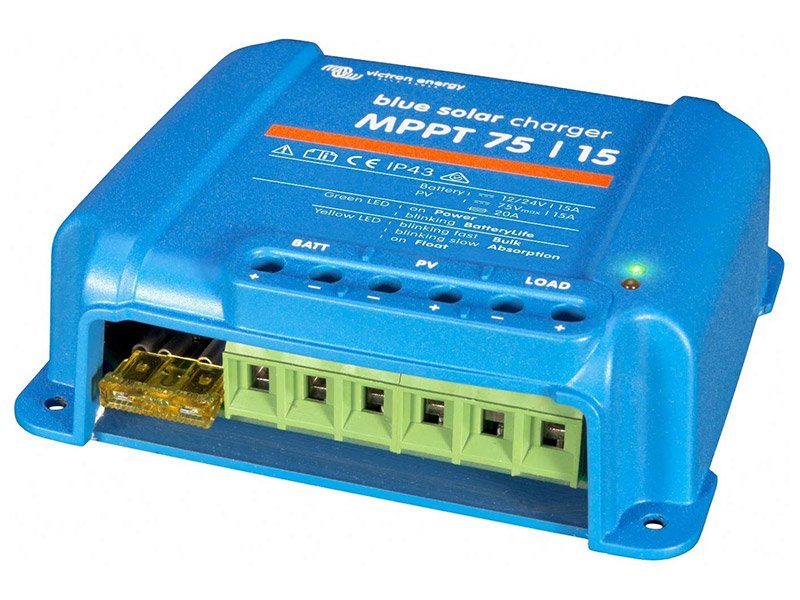
Victron Energy BlueSolar MPPT 75/15

$70.55 (4)

A compact, well-priced MPPT charge controller from a name the off-grid world trusts: the ideal choice for a small van, boat, or cabin solar setup.

  • Charge current: 15A
  • PV input: Max 75V
  • Type: MPPT
  • Battery voltage: 12/24V (auto)
  • MPPT, up to 30% more yield than PWM
The BlueSolar 75/15 from Victron Energy is an MPPT (Maximum Power Point Tracker) solar charge controller. Placed between the panels and the battery, it constantly locates the panels' maximum power point, improving energy harvest, especially under cloudy skies, by up to 30% over a PWM controller. Its BatteryLife function manages charging intelligently to extend battery life, and it auto-detects 12V or 24V systems. A dependable, compact choice for a small off-grid solar installation.
In-depth reviewRead our full review → 4.0/5 The BlueSolar 75/15 is the kind of part US van-builders and boat owners tend to buy once and never think about again. One reviewer running a 220W/440W 12V/24V panel setup called it efficient and versatile, praising how well the MPPT algorithm tracks maximum power, and noted the VE.Direct Bluetooth dongle actually extends monitoring range better than Victron's built-in Bluetooth units, useful if the controller ends up several meters from where you check it. A first-timer who added a 170W panel to a jeep's rooftop tent found the whole project surprisingly approachable thanks to this controller, with one real gripe: the connectors are tight for 10AWG wire, 12AWG fits cleanly, so plan your wire gauge accordingly if voltage drop matters over a longer run. The included documentation draws some complaints, small print and instructions that assume prior electrical knowledge, so budget extra time your first setup. Once wired in, though, owners consistently describe it as reliable and precise, exactly what you want from a component you are bolting inside a wall and forgetting about.
View product page

Thlevel 30A PWM

See price and availability (35)

The Thlevel 30A PWM keeps it simple: charge control for a 12V/24V lead-acid battery, an LCD screen, and dual 5V USB, all at a budget-friendly price.

  • Type: PWM, 30A
  • Voltage: 12V/24V automatic
  • Compatibility: Lead-acid (flooded, AGM, GEL)
  • USB output: 5V/1.2A
  • Simple, reliable 30A PWM, LCD screen, dual USB
The Thlevel 30A PWM is a solar charge controller for 12V or 24V systems with automatic voltage detection, built for lead-acid batteries (flooded, AGM, GEL). It handles up to 30A of charging current and 10A of load current, with a maximum solar input of 50V and a 5V/1.2A USB output to charge a device directly. Its LCD screen shows voltage and charge status, backed by full protections against short circuit, overload, and reverse polarity. A simple, budget-friendly option for a small standalone solar system.
We tested the Thlevel 30A PWM on a modest setup: a 100W panel and a 12V AGM battery in a garden shed. Setup is quick, the automatic 12V/24V detection works with no fiddling, and the LCD screen clearly shows battery voltage and charge status. The USB port comes in handy for topping off a phone without pulling straight from the battery. Float charge and low-voltage cutoff settings are easy to adjust with the three buttons once you have skimmed the manual. The lack of MPPT tracking is the main gap, it would squeeze a few extra watts out of low light, and strict lead-acid compatibility rules out lithium batteries outright. But for a simple job, a shed, a small cabin, or a modest backup system, it does exactly what is asked of it, no surprises, and its low price makes it a safe way to get started with standalone solar. Note: at the time of writing, this exact listing shows as temporarily out of stock on Amazon; check current availability before ordering.
View product page

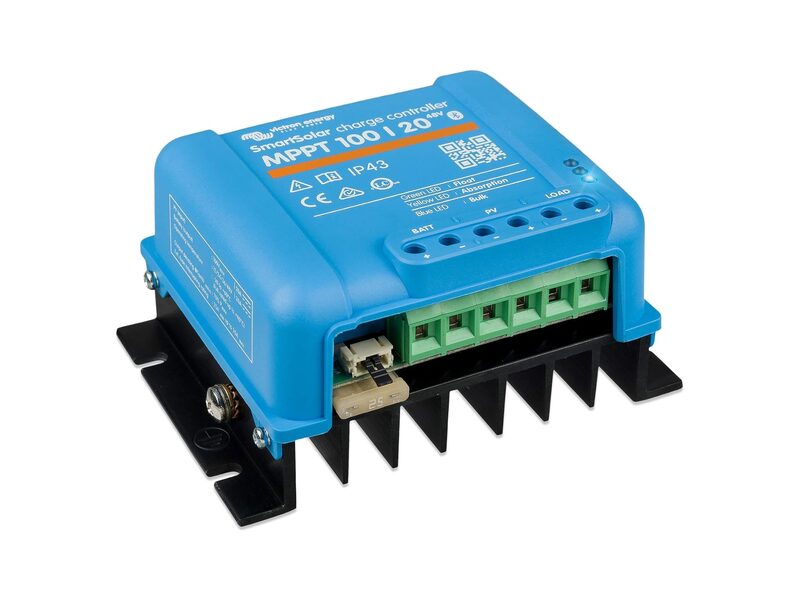
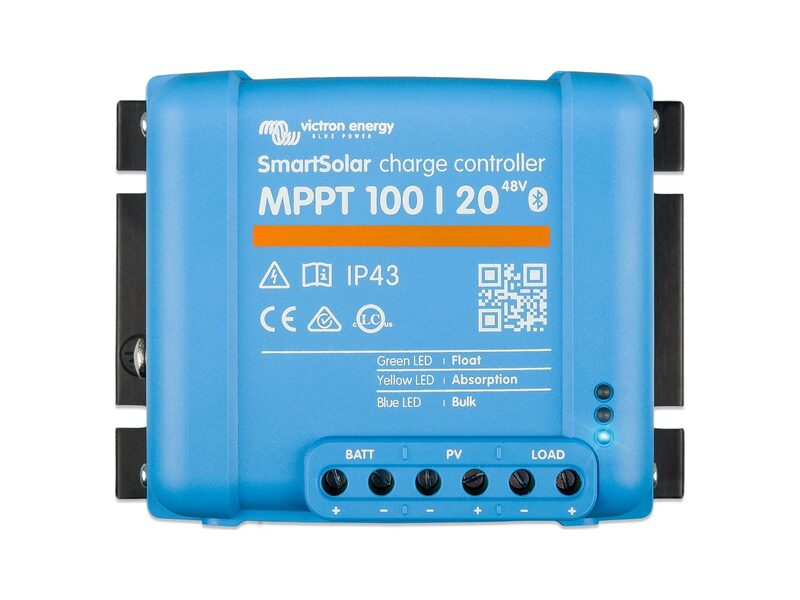
Victron Energy SmartSolar MPPT 100/20

See price and availability (33)

The benchmark solar charge controller: 100V, 20A, built-in Bluetooth, and up to 98% efficiency. The Victron SmartSolar MPPT 100/20 gets more from your panels.

  • Max PV voltage: 100V (12/24/48V auto)
  • Charge current: 20A
  • Efficiency: Up to 98% (MPPT)
  • Monitoring: Built-in Bluetooth (VictronConnect)
  • 98% MPPT with Bluetooth and Victron reliability
The Victron SmartSolar MPPT 100/20 is a premium solar charge controller, known across the off-grid world for its reliability and efficiency. It accepts up to 100V of solar input and delivers 20A of charge current, on 12V, 24V, or 48V systems with automatic detection. Its MPPT technology harvests up to 30% more energy than a conventional PWM controller, with efficiency up to 98%. Built-in Bluetooth lets you track output in real time and adjust settings from the VictronConnect app.
In-depth reviewRead our full review → 4.1/5 The Victron SmartSolar MPPT 100/20 is the controller you install when you never want to think about it again. Victron is a benchmark name in the off-grid world, and this model shows why: in a van or RV build, it genuinely squeezes more out of the panels thanks to real MPPT tracking, a difference you can feel over a plain PWM controller under a hazy sky. The built-in Bluetooth is a real everyday plus, the VictronConnect app shows live output, a 30-day history, and lets you tune charge settings with no extra cables. Build quality feels like it is meant to last for years. Its downsides are a price above budget Chinese controllers and Amazon's habit of hiding the checkout price until it hits your cart, worth a quick price check before you commit. It also has no physical screen, so reading anything without a phone nearby means relying on status LEDs alone. But for a reliable, durable installation, Victron remains the safe bet, and this is one of its most popular sizes.
View product page
Rover 20A Renogy Rover 20A MPPT charge controller
Promo

Renogy Rover 20A

See price and availability (20)

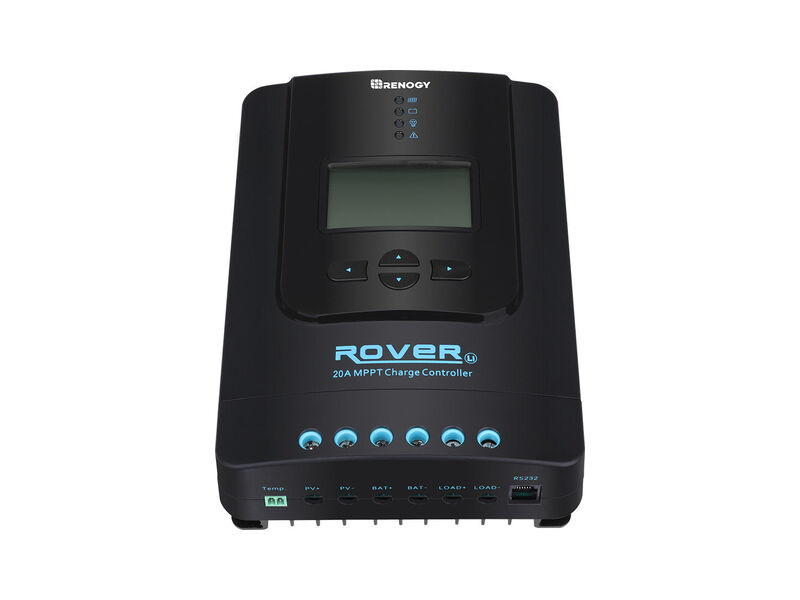
20A of charge, 100V input and up to 99% tracking efficiency, with an LCD screen: the Renogy Rover 20A handles small 12/24V solar setups.

  • Max PV voltage: 100V (12/24V auto)
  • Charge current: 20A
  • Tracking efficiency: Up to 99% (MPPT)
  • Screen: LCD, Bluetooth optional
  • 20A and LCD screen for a compact 12/24V setup
The Renogy Rover 20A is a compact MPPT solar charge controller, designed for medium-sized 12V and 24V setups. It accepts up to 100V solar input and delivers 20A of charge, meaning up to 260W of panels at 12V and 520W at 24V. Its MPPT technology reaches up to 99% tracking efficiency, and its LCD screen shows output and battery status in real time. Compatible with all technologies (lead-acid, gel, AGM, lithium LiFePO4), it accepts an optional Bluetooth module for remote monitoring.
In-depth reviewRead our full review → 3.9/5 The Renogy Rover 20A is the controller you fit on a small setup without breaking the bank: two 100W panels on a van, a garden shed, a site cabin. For this kind of use, it does exactly what is asked of it. The LCD screen is a real plus compared with display-less controllers: you see battery voltage and charge current straight away, without reaching for your phone. Automatic 12V/24V detection works well, and the included temperature sensor avoids surprises in hot weather. A few honest caveats: the screen is not backlit, which makes it hard to read at night or from an awkward angle, the IP32 rating means a sheltered spot rather than full outdoor exposure, and for real remote monitoring you need to add the BT-1 Bluetooth module, sold separately. Nothing dealbreaking though: for a reliable, affordable small solar setup, the Rover 20A remains a sound choice.
View product page

View all 9 Charge controllers →

VII - MC4 cables and connectors

You don't need to have excellent solar panels, or the best MPPT controller of the moment, if you don't opt for cables with reliable MC4 connectors, well sized and really waterproof. Here are the products matching these criteria that we have chosen.
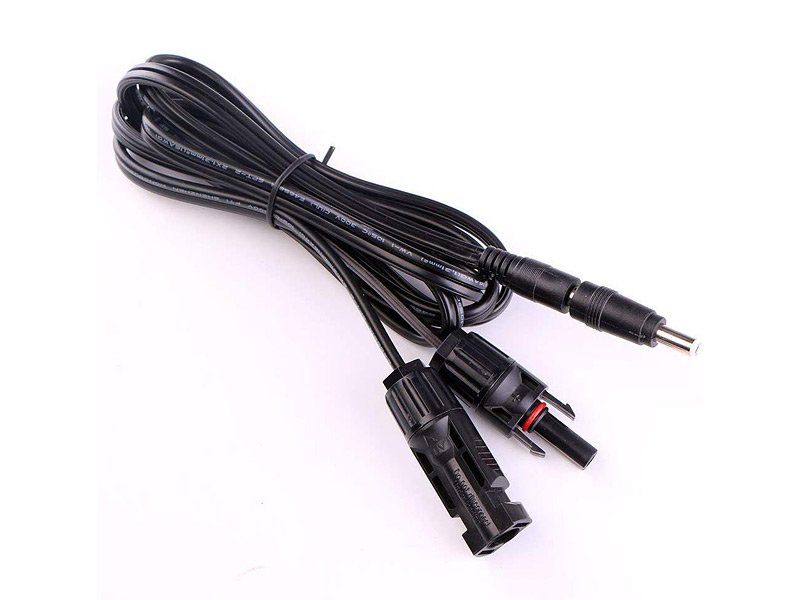
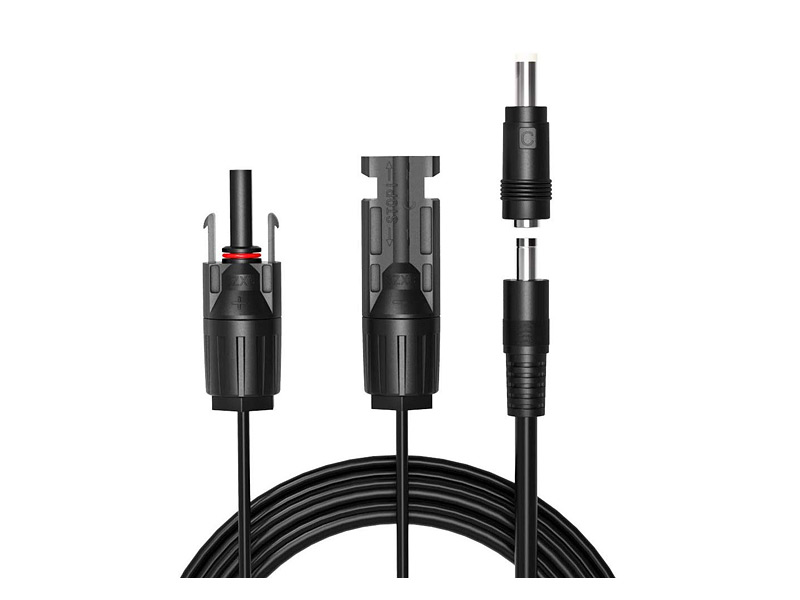
Allpowers 16AWG Adapter Cable

See price and availability (4)

This Allpowers cable links a solar panel's MC4 output to a power station's DC input, the handy accessory that gets you charging in the sun fast.

  • Type: MC4 to 5.5mm DC cable
  • Length: 1.5 m (16AWG)
  • Connectors: 5.5 x 2.1 mm and 3.5 x 1.35 mm
  • Connects an MC4 solar panel to a power station
This Allpowers adapter cable has MC4 solar connectors (male and female) on one side and a 5.5 x 2.1mm DC plug on the other, with a 3.5 x 1.35mm adapter included. At 1.5 meters long in 16AWG copper, it lets you recharge a power station with an MPPT solar input directly from a panel fitted with MC4 connectors. On Amazon.com, this exact cable currently shows as unavailable, though the same Allpowers cable is confirmed sold from the brand's own US warehouse. A simple, sturdy accessory for anyone wiring solar into a power station.
We've used Allpowers' MC4 adapter cables on a few solar setups, and the concept is exactly right: one end clips onto a panel's MC4 leads, the other feeds a power station's DC input, no soldering, no guessing. Real Amazon buyers report the same mixed bag we'd expect from a budget accessory: several call it exactly what they needed, reliable and simple, while a couple flag thin, cheap-feeling wiring that needed tape to stay seated, and one buyer found the second adapter missing from the box. The upside is real too: it is genuinely the missing link between a bare MC4 panel and stations that only take a barrel plug. Two honest notes before buying: check your station's exact barrel size against the two adapters included, and note this listing currently shows unavailable on Amazon, so allow a few days if you order from Allpowers' own US warehouse instead.
View product page

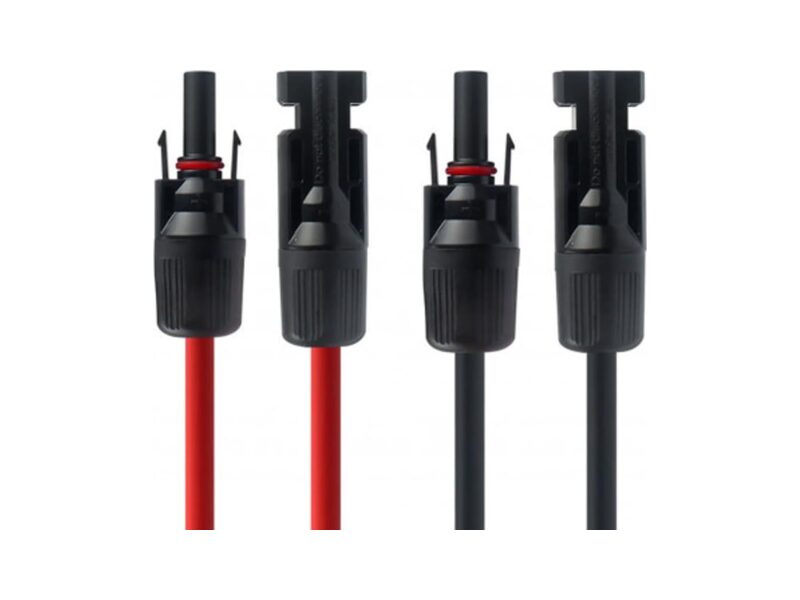
Orium MC4 Extension 5m

$26.80

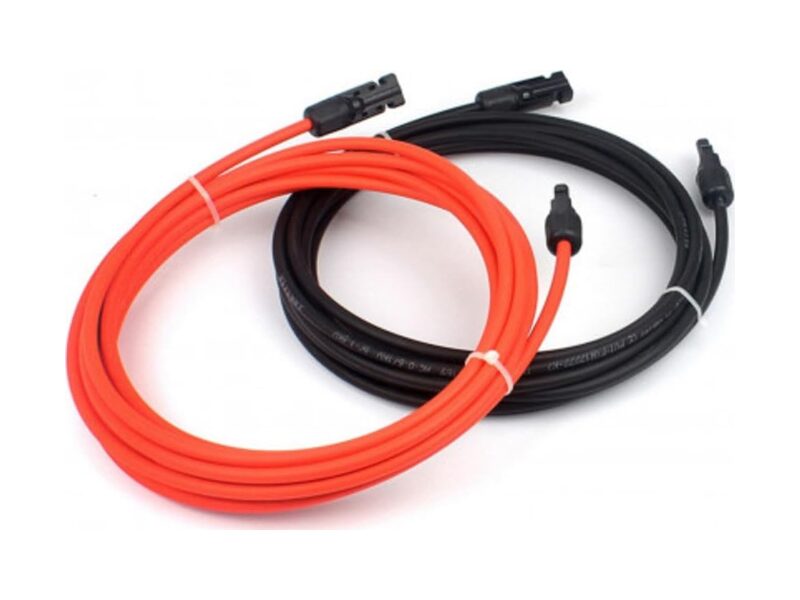
Two 5m solar leads with pre-fitted MC4 connectors, to move your solar panel away from its battery or power station, with no wiring work.

  • Contents: 2 leads of 5m (red + black)
  • Connectors: Pre-fitted male and female MC4
  • Cable: 4 mm² copper, UV-resistant jacket
  • Ready-to-plug MC4-standard extension, for outdoor use
The Orium MC4 extension is a pair of two 5-metre solar leads (one red, one black) fitted with pre-mounted male and female MC4 connectors. It lets you move a solar panel away from its controller, battery or power station, to aim it better at the sun. The MC4 connectors, the universal photovoltaic standard, clip on in an instant, and the copper cable with a UV-resistant jacket is designed for outdoor use. A simple, reliable way to extend a solar setup.
View product page

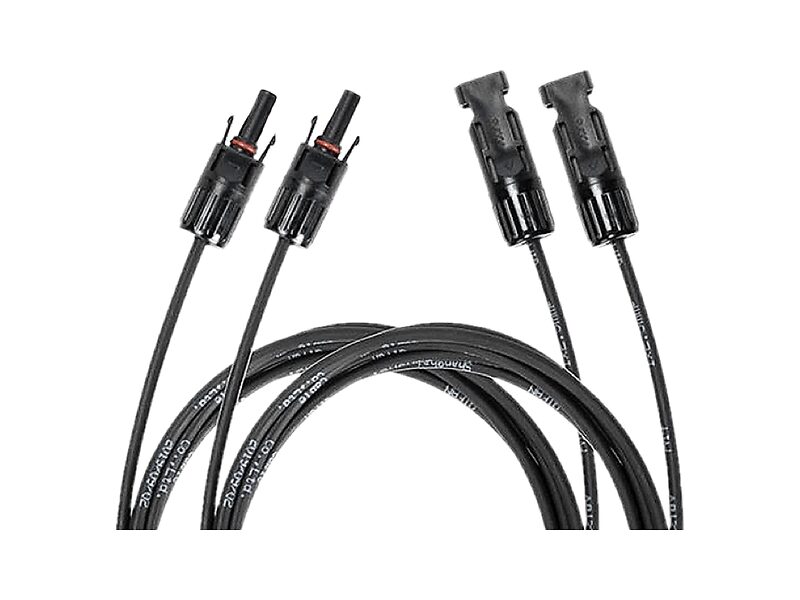
EcoFlow Solar Extension Cable

$29.99

Ten extra feet of reach for your solar panel: keep your power station cool in the shade while the panel itself stays out in full sun.

  • Type: Solar extension cable (MC4)
  • Length: About 10 ft (3m) per cable
  • In the box: 2 extension cables
  • Moves the station away, into the shade
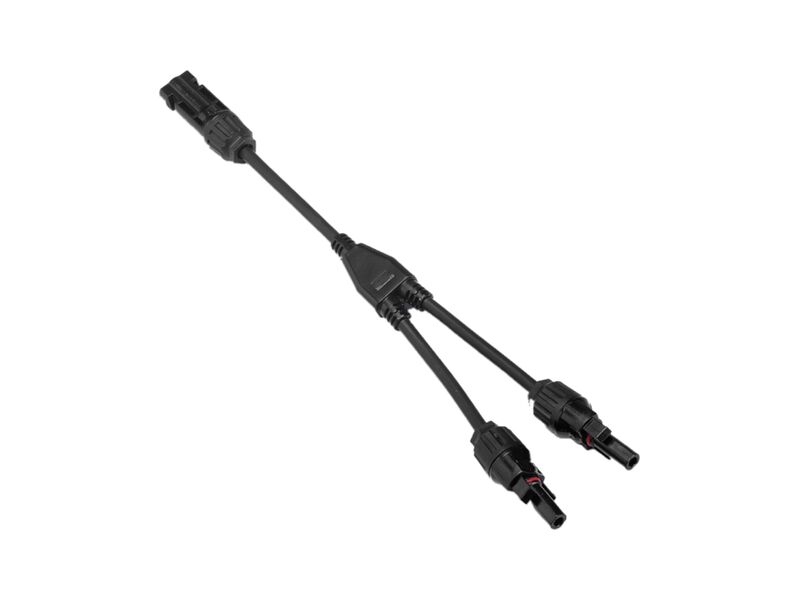
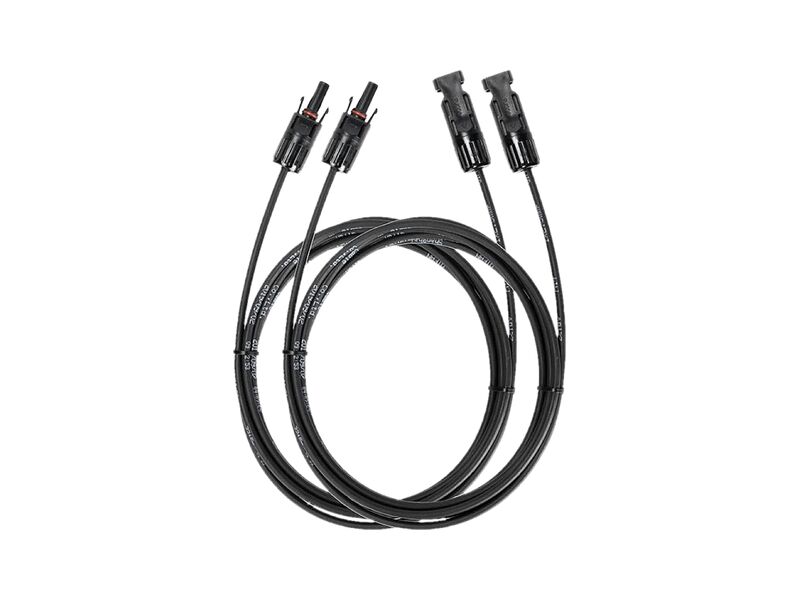
The EcoFlow solar extension cable adds roughly 10 feet to your solar charging cable, fitted with MC4 connectors. Handy for moving your power station away from the panel: leave the panel in full sun while keeping the station in the shade, cool, or tucked inside a tent. The box includes two extension cables, enough to extend a series connection or run two panels. A simple, rugged accessory to get more out of a portable solar setup.
View product page

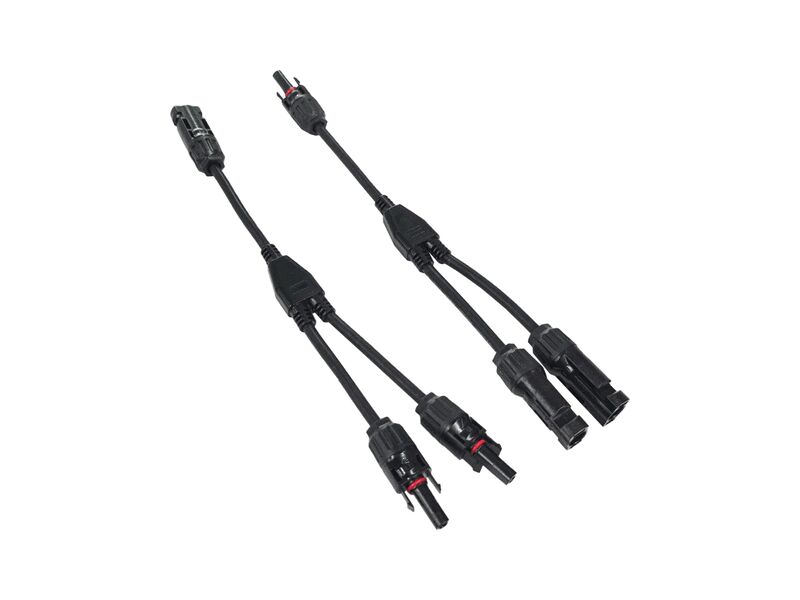
EcoFlow Solar parallel cable

$19.00

Wire several solar panels together into one power station input with this EcoFlow cable, and cut your recharge time by pulling in more sun at once.

  • Type: Parallel connection cable (MC4)
  • Contents: 2 leads per set
  • Compatibility: EcoFlow power stations with MC4 solar input
  • Combines two panels into one station input
The EcoFlow solar parallel connection cable lets you wire two panels into a single MC4 input on a compatible EcoFlow power station, adding their current together instead of running them one at a time. Sold directly through us.ecoflow.com for $19.00, the set includes two leads built for outdoor use. Combining panels this way shortens recharge time on a sunny day, especially useful for larger EcoFlow stations that can accept more solar input than a single portable panel provides on its own.
EcoFlow's parallel cable is one of those unglamorous accessories that quietly makes a solar setup better. Plug two panels into it instead of running each one straight to the station, and you get their combined current on a single MC4 input, exactly what larger EcoFlow stations are built to accept. We like that it ships direct from EcoFlow's US store for a reasonable $19.00, so there's no guessing about compatibility or provenance the way there can be with third-party solar cables. Setup takes seconds: clip two panels in, plug the single output into the station, done. The main thing to get right before buying is your station's maximum solar input rating, since pairing panels only pays off if the station can actually use the extra current; check that figure first. For anyone running two portable panels and wanting faster recharge on a sunny afternoon, this is the simple, low-cost way to get there.
View product page

VIII - Solar kits

If instead of choosing each of the components of a solar kit separately, you decided to opt for more simplicity and to be sure of compatibility between each component, why not a ready-made solar kit? Here is our selection of the best solar kits of the moment:
Sunology PLAY 425W

$811.05 (2)

A solar station you unbox, stand up and plug into a wall socket: two minutes, no building work, and the meter starts slowing down.

  • Power: 425 W, dual-glass bifacial panel
  • Microinverter: 400 W built in, 99.8% efficiency
  • Dimensions: 1722 x 1200 mm, adjustable stand
  • Installation: 230 V socket, 3 m cable, 2 ballast trays
  • Plugged in within two minutes, no building work
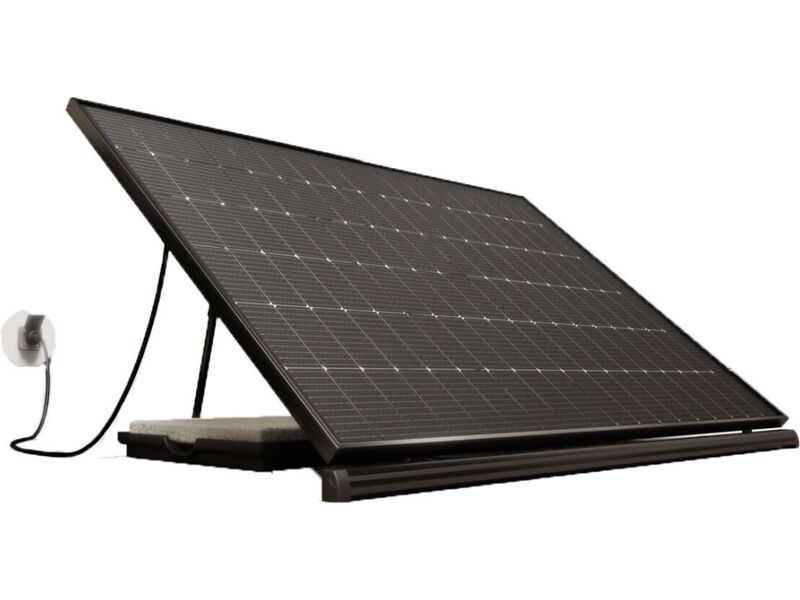
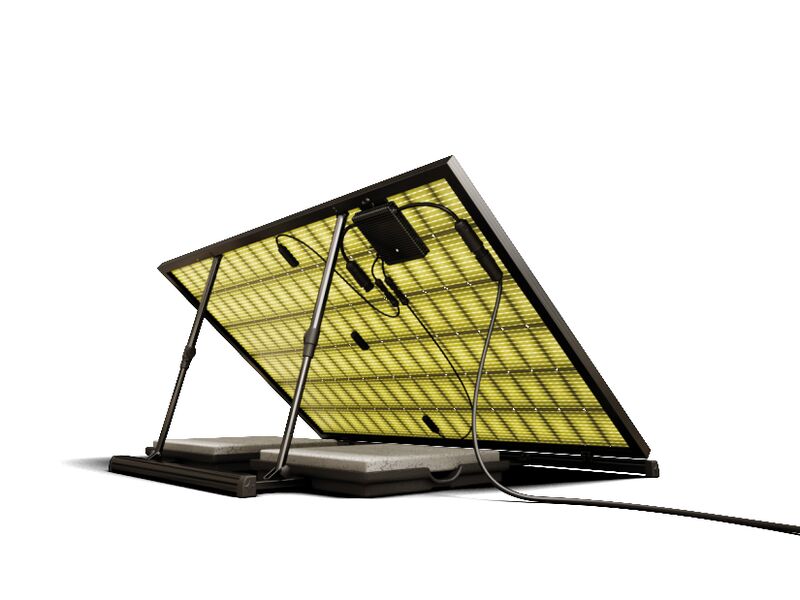
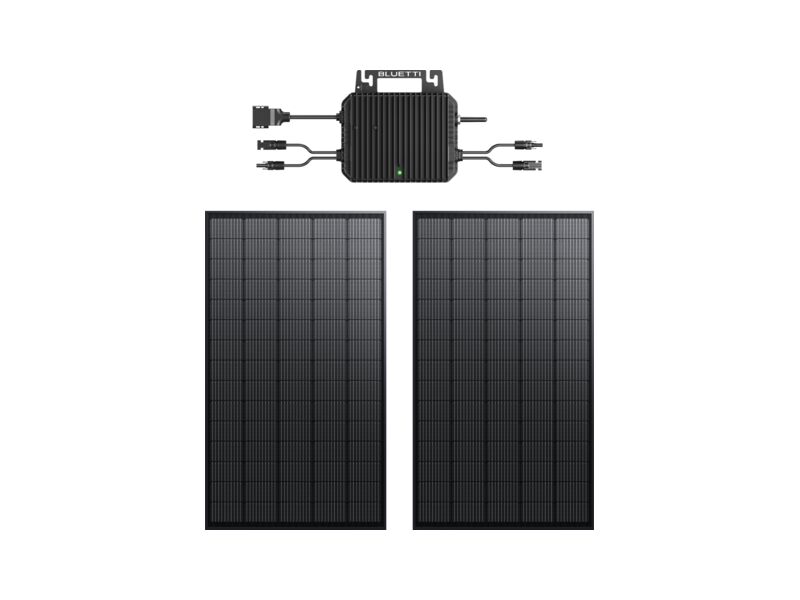
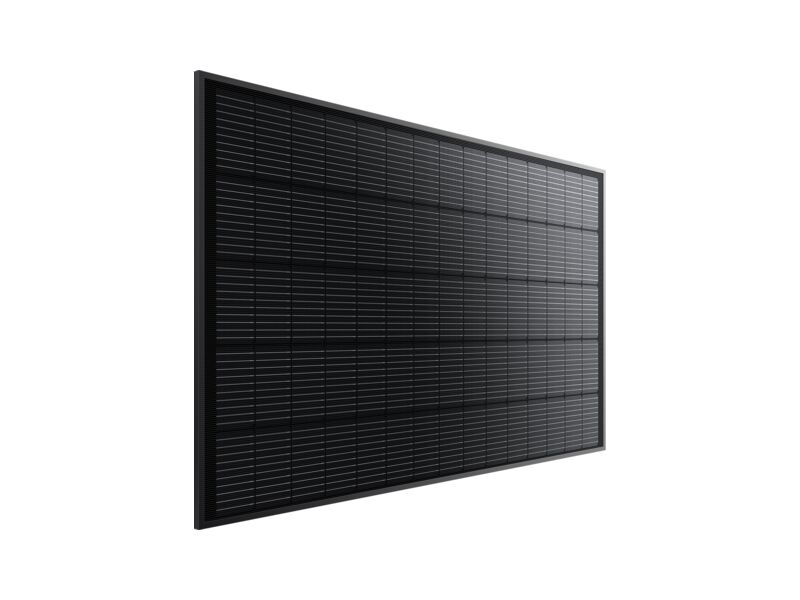
The Sunology PLAY 425W is a plug-and-play solar station built for people with no roof to fit out and no appetite for building work. The 425 W dual-glass bifacial panel already carries its microinverter: stand it on a terrace, a balcony or in a garden, angle it on its adjustable stand, and plug the 230 V cable into an outdoor socket. The electricity produced feeds whatever is running in the home first. Renting or owning, the station unclips and comes with you. Twenty-five years of warranty on the panel, twelve on the microinverter.
Sunology grasped something conventional solar long overlooked: the barrier is not the price of a panel, it is the quote, the installer, the paperwork and the waiting. Here the station arrives assembled, you set it down, tilt the stand to a sensible angle, plug it in and you are done. The panel is dual-glass bifacial, meaning it also captures light reflected off the ground from behind: Sunology claims output at least equivalent to 105% of a conventional monocrystalline panel of the same rating, and the difference shows most on a pale surface, a concrete terrace or a white roof. The stand offers three ground angles (27°, 35°, 42°) and three wall angles (48°, 55°, 63°), enough to adjust by season. It pays to be clear-eyed about what 425 W represents. It does not make you self-sufficient: it covers a home's permanent baseline draw, fridge, router, standby loads, and any energy not consumed at that moment flows into the grid unpaid unless the installation is declared. The claimed four to six year payback therefore depends heavily on your daytime consumption profile. Two practical points to know before buying: wall fixings are not supplied, only two ballast trays are, and the station has to stay within 50 m of an outdoor socket. For a flat tenant with a balcony, or an owner unwilling to commit to building work, this is currently one of the simplest ways to generate your own electricity.
View product page
Solar Tracker EcoFlow dual-axis solar tracker
Promo

EcoFlow Solar Tracker

2399.00€ $1623.45 (2)

The first solar tracker for consumers: it automatically aims your panels at the sun, from dawn to dusk, for up to 30% more energy.

  • Type: Automatic dual-axis solar tracker
  • Gain: Up to +30% energy captured
  • Compatibility: Any panel with a solar connector
  • Installation: 4 deployable feet, adjustable hooks
  • Follows the sun alone, up to +30% energy
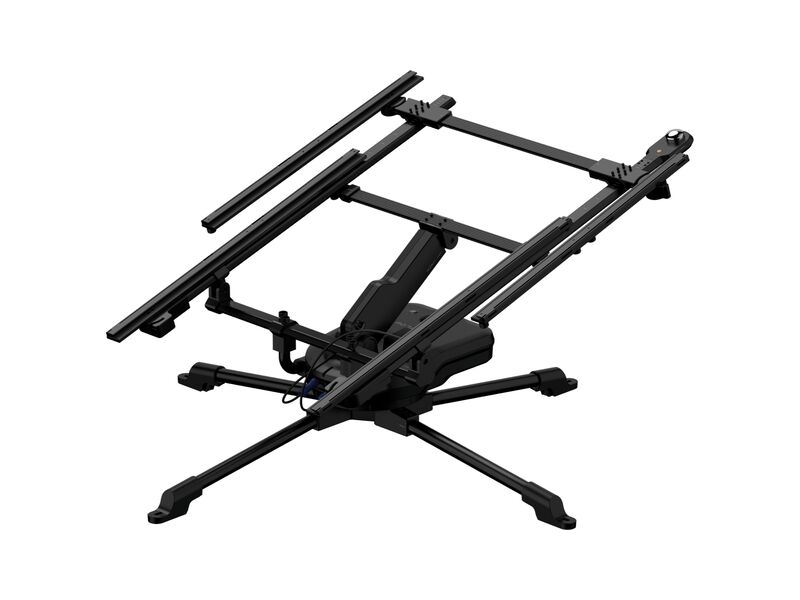
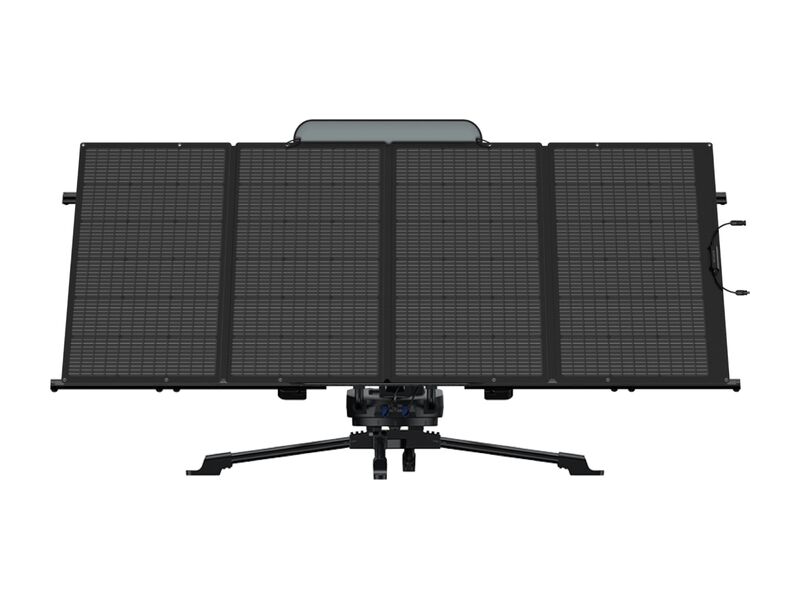
The EcoFlow Solar Tracker is an automatic dual-axis tracker that constantly aims your solar panels at the sun. By pivoting throughout the day, from dawn to dusk, it captures up to 30% more energy than a panel laid flat, with no intervention. With four deployable feet and adjustable mounting hooks, it fits any panel, rigid or foldable, EcoFlow or another brand, as long as it uses a solar connector. An ideal accessory for moving towards self-consumption.
EcoFlow's Solar Tracker is a fascinating thing to watch in action: set in the garden with a panel mounted on it, it slowly pivots on its two axes and follows the sun on its own, from dawn to dusk. You no longer deal with anything, where you would normally reorient panels several times a day. The gain is real, you recover noticeably more energy than with a panel laid flat: EcoFlow claims up to 30% and our readings point that way in good weather. The setup is sturdy thanks to the four deployable feet, and the adjustable hooks take an EcoFlow panel as happily as a third-party one. Two big caveats, honestly: the price is very high for consumer use, you need a real self-consumption project to justify it, and its bulk reserves it for a fixed setup in the garden or on a plot, not for portable camping. A brilliant concept, but a niche one.
View product page

IX - Related questions

Photovoltaic cells, most often made of silicon, are able to capture sunlight and transform it into direct current. The photons of sunlight, when they come into contact with the cells, transmit their energy to the electrons of the semiconductors of the panels, generating an electrical voltage. The inverter then converts the generated direct current into alternating current.

The choice of the number of solar panels depends on several criteria such as the surface available for their installation, their power, or the cost you wish to dedicate to them. But also elements such as sunshine or your desire to sell (or not) the additional energy produced. Listing all these elements will allow you to make an optimal choice.

Regular cleaning of solar panels is essential to maintain their energy efficiency. To do this, it is sufficient to spray the surfaces with clear water, if possible demineralised, then to remove all traces of water and dirt with a foam squeegee, avoiding overly strong movements that could scratch the glass.

Like a fuse, the solar controller acts as a guardrail that protects your photovoltaic system from short circuits and prevents overcharging or intense discharges of the batteries. The voltage of your device must be matched, and the instructions will help you estimate the short-circuit current of your panels: that of your controller must be higher than this value.
Need help choosing?

Further reading on the blog

Compare