
What the advertised 8000W and 12000W actually mean
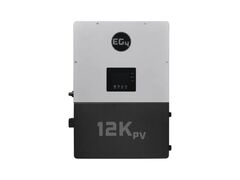
The EG4 12kPV's spec sheet leads with two figures: 8000W of continuous output and 12000W of solar accepted on the input side. The first number is worth a closer look, since an inverter does not deliver the same power continuously as it does for a few seconds.
What sets the 12kPV apart is how long it holds a load above its rated output. The 16000W peak lasts only half a second, but the unit then stays capable of 12000W for a full second, 10000W for a minute, then 8800W for twelve minutes before settling at its 8000W continuous rating. That last figure, 10% above the nameplate rating and held for several minutes, matters more for starting a well pump or a compressor than the half-second peak highlighted on the spec sheet.
On the solar side, the 12000W accepted on input is the maximum DC power from the panels; EG4 recommends installing up to 15000W of panels, a roughly 25% margin that offsets production losses from high heat or an unfavorable angle of incidence.
600V input: solar wiring finally simplified
The 12kPV's real technical edge shows up before the inverter itself: its two MPPT trackers accept a DC voltage from 120 to 500V in everyday operation, with an absolute ceiling of 600V. Such a high input voltage allows long strings of panels wired in series rather than split across several parallel groups, which cuts the current that needs to run through the wiring and, in most residential installs, removes the need for a combiner box between the panel rows and the unit altogether.
The trade-off for this simplification is the tracker count: only two, against three on several direct rivals in this comparison. For a roof with a single orientation, that changes nothing. For a roof with multiple faces, or partly shaded by a chimney or a tree, two trackers mean two panel groups treated as a block, with a production compromise across the whole group as soon as a single panel in the string is shaded.
97.5%, 99.9%, 96.4%: three efficiency figures, one spec sheet
EG4 publishes several efficiency figures for the 12kPV, each measuring a different conversion path. Mixing them up means comparing things that are not comparable.
The first two figures, 97.5% and 99.9%, are peak efficiencies: they describe the best possible conversion, under favorable load conditions. The third, 96.4%, follows the California Energy Commission's weighting method, the standard used to list inverters for sale in the US, which averages efficiency across several power levels rather than reporting only the best operating point. That last figure comes closest to a real day of production, mornings and late afternoons included.
A 1.1-point gap between the peak and the CEC-weighted average is unremarkable for an inverter of this size and signals no particular weakness: nearly every string and hybrid inverter sold in the US shows the same kind of gap between its headline peak number and its CEC-listed figure. At 96.4%, the 12kPV sits in the upper-middle of its category.
Battery: lithium, lead-acid, and an ecosystem that stays open
The EG4 12kPV manages charge and discharge of a 48V battery up to 167A, roughly 8000W on the battery side, consistent with its output rating. Its battery management covers both lithium and lead-acid chemistries, a flexibility rarely seen on a recent hybrid inverter, since most current models have dropped lead-acid support entirely.
On the lithium side, closed-loop communication (CAN or RS485, selectable in the unit's own menu) natively recognizes EG4's own range (LL, LifePower4, PowerPro wall-mount batteries) as well as a set of third-party brands fixed by the manufacturer, with SOK and Fortress coming up most often in the independent solar installer community. This menu-level protocol choice, rather than a lock to a single range, places the 12kPV among the more open hybrid inverters on the market on this axis, well ahead of a unit locked to its own maker's proprietary ecosystem.
Lead-acid mode mostly serves as a fallback: several installs switch it on temporarily to work around a lithium battery communication fault after a firmware update, before returning to normal lithium configuration once the link is restored.
Remote control: the app, export limiting, and the cloud outage
A plug-in Wi-Fi module connects the 12kPV to the EG4 app and monitoring portal, with access to production, consumption and battery state of charge. For installs bound by a contractual export limit, two current-transformer clamps fitted on the incoming service feed enable an export-limiting (zero-export) function: the 12kPV measures the real flow to the grid and trims its output to never exceed it. Three clamp ratios are supported (1000:1, 2000:1, 3000:1), with the clamps shipped as standard rated at 3000:1.
Time-of-use settings, useful for arbitrating between storage and resale depending on the current tariff, remain not very intuitive to configure the first time round. On fast load changes, the switch to battery also shows a slight lag: it covers closer to 98% than 100% of the instantaneous power draw, a minor but real gap on an abrupt motor start.
Three operating modes, one promise worth qualifying state by state
The 12kPV operates in three modes: grid-tied with solar consumed first, fully off-grid, or selling surplus back to the local utility. Output runs on split-phase, 120/240V or 120/208V, with a maximum current of 33.3A at 240VAC (38.5A at 208VAC) and a recommended minimum 40A breaker.
The built-in rapid shutdown meets the NEC 690.12 requirements for solar interconnection, and the unit is certified to UL1741 in both its SA and SB variants, the baseline needed to talk to the grid safely. Those two certifications cover the technical side of interconnection nationwide.
Build quality, warranty and brand reliability
The 12kPV's NEMA 4X enclosure is built to withstand driving rain and water jets, allowing outdoor mounting or placement in an unheated space (garage, shed) as well as indoors. The unit weighs 110 lb (50 kg) and operates from -13 °F to 140 °F (-25 °C to 60 °C), a wide range that covers nearly all of the continental US climate.
No product recall or safety defect turned up for the 12kPV. A share of installs nonetheless report real but non-widespread faults: a voltage imbalance between the two output legs on some units, or an occasional loss of battery communication after an update, generally fixed by reflashing the firmware. The manuals and installation guides, numerous and regularly updated, also remain uneven from one document to the next, which complicates the first setup for an installer new to the brand.
The 10-year warranty, included with no activation step, remains a strong argument against a share of the competition that gates the same length behind an online registration.
Against direct competition
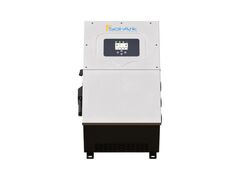
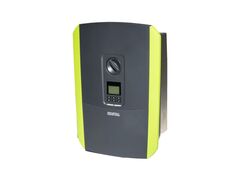
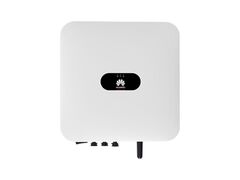
In the residential hybrid inverter segment, the 12kPV compares both to a higher-power rival, the Sol-Ark 15K, and to two more compact European inverters already compared against each other, the Kostal PLENTICORE plus 4.2 and the Huawei SUN2000-3K-LB0.
| Criterion | EG4 12kPV | Sol-Ark 15K | Kostal PLENTICORE plus 4.2 |
|---|---|---|---|
| Continuous AC power | 8000 W, split-phase | 15000 W, split-phase | 4200 W, three-phase |
| MPPTs | 2 | 3 | 3 |
| Battery | Lithium or lead-acid, EG4 and third-party brands | Lithium or lead-acid | 10 compatible brands or lines |
| Warranty | 10 years, no activation | 10 years, no activation | 5 years (10 with activation) |
| Price observed | $2999.99 | $4999.00 | $1557.00 |
Against the Sol-Ark 15K, more powerful, pricier and fitted with a third MPPT tracker, the 12kPV targets a more modest budget and consumption level: both units share the same battery flexibility and the same no-strings warranty length. Against the two European inverters, three-phase or single-phase units built primarily for the European grid, the 12kPV wins on power class and battery openness but cannot match their compact indoor footprint.
Real price and where it's sold
The price listed by the official distributor stood at $2999.99 at the time of writing, against a full list price of $4048.99 outside the promotion, a discount of roughly 26%. Like most prices in this category, that figure is before any state or local sales tax, added at checkout and varying by location. It covers neither the battery, sold separately, nor installation.
The unit is not listed on Amazon or any general marketplace: it is sold exclusively through retailers specializing in off-grid solar and DIY energy equipment, such as Signature Solar and ShopSolarKits. That narrower distribution is typical of the DIY residential storage niche the 12kPV serves, and it means shopping around across two or three of these specialty retailers before buying is worth the few extra minutes.
Who the 12kPV suits, and who it doesn't
It suits a household already comfortable with residential electrical work, ready to size its own panel string and battery bank rather than pay for a turnkey solution, with a roof that has a single or double orientation rather than multiple faces. That is exactly the setup where its 600V input, price and 10-year warranty make the difference.
It suits less anyone wanting a fully turnkey solution with no electrical know-how at all, a complex roof that would benefit from a third MPPT tracker, or a grid resale project in California without first checking the interconnection listing status with the local utility, as detailed above. For a straightforward off-grid or self-consumption setup outside California, that last caveat matters far less.