Portable generators

When a power station is no longer enough and runtime is key, the generator takes over: here is our selection in 2026.

Unlike a power station, which stores electricity in a battery to release it later, a generator produces its own current from a combustion engine. Its big advantage: near-unlimited runtime, as long as you have fuel. It is the go-to solution for powering demanding appliances on a job site, while camping, on a remote site or as home backup during a long outage.
Recent inverter models have become far quieter and deliver clean power that is safe for sensitive electronics; some even run on either petrol or gas (dual fuel). Our team has selected the best portable generators on the market for you. If you would rather have a silent, fuel-free solution, take a look at our portable power stations. · 18 products

I - Portable inverter generators

Compact, quieter and more economical, inverter generators deliver stable, clean power that is safe for your sensitive electronics (phone, laptop, fridge). Perfect for camping, motorhomes or small job sites, they are easy to carry. Here is our selection of the best portable inverter generators.
EU1000i Honda EU1000i 1000W inverter generator
Favorite

Honda EU1000i

$999.00 (7)

A legendary Honda portable inverter generator: ultra quiet, gas powered, perfect for RVs, boats, and camping without disturbing the neighbors.

  • Power: 1000W starting / 900W running, 120V
  • Engine: Honda GXH50 4-stroke, 49.4cc, gas
  • Runtime: 3.0h at rated load, 0.6-gal tank
  • Weight: 28.7 lbs (13 kg)
  • Compact, whisper quiet, Honda reliability
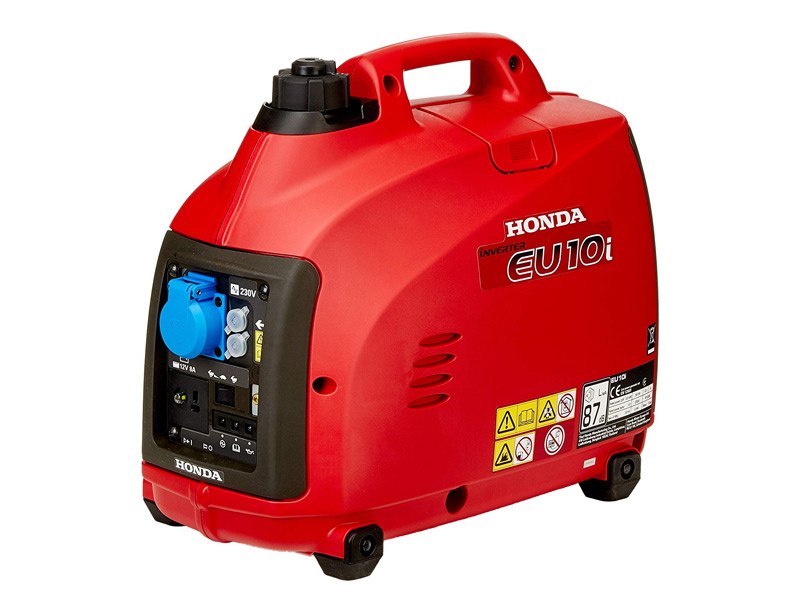
A benchmark in the portable generator world, the Honda EU1000i pairs a compact 29-pound body with genuine Honda reliability. Its GXH50 engine and inverter technology deliver clean, stable power (900W rated, 1000W starting at 120V/8.3A) safe for laptops and RV electronics, while staying remarkably quiet thanks to Eco-Throttle, which trims engine speed to match the load. A 12V DC accessory outlet rounds out the connections. It is the small, dependable companion generator that campers, boaters, and tailgaters have trusted for years.
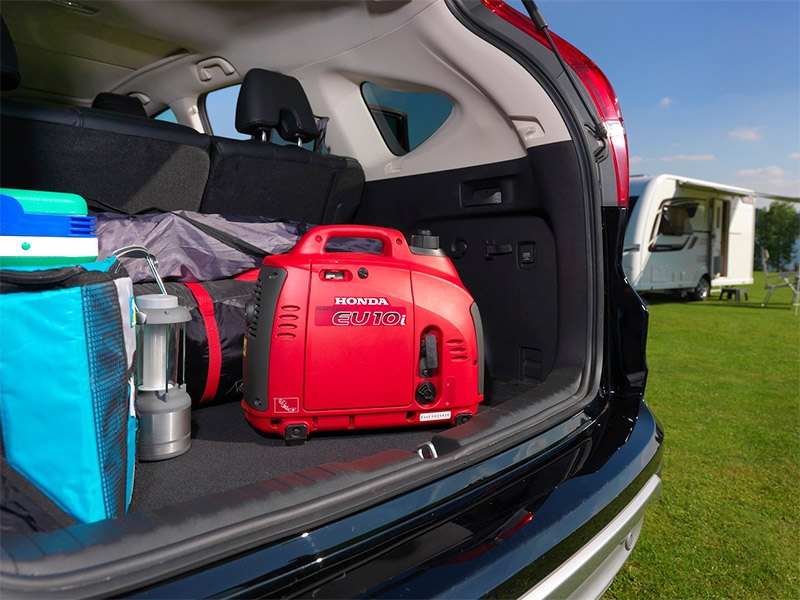
We borrowed an EU1000i for a week of tailgating and a weekend on a friend's sailboat, and it lives up to the reputation Honda generators carry. The recoil start is crisp, one confident pull and it settles into a hum quiet enough that you keep talking normally standing right next to it. We ran a laptop and a phone charger off it without a second thought, the inverter power is textbook clean, nothing so much as flickered. At 28.7 pounds with a molded handle, it really is a one-hand carry down a dock or across a campsite. Fuel efficiency is the other pleasant surprise: a small tank goes a long way at partial load. Two honest caveats: 1000 watts disappears fast (forget a window AC unit or a full-size coffee maker, you will want the bigger EU2200i for that), and there is no USB port, only a 12V DC accessory outlet, so device charging needs an adapter. But as a small, dependable, whisper-quiet backup power source that holds its resale value better than almost anything else in this class, the EU1000i remains a very safe bet.
View product page

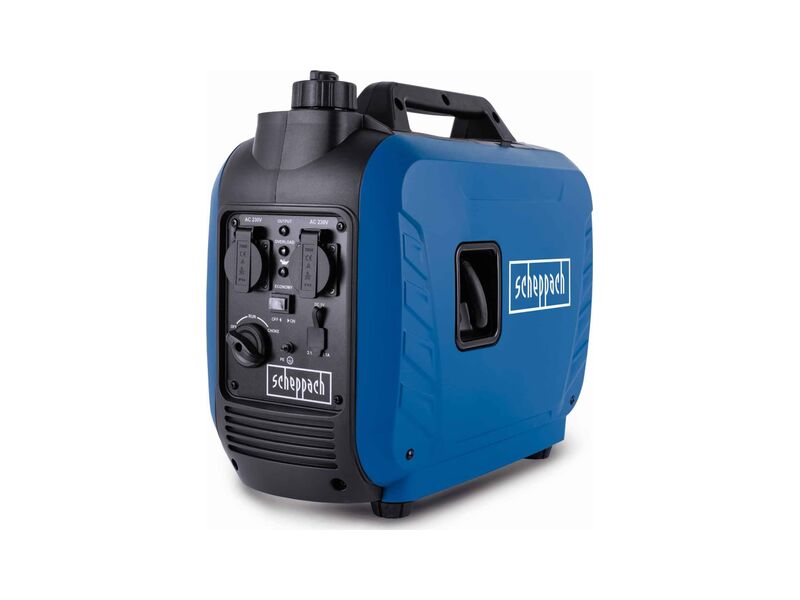
Scheppach SG2500i

$440.01 (11)

A 2000W portable inverter generator, quiet and with stabilised power, ideal for safely powering your sensitive electronic devices anywhere.

  • Power: 2000 W (2200 W max), inverter
  • Engine: 4-stroke petrol, 79 cc (3 hp)
  • Outputs: 2 x 230V sockets + 2 USB-A
  • Stabilised power, quiet (~64 dB) and portable
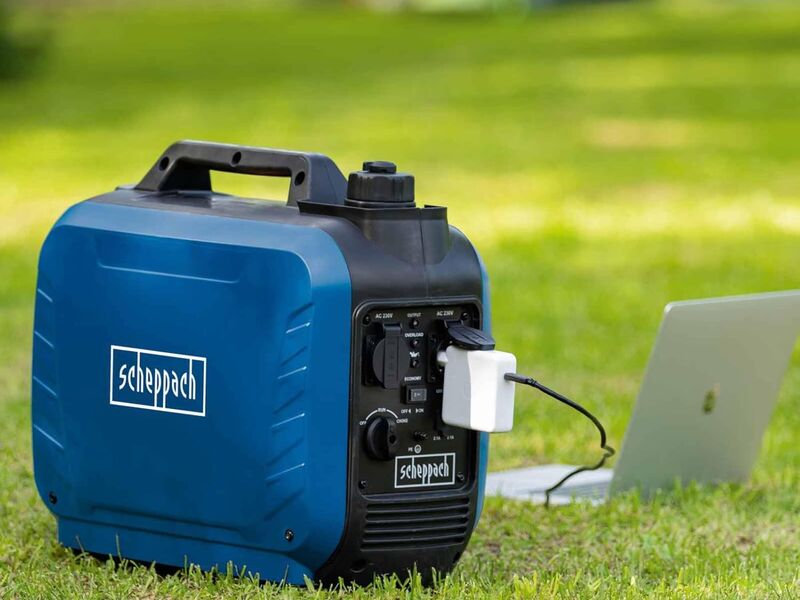
The Scheppach SG2500i is a compact, portable inverter generator delivering 2000W from a 4-stroke petrol engine. Its inverter technology produces pure sine wave power, safe for sensitive electronics (laptops, smartphones, fridges). Particularly quiet, it features two 230V sockets and two USB ports and carries easily thanks to its handle. Ideal for motorhomes, events, DIY or backup power at home.
We tested the SG2500i in the context it is made for: powering devices where there is no outlet. And it is a pleasant surprise. Recoil starting takes no effort, one or two pulls and the engine purrs. The real strength is the relative quiet: in eco mode and at low load, it stays very discreet for a petrol unit, you can chat next to it without raising your voice, unlike old noisy generators. Thanks to the inverter technology, we plugged in a laptop and a small fridge without worry: the power is clean, stable, jolt-free. The two 230V sockets and USB ports cover the needs of a bivouac or a corner of the garden well. It is also light and compact enough to carry with one hand. Two honest reservations: the 2000W output means managing your loads (no big power tools at the same time), and like any petrol engine, it needs maintenance and fresh fuel. But for a reliable, quiet backup generator, the value for money is excellent.
View product page

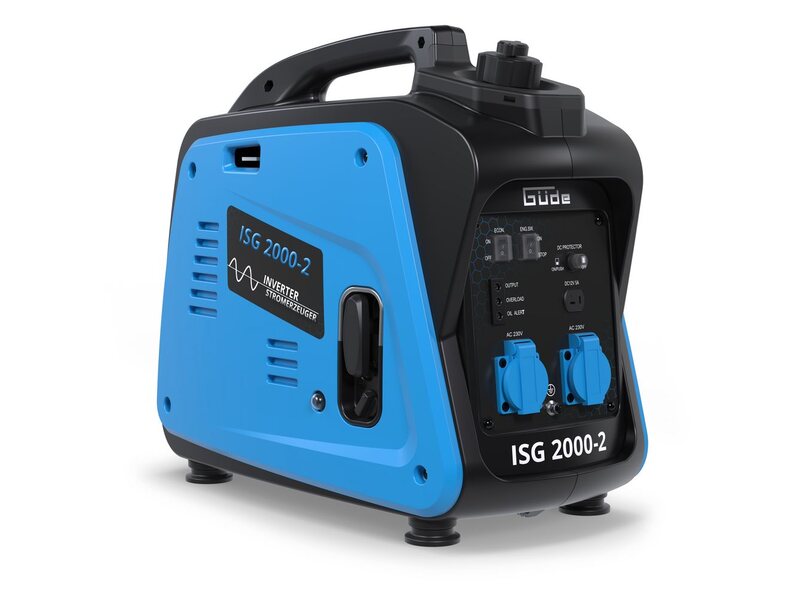
Güde ISG 2000-2

$392.46 (7)

The generator you can take camping without waking the next tent: clean power, an enclosed case, 18.5 kilos and a handle on top.

  • Power: 2000 W peak, 1700 W continuous
  • Engine: 99.2 cc four-stroke OHV, 2.11 kW, 4.1 L tank
  • Runtime: Up to 5.9 h at 50% load, ECO mode
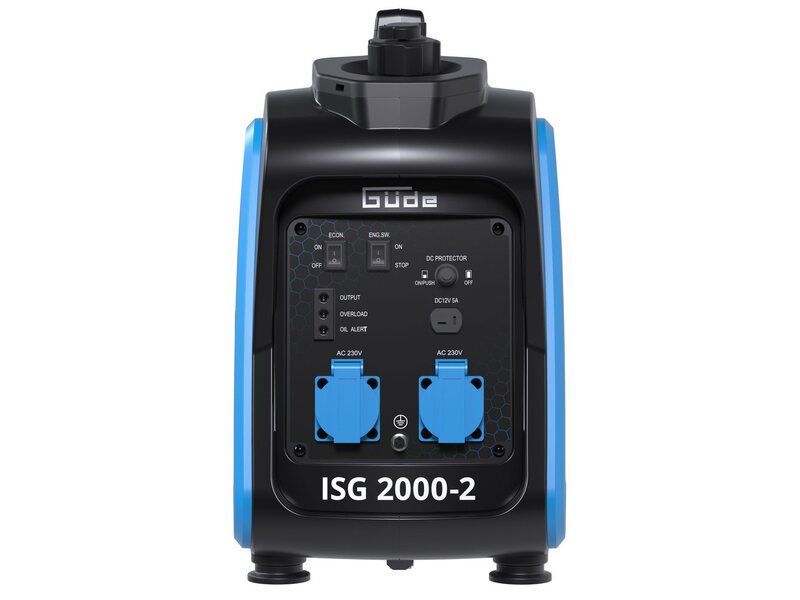
  • Outputs: 2 x 230 V Schuko + 12 V, cable supplied
  • Inverter-clean power and 18.5 kg, enclosed case
The Güde ISG 2000-2 is an inverter generator, and that changes everything for electronics: the current comes out conditioned, without the voltage spikes of an open-frame set. Its 99.2 cc four-stroke OHV engine delivers 2000 W peak and 1700 W continuous across two 230 V Schuko sockets, plus a 12 V output for topping up a car battery. The 4.1 litre tank runs up to 5.9 hours at half load thanks to ECO mode, and the sound-damped case stays under 93 dB LWA. All of it weighs 18.5 kg, carried by a single handle.
This small Güde solves a problem many people discover the hard way: a conventional generator produces dirty power, with voltage swings that an angle grinder shrugs off but that become worrying the moment you plug in a laptop, a router or a modern fridge with a control board. The inverter in the ISG 2000-2 rebuilds the waveform before delivering it, and that is what justifies paying a little more than for an open-frame set of the same rating. The format follows the same logic. An enclosed case rather than a tubular frame, a handle on top, 18.5 kg empty, roughly the footprint of a large cool box: you lift it out of the boot one-handed and set it down by a tent without waking the campsite. The quoted 93 dB is a standardised sound-power figure, not what you hear from three metres away, and in practice it sits at the quieter end of its class. Where you have to be clear-eyed is runtime. The tank holds only 4.1 litres: the claimed 5.9 hours apply at half load with ECO mode engaged, which drops engine speed whenever demand falls. Worked hard, expect closer to three hours. That is the price of the compact format, and the flip side is that a 5 litre jerry can doubles your day. Two other things worth knowing: starting is by recoil pull, there is no electric start, and 1700 W continuous rules out heavy resistive loads such as a fan heater or a kettle.
View product page

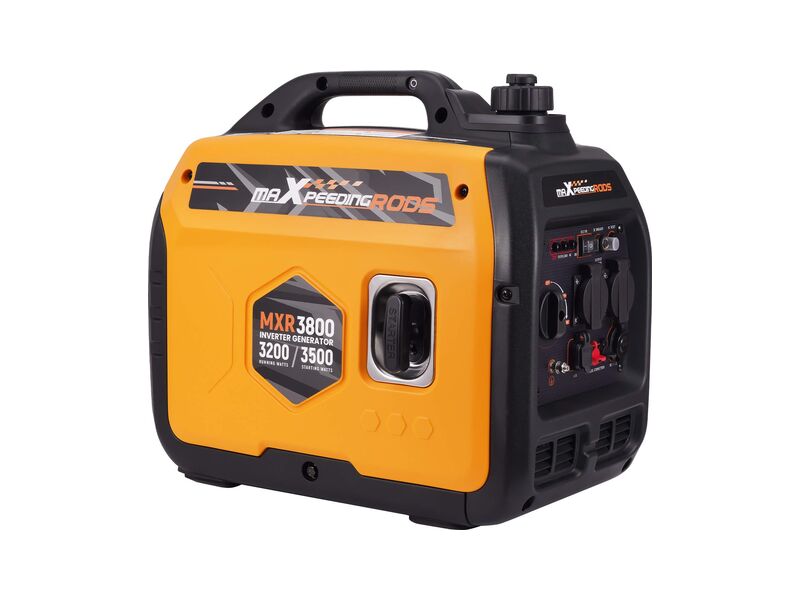
maXpeedingrods MXR3800 Inverter 3500W

$676.99 (6)

Big-generator output in a 21 kg case: 3200 W continuous, clean power for electronics and 58 dB(A) at seven metres in Eco mode.

  • Power: 3500 W peak, 3200 W continuous
  • Engine: 145 cc four-stroke OHV, 4 L tank
  • Runtime: 7 h at 25% load, 4 h at 50%, Eco mode
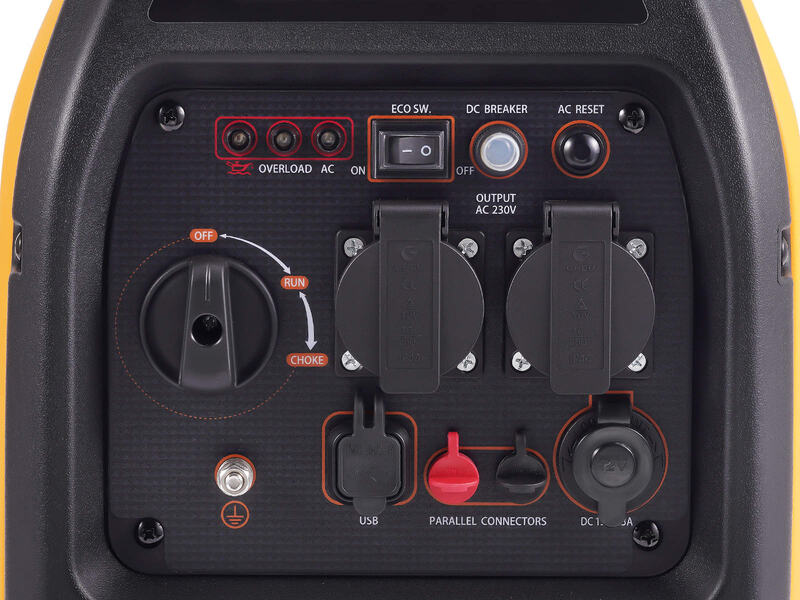
  • Outputs: 2 x 230 V + 12 V DC + USB, parallel ready
  • 3200 W continuous for only 21 kg
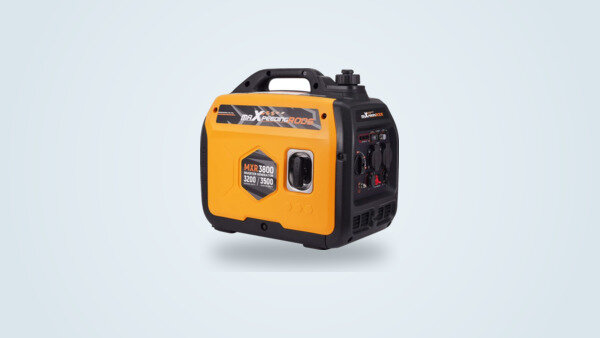
The maXpeedingrods MXR3800 targets the point where a battery power station gives up: 3200 W continuous and 3500 W peak, enough to start a compressor or run a fan heater, which no portable battery of sensible size can do. Its inverter electronics deliver a pure sine wave, so a laptop, a router or a fridge with a control board can be plugged in safely. The 145 cc four-stroke OHV engine and the 4-litre tank last 7 hours at quarter load, and the enclosed 21 kg case can still be carried by hand. Two 230 V sockets, a 12 V outlet and a USB port complete the picture.
On paper this MXR3800 pulls off a neat balancing act: 3200 W continuous is job-site power, and 21 kg is the weight of a machine half as capable. The clearest comparison sits in our own catalogue: the Güde ISG 3200-2 quotes exactly the same 3200 W continuous for roughly twice the price. At that gap, branding alone does not explain it. The pure sine wave output is genuinely there, the Eco mode works, so do the overload and low-oil LED alarms, and two units can be paralleled if 3200 W stops being enough. Two reservations, though, and they matter. Runtime first: the quoted 7 hours applies at quarter load, expect around 4 hours at half power and considerably less when actually drawing 3000 W. After-sales second: the brand remains an online operation with no service network, and several owners say so. For standby or leisure use the maths still works out well. For daily professional use, a local repair network often justifies the extra cost.
View product page

View all 8 Portable inverter generators →

II - Petrol & dual-fuel generators

When raw power matters most, a conventional petrol generator remains a robust and affordable choice. Some dual-fuel models also accept gas, for more flexibility and cleaner running. Ideal for home backup or big occasional needs, here are the petrol and dual-fuel generators we recommend.
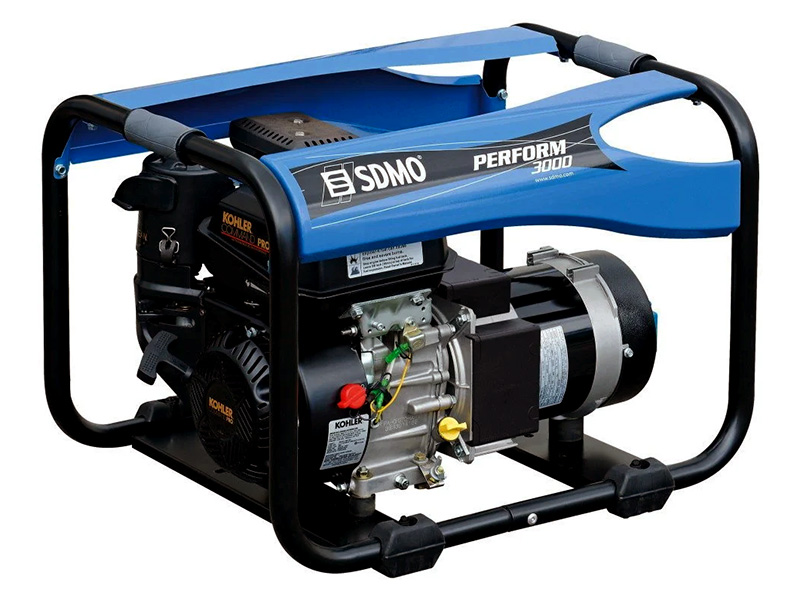
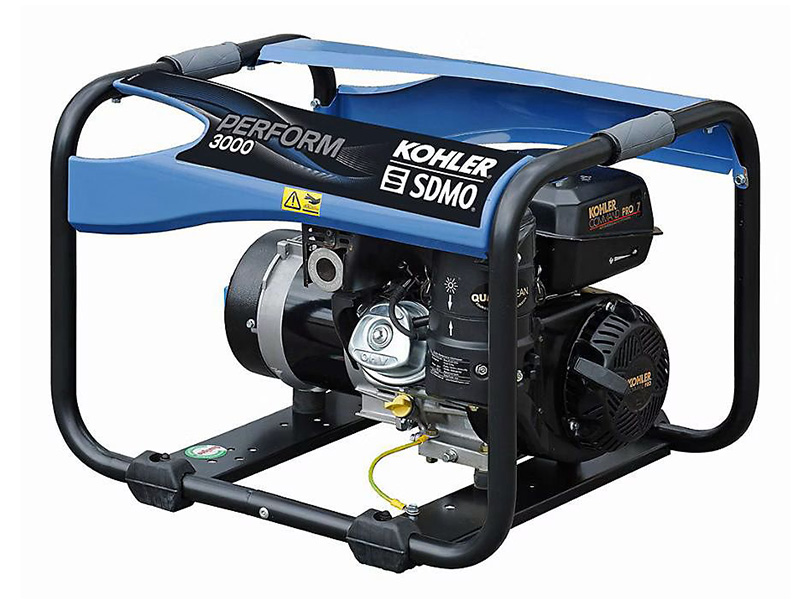
SDMO Perform 3000 TB Petrol Generator

$758.23 (2)

A Kohler engine, 115 and 230 volt outlets and a frame built to take knocks: the site generator that aims at service life rather than the spec sheet.

  • Output: 2,800 W max, 2,400 W continuous, 50 Hz
  • Engine: Kohler CH270, 208 cc, petrol
  • Sockets: 2 x 115 V 16 A + 1 x 230 V 16 A, each with breaker
  • Runtime: 3.2 h at 75 %, 4.1 L tank
  • Site voltage and a genuine Kohler engine
The Perform 3000 TB comes from a manufacturer that has been building generators in Brest since 1966, and it shows in the engineering choices. Rather than an entry-level engine, SDMO fits a 208 cc Kohler CH270, paired with a four-stage Quad Clean air filter that genuinely protects the engine on a dusty site. Output peaks at 2,800 watts, 2,400 watts continuous, and the TB panel splits it between two 115 volt 16 A sockets and one 230 volt 16 A socket, each on its own breaker: reduced voltage for handheld tools, mains voltage for everything else. The 4.1 litre tank gives 3.2 hours of runtime at three-quarter load. The tubular frame with anti-shock panels and the 45.5 kilo weight make it a generator two people carry without thinking about it.
On paper the Perform 3000 TB impresses nobody: 2,800 watts, no electric start, no screen, no inverter. You can find generators claiming more for half the price. The logic appears once you look at what is inside. The engine is a Kohler CH270 of 208 cubic centimetres, a professional reference found on hire fleet machines, not an anonymous generic block. The Quad Clean air filter, with its four stages of filtration, is not a marketing line: on a dusty site or by a roadside, it is what separates an engine that lasts five years from one that clogs up in a season. SDMO has manufactured in Brest since 1966 and backs the machine with a three-year warranty and a maintenance kit catalogued for this exact model, oil, spark plug and air filter in one box. The TB panel reflects the reduced-voltage standard used on UK and Ireland job sites: two 115 volt 16 A sockets and one 230 volt 16 A socket, each protected by its own breaker. Reduced voltage is what site practice calls for with handheld tools, and taking it straight from the generator means no separate transformer riding in the van, while the 230 volt socket stays free for a pump, a compressor or a lighting mast. Pull-cord starting takes no particular effort thanks to the summer/winter setting, and the tubular frame with anti-shock panels survives transport in a tipper without a handle snapping off. Three limits to know about. The 4.1 litre tank is small: 3.2 hours at three-quarter load means a jerry can as soon as you work a full day. The noise level, 96 decibels of guaranteed acoustic power, remains that of an open-frame generator: this is not a camping appliance. Finally, it is not an inverter, so no clean power for fragile electronics. For tools, a pump, lighting or a site post, on the other hand, it is a purchase that pays for itself over time.
View product page

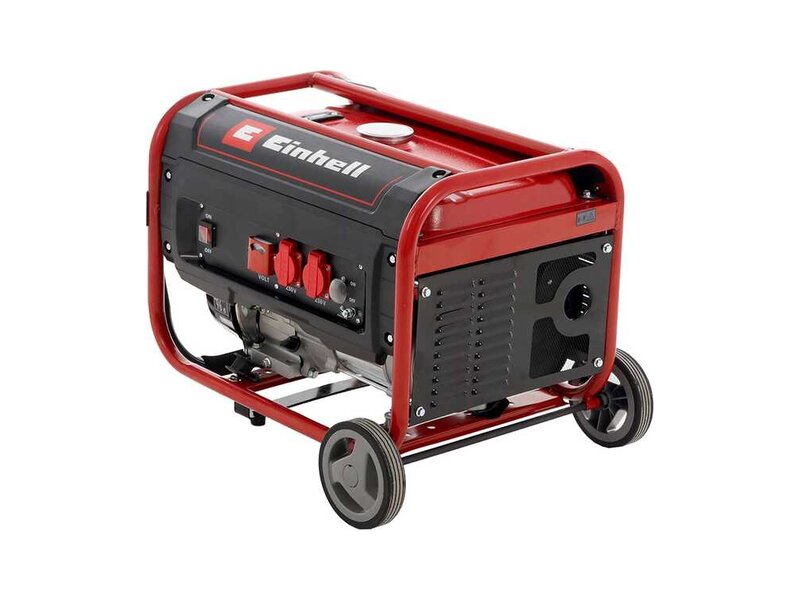
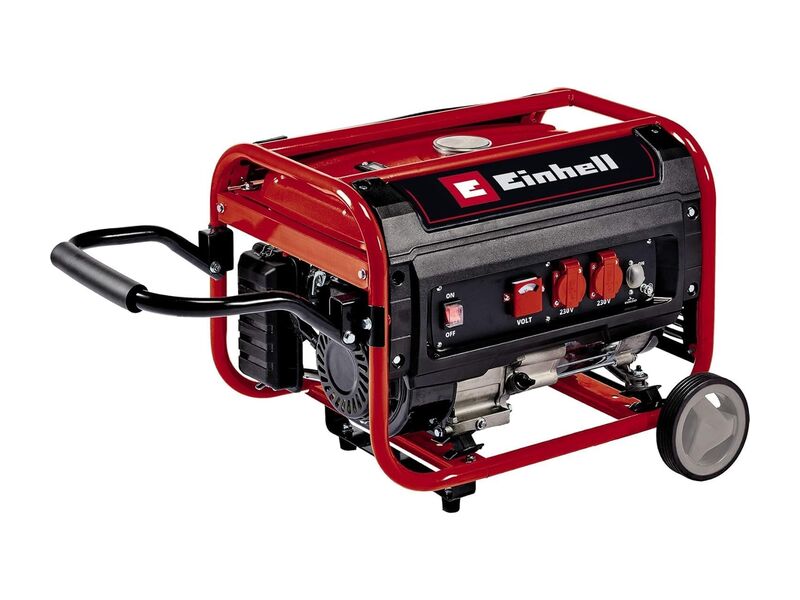
Einhell TC-PG 35/E5

$397.17 (22)

A rugged 3100W petrol generator with a large 15L tank and an AVR voltage regulator, designed for the worksite and backup power.

  • Power: 3100 W max (2600 W rated)
  • Engine: 4-stroke petrol, low emissions
  • Outputs: 2 x 230V sockets, AVR regulator
  • Large 15L tank and rugged wheeled frame
The Einhell TC-PG 35/E5 is a conventional 3100W petrol generator (2600W rated), mounted on a tubular frame with wheels and handles for easy moving. Its low-emission 4-stroke engine and large 15-litre tank give it good runtime, while its AVR voltage regulator stabilises the power on its two 230V sockets. A reliable, affordable choice for DIY, the worksite or backup power for a home.
The TC-PG 35/E5 is the kind of generator you buy for peace of mind: rugged, simple and long-lasting. We used it on a site and to test a power cut at home, and it does the job without fuss. Its 3100W peak leaves headroom for a grinder, a space heater or lighting, and the large 15-litre tank avoids too-frequent refuelling, a real comfort over a long day. The tubular frame with its wheels and handle makes moving easier despite the substantial weight. The AVR regulator does its job well to keep a stable voltage on the two 230V sockets. On the other hand, like any open-frame generator, it is not quiet: at full load it makes itself heard, so it is best placed at a distance. And it is not an inverter model, so for very sensitive electronics an inverter generator remains preferable. But for tough, versatile use at a contained price, the Einhell delivers on its promises.
View product page

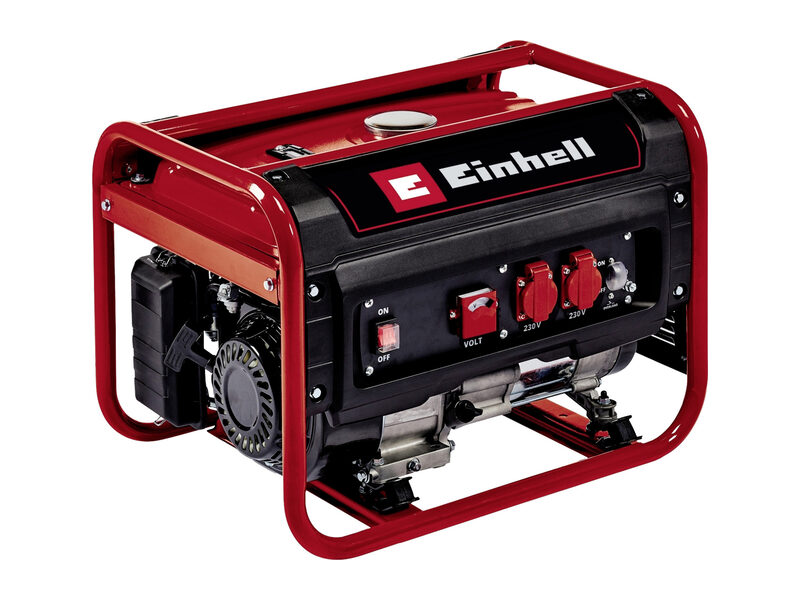
Einhell TC-PG 25/1/E5

$410.91 (10)

Twelve and a half hours on one tank: the small petrol generator that carries a whole night of outage without a refill, and without breaking the bank.

  • Power: 2100 W continuous (2400 W peak)
  • Runtime: 12.5 h at 2/3 load, 15 L tank
  • Outputs: 2 x 230 V sockets, voltmeter, AVR
  • Weight: 36.8 kg, tubular frame
  • A 15-litre tank on a 2100 W generator
The TC-PG 25/1/E5 is Einhell's entry-level petrol generator, built for backup use and light site work. Its four-stroke engine delivers 2100 watts continuously and 2400 watts at peak across two 230 volt sockets, with a voltmeter to watch the output and AVR regulation to steady it. The 15-litre tank, unusually large for this power class, gives up to 12.5 hours of running at two-thirds load. Tubular frame, recoil start, 36.8 kilos.
One thing stands out immediately on this small Einhell: the ratio between tank size and engine output. Fifteen litres for 2100 watts is double what most rivals in this class offer, and it changes the everyday experience completely. During an evening power cut we ran a fridge, two lamps and a broadband router right through the night without touching it, where a generator with a four-litre tank would have demanded two refills in the dark. The claimed 12.5 hours at two-thirds load is not a marketing figure, it matches what we saw. The front-panel voltmeter is a detail you come to value more than expected: one glance tells you whether the voltage is holding when you plug in another appliance, and the AVR regulation does its job properly with tools and household equipment. The recoil starter needs a firm pull when cold, nothing more. Two honest reservations. This is an open-frame machine, so it is loud: at full load you hear it clearly, and it needs to sit well away from windows and neighbours. And its 36.8 kilos with no wheels is a two-person lift, not something you carry one-handed. For household backup or an off-grid cabin, it remains a very sound buy.
View product page

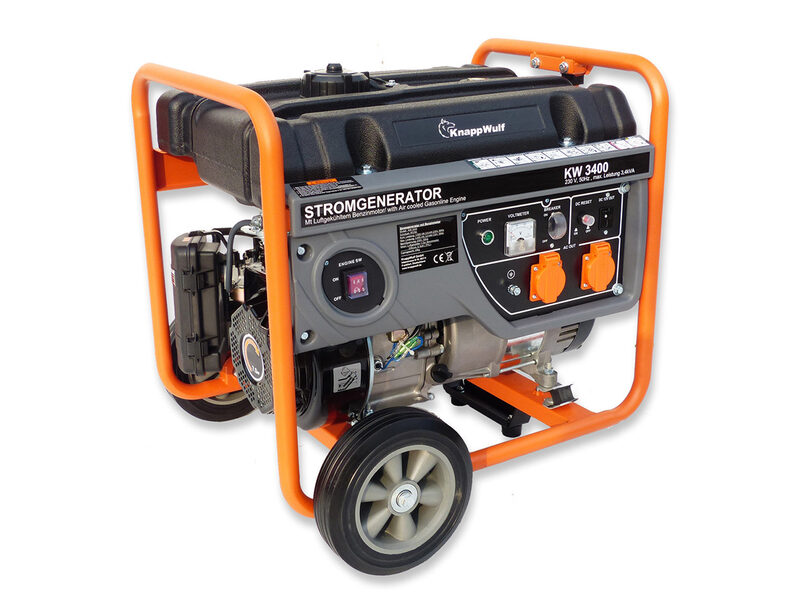
KnappWulf KW3400

$624.13 $334.64 (6)

Eleven to twelve hours on one tank, an analogue voltmeter and two solid wheels: the no-frills site generator, for under 250 pounds.

  • Power: 3.4 kVA peak (3 kW), 3.1 kVA continuous (2.6 kW)
  • Engine: Single-cylinder four-stroke 208 cc, air-cooled
  • Runtime: 11 to 12 h on one 15 litre tank
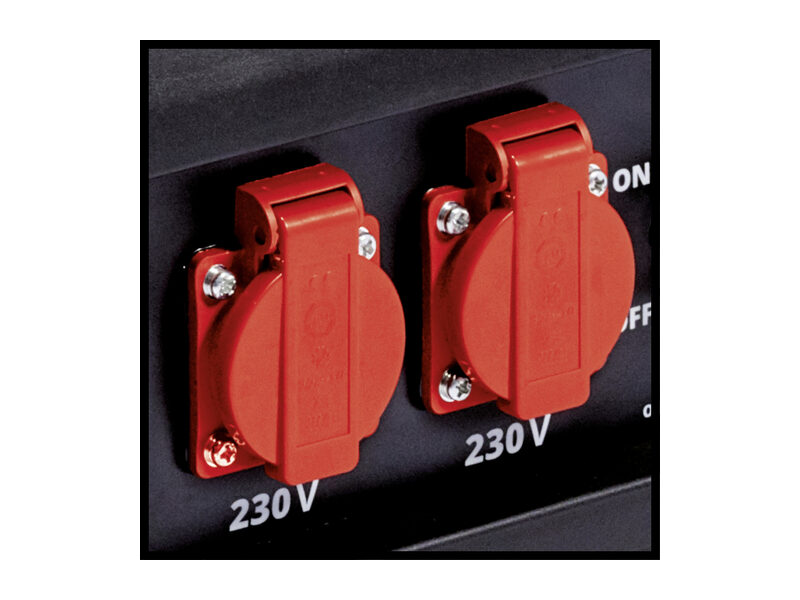
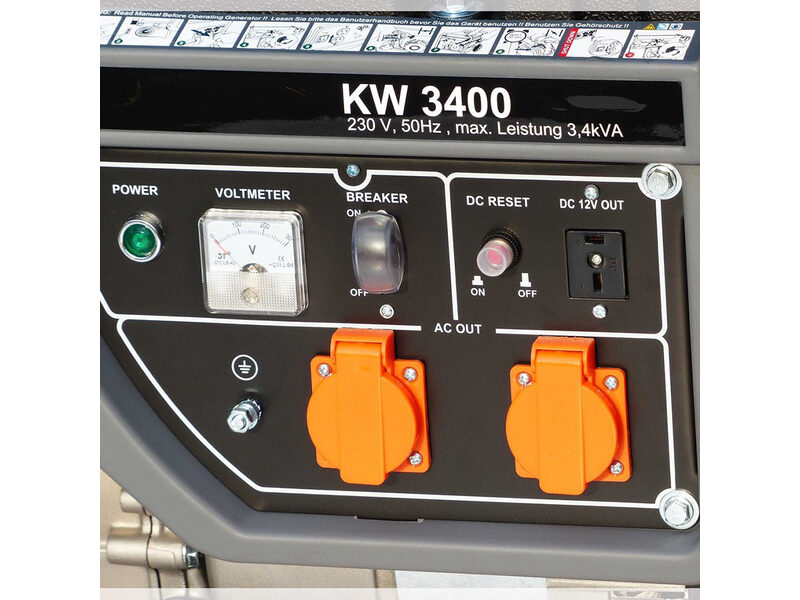
  • Outputs: 2 x 230 V sockets + 12 V (7 A), voltmeter, AVR
  • Solid wheels on bearings and a 15 L tank
The KnappWulf KW3400 is an open-frame petrol generator sold direct by this German manufacturer based in Frankfurt. Its 208 cc air-cooled single-cylinder four-stroke engine is quoted at 3.4 kVA peak, or 3 kW, for 3.1 kVA in steady operation, or 2.6 kW at 230 V. Two 230 V sockets and a 12 V output rated 7 A make up the panel, with an analogue voltmeter, a 13 A engine circuit breaker and electronic AVR regulation. The 15 litre tank gives eleven to twelve hours of runtime, and the 47 kg rolls on two solid wheels mounted on ball bearings.
The KW3400 is an object without marketing. Orange tubular frame, exposed engine, an analogue voltmeter rather than a screen, two sockets and a start switch: everything the spec sheet promises is visible at a glance, and nothing more. At under 250 pounds direct from the maker, that is exactly what you want from a backup generator. Its strengths are concrete. The 15 litre tank gives a quoted eleven to twelve hours of runtime, covering a working day or a night-time outage without a second thought. The wheels are solid and mounted on ball bearings, a detail that matters when dragging 47 kg over rough ground, where many rivals make do with plastic wheels on a bare axle. The 13 A engine breaker and the low-oil cut-out cover the essentials on protection, and electronic AVR regulation stabilises the voltage for power tools. Two honest reservations. First, noise: 96 dB LWA and 76 dB(A) measured at four metres are frank open-frame figures, so install it well away from windows. Second, starting, manual only on this version: the automatic decompressor helps, but a 208 cc engine still calls for a firm pull. KnappWulf offers a KW3400E with electric start and battery for those who prefer a button. Finally, the brand has limited distribution outside Germany, which complicates after-sales support elsewhere in Europe.
View product page

View all 8 Petrol & dual-fuel generators →

III - Diesel generators

Diesel remains the reference as soon as you need power for hours on end: lower consumption than a petrol engine at the same load, torque available instantly and longer service life. Often fitted with a 400 V three-phase socket and an electric starter, these generators target job sites, farms and extended backup rather than camping. Here are the diesel models we recommend.
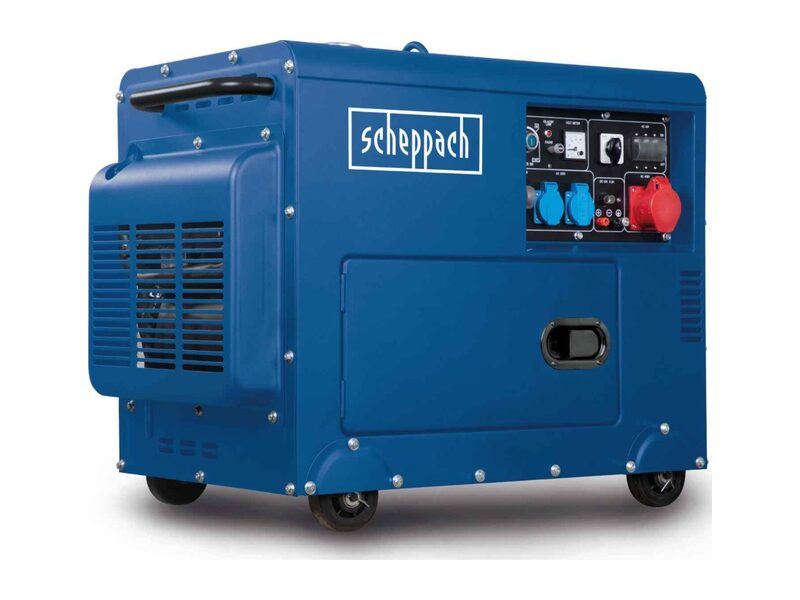
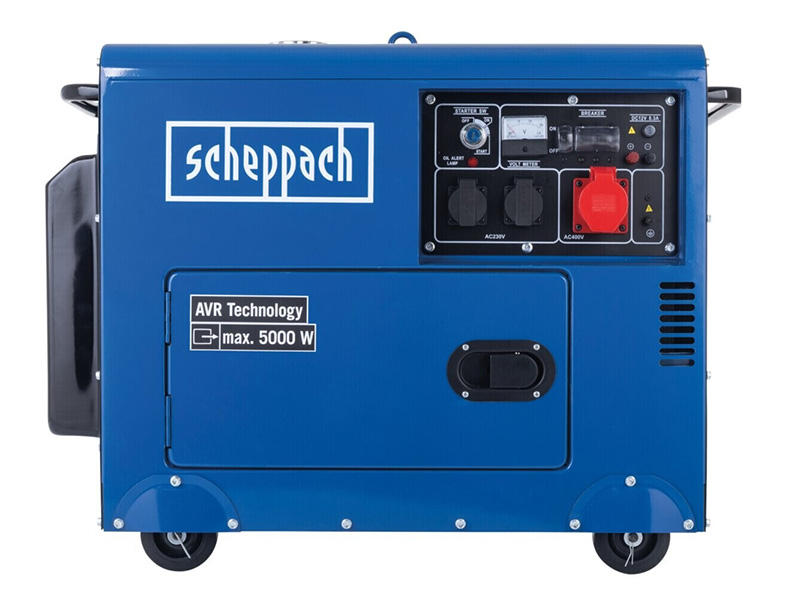
Scheppach SG5200D Diesel Generator

$1489.39 (4)

Five kilowatts of diesel power, a 400 V three-phase socket and a sixteen litre tank: a generator aimed at job sites and extended backup, not camping.

  • Output: 5,000 W max at 400 V, 3,300 W at 230 V
  • Engine: 418 cc diesel, 7.7 hp, air cooled
  • Sockets: 1 x 400 V, 2 x 230 V, 1 x 12 V DC
  • Runtime: 16 L tank, electric key start
  • Three-phase 400 V for under $1354.00
The SG5200D is the first true diesel in our selection, and it plays in a different league from portable petrol generators. Its air-cooled 418 cc single cylinder produces 7.7 horsepower and feeds a 400 V three-phase socket rated at 5,000 watts peak, plus two single-phase 230 V sockets and a 12 volt output. The 16 litre tank and diesel's moderate consumption give it several hours of running without refuelling. Starting is by key thanks to a 12 V 30 Ah battery supplied with the unit, and an AVR regulator steadies the voltage as the load varies. In exchange, its 148 kilos confine it to a fixed post or a move on its own wheels.
The context needs setting: with the SG5200D you leave the world of generators you take camping and enter that of site equipment. A hundred and forty-eight kilos, a sound-insulated steel canopy and a diesel engine that starts on a key bear no comparison to a twenty kilo inverter. What justifies the bulk is something few rivals offer at this price: a genuine 400 volt three-phase socket, quoted at 4,200 watts continuous and 5,000 at peak. For running a stationary mitre saw, a cement mixer or a welding set on a plot with no mains connection, it is exactly the right tool. Choosing diesel makes sense over time: at equal load, consumption is lower than petrol, torque arrives sooner, and a well maintained diesel takes thousands of hours. The sixteen litre tank covers a good working day without a jerry can, and the 12 V 30 Ah starting battery is included, where some rivals charge extra for it. The AVR regulator does its job on resistive loads, but this is not an inverter: we would not plug a laptop or a games console into it without a UPS in between. Two reservations. The first is obvious on site: it is loud, around 71 decibels measured at a distance, and a single cylinder diesel vibrates. You do not run it next to a terrace or in a housing estate on a Sunday morning. The second concerns maintenance: filters, oil changes and bleeding the fuel circuit demand a minimum of discipline, otherwise cold starting turns temperamental. For occasional professional use or building backup, the power-to-price ratio remains very hard to beat.
View product page

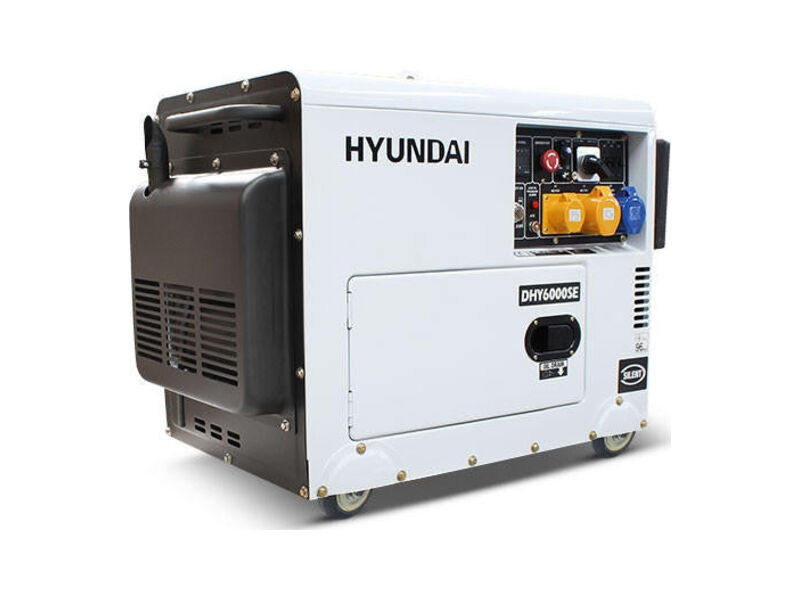
Hyundai DHY6000SE Diesel Generator

$1692.50 (3)

A genuine sound-insulated diesel workhorse: electric start, ATS ready for automatic backup, and steady single-phase power when the mains goes down.

  • Output: 4.5 kW continuous, 5.2 kW max (230 V)
  • Engine: 418cc diesel, 10 hp, air cooled
  • Sockets: 1 x 230V/32A, 2 x 115V (16A + 32A)
  • Runtime: 13 L tank, up to 16h at 50% load
  • Electric start, ATS ready, quiet-canopy diesel standby
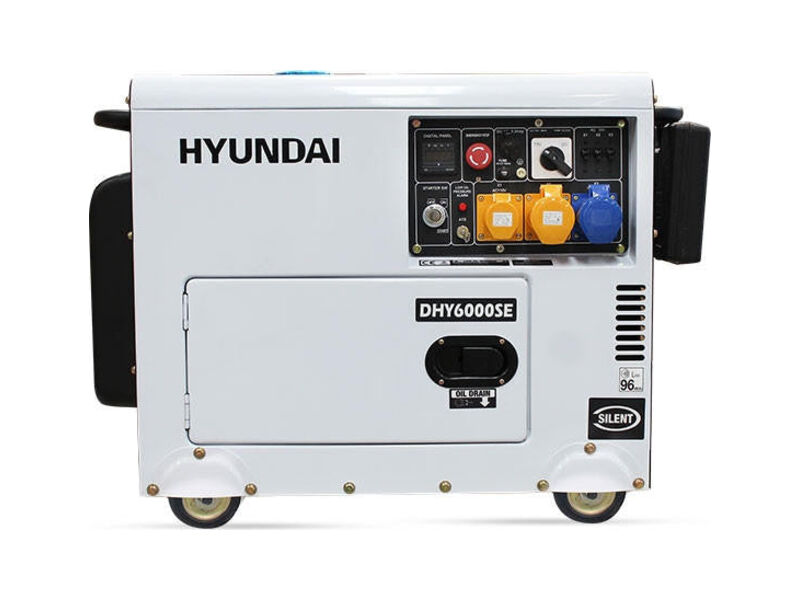
The Hyundai DHY6000SE is a compact standby diesel generator built for households and small businesses that want real backup power without a three-phase installation. Under its sound-insulated canopy sits a rugged 418cc single-cylinder diesel engine driving a brushed AVR alternator, delivering steady single-phase current through three sockets. Electric key start and ATS/MTS compatibility make it easy to wire into an automatic changeover for a home or workshop, while the 13 litre tank keeps it running for hours between refills.
We unboxed the DHY6000SE expecting a scaled-down version of Hyundai's bigger three-phase units, and that is roughly what you get, minus the 400 V socket. Turning the key and watching the digital panel light up beats yanking a recoil cord every single time, and the 13 litre tank genuinely lasts most of a working day at moderate load. Wiring it to a changeover switch for the freezer and a few circuits during a power cut took an afternoon, and it has not missed a start since. The catch is the word silenced on the canopy: measured at seventy decibels seven metres out, it is calmer than an open-frame petrol unit, but several owners online report it is still loud enough to annoy neighbours, and we agree it is not a machine to leave running under a bedroom window overnight. Build quality feels solid rather than premium, and access for oil changes is a bit tight. For occasional backup or site use where three-phase power is not needed, it earns its keep.
View product page

IV - Related questions

A power station stores electricity in a battery and releases it silently, with no fuel or emissions: ideal indoors and for electronics. A generator produces its current with a combustion engine: louder and needing fuel, but with near-unlimited runtime and high power. Choose based on how long you will run it and where.

Ask the right questions: occasional or intensive use? Which appliances will you power, to determine the required power (in Watts)? Do you need inverter regulation (clean power for electronics) or a conventional AVR model? Which fuel do you prefer (petrol, dual fuel)? And what is your budget? These answers guide your choice.

A generator relies on two parts: a combustion engine and an alternator. The engine, fuelled by petrol, diesel or gas, drives the alternator in rotation, which then produces electric current. Inverter models add electronics that smooth this current to make it stable and safe for sensitive devices.
Need help choosing?

Further reading on the blog