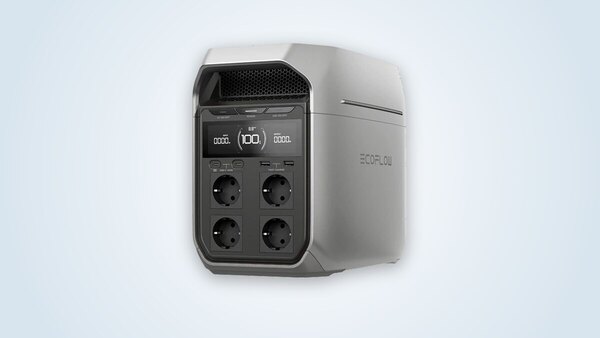
Portable power stations

We are pleased to present the best portable power stations in 2026, sorted by capacity to help you choose.

When pocket USB power banks no longer offer enough capacity or power, the power station (or portable energy station) takes over. These portable batteries store electricity to power your devices in both 12V and 230V, silently and with no emissions. While camping, in a van, on a 4x4 trip, on a remote site, on a boat, in a motorhome or even at home during an outage, they can get you out of many situations.
To make things easy, we have sorted our selection by capacity (in Wh): it is the most meaningful buying criterion, from the compact, lightweight model for travel to the very high-capacity and expandable stations able to run part of your home. If you need unlimited runtime with fuel, take a look at our portable generators instead. · 92 products

I - Compact power stations

Up to 500 Wh: light and easy to carry, these compact stations are perfect for travel, remote work, a weekend camping trip or emergencies. They easily recharge phones, tablets, laptops and small appliances while fitting in a bag. Here are the best ones by our standards.
EcoFlow River 2

See price and availability (34)

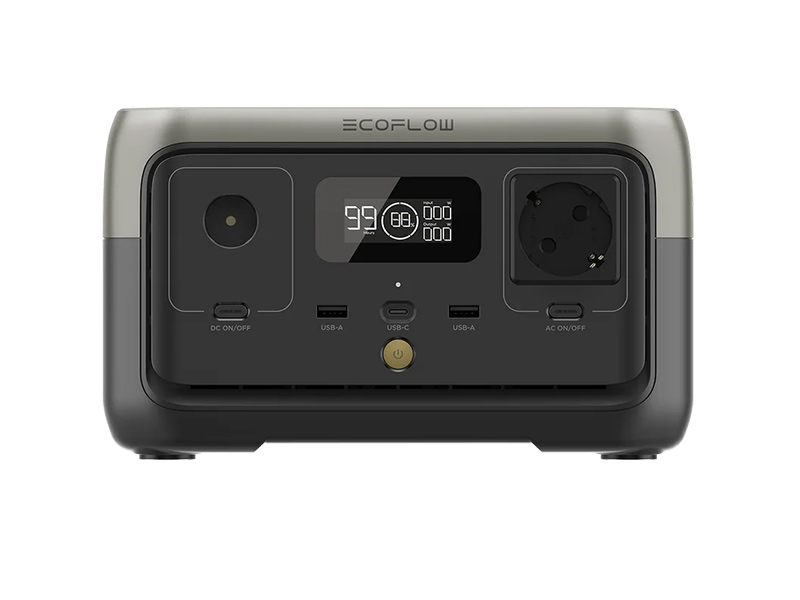
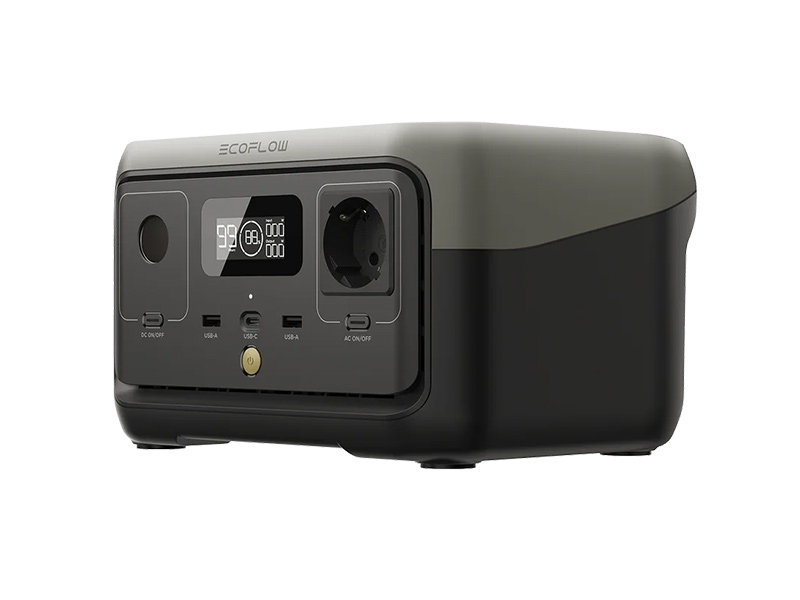
256Wh and a genuine 1 hour full recharge from the wall, the fastest in its class: the EcoFlow River 2 follows US buyers from the campsite to home backup.

  • Capacity: 256Wh, LFP (LiFePO4) battery
  • Power: 300W, up to 600W with X-Boost
  • Recharge: 0 to 100% in about 60 min from the wall
  • Weight: 3.5kg (7.7lb)
  • 1 hour full recharge, 3000+ cycles, 5-year warranty
Compact and lightweight, the EcoFlow River 2 is a favorite US pick for keeping devices running off the grid. Its LiFePO4 battery fully recharges in about an hour from the wall, a record confirmed by numerous US buyers, and is rated for 3000+ cycles. From camping and van shed setups to CPAP backup and small-business UPS duty, it powers phones, laptops, lighting and light appliances up to 300W continuous (600W with X-Boost), all managed from the EcoFlow app.
In-depth reviewRead our full review → 4.2/5 Few products in this price range have as deep a US review base as the River 2, over 4,500 ratings, and the real-world stories back up the spec sheet. One owner runs it as a line-interactive UPS for a small business's security system, right at the edge of its 300W budget but delivering 60 to 75 minutes of clean runtime with zero dropped connections during real outages. Another ran a CPAP machine for six hours and still had 40% left. A third turned an unpowered shed into an off-grid e-bike charging station using solar input alone, calling it a gateway device to a bigger battery habit. The genuinely-timed 1 hour full recharge shows up again and again in reviews, and the EPS switchover, under 30ms, kept a router and NVR running invisibly through brief blips. A firmware update briefly broke AC charging display for one buyer, fixed a few days later by EcoFlow support. The more serious caveat: a vocal minority report their unit draining to zero within days even when idle, with mixed luck getting warranty support to resolve it.
View product page

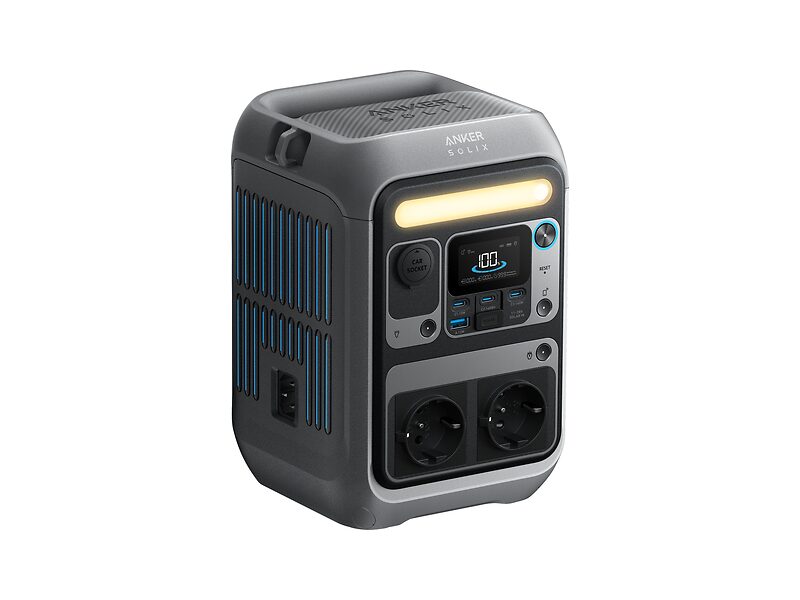
Anker Solix C300

See price and availability (24)

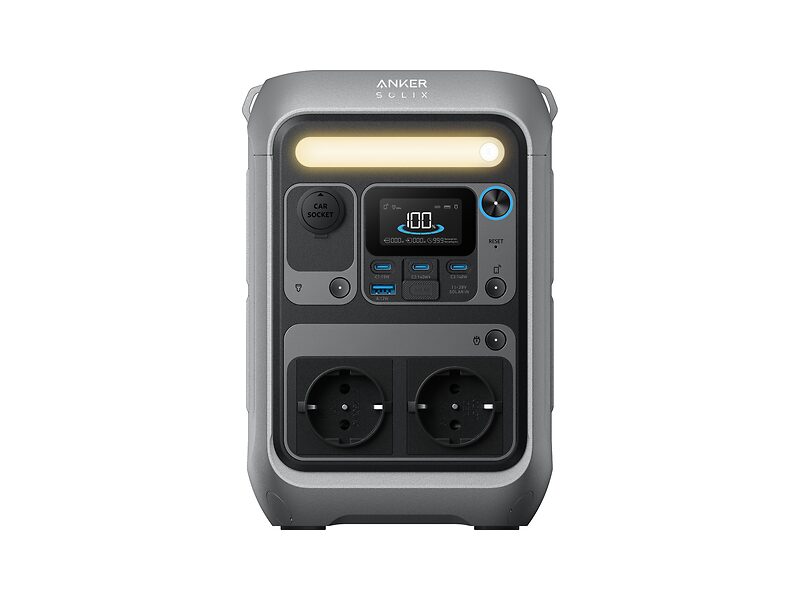
288Wh, three household outlets and a 140W USB-C port in an ultra-compact, whisper-quiet body: the small station that even charges a laptop.

  • Capacity: 288 Wh (LiFePO4)
  • Output: 300W (600W SurgePad), 3 outlets
  • USB-C: 140W bidirectional (laptop charging)
  • Comfort: Built-in light, 25 dB, 0-80% in 50 min
  • 288Wh, USB-C 140W, ultra-quiet
The Anker Solix C300 is a compact 288Wh portable power station built for light camping, remote work and emergencies. Despite its small size, it packs three household outlets (300W continuous, up to 600W with SurgePad) and a bidirectional 140W USB-C port that charges a laptop and can also recharge the unit itself. Its LiFePO4 battery is durable, it has a built-in light, and it runs whisper-quiet at 25 dB. It recharges to 80% in 50 minutes on a wall outlet. A complete, versatile pocket station.
In-depth reviewRead our full review → 4.4/5 We tested the Solix C300 for its format above all: three real household outlets, a 140W USB-C port that charges a laptop at full speed, and even a built-in light for camping or an outage. Its 300W output (600W in SurgePad mode) covers most small appliances, and we especially like how quiet it runs, at 25 dB you forget it completely on a nightstand or desk. Charging is fast for the category, 80% in fifty minutes on a wall outlet, and the 140W USB-C port doubles as a quick way to recharge it. The retractable handle and small footprint make it a true pocket station you grab without thinking twice. Two honest caveats: 288Wh is a backup capacity, perfect for USB devices, a mini fridge or an evening, not for several days on end, and solar input tops out at 100W. For a compact, complete and quiet station, it remains a strong value.
View product page

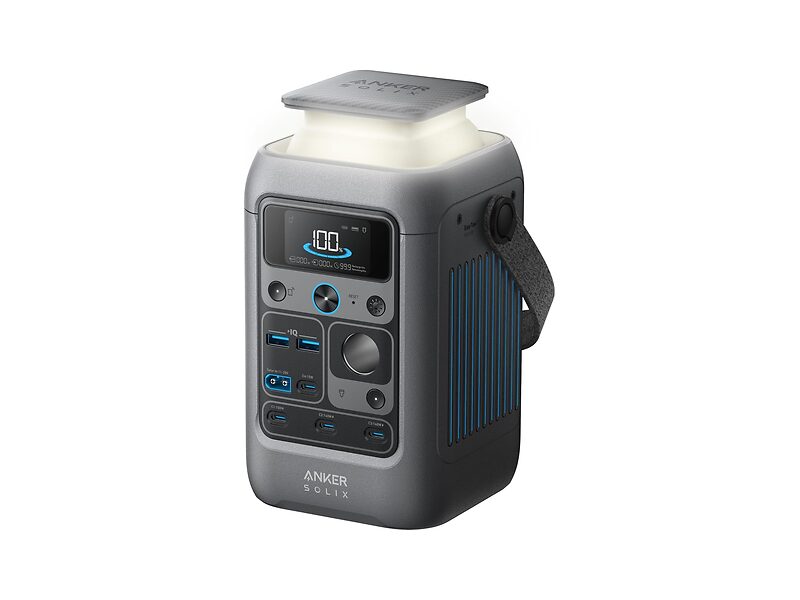
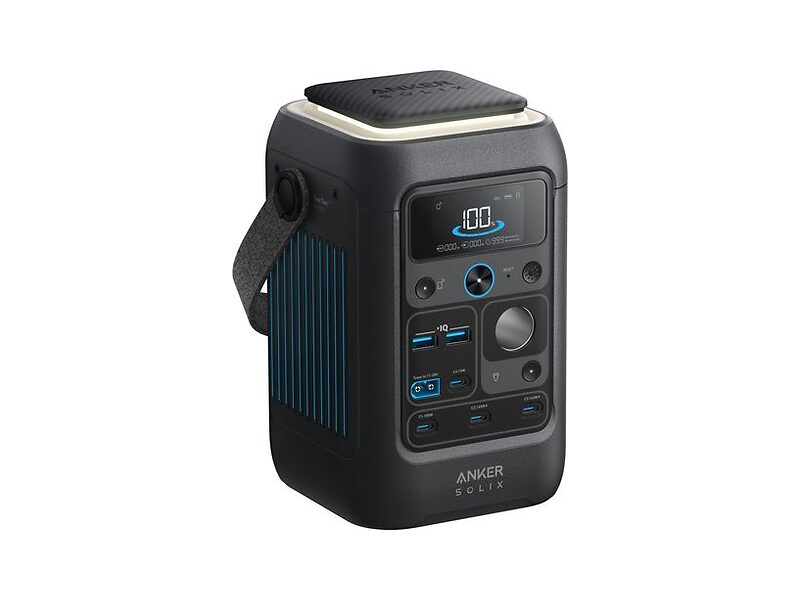
Anker Solix C300 DC

See price and availability (23)

288Wh, 100% USB-C with four ports (2x140W, 100W, 15W): the pocket station that charges four devices, laptop included, with zero conversion loss.

  • Capacity: 288 Wh / 90,000 mAh (LiFePO4)
  • Output: 100% USB-C, four ports (2x140W + 100W + 15W)
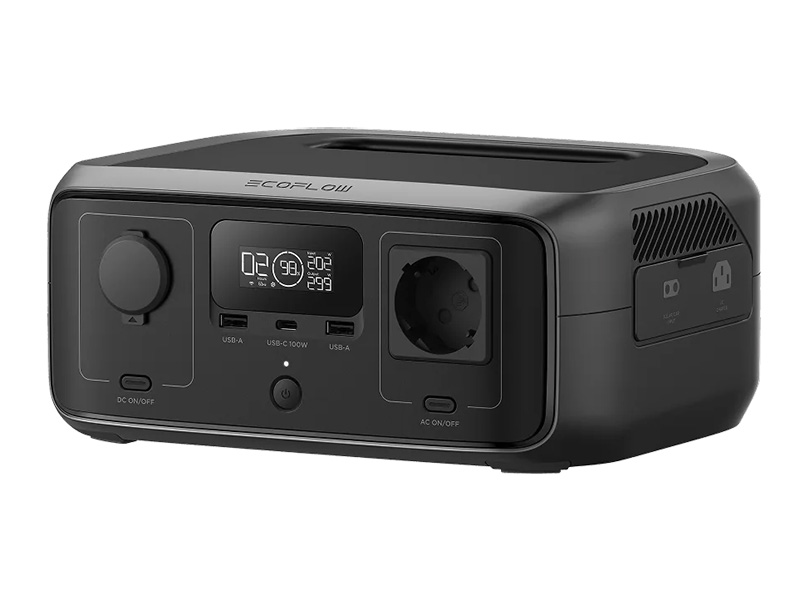
  • Ports: USB-C 140W, USB-A, 12V output
  • Comfort: Built-in light, strap, solar charging
  • 288Wh 100% USB-C, four ports (2x140W + 100W + 15W)
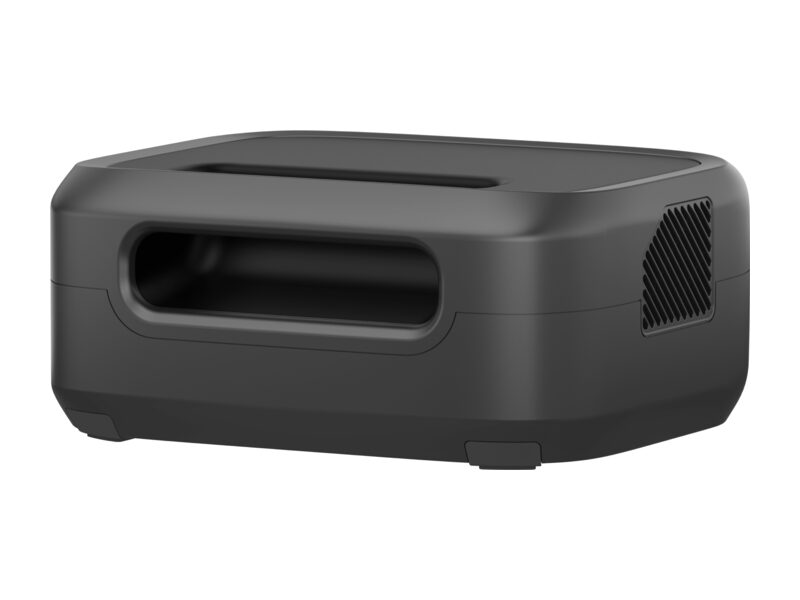
The Anker Solix C300 DC is a compact 288Wh (90,000 mAh) portable power station built entirely around direct current and USB-C. With no AC inverter, it avoids conversion losses and powers your devices for longer through four USB-C ports (two up to 140W, one up to 100W, one up to 15W), a USB-A port and a 12V output, enough to charge up to four devices at once, laptop included. Its LiFePO4 battery is durable, it has a built-in light and a carry strap, and it recharges on solar. A versatile portable energy companion for camping and outdoor work.
In-depth reviewRead our full review → 4.3/5 The C300 DC takes the opposite approach from a classic small station: no AC outlet at all, everything runs through USB-C, and it's remarkably effective. You plug a phone, tablet and laptop straight into its 140W ports, with no inverter, which avoids losses and stretches real-world runtime. With four USB-C ports (two up to 140W, one up to 100W, one up to 15W), you can charge a laptop at full speed while powering three other devices at once, real comfort while working remotely or on the road. Its 288Wh in a compact format slip easily into a bag thanks to the included strap, and the built-in light comes in handy while camping or during an outage. Solar charging lets you stay self-sufficient for several days. One honest caveat: the absence of an AC outlet restricts it to USB and 12V devices, you can't plug in a small household appliance. But to charge portable devices fast and loss-free, in a light and versatile format, it's an excellent pick.
View product page

EcoFlow River 3

See price and availability (15)

Ultra-compact (3.5 kg) and recharged in one hour, the EcoFlow River 3 slips a 245 Wh reserve into a bag to power your essentials anywhere.

  • Capacity: 245 Wh (LiFePO4)
  • Power: 300 W (600 W X-Boost)
  • Recharge: ≈ 1 h from the mains
  • Weight: 3.5 kg
  • 245 Wh, UPS and 1-hour charge in an ultra-compact body
The EcoFlow River 3 is the brand's most compact portable power station: 245 Wh of LiFePO4 battery and 300 W output (600 W X-Boost) in a flat 3.5 kg body that slips into a bag or a boot. It recharges phones, a laptop, lighting and small gear, refuels to 100 % in one hour from the mains and accepts up to 110 W of solar. Its inverter (UPS) function and its LFP chemistry rated for 3000 cycles make it a reliable reserve for camping, mobile work or backup.
In-depth reviewRead our full review → 4.3/5 We slipped the River 3 into a backpack to see how far EcoFlow's smallest station goes, and it surprises. At 3.5 kg and barely thicker than a big book, you really take it everywhere: on a day of hiking photography it recharged two camera bodies, a drone and our phones without flinching. The one-hour recharge is the model's real luxury, you top it up in the time it takes to have a coffee. As backup at home, its inverter function kept the router and a camera running without the slightest flicker during a micro-outage. The silence is total, you forget it under the tent. Two owned limits: 245 Wh remains a small reserve, best kept for light devices, and unlike the River 3 Plus it is not expandable, which you must anticipate if needs grow. For a first compact, fast and LFP-durable mobile station, it offers a footprint-to-service ratio that is hard to beat.
View product page

View all 24 Compact power stations →

II - Versatile power stations

From 500 Wh to 1.5 kWh: this is the heart of the market, the best compromise between runtime, weight and price. These versatile stations power most everyday appliances, ideal for a van, a motorhome, a long weekend or light home backup. Discover our selection.
Explorer 1000 v2 Jackery Explorer 1000 v2 portable power station 1070Wh
Deal

Jackery Explorer 1000 v2

See price and availability (31)

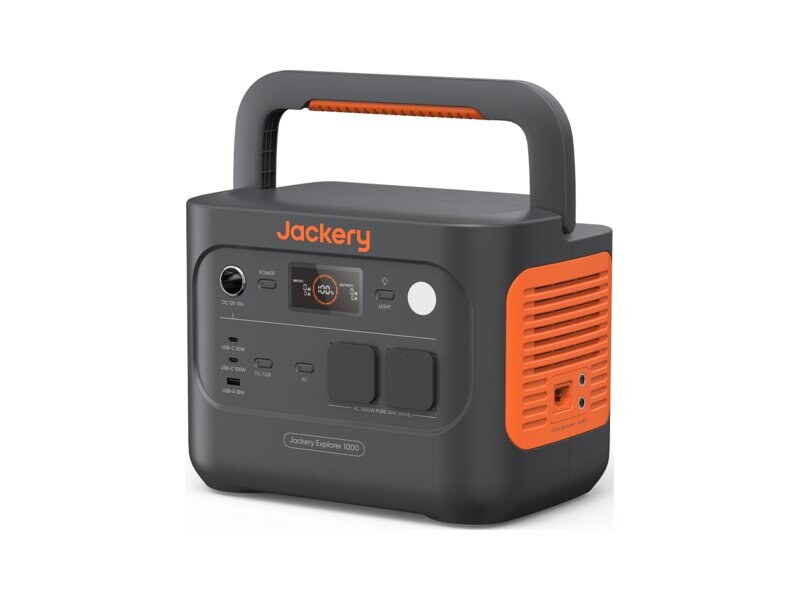
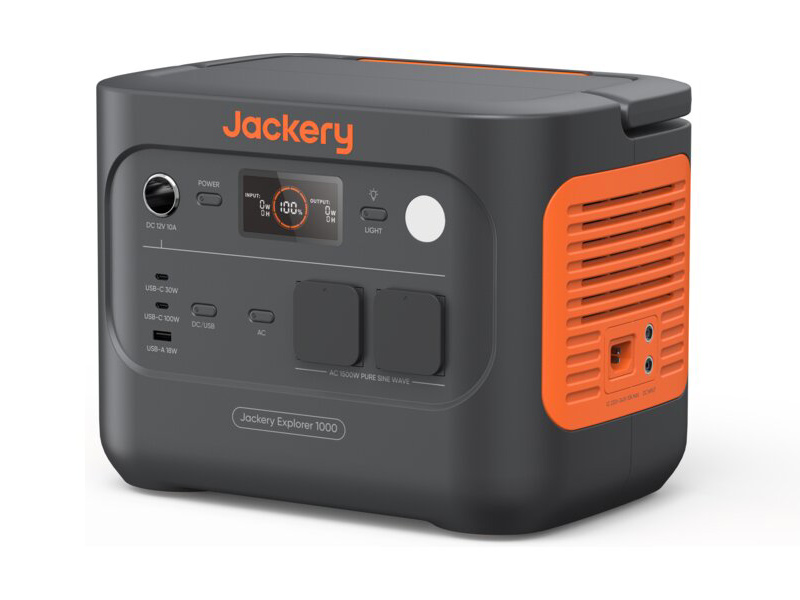
1070Wh and 1500W in a compact, lightweight station: enough to run a fridge, a kettle or all your devices, camping or during a power outage.

  • Capacity: 1070Wh (LiFePO4 battery)
  • Power: 1500W continuous, 3000W peak
  • Outputs: 3 outlets, USB-C 100W + USB-C 30W, USB-A, car socket
  • Recharge: ~1h in emergency mode, 400W max solar
  • 1500W and a fast recharge in just 10.8 kg
The Jackery Explorer 1000 v2 is a 1070Wh portable power station with a LiFePO4 battery, able to deliver 1500W continuously (3000W peak). Lighter and more compact than the previous generation (around 10.8 kg), it powers up to six devices at once via three household outlets, a USB-C 100W port and a USB-C 30W port, a USB-A port and a 12V car socket. Its ChargeShield technology enables a fast recharge in emergency mode, and its battery lasts 4000 cycles, a lifespan of up to 10 years. Controllable via the Jackery app.
In-depth reviewRead our full review → 4.1/5 We carried the Explorer 1000 v2 over several weekends, and it's exactly the format we hoped for from Jackery. At 10.8 kg with a folding handle, it slips into the trunk without a fight, yet it still puts out 1500W continuously, enough to run a kettle or an induction burner while camping, which many stations this size can't do. The 1070Wh easily cover a night of camping fridge plus charging phones and a laptop. Recharging is a real highlight: in emergency mode via the app, we got close to a full charge in about an hour on a regular outlet, versus roughly an hour and a half in standard mode, and quiet mode drops noise below 30dB, so you forget it's there. The 100W USB-C port is perfect for a laptop. Jackery advertises a 5-year total warranty on this unit (3 years standard, plus 2 more when registered directly with Jackery), worth confirming at checkout depending on where you buy. The only small gripe is the fairly basic screen and the fan spinning up in the fastest charge mode. Otherwise, it's a solid, well-built, dependable choice.
View product page
Solix C1000 Anker Solix C1000 Gen 2 power station
Deal

Anker Solix C1000

See price and availability (22)

With 1024Wh, 2000W output and a full recharge in 49 minutes via HyperFlash, the Anker Solix C1000 Gen 2 is one of the fastest-charging stations on the market.

  • Capacity: 1024 Wh (LFP battery, 4000 cycles)
  • AC output: 2000 W, up to 3000 W peak, 5 outlets
  • Recharge: 0 to 100% in 49 min via HyperFlash, solar up to 600 W
  • Lifespan: 4000 LFP cycles, about 10 years, 5-year warranty
  • Full recharge in 49 min, the fastest in its class
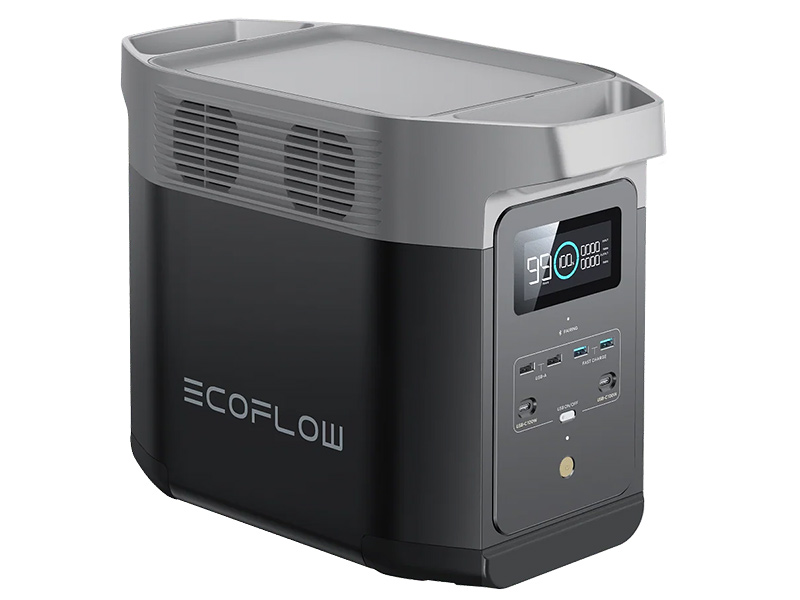
The Anker Solix C1000 Gen 2 is a portable power station with a 1024Wh LFP battery (InfiniPower, 4000 cycles). It delivers 2000W continuous (3000W peak) and fully recharges from the wall in 49 minutes thanks to HyperFlash technology (up to 1600W input). It accepts 600W of solar input, features a UL-certified UPS function (under 10ms switchover) and offers plenty of outputs including 5 outlets and 3 USB-C ports (2x140W). Compact (11.3 kg), app controlled, 5-year warranty.
In-depth reviewRead our full review → 4.4/5 We put the C1000 Gen 2 through its paces at home and on weekends, and its recharge speed is stunning: barely more than a lunch break and it's full, which changes everything when you leave on short notice. It kept the fridge, the router and two laptops going for a good part of the day, and the UPS switchover during a test outage went completely unnoticed. We love how compact it is (11.3 kg, you move it one-handed) and how quiet it stays at rest. The app lets you switch to UltraFast mode or, conversely, cap the input to quiet the fans, which are a little present during fast charging. Two honest gripes: unlike the older C1000X, this generation isn't expandable, and 2000W remains a ceiling for the very largest appliances. As a compact, reliable, ultra-fast-charging station, it's hard to fault.
View product page
Delta 2 EcoFlow Delta 2 portable power station
Favorite

EcoFlow Delta 2

(21)

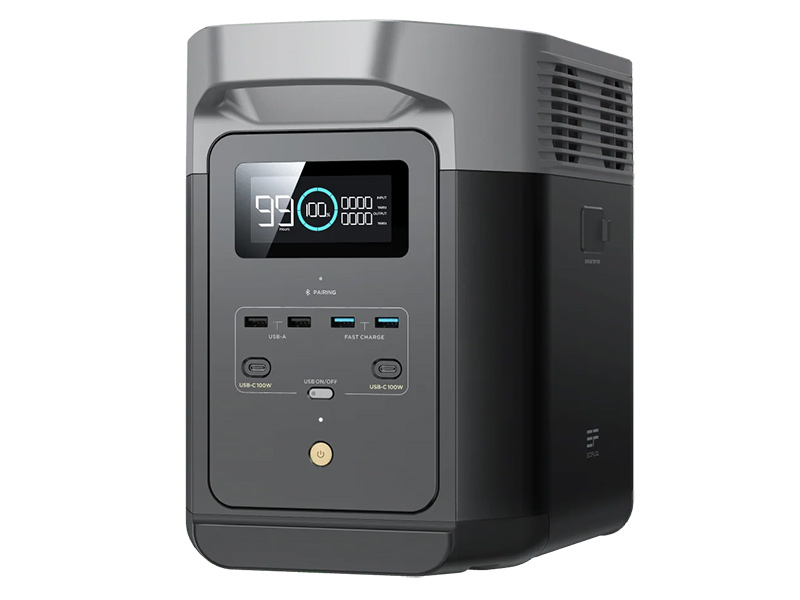
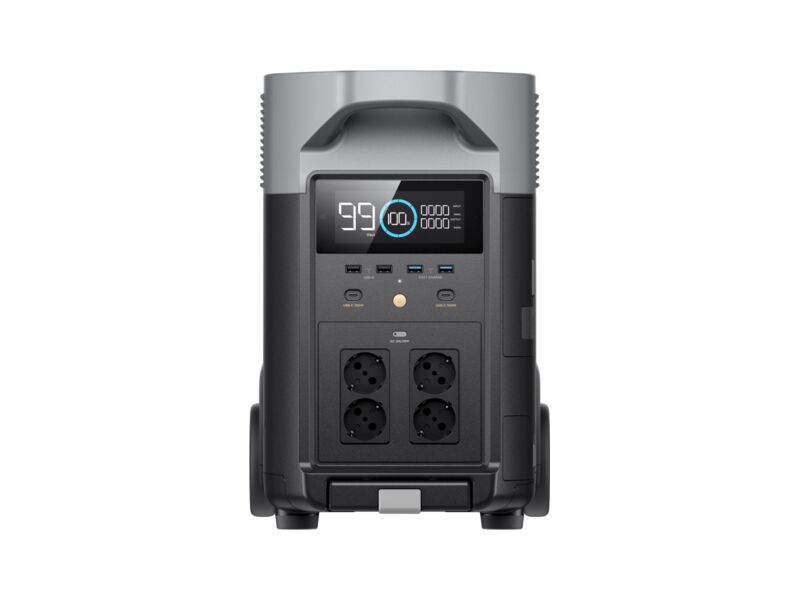
With 1024 Wh expandable to 3 kWh, 1800 W output and a 0-80% recharge in 50 minutes, the EcoFlow Delta 2 powers almost all your devices, at home or off-grid.

  • Capacity: 1024 Wh, expandable up to 3040 Wh (LFP battery)
  • AC output: 1800 W, 2400 W with X-Boost, 2700 W surge
  • Recharge: 0 to 80% in 50 min on mains, solar up to 500 W
  • Weight: 12 kg (400 x 211 x 281 mm)
  • 0-80% recharge in 50 min, expandable up to 3 kWh
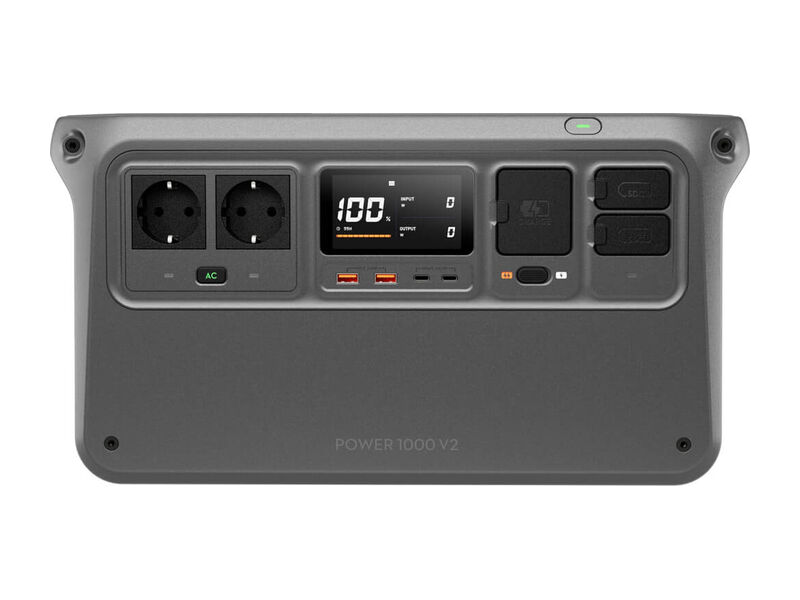
The EcoFlow Delta 2 is a portable power station with 1024 Wh (LFP battery) delivering 1800 W output, up to 2400 W with X-Boost technology. It recharges from 0 to 80% in 50 minutes on mains, accepts up to 500 W of solar input and offers 13 outlets including 4 AC sockets and 2 USB-C 100 W ports. Its capacity is expandable up to 3040 Wh and its LFP battery exceeds 3000 cycles, roughly 10 years of use. Weight: 12 kg, 5-year warranty.
In-depth reviewRead our full review → 4.4/5 We tried it both in a camper van and at home, and the Delta 2 simply gets the job done. The lightning recharge (80% in under an hour) is a game changer at a motorway stop, and the app is a real plus. It ran a fridge, the router and two laptops for a good part of the day. Only gripe: the fans blow hard during fast charging, but you can quiet them by capping the power. Rugged and expandable.
View product page

EcoFlow River 2 Max

$607.95 (16)

512Wh, 500W and only 6.1 kg: the compact station that recharges 0 to 100% in one hour and powers 80% of your essential devices thanks to X-Boost.

  • Capacity: 512 Wh (LiFePO4, TÜV certified)
  • Output: 500W (X-Boost up to 1000W)
  • Recharge: 0 to 100% in 60 min (mains)
  • Weight: 6.1 kg, Bluetooth/Wi-Fi app
  • 512Wh, 1000W X-Boost, 6.1 kg
The EcoFlow River 2 Max is a compact 512Wh portable power station that plays on balance: enough capacity for a weekend, light enough (6.1 kg) to set off easily. It delivers 500W of continuous output, pushed to 1000W with X-Boost, enough to power up to 80% of essential devices. Its LiFePO4 battery, TÜV Rheinland certified, promises 10 years of use, and its recharge is among the fastest in the segment: 0 to 100% in 60 minutes. Four charge modes (mains, car, solar, USB-C) and app control complete the picture.
In-depth reviewRead our full review → 4.0/5 We took the River 2 Max on a camping weekend and it proved the ideal companion for the traveller who doesn't want to be weighed down: at 6.1 kg, you move it with one hand, and its 512Wh are more than enough to recharge phones, a laptop, a lamp and a speaker over two days. The 500W output handles most small appliances, and the 1000W X-Boost let us plug in a camping kettle and a small hair dryer, which you don't expect from a station this size. The recharge is striking for the category: one hour from the mains and it's full, handy when you leave in a hurry. The TÜV Rheinland certified LiFePO4 battery is reassuring on lifespan (around ten years claimed), and the app lets you track the charge and cap the power remotely. Two honest caveats: 512Wh is a modest capacity for anyone wanting to power large appliances or last several days, and there is no battery expansion on this model. But for a compact, fast and reliable station, it is a safe mid-range bet.
View product page

View all 27 Versatile power stations →

III - High-capacity power stations

From 1.5 to 2.5 kWh: built to go the distance, these high-capacity stations power demanding appliances (fridge, power tools, cooktop) over long periods. They are made for home backup, motorhome autonomy or semi-residential use. Here are the best current models.
Explorer 2000 v2 Jackery Explorer 2000 v2 power station 2042Wh
Deal

Jackery Explorer 2000 v2

See price and availability (17)

2042Wh and 2200W in a station lighter than most 2kWh rivals, with UL1778-certified backup: enough to keep the home running during an outage.

  • Capacity: 2042Wh (LiFePO4 battery)
  • Power: 2200W continuous, 4400W peak
  • Outputs: 3 outlets, USB-C 100W, USB-C 30W, USB-A, car socket
  • Recharge: 0-80% in 66 min, 0-100% in ~1h42
  • 2200W and UL1778 backup in just 17.9 kg
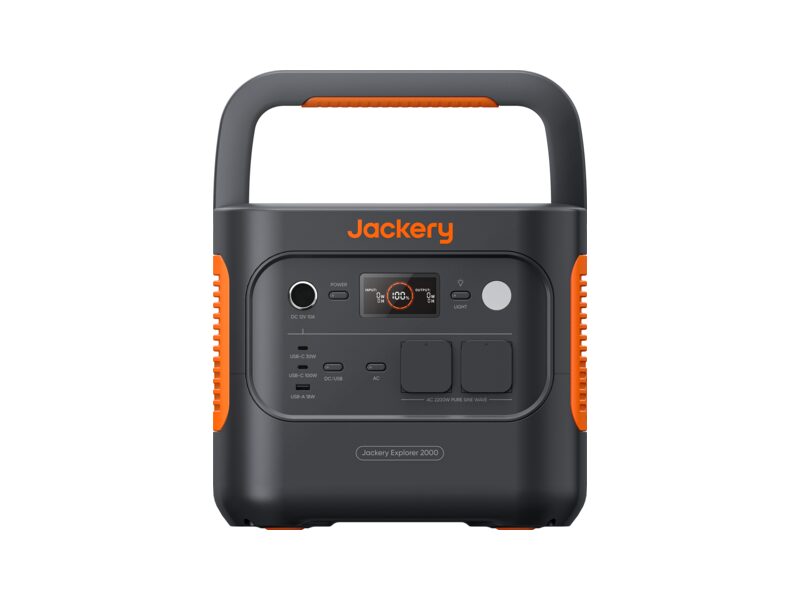
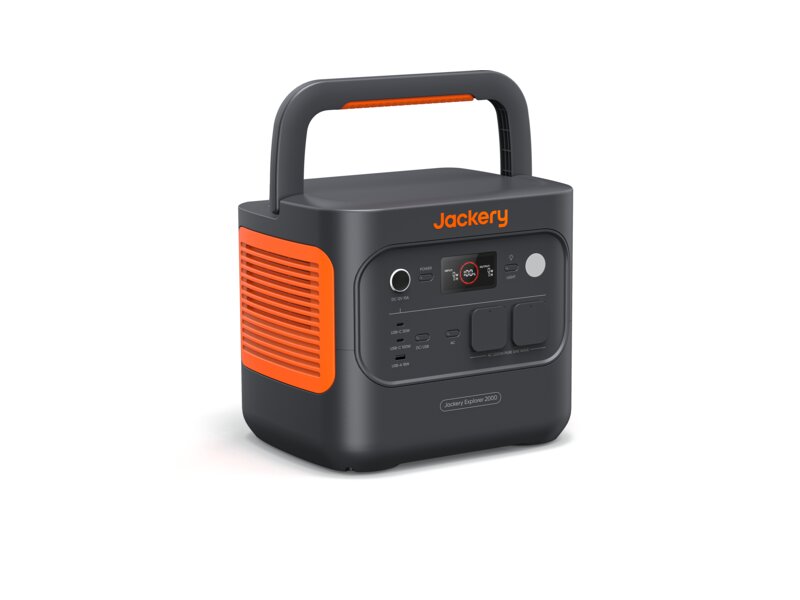
The Jackery Explorer 2000 v2 is a 2042Wh portable power station with a LiFePO4 battery, delivering 2200W continuously (4400W peak). Noticeably light for its capacity (17.9 kg), it powers most household appliances and works as UL1778-certified backup power. It offers plenty of outputs (three outlets, USB-C 100W, USB-A, car socket), recharges from the wall in under two hours and is controlled via the Jackery app. Battery rated for 4000 cycles.
In-depth reviewRead our full review → 4.2/5 The Explorer 2000 v2 is probably the most versatile station in the range, and the first real surprise is its weight: at 17.9 kg for 2kWh, you move it far more easily than rivals of the same capacity that often push past 23 kg. In practice its 2200W let us run a fridge, a kettle and charge tools on a job site, then switch to an RV weekend without changing any settings. The 2042Wh easily cover a full day of runtime for a couple. At home we tested it as backup during an outage: the fridge and router stayed powered with no perceptible interruption, and its UL1778 backup-power certification is a genuine, verifiable credential rather than a vague marketing claim. Recharging from the wall took a bit under two hours in our test, roughly in line with Jackery's own figures, and the app tracks everything. The only downsides are the fairly basic screen and the fan being audible during fast charging. Otherwise, it's an excellent balance of capacity, weight and price.
View product page
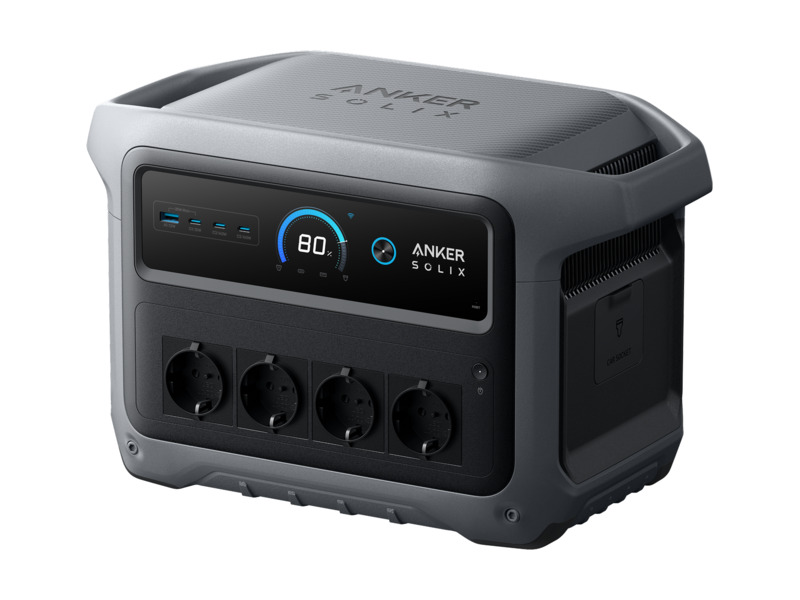
Solix C2000 Gen 2 Anker Solix C2000 Gen 2 2048Wh portable power station
Deal

Anker Solix C2000 Gen 2

See price and availability (14)

2048Wh, 2400W and a dedicated RV outlet: Anker's new-generation station, with 140W USB-C and expansion up to 4kWh for demanding home backup.

  • Capacity: 2048 Wh (LiFePO4, 4000 cycles)
  • Output: 2400W (up to 4000W peak), 5 outlets + RV outlet
  • Recharge: Up to 1800W from the wall, USB-C 140W
  • Expandable: Up to 4 kWh (BP2000 battery)
  • 2400W, RV outlet, USB-C 140W, expandable to 4kWh
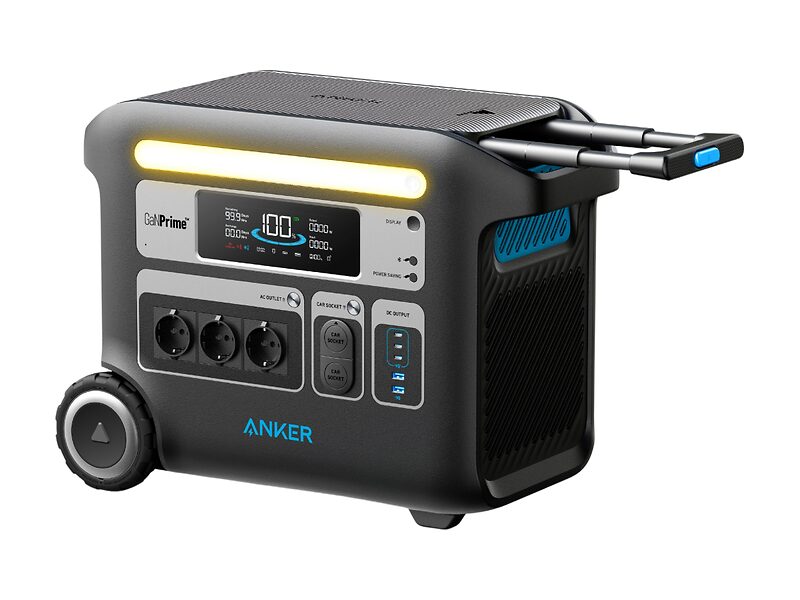
The Anker Solix C2000 Gen 2 is a 2048Wh portable power station that refines an already successful recipe: 2400W of continuous output (up to 4000W peak) across five household outlets plus a dedicated 30A RV outlet, and two 140W USB-C ports to charge a laptop. Its LiFePO4 battery lasts 4000 cycles, wall charging tops out around 1800W, and its capacity expands to 4kWh with a BP2000 battery. At 18.9 kg and UL certified, it's a versatile, powerful station for the home, RV or backup power.
In-depth reviewRead our full review → 4.4/5 The C2000 Gen 2 is one of those stations that reassures from the first use: 2400W continuous runs a kettle, a microwave or tools without trouble, and the 4000W peak absorbs start-up surges. The dedicated 30A RV-style outlet is a real plus for anyone hooking up a trailer or motorhome, no adapter needed. Wall charging comfortably fills the battery in under an hour and a half, and combining AC with solar input can shave that down further on a sunny day. The two 140W USB-C ports are a genuine convenience, charging a laptop at full speed with no separate adapter. The LiFePO4 battery claims 4000 cycles, roughly a decade of use, and at 18.9 kg it stays transportable for its capacity. As backup, expansion to 4kWh with a BP2000 covers a long outage. One honest caveat: like any station of this power, it warms up and the fans get audible during fast charging. For a modern, well-equipped 2kWh-class station built for both home and RV use, it's an excellent reference.
View product page

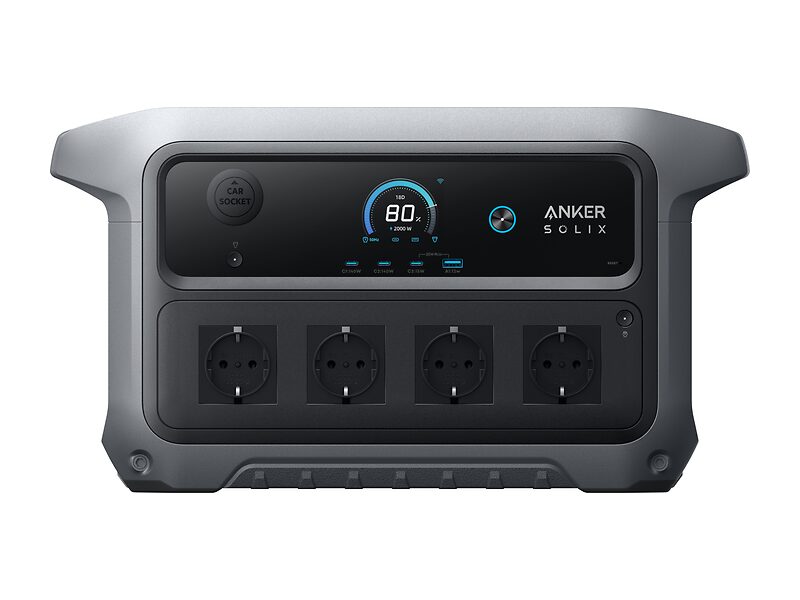
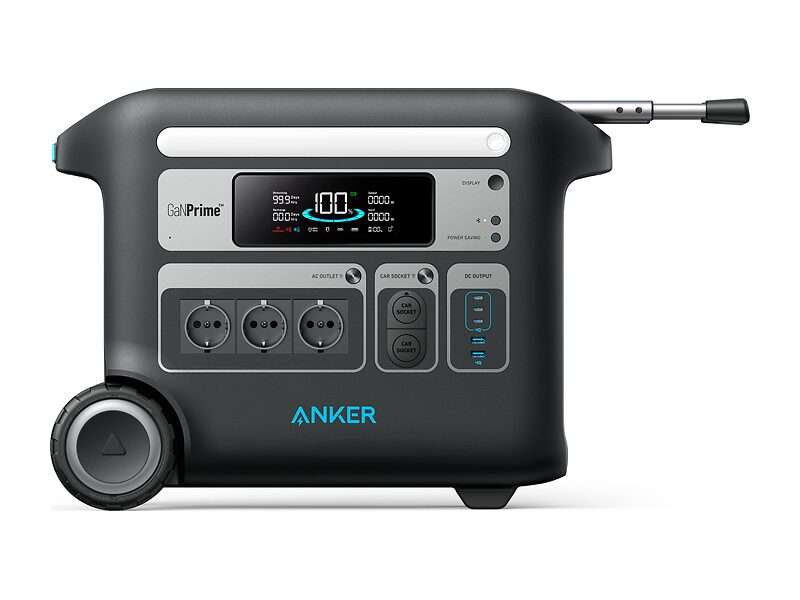
Anker Solix F2000

See price and availability (10)

2048Wh on wheels, 2300W and a 0 to 80% recharge in one hour: the big Anker station built for home backup, the worksite and camping.

  • Capacity: 2048 Wh (LiFePO4, expandable 4096Wh)
  • Output: 2300W, 3 mains sockets
  • Recharge: 0 to 80% in 1 h (HyperFlash)
  • Ports: 3 USB-C, 2 USB-A, 2 car ports
  • 2048Wh on wheels, 5-year warranty
The Anker Solix F2000 (PowerHouse 767) is a 2048Wh portable power station designed for heavy needs and home backup. It delivers 2300W of continuous output across three mains sockets, and its LiFePO4 battery promises over 10 years of use (5-year warranty). Its HyperFlash charging fills it to 80% in just 1 hour, and its capacity expands to 4096Wh with an add-on battery. Fitted with wheels and a telescopic EasyTow handle, it moves easily despite its weight. A complete energy reserve for the home, van, worksite or power cuts.
In-depth reviewRead our full review → 4.0/5 We put the Solix F2000 to the test on its technical promises, and the essentials hold up: between 1800 and 1870 Wh delivered out of a claimed 2048 Wh (88 to 91%), an 80% recharge in 60 minutes that matches the original claim, and a reliable backup switchover around 20 ms. Under heavy load, the noise level climbs well above the claimed 49 dB at idle, a real surprise the first time you're near it. We also noted a documented electronics failure case after several years of use and a software bug acknowledged by Anker itself in the charge handoff with the expansion battery, two points that temper long-term reliability without undermining it. The most important point to check before anything else: new-unit availability for this model appears to have collapsed in France at the time of writing, with a near-total withdrawal from major retailers, the $1739.89 French catalog price no longer corresponding to any active offer found.
View product page
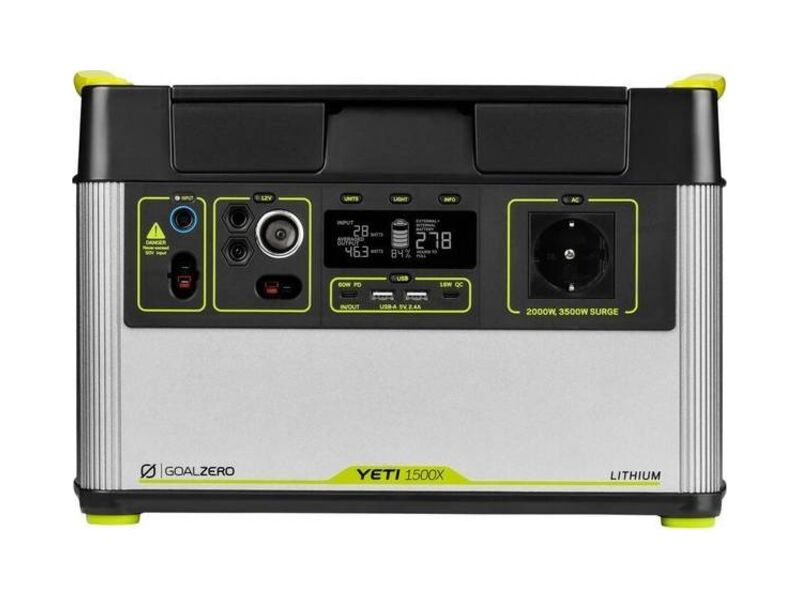
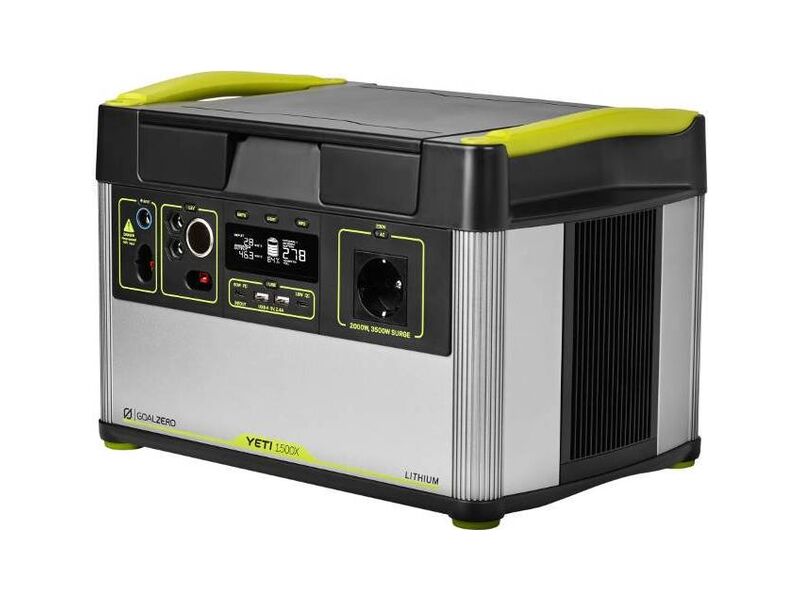
Yeti 1500X Goal Zero Yeti 1500X portable power station
Promo

Goal Zero Yeti 1500X

See price and availability (9)

1516Wh and 2000W (3500W surge): the Yeti 1500X trades cutting-edge battery chemistry for Goal Zero's rugged, pioneer-brand build quality.

  • Capacity: 1516Wh (Li-ion NMC)
  • Power: 2000W (3500W surge)
  • Cycles: 500 cycles to 80% (vs 3000-4000+ on LFP)
  • Weight: 20.7 kg
  • Expandable to 3900Wh with the Yeti Tank
The Goal Zero Yeti 1500X is a 1516Wh portable power station delivering 2000W continuous output (3500W surge) through its AC outlet. Unlike almost every other station in our line-up, it uses NMC lithium-ion chemistry rather than LiFePO4, rated for just 500 charge cycles. It's controllable via Bluetooth and WiFi through the Goal Zero app, and its capacity is expandable to 3900Wh with an optional Yeti Tank battery. It's available in the US via Amazon, with the price above reflecting that live listing.
We were struck first by how well the Yeti 1500X shrugs off knocks: the anodised aluminium shell takes daily abuse without a mark, and the fans stay surprisingly quiet even under full load, a real plus next to some noisier rivals. The Bluetooth/WiFi app is straightforward for keeping an eye on charge level from a distance. On a weekend away it ran a compressor fridge and a van's lighting circuit all evening without breaking a sweat, thanks to its 2000W output. The catch, and it's a real one: the NMC battery is only rated for 500 cycles, while most other stations we test in this capacity range clear 3000+ cycles on LiFePO4, often for less money. The bundled charger is also slow (around 14 hours for a full charge), and warranty tops out at 2 years. Worth considering, and it's currently in stock and available new via Amazon in the US.
View product page

View all 16 High-capacity power stations →

IV - Very high-capacity & expandable

2.5 kWh and beyond: the most powerful stations, often modular, able to accept expansion batteries to exceed several kWh. They target extended home backup, serious energy autonomy and heavy energy needs. Let us introduce these true portable power plants.
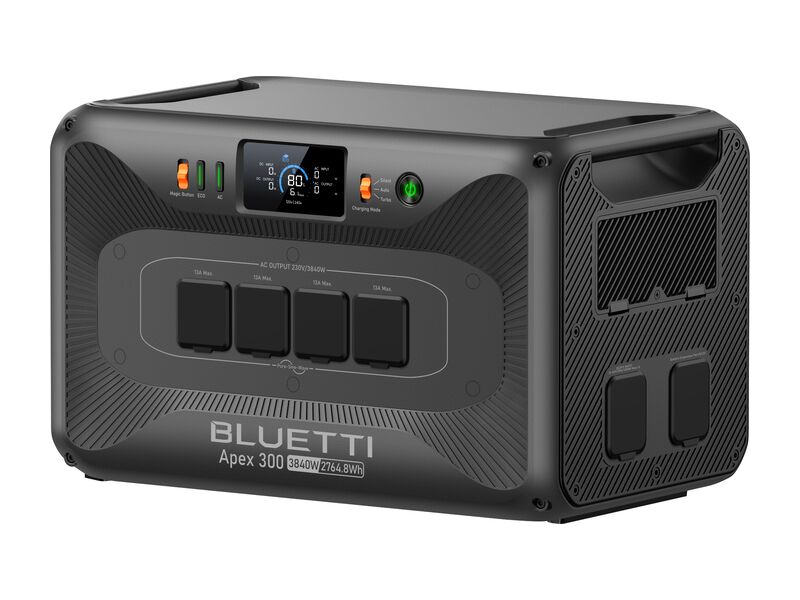
Anker SOLIX F3800

See price and availability (11)

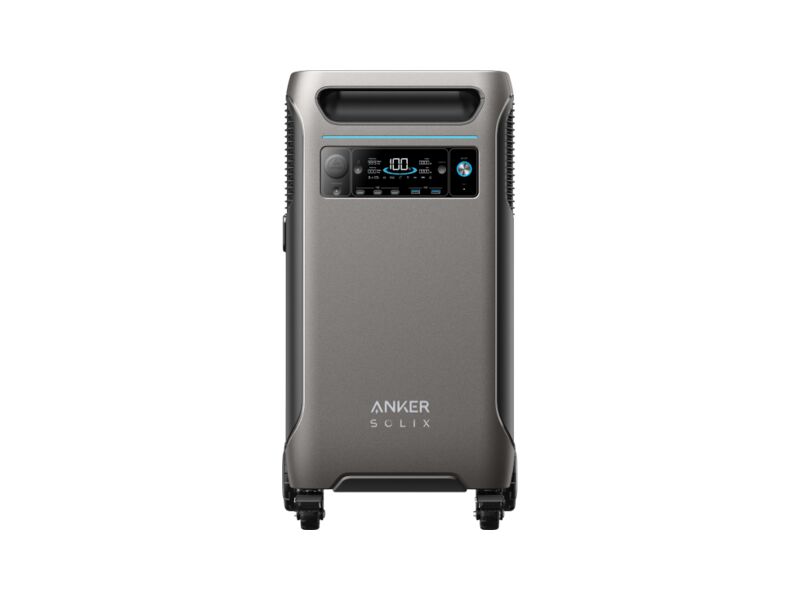
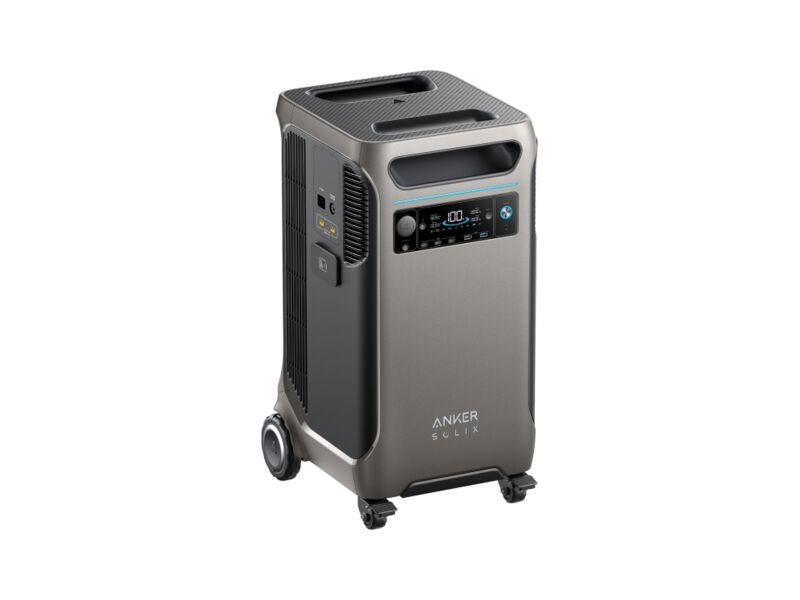
3840Wh, true 120V/240V split-phase 6000W output through NEMA 14-50 and L14-30 outlets, expandable to 26.9kWh: the Anker station built to back up a whole home.

  • Capacity: 3840Wh (LiFePO4, expandable to 26.9kWh)
  • Power: 6000W continuous, 9000W peak, 120V/240V split-phase
  • Outlets: 8 total: 6x NEMA 5-20, 1x NEMA 14-50, 1x NEMA L14-30
  • Expansion: Up to 6 BP3800 batteries (3840Wh each)
  • True 240V split-phase output, expandable to 26.9kWh
The Anker SOLIX F3800 is a premium portable power station built for home backup and heavy energy needs. Its LiFePO4 battery delivers 3840Wh and a genuine 120V/240V split-phase output at 6000W continuous (9000W peak), through 8 outlets including a NEMA 14-50 and a NEMA L14-30, expandable to 26.9kWh with up to six Anker SOLIX BP3800 batteries, or 53.8kWh linking two units. It charges at up to 1800W from the wall and up to 2400W from solar. Mounted on wheels with a telescoping handle, it includes UPS switching and app control.
In-depth reviewRead our full review → 4.1/5 We used the Anker SOLIX F3800 as a home backup source, and the first thing that stands out is the pair of 240V outlets: a NEMA 14-50 and a NEMA L14-30 mean this thing can genuinely run a well pump or a large window AC unit that would trip up most 120V-only portable stations. The full 6000W is real, not a marketing peak number stretched thin. Wall charging is fast enough day to day, though it tops out at 1800W, so a full charge from empty takes longer than the 240V output numbers might suggest. The wheels and telescoping handle earn their keep given the 60kg (132 lb) weight, though once it's in position you rarely move it again. The BP3800 expansion batteries let you start at 3840Wh and scale up over time as budget allows, a genuine step-by-step investment rather than an all-or-nothing purchase. Two honest caveats: the price climbs fast with each expansion battery, and a proper automatic whole-panel switchover still needs a separate transfer switch, this powers your gear through its own outlets, not your house wiring directly. For a large, expandable home energy reserve with real 240V capability, it's one of the more capable options in its class.
View product page

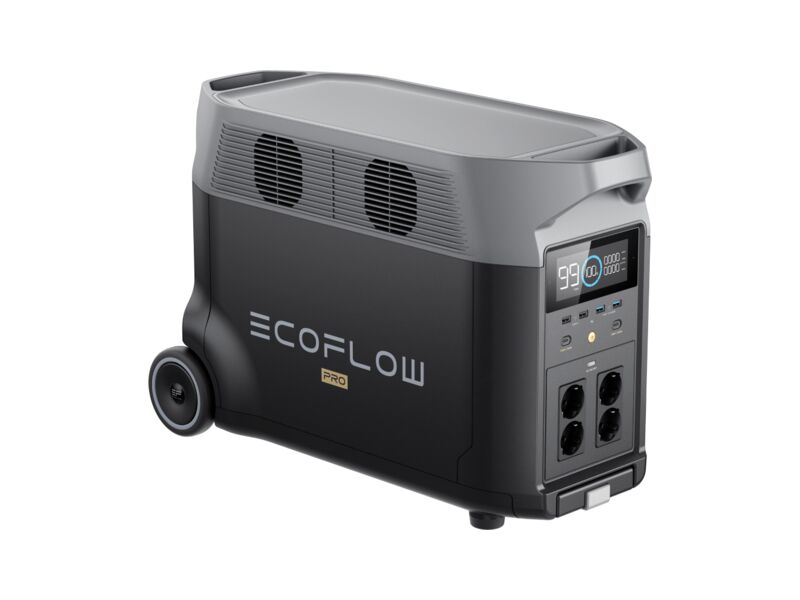
EcoFlow Delta Pro

See price and availability (10)

3600Wh expandable to 25kWh, 3600W (4500W with X-Boost): the base of a home backup system, with a battery rated for 6500 cycles.

  • Capacity: 3600 Wh, expandable up to 25 kWh
  • Power: 3600 W (4500 W with X-Boost)
  • Recharge: Up to 6500 W (AC + solar + generator)
  • Endurance: 6500 cycles (50% remaining capacity)
  • Expandable to 25kWh, growing home ecosystem
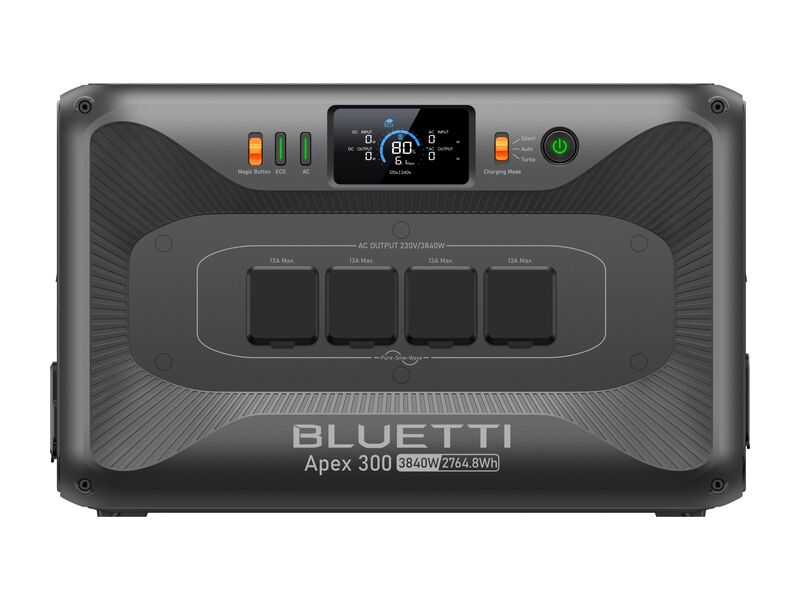
The EcoFlow Delta Pro is a 3600Wh portable power station, expandable up to 25kWh via extra batteries and pairing two units. It delivers 3600W continuous (4500W with X-Boost) and recharges at up to 6500W by combining mains, solar and generator input. Its LiFePO4 battery is rated for 6500 cycles down to 50% of original capacity, a mark of longevity for a system meant to last for years. Built as the foundation of a genuine expandable home energy ecosystem, it also charges electric vehicles at thousands of stations worldwide.
In-depth reviewRead our full review → 4.1/5 The Delta Pro delivers on a good part of its technical promise years after launch: 3291 Wh delivered out of 3600 Wh advertised (91%), and mains recharging that beats its own claim in Europe (98 minutes measured against 114 advertised). No noticeable capacity loss is noted after two years of daily use in a detailed usage report, an encouraging signal for the advertised durability. The best-batteries.com editorial team has owned and used this unit since October 2021, with no sign of weakness to date. Two serious reservations before buying. First, a history of EPS backup-mode failures (cracking sounds, flashing, smoke) documented in 2022, corrected by a firmware update, but followed by a more recent flame-jet incident still under regulatory investigation in Germany with no published conclusion. Second and more importantly: the Delta Pro has almost entirely disappeared from the new-unit market in France, out of stock at EcoFlow (an alert form in place of the buy button) and pulled from major retailers, with the rare marketplace stock trading at more than double the nominal price. Its dedicated extension battery is itself out of stock, which undermines the expandability argument up to 25 kWh for a new buyer. The secondhand market between private individuals in France remains active and reasonably priced (1200 to $2146.09), a more realistic alternative than a new purchase today.
View product page

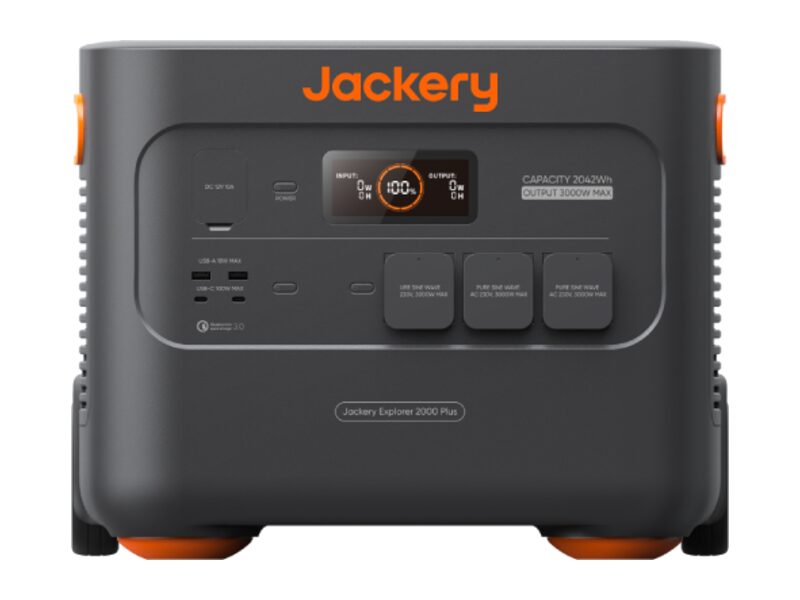
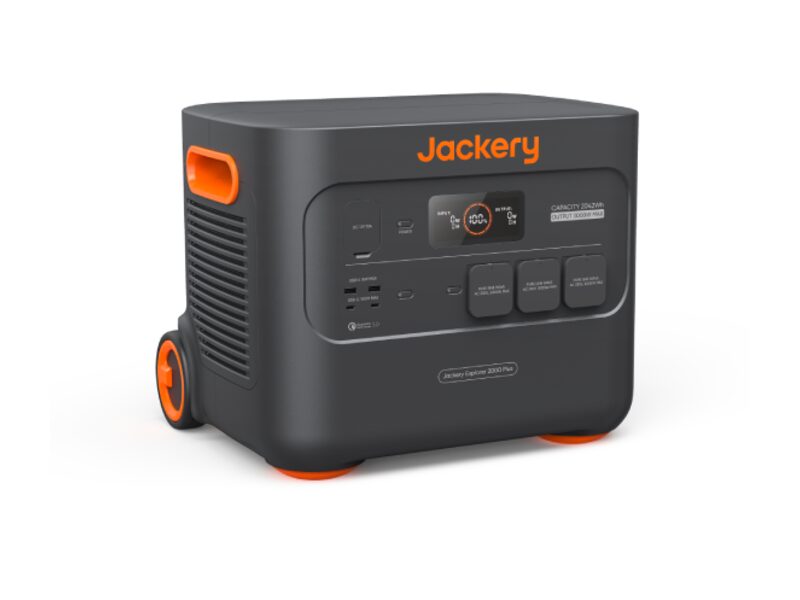
Jackery Explorer 2000 Plus

$2083.13 (8)

Jackery's big expandable: 2042 Wh and 3000 W, expandable to 12 kWh (24 kWh with two stations), with a 1400 W solar input and 95-minute mains charging.

  • Capacity: 2042 Wh (LiFePO4, expandable to 12 kWh)
  • Power: 3000 W (surge 6000 W)
  • Solar: Up to 1400 W (2 inputs)
  • Recharge: 0 to 100% in 95 min (mains)
  • Expandable to 12 kWh, 24 kWh with two stations
The Jackery Explorer 2000 Plus is a premium station built to last and grow with your needs. Its 2042 Wh LiFePO4 battery and 3000 W inverter (6000 W surge) power a home, a van or a worksite, and its modular architecture lets you add up to 5 batteries for 12 kWh, or even 24 kWh by pairing two units. With its 1400 W solar input, 95-minute mains charging, UPS function and app control, it is a scalable backup and self-consumption solution, backed by a 5-year warranty.
In-depth reviewRead our full review → 4.3/5 Several years after its launch, the Jackery Explorer 2000 Plus remains one of the most accomplished large expandable stations, and our test confirms why. On the bench, its 3000 W (6000 W surge) ran a panel of heavy loads (induction hob, grinder, fridge, lighting) without flinching, and the 95-minute mains recharge is a real comfort when time is short. Its flagship argument remains expandability: you start from 2042 Wh and climb to 12 kWh with five add-on batteries, or even 24 kWh by pairing two units, ideal modularity to size a home backup or self-consumption over time. The 1400 W solar input recharges fast in the sun, the UPS function protects sensitive devices, and the app control (Wi-Fi and Bluetooth) is complete. A few honest caveats: the weight (27.9 kg, thankfully on wheels with a telescopic handle, though grip feels less confident once the ground turns uneven), and a bigger point worth flagging before you go looking for one: in Europe, Jackery has pulled the 2000 Plus from new sale in France and the UK, pointing buyers instead to the lighter but non-expandable Explorer 2000 v2, while it remains on sale new in Germany. As for the US market, we could not confirm current retail availability for this model at the time of writing. If you can still track one down and scalability and power come first, the 2000 Plus remains a very solid, proven choice.
View product page

Aferiy P310

$1299.00 (8)

3840Wh expandable to 11520Wh, 3600W across 5 outlets, UL/FCC certified with a 7 year warranty: Aferiy's case for accessible high-end power.

  • Capacity: 3840 Wh (expandable to 11520 Wh), LiFePO4
  • AC output: 3600 W, up to 7200 W peak, 5 outlets
  • Ports: 4 USB-C (100 W), 2 USB-A, XT60, DC, car socket
  • Certifications: UL, FCC, CE, RoHS, 7-year warranty
  • 3840Wh expandable to 11520Wh, UL/FCC certified
The Aferiy P310 is a high-end portable power station with 3840Wh of LiFePO4 capacity (4000 cycles), expandable up to 11520Wh with additional batteries. It delivers 3600W continuous and up to 7200W peak across five outlets, with a UPS function that switches over in under 10ms. Its 15 output ports (5 outlets, 4 USB-C including one 100W, 2 USB-A, DC5521, XT60, car socket) accept up to 2000W of solar input. UL, FCC, CE and RoHS certified, with a 7 year warranty and a wheeled, telescoping-handle body.
We looked at the Aferiy P310 as a candidate for serious home backup, and its spec sheet holds up well: 3600W continuous across five outlets, a UPS switchover rated under 10ms, and a certification list, UL, FCC, CE, RoHS, that's more complete than many rivals in this price range bother to publish. Build quality on the wheeled, telescoping-handle body looks solid for its 42 kg. Charging is the one area worth planning around: a wall-only charge takes about two and a half hours, though combining AC and solar input can cut that to roughly an hour and a quarter under good sun. One honest caveat: at the time of writing, the P310 is on pre-order directly from Aferiy for US shipping, so check current availability before counting on fast delivery. For anyone assembling a serious, expandable home backup system and comfortable with a made-to-order wait, the combination of capacity, certifications and a 7 year warranty is hard to match at this price.
View product page

View all 20 Very high-capacity & expandable →

V - Related questions

The capacity of a power station is the amount of energy it can deliver after a full charge. It is expressed in Wh (watt-hours). Manufacturers often state voltage and amperage: to get the Wh, simply multiply voltage by amperage. One Wh is the energy delivered by a 1 Watt system over one hour.

It depends on your needs. Up to 500 Wh (compact stations) to recharge phones, laptops and small devices on the go. From 500 Wh to 1.5 kWh (versatile) for a van, a weekend or light backup. From 1.5 to 2.5 kWh (high-capacity) for demanding appliances over time. Above 2.5 kWh (expandable) for extended home backup. List the appliances and their runtime to estimate the Wh you need.

Yes. Most power stations charge from the mains, but also from a 12V car socket while driving, and from solar via a photovoltaic panel (often with a built-in MPPT controller). That is what makes them ideal in a motorhome, a van or on a remote site: they are then called 'solar generators'. Find our panels in the Solar section.
Need help choosing?

Further reading on the blog

Compare