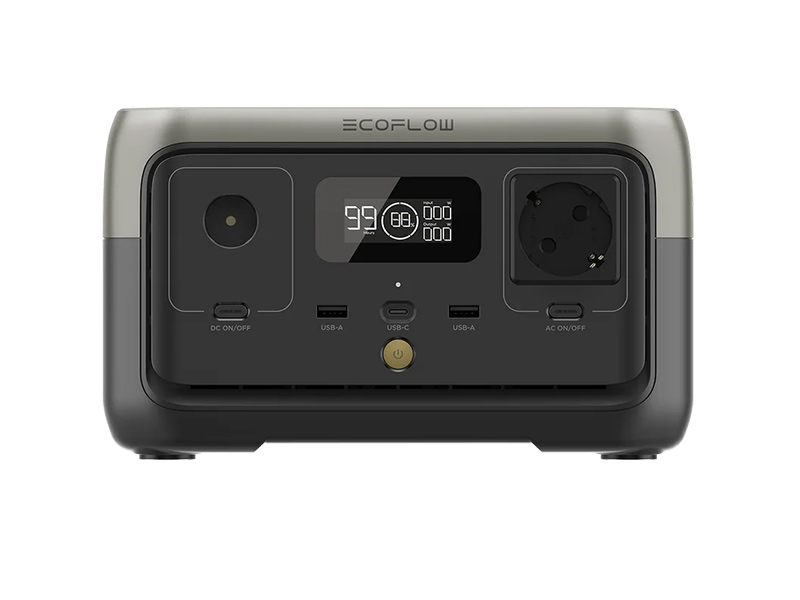
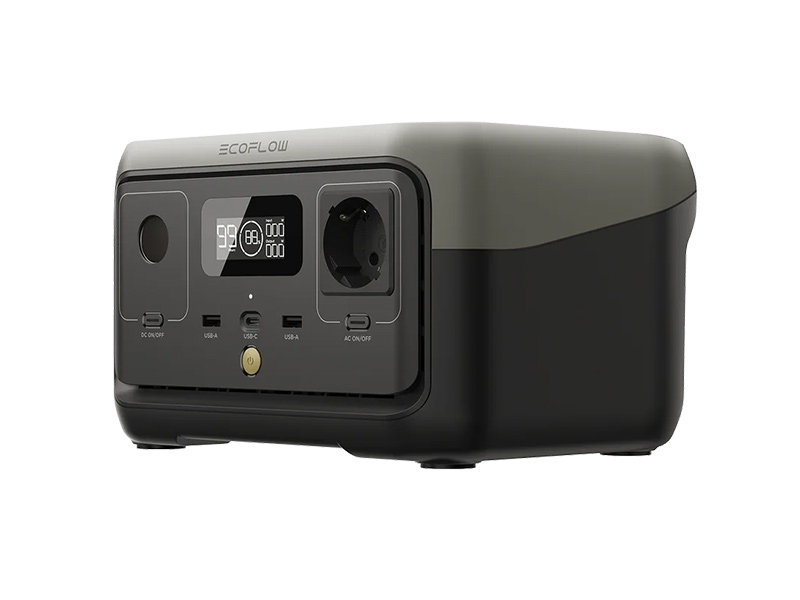
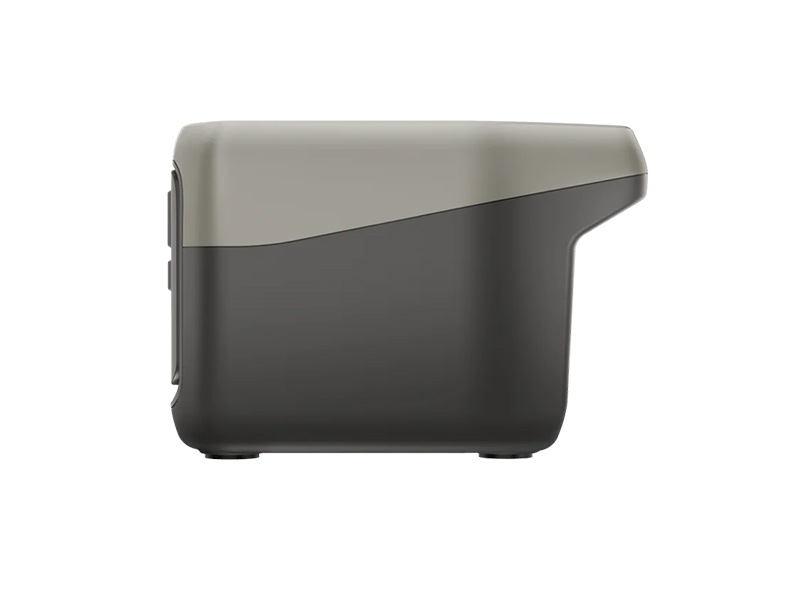
EcoFlow River 2
(34 reviews)
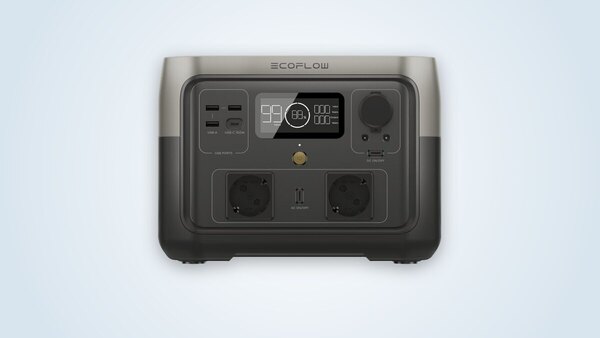
256Wh and a genuine 1 hour full recharge from the wall, the fastest in its class: the EcoFlow River 2 follows US buyers from the campsite to home backup.
Buy at AmazonAs an Amazon Associate I earn from qualifying purchases.
Characteristics
- Capacity: 256Wh, LFP (LiFePO4) battery
- Power: 300W, up to 600W with X-Boost
- Recharge: 0 to 100% in about 60 min from the wall
- Weight: 7.7 lb (3.5 kg) (7.7lb)
- 1 hour full recharge, 3000+ cycles, 5-year warranty
Detailed overview: EcoFlow River 2 portable power station
The EcoFlow River 2 is one of the best-reviewed compact portable power stations on the US market, with over 4,500 ratings on its Amazon listing. This 256Wh LiFePO4 battery targets the same job EcoFlow built it for everywhere: keeping devices charged while camping, working remotely, or riding out a power outage, without the bulk of a full generator.
Its headline feature is charging speed: a full recharge from 0 to 100% in about an hour from a wall outlet, confirmed independently by numerous US buyers, thanks to EcoFlow's X-Stream technology. It also accepts solar input up to 110W (2 to 3 hours for a full charge in good sun, though owners note panels rated well under their real output can charge inconsistently), car charging, and USB-C input.
Connectivity covers the essentials: a 300W AC outlet (pure sine wave, boostable to 600W via X-Boost for short bursts on resistive loads), two USB-A ports and one 60W USB-C port, plus a 12V car-style output. Its EPS (emergency power switching) function moves to battery in under 30ms, fast enough that US owners report a router, an NVR system or a CPAP machine running through an outage with no noticeable interruption.
The LFP chemistry is the long-term argument: rated for over 3000 charge cycles before dropping below 80% capacity, close to a decade of regular use, backed by a 5-year warranty. Real-world reports back this up, though a vocal minority of reviewers describe their unit losing charge unexpectedly fast even when idle, with mixed experiences getting it resolved through warranty support, worth knowing before you buy one purely to sit and wait for an emergency.
At 256Wh, it stays a modest reserve, good for phones, laptops, lighting and light appliances, not a fridge or a heater over time, and it is not expandable. At just 7.7 lb (3.5 kg) (7.7lb) and controllable through the EcoFlow app over Bluetooth, the River 2 remains one of the most versatile and best-reviewed compact stations sold in the US.
Full specifications
Detailed characteristics (EAN: 4895251619905)
Battery and capacity
| Rated capacity?Total stored energy in watt-hours. The higher the figure, the longer the runtime. | 256 Wh |
|---|---|
| Delivered energy, measured?Energy that actually leaves the battery and reaches the devices. Always below the stored energy, as conversion costs heat. Taken from our in-depth review. | 217 Wh |
| Expandable capacity?Whether capacity can be increased with add-on batteries. | No |
| Removable battery?The main battery can be removed or replaced by the user. | No |
| Battery chemistry?LiFePO4 (LFP) lasts far longer and is safer than NMC. | LFP (LiFePO4) |
| Charge cycles?Number of full charges before capacity drops to the stated threshold. | 3000 cycles (80 %) |
AC output
| Continuous AC power?Power the unit can sustain continuously on its 230 V outlets. | 300 W |
|---|---|
| Surge power?Brief peak tolerated when starting motor or compressor devices. | 600 W |
| Boost-mode power?Extended power via a proprietary mode (X-Boost, AmpUp…) by lowering voltage. | 600 W |
| Inverter type?A pure sine wave is essential for sensitive electronics and motors. | Pure sine wave |
| AC voltage / frequency?Voltage and frequency of the AC output (230 V / 50 Hz in Europe). | 120 V / 60 Hz |
| Number of 230 V AC outlets?Number of mains outlets available on the unit. | 1 |
| RV / TT-30 outlet?Dedicated 30 A outlet for North-American style RVs. | No |
Recharging
| Max AC charging power?Maximum power drawn from a wall socket; higher means faster charging. | 360 W |
|---|---|
| AC charge 0-80%?Stated time to go from 0 to 80% on mains power. | 48 min |
| AC charge 0-100%?Stated time for a full charge on mains power. | 60 min |
| Max solar input?Maximum solar power accepted at the input (PV panels). | 110 W |
| Accepted solar voltage?Panel voltage range compatible with the solar input. | 11 to 30 V |
| Max solar current?Maximum current accepted on the solar input. | 8 A |
| MPPT controllers?Number of independent MPPT solar inputs (yield optimisation). | 1 |
| Vehicle charging (12/24 V)?Can be charged from a vehicle's cigarette-lighter socket. | Yes |
| Pass-through charging?The unit can power devices while charging (pass-through). | Yes |
Ports and connectors
| USB-C ports?Number of USB-C ports and the fastest port's power (laptops, phones). | 1 × 60 W |
|---|---|
| USB-A ports?Number of USB-A ports and maximum power (small devices). | 2 × 12 W |
| 12 V output (car socket)?12 V cigarette-lighter output and its power (coolers, pumps…). | Yes (100 W) |
Portability
| Weight?Net weight of the unit, battery included. | 7.7 lb (3.5 kg) |
|---|---|
| Dimensions (L × W × H)?Overall size of the unit in millimetres. | 9.6 × 8.4 × 5.6 in (245 × 214 × 142 mm) |
| Form factor?Portable (hand-carried), transportable (heavy), or wheeled. | Portable |
| Wheels?Built-in wheels for moving the unit. | No |
| Telescopic handle?Retractable handle like a wheeled suitcase. | No |
Safety and environment
| Certifications?Standards and approvals obtained (CE, RoHS, UN38.3, UL…). | CE, RoHS, UN38.3, TÜV Rheinland |
|---|---|
| Discharge temperature?Temperature range in which the unit can deliver power. | 14 to 113 °F (-10 to 45 °C) |
| Charge temperature?Temperature range in which the unit can be recharged. | 32 to 113 °F (0 to 45 °C) |
Backup / UPS
| UPS / EPS mode?Automatic switch to battery on a mains outage (backup). | Yes |
|---|---|
| Switchover time (rated)?Delay before switching to battery; under 20 ms suits a PC or router. | 30 ms |
Noise and thermal
| Quiet mode?Setting that limits fan noise, often by capping charge power. | No |
|---|---|
| Self-heating battery?Battery pre-heating to allow charging in cold weather. | No |
Display and connectivity
| Display?Type of screen showing power, runtime and alerts. | LCD |
|---|---|
| Bluetooth?Bluetooth link for nearby control. | Yes |
| Wi-Fi?Wi-Fi connection for remote control and monitoring. | Yes |
| Mobile app?iOS / Android app to control the unit. | Yes |
| Local control (no cloud)?Control possible over Bluetooth without an account or internet. | Yes |
| Solar connector?Connector type of the solar input (XT60, Anderson, MC4…). | XT60i |
Availability and warranty
| Market launch?Date the model first became available on the European market. Useful to place its generation: technology moves fast in this segment, and a device several years old may be at the end of its commercial life. | November 2022 |
|---|---|
| Warranty?Length of the manufacturer's warranty. | 5 years |
⚡ How long will this power station run a device?
With 256 Wh, the EcoFlow River 2 external battery runs a fridge (50 W) for ~4h20 or an LED TV (90 W) for ~2h25.
| Home | Runtime |
|---|---|
| Mini fridge (45 W) | ~4h50 |
| Refrigerator (50 W) | ~4h20 |
| Freezer (60 W) | ~3h40 |
| American fridge (150 W) | ~1h25 |
| Outdoor & workshop | Runtime |
|---|---|
| Wi-Fi router (15 W) | ~15h |
| Electric cooler (45 W) | ~4h50 |
| E-scooter (charging) (100 W) | ~2h10 |
| Oxygen concentrator (300 W) | ~45 min |
Rough estimate: real consumption varies, and very power-hungry appliances (heating elements) must stay below the output power.
What is this power station best for?
-
Camping & Tent Ideal
At 7.7 lb (3.5 kg) (7.7lb) with a rear-mounted handle that keeps the top surface free for charging devices, the EcoFlow River 2 is a favorite pick for travel weight among US reviewers. Its 256Wh comfortably ran tent lighting for three hours, charged a phone in about an hour, and inflated an air mattress with charge to spare in one camper's account. With X-Boost enabled, its 300W continuous output stretches to 600W for short bursts, enough for a fan, string lights and device charging at once, though reviewers are clear it will not run a coffee maker, hair dryer or microwave. Solar charging works well with a proper panel, one owner found anything under 25W of real output charged inconsistently, while EcoFlow's own 60W and 110W panels performed reliably, filling the battery in 2 to 3 hours. A full wall recharge genuinely takes about an hour, confirmed independently by several US buyers. Fan noise during fast charging is audible but not intrusive.
-
Home & Power cuts Ideal
US reviewers put the River 2 to work as a genuine backup power source more often than the spec sheet alone suggests. One owner uses it as a line-interactive UPS for a small business's security NVR, router and PoE switch, right at the edge of its 300W AC budget but delivering a consistent 60 to 75 minutes of runtime during real outages, with an EPS switchover measured at under 30ms and zero dropped connections. Another bought it to send to family in Cuba specifically for outage protection, and called it one of their best purchases. A Canadian owner used it during scheduled condo power shut-offs to run a lamp, a router and charge devices for about 6 hours per charge. One honest caveat from a smaller but vocal group of reviewers: a minority report the battery draining to zero within a few days even when left untouched, with mixed experiences getting warranty support to resolve it, worth knowing if you plan to keep it charged and waiting for months at a time.
-
Remote work Suitable
For mobile or remote work, the River 2 handles the basics: its 300W output runs a laptop and a monitor, and the single 60W USB-C port charges a laptop directly, though several reviewers wish for a second USB-C port for simultaneous laptop and headphone charging. Its EPS function switches to battery in under 30ms, enough to protect an ongoing call or a saved document through a brief blip. At 7.7 lb (3.5 kg) it moves easily between a desk, a shed or a van. Its 256Wh suit a few hours of light use rather than a full day of heavier equipment.
-
Health & CPAP Suitable
One US reviewer ran a CPAP machine (a Philips DreamStation 2, humidifier off) for six full hours on the River 2 and still had about 40% charge left, a solid real-world data point for this capacity. Its pure sine wave output suits sensitive medical electronics, and at 7.7 lb (3.5 kg) it travels easily for a trip away from home. Running the humidifier draws noticeably more power, so expect shorter runtime with it on. The EPS function switches over in under 30ms if paired with mains power at home, though for CPAP use most owners simply run it from a full charge overnight.
Our team's recommendations based on the model's capacity, output power and weight.
Comparison
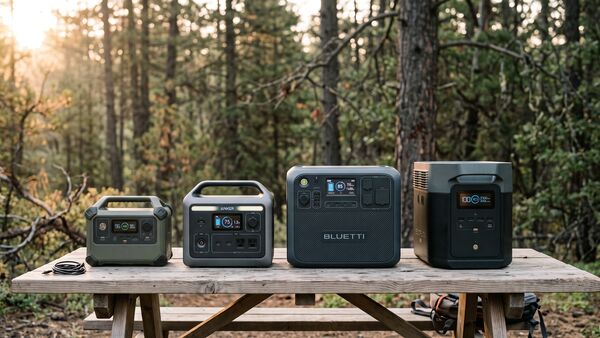
Around $200 to $240, the EcoFlow River 2 competes with the most searched compact power stations sold in the US, in queries like "EcoFlow River 2 vs River 3" or "River 2 vs Jackery Explorer 300". Here is how it stacks up against three direct alternatives.
| Criterion | EcoFlow River 2 | EcoFlow River 3 | Bluetti Elite 30 V2 | Jackery Explorer 300 |
|---|---|---|---|---|
| Capacity | 256Wh | 245Wh | 288Wh | 292Wh |
| Continuous / boosted power | 300W / 600W | 550W | 600W / 1500W lifting | 300W |
| Mains recharge | 60 min (0-100%) | 60 min | 45 min (0-80%) | Not stated |
| Reviews on Amazon US | 4,536 (4.3 stars) | 886 (4.5 stars) | 803 (4.4 stars) | 11,100 (4.6 stars) |
| Observed price | $209.00 | $239.00 | $399.00 | $259.00 |
The EcoFlow River 2 remains the cheapest of the group and the only one still combining a full 60-minute mains recharge with X-Boost headroom to 600W. The newer River 3 charges just as fast with more continuous power for slightly more money, the Bluetti Elite 30 V2 wins on raw and boosted power, and the Jackery Explorer 300 carries by far the largest review base. For the lowest entry price and a genuinely fast recharge, the River 2 still holds up well.
Related video
Video: Portable Power Station | EcoFlow River 2 - Most Detailed Review - Published on 07/11/2025
Our tester's review: Christophe Delpuech
Few products in this price range have as deep a US review base as the River 2, over 4,500 ratings, and the real-world stories back up the spec sheet. One owner runs it as a line-interactive UPS for a small business's security system, right at the edge of its 300W budget but delivering 60 to 75 minutes of clean runtime with zero dropped connections during real outages. Another ran a CPAP machine for six hours and still had 40% left. A third turned an unpowered shed into an off-grid e-bike charging station using solar input alone, calling it a gateway device to a bigger battery habit. The genuinely-timed 1 hour full recharge shows up again and again in reviews, and the EPS switchover, under 30ms, kept a router and NVR running invisibly through brief blips. A firmware update briefly broke AC charging display for one buyer, fixed a few days later by EcoFlow support. The more serious caveat: a vocal minority report their unit draining to zero within days even when idle, with mixed luck getting warranty support to resolve it.
In-depth review EcoFlow River 2: our full review 4.2/5 Read our full review → Capacity and efficiency 4.2 Delivered power 4.0 Recharging 4.6 Ports and control 3.9 Build and endurance 4.5 Noise not measuredFrequently asked questions: EcoFlow River 2 portable power station
With 256Wh, it recharges a smartphone roughly 15 to 20 times or a laptop 3 to 5 times, matching what US owners report for a camping weekend of typical use.
About an hour from 0 to 100% on a wall outlet, a figure US buyers repeatedly confirm as accurate. Solar charging with a 60 to 110W panel takes roughly 2 to 3 hours in good sun.
Yes. One US reviewer ran a CPAP (humidifier off) for six hours and still had about 40% charge left. Turning the humidifier on will noticeably shorten that runtime.
Yes, its EPS function switches to battery in under 30ms. US owners use it to protect a router, a security system or medical equipment through brief outages, though a minority report their unit losing charge unexpectedly fast when left idle for long stretches.
Need help choosing?
Other products in the "Compact power stations" category
Aferiy P040
See price (3)
256Wh, 400W and a full recharge in about 1.2 hours, the Aferiy P040 is a light 8.8 lb (4 kg) backup, though one detailed US review flags a real UPS caveat.
Allpowers R600
$219.00 (7)
Affordable and backed by a 5-year warranty, the Allpowers R600 delivers 299 Wh, 600 W and a one-hour recharge, plus a built-in wireless charger.
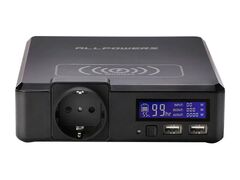
Allpowers S200
$99.00 (6)
154Wh and 200W in an ultra-compact, book-sized station with built-in wireless charging: the mini power station that goes everywhere without weighing you down.
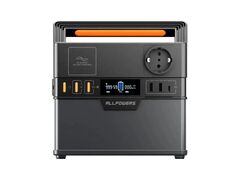
Allpowers S300 Plus
$189.00 (5)
Compact and clever, the Allpowers S300 Plus (288 Wh) combines USB-C 100 W, a wireless charger, an LED light and app control.
Published on 02/09/2026, updated on 16/09/2026