Solar panels for campervans and fixed roofs

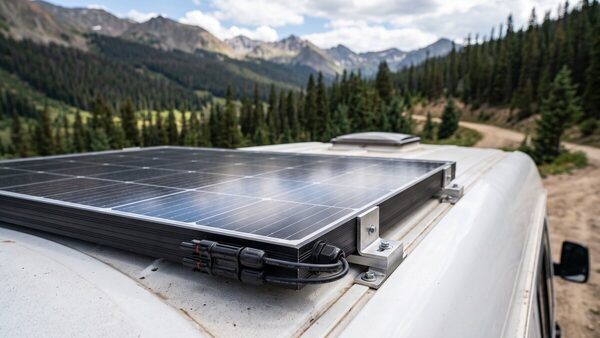
On a campervan roof a rigid panel is fitted once for twenty years: what counts is not the headline efficiency but the output voltage and the space left between the roof vents.

On a fixed installation the decisive technical figure is open circuit voltage, the Voc. It determines whether the panel suits your charge controller or power station, and exceeding the limit can damage the electronics. Two classes coexist: around 20 to 24 volts for van and shed panels, and 48 to 58 volts for roof modules, which are incompatible with most portable stations. Efficiency, by contrast, differs by only a few points between monocrystalline and polycrystalline, which matters less than good orientation. We state the Voc of each model, its mounting method and the production warranty, usually twenty to twenty-five years.

No product matches these criteria.

Our selection

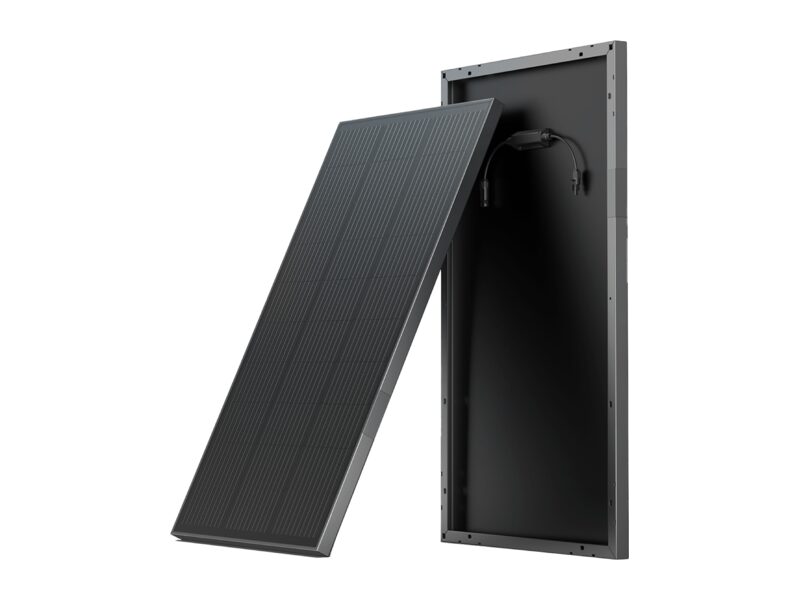
Rigid solar panel 100W (x2) EcoFlow 100 W rigid solar panel 2-pack
Promo

EcoFlow Rigid solar panel 100W (x2)

See price and availability (10)

Two 100 W rigid panels to mount once and forget: 23% efficiency, IP68 tempered glass and mounting feet supplied to equip a van or a roof.

  • Power: 2 x 100 W (200 W total)
  • Efficiency: 23% (monocrystalline cells)
  • Output: 17.1 V / 5.9 A, MC4 connectors
  • Durability: IP68, tempered glass, high winds
  • 2-pack of IP68 rigid panels, mounting feet included
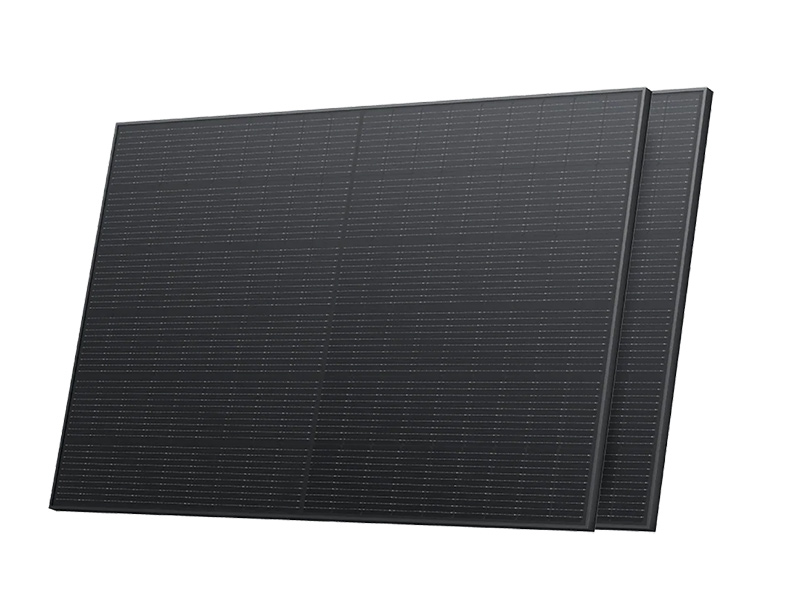
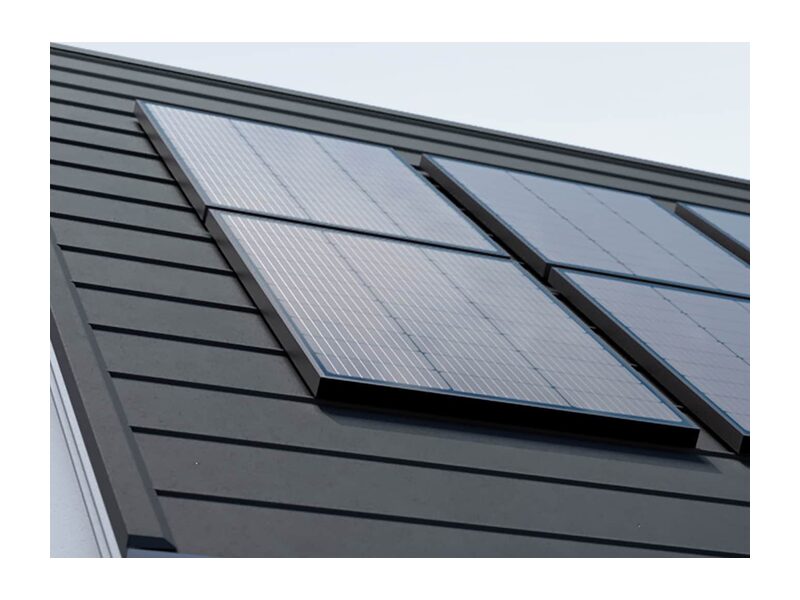
The EcoFlow 2-pack of 100 W rigid solar panels is for those who want a permanent installation rather than a panel to unfold every day. Its monocrystalline cells reach 23% efficiency, protected by tempered glass and durable IP68-certified lamination able to take rain, dust, high winds and snow. Each panel delivers 17.1 V / 5.9 A over MC4 connectors, and the included mounting feet let you angle it on a van roof, a shed or a terrace. A solid 200 W foundation to feed a portable power station day after day.
We fitted this pair of EcoFlow rigid panels to the roof of a converted van, and it is exactly the kind of product you forget about once installed, in the best sense. Mounting is simple thanks to the supplied feet: you screw them down, set the angle, plug in the MC4 leads, and you are done. The build inspires confidence, with a solid frame and tempered glass that did not flinch after a winter of rain, frost and gusts. In full June sun, the two panels gave us output very close to the advertised 200 W, enough to fill a 1 kWh station over the day without thinking about it. The real advantage over a folding panel is consistency: no need to set the panel out each morning or bring it in at night, production starts at sunrise. Two honest caveats: at 6.2 kg each, you need a support and a roof able to take them, and the lack of a built-in kickstand means you depend on the mount for tilt. For a fixed installation on a van, cabin or garden shed, this is an excellent starting point.
View product page

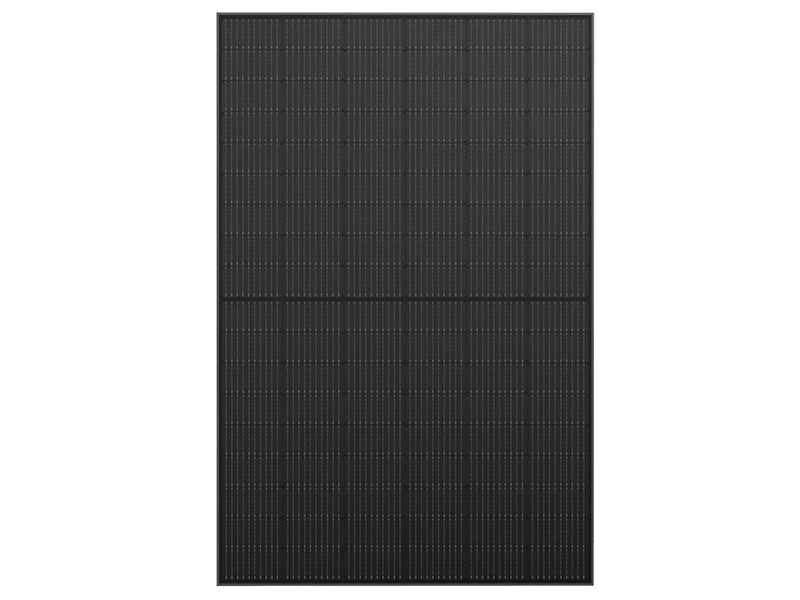
EcoFlow Rigid Solar Panel 400W (x2)

See price and availability (4)

Fit two EcoFlow 400W rigid solar panels at home or on your RV: 23% efficiency, IP68 rating and long-lasting weather resistance built to last.

  • Power: 400W per panel (x2 included)
  • Efficiency: 23%, monocrystalline cells
  • Waterproofing: IP68
  • Weight: 21.8 kg per panel
  • 23% efficiency, IP68 rated, withstands 209 km/h winds
Sold as a pack of two panels, the EcoFlow 400W rigid solar kit uses monocrystalline cells rated at 23% efficiency to charge your PV system, RV or EcoFlow Power Kit faster. Its anti-corrosion aluminium frame and IP68 rating let it withstand winds up to 209 km/h and 551 kg of snow per square metre. A durable solution built for a fixed install on a roof, wall or outdoor structure, backed by up to a 10-year warranty.
We tested these rigid panels mounted flat on a garden shed roof, in an area that is not exactly known for constant sunshine. Result: even under a hazy sky, output stays decent, and as soon as the sun breaks through, current climbs fast thanks to EcoFlow's claimed 23% efficiency. What catches you off guard on unboxing is the weight: each panel is close to 22 kg, so handling one alone once it is up on a roof or fence is not an option. Installation itself is straightforward if you have done some DIY before: pre-drilled holes, a sturdy rigid aluminium frame, a reliable solar connector on the back. Small downside: neither the mounting feet nor the XT60i cable needed to plug directly into an EcoFlow power station are included, so budget for those separately. Over time, the IP68 rating is genuinely reassuring: rain, salt spray, frost, none of it seems to dent performance across the seasons. For a fixed, long-term install this is a very solid pick; for daily portable use, EcoFlow's foldable panels are the better fit.
View product page

Renogy ShadowFlux 200W

See price and availability (3)

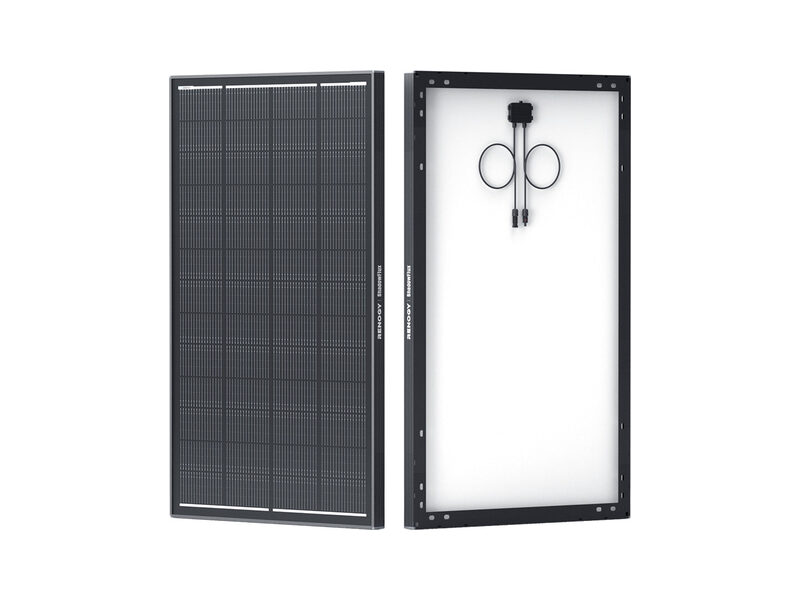
A roof vent, an aerial, a branch: on a campervan roof, partial shade is expensive. This panel is built to keep producing when part of its surface is covered.

  • Power: 200 W, N-type cells (25% efficiency)
  • Anti-shading: 28 bypass diodes, up to 85% more output in shade
  • Module efficiency: 20.7%
  • Format: 1262 x 764 x 30 mm, 10.81 kg
  • Keeps producing when part of the panel is covered
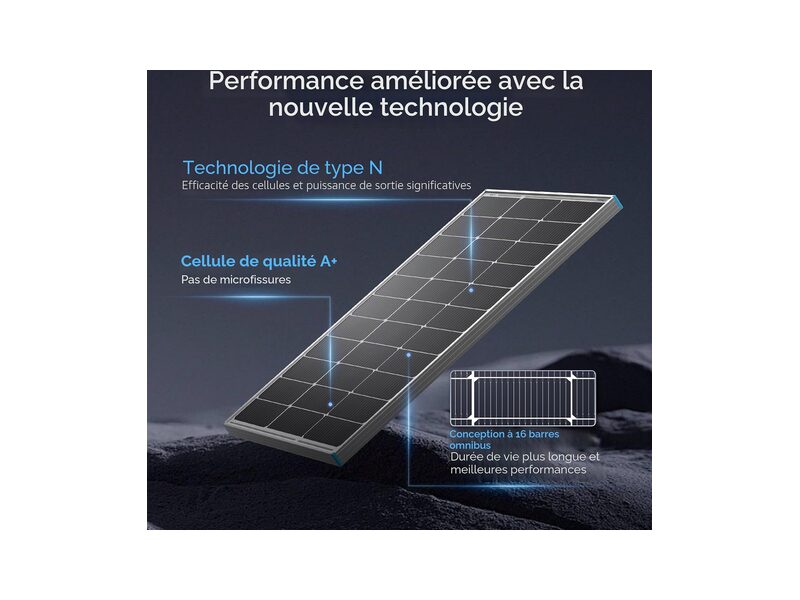
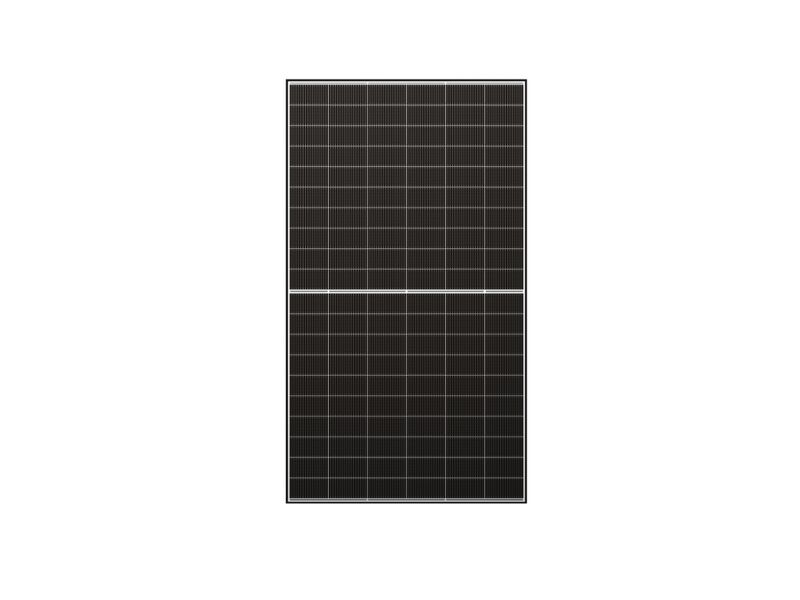
On a conventional panel, a single shaded cell drags down its whole string: that is the structural weakness of solar on a cluttered roof. The Renogy ShadowFlux splits the module into 28 sections, each protected by its own bypass diode, where an ordinary panel has three. Renogy claims up to 85% more output under partial shade. The rest follows: N-type cells at 25% efficiency, 16 busbars, 20.7% module efficiency, IP67 rating and 10.81 kg for 1262 x 764 mm, a more compact format than the average 200 W panel.
Partial shade is the problem you discover after fitting, never before. On a van roof there is always a vent, an aerial or a rack casting a shadow at some point in the day, and on a conventional panel that shadow does not cost you the covered area: it collapses the entire cell string involved. That is exactly what this ShadowFlux tackles, with 28 bypass diodes instead of the usual three. Each zone keeps working on its own account. The claimed 85% gain obviously applies in the manufacturer's best case, but the principle is sound and checkable: the finer the electrical subdivision, the less a local shadow penalises the whole. The rest of the spec sheet holds up, with N-type cells that age better than PERC and a format 7% more compact than the average 200 W, which matters when fitting three panels between two roof vents. Two reservations: the materials warranty runs five years where some rivals offer ten or twelve, and 10.8 kg on a van roof calls for proper bonding or serious brackets. If your roof is completely clear, a standard panel will do just as well for less.
View product page

Renogy 16BB 175W Panel

See price and availability (3)

The same watts on less roof. N-type cells at 25% efficiency and 16 busbars, in a shorter format than the average 175 W panel.

  • Power: 175 W at 12 V, N-type cells (25% efficiency)
  • Module efficiency: 20.6%
  • Footprint: 1110 x 764 x 30 mm, 7 to 10% less than typical 175 W panels
  • Weight: 9.6 kg
  • The best watts-per-centimetre-of-roof ratio in our selection
On a van roof the constraint is almost never budget: it is space. The Renogy 16BB 175 W answers exactly that, with a 1110 x 764 mm format quoted 7 to 10% more compact than other panels of the same rating, for 9.6 kg. The density comes from N-type cells at 25% efficiency, a newer generation than PERC, and from 16 busbars that cut resistive losses. Module efficiency 20.6%, 175 W at 20.88 V, IP67-rated MC4 connectors.
When fitting out a van you do not think in pounds per watt but in watts per metre of roof. Between vents, rack and aerial, usable area is counted in centimetres, and that is where this 175 W stands out: Renogy quotes 7 to 10% less area than other panels of the same rating, which can be enough to fit a third module where two looked like the limit. The gain comes from N-type cells, more efficient than PERC for a given area, and from 16 busbars collecting current at more points. Two secondary benefits deserve a mention: N-type degrades more slowly over time, and it loses less efficiency as the panel heats up, which is daily life on a summer roof. At this price that is a rare performance-to-footprint ratio. The only limit is positioning: without the anti-shading subdivision of its bigger ShadowFlux sibling, it remains vulnerable to a cast shadow, like any conventional panel. Clear roof, it is the best pick in our selection; cluttered roof, look at the ShadowFlux.
View product page

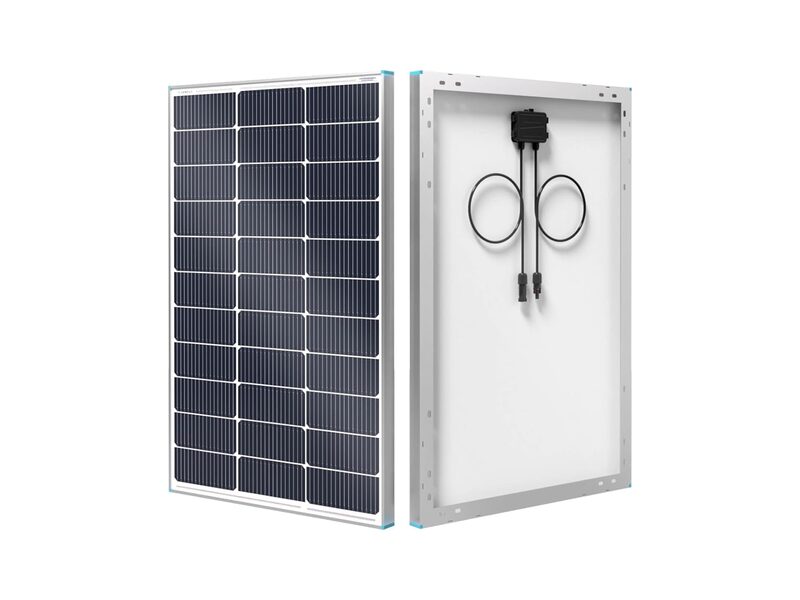
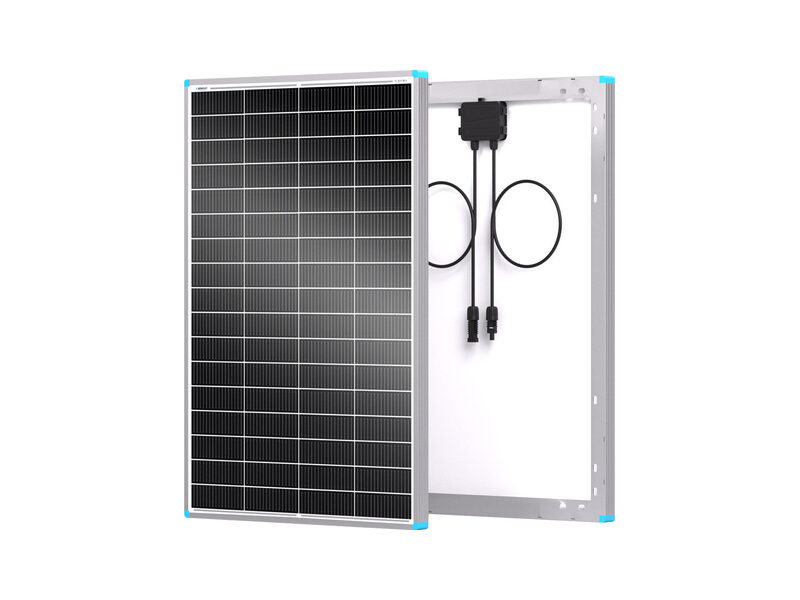
Renogy 100W Rigid Panel

See price and availability (2)

100W monocrystalline with N-type cells at 25% cell efficiency and a rugged aluminum frame: Renogy's rigid panel anchors any fixed solar setup.

  • Power: 100W (N-type 16BB monocrystalline)
  • Efficiency: 20% module, cells up to 25%
  • Frame: Corrosion-resistant aluminum, tempered glass
  • Format: Rigid, about 13 lbs, 34.1 x 22.8 in
  • N-type cells, 20% module efficiency, rugged frame
The Renogy 100W 12V rigid solar panel is a monocrystalline module built with N-type 16BB cells, rated up to 25% cell efficiency for a 20% module efficiency, among the best figures in its class. Its corrosion-resistant aluminum frame and tempered glass hold up to years of outdoor exposure, wind loads up to 2400Pa and snow loads up to 5400Pa, for a fixed install on an RV roof, a van, a cabin, or a boat. Light for a rigid panel at about 13 pounds, it ships with a 10-year product warranty and a 25-year power output warranty.
The Renogy 100W rigid panel is a classic fixed-solar building block, and this N-type version is a real step up. Its 20% module efficiency, with cells rated to 25%, shows in practice: on an equal footprint, it pulls in noticeably more power than an older PERC panel, which matters when roof space on a van or trailer is tight. The aluminum frame and tempered glass feel built for years outside, and it stays relatively light for a rigid panel at around 13 pounds, easier to lift onto a roof solo than most framed panels this size. Real output naturally depends on sun and angle, but aimed well, it keeps a leisure battery topped off through an MPPT controller without drama. The only real planning needed is around installation, mounting hardware, MC4 wiring, and a charge controller sold separately, plus wiring multiple panels together for a bigger setup. For the base of a dependable, long-lasting solar system, it remains a safe, well-reviewed pick.
View product page
500W Bifacial Solar Panels Zendure 2 x 500W bifacial solar panel kit
Promo

Zendure 500W Bifacial Solar Panels

$541.60 $487.44 (2)

Two 500W dual-glass bifacial panels that catch light on both faces: up to 1300 Wp combined, 22.5% efficiency and genuine all-weather toughness.

  • Power: 2 x 500W bifacial (up to 1300 Wp)
  • Efficiency: Up to 22.5%, dual-glass
  • Toughness: Wind 2400 Pa, snow 5400 Pa, IP68
  • Capture: Both sides, excellent in low light
  • High-efficiency bifacial for balcony and roof
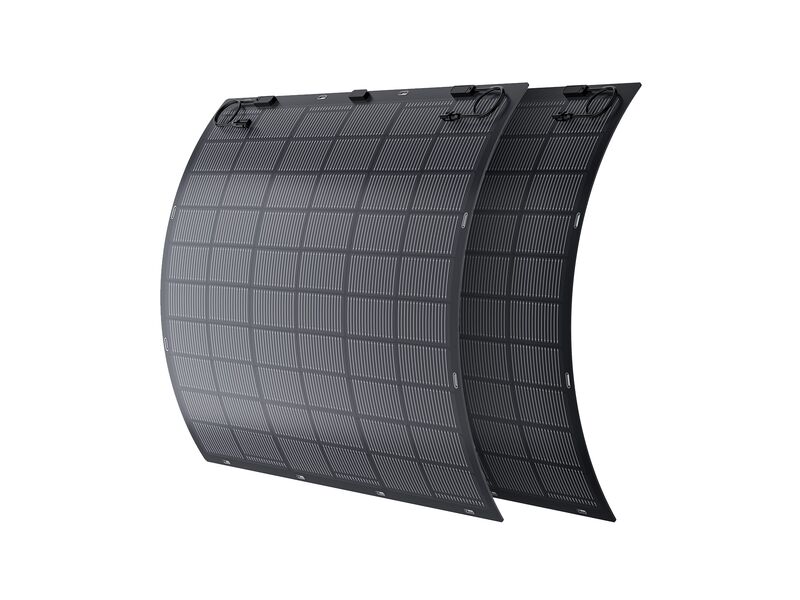
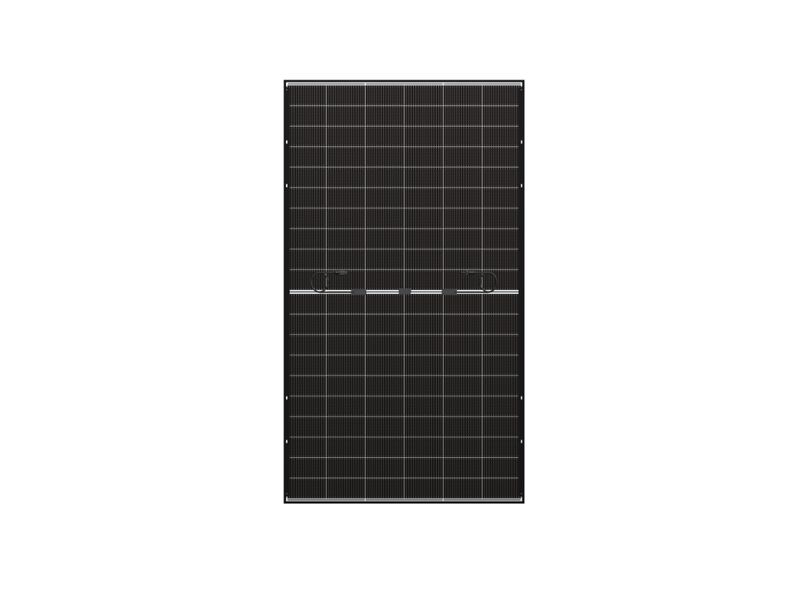
This set of two Zendure 500W bifacial solar panels catches light on the front and the back, for a combined potential of up to 1300 Wp depending on ground reflection. Monocrystalline dual-glass, with a claimed efficiency of up to 22.5%, they excel in low light and withstand strong winds (2400 Pa) and snow loads (5400 Pa). IP68 junction box and MC4 connectors: a rigid, durable base for a balcony, a terrace or a flat roof.
Bifacial changes the game when you have a bright surface behind the panels (light ground, white railing, gravel, snow): by also catching the light reflected onto the rear face, these Zendure modules recover extra output that ordinary panels leave on the table. On paper two 500W modules, but up to 1300 Wp combined in good reflection conditions: the gain is real at midday and in clear weather. The dual-glass build inspires confidence over time, and the wind (2400 Pa) and snow (5400 Pa) resistance certifications confirm they are built to stay outdoors all year. The 22.5% efficiency and the good low-light behaviour (morning, overcast sky) are there. Two caveats: these are rigid, heavy panels, so they need solid mounting and a suitable frame, ideally slightly raised to let light reach the rear face; and without a reflective surface behind, the bifacial bonus stays modest. But to maximise output on a balcony or a flat roof, it is an excellent choice.
View product page
420W Flexible Solar Panels Zendure 2 x 210W flexible solar panel kit
Promo

Zendure 420W Flexible Solar Panels

$541.60 $418.39 (2)

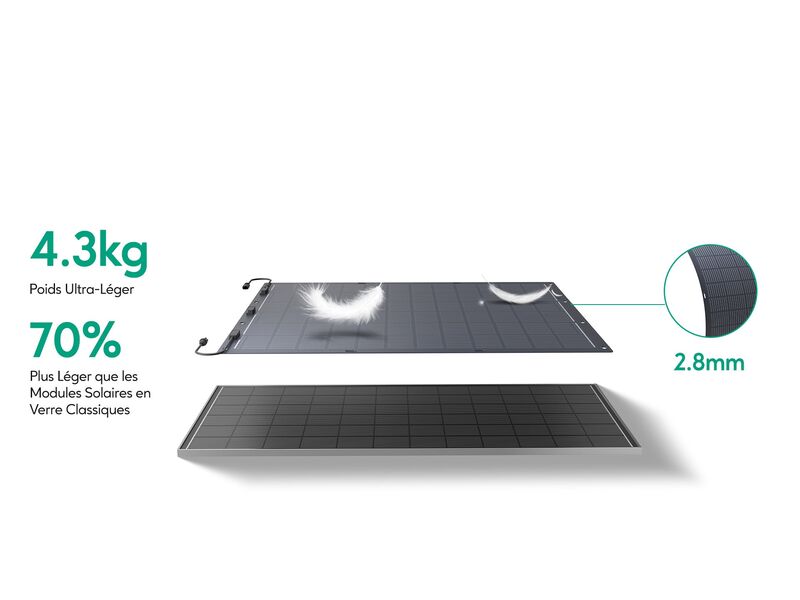
Two 210W flexible solar panels that hug the curves of a balcony or roof: 23% efficiency, bendable to 220°, IP68 and just 4.3 kg each.

  • Power: 420W (2 x 210W monocrystalline)
  • Efficiency: Up to 23%
  • Flexibility: Bendable up to 220°
  • Weight: 4.3 kg per panel, IP68
  • Light flexible panels, 12-year warranty
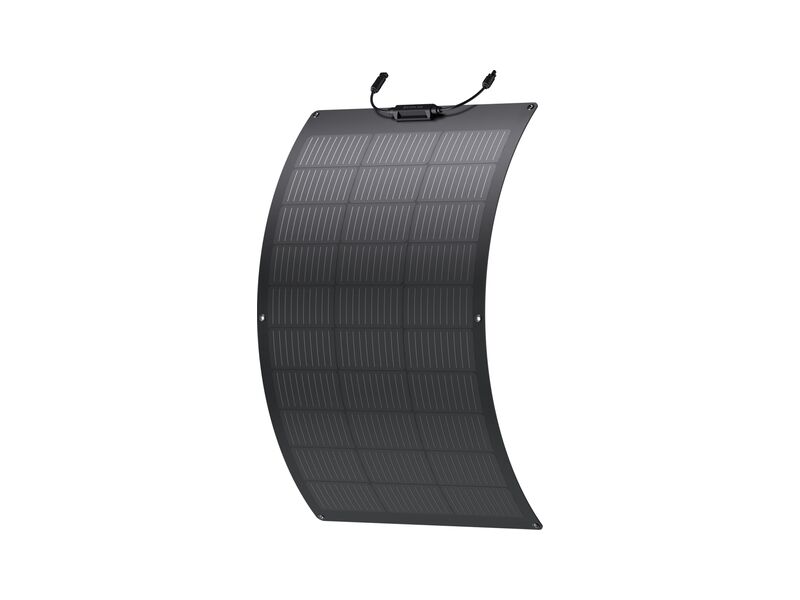
This set of two Zendure 210W flexible solar panels (420W total) is built for balcony solar and curved surfaces. Monocrystalline with a claimed 23% efficiency, they bend up to 220° to fit a rounded railing or a curved roof, while staying very light (4.3 kg per panel). Their IP68 junction box and MC4 connectors make them reliable in the rain, easy to fit with no heavy drilling, and backed by a 12-year warranty.
These flexible panels solve a real balcony-solar problem: mounting on a rounded railing or a surface that is not perfectly flat. With a claimed flexibility of up to 220°, they fit where a rigid panel would refuse to sit, and their featherweight (4.3 kg per panel) lets you handle and fix them on your own, with no heavy drilling. In use, you appreciate the matte finish and the ETFE surface that lets light through well; the 23% efficiency is very decent for a flexible panel, and output holds up even under a hazy sky. The IP68 junction box and MC4 connectors plug straight into a microinverter or a SolarFlow hub, with no adapter. Two honest caveats: like any flexible panel, they run hotter than a well-ventilated rigid one, which nibbles at output in high summer, and they remain more fragile to repeated bending. But to dress a balcony or a garden shed discreetly and lightly, with a 12-year warranty, this pair of 210W panels is an excellent choice.
View product page

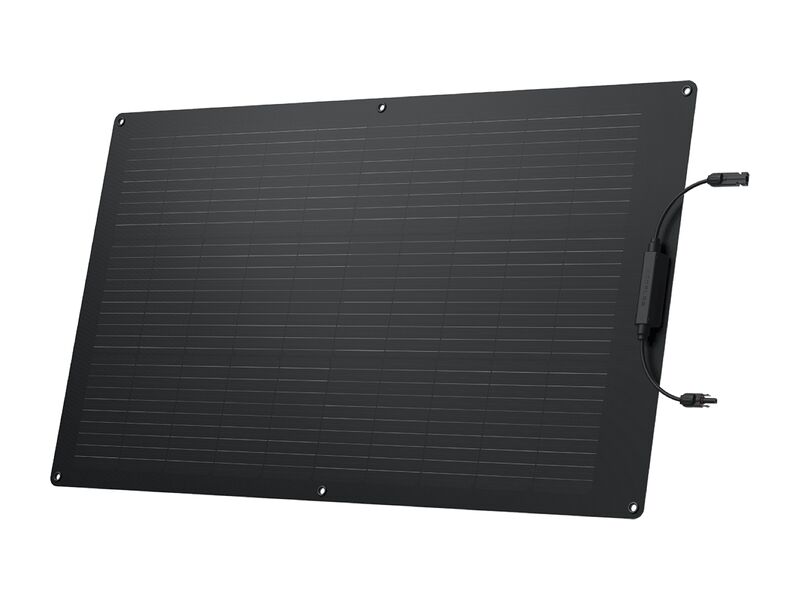
EcoFlow 100W Flexible Solar Panel

$199.00

Ultra-light at 5.1 pounds and flexible up to 258 degrees, it hugs the roof of a van, a boat, or an RV: a discreet solar panel that disappears once mounted.

  • Power: 100W, flexible panel
  • Weight: 5.1 lbs (ultra-light)
  • Flexibility: Curves up to 258 degrees
  • Durability: IP68 rating, universal compatibility
  • Flexible 258 degrees, 5.1 lbs, hugs curved surfaces
The EcoFlow 100W flexible solar panel is built for permanent mounting on curved surfaces: van, RV, boat, or cabin roofs. It weighs just 5.1 pounds and curves up to 258 degrees, letting it hug almost any shape where a rigid panel would not fit. Thin and low-profile, it mounts flush for a clean, aerodynamic look. Its IP68 rating protects it through rain and dust, and its universal compatibility fits most solar setups, EcoFlow or third-party. A light, permanent solar source for anyone building out a rig for the long haul.
In-depth reviewRead our full review → 4.1/5 This 100W flexible panel earns its keep doing what a rigid panel simply cannot: mounting permanently on a curved roof. On a domed van roof, it laid flat with almost no effort thanks to that 258 degree flex, and once secured, you genuinely forget it is there, no wind noise, no snagging on low branches, no dent in the vehicle's lines. At 5.1 pounds, it is light enough to mount on structures that would not take a framed rigid panel without reinforcing something. In daily use, 100W is enough to keep a leisure battery topped off or give a steady daytime boost, exactly what you want so the battery never runs flat mid-trip. The IP68 rating is reassuring for something that lives outside year-round. Two honest notes: like any flexible panel, it needs airflow underneath, laid flat on a dark surface it runs hot and loses some output, and it has no kickstand, this is a permanent mount, not a portable panel you fold out. For fitting out a van, a boat, or a cabin without adding weight or drilling more than necessary, it does exactly what it promises.
View product page

← Back to Solar

Related questions

A rigid panel produces 10 to 15 per cent more for the same rating, lasts 25 years against 5 to 10 for a folding one, and costs less per watt. Folding only makes sense if you have to store it, carry it on foot or reorient it often. On a van roof or a garden shed, rigid always wins.

Across most of Europe the year-round optimum is around 30 to 35° facing south. If winter is the priority, go to 55 or 60°: the sun sits low and cold-season output matters more. A 10° deviation from the optimum only costs 2 to 3 per cent of production.

Between 1.4 and 1.8 kWh in summer in southern Europe, and 0.4 to 0.6 kWh in December. The annual average sits around 1.1 to 1.3 kWh a day, so roughly 400 to 480 kWh a year. Those figures assume a south-facing orientation and no shading at all, not even partial.

Manufacturers generally guarantee 80 to 85 per cent of initial output after 25 years, and real service life often exceeds 30. Annual degradation runs at 0.4 to 0.7 per cent. What fails first is almost never the cell, but the junction box or the connectors exposed to the weather.

In series voltages add up and current stays the same: that is the right choice with an MPPT controller and long cables, because line losses drop. In parallel it is the currents that add, which protects against partial shading since a shaded panel does not drag the other down. Never mix panels of different ratings in series.
Need help choosing?

Further reading on the blog

Compare