Compact power stations

Below 700 Wh a station is chosen as much for its weight and discretion as for its capacity: this is the size people actually take with them.

This category is the one for a weekend under canvas, working from the garden, or household backup limited to essentials. Five to seven kilos, a handle, and enough to cover a night of lighting, several laptop charges or a few hours of cool box. The pitfalls are known: a capacity quoted in nominal watt-hours of which 10 to 15 per cent is never returned, an output rating sometimes too tight for a heating appliance, and recharging times that vary widely depending on whether the station accepts 100 or 300 watts from the mains. We measure all three on every model.

No product matches these criteria.

Our selection

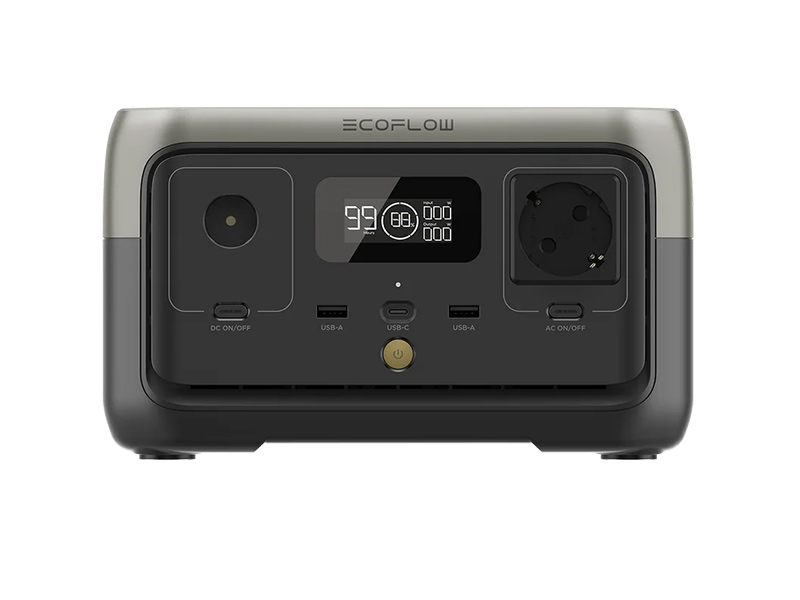
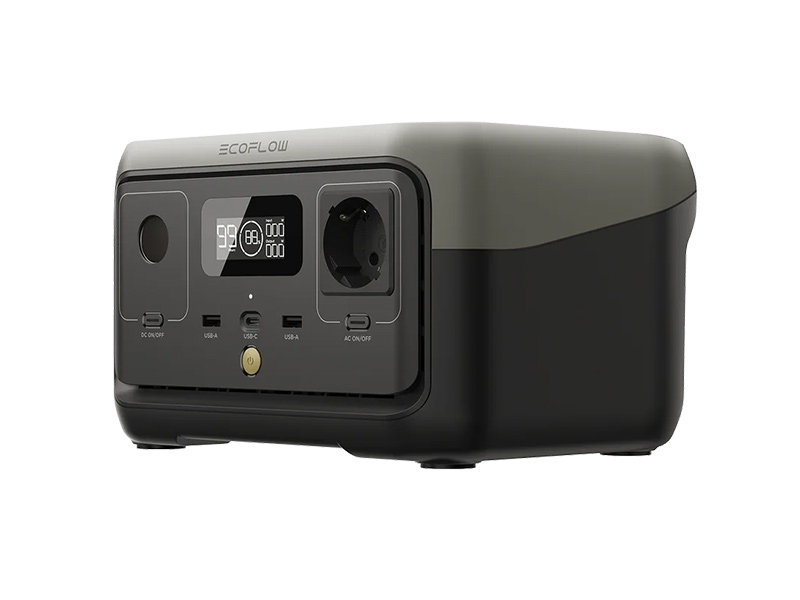
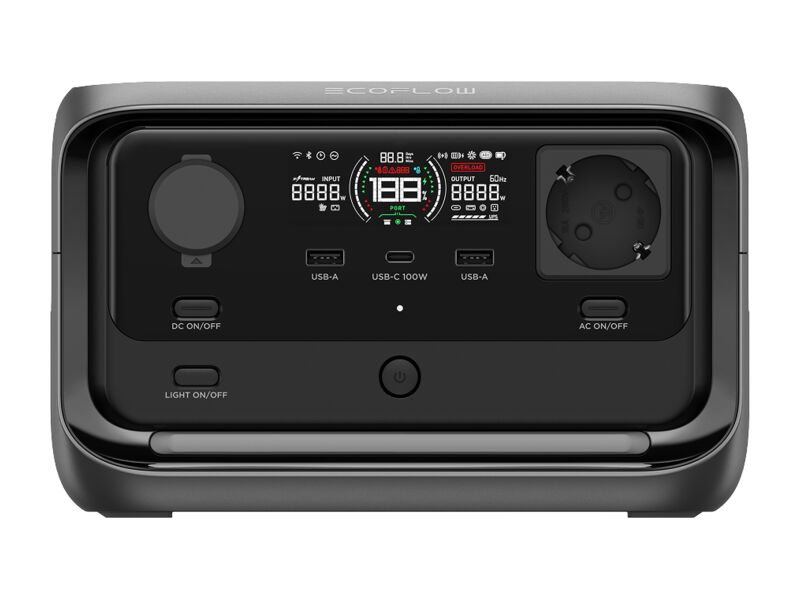
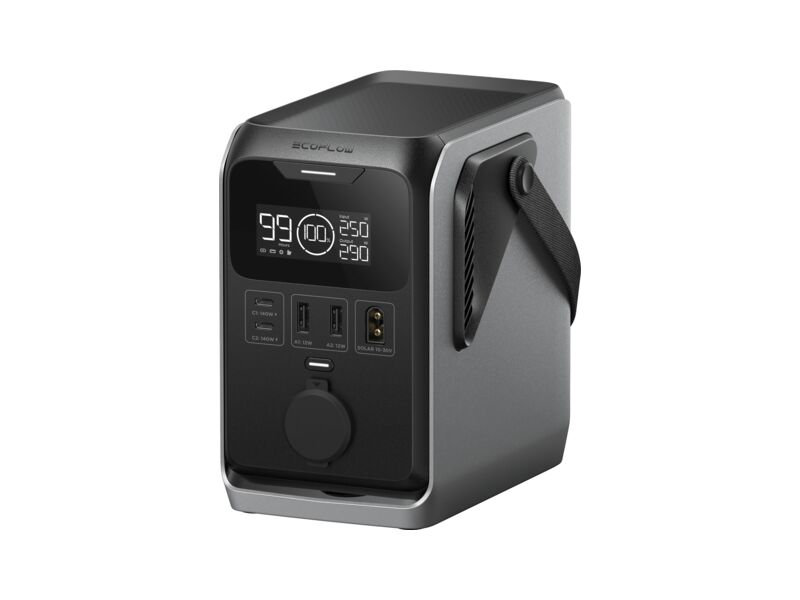
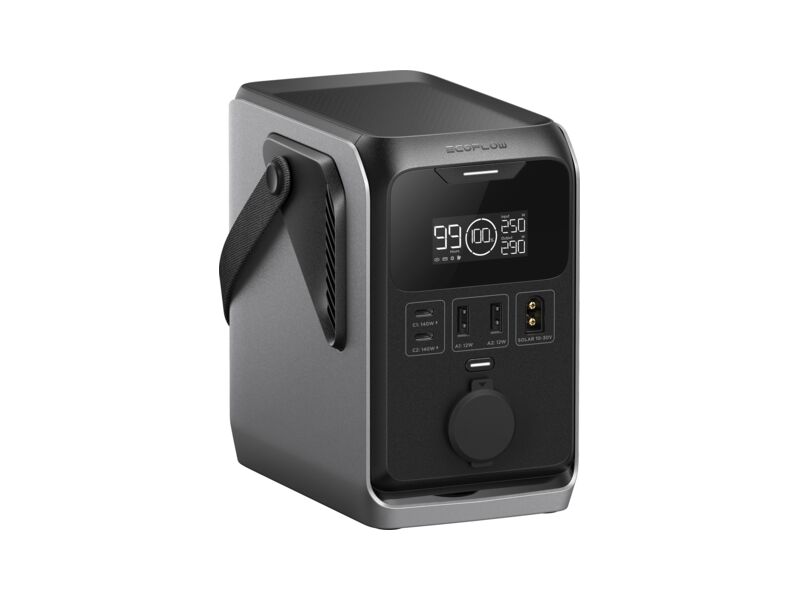
EcoFlow River 2

See price and availability (34)

256Wh and a genuine 1 hour full recharge from the wall, the fastest in its class: the EcoFlow River 2 follows US buyers from the campsite to home backup.

  • Capacity: 256Wh, LFP (LiFePO4) battery
  • Power: 300W, up to 600W with X-Boost
  • Recharge: 0 to 100% in about 60 min from the wall
  • Weight: 3.5kg (7.7lb)
  • 1 hour full recharge, 3000+ cycles, 5-year warranty
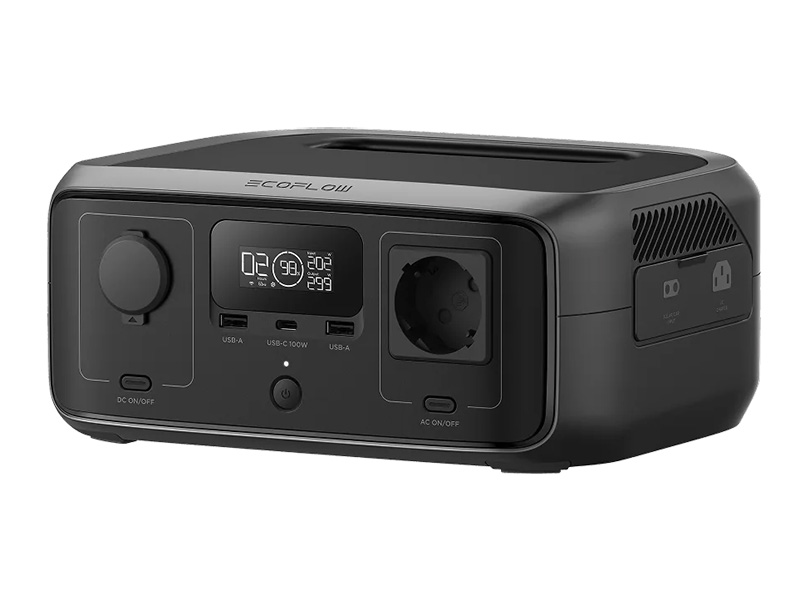
Compact and lightweight, the EcoFlow River 2 is a favorite US pick for keeping devices running off the grid. Its LiFePO4 battery fully recharges in about an hour from the wall, a record confirmed by numerous US buyers, and is rated for 3000+ cycles. From camping and van shed setups to CPAP backup and small-business UPS duty, it powers phones, laptops, lighting and light appliances up to 300W continuous (600W with X-Boost), all managed from the EcoFlow app.
In-depth reviewRead our full review → 4.2/5 Few products in this price range have as deep a US review base as the River 2, over 4,500 ratings, and the real-world stories back up the spec sheet. One owner runs it as a line-interactive UPS for a small business's security system, right at the edge of its 300W budget but delivering 60 to 75 minutes of clean runtime with zero dropped connections during real outages. Another ran a CPAP machine for six hours and still had 40% left. A third turned an unpowered shed into an off-grid e-bike charging station using solar input alone, calling it a gateway device to a bigger battery habit. The genuinely-timed 1 hour full recharge shows up again and again in reviews, and the EPS switchover, under 30ms, kept a router and NVR running invisibly through brief blips. A firmware update briefly broke AC charging display for one buyer, fixed a few days later by EcoFlow support. The more serious caveat: a vocal minority report their unit draining to zero within days even when idle, with mixed luck getting warranty support to resolve it.
View product page

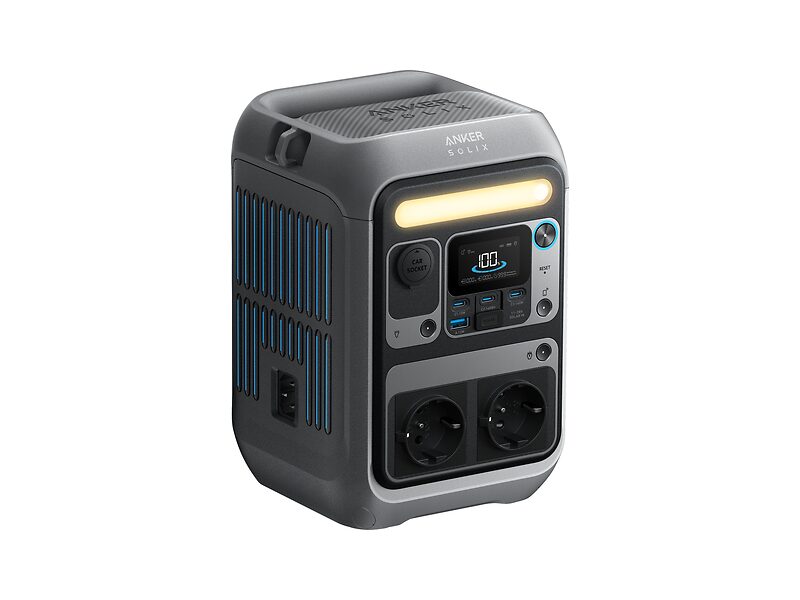
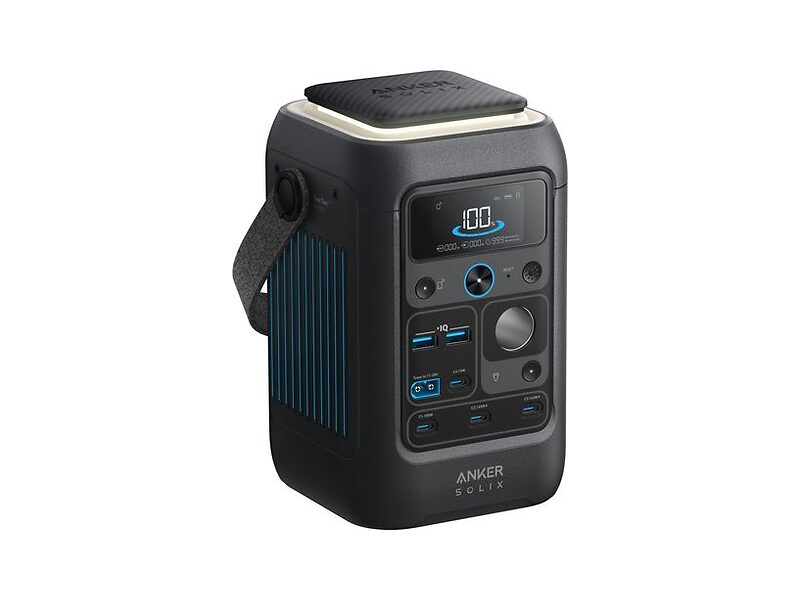
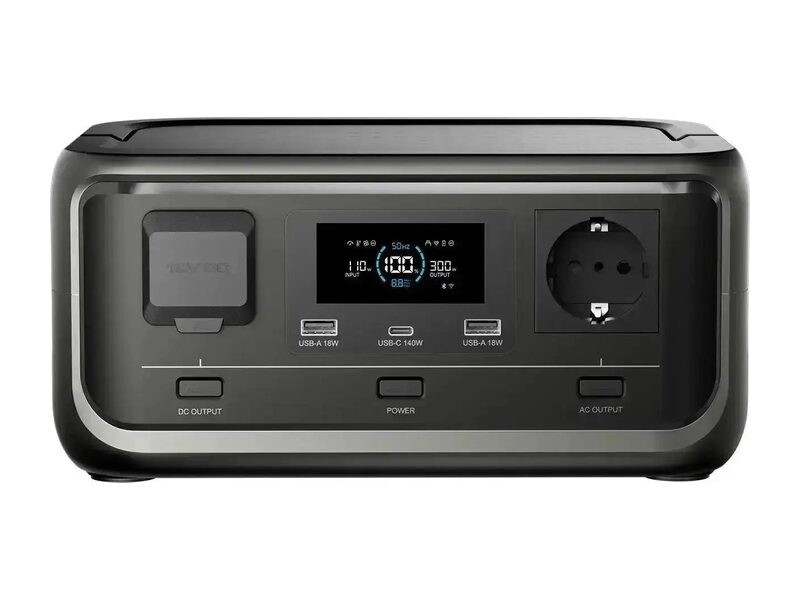
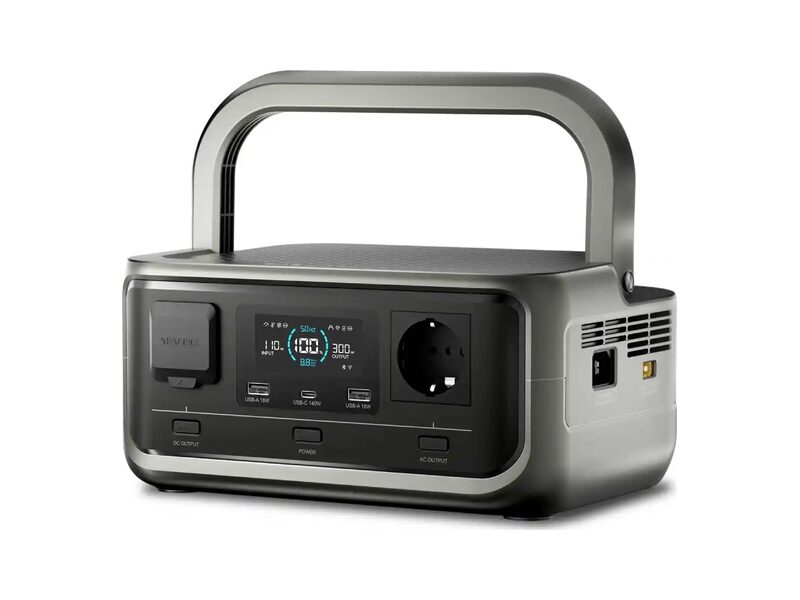
Anker Solix C300

See price and availability (24)

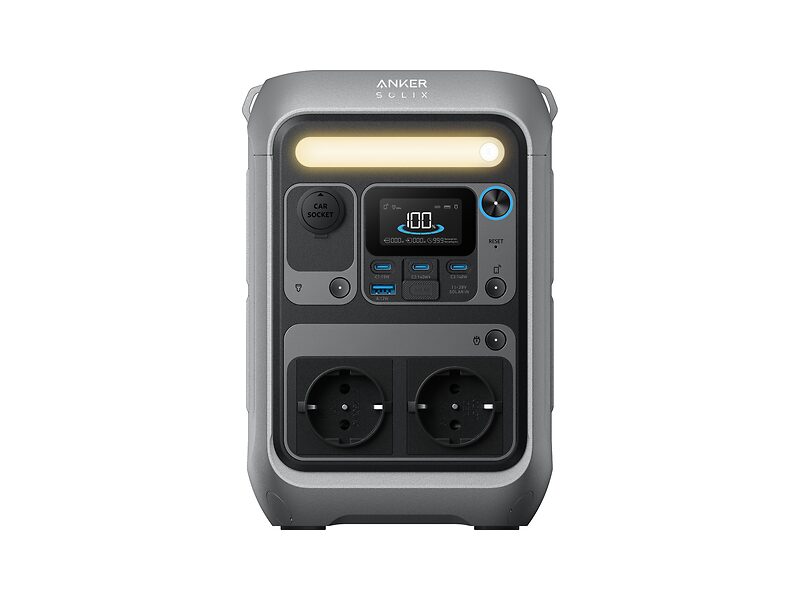
288Wh, three household outlets and a 140W USB-C port in an ultra-compact, whisper-quiet body: the small station that even charges a laptop.

  • Capacity: 288 Wh (LiFePO4)
  • Output: 300W (600W SurgePad), 3 outlets
  • USB-C: 140W bidirectional (laptop charging)
  • Comfort: Built-in light, 25 dB, 0-80% in 50 min
  • 288Wh, USB-C 140W, ultra-quiet
The Anker Solix C300 is a compact 288Wh portable power station built for light camping, remote work and emergencies. Despite its small size, it packs three household outlets (300W continuous, up to 600W with SurgePad) and a bidirectional 140W USB-C port that charges a laptop and can also recharge the unit itself. Its LiFePO4 battery is durable, it has a built-in light, and it runs whisper-quiet at 25 dB. It recharges to 80% in 50 minutes on a wall outlet. A complete, versatile pocket station.
In-depth reviewRead our full review → 4.4/5 We tested the Solix C300 for its format above all: three real household outlets, a 140W USB-C port that charges a laptop at full speed, and even a built-in light for camping or an outage. Its 300W output (600W in SurgePad mode) covers most small appliances, and we especially like how quiet it runs, at 25 dB you forget it completely on a nightstand or desk. Charging is fast for the category, 80% in fifty minutes on a wall outlet, and the 140W USB-C port doubles as a quick way to recharge it. The retractable handle and small footprint make it a true pocket station you grab without thinking twice. Two honest caveats: 288Wh is a backup capacity, perfect for USB devices, a mini fridge or an evening, not for several days on end, and solar input tops out at 100W. For a compact, complete and quiet station, it remains a strong value.
View product page

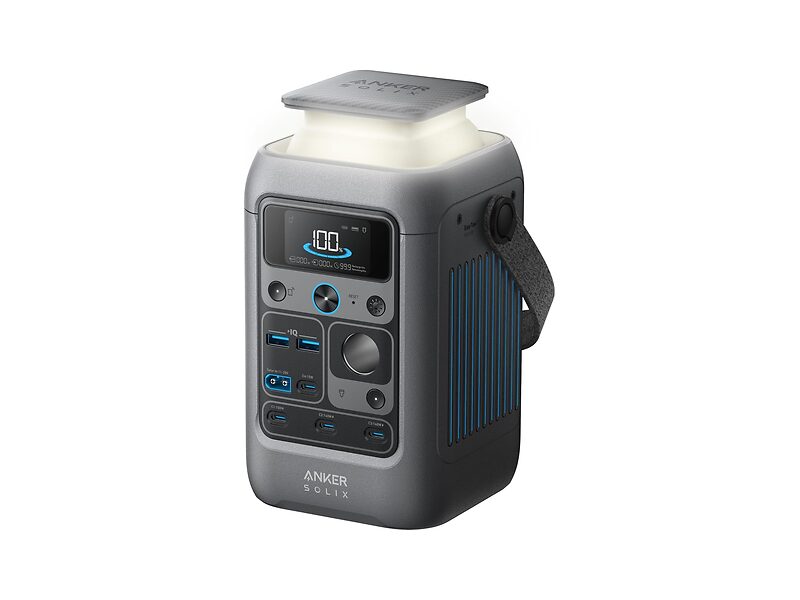
Anker Solix C300 DC

See price and availability (23)

288Wh, 100% USB-C with four ports (2x140W, 100W, 15W): the pocket station that charges four devices, laptop included, with zero conversion loss.

  • Capacity: 288 Wh / 90,000 mAh (LiFePO4)
  • Output: 100% USB-C, four ports (2x140W + 100W + 15W)
  • Ports: USB-C 140W, USB-A, 12V output
  • Comfort: Built-in light, strap, solar charging
  • 288Wh 100% USB-C, four ports (2x140W + 100W + 15W)
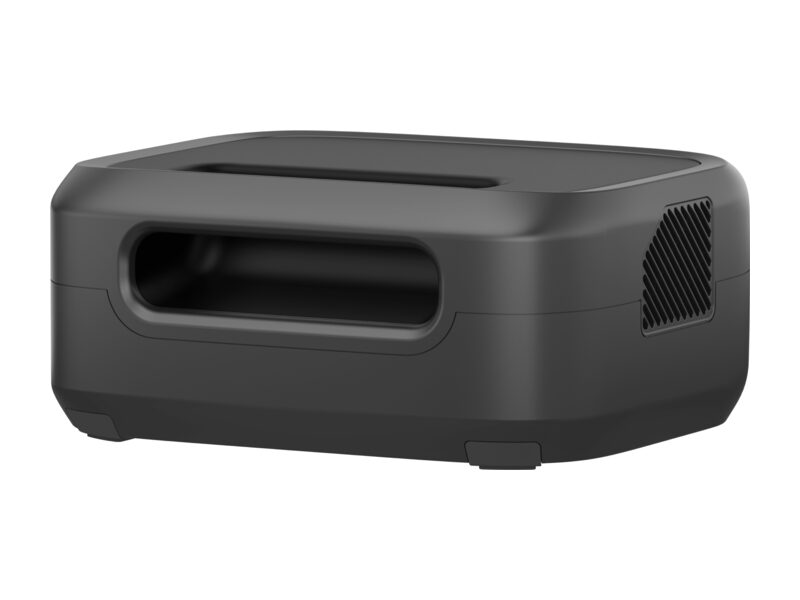
The Anker Solix C300 DC is a compact 288Wh (90,000 mAh) portable power station built entirely around direct current and USB-C. With no AC inverter, it avoids conversion losses and powers your devices for longer through four USB-C ports (two up to 140W, one up to 100W, one up to 15W), a USB-A port and a 12V output, enough to charge up to four devices at once, laptop included. Its LiFePO4 battery is durable, it has a built-in light and a carry strap, and it recharges on solar. A versatile portable energy companion for camping and outdoor work.
In-depth reviewRead our full review → 4.3/5 The C300 DC takes the opposite approach from a classic small station: no AC outlet at all, everything runs through USB-C, and it's remarkably effective. You plug a phone, tablet and laptop straight into its 140W ports, with no inverter, which avoids losses and stretches real-world runtime. With four USB-C ports (two up to 140W, one up to 100W, one up to 15W), you can charge a laptop at full speed while powering three other devices at once, real comfort while working remotely or on the road. Its 288Wh in a compact format slip easily into a bag thanks to the included strap, and the built-in light comes in handy while camping or during an outage. Solar charging lets you stay self-sufficient for several days. One honest caveat: the absence of an AC outlet restricts it to USB and 12V devices, you can't plug in a small household appliance. But to charge portable devices fast and loss-free, in a light and versatile format, it's an excellent pick.
View product page

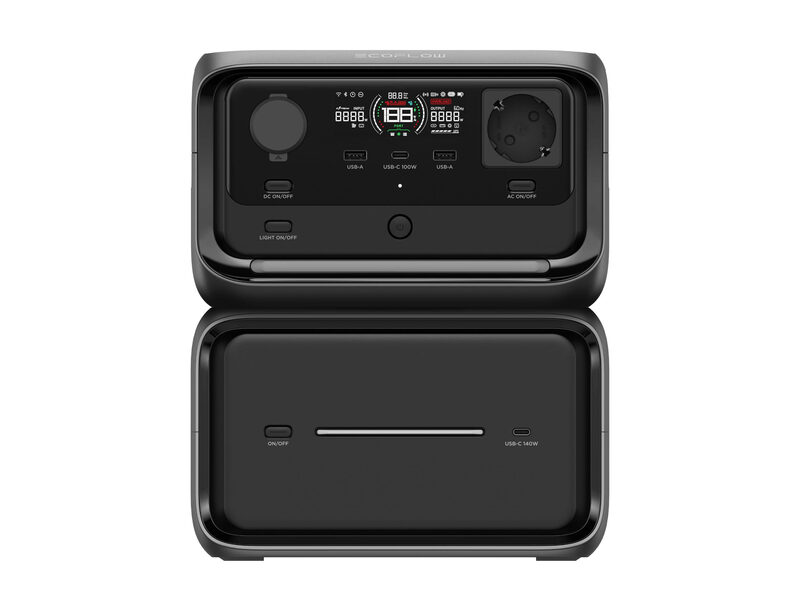
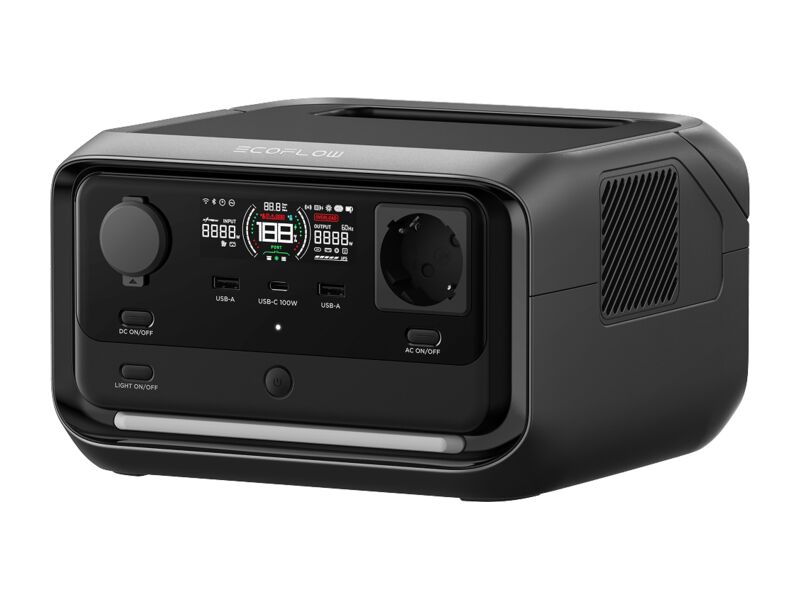
EcoFlow River 3

See price and availability (15)

Ultra-compact (3.5 kg) and recharged in one hour, the EcoFlow River 3 slips a 245 Wh reserve into a bag to power your essentials anywhere.

  • Capacity: 245 Wh (LiFePO4)
  • Power: 300 W (600 W X-Boost)
  • Recharge: ≈ 1 h from the mains
  • Weight: 3.5 kg
  • 245 Wh, UPS and 1-hour charge in an ultra-compact body
The EcoFlow River 3 is the brand's most compact portable power station: 245 Wh of LiFePO4 battery and 300 W output (600 W X-Boost) in a flat 3.5 kg body that slips into a bag or a boot. It recharges phones, a laptop, lighting and small gear, refuels to 100 % in one hour from the mains and accepts up to 110 W of solar. Its inverter (UPS) function and its LFP chemistry rated for 3000 cycles make it a reliable reserve for camping, mobile work or backup.
In-depth reviewRead our full review → 4.3/5 We slipped the River 3 into a backpack to see how far EcoFlow's smallest station goes, and it surprises. At 3.5 kg and barely thicker than a big book, you really take it everywhere: on a day of hiking photography it recharged two camera bodies, a drone and our phones without flinching. The one-hour recharge is the model's real luxury, you top it up in the time it takes to have a coffee. As backup at home, its inverter function kept the router and a camera running without the slightest flicker during a micro-outage. The silence is total, you forget it under the tent. Two owned limits: 245 Wh remains a small reserve, best kept for light devices, and unlike the River 3 Plus it is not expandable, which you must anticipate if needs grow. For a first compact, fast and LFP-durable mobile station, it offers a footprint-to-service ratio that is hard to beat.
View product page
River 3 Max Plus (Wireless) EcoFlow River 3 Max Plus Wireless 858Wh station
Promo

EcoFlow River 3 Max Plus (Wireless)

$567.33 $526.71 (14)

A modular station that charges wirelessly: 858Wh, a built-in Qi2 15W charger and a removable Rapid power bank you take on its own. Clever and versatile.

  • Capacity: 858 Wh (286Wh + EB600 battery)
  • Output: 600W (X-Boost up to 1200W)
  • Wireless: Qi2 15W charging + removable Rapid bank
  • Recharge: 0 to 100% in 1 h, UPS < 10 ms
  • Modular, Qi2 wireless, 858Wh
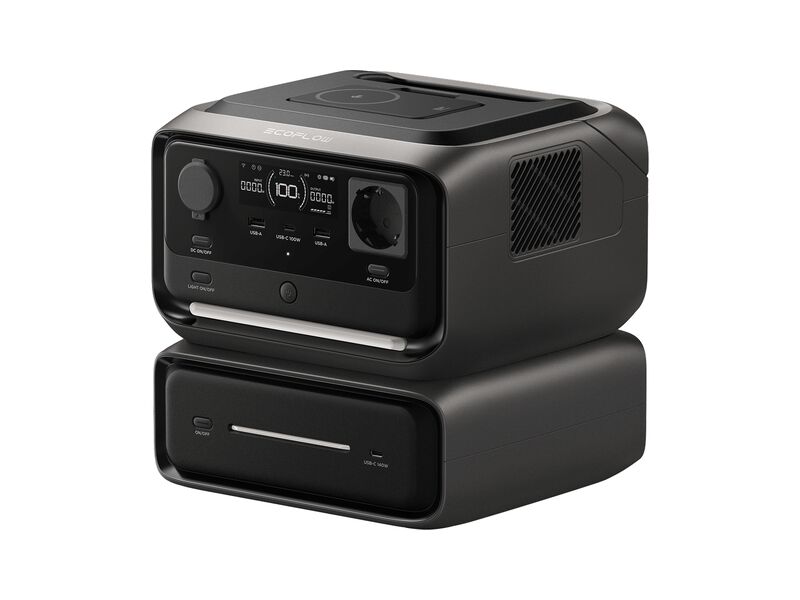
The EcoFlow River 3 Max Plus (Wireless) reinvents the portable station with a modular design and built-in wireless charging. It combines the River 3 Plus station (286Wh) with an EB600 extra battery to reach 858Wh, delivers 600W (1200W with X-Boost) and includes a Qi2 15W inductive charger plus a magnetic Rapid 5000mAh power bank, removable to travel light. Full recharge in 1 h, under-10 ms switchover and quiet operation (under 30 dB) complete a station as smart as it is versatile.
In-depth reviewRead our full review → 4.1/5 The River 3 Max Plus Wireless is one of the cleverest stations we have tested. The modular concept hits home: you keep the large capacity (858Wh) at home or camp, and detach the small magnetic Rapid 5000mAh power bank to head out with just enough to recharge your phone, wirelessly at that. The built-in Qi2 15W inductive charger is a real everyday comfort, you set the phone on it without looking for a cable. On performance, the 600W (1200W in X-Boost) power most devices, the full recharge in one hour is excellent, and the quiet (under 30 dB) makes it perfect indoors, even at night. The under-10 ms switchover secures sensitive devices during a cut. Two caveats: this premium modular concept costs a little more than a classic station of equivalent capacity, and the wireless part will mainly appeal to those living in the portable ecosystem. But for anyone wanting a versatile, quiet and genuinely modern station, it is an original success.
View product page
River 3 Plus EcoFlow River 3 Plus portable power station
Promo

EcoFlow River 3 Plus

See price and availability (14)

Compact, quiet and fully recharged in just one hour, the EcoFlow River 3 Plus delivers reliable power wherever you happen to need it.

  • Capacity: 286 Wh (expandable to 858 Wh)
  • Power: 600 W (1200 W X-Boost)
  • Recharge: ≈ 1 h from mains, ≈ 1.5 h solar
  • Weight: 4.7 kg
  • Full recharge in 1 h, expandable to 858 Wh, built-in UPS
With its 286 Wh LiFePO4 battery and 600 W of power (up to 1200 W peak), the River 3 Plus effortlessly runs laptops, lighting, small appliances and camping gear. Its strength: a full recharge in about one hour from the mains, a solar input up to 220 W and a capacity expandable to 858 Wh. Quiet (under 30 dB), rugged and equipped with a UPS function, it suits home-office backup as much as weekends in a van or off-grid.
In-depth reviewRead our full review → 4.2/5 We lugged the River 3 Plus around for several weeks, from the desk to the campsite, and it quickly earned its place. First good point: plugged in on a Friday evening, it goes from nearly empty to full in about an hour, so no more stress over a forgotten charge. Out in the field, it powered a mini fridge, an LED string light and two phones through a whole evening without flinching, still with charge to spare by morning. Another real plus is the quiet: sitting inside the tent you forget it is even there, where other models have their fan droning away. Its UPS function even saved us during a brief power cut at home, the router and NAS did not notice a thing. Two honest downsides: 286 Wh shows its limits over several days of heavy use (the add-on battery then becomes essential), and the handle, handy as it is, could be a touch more comfortable. Otherwise it is hard to do better in this price range: fast charging, LFP longevity and versatility make it an excellent first power station.
View product page

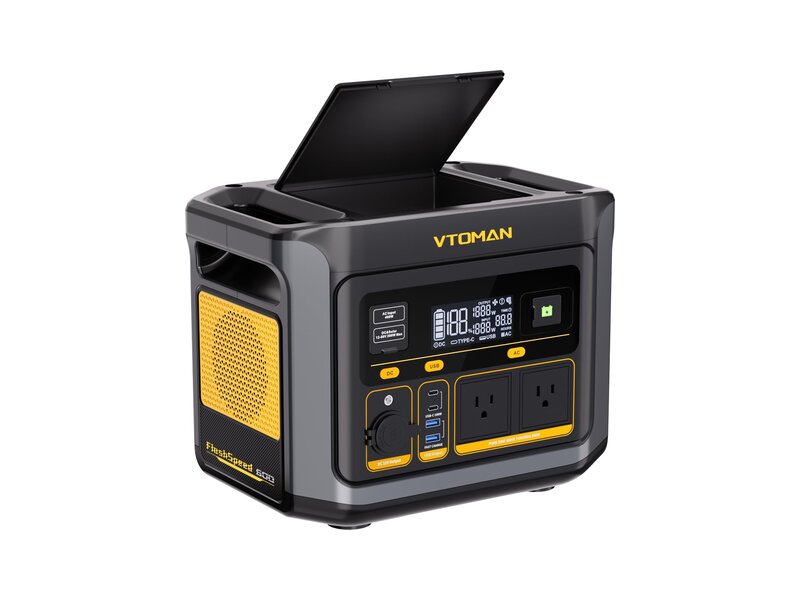
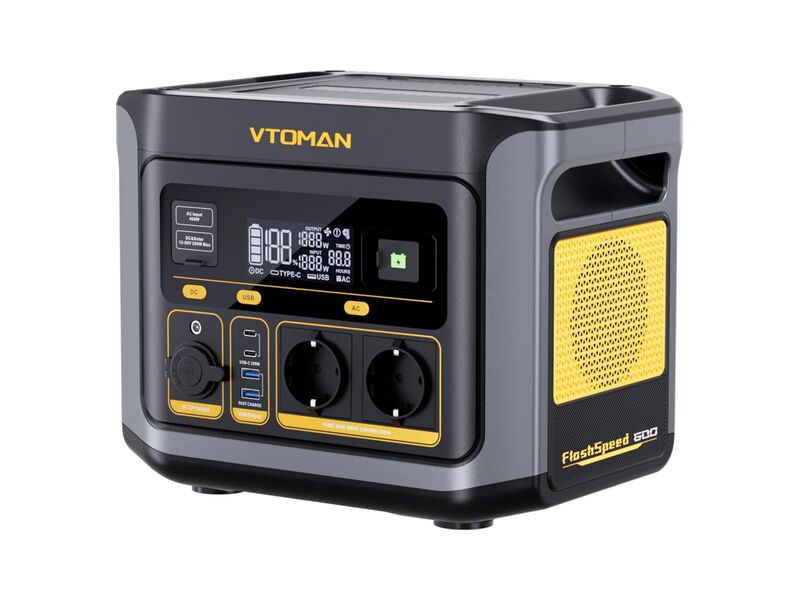
Vtoman FlashSpeed 600

$346.22 (14)

Compact but tough: the Vtoman FlashSpeed 600 delivers 600W (1200W peak) with an expandable LiFePO4 battery, to power up to 9 devices when camping or as backup.

  • Power: 600W (1200W peak)
  • Capacity: 499Wh LiFePO4 (expandable)
  • Outputs: 9 outputs (2 AC, USB-C 100W, USB-A, 12V)
  • Recharge: 0 to 80% in 1 hour
  • Compact, expandable LiFePO4 and fast charging
The Vtoman FlashSpeed 600 is a compact 499Wh portable power station, able to deliver 600W continuous and 1200W peak. Its LiFePO4 battery offers over 3000 cycles and up to 10 years of life, and its capacity is expandable with an add-on battery (up to about 2047Wh). It offers up to 9 outputs (2 AC outlets, USB-C 100W, USB-A QC3.0, 12V output), fast charging (0 to 80% in 1 hour) and a solar input. Ideal for camping, campers, fishing or power cuts.
In-depth reviewRead our full review → 4.0/5 The Vtoman FlashSpeed 600 is one of those compact stations that tick many boxes on a contained budget. We took it on a camping weekend and it kept up with no trouble: charging phones, running an electric cooler, a fan and LED lighting, with margin to spare. What we like first is its LiFePO4 battery, more durable and safer than conventional lithium, with a claimed life up to 10 years. Its 600W covers most small devices, and the 1200W peak helps start slightly more demanding equipment. Fast charging is a real plus: you get 80% back in an hour from the mains, handy before setting off. The option to add an expansion battery to climb around 2000Wh is clever if needs grow. The downsides: 499Wh remain limited for large devices or multi-day runtime, and the electronics make some noise under heavy load. But for a versatile, expandable compact, it is an excellent starting point.
View product page

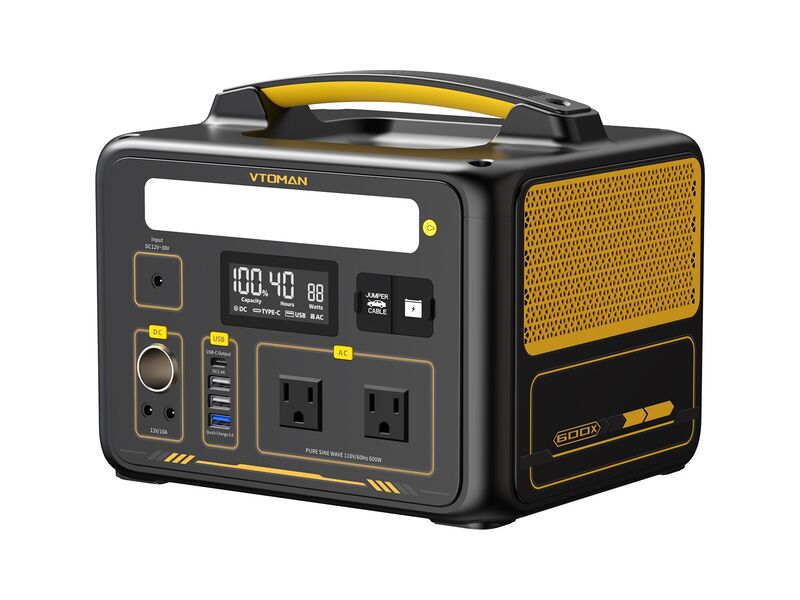
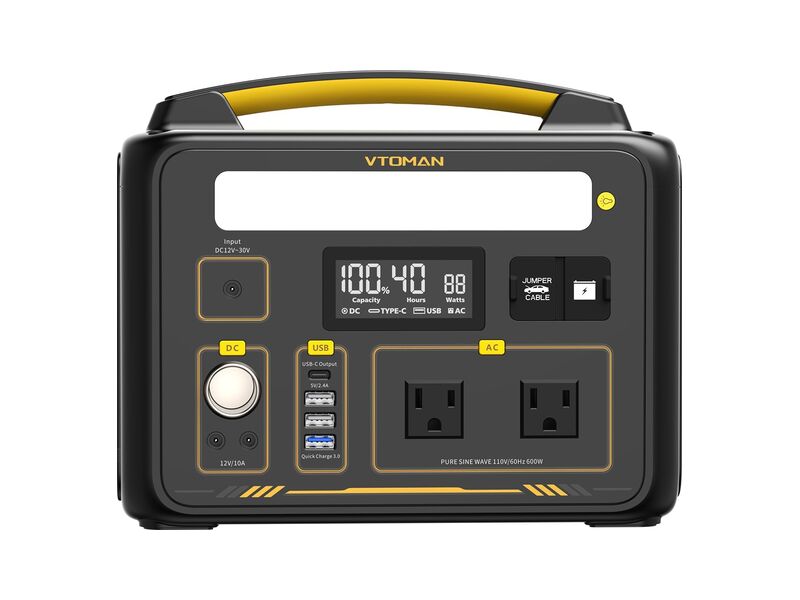
Vtoman Jump 600X

$297.87 (13)

Compact and cunning, the Vtoman Jump 600X hides a genuine vehicle jump starter behind its 299Wh LiFePO4 battery, expandable to 939Wh so you never run short of power.

  • Power: 600W (1200W peak)
  • Capacity: 299Wh LiFePO4 (expandable to 939Wh)
  • Outputs: 9 outputs including 60W USB-C and 3x USB-A
  • Unique feature: Built-in vehicle jump starter
  • Compact, LiFePO4 and built-in vehicle jump starter
The Vtoman Jump 600X is a compact 299Wh portable power station delivering 600W continuous (1200W peak) from a LiFePO4 battery rated for over 3000 cycles. Its signature feature: a built-in vehicle jump starter (cable sold separately) to rescue a flat car battery. Capacity is expandable to 939Wh with an optional add-on battery. Nine output ports in total, including a 60W USB-C port and three USB-A ports, make it well suited to camping, road trips or emergency backup power.
We tested the Vtoman Jump 600X over a motorhome weekend, and the first thing that strikes you is the size: barely bigger than a large cooler, it fits easily in a boot. It recharged phones and a laptop without trouble, and ran a small electric cooler for a whole afternoon. Its real signature feature is the jump-start connector: handy to have on hand for rescuing a flat car battery without pulling out traditional jump leads, even though the matching cable is sold separately. Mains recharging, about 3 hours for a full charge through its single 100W-capped input, takes a bit of patience compared with faster models. And with 299Wh as standard, the limit shows quickly against anything that heats up (kettle, toaster): a few minutes of heavy use and the charge drains fast. The capacity expansion is reassuring for longer trips. For a versatile compact at this price, with a feature few rivals offer, it's a safe bet.
View product page

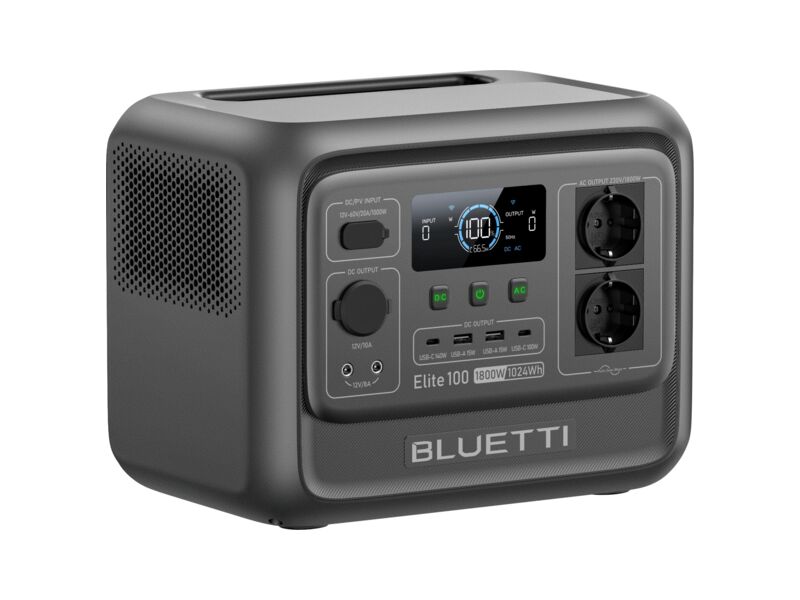
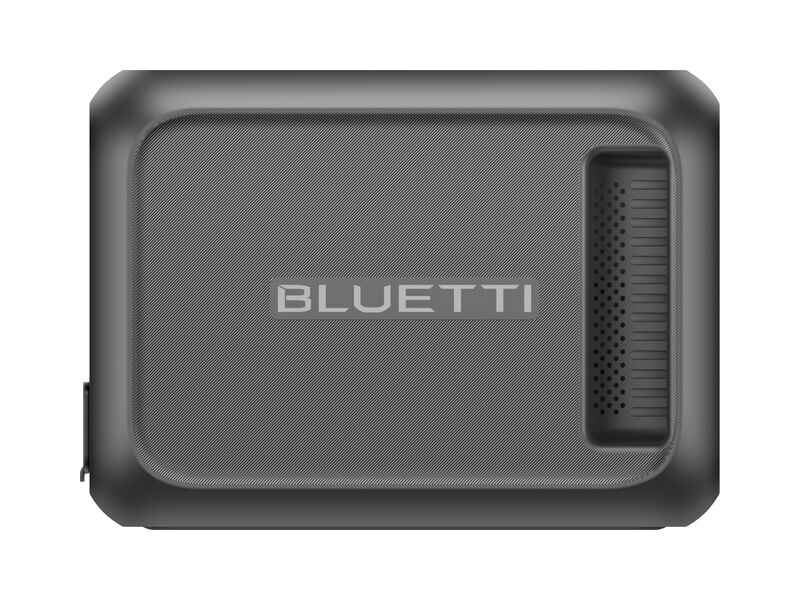
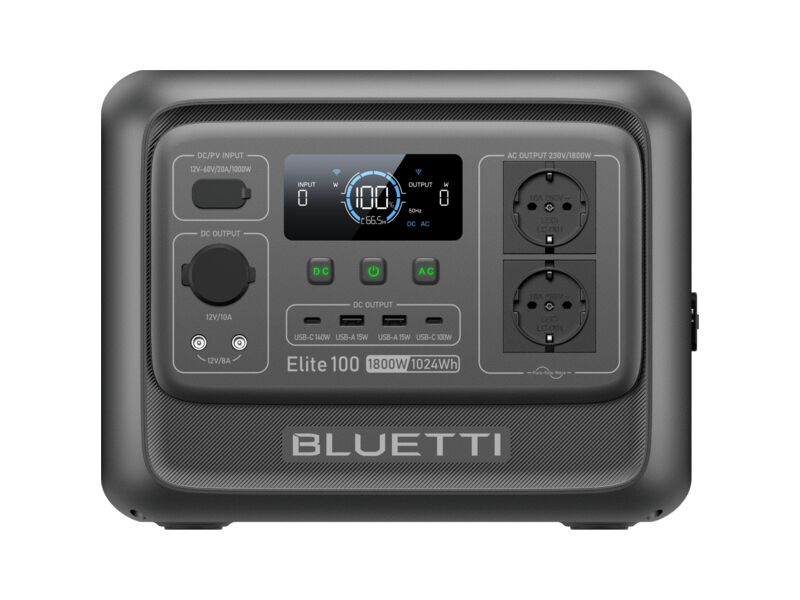
Bluetti Elite 100 V2

See price and availability (11)

1024Wh and 1800W in just 11.5kg: the ultra-compact power station that recharges to 80% in 45 minutes and switches to UPS backup in 10ms.

  • Capacity: 1024Wh (LiFePO4)
  • Power: 1800W (2700W Power Lifting)
  • Recharge: TurboBoost, 80% in 45 min
  • Weight: 11.5kg, ultra-compact format
  • 1024Wh, 1800W and just 11.5kg
The Bluetti Elite 100 V2 is a 1024Wh portable power station packed into an ultra-compact 17-litre design weighing just 11.5kg, 35% smaller and 30% lighter than the previous generation. It delivers 1800W continuous output (2700W with Power Lifting) and recharges to 80% in 45 minutes on mains thanks to TurboBoost technology, or fully in 70 minutes in direct sunlight via its 1000W solar input. Its UPS function switches in 10ms to protect your sensitive devices during a power cut. Ideal for camping, remote work and home backup.
In-depth reviewRead our full review → 4.1/5 We took the Elite 100 V2 on a van weekend and the first thing that stands out is the weight: at 11.5kg with its built-in handle, you can carry it one-handed without effort, a real change from the usually much heavier 1kWh-class stations. Its 1800W output (2700W with Power Lifting) ran a kettle and a small induction hob without flinching, uses you don't necessarily expect from such a compact format. The recharge is impressive too: on mains, it jumps to 80% in 45 minutes flat, handy when you need to head off quickly. Day to day it stays very quiet, almost forgettable next to the bed. One small gripe: with 1024Wh, you have to keep usage reasonable over several days without a recharge, and the fastest USB-C port (140W) isn't always obvious to spot without the manual. For a versatile, easy-to-carry station, it's a genuine success.
View product page

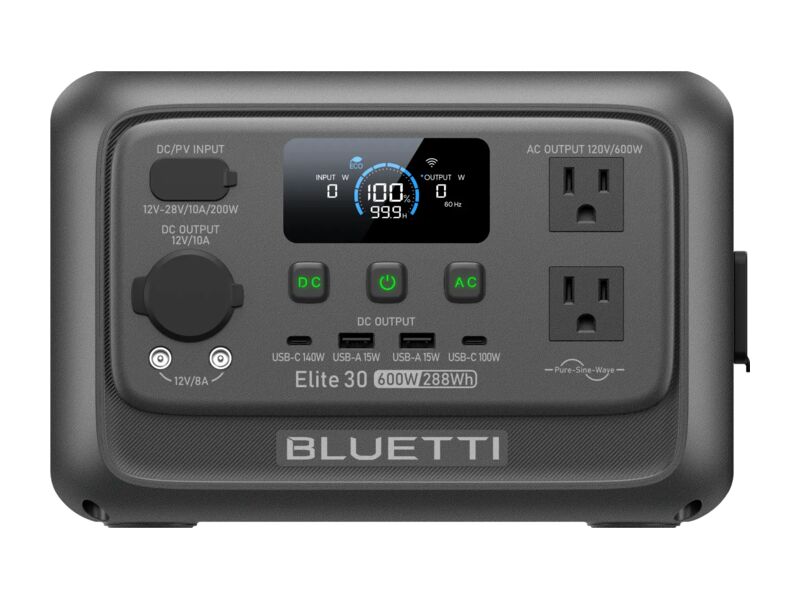
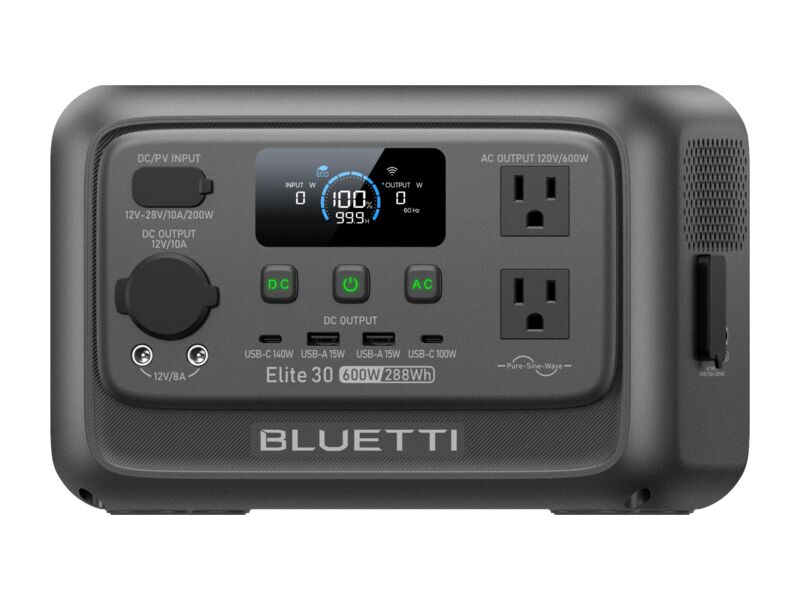
Bluetti Elite 30 V2

See price and availability (9)

Just 4.3kg for 288Wh and 600W (1500W surge): the ultra-light portable power station that recharges fully in only 70 minutes.

  • Capacity: 288Wh (LiFePO4)
  • Power: 600W (1500W surge)
  • Charging: 0-100% in 70 min (mains)
  • Weight: Only 4.3 kg
  • Only 4.3 kg for 600W and a 10ms UPS
The Bluetti Elite 30 V2 is a 288Wh portable power station built for lightness: at just 4.3 kg on the scale, it slips into a backpack as easily as a large power bank. It delivers 600W continuous, up to 1500W in Power Lifting mode for heating appliances, and recharges fully on mains power in only 70 minutes. Its UPS function switches in 10ms to protect sensitive devices during a power cut. Ideal for hiking, wild camping, light camping trips and home backup.
We took the Elite 30 V2 hiking with an overnight camp, and the first thing that struck us was the weight: at 4.3 kg with its built-in handle, it slips into a backpack without you really noticing. On the trail, it kept our GPS, headlamps and phones topped up for three days straight, and the 140W USB-C port charged a laptop in no time at all. Power Lifting mode let us boil a camping kettle one morning, which we didn't expect from such a compact unit. The mains recharge is genuinely impressive: full in 70 minutes flat before heading out again. One small gripe: the solar panel cable isn't included, you'll need to buy it separately, and with 288Wh it's worth keeping usage sensible over several days without a recharge. For an ultra-light, versatile station, it's a real success.
View product page
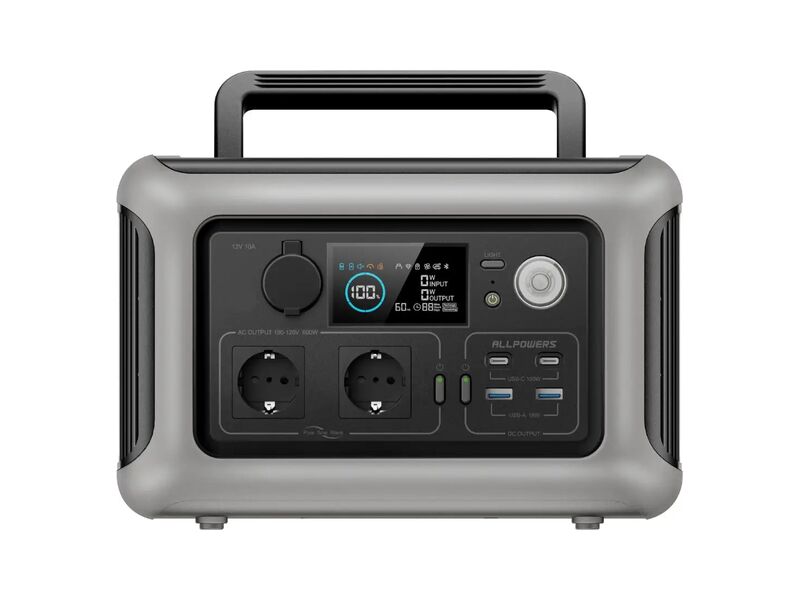
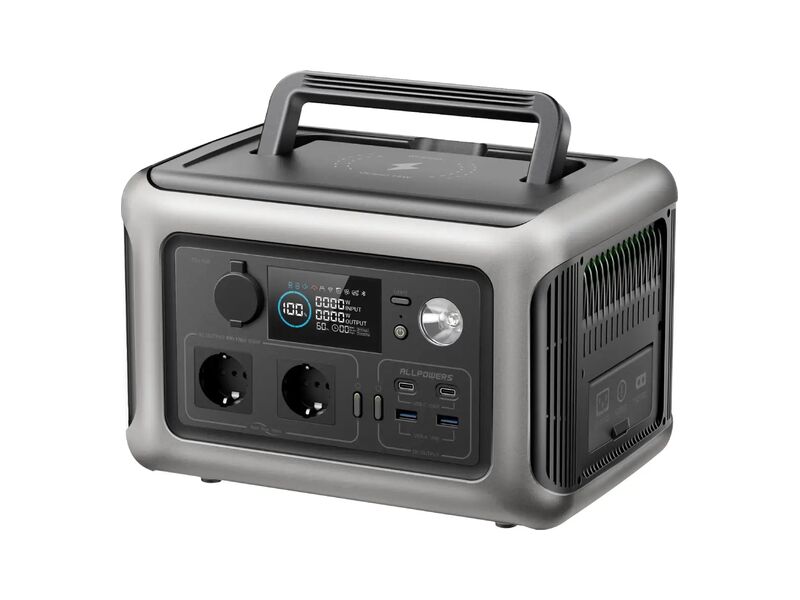
R600 Allpowers R600 portable power station
Promo

Allpowers R600

$369.38 $273.28 (7)

Affordable and backed by a 5-year warranty, the Allpowers R600 delivers 299 Wh, 600 W and a one-hour recharge, plus a built-in wireless charger.

  • Capacity: 299 Wh
  • Power: 600 W (1200 W peak)
  • Recharge: 0 to 100% in about 1 h from mains
  • Weight: 5.6 kg
  • 5-year warranty, full charge in 1 h and built-in wireless pad
With 299 Wh, 600 W (1200 W peak) and a full recharge in one hour, the Allpowers R600 runs a laptop, lighting, small appliances and camping gear. Very complete for its size (2 AC outlets, USB-C, a 15 W wireless charging pad), with a UPS function and an LFP battery backed by a 5-year warranty, it targets the best features-to-price ratio for van life, off-grid trips or home backup.
In-depth reviewRead our full review → 4.3/5 We used the R600 for several weeks, and for the price it is a pleasant surprise. The first good point is charging: left on a socket over lunch, it comes back full, barely over an hour. Out and about, its 299 Wh covered an evening of camping with an electric cool box, an LED string light and topping up two phones, without strain. We liked the little wireless charging pad on top: drop the phone on it and you are done, no hunting for a cable. The two AC outlets and USB-C ports are plenty for portable use. The UPS function bailed us out during a brief power cut at home, the router did not notice. And above all, the 5-year warranty is genuinely reassuring on a product at this price. Two honest downsides: 299 Wh is a top-up capacity you have to manage, and the lack of battery expansion limits future-proofing. But at this price it is hard to be picky: it is an excellent entry point into portable power.
View product page

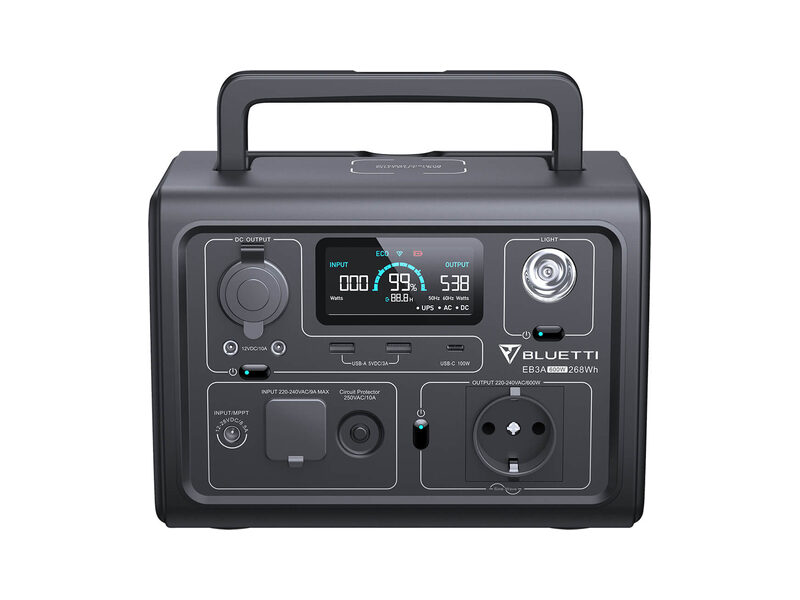
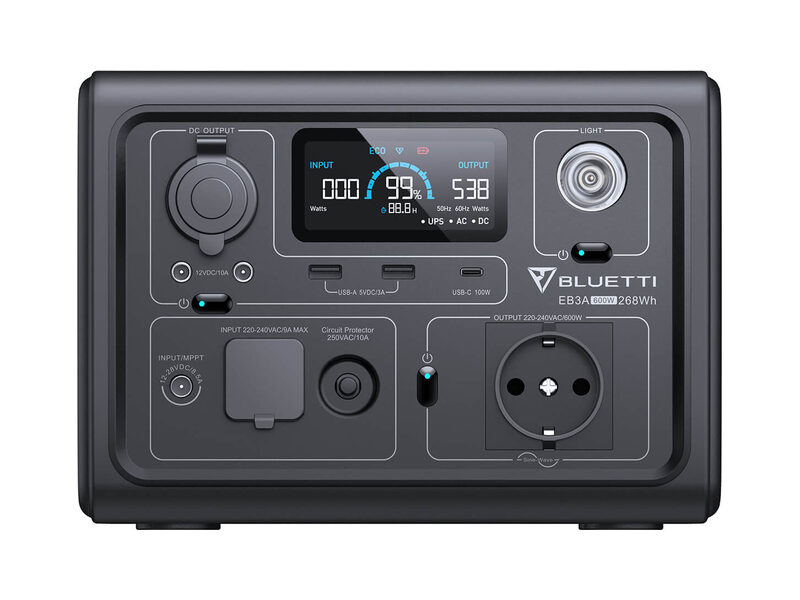
Bluetti EB3A

See price and availability (7)

268Wh and 600W in an ultra-compact station under 5 kg, recharging to 80% in under an hour: the ideal entry-level pick for camping and top-ups.

  • Capacity: 268Wh (LiFePO4 battery)
  • Power: 600W continuous, 1200W peak
  • Outputs: 1 AC outlet, USB-C 100W, USB-A, car socket, 15W wireless
  • Recharge: 80% in under an hour (350W fast charge), 200W solar
  • 80% recharge in under an hour in just 4.6 kg
The Bluetti EB3A is a compact 268Wh portable power station with a LiFePO4 battery, delivering 600W continuously (1200W peak via Power Lifting). Light (4.6 kg), it recharges to 80% in under an hour thanks to its 350W fast charge. It packs many outputs: 1 AC outlet, a USB-C 100W, USB-A, a car socket and a 15W wireless charging pad. Battery rated for 2500 cycles and controlled via the Bluetti app. An excellent budget top-up station.
In-depth reviewRead our full review → 3.8/5 The EB3A is the little station that does a lot for its price. We first used it camping to run a cool box, lighting and to charge phones and a camera: its 268Wh is plenty for a light weekend, and at 4.6 kg you move it without thinking. The real surprise is charging: on the mains, it is back to 80% in under an hour, which is impressive in this segment and very handy when you leave in a rush. The small wireless pad on top is a nice bonus for the phone. Just do not overestimate its 600W: it is perfect for electronics and small appliances, but Power Lifting mode never really delivers the claimed 1200W: a kettle or hair dryer just limps along. For portable top-ups or an occasional backup reserve, at this reduced price it remains a good choice, as long as you do not rely on it too heavily for prolonged critical backup.
View product page

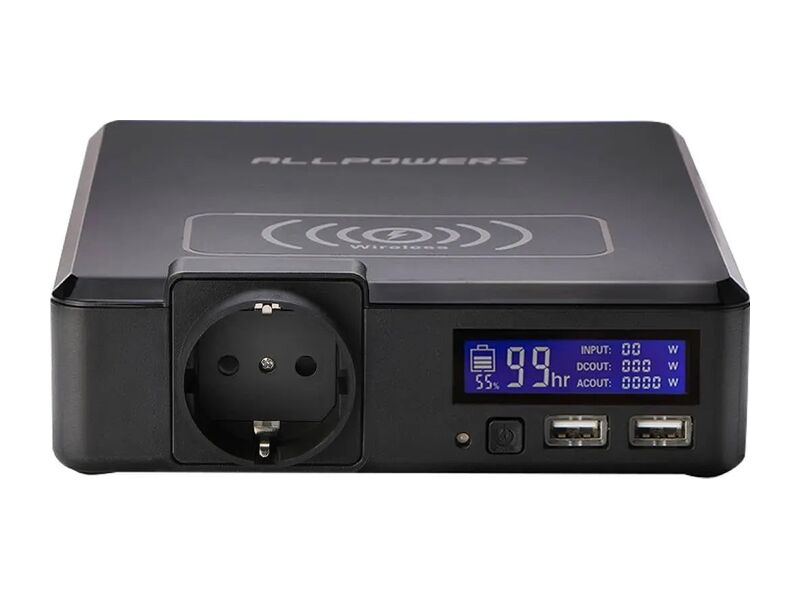
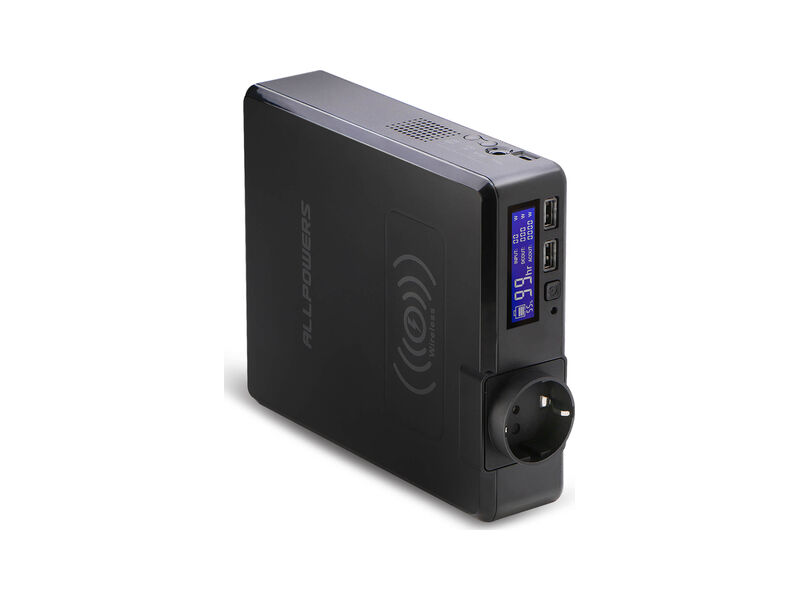
Allpowers S200

$108.31 (6)Battery 100-160 Wh: cabin only with airline approval (max 2 spare batteries), prohibited in checked baggage. Learn more.

154Wh and 200W in an ultra-compact, book-sized station with built-in wireless charging: the mini power station that goes everywhere without weighing you down.

  • Capacity: 154 Wh
  • Power: 200 W (240 W peak)
  • Outputs: 230V socket, USB-C 60W, USB-A, wireless charging
  • Format: Ultra-compact, 1.3 kg
  • 154Wh, 200W, wireless charging, book-sized
The Allpowers S200 is a 154Wh portable mini power station delivering 200W continuous (240W peak). In a compact, book-sized format weighing just 1.3 kg, it packs a 230V mains socket, a 60W USB-C port, two USB-A ports and a built-in wireless charging pad for your phone. Enough to top up a laptop, a camera, a tablet or a small light on the move. It recharges from the mains (36W, down to 1.5 hours with USB-C support), in the car, or via a solar panel (99W max). A simple, versatile nomadic companion for camping, working away from the office, or small power cuts.
The S200 delivers on the essentials: it is genuinely compact, slips into a laptop bag, and a 230V mains socket in this format is a real advantage over plain USB power banks. The built-in wireless charging pad is especially handy for dropping a phone on it without a cable, and the 60W USB-C port noticeably speeds up charging a laptop or tablet. In practice, it reliably runs a laptop for several hours, powers small pumps or fans, or steps in briefly during a power cut. The 200W (240W peak) is enough for everyday electronics but leaves out large appliances. The fan is audible while charging from the mains, and as is common at this price point, a share of the feedback points to reliability issues after months of heavy use, so it is better suited to occasional mobile use than permanent outdoor duty. For light, portable top-ups, it remains a sensible, affordable pick.
View product page

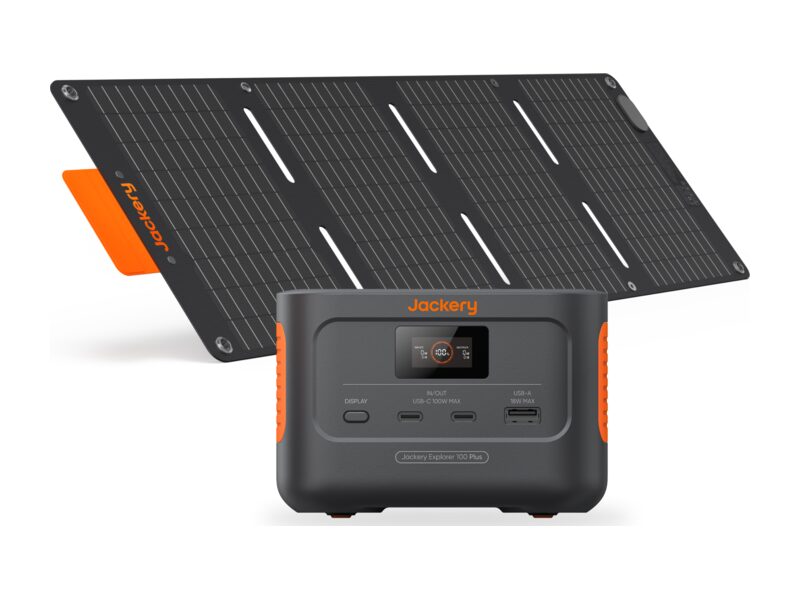
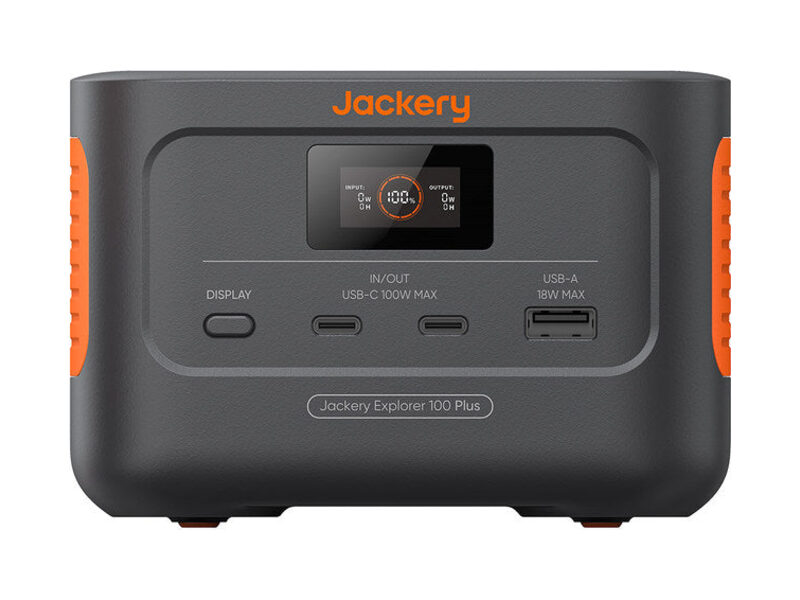
Jackery Explorer 100 Plus

$120.51 (6)Allowed in cabin (flights)

99Wh and 128W in a palm-sized body (965 g): the ideal mini station to fly with, charge a laptop and keep your devices running.

  • Capacity: 99.2Wh / 31000mAh (LiFePO4)
  • Power: 128W (USB-C 100W In/Out)
  • Weight: 965 g, palm-sized
  • Recharge: Full in about 2 h
  • 99Wh, flight-friendly, in just 965 g
The Jackery Explorer 100 Plus is a mini portable power station of 99.2Wh (31000mAh) with a LiFePO4 battery, delivering 128W. Palm-sized and weighing just 965 g, it is carry-on friendly for flights and slips into a bag. Its 100W USB-C port works as input and output, enough to charge a laptop, a smartphone, a drone or a tablet. Its LFP battery lasts 2000 cycles, and it recharges fully in about 2 hours.
In-depth reviewRead our full review → 4.1/5 The Explorer 100 Plus changed the way we travel light. Under the 100Wh mark, it goes through airport security into the cabin without trouble, and at 965 g you forget it in the camera bag. On the move, its 100W USB-C port charged a MacBook Air at full speed while keeping enough to top up a smartphone twice, exactly what you want from a backup reserve. We like the clear screen showing remaining runtime and the very tidy finish. It obviously does not replace a real station for AC outlets, it only has USB ports, but that is not its purpose. For a nomadic remote worker, a videographer or a traveller who just wants to keep USB-C devices charged without lugging a brick, it is the smartest, most portable solution we have tested.
View product page

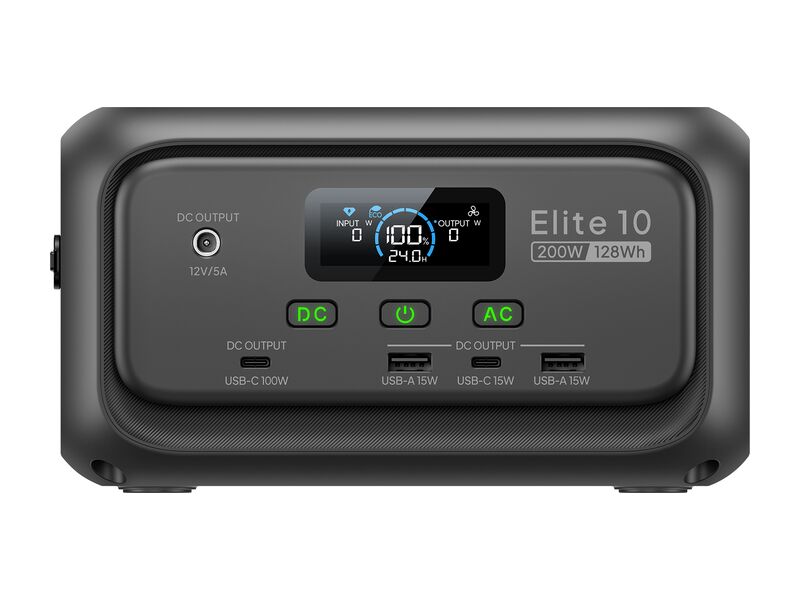
Bluetti Elite 10

See price and availability (5)Battery 100-160 Wh: cabin only with airline approval (max 2 spare batteries), prohibited in checked baggage. Learn more.

A 128Wh, 200W mini power station with a 10ms UPS and a full recharge in just 70 minutes: the power of a station that fits in your pocket.

  • Capacity: 128Wh (LiFePO4 battery)
  • Power: 200W continuous, built-in AC outlet
  • Recharge: 100% in 70 min (150W mains), 100W solar
  • Weight: 1.8 kg, 20x14.6x11 cm
  • 10ms UPS and a full recharge in 70 minutes
The Bluetti Elite 10 is a 128Wh portable mini power station with a LiFePO4 battery, small enough to fit in your hand and weighing just 1.8 kg. It delivers 200W continuous through its AC outlet, backed by a 100W USB-C port, a 15W USB-C port, two 15W USB-A ports and a 12V DC output. Its UPS switches over in 10 ms to protect sensitive devices during an outage. It recharges to 100% in just 70 minutes on the mains, or via a solar panel or the car's cigarette lighter socket. Far more than a plain power bank.
We were sceptical at first glance: barely bigger than a large power bank, yet the Elite 10 packs a genuine 200W AC outlet, enough to plug in a laptop charger or a small lamp with no adapter needed. Working remotely, its UPS function proved its worth: during a mains outage it kicked in instantly, just long enough to save our work. Another pleasant surprise was the recharge: back on the mains, it returns to 100% in a little over an hour, which is fast for this segment. The small LED light on top is a genuine plus for a bivouac night or a power cut at home. Two honest gripes: with only 128Wh, you have to keep usage sensible, nothing power-hungry runs for long, and only one USB-C port delivers the full 100W, the rest are capped at 15W. For nomadic top-ups, light remote work or a small backup reserve in a shape that fits in your hand, the Elite 10 remains a safe bet from Bluetti.
View product page

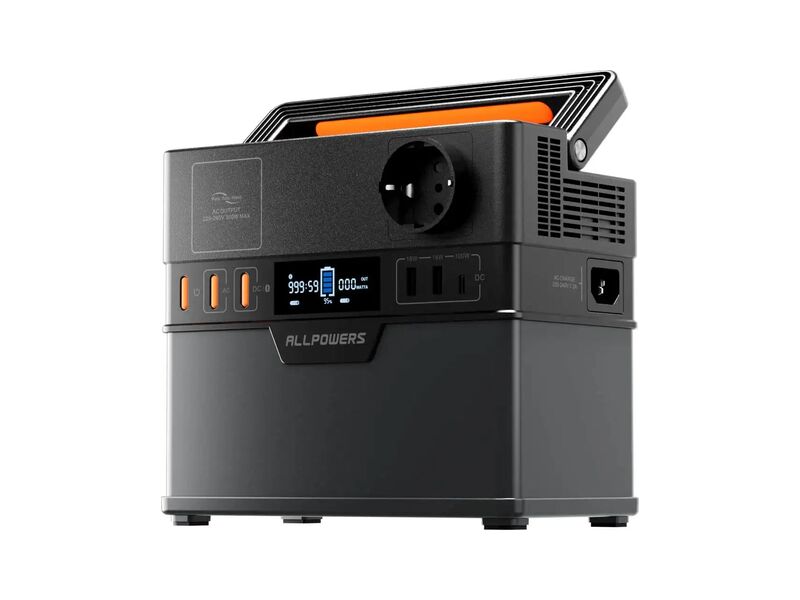
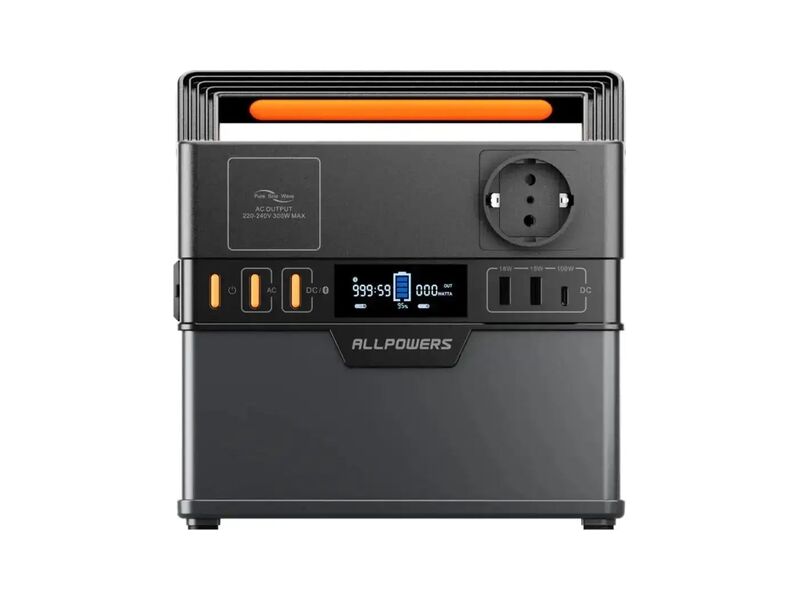
Allpowers S300 Plus

$346.22 $218.85 (5)

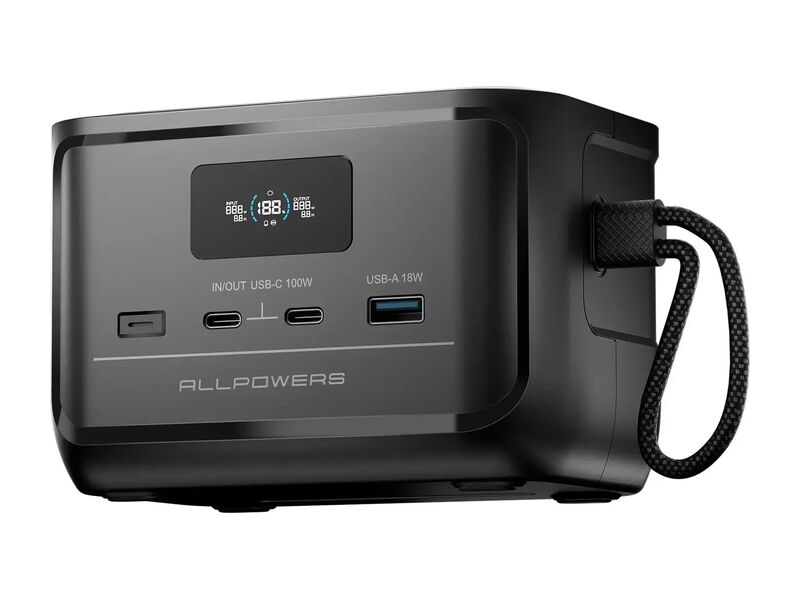
Compact and clever, the Allpowers S300 Plus (288 Wh) combines USB-C 100 W, a wireless charger, an LED light and app control.

  • Capacity: 288 Wh
  • Power: 300 W (600 W peak)
  • Recharge: about 1 h 30 from mains
  • Weight: 3.4 kg
  • USB-C 100 W, wireless charger, LED light and Bluetooth app
Compact and light (3.4 kg), the Allpowers S300 Plus packs 288 Wh and 300 W (600 W peak) to charge a smartphone, a laptop, lighting and small gear. Very well-equipped for its format: USB-C 100 W, a wireless charging pad, an LED light and ALLPOWERS app control. Full recharge in 1.5 hours from the mains, solar and car compatible. Ideal as a first top-up portable station for camping, van life or home office.
In-depth reviewRead our full review → 3.8/5 We tested the S300 Plus for several weeks, and for a station this size it is surprisingly complete. Compact as a small shoebox and light (3.4 kg), it fits anywhere. What stands out first is the USB-C 100 W port: rare at this format, it charges a laptop at full speed, where many rivals cap at 60 W. The wireless charging pad on top and the built-in LED light are two well-thought-out extras for camping or an outage. We also liked the Bluetooth app, which lets you monitor charging and switch ports off remotely, not that common on such an affordable model. Its 288 Wh and 300 W suit small and medium devices (phones, laptops, lighting, a router, small gear), not running large appliances. Two honest downsides: the 300 W output limits its uses, and a few users report a perfectible finish on the fans. But at under $230.18 with this level of equipment, it offers formidable value for a first portable station.
View product page

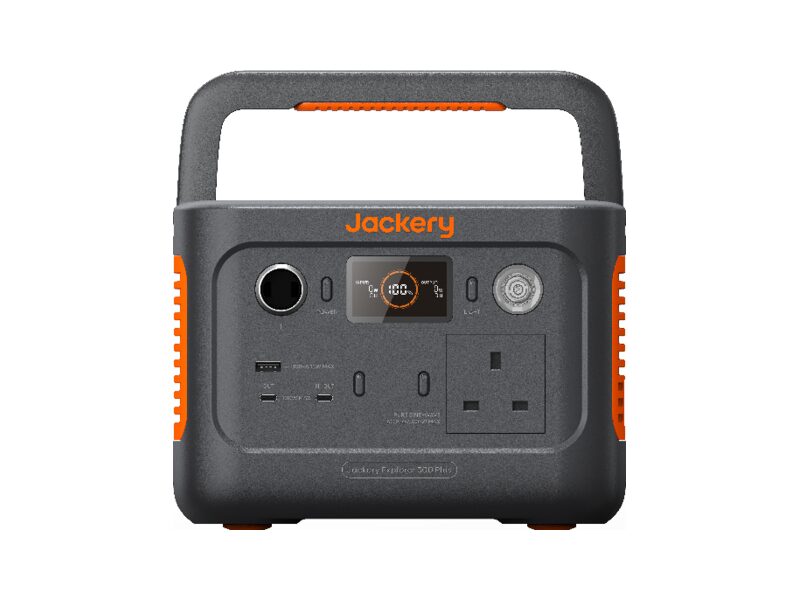
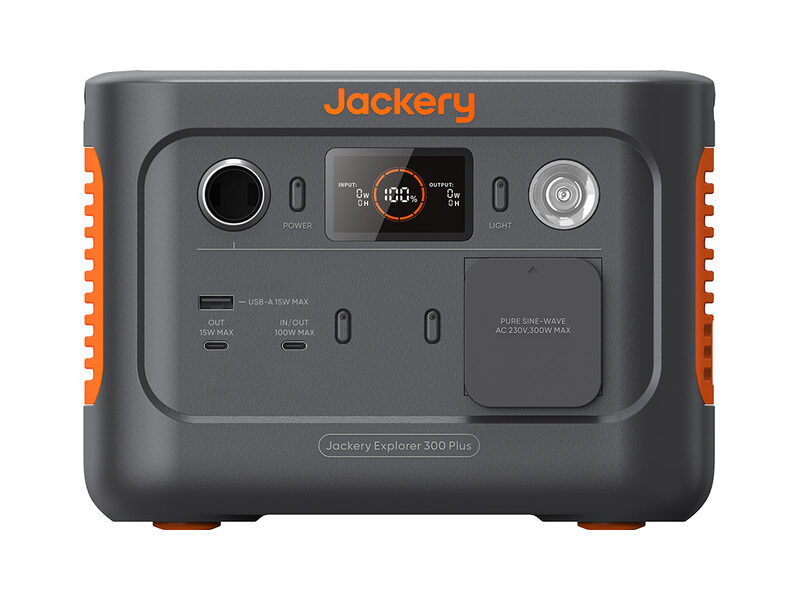
Jackery Explorer 300 Plus

$431.93 (5)

288Wh and 300W in a station of just 3.75 kg, with AC outlets and 100W USB-C: the ideal companion for light camping and nomadic remote work.

  • Capacity: 288Wh (LiFePO4 battery)
  • Power: 300W continuous, 600W peak
  • Outputs: 1 AC outlet, 2 USB-C incl. one 100W, 1 USB-A
  • Recharge: About 2 h from the mains, solar compatible
  • AC outlet and 100W USB-C in 3.75 kg
The Jackery Explorer 300 Plus is a compact 288Wh portable power station with a LiFePO4 battery, delivering 300W continuously (600W peak). Light (3.75 kg), it combines one AC outlet, 2 USB-C ports including one rated 100W and a USB-A to power and charge several devices. Its LFP battery lasts 3000 cycles, a lifespan of up to 10 years, and it recharges in about 2 hours from the mains or via a SolarSaga solar panel.
In-depth reviewRead our full review → 4.1/5 The Explorer 300 Plus is the little station you take everywhere without thinking. At 3.75 kg, it fits in one hand and slips into a backpack, but unlike a simple power bank it offers a real AC outlet: we plugged in a small camera charger while charging a laptop over the 100W USB-C. Its 288Wh is plenty for a weekend of bivouac for two (phones, lighting, drone) or as a backup reserve at home. We like the LiFePO4 battery, far more durable than conventional lithium, and the two-hour recharge. Its limits are logical for the size: 300W is not enough for large appliances, and you have to make do with a single AC outlet. But for a reliable, compact and well-finished top-up station, it is a safe bet.
View product page

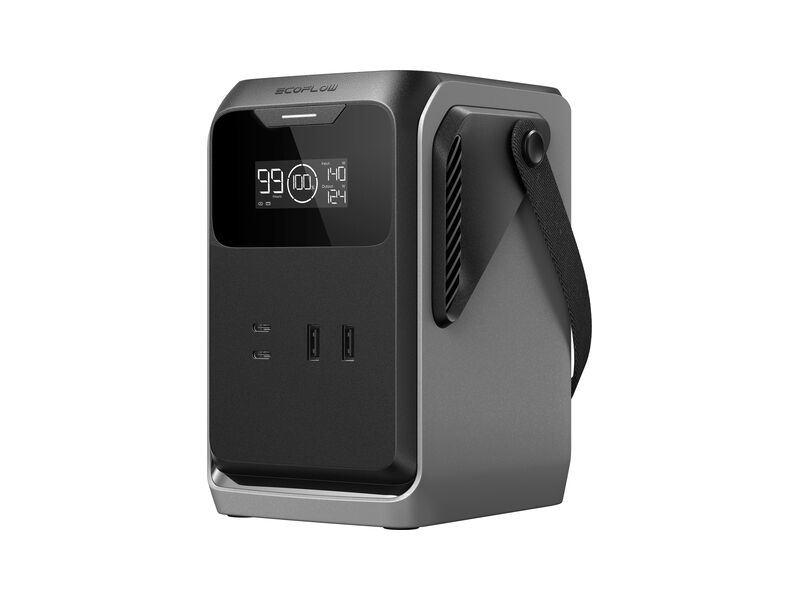
EcoFlow Trail 300 DC

See price and availability (4)

A 100% DC power station of 288Wh with a 12V car outlet: dual 140W USB-C, long-life LiFePO4 battery, built for camping and road trips.

  • Capacity: 288 Wh (LiFePO4, 3000+ cycles)
  • Output: 300W max, 100% direct current (DC)
  • Ports: 2x USB-C 140W, 2x USB-A, 12V outlet (120W)
  • Weight: 2.58 kg (167 x 115 x 166 mm)
  • 288Wh pure DC, dual 140W USB-C and a 12V outlet, 2.58 kg
The EcoFlow Trail 300 DC is a portable power station of 288Wh that goes all-in on direct current: no AC inverter, so no conversion losses, to power a laptop, a drone, a 12V cooler or camping lamps for longer. Its LiFePO4 battery lasts over 3000 cycles, it weighs 2.58 kg and delivers up to 300W, with two 140W USB-C ports and a 12V car outlet, a first for the Trail range. It also recharges directly from a solar panel, up to 110W.
In-depth reviewRead our full review → 4.4/5 We took the Trail 300 DC out for testing after already adopting its little sister the Trail 200 DC, and the real surprise is the 12V car outlet: it changes everything on a road trip, you plug a portable cooler straight in with no adapter. In the field, the two 140W USB-C ports keep pace, a laptop and a camera body recharge in parallel without slowing down. The dedicated solar port is a real plus over the 200 DC: you connect the panel without going through USB-C, simpler at the bivouac. At 2.58 kg it stays reasonable to carry, though you do notice the difference against the 1.8 kg of its little sister. The total silence (no fan) and the announced ruggedness inspire confidence. One honest caveat: still no 230V mains socket, so you cannot plug in a small classic appliance, and 288Wh remains a backup capacity over several days. But for anyone who wants more versatility than the Trail 200 DC without moving up to a big inverter station, it is a success.
View product page
Volix P300 Allpowers Volix P300 256Wh portable power station
Deal

Allpowers Volix P300

See price and availability (3)

256Wh and 300W in an ultra-compact format: the little station that powers a laptop, cameras and small appliances camping or in remote work.

  • Capacity: 256 Wh
  • Power: 300 W (600 W peak)
  • Outputs: 230V socket, USB-C, USB-A, 12V
  • Format: Compact and light
  • 256Wh, 300W, mains socket, portable
The Allpowers Volix P300 is a compact 256 Wh portable power station that delivers 300 W continuous (600 W peak). Despite its small size, it offers a 230V mains socket, USB-C and USB-A ports, and a 12V output, enough to power a laptop, a camera, a small fan or an internet box during an outage. Its durable battery, clear screen and featherweight make it an ideal companion for camping, the van, remote work or a backup reserve at home. Simple, light and versatile.
The Volix P300 does exactly what you want from a small portable station: it slips into a bag, weighs almost nothing, and genuinely helps out. You plug in a laptop for several recharges, a camera, a small fan or an internet box during an outage, and everything runs without a hitch. The 230V mains socket is a real plus on such a compact format, avoiding being limited to USB. The screen is clear and shows the essential info at a glance. We also like the USB-C for charging phone and tablet at good speed. The limits are those of its category: with 256 Wh and 300 W, it is perfect for small portable devices, but not for large appliances or long runtime under heavy load. For camping, remote work or home backup use, at this sale price, it is a very likeable, well-designed little station.
View product page

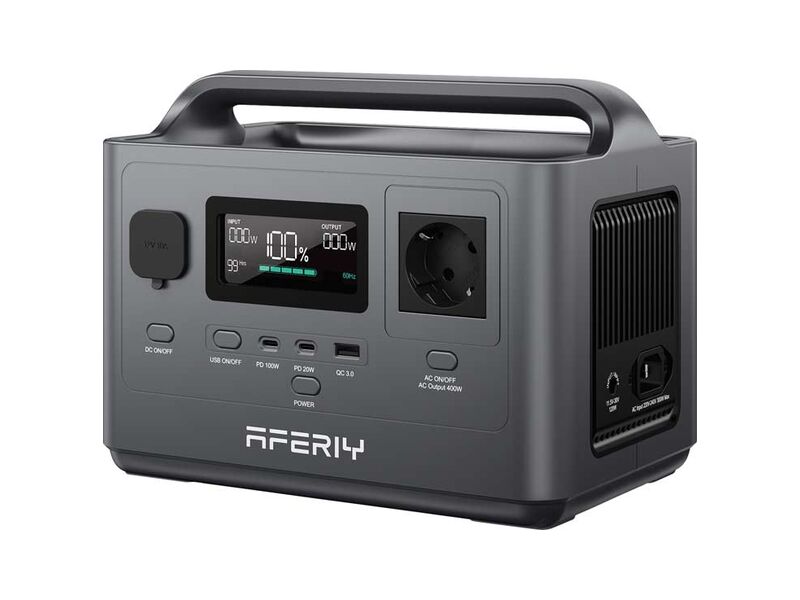
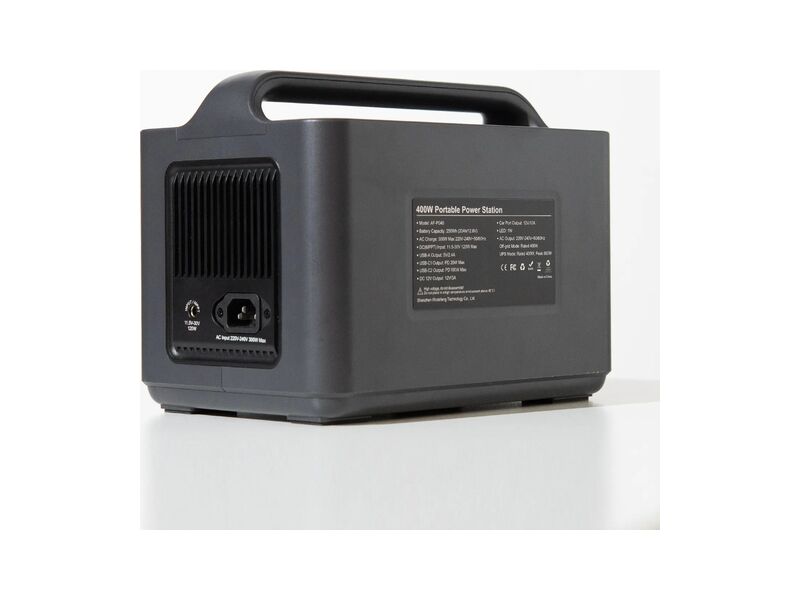
Aferiy P040

See price and availability (3)

256Wh, 400W and a full recharge in about 1.2 hours, the Aferiy P040 is a light 4kg backup, though one detailed US review flags a real UPS caveat.

  • Capacity: 256Wh LiFePO4
  • Power: 400W, two AC outlets
  • Charging: 300W mains, full in about 1.2h
  • Ports: 100W USB-C, USB-A, 12V car output
  • Two AC outlets, up to 7-year warranty
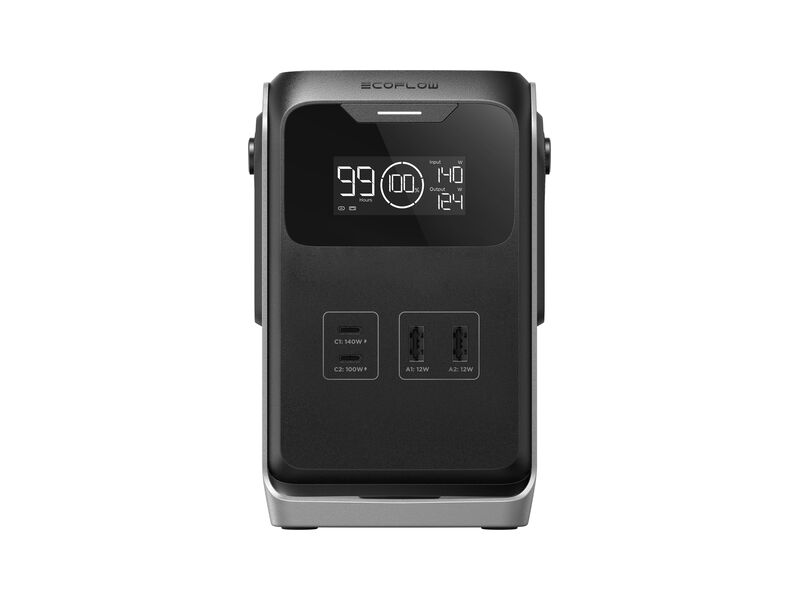
The Aferiy P040 is a compact 256Wh portable power station with a LiFePO4 battery (3500+ cycles) and a 400W pure sine wave output across two AC outlets on the US model. It recharges fully in about 1.2 hours on the wall and up to 120W from solar, and includes a UPS function rated under 10ms. A detailed US review documents both a successful UPS test and a later passthrough failure on that same unit, worth weighing before relying on it for unsupervised backup. Compact at 4kg (8.8lb).
The Aferiy P040 drew the most detailed US review we've seen for a compact station in this price range, and it's worth reading before you buy. The reviewer, testing it specifically as a UPS for a desktop computer during utility cutovers, first found it worked exactly as advertised: a silent, sub-10ms switchover, a fan that stayed off in standby, and enough headroom to run a MacBook Air about three times or a phone around twelve times off the 100W USB-C port. Then, within hours of a fresh setup, the same unit silently ran down to empty while still plugged into the wall, the passthrough had stopped drawing mains power without any warning. They returned it, and called it a likely isolated defect rather than a design flaw, noting Aferiy reached out afterward. A separate buyer reported the LED light not working with no response from support, and another described inconsistent charging. On the plus side, two AC outlets (more than some listings suggest) and a genuine 1.2 hour full recharge are real strengths at this price. We'd test the UPS over several days first.
View product page

EcoFlow Trail 200 DC

See price and availability (2)

A 100% DC power station of 192Wh barely heavier than a water bottle (1.8 kg): 140W USB-C, long-life LiFePO4 battery, built for lightweight camping.

  • Capacity: 192 Wh (LiFePO4, 3000+ cycles)
  • Output: 220W max, 100% direct current (DC)
  • Ports: USB-C 140W, USB-C 100W, 2 USB-A
  • Weight: 1.8 kg (167 x 115 x 126 mm)
  • 192Wh pure DC in 1.8 kg, 140W USB-C
The EcoFlow Trail 200 DC is an ultra-compact 192Wh power station that goes all-in on direct current: no AC inverter, so no conversion losses, to power lamps, cameras, drones, tablets and speakers for longer. Its LiFePO4 battery lasts over 3000 cycles, it weighs just 1.8 kg and delivers up to 220W, with a 140W USB-C port able to charge a laptop. Rugged (drop and fire resistant), it is the ideal portable power source for wild camping, fishing or a day of filming.
In-depth reviewRead our full review → 4.1/5 We took the Trail 200 DC out two weekends in a row, wild camping then on a photo session, and its concept won us over: by dropping the AC inverter, EcoFlow wins on both fronts, weight (1.8 kg, it slips into a backpack) and efficiency, because powering a device over USB-C directly avoids the losses of 230V conversion. In practice, you recharge a camera body, a drone, a phone and a lamp without ever draining the battery over a day. The 140W USB-C port is the real asset, it runs a laptop or recharges the station at full speed. The build inspires confidence, drop-resistant shells, and the LiFePO4 battery promises over 3000 cycles, meaning years of use. Two honest caveats: the total absence of a mains socket and a 12V port restricts it to USB devices (you cannot plug in a small 230V appliance or a 12V cooler), and 192Wh is a backup capacity, not enough for a long weekend without an interim recharge. But to travel light and power your portable devices, it is a success.
View product page
Explorer 300D Jackery 288 Wh power station without mains sockets
Promo

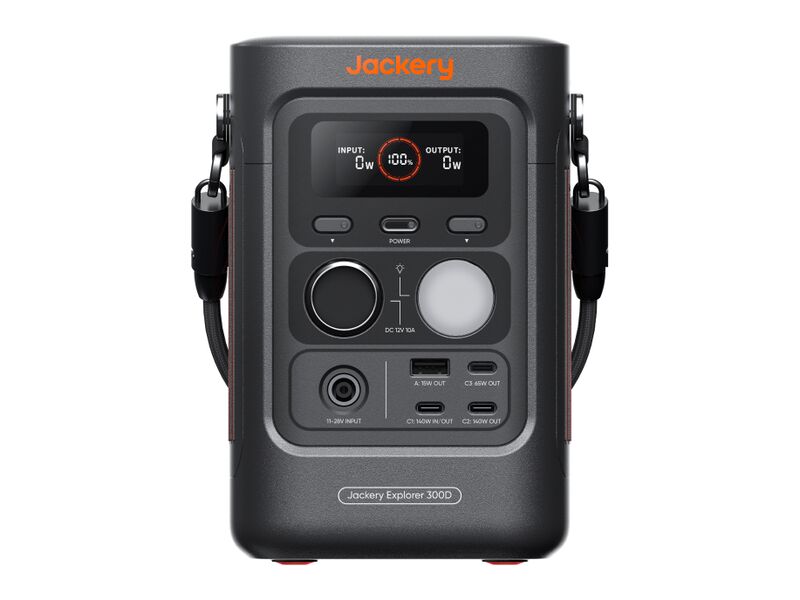
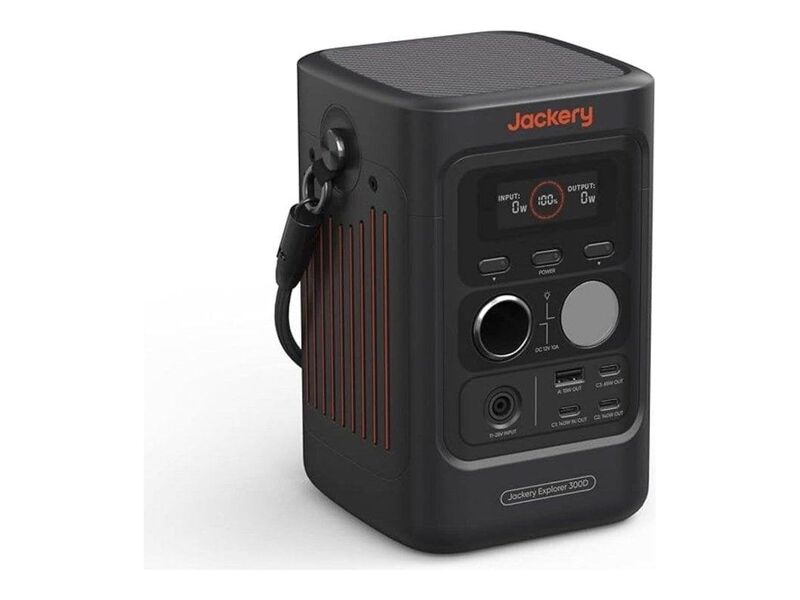
Jackery Explorer 300D

$276.74 $207.27 (2)

Two and a half kilos, 288 Wh of LiFePO4 and not a single fan: a station that fits in a camera bag and that you never hear.

  • Capacity: 288 Wh of LiFePO4, 4,000 cycles
  • Outputs: 3 USB-C (140 W max), 1 USB-A, 12 V cigarette 120 W
  • Distinctive: No 230 V socket at all, DC output only
  • Recharge: 2 h 18 on 140 W USB-C, 3 h 30 on 100 W solar
  • 2.5 kg, fanless and therefore perfectly silent
The Jackery Explorer 300D turns the usual power station on its head: it drops the 230 V socket entirely and keeps only DC output, which buys it a compact upright format weighing 2.5 kg. Its 288 Wh of LiFePO4 (4,000 cycles) feed three USB-C ports, a USB-A and a 120 W 12 V cigarette-lighter output, 300 W in total. The 140 W USB-C cable doubles as the carrying handle and as the charging lead, refilling the battery in 2 h 18. With no fan, it runs in complete silence, and Jackery warrants it for 5 years.
In-depth reviewRead our full review → 4.0/5 You need to understand this station's gamble before judging it, because it is unusual: Jackery removed the inverter and the 230 V sockets. The result: no more DC-to-AC conversion, so fewer efficiency losses (267 Wh delivered out of 288 Wh advertised at the charge bench, or 93 %), no more fan needed to clear the inverter's heat, and a much smaller housing. At equal capacity, 288 Wh, the 300D weighs 2.5 kg against 3.75 kg for the Explorer 300 Plus, its mains-socket sibling, and costs less. Excellent if everything you carry recharges over USB-C or 12 V: phone, tablet, laptop, camera, drone, e-reader, 12 V cool box, lighting. The 140 W USB-C port charges a MacBook Pro at good speed with a compatible charger, but the real speed depends heavily on the charger used, a point the spec sheet does not mention. A deal-breaker if you were counting on plugging in anything with a mains plug, even a simple older-generation laptop charger. One point deserves real caution: the 2-in-1 carrying cable, presented as a handle rated to carry 10 kg (a figure never independently corroborated), deformed after a few uses for one user, causing the unit to fall and an injury, with no compensation from Jackery despite the evidence supplied. The brand's customer service, moreover, comes up regularly in complaints for its slowness. The complete absence of a fan otherwise gives a rigorously silent station, confirmed in use including under sustained load. The deliberate omissions: no Wi-Fi, no Bluetooth, no app, no UPS function, no IP rating.
View product page

Allpowers Solax P100

$94.77 Allowed in cabin (flights)

99Wh and 128W in a 950g compact format, with no mains socket: the all-USB-C mini power station that recharges almost everything while hiking or travelling.

  • Capacity: 99.2 Wh
  • Power: 128 W (2x USB-C 100W + USB-A 18W)
  • Charging: USB-C 100W, solar 100W, car socket 60W
  • Format: Ultra-compact, 950g
  • 99Wh, all USB-C/DC, 950g, no mains socket
The Allpowers Solax P100 is an ultra-light (950g) 99.2Wh DC mini power station, built for anyone who doesn't need a 230V mains socket but wants more power and capacity than a plain power bank. It delivers up to 128W combined through two 100W USB-C ports and one 18W USB-A port, enough to quickly recharge a laptop, a drone, a camera or several phones. Its LiFePO4 battery (2000 cycles) is particularly durable, and it recharges from the mains via USB-C, in the car (60W cigarette-lighter socket) or from the sun (100W with an XT60 adapter cable sold separately). A pocket-sized format for hiking, travel or nomadic work.
The Solax P100 fills a real gap between plain power banks and stations with a mains socket: with its two 100W USB-C ports, it recharges a laptop or tablet almost as fast as a mains charger, and its 950g format fits in a backpack pocket. The LiFePO4 battery is reassuring for the long run (2000 cycles), and the small screen clearly shows input and output in watts. Solar charging is a real plus for hiking, but watch out: the USB-C to XT60 cable needed to plug in a panel is not included and must be bought separately. The main limit, clear from the outset, is the complete lack of a 230V mains socket: no plugging in a light, a mini-fridge or anything with a standard plug, only USB-C and USB-A devices apply. For anyone who only needs to recharge electronics while travelling light, it's a smart, genuinely portable pick; for backup power at home, a station with a mains output like the S200 is the better call.
View product page

Xtorm XP2W300

$345.68

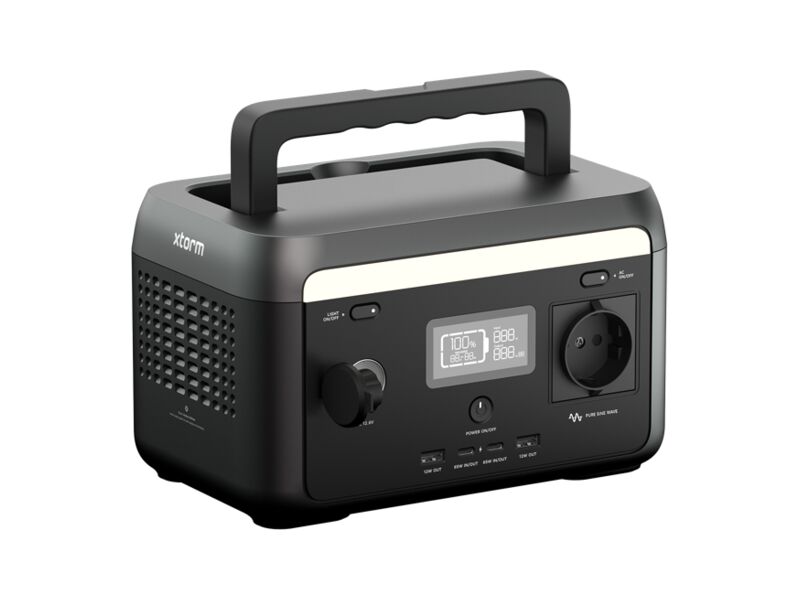
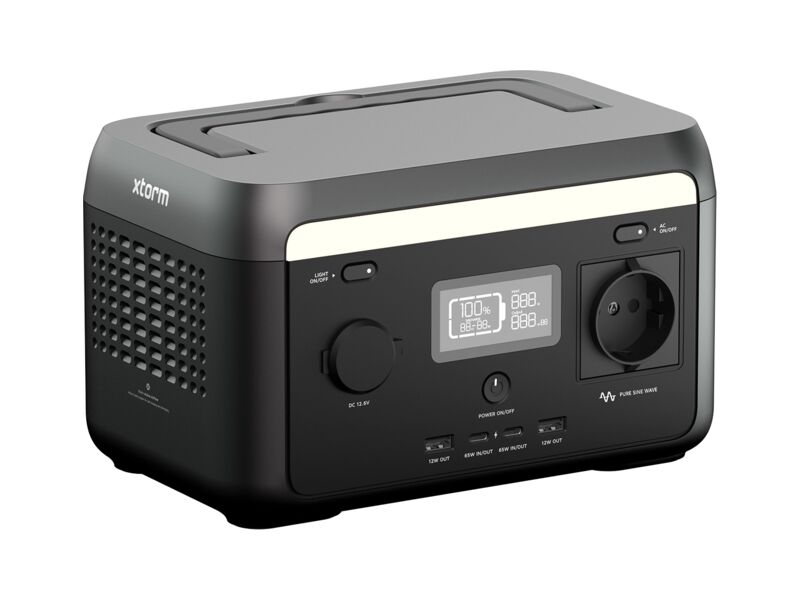
The Xtorm XP2W300 packs 204.8Wh and 300W (500W with PowerBoost) into a 3.65kg case you can control over WiFi, ready for camping and remote work.

  • Capacity: 204.8Wh (LiFePO4)
  • Power: 300W (500W PowerBoost)
  • Charging: ≈ 1h30 on mains power
  • Weight: 3.65kg
  • WiFi + Smart Life app, pure sine wave, 10ms EPS switchover
The Xtorm XP2W300, also sold as the Powerstation Smart 300W, is the most compact power station in the brand's Xtreme Power 2 range: a 204.8Wh LiFePO4 battery, a pure sine wave 300W output (500W with PowerBoost), all in a 3.65kg case. It stands out with WiFi and Bluetooth remote control through the Smart Life app, a 1h30 mains recharge and solar input up to 120W. Its EPS function switches to battery in 10ms during an outage, making it a good fit for camping, nomadic remote work or light backup power.
Out of the box, the XP2W300 impresses with its size: barely bigger than a picnic cooler, it slips into a backpack without you noticing its 3.65kg. During a weekend of outdoor remote work, the Smart Life app let us switch off the USB output remotely from the sofa, a detail that genuinely changes daily use compared with rivals that only offer short-range Bluetooth control. Camping overnight, it comfortably covered LED lighting and charging two phones and a camera without breaking a sweat. The EPS function proved itself during a test mains outage, the home router did not even have time to flicker. One honest downside: 204.8Wh remains modest next to the River 3 Plus or SOLIX C300, which pack in about 80Wh more in a similar footprint, and there is no add-on battery to grow with your needs. As a first connected, compact power station built on solid fundamentals (pure sine wave, LiFePO4, EPS), it remains a serious option, best kept for light-duty use.
View product page

← Back to Power Stations

Related questions

A 45 watt cool box for around 6 hours, a laptop 4 to 5 times, a drone or camera body for about ten recharges, LED lighting all night. On the other hand forget the kettle, the hairdryer and the hob: their draw would empty the reserve in minutes.

For two nights with phones, lighting, ventilation and a frugal cool box, 300 to 500 Wh just about copes. Add a 100 watt solar panel and the autonomy becomes comfortable. Beyond two days without sun, or with a compressor fridge, you need to aim for 700 Wh minimum.

Almost never. The cabin ceiling is 100 Wh without approval and 160 Wh with airline authorisation. Yet the smallest station on the market exceeds 150 Wh. In practice only a few 140 to 160 Wh units are conceivable, and only after written clearance from the carrier.

The mains socket. A power bank, even at 25,000 mAh, only delivers direct current over USB. A station carries an inverter that recreates 230 V alternating current, which lets you plug in a camera charger, a pump or a small appliance. In exchange it is 5 to 10 times heavier.

An idle LFP battery loses 2 to 3 per cent a month, but the standby electronics consume more: expect a real loss of 5 to 10 per cent monthly. For long storage, leave the station between 50 and 70 per cent charged and switch it on every three months.
Need help choosing?

Further reading on the blog

Compare