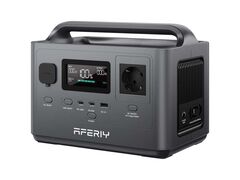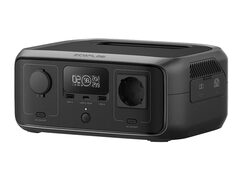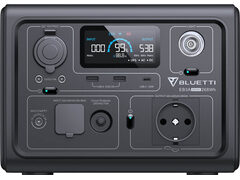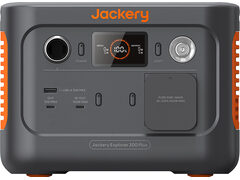
What that claimed 256Wh really gets you
The P040 runs a 4S LiFePO4 pack, each cell rated 20Ah at 3.2V, for a nominal 12.8V (range 10.5 to 14.4V), which works out to a nominal 256Wh. Against the unit's 8.8 lb (4 kg), that's an energy density of about 64Wh/kg, among the best for this price bracket.
That nominal number is never fully available at the outlets, though. On a full charge, the 100W USB-C port is enough to charge a compact laptop three times over, or a phone about a dozen times, which works out to roughly 190 to 220Wh actually usable. The gap between that and the 256Wh nominal figure comes from conversion losses and the safety buffer the battery management system always holds back, a pattern common across this whole category that spec sheets never spell out.
This brand has already shown, on a much more powerful model in its lineup, real world efficiency noticeably below what it advertises. Good reason to stay cautious on the P040 until an independent measurement of this exact unit confirms a hard number, without pinning that other, far more powerful unit's shortfall on the P040 itself.
One of the fastest wall charges in its class
Charging is where the P040 pulls ahead. On a wall outlet it accepts up to 300W and claims a full 0 to 100% charge in about 1.2 hours. Part of that charge moves noticeably faster: the first 80% fills in around 45 minutes, with the last stretch slowing down as the current tapers off to protect the cells, a standard constant current then constant voltage charging curve rather than two numbers that don't add up.
It also takes up to 120W of solar input (MPPT range 11.5 to 30V, DC5521 connector, MC4 cable included), good for a full charge in around two and a half hours of solid sun, and it recharges from a car's 12V outlet at 8A. Wall and solar input can run together for an even quicker top off when you're in a hurry.
Against similarly sized rivals, it lands in second place for full charge speed: the EcoFlow River 3 edges it out slightly, while the Bluetti EB3A and the Jackery Explorer 300 Plus both take noticeably longer.
The UPS function: fast on paper, worth testing yourself
Beyond simple charging, the P040 includes a UPS function claimed to switch to battery in under 10 milliseconds during a power outage, one of the fastest switchover times claimed for a station this size. In theory, that's fast enough to keep a desktop computer, a home router, or a CPAP machine running through a blip without a hard reboot.
One detailed account, from a buyer testing it specifically as a desktop UPS during utility cutovers, found it worked exactly as promised at first: a silent switchover, fan off in standby. Then, within hours of that same setup, the unit silently stopped drawing wall power altogether and ran itself flat on battery despite staying plugged in the whole time. The buyer returned it and called it a likely isolated defect rather than a design flaw, and noted Aferiy reached out after the fact. Either way, it is a real reason for caution.
Solar and 12V: charging flexibility that pays off
The P040 charges from three sources, wall, solar, and a car outlet, a real plus for anyone off grid. Solar input tops out at 120W through a DC5521 connector (MC4 cable included), across an 11.5 to 30V range: enough to run a 100 to 120W folding panel with no extra adapter. Camping in good sun, a full charge takes roughly two and a half hours.
In a vehicle, the 12V outlet (8A) tops off the reserve on the move. The 12V/10A DC output, meanwhile, is a genuine asset beyond the obvious: it can run 12V gear like a Starlink Mini dish or astronomy and radio equipment directly, without routing through the inverter and its extra losses, and it also powers a small car fridge, an LED light, or an electric pump right off the bat.
Ports: six at once, but nothing smart
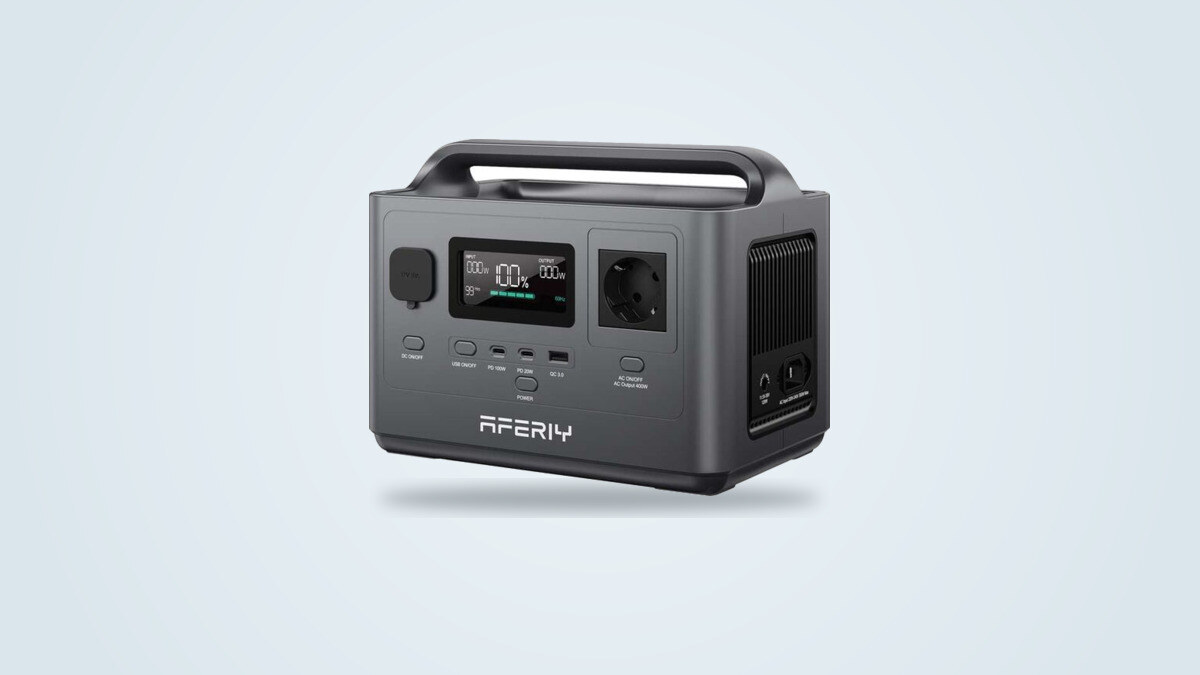
For a case measuring 10.2 x 6.9 x 7.9 in (259 x 174 x 201 mm), the US P040 packs in six simultaneous outputs: two AC outlets (confirmed directly by a verified buyer, since some listing copy implies only one), two USB-C Power Delivery ports (20W and 100W, the 100W port strong enough for a laptop on its own), one USB-A Quick Charge 3.0 port (18W), and a 12V car style DC output. A built in LED light rounds things out for occasional nighttime use. That is one more AC outlet than the European version gets, a real plus for running two AC devices at the same time.
Monitoring, though, stays entirely on device: no Bluetooth, no WiFi, no app, just the built in LCD screen showing charge percentage and power in and out. If you're used to checking a station remotely through an app, that's a genuine step down, even if the screen itself stays easy enough to read in person.
A separate buyer reported the built in LED light failing outright with no response from support, an isolated case but worth keeping in mind given how new this brand still is to US retail.
400W, 800W peak: power that backs up its own numbers
The rating label on the P040's own case confirms a 400W continuous, 800W peak output, a figure also repeated across major retailer listings, with nothing contradicting it. No independent test has confirmed whether that 400W actually holds up over a long stretch or under a rough load (a compressor's startup surge, say), but nothing turned up suggesting a gap between the claim and reality either, unlike some other stations in this class.
| Spec | Aferiy P040 | EcoFlow River 3 | Bluetti EB3A | Jackery Explorer 300 Plus |
|---|---|---|---|---|
| Capacity | 256Wh | 245Wh | 268Wh | 288Wh |
| Power | 400W (800W peak) | 300W (600W X-Boost) | 600W (1200W peak) | 300W (600W peak) |
| Full wall charge | 1.2 hrs | ≈ 1 hr | ≈ 1.5 hrs | ≈ 2 hrs |
| Warranty | up to 7 years (2 + 5) | 5 years | 2 years | 5 years |
| Listed price | ≈ $189 | ≈ $239 | ≈ $288 | ≈ $432 |
Against these three, the P040 sits in the middle on raw power but wins clearly on price and on its claimed warranty length, undercutting all three by a wide margin.
Build, brand track record, and warranty fine print
The maker, Shenzhen Aferiy Technology, lists a 2 year base warranty, extendable for free up to 7 years through online registration, a rare pitch at this price point where the norm runs closer to 2 to 5 years. Here's the catch: the printed manual that ships in the box only lists a 24 month warranty, with no mention of that extension anywhere in it. Confirm the exact terms directly with Aferiy before treating that 7 year figure as a settled fact.
On the build side, the LiFePO4 battery is rated for 3500 cycles before dropping to 80% of its original capacity, in line with the rest of the class. A battery management system with six layers of protection (overvoltage, over discharge, overcurrent, overheating, low temperature, short circuit) covers the usual failure modes, and the unit carries FCC and UN38.3 certification for legal sale and safe lithium battery transport. Its discharge operating range is claimed at 14 °F to 104 °F (-10 °C to 40 °C).
Aferiy is still a young name on US retail shelves, with the P040 (Nomad400) itself launched in late 2025, and its Amazon listing carries only a handful of ratings so far, a thin sample for a purchase decision. That thin sample is exactly why the two individual accounts covered above (the UPS passthrough failure and the failed LED light) carry more weight than they would for a brand with thousands of reviews to average against. No recall or safety incident turned up for the P040 itself.
Who should buy the P040, and who should not
Camping: its 256Wh cover LED lighting, charging several phones, a tablet, a camera, and a drone for an evening or a full night, and the 100W USB-C port tops off a laptop at full speed. One account even describes running it through a snowy overnight camp, keeping lighting and small devices going the whole time.
Desk backup: the 100W USB-C port charges a laptop directly, roughly three full charges of a MacBook Air or about a dozen phone charges per full battery, and the UPS function adds a safety net against blips once you've tested it yourself.
Off grid and vehicle use: at 8.8 lb (4 kg), it stows easily in a car, recharges from the 12V outlet between stops, and the 12V DC output can run a Starlink Mini or similar 12V gear directly without inverter losses.
Light medical equipment like CPAP: generally enough for one night without a heated humidifier, worth checking against your machine's actual draw, and keep the UPS caveat above in mind.
An occasional power outage at home: it keeps essentials (router, lighting, small electronics) running through a short outage, not an extended backup for a whole house.
The smallest model in Aferiy's lineup
Within Aferiy's lineup, the P040 sits at the smallest and lightest end: the P010, despite its lower model number, packs double the capacity (512Wh) and double the power (800W) at 13.8 lb (6.25 kg), well above the P040's 8.8 lb (4 kg). The higher tier models in the range aim at a different job altogether, extended home backup or running much hungrier appliances, with capacities running from several hundred to several thousand watt hours.
That entry level spot has a direct effect on who it's for: the P040 suits anyone wanting an easy to carry, easy to store backup reserve, not anyone looking to replace a whole home backup setup. On a far more powerful model from the same brand, already reviewed on this site, real world efficiency below the claims and a warranty extension that is less automatic than advertised also turned up: two caveats that look like they apply to the brand as a whole, not just one isolated model.