Battery chargers for AA, AAA and 18650
Our selection
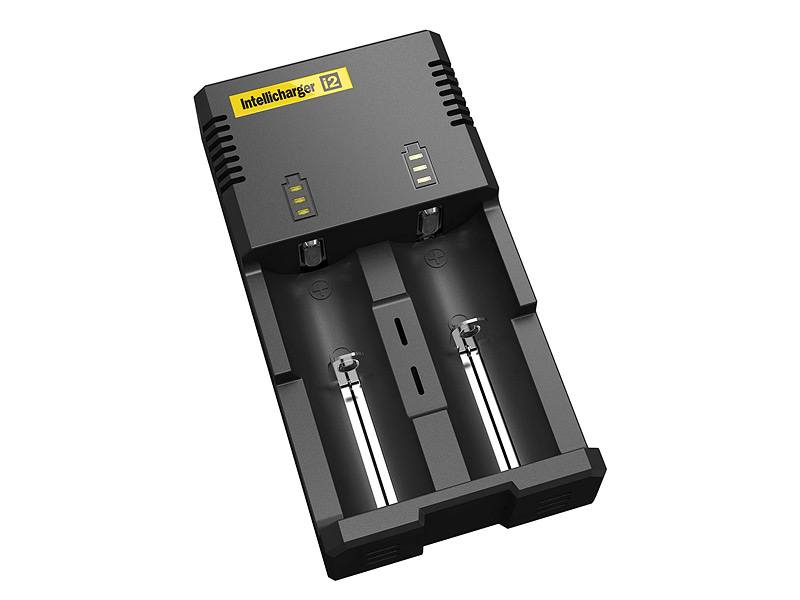
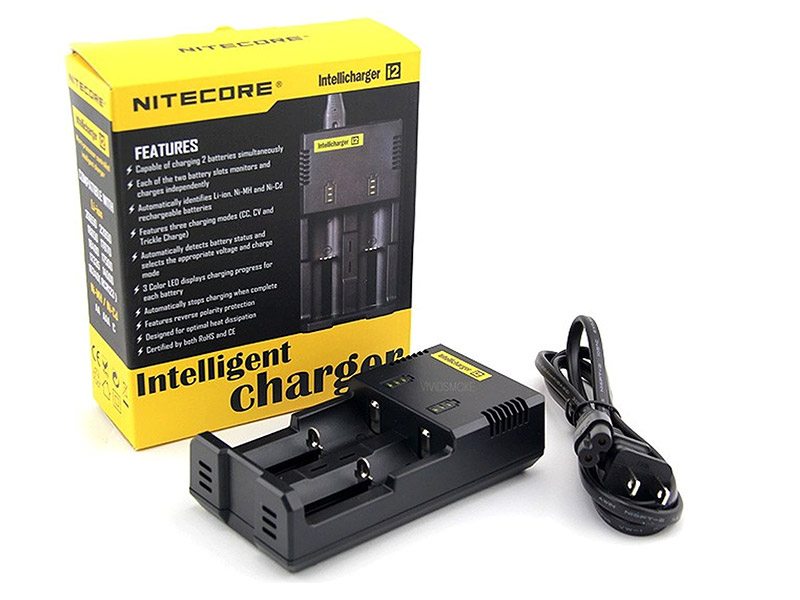
Nitecore IntelliCharger i2 Charger
$16.95 (18)
A rugged, versatile charger that charges two cells at once, even of different types, from 18650 Li-ion to AA NiMH, with automatic chemistry detection.
- Charge: 1000 mA max (500 mA on 2 bays)
- Bays: 2 independent bays
- Compatibility: Li-ion/IMR (18650, 26650...) + NiMH/NiCd (AA, AAA, D)
- Auto chemistry detection, rugged, wall power or 12V
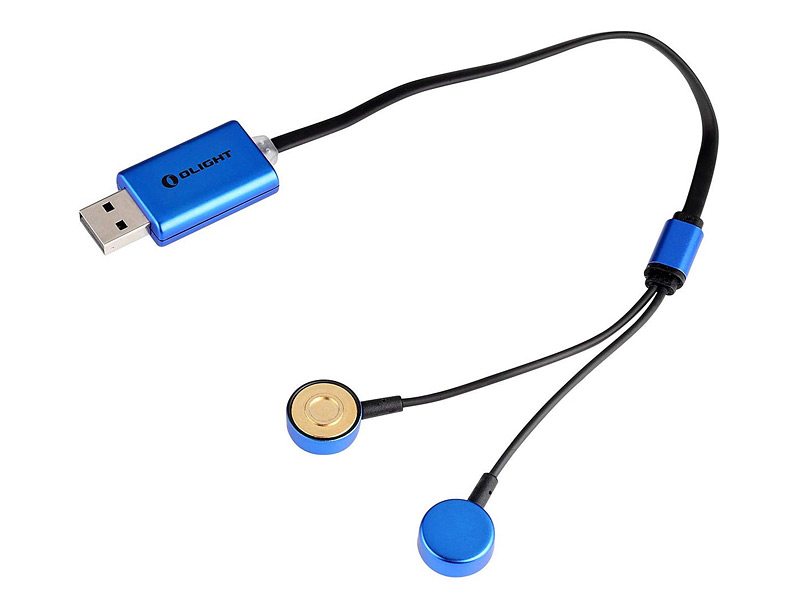
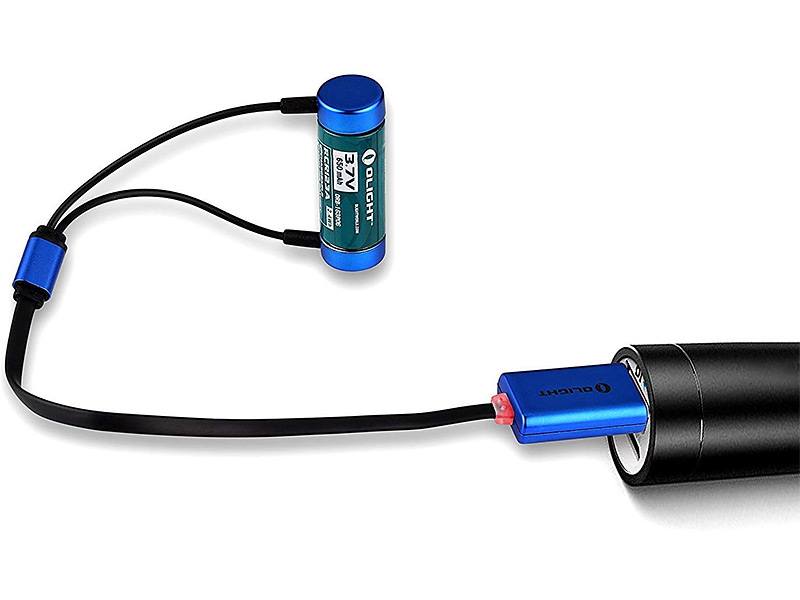
Olight UC Magnetic USB Charger
See price and availability (9)
Particularly clever, this small charger from Olight is able to recharge almost any cylindrical battery, via USB.
- Charge: 750mA via USB
- Slot: Charges a single battery at a time
- Compatibility: Lithium IMR/Li-ion, Nickel (Ni-MH/Ni-Cd)
- Ultra compact, universal (charges more than 30 battery types)
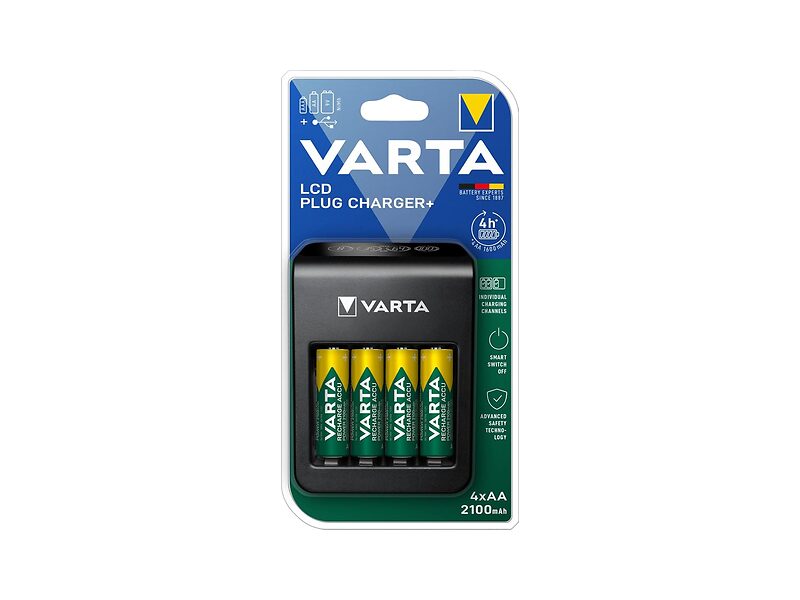
Varta LCD Smart Charger+
$43.72 (28)
Clear LCD screen, handy USB power and 4 AA cells included: the good all-round compromise for the home.
- Formats: AA/AAA (NiMH)
- Screen: LCD (state, time left)
- Input: USB, 4 slots
- Included: 4 AA 2100mAh cells
- LCD screen and USB charging, 4 cells included
MiBoxer C4 Charger
See price and availability (27)
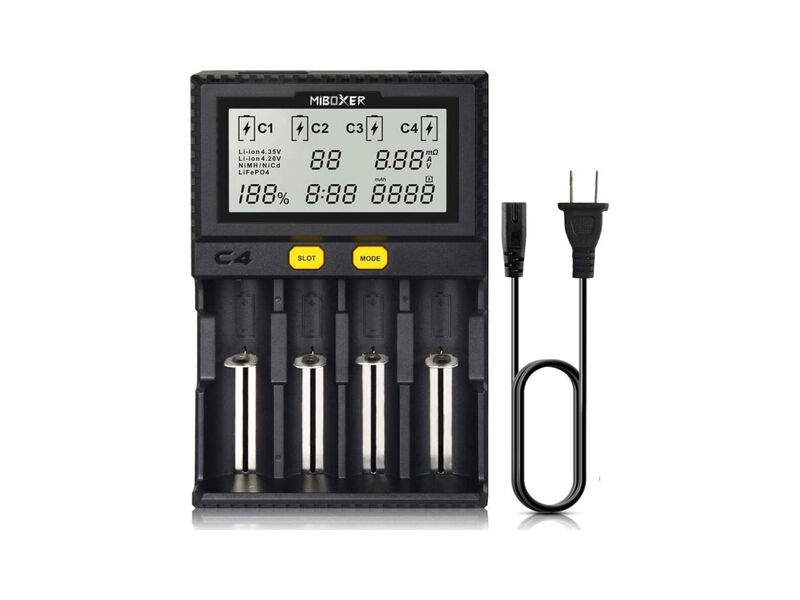
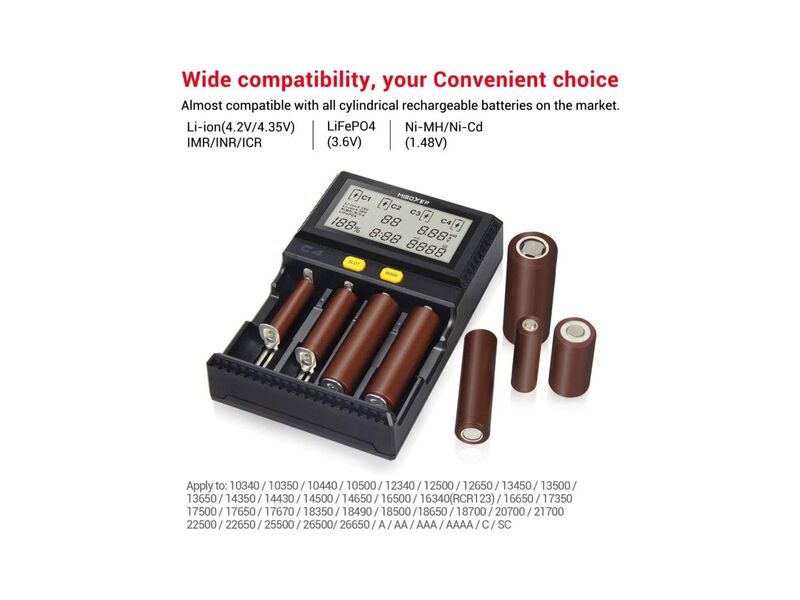
The MiBoxer C4 charges 4 cells at once, shows voltage, current and capacity on its LCD screen, and even handles LiFePO4: the clever universal charger.
- Bays: 4 independent bays, discharge/test on the 4th
- Compatibility: Li-ion/IMR/INR/ICR, LiFePO4 (3.6V), NiMH/NiCd
- Current: Up to 1.5A per bay, adjustable
- Power: Mains 90-260V or 12V (car)
- 4 independent bays, LiFePO4 support and detailed LCD
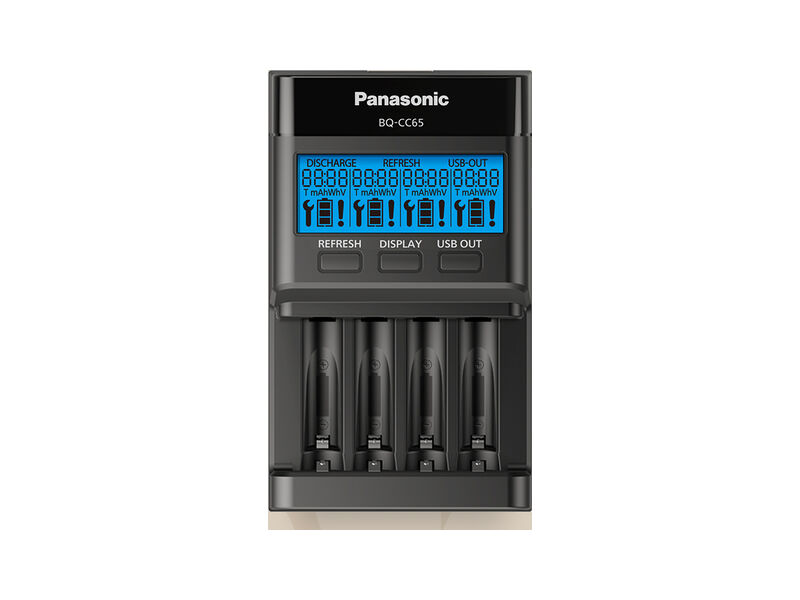
Panasonic Eneloop Pro BQ-CC65 Charger
See price and availability (21)
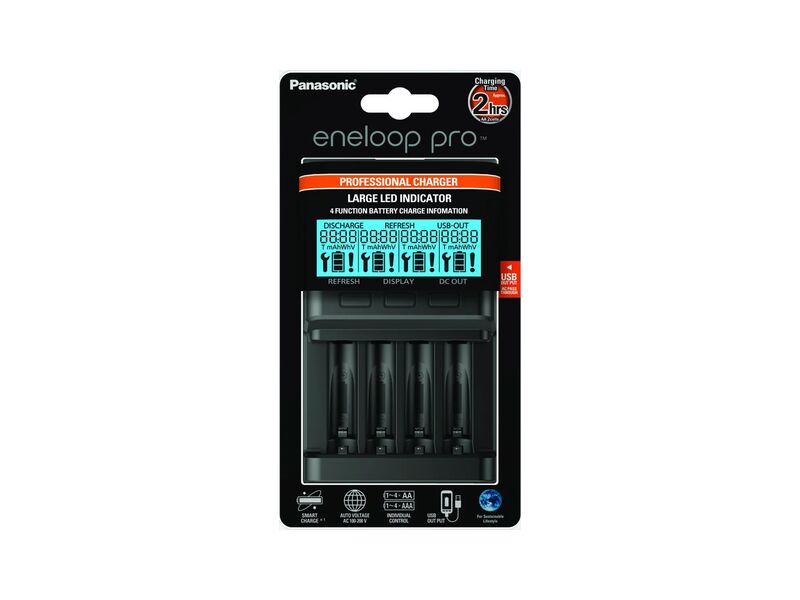
The most complete eneloop charger: detailed LCD screen, individual charging for 1 to 4 batteries, Refresh mode and a USB port to top up a device.
- Screen: 3 inch LCD (V, mAh, Wh)
- Slots: 4, individual charging
- Functions: Refresh, 5V USB output
- Charge: Fast, ~2h for 2 AA pro
- Full LCD screen and Refresh mode, the most advanced eneloop
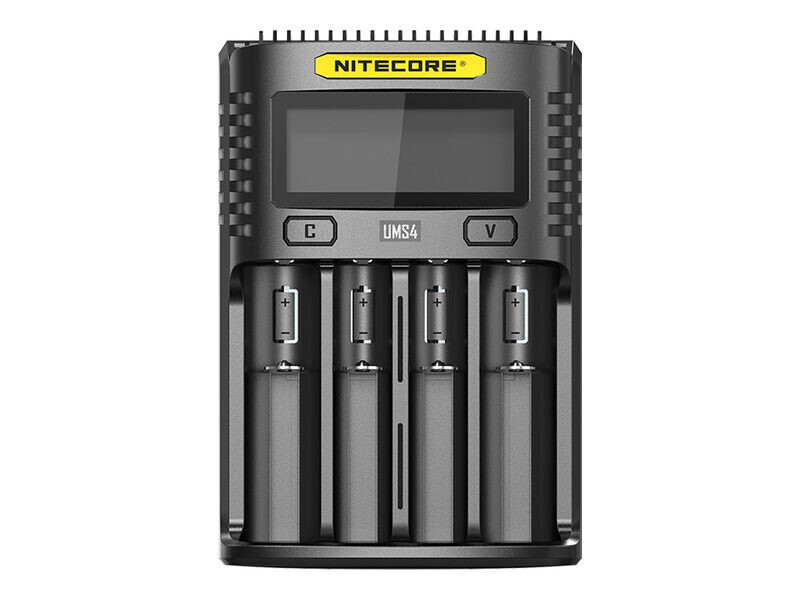
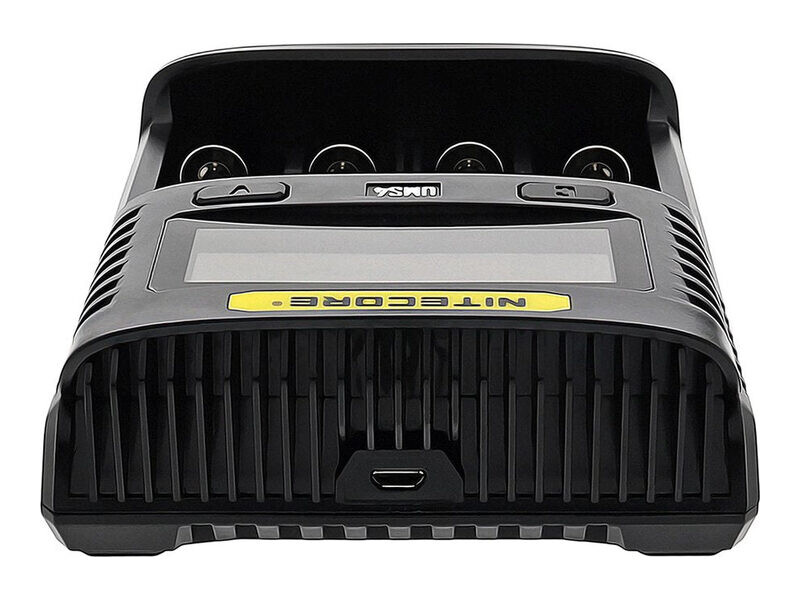
Nitecore UMS4 Charger
$38.95 (20)
The four-bay big brother of the UM2: the Nitecore UMS4 charges four cells at once over USB, up to 3A per bay, with a large and very complete LCD screen.
- Bays: 4 independent bays
- Charging: USB QC input, up to 3A per bay (4A total)
- Display: LCD: voltage, current, capacity, health
- Compatibility: Li-ion 10440 to 26650 + NiMH AA/AAA
- Four cells at once with detailed LCD monitoring
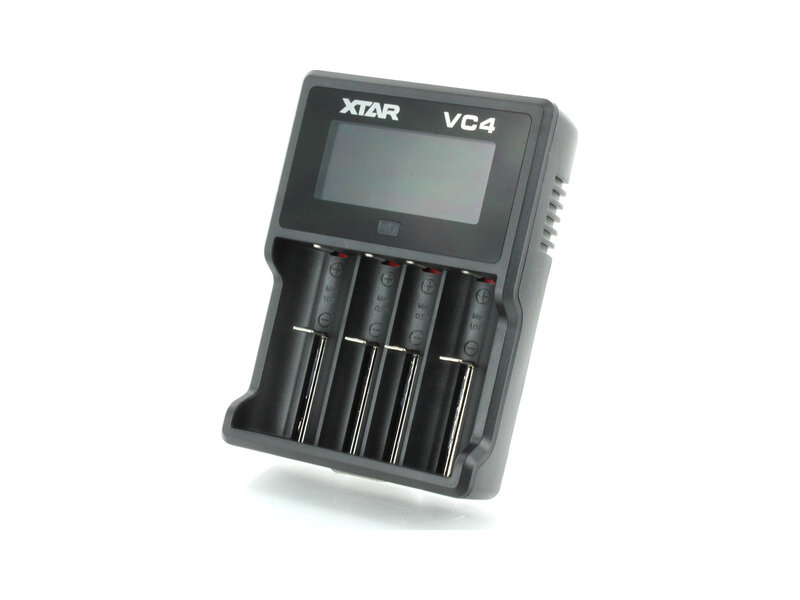
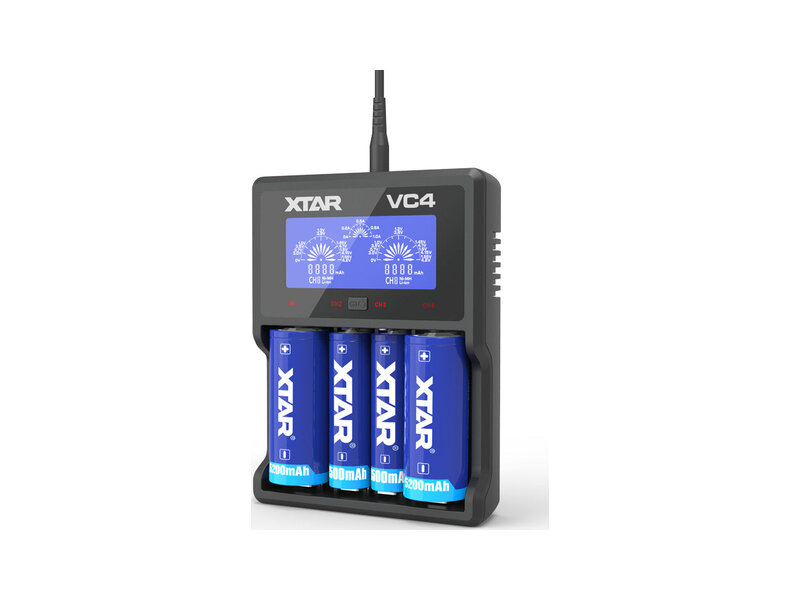
XTAR VC4
$18.90 (19)
A charger that tells you everything: the XTAR VC4 charges 4 Li-ion or Ni-MH cells at once and shows voltage, current and capacity on its LCD screen. The reference for cell enthusiasts.
- Slots: 4 (independent)
- Compatibility: Li-ion and Ni-MH (18650, AA, AAA...)
- Display: LCD screen (voltage, current, capacity)
- Power: USB
- 4 cells at once with informative LCD screen
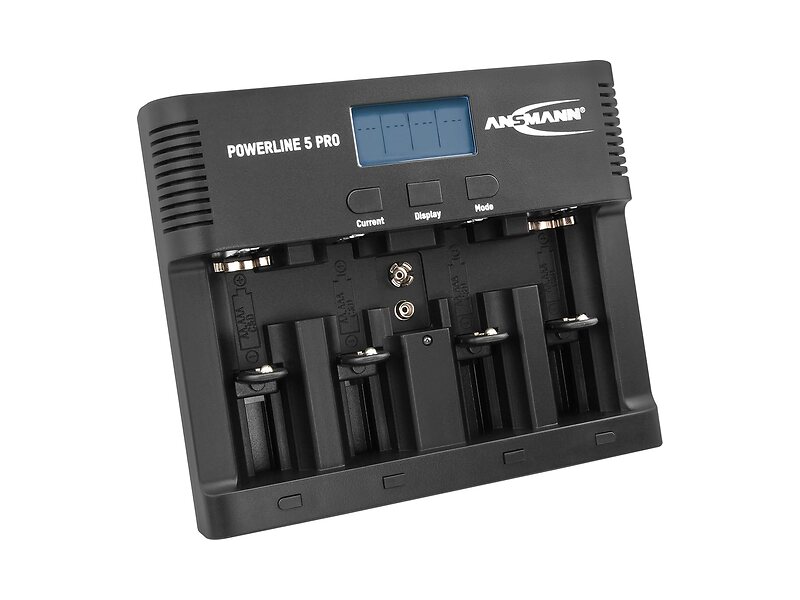
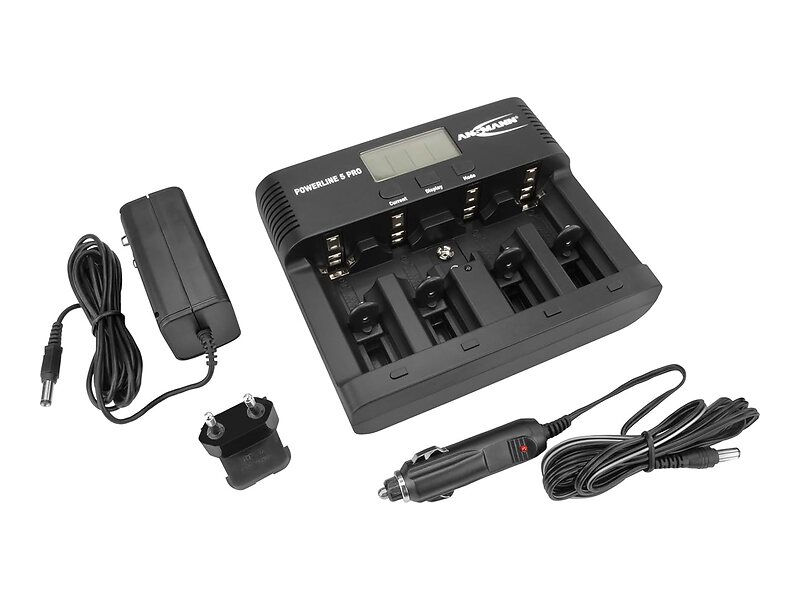
Ansmann Powerline 5 Pro charger
$96.57 (17)
The charging and reconditioning station for enthusiasts: all formats (AA to D, 9V), LCD screen and test, discharge and refresh programs to maintain your batteries.
- Formats: AA/AAA/C/D and 9V
- Screen: LCD, adjustable current
- Functions: Charge, discharge, test, refresh
- Slots: Individual charging
- Multi-format maintenance station with LCD
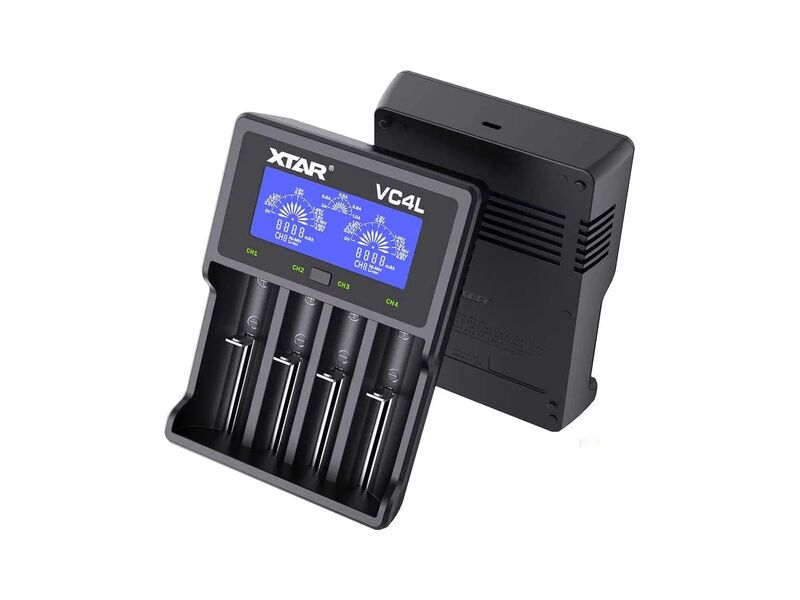
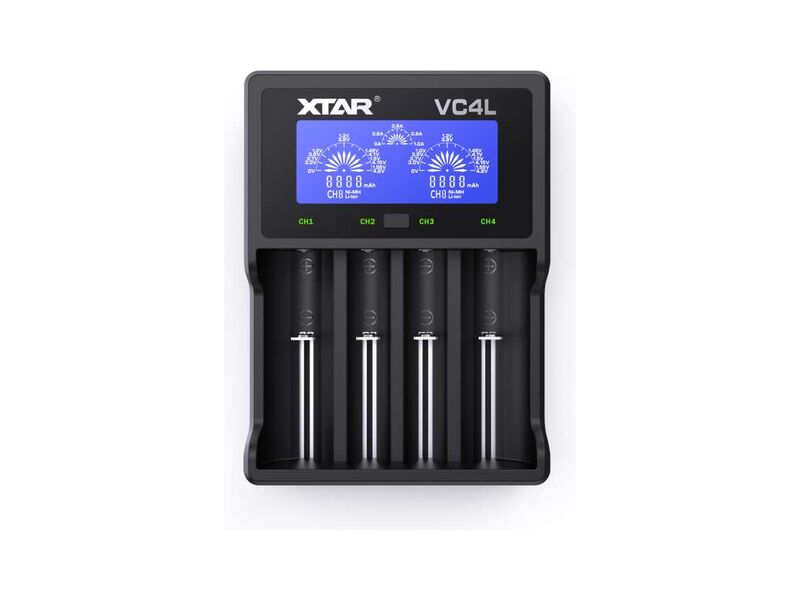
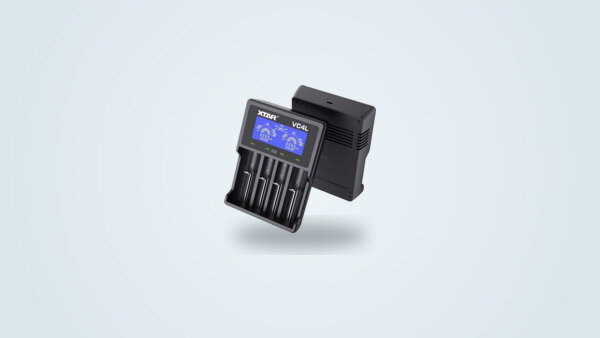
XTAR VC4L
$29.77 (17)
The XTAR VC4L charges up to 4 Li-ion or NiMH batteries over USB-C, with an LCD screen showing voltage, current and capacity for each bay.
- Bays: 4 independent bays
- Power input: USB-C, 5V/2.1A
- Charging current: 1A max (CH1 & CH4), 0.5A otherwise
- Compatibility: Li-ion 10440 to 32650 (protected 21700) + NiMH AA/AAA
- Detailed LCD screen, supports protected 21700 cells
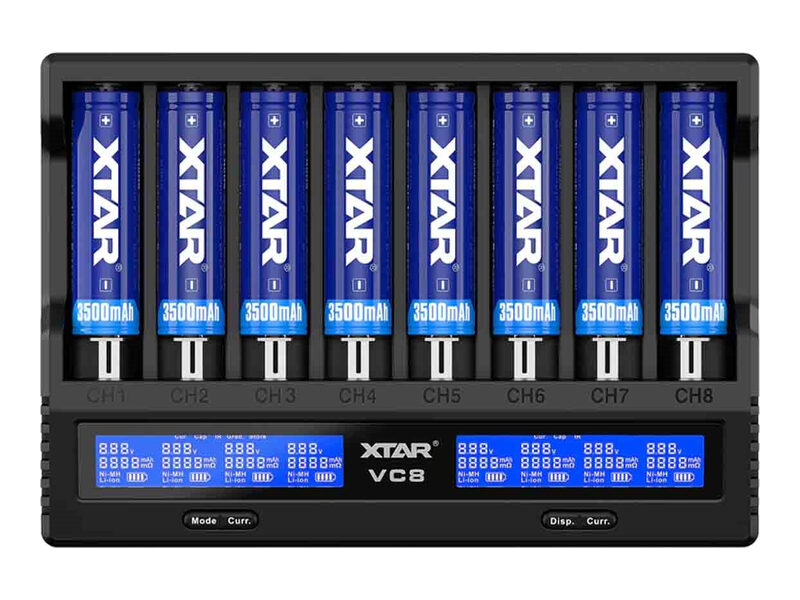
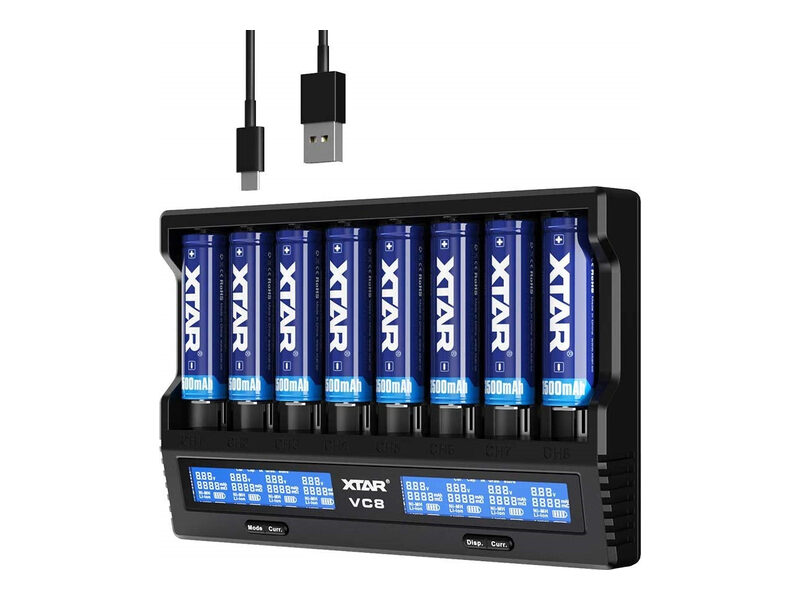
Xtar VC8 Charger
$37.99 (14)
Eight cells at once: the Xtar VC8 charges, tests and grades up to eight 18650 or 21700 cells over USB-C, with a large and very detailed LCD screen.
- Bays: 8 independent bays
- Charging: USB-C QC3.0, up to 3A (1 cell)
- Display: LCD: voltage, current, capacity, resistance
- Functions: Charge, capacity test, grading
- Eight cells at once with detailed analysis
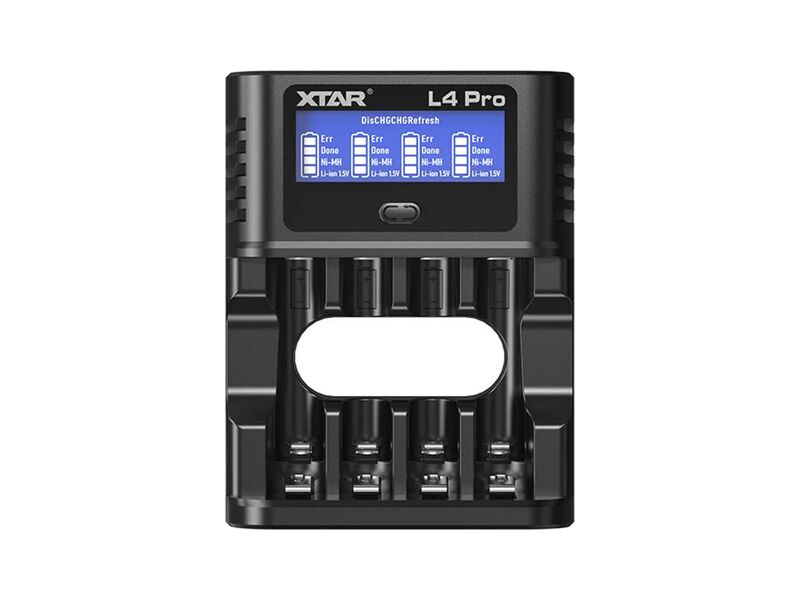
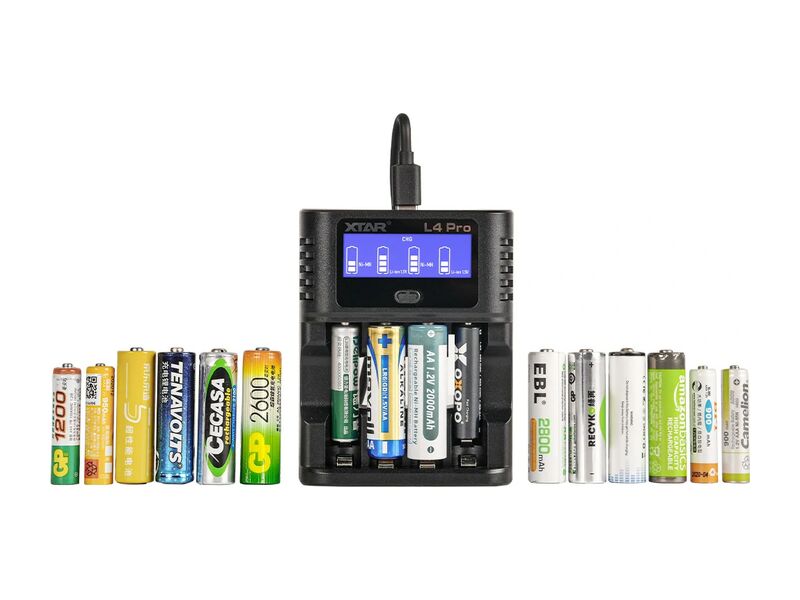
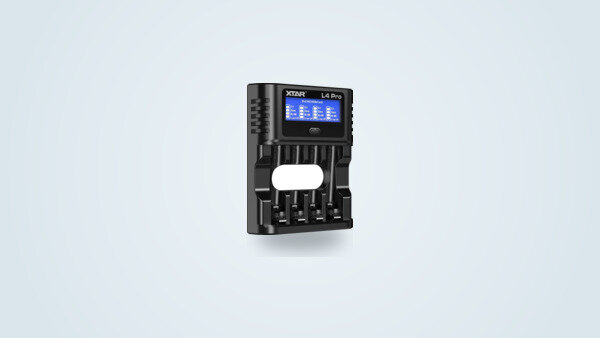
Xtar L4 Pro
$15.90 (11)
The XTAR L4 Pro charges AA/AAA NiMH and 1.5V Li-ion batteries over USB-C, and goes further: its refresh mode revives tired or deeply discharged rechargeables.
- Slots: 4 (independent)
- Compatibility: AA/AAA: NiMH 1.2V and Li-ion 1.5V
- Power input: USB-C 5V/2A (cable included)
- Functions: Discharge, refresh, 0V activation
- Revives tired or deeply discharged NiMH cells
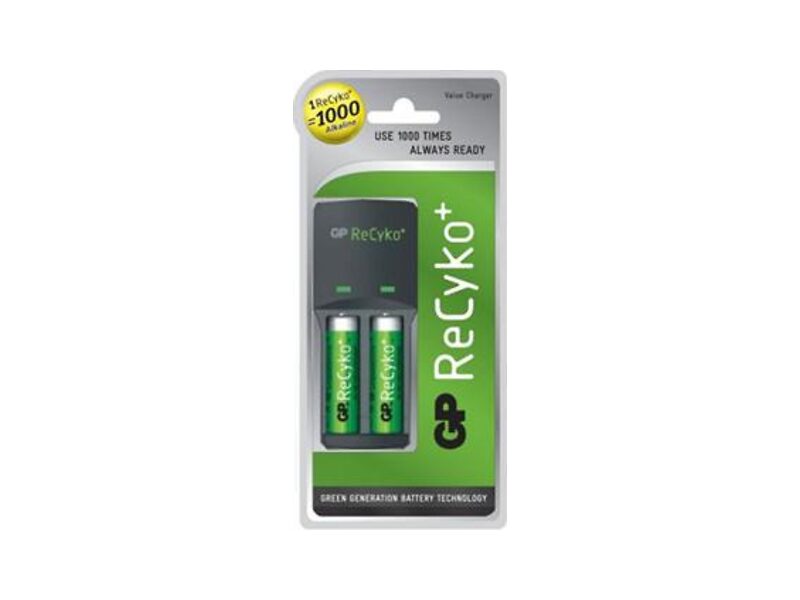
GP ReCyko AR02 charger
$11.56 (11)
The clever entry-level charger: simple, compact and affordable, supplied with 2 ReCyko AA cells ready to use. Perfect to start with rechargeables.
- Formats: AA/AAA (NiMH)
- Slots: 2 to 4
- Included: 2 ReCyko AA 2000mAh cells
- Safety: Built-in protection
- Simple, affordable charger, 2 cells included
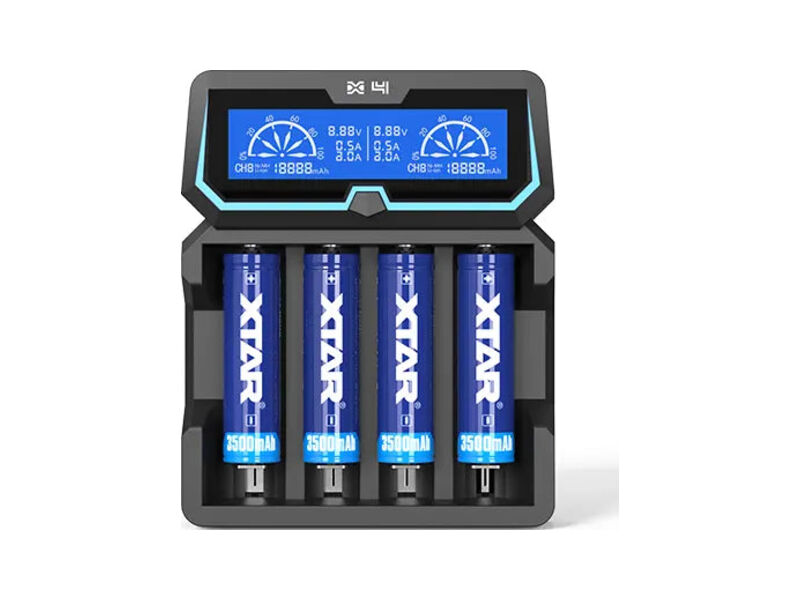
Xtar X4 Charger
$35.99 (10)
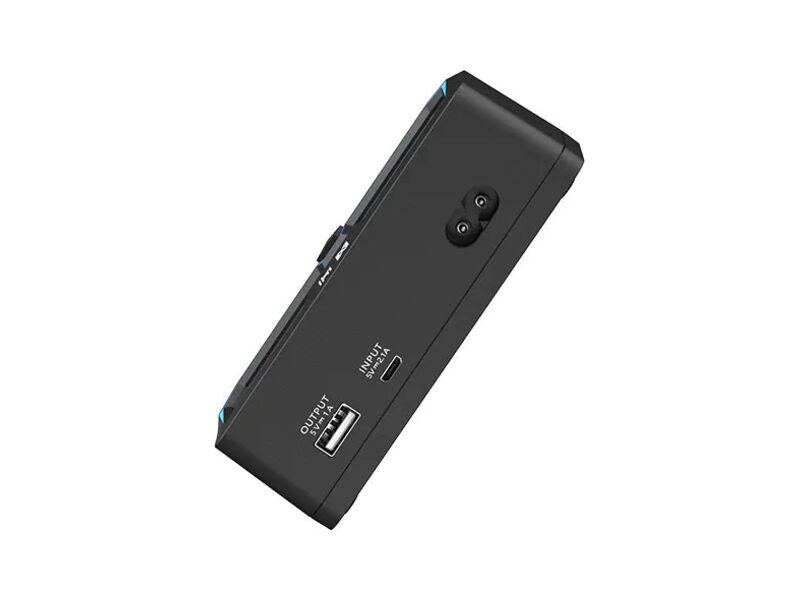
The Xtar X4 charges 4 Li-ion or NiMH cells at once, runs on mains or USB power, and turns into an emergency power bank thanks to its 5V USB output.
- Bays: 4 independent (2A max per 2)
- Power: Mains or micro-USB (2 inputs)
- Output: USB 5V/1A, power bank function
- Compatibility: Li-ion 10440-26650 + NiMH/NiCd
- 4 bays, mains power and USB power bank output
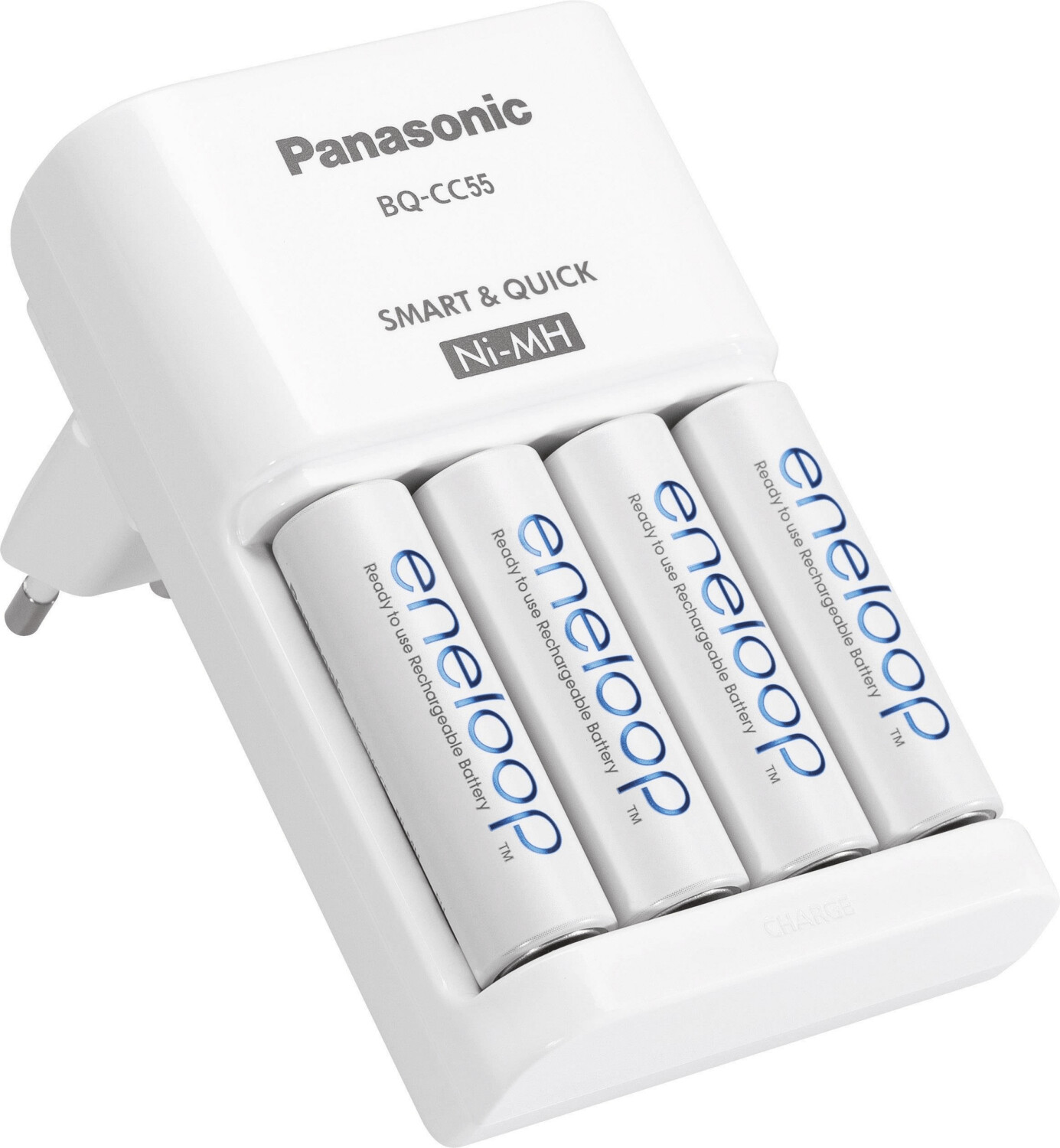
Panasonic Eneloop BQ-CC55 charger
See price and availability (10)
The reference smart charger for AA and AAA NiMH batteries: per-slot charging, automatic detection and 4 eneloop batteries included.
- Formats: AA/AAA (NiMH)
- Slots: 4, individual charging
- Charge: Fast, ~3h for 4 AA
- Safety: Detection, overcharge protection
- Smart per-slot charging, 4 eneloop included
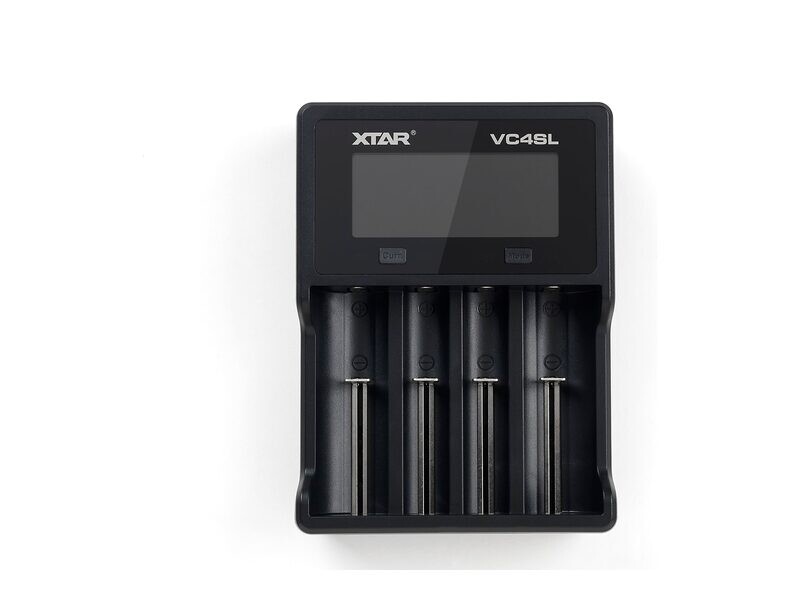
Xtar VC4SL Charger
$32.90 (10)
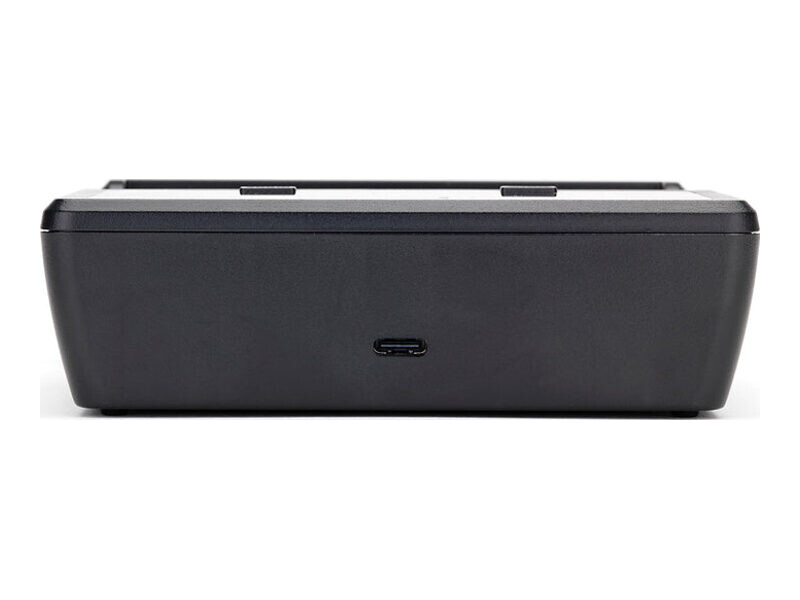
A four-bay charger with an LCD screen and USB-C: the Xtar VC4SL shows voltage, current, capacity and internal resistance, and charges at up to 3A on one bay.
- Bays: 4 independent bays
- Charging: USB-C QC3.0, up to 3A (1 cell)
- Display: LCD: voltage, current, capacity, resistance
- Compatibility: Li-ion 10440 to 32650 + NiMH AA/AAA
- Real-capacity and internal-resistance test
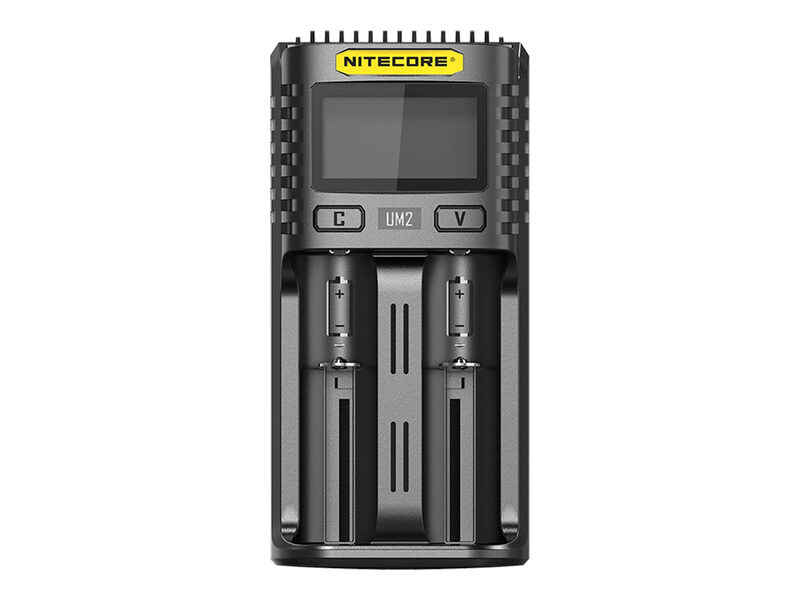
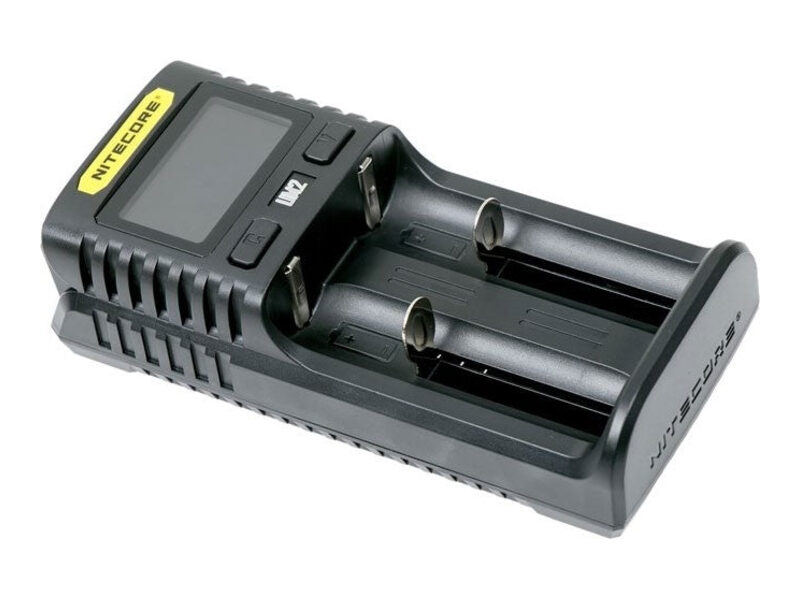
Nitecore UM2 Charger
$17.78 (9)
A compact two-bay charger with a large LCD screen: the Nitecore UM2 recharges over USB at up to 3A and shows voltage, current, capacity and health for each cell.
- Bays: 2 independent bays
- Charging: USB QC input, up to 3A (1 cell)
- Display: LCD: voltage, current, capacity, health
- Compatibility: Li-ion 10440 to 26650 + NiMH AA/AAA
- Large LCD screen and automatic detection
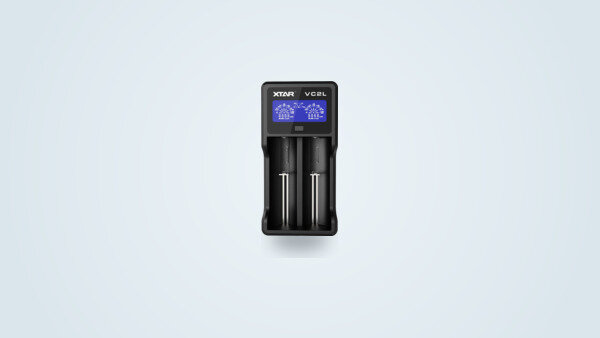
Xtar VC2L Charger
$16.90 (8)
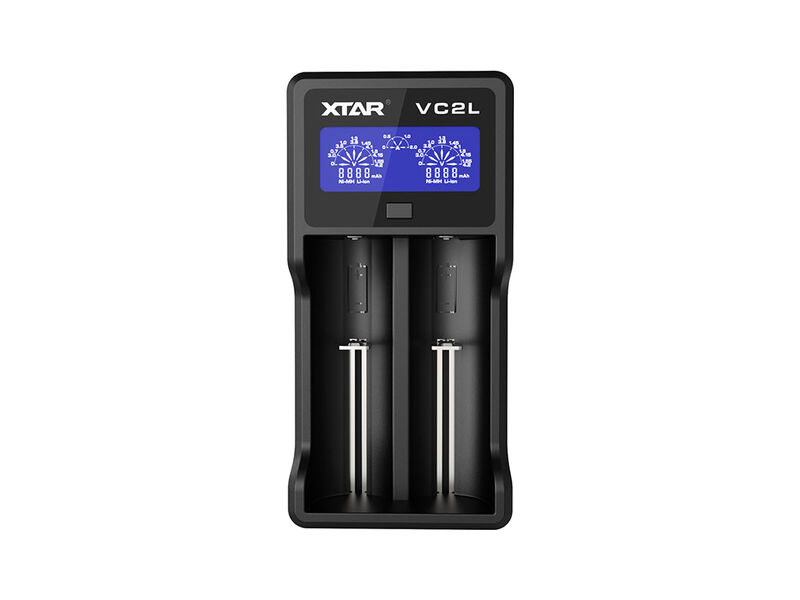
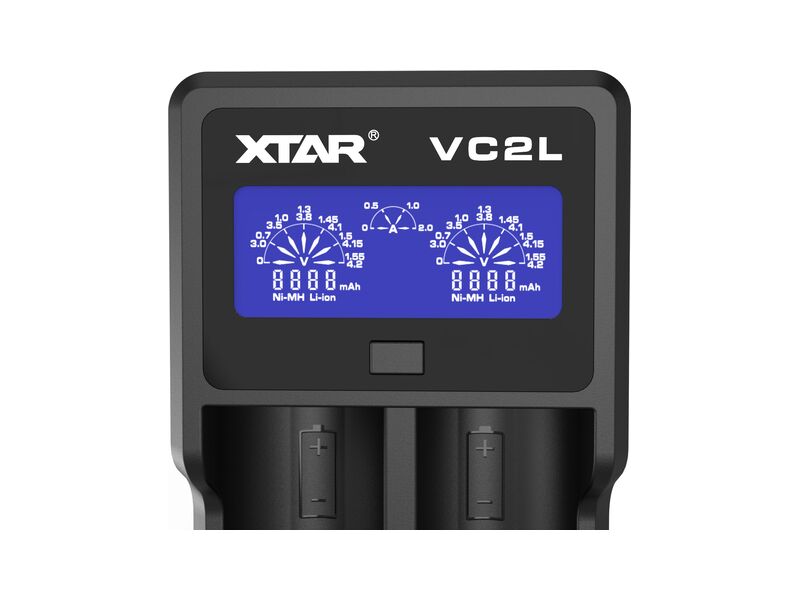
Two bays, a tachometer-style LCD screen, USB-C input: the Xtar VC2L charges and monitors your Li-ion and NiMH cells with precision, in a compact 4.2 oz (120 g) body.
- Bays: 2 independent bays
- Charging: USB-C, up to 2A (1 cell)
- Display: Tachometer-style LCD: voltage, current, capacity
- Compatibility: Li-ion 10440 to 26650 + NiMH/NiCd AAAA to D
- Compact and light at 4.2 oz (120 g) with OV activation
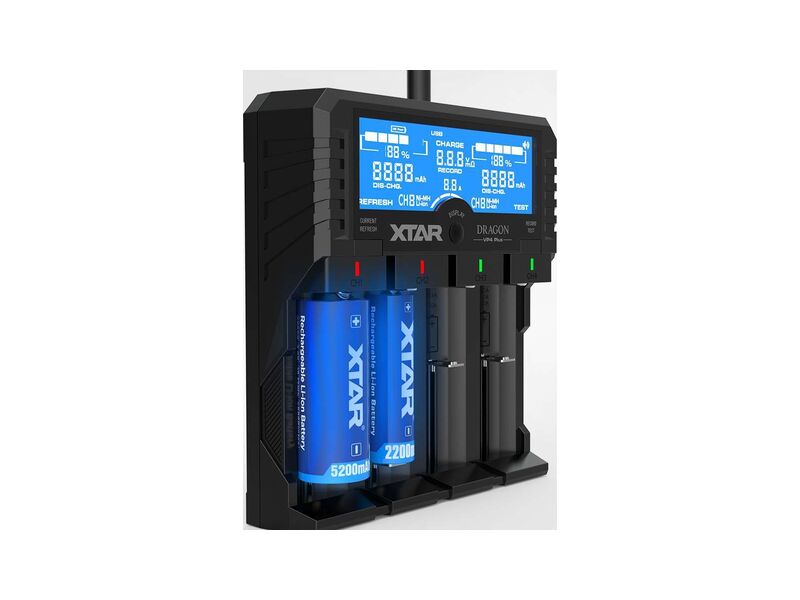
Xtar Dragon VP4 Plus Charger
See price and availability (7)
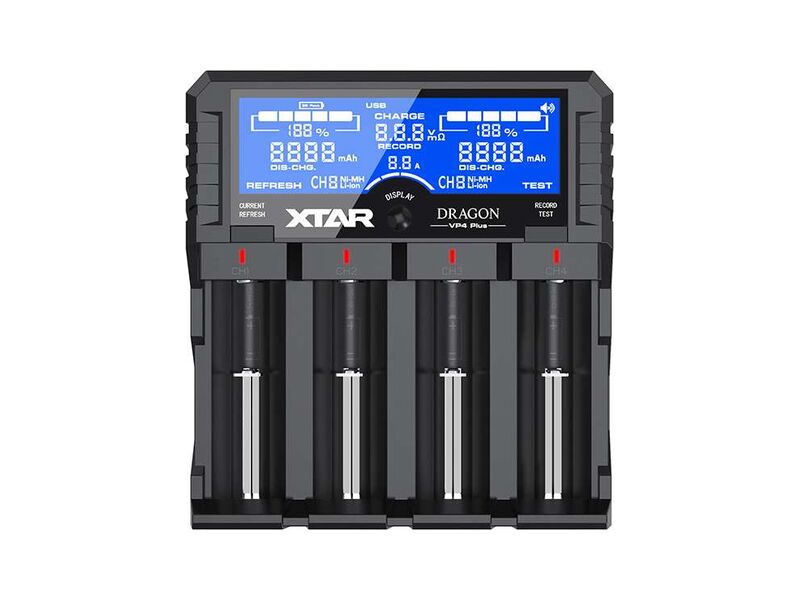
The battery doctor for enthusiasts: the Xtar Dragon VP4 Plus charges, analyzes and revives your Li-ion and NiMH cells with its external test probes.
- Bays: 4 independent, display by channel pair
- REFRESH mode: Anti NiMH memory effect via discharge/charge
- Diagnostics: Voltage, resistance probes and capacity test
- Compatibility: Li-ion 10440-32650, NiMH AAAA-D, 11.1V/3S packs
- Battery doctor: diagnostics, REFRESH, USB power bank
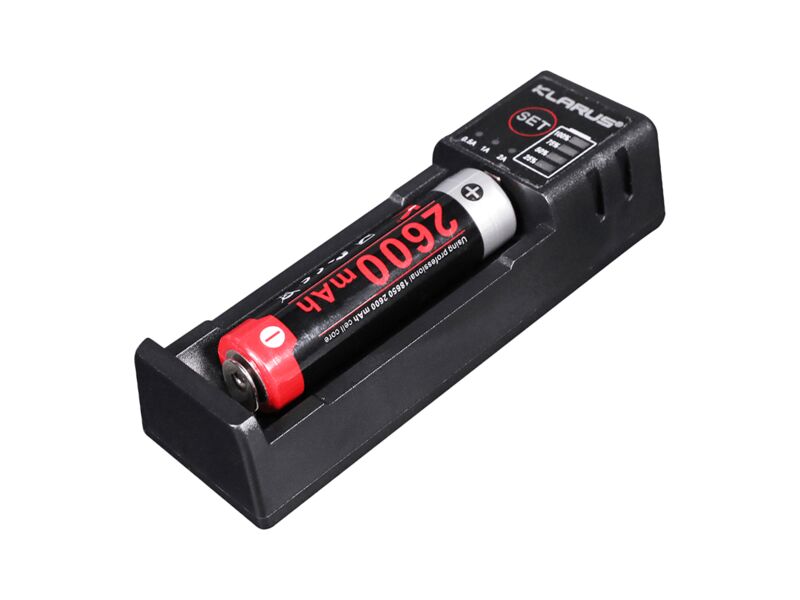
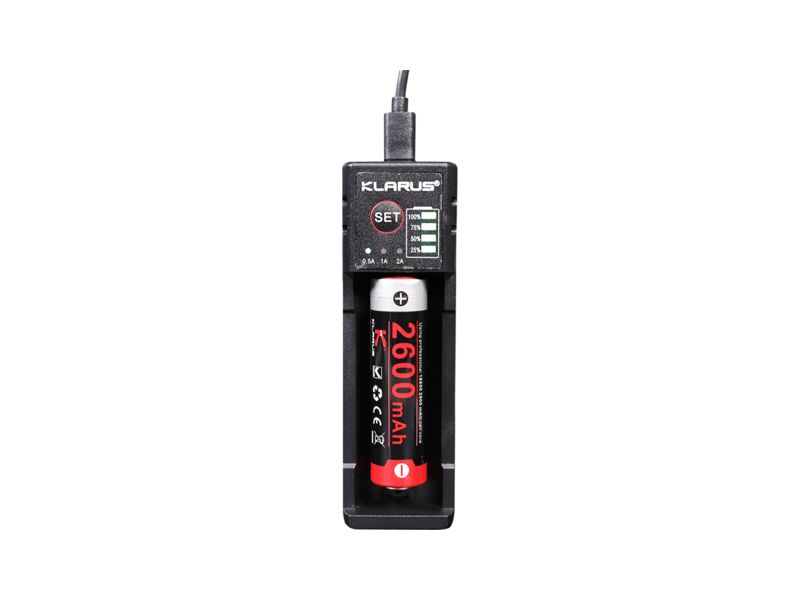
Klarus K1 Charger
See price and availability (6)
The Klarus K1 charges your Li-ion cells and NiMH or NiCd batteries over USB from a single bay, with a clear LED indicator you can trust.
- Compatibility: Li-ion 10440 to 26650 + NiMH/NiCd AA to C
- Charging: USB, 0.5A or 1A selectable
- Indicator: LED charge and end-of-charge light
- Format: Single bay, 4.5 x 1.5 x 1.1 in (115 x 37 x 28 mm), about 1.6 oz (45 g)
- Compact, versatile: Li-ion, LiFePO4 and NiMH on 1 bay
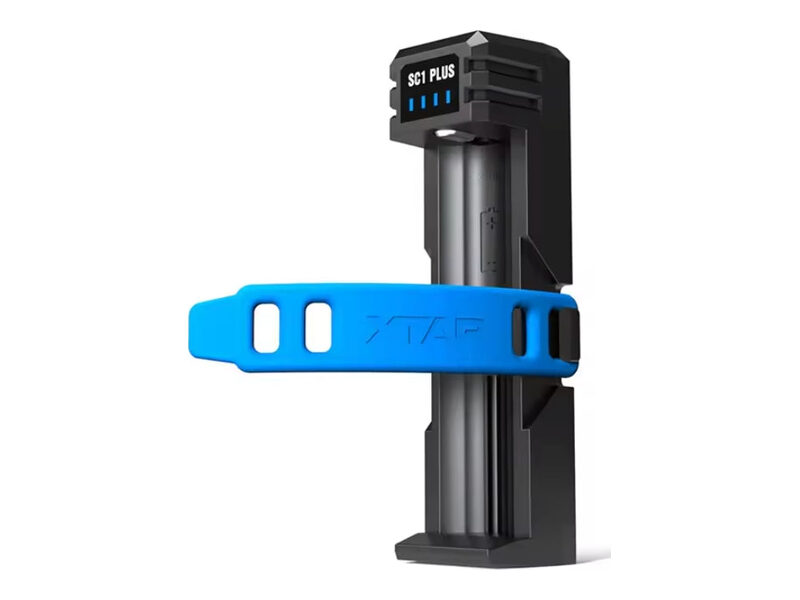
Xtar SC1 Plus Charger
$10.90 (4)
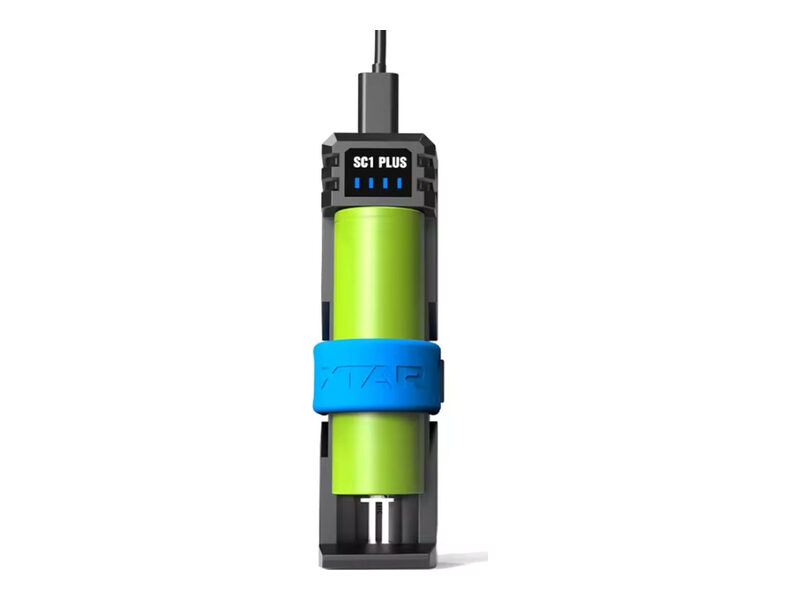
The smallest of the two-in-ones: the Xtar SC1 Plus charges an 18650-to-26800 cell over fast USB-C and turns it into a 10 W pocket power bank, for just 1.7 oz (47 g).
- Slot: 1 slot (18650 to 26800)
- Charging: USB-C QC/PD, up to 3A
- Power bank: 10 W USB output (cell not included)
- Weight: 1.7 oz (47 g)
- Pocket charger + power bank, pass-through
Xtar PB2SL V2 Charger
$23.99 (3)
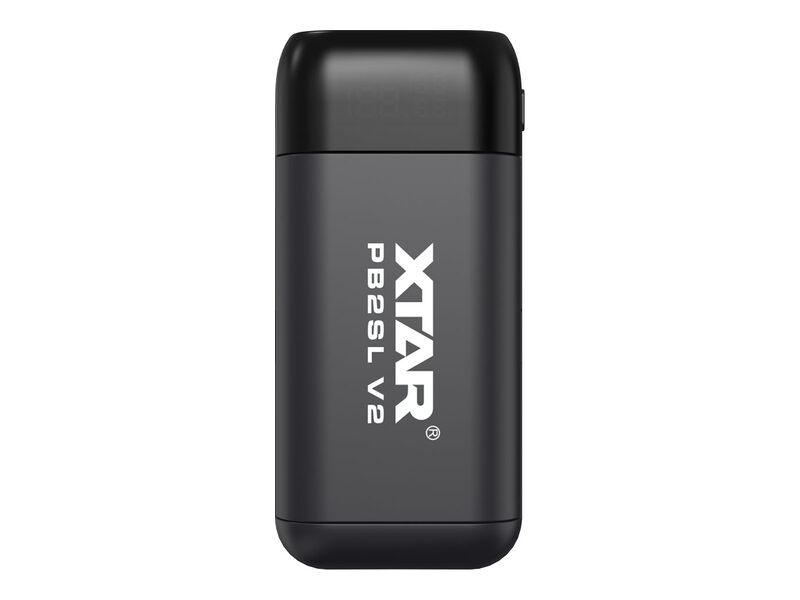
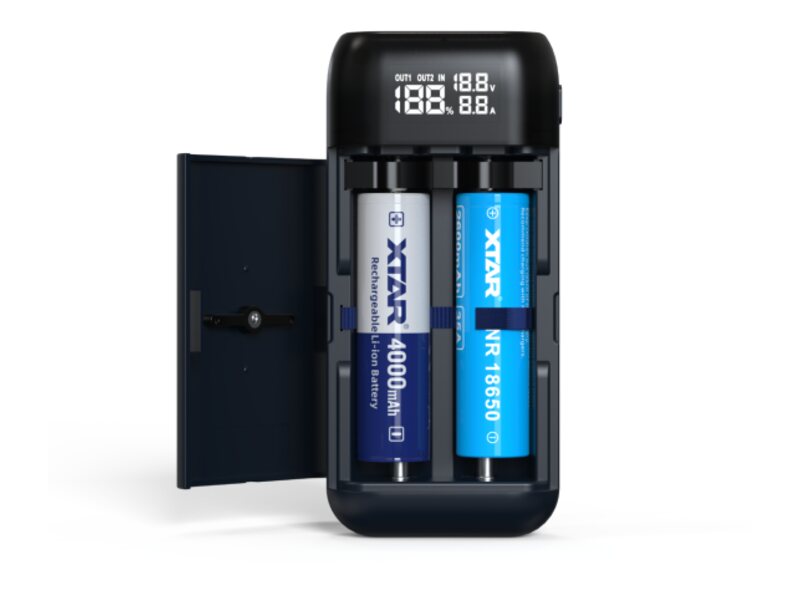
A two-cell charger and a power bank at once: the Xtar PB2SL V2 recharges your 18650/21700 cells and turns them into a power bank up to 22.5 W, screen included.
- Slots: 2 slots (18650/21700)
- Dual function: Charger + power bank (cells not included)
- Charging: USB-C QC/PD, 2A per slot
- Output: USB-C + USB-A up to 22.5 W
- Revives cells from 0V, modular capacity
Related questions
The marking is always printed on the cell body: rechargeable, NiMH or Ni-MH, along with a capacity in mAh. A disposable cell instead reads alkaline, lithium or zinc-carbon, with no capacity given. Voltage helps too: a NiMH rechargeable shows 1.2 V against 1.5 V for an alkaline.
No, unless they explicitly say rechargeable. A standard alkaline placed in a charger heats up, swells and may leak or burst, because its chemistry is not designed to reverse the reaction. Only the rare RAM alkalines, sold with their own dedicated charger, are an exception.
Three signs are conclusive: the charger reports a fault or refuses to start the cycle, the cell heats abnormally during charging, or it drains in a few days without being used. An analysing charger measures real capacity: below 70 per cent of the nominal figure, the cell has reached the end of its life.
A standard NiMH charger handles AA, AAA, C and D formats at 1.2 V. Lithium cells such as 18650, 21700 or 14500 run at 3.6 to 3.7 V and require a lithium charger, never a NiMH one. Universal models detect the chemistry automatically, which avoids the most dangerous mistake in this field.
The numbers give the dimensions: 18 mm diameter by 65 mm long, against 21 by 70. The 21700 stores 4,000 to 5,000 mAh against 2,500 to 3,500 for an 18650, and delivers more current. Always check that your device accepts the greater length before switching format.
No, that reflex is inherited from old NiCd cells and their memory effect. Modern NiMH and lithium cells do not suffer from it, and deep discharges actually wear them out faster. Recharge when you need to, and simply avoid leaving a cell at zero for weeks.