Ansmann Powerline 5 Pro: Our Full Review

Adjustable charge current from 200 to 1800 mA, four programs including a genuine capacity test, and a hidden USB port on the back for charging a phone: the Powerline 5 Pro does almost everything, except display its own readings clearly on a screen that stays genuinely too small to read with ease.

Our rating
4.4/5
Safety and protections: 4.5 out of 5 (weighting 20%)Safety4.5Build and endurance: 4.3 out of 5 (weighting 15%)Build4.3Format and chemistry compatibility: 4.4 out of 5 (weighting 25%)Compatibility4.4Charging precision: 4.7 out of 5 (weighting 25%)Precision4.7Display and control: 3.8 out of 5 (weighting 15%)Display3.8

How is this rating calculated?

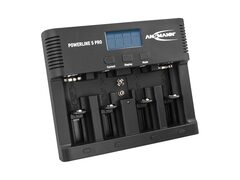
Ansmann Powerline 5 Pro battery charger with LCD screen

The essentials

The Powerline 5 Pro stands out for a range of functions that few battery chargers offer at this price point. The charge current is adjustable from 200 to 1800 mA depending on the format, each slot is controlled individually, and the four programs (charge, discharge then charge, capacity test, refresh) work exactly as advertised, with, for example, capacity readings consistent with the manufacturer's data for the cells tested. It covers the AAA, AA, C and D formats plus a 9V block, a versatility that is rare for a NiMH/NiCd charger, and even hides a USB port on the back for charging a mobile device. The main reservation concerns its LCD screen: it does display precise data per slot (voltage, current, charging time), but its small size makes it hard to read without good eyesight or proper lighting, a recurring weak point. Standard protections (reverse polarity, short circuit, overcharge) are present, and no notable overheating issue comes up in the available usage feedback. Reliability is generally solid over several years, punctuated by rare isolated failures (one slot, one power adapter) covered under the stated 3 year warranty. For anyone with a varied stock of rechargeable batteries who genuinely wants to maintain them rather than simply recharge them, this is one of the most complete options on the market; for occasional use on AA/AAA only, a simpler model is more than enough.

Strengths

  • Charge current adjustable from 200 to 1800 mA, depending on the format and the number of cells being charged
  • Four working programs (charge, discharge, capacity test, refresh), rare at this price point
  • Compatible with AAA, AA, C, D and 9V block formats, a versatility rarely seen on a NiMH/NiCd charger
  • USB port on the back for charging a phone or tablet
  • No notable overheating issues, backed by a 3 year manufacturer warranty

Limitations

  • Real LCD screen, but small, and genuinely hard to read without good eyesight or proper lighting
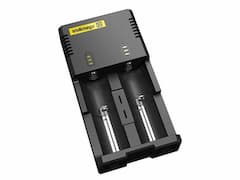
  • Limited to NiMH and NiCd chemistries, no Li-ion compatibility unlike a versatile charger such as the Nitecore i2
  • Noticeably pricier than an entry-level charger with no advanced functions
  • Bulkier and heavier than a simple charger, due to the number of slots and the screen
  • A small number of isolated failures (one dead slot, one power adapter), covered under warranty
Ansmann Powerline 5 Pro charger: see the full details and price →

The maintenance station for anyone serious about their batteries

Photographers, families with a large stock of AA and AAA cells, and DIYers using C or D batteries: the Powerline 5 Pro is aimed at anyone who wants not just to recharge NiMH and NiCd batteries, but also to test them, maintain them and extend their useful life.

5
Slots (4 round + 1 9V block)
4
Charging programs
3 years
Manufacturer warranty

AAA to D and a 9V block: rare versatility for a NiMH charger

The Powerline 5 Pro accepts the AAA, AA, C and D formats (up to four at once, mixing sizes) as well as a 9V block in a dedicated slot. This coverage of the C and D formats sets the unit apart from most consumer battery chargers, which are usually limited to AA and AAA only. The limit to bear in mind is chemical rather than dimensional: the unit only charges NiMH and NiCd, with no Li-ion or IMR compatibility, unlike a versatile charger such as the Nitecore i2, which can cover both families.

Adjustable current and programs that genuinely work

The charge current adjusts from 200 to 1800 mA, with levels that depend on how many cells are being charged at once (up to 1800 mA across two slots, less if all four are in use). Each slot is controlled individually, both for the mode and for the current. The four programs, standard charge, discharge then charge, capacity test and refresh, are not just marketing claims: the test program returns capacity readings consistent with the manufacturer's data for the cells tested, and the refresh mode can revive batteries weakened by several full discharge and recharge cycles. This is one of the most complete function sets available on a round-cell charger.

A full LCD display, held back by its small screen

The backlit LCD screen shows, for each slot, the voltage, the charge or discharge current, the elapsed time and the status (charging, full, faulty). That is a genuine wealth of information, well beyond a simple LED indicator. The weak point lies in the size of this screen, which is genuinely small and hard to read from an oblique angle or without good lighting, to the point that a magnifying glass or reading glasses can be useful for reading the figures with confidence. Another detail missing from the product's usual presentation: a USB port sits on the back of the unit and can charge a phone or tablet in addition to charging batteries.

Standard protections, with no overheating issues

The unit includes protection against reverse polarity, short circuits and overcharging, with an automatic cut-off at the end of the cycle. Unlike other battery chargers on the market, no overheating or unusual heat build-up comes up in the available usage feedback for this model, a reassuring point for a device that may end up left charging for several hours without continuous supervision.

Generally solid reliability, with a few isolated failures

The brand has an established reputation in the rechargeable battery world, and the Powerline 5 Pro benefits from a high rate of positive feedback across a large volume of sales. Several years of fault-free use are common. Two types of isolated failure do exist, however: on one unit, a charging slot stopped working after several months of use and was handled quickly and without argument by after-sales support, and on another unit, a power adapter failed after a little under two years. Both cases remain isolated against the broader volume of largely positive feedback, but are worth knowing about. The manufacturer's 3 year warranty covers this type of incident.

Up against the other battery chargers in the selection

Priced at around $70-80, here's how this charger compares with other popular battery chargers.

Battery charger comparison (observed prices, for guidance only)
CriterionAnsmann Powerline 5 ProNitecore i2Panasonic Eneloop BQ-CC55Varta LCD Smart Charger+
FormatsAAA/AA/C/D/9VLi-ion + NiMH/NiCd, AA to DAA/AAAAA/AAA
LCD screenYes (small)No (LED)No (4 LEDs)Yes
Adjustable currentYes, 200 to 1800 mANoNoNo
Advanced functionsDischarge, test, refreshNoneNoNo
Observed price$70-80≈ $22≈ $43≈ $47

The Nitecore i2 costs around a third of the price and wins on Li-ion compatibility, but has no maintenance or adjustment functions at all. The Eneloop BQ-CC55 and Varta LCD Smart Charger+ are limited to AA/AAA formats and do not match the functional range of the Powerline 5 Pro. For anyone who genuinely wants to test, maintain and extend the life of a varied stock of batteries, the Powerline 5 Pro remains the benchmark in this selection.
The rating in detail

Our rating
4.4/5
Actual charging current not measured
Battery compatibility not measured
Safety and protections 4.5
Build and endurance 4.3
Cables and connectors not measured
Actually delivered power not measured
Multi-port power sharing not measured
Protocol compatibility not measured
Size and technology not measured
Format and chemistry compatibility 4.4
Charging precision 4.7
Display and control 3.8
Ansmann Powerline 5 Pro charger: see the full details and price →

The product and its alternatives

Ansmann Powerline 5 Pro charger

Ansmann Powerline 5 Pro charger

See price (17)

The charging and reconditioning station for enthusiasts: all formats (AA to D, 9V), LCD screen and test, discharge and refresh programs to maintain your batteries.

View product
Nitecore IntelliCharger i2 Charger

Nitecore IntelliCharger i2 Charger

See price (18)

A rugged, versatile charger that charges two cells at once, even of different types, from 18650 Li-ion to AA NiMH, with automatic chemistry detection.

View product
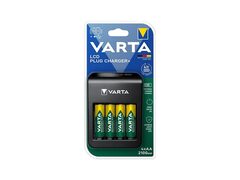
Varta LCD Smart Charger+

Varta LCD Smart Charger+

$43.72 (28)

Clear LCD screen, handy USB power and 4 AA cells included: the good all-round compromise for the home.

View product

Frequently asked questions

No, the unit is designed exclusively for NiMH and NiCd rechargeable batteries in the AAA, AA, C, D and 9V formats. For Li-ion compatibility, a charger such as the Nitecore i2 is needed.

It displays genuine, precise data per slot, but its small size makes it hard to read without good eyesight or proper lighting. This is not a defect that prevents normal use, but it is worth knowing about.

Yes, it returns capacity readings consistent with the manufacturer's data for the cells tested, a useful function for identifying tired batteries in a varied stock.

Yes, a 12V cigarette lighter adapter is supplied in addition to the standard power supply.

It can charge a phone or tablet alongside the battery charging, a handy function in a pinch, even though it is absent from the product's usual presentation.