Testers, cables & accessories

Battery testers, quality cables and adapters: the small accessories that make a daily difference with your cells and batteries.

Around cells and batteries revolves a whole set of small accessories that, well chosen, change the everyday experience. A battery tester saves you from throwing away good cells or being caught out at the wrong moment. A quality charging cable, in the right format and correctly sized, guarantees a fast and reliable charge, where a poor cable holds everything back. An adapter or a voltage converter, finally, gets you out of trouble when you need to switch from one connector or voltage to another.
We have gathered here our selection of these essential accessories. For chargers (mains, USB, battery or vehicle), head to our dedicated Chargers section. · 9 products

I - Battery testers

You can have the best batteries in the world, they are useless if they are flat. It is not always easy to know a battery's level: that is where the battery tester comes in. This simple device shows you at a glance the charge level of your batteries, so you never throw away a good one again. Here is our selection.
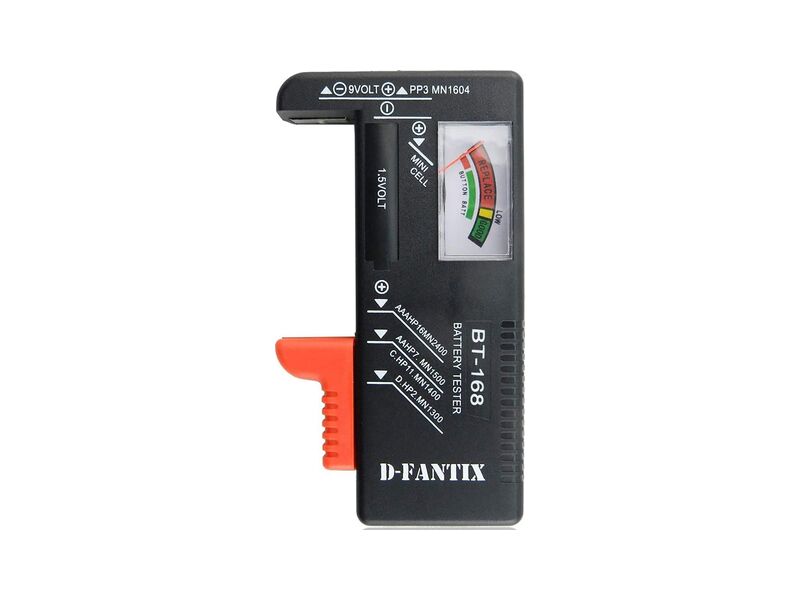
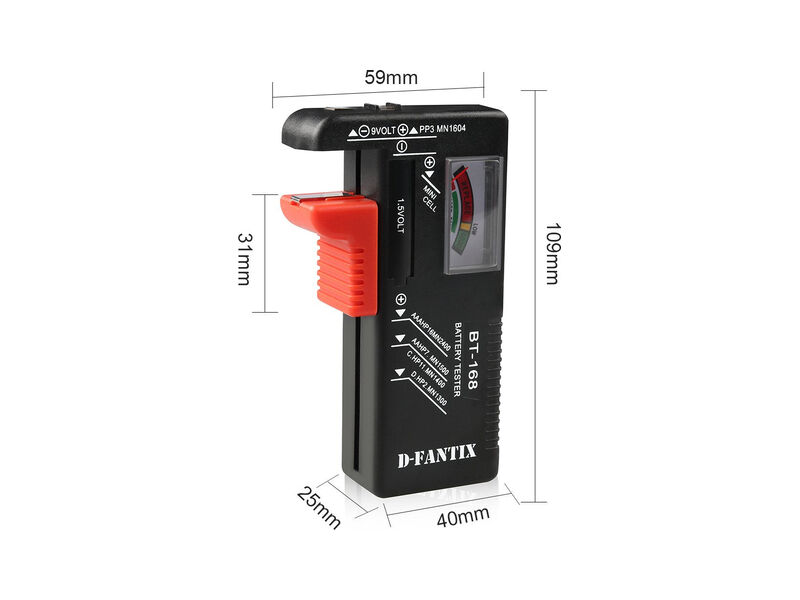
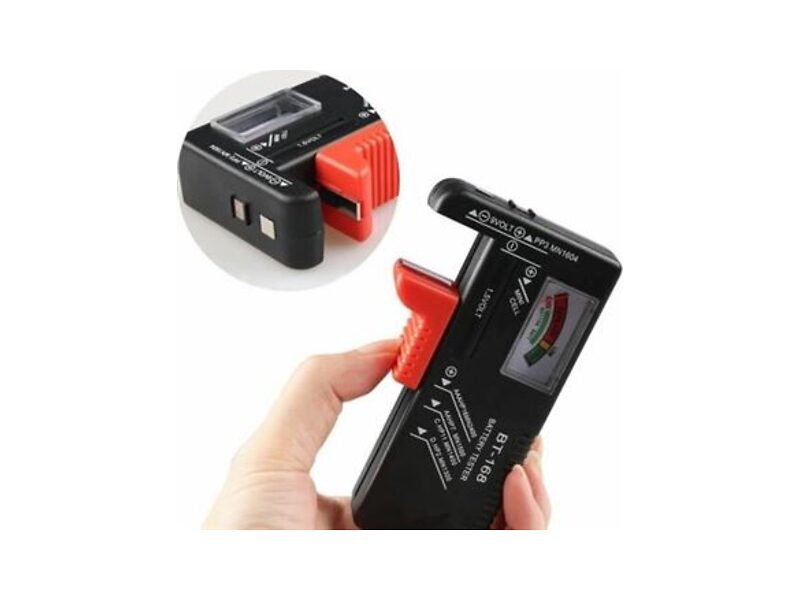
D-FantiX BT-168 battery tester

See price and availability (75)

The classic needle-and-dial battery tester, self-powered and dead simple: one glance at the color-coded scale tells you if a battery is good, low, or done.

  • Formats: AA/AAA/C/D/9V and button cells
  • Display: Analog needle (color-coded scale)
  • Power: No battery required
  • Use: Household and button batteries
  • Huge review base, self-powered, budget price
The D-FantiX BT-168 is a compact, self-powered battery tester with no internal battery of its own; it draws just enough current from the cell being tested to move its needle. It covers the full range of household batteries: AA, AAA, C, D, 9V and small button cells. The color-coded dial makes the reading instant, green for good, yellow for low, red for replace or recharge. With one of the largest review counts of any tester on Amazon, it is a proven, no-frills way to stop guessing which batteries are still worth keeping.
This is about as no-frills as a battery tester gets, and that simplicity is exactly why it works so well. Drop in a battery, and the needle swings to green, yellow or red almost instantly, no buttons, no settings, nothing to charge or replace. We keep one in a kitchen drawer specifically to sort through the pile of AA and AAA cells that inevitably accumulates from swapped-out remotes and toys, and it makes short work of separating the ones worth keeping from the ones headed to recycling. It handles button cells too, which covers most of what a typical household needs to check, though it is a generalist rather than a specialist at that particular job. Build quality is basic, matching the price: a couple of long-term reviewers mention the internal contact wires can wear out after heavy use, though ours has held up fine so far. At under eight dollars and with tens of thousands of buyers behind it, it is hard to find a more proven, lower-risk way to stop tossing out batteries that still have life left in them.
View product page

Tenergy T-333 battery tester

See price and availability (37)

The LCD-screen tester from a trusted battery brand: it checks everything from AA cells to CR123A lithium and button batteries, shown clearly on screen.

  • Formats: AA/AAA/C/D/9V, CR123A and button cells
  • Display: LCD screen
  • Power: 1x AAA battery (included)
  • Brand: Tenergy, battery and charger specialist
  • Widest format coverage, clear LCD screen
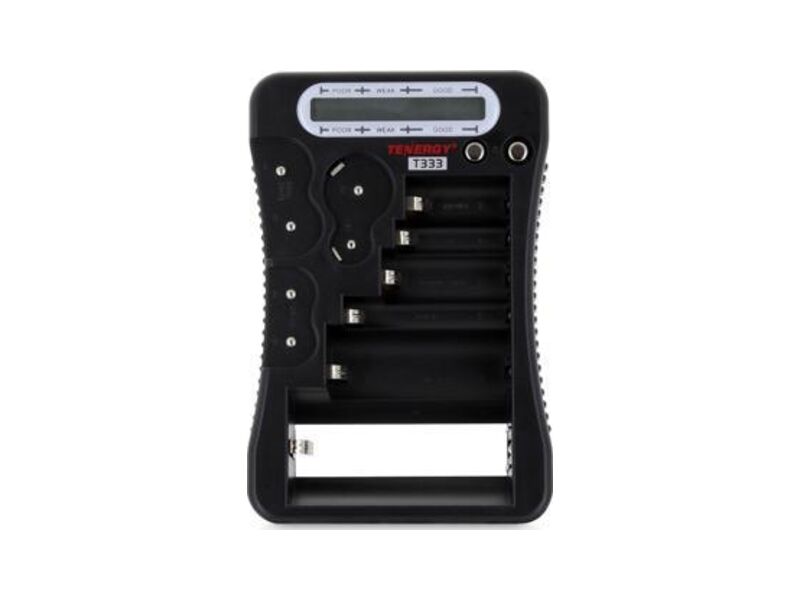
The Tenergy T-333 is an LCD-screen battery checker from a brand best known for its own rechargeable cells and chargers. It tests an unusually wide range of formats in one device: AA, AAA, C, D, 9V, CR123A, CR2, CRV3, 2CR5, CR-P2 and various button cells. It runs on a single AAA battery, included in the box, so it does not draw down the cell being tested. Compact and Amazon's Choice with thousands of ratings behind it, it is a handy accessory to check your batteries before tossing them or swapping in fresh ones.
What sold us on this tester over cheaper needle-style options is the sheer range of batteries it covers, right down to the oddball CR123A cells our home security sensors use, which most basic testers do not handle. The LCD screen is a real step up in usability too: instead of interpreting where a needle lands on a scale, you get a direct reading, easier to trust at a glance and easier to compare between two batteries. It runs off its own included AAA battery rather than drawing from the cell being tested, which reviewers and our own use both suggest gives a steadier result than a self-powered tester. We reach for it before a games night to make sure every controller battery is good, and it has saved more than one abandoned match. One thing to know going in: unlike some simpler testers, this one needs that internal AAA battery to function, though a single AAA lasts a very long time given how little current it draws. For a mixed drawer of household, camera and specialty batteries, it is the more capable pick.
View product page

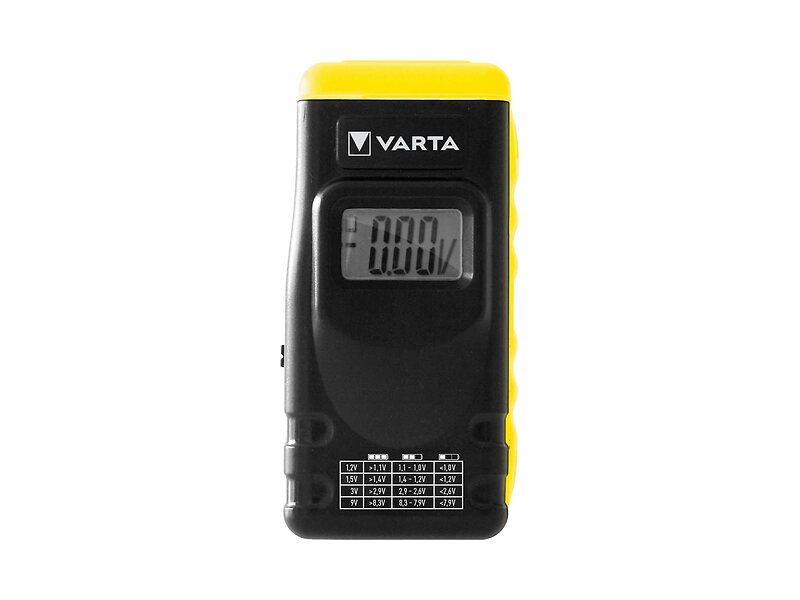
Varta LCD battery tester

$15.46 (27)

The Varta-branded tester with LCD screen: it checks all common battery formats and clearly shows their state. Handy, readable and from a recognised brand.

  • Formats: AA/AAA/C/D, 9V, buttons
  • Display: LCD screen
  • Power: No battery required
  • Brand: Varta, energy specialist
  • Clear LCD screen, all common formats
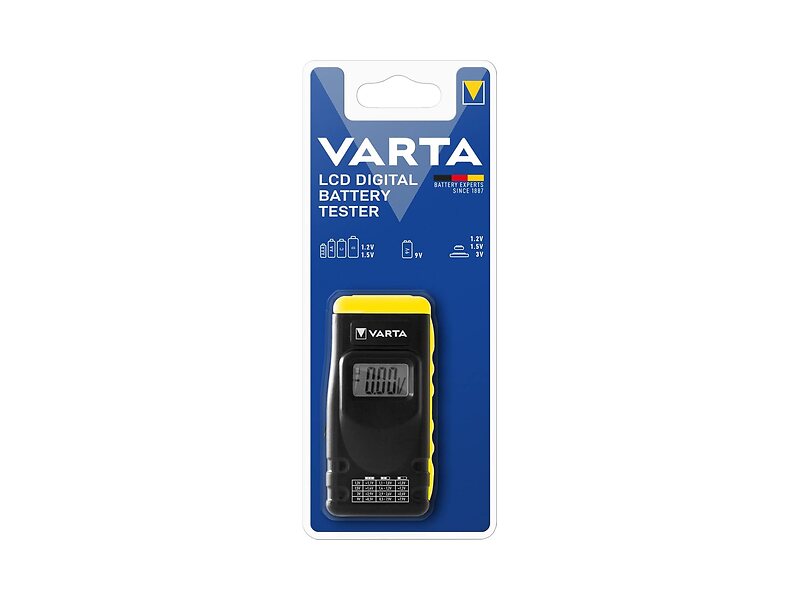
The Varta battery tester is an LCD-screen checker from one of the big energy brands. It tests the most common formats (AA, AAA, C, D, 9V, 1.5V cells) as well as button cells, and shows the state of charge on its screen, more readable than a simple needle. It needs no battery to work. Compact and easy to store, it is a handy accessory to check your batteries before binning or replacing them, and avoid nasty surprises with a controller or a remote.
The LCD screen is the real plus over a needle tester: you read the state at a glance, without interpreting a needle's position. It handles common formats and button cells well, and the Varta name is reassuring on longevity. We use it regularly to check controller batteries before a games night, no more interrupted matches. We do see one limitation: on borderline cells, the ones hovering between usable and spent, the reading can be a little optimistic. It is not a lab instrument, but for readable, practical home use at a contained price, it does the job very well.
View product page

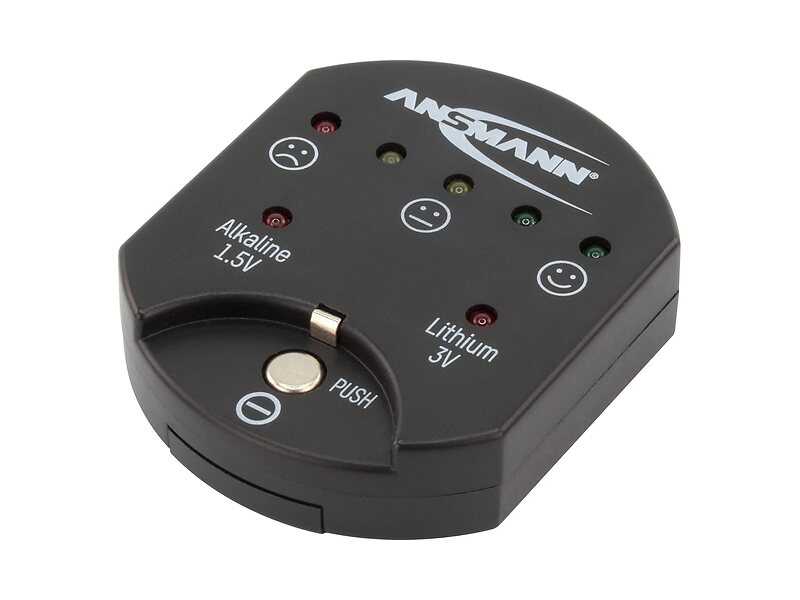
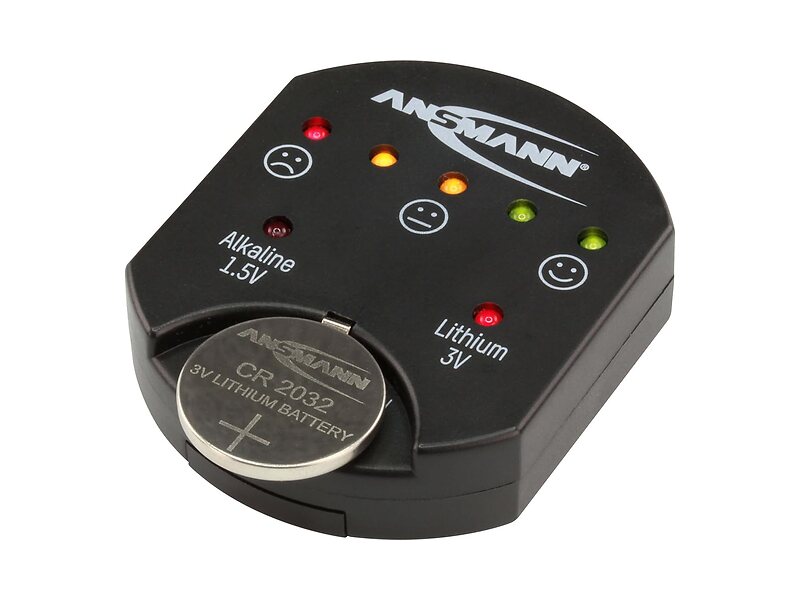
Ansmann button battery tester

$13.39 (26)

The specialised tester for button cells: alkaline and lithium (CR2032, LR44...). LEDs show the state of charge at a glance, with no battery required.

  • Formats: Button cells (alkaline/lithium)
  • Display: LEDs
  • Power: No battery required
  • Use: CR2032, CR2025, LR44...
  • Button-cell focus, instant reading
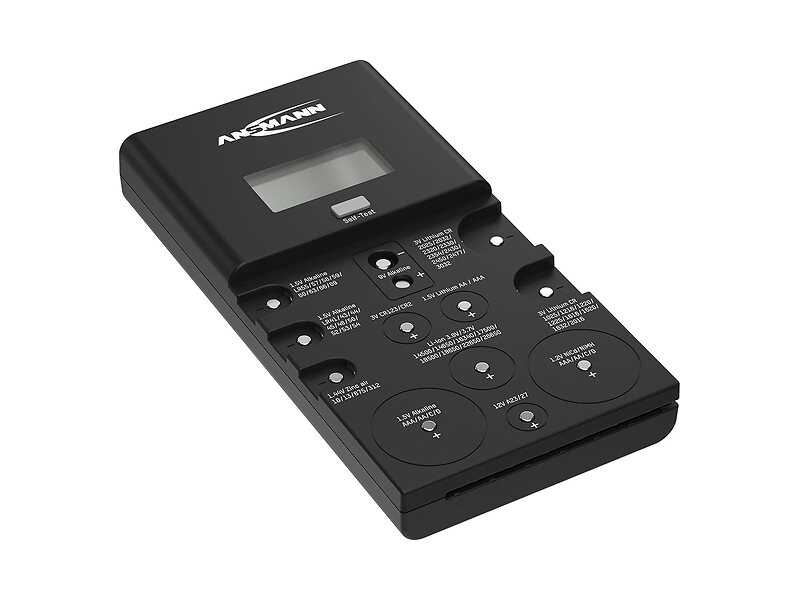
The Ansmann button-cell tester is dedicated to the small cells that a universal tester often handles poorly: alkaline and lithium button cells (CR2032, CR2025, CR2016, LR44 and others). You place the cell on the contact, and LEDs immediately show whether it is full, low or empty. No battery is needed to operate it. Compact and from an energy specialist brand, it is perfect for checking the cells of your remotes, car keys, scales, thermometers, toys and other button-cell devices.
It is the accessory you never think of buying until the day a car key or a scale dies. Universal testers handle button cells poorly, here it is their speciality: you place the CR2032, an LED lights up, and you know instantly. We rediscovered a stock of button cells of unknown state, and sorting took two minutes. The Ansmann brand is a mark of seriousness. Of course, it is a niche product: if you never handle button cells, a universal tester will do. But as soon as you have several CR2032/LR44 devices at home, it renders proud service and avoids buying new cells needlessly.
View product page

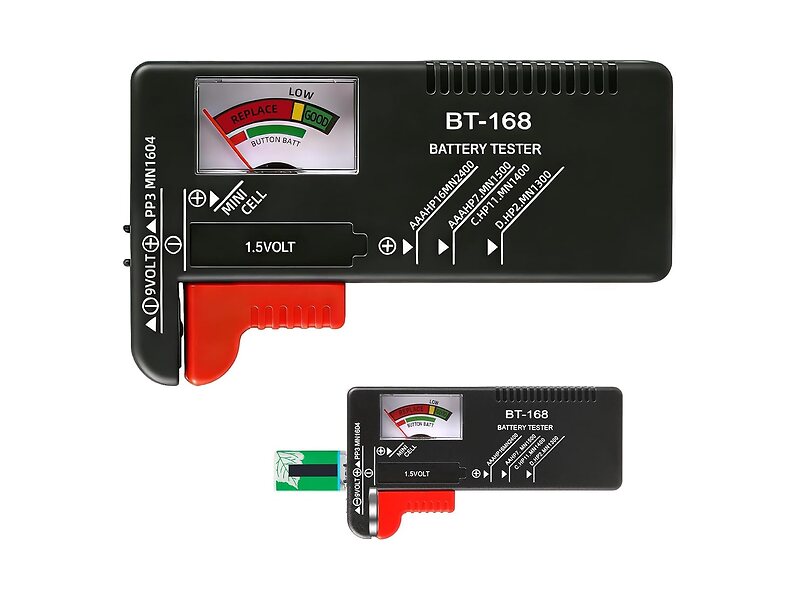
BT-168 universal battery tester

See price and availability (21)

The classic, unbeatable battery tester: a needle, a colour scale, and in a second you know if a battery is good, low or to be binned. No battery required.

  • Formats: AA/AAA/C/D, 9V, buttons
  • Display: Needle, colour scale
  • Power: No battery required
  • Measure: Under load
  • Simple, universal, no battery, very affordable
The BT-168 is the reference universal battery tester: a compact unit with a needle and a colour scale (green = good, yellow = low, red = replace). It tests under load all common formats (AA, AAA, C, D, 9V, 1.5V cells) as well as button cells, thanks to its sliding contacts. It needs no battery to work: the tested cell powers it. Simple, reliable and very affordable, it avoids throwing away good batteries and quickly sorts a full drawer.
Hard to do simpler or more effective for the price. You slide the cell between the contacts, the needle jumps, and the colour tells you everything: green you keep, red to the bin. We used it to clear a drawer full of batteries of unknown age, and in five minutes everything was sorted, several cells thought dead were actually still good. That it needs no battery to work is a real plus, it is always ready. It is obviously not a precision instrument: no numeric value, just a trend, and you have to hold contact well for button cells. But as a home tester, at this price, it is the smart buy par excellence.
View product page

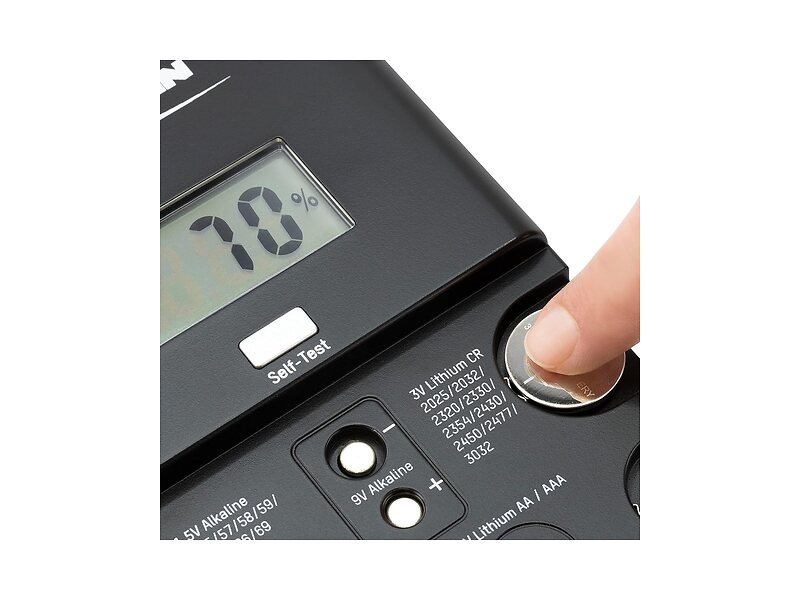
Ansmann Energy Check LCD

See price and availability (7)

Ansmann's premium versatile tester: from button cell to car battery, with a backlit LCD screen and under-load measurement. For those who want the serious option.

  • Formats: AA to D, 9V, buttons + car batteries
  • Display: Backlit LCD
  • Measure: State of charge under load
  • Use: Versatile, semi-pro
  • Versatile LCD tester, from button cell to car battery
The Ansmann Energy Check LCD is a versatile, premium battery tester. It covers a very wide range: round cells AA, AAA, C, D, 9V blocks, button cells, but also vehicle batteries (car, motorcycle) whose state it checks. Its backlit LCD screen clearly shows the charge level, measured under load for a more reliable result than a simple voltage check. Rugged and from a specialist brand, it is aimed at demanding users, photographers, DIYers or enthusiasts who want a single device able to test everything at home and in the garage.
It is the tester you keep for life. Where a model costing a few pounds gives just a trend, the Energy Check LCD gives a clear, reliable reading, under load, for everything: from the AAA cells of remotes to the 12V motorcycle battery at the back of the garage. The backlit screen reads even in dim light, and the Ansmann build inspires lasting confidence. We adopted it to diagnose both a pack of rechargeables and a slightly weak car battery before winter. The only real brake is the price: it is noticeably dearer than a basic tester, and for simple home battery sorting, a BT-168 at $9.48 will do. But for those who want a single serious, versatile tool, the investment is justified.
View product page

II - Cables & adapters

It is great to have the best power bank or the fastest charger in the world, but without a good cable between them and your device, everything is held back. The quality and type of cable are essential for fast, reliable charging. We offer here our selection of cables, as well as adapters and converters to switch from one connector or voltage to another.
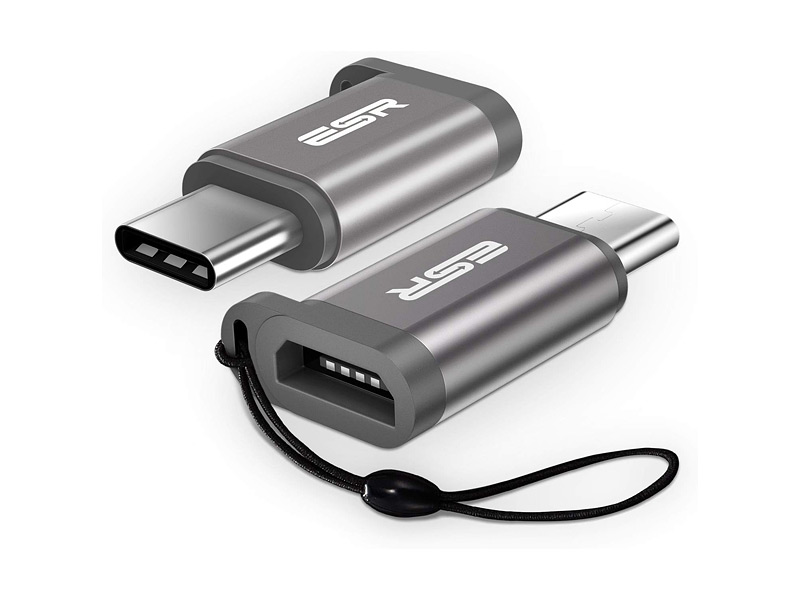
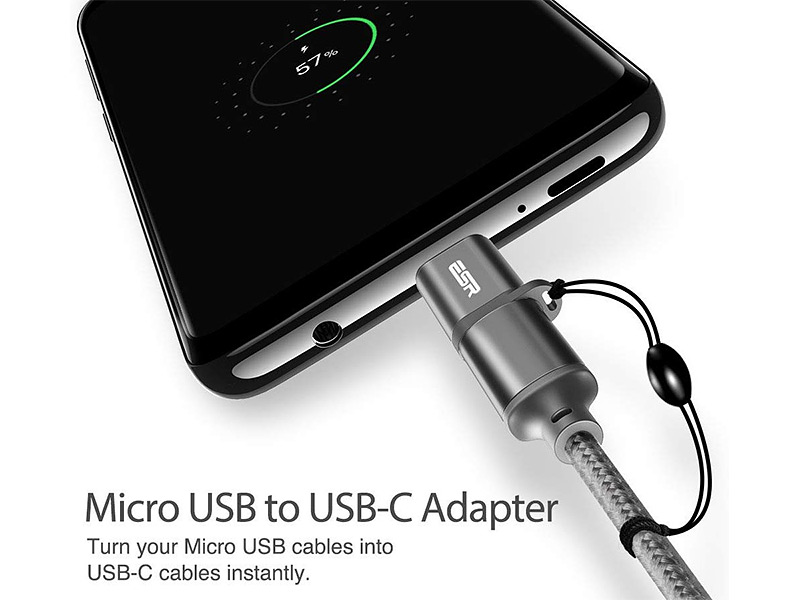
ESR OTG Connector Adapter

$11.90 $9.88 (6)

This small adapter lets you power a USB-C smartphone using any cable that ends in a micro-USB plug.

  • Type: Micro-USB to USB-C
  • Speed: Up to 480Mbps
  • Function: OTG
  • Extremely handy, reliable
What's more annoying than having a power bank, a cable, and an empty smartphone, but no way to recharge it because it needs a USB-C plug while you only have a cable ending in a micro USB? The simplest solution is to get a micro USB to USB-C adapter like this one from ESR, with its handy elastic band to attach it to your cable so you never lose it. This adapter is also OTG (On the Go) compatible, for data transfer speeds of up to 480Mbps.
View product page

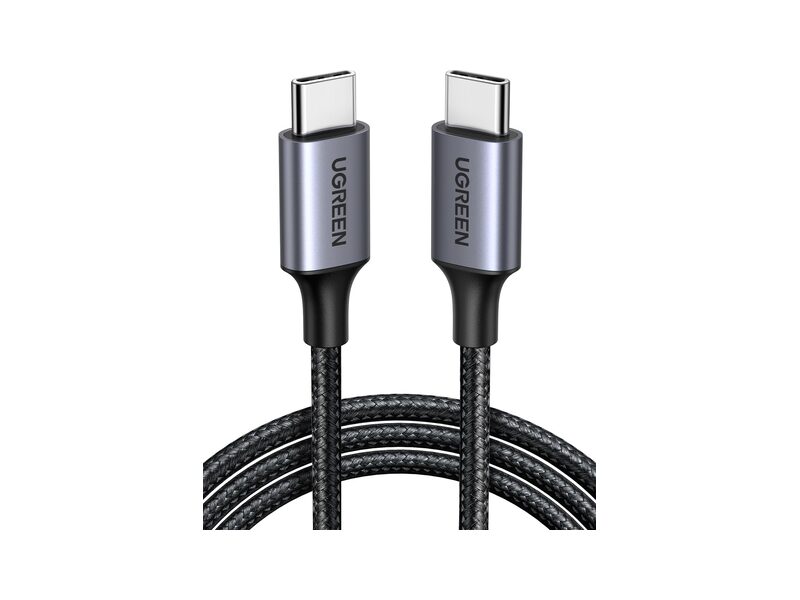
Ugreen USB-C Cable 60W (x2)

See price and availability (40)

A rugged braided-nylon USB-C to USB-C cable, sold as a 2-pack: 60W Power Delivery fast charging and data transfer, for smartphones, tablets and laptops.

  • Type: USB-C to USB-C
  • Power: 60W max (Power Delivery, 20V/3A)
  • Jacket: Reinforced braided nylon (6.6 ft, 2-pack)
  • 60W fast charging and durability, two in the box
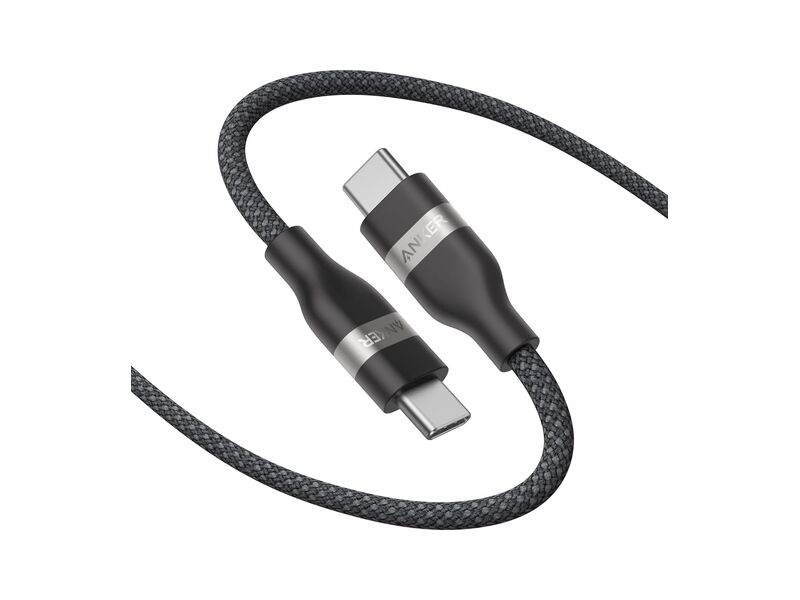
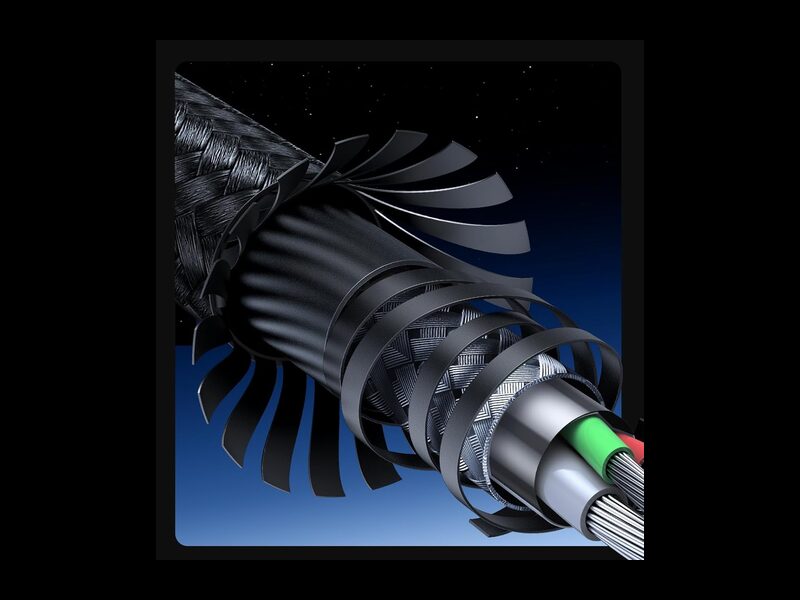
The Ugreen 60W USB-C to USB-C cable is a versatile, durable cord for the USB-C ecosystem, sold here as a 2-pack at 6.6 feet each. Thanks to Power Delivery, it delivers up to 60W, enough to charge a smartphone or tablet quickly, take a MacBook Air from empty to 78% in about an hour, or top off a Galaxy phone from 0 to 60% in 30 minutes. Its braided nylon jacket and laser-welded connectors survive past 10,000 bend and plug cycles, and it also handles data transfer. Two in the pack means a spare is always on hand.
You do not expect miracles from a USB-C cable, but you want it to be reliable and to last, and on both counts this pack delivers. The braided nylon jacket is the whole story compared with the flimsy white cables that ship in the box with most phones: it shrugs off coiling, getting stuffed in a bag and daily tugging without fraying at the connector, which is exactly where cheap cables tend to fail first. The 60W fast charging handles a phone or tablet with ease and is enough to charge a lightweight USB-C laptop too, just not a power-hungry one at full speed. Getting two cables in the box instead of one is a small thing that makes a real difference day to day: one stays at the desk, one lives in the bag, and losing or wearing out a single cable no longer means an emergency trip to the store. At this price, backed by Ugreen's track record and sold directly through their own Amazon storefront, it is hard to find a better everyday USB-C cable for the money.
View product page

Anker USB-C Cable 240W

See price and availability (30)

The cable that no longer throttles charging: Anker Prime USB-C 240W delivers full power to your laptop and survives -40 to 176 degrees F without flinching.

  • Power: Up to 240W
  • Type: USB-C to USB-C
  • Length: 6 ft
  • Sheath: Upcycled braided nylon, 300,000-bend rated
  • 240W with no throttling, extreme-temperature rated
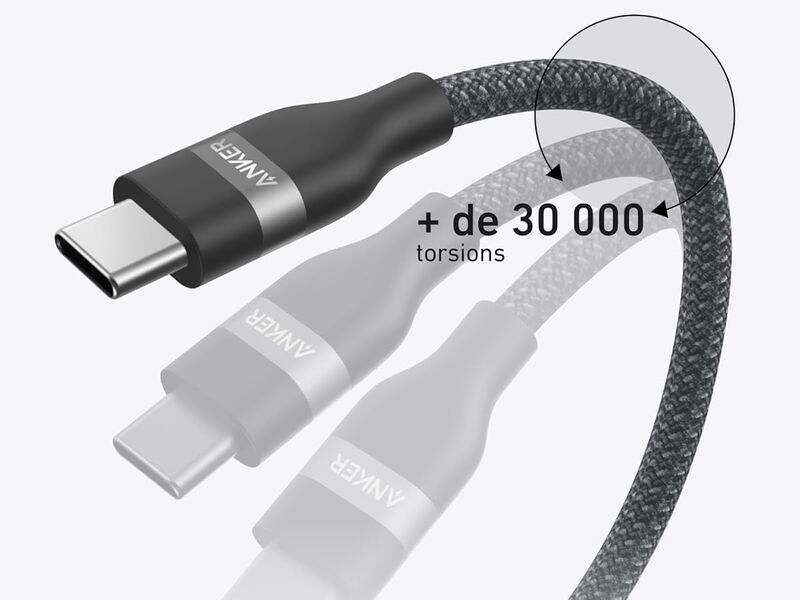
The Anker Prime USB-C 240W cable is built for power-hungry devices: it supports up to 240W of charging, enough to power a 16-inch MacBook Pro, a power station, a smartphone or a tablet at full speed without ever throttling. Its upcycled braided nylon sheath is rated for over 300,000 bends and works in temperatures from -40 to 176 degrees Fahrenheit. At a practical 6-foot length, it combines fast charging and data transfer, and ships with a cord organizer and Anker's everlasting warranty.
The Anker Prime 240W cable is the kind of accessory you buy once and stop thinking about, which is exactly the point. We have paired it with a MacBook Pro and a couple of USB-C phones, and it charges every one at full rated speed with no bottleneck, something cheaper cables quietly fail to do past basic phone charging. The upcycled braided nylon feels genuinely dense rather than just marketed that way, with a slight memory that keeps it from tangling in a bag while still coiling down small. Anker's 300,000-bend claim is obviously not something we tested to the end, but months of daily coiling have not put a dent in it. The temperature rating from -40 to 176 degrees Fahrenheit is overkill for most people, but reassuring if the cable ever lives in a car or gets left somewhere hot. The one real catch is data speed, capped at 480 Mbps since this is a charging-first cable, so moving large files from an external drive still calls for a separate Thunderbolt or USB4 cable. For a do-it-all charging cable that will outlast the device it powers, this is about as good as it gets.
View product page

III - Related questions

The simplest way is to use a battery tester: you place the cell in it and the device instantly shows its charge level. Some models also test the most common formats (AA, AAA, C, D, 9V, button cells). This way you avoid throwing away good cells or being caught out by a flat one.

Yes, a lot. An undersized or poor-quality cable limits the current and holds back fast charging, even with an excellent charger. Check the connector type (USB-C, Lightning…), the supported power (in W) and, for fast charging and high throughput, the presence of an e-marker chip on high-power USB-C cables.
Further reading on the blog