APC Back-UPS Pro 650VA (BR700G): Our Full Review

An LCD screen cycling through 20-plus status conditions and surge protection covering both coax and Ethernet: the BR700G is the only model in this Back-UPS lineup built for a NAS wired over cable internet.

Our rating
4.0/5
Runtime under real load: 3.8 out of 5 (weighting 30%)Runtime3.8Power and outlet versatility: 4.0 out of 5 (weighting 20%)Power4.0Mains-to-battery switch time: 4.2 out of 5 (weighting 20%)Switch time4.2Control and monitoring software: 4.4 out of 5 (weighting 15%)Control4.4Build and safety: 3.8 out of 5 (weighting 15%)Build3.8

How is this rating calculated?

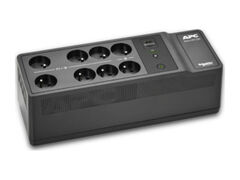
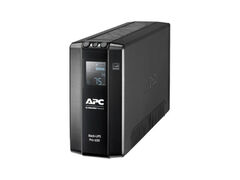
APC Back-UPS Pro BR700G UPS with its LCD screen

The essentials

The Back-UPS Pro (BR700G) stands apart from the rest of this Back-UPS lineup right away, thanks to an LCD front panel cycling through more than 20 status conditions, battery charge, load level, and estimated runtime included. Its line-interactive design uses automatic voltage regulation (AVR) to correct dips and surges across all 6 NEMA outlets without ever drawing on the battery, a real plus on a setup wired to solar panels or an older circuit where voltage can drift. What sets it apart from every other UPS in this comparison is its data-line protection: alongside the now-common protected Ethernet port, it also filters coax lines, a genuine advantage for anyone running a NAS or server over cable internet rather than fiber or DSL. Of the 6 outlets, only 3 are battery-backed, fewer than the entry-level and mid-tier models in the same lineup, though all 6 benefit from surge protection and AVR. Runtime runs from about 39 minutes at a light 100W load down to just a few minutes at full 420W load. The unit's warranty length is not stated on its product listing, unlike its two Back-UPS siblings which both carry a clearly advertised term. For anyone wanting real-time visual monitoring and broader network protection, the BR700G remains the most complete pick in this lineup.

Strengths

  • LCD screen cycling through 20-plus status conditions, unique to this model in the lineup
  • Surge protection covering both coax and Ethernet lines, a real plus for cable-connected gear
  • Automatic voltage regulation (AVR) across all 6 outlets, correcting dips without draining the battery
  • USB monitoring port for PowerChute-style software on a connected computer
  • User-replaceable sealed lead-acid battery

Limitations

  • Only 3 of the 6 outlets are battery-backed, fewer than the entry-level and mid-tier models in the lineup
  • Runtime drops to just a few minutes at full 420W load
  • Warranty length not stated on the product listing, unlike its two Back-UPS siblings
  • Output waveform remains a simulated approximation, not a pure sine wave
  • Higher price than the mid-tier model for fewer battery-backed outlets
APC Back-UPS Pro 650VA: see the full details and price →

The only model in the lineup with a status screen

Compared with the entry-level BE600M1 and the mid-tier BE850G2, the Back-UPS Pro (BR700G) adds a real LCD screen and broader data-line protection, aimed at a NAS or home server that deserves a closer eye and cable-line surge coverage.

700 VA
Apparent power
20+
LCD status conditions
2
Protected line types (coax + Ethernet)

Runtime that favors light loads

APC rates the BR700G at up to roughly 39 minutes of runtime at a light 100W load, dropping to just a few minutes at full 420W load. A lightly loaded NAS or router gets a genuinely useful buffer here, well beyond a simple clean-shutdown window, while a fuller setup drawing closer to the unit's rated capacity gets only enough time to trigger that shutdown.

6 NEMA outlets, only half battery-backed

At 700VA and 420W, the BR700G comfortably covers a 2 to 4-bay NAS, a home server, a router with a satellite dish, or a small workstation. Of its 6 standard NEMA 5-15R outlets, only 3 are battery-backed with surge protection; the other 3 offer surge protection only. That is fewer battery-backed outlets than the entry-level BE600M1 (5 of 7) and the mid-tier BE850G2 (6 of 9), a real tradeoff to weigh against this model's LCD screen and broader network protection.

Line-interactive regulation across every outlet

The BR700G runs a line-interactive topology with automatic voltage regulation (AVR) applied across all 6 outlets, correcting dips and surges directly rather than switching to battery for every minor fluctuation. On a circuit wired to solar panels, or simply an older or unstable line, this preserves battery runtime for real outages rather than spending it on routine voltage noise, a genuine advantage over a simpler standby design.

An LCD screen plus a USB monitoring port

The LCD front panel is the standout feature of this model: it cycles through more than 20 status conditions, including battery charge, load level, and estimated runtime, glanceable without opening any software. A USB port also lets a connected computer run APC's monitoring software for an automatic, graceful shutdown during an extended outage; as with the rest of APC's consumer lineup, that software remains Windows-only.

Broader network protection, an unstated warranty

Alongside a protected Ethernet port, the BR700G also filters coax lines, a genuine plus for anyone running a NAS or server over cable internet, a protection layer neither of its two Back-UPS siblings offers. The sealed lead-acid battery is user-replaceable without tools. One gap worth noting: unlike the BE600M1 and BE850G2 in the same lineup, which both advertise a 3-year warranty, the BR700G's product listing does not state a warranty length.

Against the CyberPower CP685AVRG and the Tripp Lite AVR750U

How does the BR700G stack up against other UPS units built for a NAS or home server?

Technical comparison: APC Back-UPS Pro (BR700G) against its main rivals (observed prices, for guidance only)
CriterionAPC BR700GCyberPower CP685AVRGTripp Lite AVR750UAPC Back-UPS BE650G1
Power700VA / 420W685VA / 390W750VA / 450W650VA / 390W
LCD screenYesNoNoNo
Outlets6 (3 battery-backed)8 (4 battery-backed)12 (6 battery-backed)8 (4 battery-backed)
Network protectionCoax + EthernetNot statedNot statedEthernet only
Observed price$187.46≈ $75≈ $90≈ $95

The BR700G stands out for its LCD screen, missing on all three alternatives, and its coax plus Ethernet protection, a decisive strength for anyone protecting a NAS or home server over cable internet. The CyberPower CP685AVRG and Tripp Lite AVR750U undercut it sharply on price with more battery-backed outlets, and the APC BE650G1 offers a cheaper way to stay within the same brand, but none of the three matches the BR700G's real-time visual monitoring.
The rating in detail

Our rating
4.0/5
Runtime under real load 3.8
Power and outlet versatility 4.0
Mains-to-battery switch time 4.2
Control and monitoring software 4.4
Build and safety 3.8
Measurement accuracy not measured
Format compatibility not measured
Display readability not measured
Build not measured
APC Back-UPS Pro 650VA: see the full details and price →

The product and its alternatives

APC Back-UPS Pro 650VA

APC Back-UPS Pro 650VA

See price (3)

Protecting a NAS wired to your solar setup or a Starlink dish on the road? This APC Back-UPS Pro adds an LCD screen and network surge protection.

View product
APC Back-UPS 500VA

APC Back-UPS 500VA

See price (7)

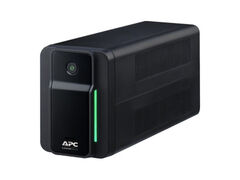
Power blip or surge at the campground? This compact APC UPS keeps a router, a Starlink dish or a NAS protected in a van, on a boat or at home.

View product
APC Back-UPS 850VA

APC Back-UPS 850VA

See price (19)

Power outage hitting your home solar setup? The APC Back-UPS 850VA keeps a NAS or home server running just long enough for a clean, safe shutdown.

View product

Frequently asked questions

It is the only one in this lineup with an LCD screen (battery charge, load, runtime) and the only one protecting both coax and Ethernet lines from surges. It targets a NAS or server setup that benefits from closer monitoring and broader network protection.

Yes, that is a sensible use case: the AVR absorbs small voltage swings from a setup wired to solar panels without draining the battery, and the LCD screen lets you check charge status at a glance.

Yes, all 6 outlets are standard NEMA 5-15R sockets, the same as any US wall outlet, so a router, NAS, or modem plugs straight in without an adapter.

About 39 minutes at a light 100W load, down to just a few minutes at full 420W load. Enough to absorb a brief outage or trigger a clean shutdown of a NAS or server, not to keep working off the mains for long.

It is a tradeoff specific to this model: the BR700G puts its emphasis on the LCD screen and broader coax-plus-Ethernet protection rather than outlet count, with only 3 of its 6 outlets actually battery-backed.