

Watts, Watt-Hours, and Amps: What They Actually Mean
Watt, watt-hour, amp, volt: four terms that get tangled up on every spec sheet. Here is the plain-English breakdown so you can shop for a charger, power bank, or power station with confidence.

News, comparisons, guides, features and reviews: everything to choose and get the most from your batteries, power banks, power stations & solar panels.
Welcome to the Best Batteries blog. For more than ten years, mobile energy has been our job: power banks, portable power stations, solar panels, cells and chargers hold no secrets for our team. This blog is where we share that expertise, not to drown you in technical detail, but to help you make the right choices, with confidence. You will find five main families of articles: News to follow launches and market trends; Comparisons to settle the models, methodology in hand; Guides to answer your practical questions (runtime, safety, charging, maintenance); Insights to understand in depth the technologies and stakes of portable energy; and Reviews, where a single device fills the whole page: what its headline figures are really worth, what it does well and what it does badly. Enjoy the read, and feel free to explore our product pages to go from theory to purchase. · 496 articles
We have been publishing one detailed review per portable power station for months, product by product. This page brings all fifty together for the first time in a single ranking, scored with the same grid for every model. You will find the podium, one winner per use case, the detail of the top ten, and a sortable table of the fifty models with their sub-scores.
Watt, watt-hour, amp, volt: four terms that get tangled up on every spec sheet. Here is the plain-English breakdown so you can shop for a charger, power bank, or power station with confidence.
Permanently mounted on the roof, a rigid solar panel charges the battery even while driving, with zero setup. But efficiency, weight per square foot and a fixed tilt angle change everything depending on the model. Here is our selection, from the small top-up panel to the system built for near-total energy independence.
With 1800 W on gasoline and up to 20 kWh on a 20 lb propane tank, this inverter generator bets on automation and dual fuel rather than raw power, at the cost of a noise level higher than expected for the technology.
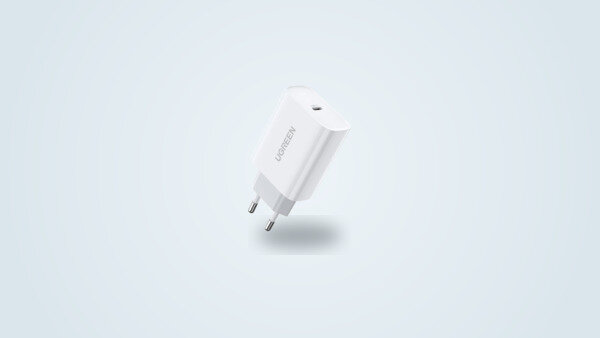
This small GaN wall charger puts everything behind a single USB-C port: the protocol compatibility and compactness promises hold up, and the single-port simplicity costs something elsewhere.
With three ports active at the same time, this cigarette lighter charger promises to keep everyone in the car topped up. The promise holds, but the advertised 30W is a shared ceiling between the ports, well below the sum of what each one can deliver on its own.
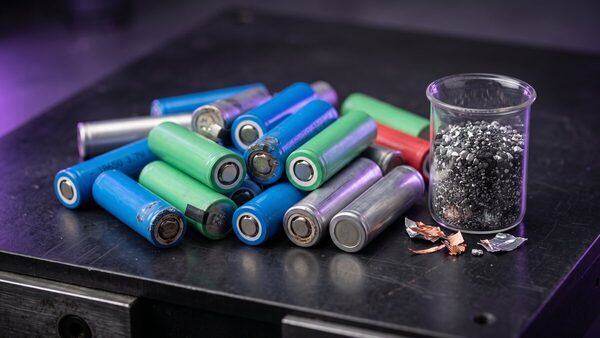
A battery that no longer has enough punch for your electric vehicle or power station is not waste, it is often the start of a second career. Here is what actually happens between a battery's retirement and its final recycling.
How many watt-hours of battery and how many watts of panel do you need for a van, a campsite, or home backup power? The complete four-step sizing method, with formulas and a worked example.
On September 17, 2026, KLM flight KL735 turned back over the Atlantic after a power bank caught fire in business class. It belonged to the Dutch airline's own former CEO, who was charging it at his seat, a practice explicitly banned under KLM's own rules: a case worth learning from.
Throughout 2026, the US Federal Trade Commission has stepped up enforcement of its Green Guides, the rules governing environmental marketing claims. Terms like 'carbon-neutral', 'recyclable' and 'biodegradable' have shown up in recent settlements when brands couldn't back them up. Here is what the FTC's Green Guides actually require, and what it means when you're shopping for a battery, a power station or a solar panel.
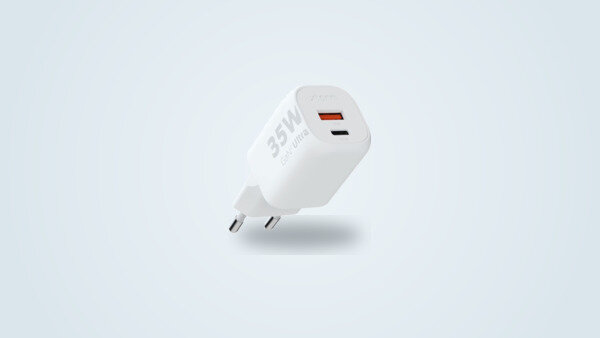
With a single USB-C port and a total power budget of 35W, the Xtorm GaN2 Ultra bets on compactness rather than raw power. One detail that few spec sheets spell out changes the picture: plugging in both ports at once never adds up to 53W (35+18), it shares the same 35W budget.
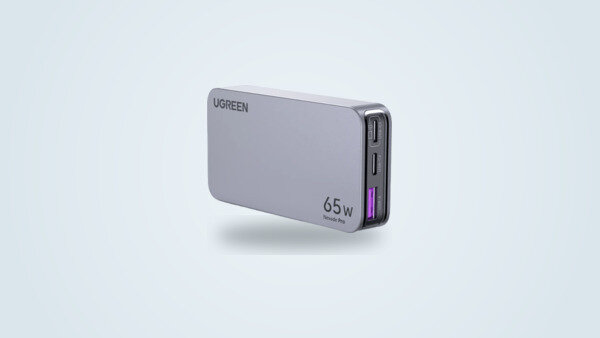
With a flat 3.3 x 1.9 x 0.55 in (84 x 48 x 14 mm) case, this GaN charger promises laptop-brick power in the smallest footprint in the Ugreen lineup. The main port genuinely delivers its 65W, but this record-thin format comes with a documented trade-off: a high surface temperature and a faint electronic whine that the product page never mentions.
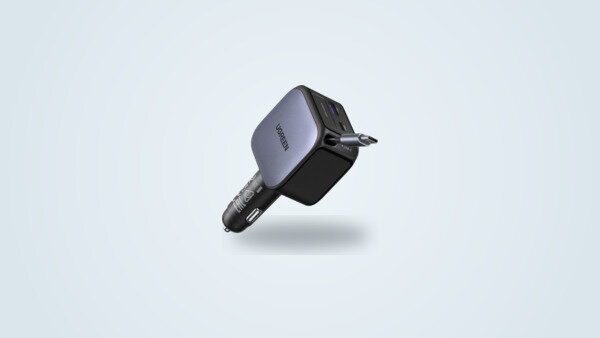
With a retractable USB-C cable rated at 60W on its own, this cigarette-lighter charger promises 90W for three devices at once. The math only truly works with two devices plugged in: the moment a third joins in, the power actually available drops to 75W, a nuance the product page only half spells out.