A European Law, Not a US One, but One Worth Knowing About
Let's be upfront about scope: EU Regulation 2023/1542, in force since August 17, 2023 and applicable since February 18, 2024, is European law. It does not bind a battery sold in the United States, and there is no equivalent federal mandate here. It replaces the EU's older 2006 directive on batteries and defines five battery categories: portable batteries (power banks, household cells, most consumer device batteries), LMT batteries (e-bikes, e-scooters and electric mopeds), electric vehicle batteries, industrial batteries, and SLI batteries (starting, lighting, ignition, the classic type in a gas-powered car).
Why cover it on a US site, then? Because brands like EcoFlow, Anker, Bluetti and Jackery build and certify products for a global market, and compliance work done for the EU (data collection on materials, supply chain documentation, durability data) often ends up informing the same hardware sold here, even without a matching US mandate. Two related EU provisions are already covered on this blog: standardized battery labeling, in force since August 18, 2026, and the user-replaceable battery requirement, due February 18, 2027. This article covers three further, less publicized parts of the same EU regulation: the digital battery passport, the carbon footprint declaration, and the due diligence duty on critical raw materials.
The EU's Digital Battery Passport: a Mandatory QR Code From 2027
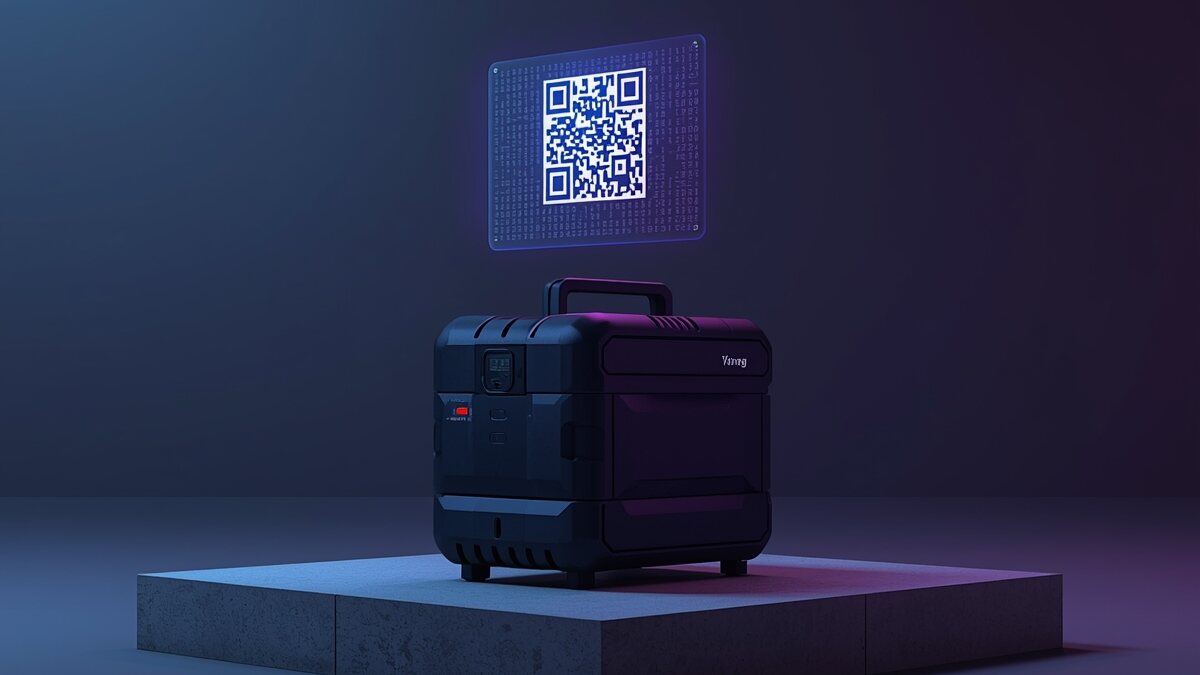
From February 18, 2027, every electric vehicle battery, LMT battery, industrial battery above 2 kWh and home storage battery placed on the EU market will need a digital battery passport, accessible via a QR code fixed on the battery. The duty to create and maintain it falls on the economic operator placing the finished battery on the EU market (usually the manufacturer), not on suppliers of individual cells or components.
The passport exposes information that varies by battery category: identification and technical characteristics, manufacturer and responsible-operator details, performance and durability data (capacity, guaranteed cycle count, operating temperature), and information useful for repair, reuse and recycling. The European technical registry meant to host this data has been operational since July 20, 2026.
Does the 2 kWh Threshold Matter for Power Stations You'd Buy Here?
Under the EU rule, a battery counts as portable if it is sealed, weighs less than 5 kg (11 lb), and is neither specifically designed for industrial use nor an SLI or LMT battery. An industrial battery falls outside that definition, and once it stores more than 2 kWh, it lands inside the scope of the EU passport and carbon footprint rules. A home power station can sit on either side of that line depending on its capacity and weight, and the text itself remains imperfect on settling borderline cases, a detail EU regulators are still sorting out.
| Model | Capacity | Position relative to the EU threshold |
|---|---|---|
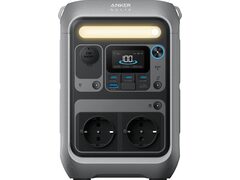
| Anker Solix C300 | 288 Wh | Well below, a classic portable battery |
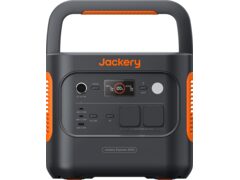
| Jackery Explorer 2000 V2 | 2,042 Wh | Just above, a borderline case in the EU |
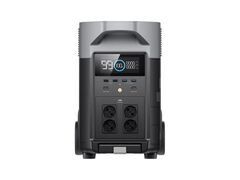
| EcoFlow Delta Pro | 3,600 Wh | Well above, likely classed industrial in the EU |
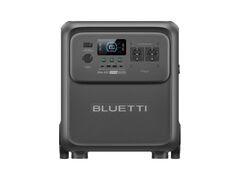
| Bluetti Elite 400 | 3,840 Wh | Well above, likely classed industrial in the EU |
None of this changes how these power stations are sold or documented in the US today. But if you are comparing a brand's EU product page to its US one, this is why you may eventually see more detailed compliance paperwork attached to the European listing of a unit above roughly 2 kWh than to the identical model sold stateside.
The Carbon Footprint Label: Still Under Construction in Brussels
The same EU categories covered by the passport (electric vehicle, LMT, and industrial batteries above 2 kWh) will also need a carbon footprint declaration, drawn up model by model and manufacturing plant by manufacturing plant. Eventually, this is meant to translate into a carbon performance class shown on the label, somewhat like the EU's A-to-G energy efficiency classes for home appliances, which also have no US equivalent.
This is, so far, the least advanced of the three EU strands: the European Commission still has to adopt the delegated act fixing the calculation and verification method, and the timeline has already slipped against the original plan. At the time of writing, no battery sold anywhere, including in the EU, displays this carbon performance class yet: it is a future EU obligation, not a current US or European reality on product datasheets.
Due Diligence on Critical Raw Materials: the EU Approach vs. the US One
The EU regulation places a due diligence duty on manufacturers and importers selling into the EU regarding the origin of the cobalt, lithium, nickel and natural graphite in their batteries: they must identify and limit the social and environmental risks tied to extracting and processing these materials (child labor, human rights abuses, local pollution), and document this check across their supply chain. An exemption applies to small and medium enterprises.
The United States has its own, older framework addressing mineral sourcing, built around Section 1502 of the Dodd-Frank Act and SEC conflict-minerals disclosure rules, focused on tin, tantalum, tungsten and gold (often called 3TG) rather than the cobalt, lithium and nickel the EU battery text targets. The two frameworks were written for different industries and different minerals, so a battery brand compliant with one is not automatically compliant with the other; a global manufacturer selling in both markets typically has to satisfy both separately.
Recycled Content Targets for 2031 and 2036
The EU regulation also sets minimum thresholds for recycled materials in new cells: starting August 18, 2031, industrial, SLI and electric vehicle batteries sold in the EU will need at least 16% recycled cobalt and 6% recycled lithium and nickel; from August 18, 2036, those thresholds rise to 26% cobalt, 12% lithium and 15% nickel. These still-distant EU deadlines are already shaping manufacturers' investment in recycling supply chains worldwide, since it rarely makes sense to build one recycling pipeline for Europe and a separate one everywhere else. We cover the broader question of battery recycling economics in our feature on the real environmental cost of a lithium battery.
The Bottom Line for US Buyers
None of this is a US legal requirement, and no American regulator currently mandates a QR-code battery passport, a carbon performance label, or EU-style due diligence on cobalt and lithium. Three EU strands are moving forward in parallel, at different speeds, and they matter here mainly because of who makes the hardware, not because of any US law:
- The EU digital battery passport becomes mandatory February 18, 2027, for EV batteries, LMT batteries, industrial batteries above 2 kWh and home storage batteries, a category that includes many power stations sold under the same model names here.
- The EU carbon footprint declaration follows the same category logic, but its calculation method is still unresolved, the least advanced part so far.
- The due diligence duty on cobalt, lithium, nickel and natural graphite already applies to manufacturers selling into the EU, running alongside, not replacing, the US's own Dodd-Frank conflict-minerals framework.
For a power station above 2 kWh, the practical habit is the same one we recommend elsewhere on this blog regardless of market: check the manufacturer's actual published documentation rather than assume a global brand's specs sheet already reflects every regulatory box checked on either side of the Atlantic.