Why does a battery that helps electrify the world have an ecological cost at all?
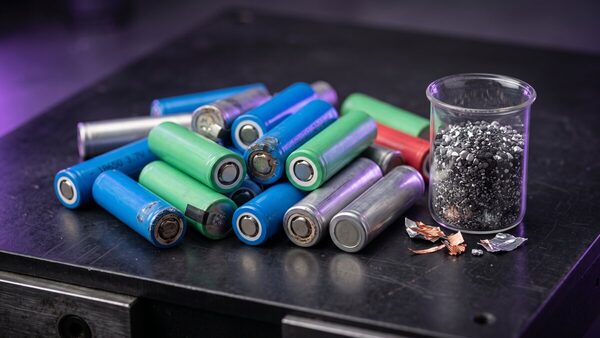
We tend to choose a lithium battery or a power station for its capacity, its power output or its price, rarely for what it actually cost the planet before its very first charge. Yet a battery used to store solar energy or to replace a gas generator is not a neutral product to manufacture: extracting its raw materials, refining them, assembling the cells and shipping the finished product already account for a large part, sometimes the largest part, of its total footprint over its whole lifetime.
This feature deliberately focuses on that upstream stage, extraction and manufacturing, which is the least visible to buyers. We have already covered what happens at end of life in our feature on battery second life: reuse, repurposing, recycling. Here, the goal is to understand honestly what a battery weighs before it reaches you, chemistry by chemistry, and above all, what is genuinely within your control to reduce that impact without giving up on electrification.
Extracting lithium: from South American salt flats to Australian hard rock
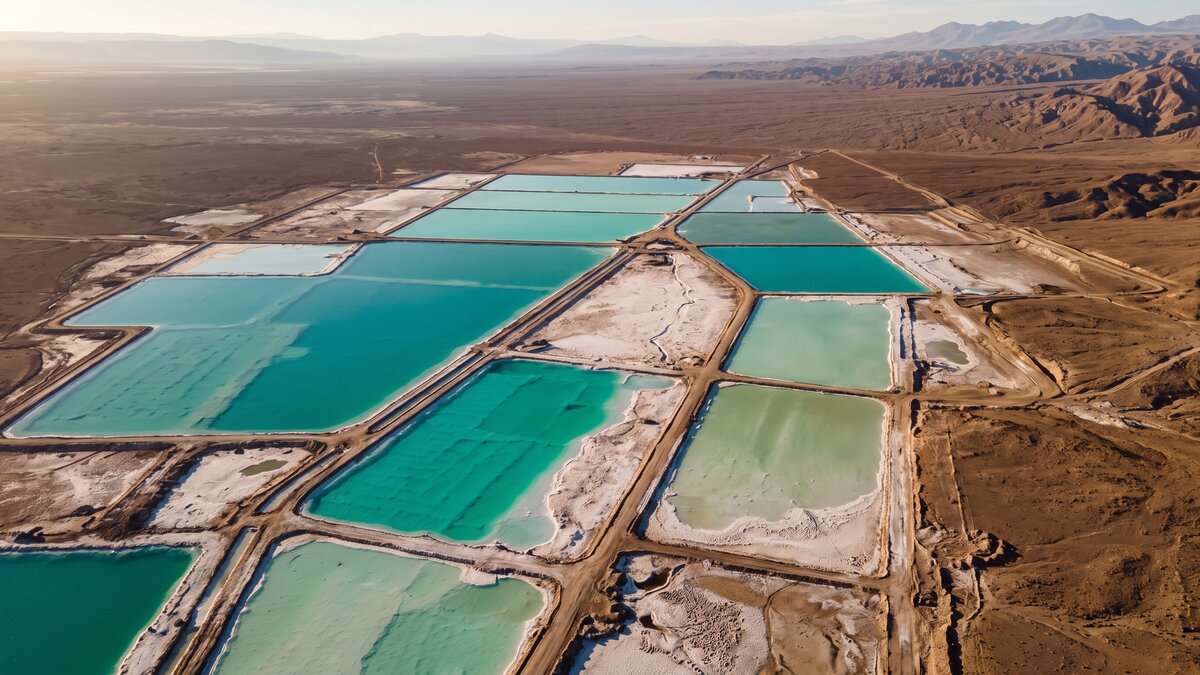
Lithium is mined industrially today mainly in two forms. In South America, in the so-called 'lithium triangle' spanning Chile, Argentina and Bolivia, it is extracted from underground brine that is pumped up and left to evaporate for months in vast open-air ponds. This process uses a great deal of water in some of the most arid regions on Earth, the Atacama Desert foremost among them, creating real tension with the agriculture and local communities that depend on the same water table.
In Australia, the world's largest producer, lithium is extracted from hard rock (spodumene) through conventional open-pit mining, a process that uses far less water on site but considerably more energy to crush, roast and chemically convert the ore into usable lithium carbonate or hydroxide. In both cases, the real local impact depends heavily on the energy source used for these processing steps, coal or low-carbon electricity, depending on the site.
| Source | Process | Dominant impact | Main regions |
|---|---|---|---|
| Brine | Pumping then solar evaporation | Water use in an arid area | Chile, Argentina, Bolivia |
| Hard rock (spodumene) | Open-pit mining then chemical roasting | Processing energy use | Australia |
Cobalt and nickel: the most sensitive materials, socially and environmentally
Cobalt and nickel are the two most sensitive materials in the supply chain, and they are also what most clearly separates the different battery chemistries. Over half of the world's cobalt comes from the Democratic Republic of the Congo, where a significant share of extraction remains small-scale and poorly mechanised: working conditions and cases of child labour there have been documented for years by international organizations, a subject that weighs directly on the reputation of the whole classic lithium-ion supply chain.
Nickel, meanwhile, is increasingly mined in Indonesia, now the world's largest producer. Processing it (through HPAL or RKEF routes) is particularly energy-intensive, and some of that energy still comes from dedicated coal plants built on site. The expansion of mining concessions there is also regularly linked to deforestation.
Recycling these two metals instead of constantly mining new ones directly eases that pressure: our feature on battery second life covers the recovery processes and their real recovery rates.
Manufacturing CO2: a weight that depends mostly on the factory's electricity
Beyond raw materials, assembling a battery cell is itself an energy-intensive process: electrode coating, drying in controlled rooms, electrical cell formation and so on. According to available lifecycle studies, manufacturing a lithium-ion battery represents roughly several tens of kilograms of CO2 per kWh of capacity, a figure that varies considerably from one factory to another.
The main reason for that gap is almost never the chemistry itself, but the electricity powering the factory. A gigafactory running on a very carbon-intensive grid (coal) emits markedly more, for a strictly identical battery, than one running on hydro, nuclear or renewable power. It is precisely to make this figure verifiable rather than merely declared that the EU battery regulation requires, from 2026, the publication of a manufacturing carbon footprint for electric-vehicle and industrial batteries, a first step towards real transparency on a cost that has so far been largely invisible to the end buyer.
LiFePO4: a chemistry that cuts the impact twice over
This is precisely the ground on which LiFePO4 (lithium iron phosphate) chemistry changes things twice over, and why it has largely replaced classic lithium-ion (NMC, nickel-manganese-cobalt) in power stations and recent home batteries. First, it removes cobalt and nickel from the equation entirely: neither of the two most sensitive materials, socially or environmentally, goes into its manufacture. Second, its native lifespan is far longer, several thousand charge cycles against only a few hundred for classic lithium-ion, which spreads its manufacturing footprint over far more years of real use.
For a detailed technical comparison between the two chemistries (safety, weight, energy density), our feature Li-ion vs LiFePO4 goes further. The ecological verdict, though, is unambiguous: for an equivalent need, LiFePO4 is today the more favorable choice.
Lifespan: the most concrete lever for cutting the real impact
Whatever chemistry is chosen, the most concrete lever in a buyer's hands remains how long the battery stays genuinely in use. A fixed manufacturing footprint, spread over two years of use or over ten, does not weigh the same each year at all: cutting the useful lifespan by five multiplies the real annual environmental weight of that same battery by five.
Three simple habits genuinely extend that lifespan: avoid leaving a battery sitting fully charged or fully empty for long periods, protect it from extreme temperatures, and choose a product whose BMS (battery management system) and warranty reflect genuine build quality rather than the lowest price. Once a battery is truly worn out, never throw it away: our guide on how to recycle a battery details where to drop it off and what precautions to take.
How to cut your real impact as a buyer
In practice, four criteria are enough to buy in a notably more responsible way without ever giving up the benefits of electrification. Favour LiFePO4 whenever the use case allows it: it is already the norm across almost every recent power station and home battery. Buy the capacity you genuinely need rather than a disproportionate safety margin, whether for a power bank or a solar setup. Make the product last as long as possible, the single most effective lever of all. And at end of life, always use a dedicated collection point rather than the bin.
The battery's digital passport, mandatory by 2027 for industrial and mobility batteries, will go further still: it will eventually let buyers verify the real origin of the materials and the declared carbon footprint of a specific product, rather than having to rely solely on a manufacturer's own marketing. Until that transparency becomes the norm, these four criteria remain the most reliable way to make an informed choice.