Why a metal box blocks electromagnetic waves
A Faraday cage is not a prepper gimmick or some kind of pseudo-science: it is a fully enclosed structure made of conductive material (metal, essentially) that keeps an outside electromagnetic field from reaching whatever is inside it. The principle is named after British physicist Michael Faraday, who demonstrated it as early as 1836 with a room entirely lined in metal foil.
The mechanism is actually fairly intuitive once you have seen it in action. When an electromagnetic wave hits the surface of a conductor, it pushes the metal's free electrons into motion, and they redistribute themselves to create an opposing field that exactly cancels the outside field inside the enclosure. As LearnEMC, an educational resource focused on electromagnetic compatibility, puts it, a perfectly conducting enclosure that completely surrounds a given volume prevents anything within that volume from electrically coupling to anything outside it. In plain terms, the field stays on the surface, it never gets inside.
This principle works just as well against static discharge as it does against a radio wave, a nuclear electromagnetic pulse, or the currents induced by a solar storm. What changes from one scenario to another is not the physics, it is the intensity and speed of the phenomenon, which is exactly what determines how good your shielding actually needs to be.
The rule that changes everything: the smallest opening ruins it
This is the part most general-audience explanations skip over, and it happens to be the most important one: a Faraday cage only works if it is completely closed. A single break in the shielding is enough to wreck most of the protection, no matter how thick or how good the metal is otherwise.
LearnEMC is blunt about it: a single unshielded, unfiltered wire penetrating a shielded enclosure can eliminate any shielding benefit that the enclosure otherwise provides. A charging cable sticking out, an antenna, or even a seam that no longer keeps continuous electrical contact all the way around the opening, and the field has a direct path inside.
This rule, far more than what the container is made of, is what separates a real Faraday cage from a metal box that merely looks like one.
What actually needs protection?
Good news: you do not need to shield your entire house. The real risk is concentrated in one specific type of component, which makes it easy to target exactly what deserves a spot inside a Faraday cage.
Semiconductors, the chips and transistors found in almost all modern electronics, are the main target. They operate at very low voltages and rely on microscopic junctions: an induced voltage spike, even a brief one, can literally punch through them. That is true for a smartphone, a radio, a laptop, or a charger, but also for a power bank or a power station, since both their charge controller and display carry sensitive electronics.
By contrast, a purely electromechanical device with no chip or control circuit generally comes through unscathed: a simple brushed motor, a classic incandescent bulb (just a resistive filament), a mechanical doorbell. One common mix-up to watch for: an LED bulb has nothing in common with an incandescent one. An LED is itself a semiconductor component, usually paired with a small driver circuit, which puts it firmly on the vulnerable side despite looking like a simple bulb.
One useful special case: a bare battery or cell (AA, 18650...) with no management electronics attached is just an electrochemical system. It has no semiconductor junction to damage, so it does not really need shielding to keep working. It is the BMS (the battery management circuit) or the charge controller that remain vulnerable whenever the device has one.
Commercial Faraday bags: what to look for
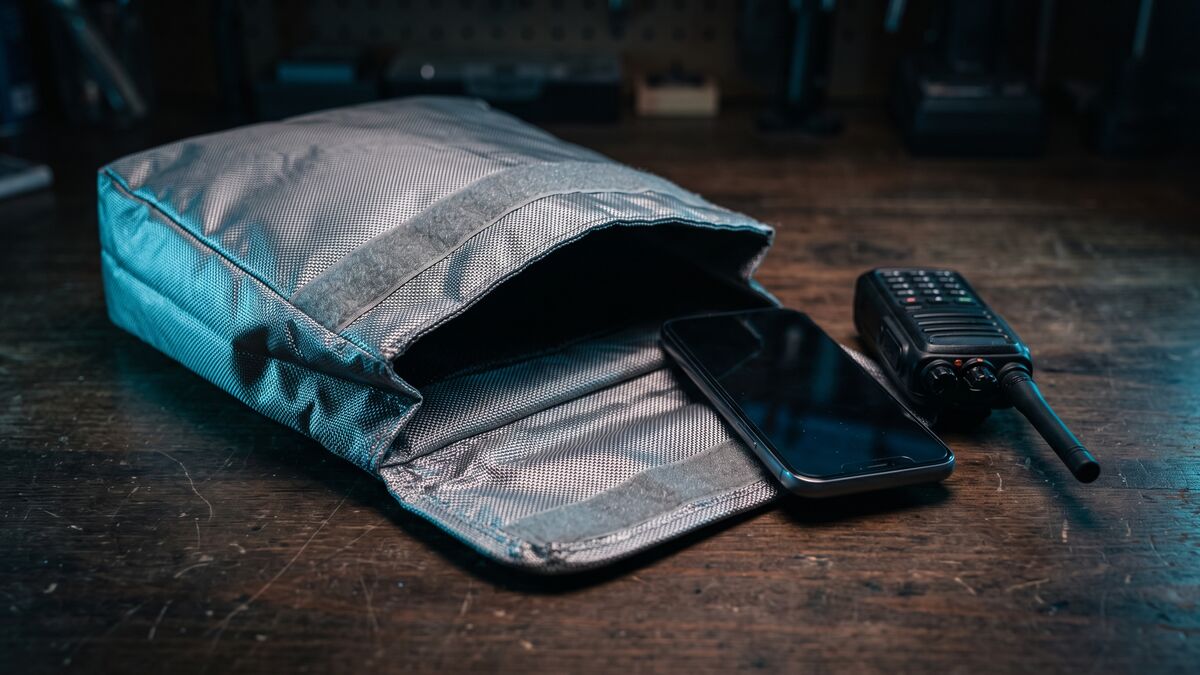
The market for Faraday bags has grown a lot in recent years, and quality varies enormously. Plenty of cheap bags on sale are really just antistatic pouches designed for shipping electronic components, protection against static discharge, not against an electromagnetic pulse or radio waves: a difference in kind, not just in degree.
A real attenuation test is expressed in decibels (dB), across a range of frequencies, not a vague marketing phrase like “military-grade protection.” The professional shielding world relies on recognized methodologies such as the IEEE 299 standard for measuring the shielding effectiveness of an enclosure, or MIL-STD-285 for high-performance military and aerospace applications. A serious manufacturer publishes numbers that come from an actual test protocol; if they do not, be cautious.
| Criterion | Commercial Faraday bag | DIY box or container |
|---|---|---|
| Cost | Variable, reasonable for a serious model | Very low, often built from materials you already own |
| Effort | Immediate, no building required | Takes some care (insulation, seams) |
| Reliability if well chosen or well built | Good, provided a real attenuation test is published | Good, provided the insulation and seam rules are followed |
| Capacity | Limited to the bag's volume | Can hold a power station or several devices |
| Watch out for | Many cheap models are just antistatic pouches | One poorly insulated seam or wall contact ruins the effect |
A few concrete things to check before buying: a closure that keeps continuous metal-to-metal contact along its full length (a simple velcro flap that closes the opening without keeping constant conductive contact is far less reliable than a folded metal seam); a double layer if possible, insulated from each other; and a size that actually matches what you want to protect, so the device never touches the inner wall.
DIY: does a metal box really do the job?
The myth refuses to die: “a metal trash can is enough.” That is neither entirely true nor entirely false. A galvanized trash can with its lid on can make a perfectly good Faraday cage, but only if two conditions are met to the letter, the same two mentioned above: a closure that keeps continuous electrical contact (the lid needs to press firmly against the rim all the way around, not just rest on top), and contents that never touch the metal wall.
The ham radio blog Off Grid Ham, run by an operator who has looked into this specifically for the amateur radio community, measured roughly 50 dB of attenuation for a single well-sealed container on his own builds, and up to 80 dB by doubling the layers (two independent containers, insulated from each other). A fair and useful caveat: these measurements were not taken under a standardized lab protocol, so treat them as indicative rather than a guaranteed figure. They still give a far more reliable ballpark than a guess.
The recipe that shows up in every serious DIY build comes down to four points.
- Always insulate the contents from the metal wall: cardboard, plastic, or fabric, never direct contact with the metal.
- Overlap the seams generously: at least 3 inches (7.5 cm) of overlap for aluminum foil, making sure it is real metal-to-metal contact, not just a visual overlap.
- Seal seams and openings with conductive tape, rather than ordinary insulating tape.
- Never ground the container or connect it to an outside metal mass: doing so would open exactly the kind of leak path you are trying to avoid.
For maximum protection, nesting two insulated, independent containers remains the gold standard. On the other hand, a single sheet of aluminum foil wrapped around an object, with no rigid container behind it, is fragile: any poorly sealed fold or tear recreates an opening, exactly the flaw described above.
What is the real threat: solar storms, nuclear EMP, static discharge
Three families of risk come up again and again, and they are nothing alike in either probability or scale.
A solar storm (or coronal mass ejection) is by far the best documented. The reference event is the Carrington Event of September 1, 1859: astronomers Richard Carrington and Richard Hodgson independently observed a solar flare of unprecedented intensity. According to records cited by NOAA, our own National Oceanic and Atmospheric Administration, the wave of particles that followed produced auroras visible at unusually low latitudes, drove currents strong enough through telegraph wires to shock some operators and start small fires in a number of offices, and even let some machines send messages while completely disconnected from any power source.
To put these scenarios in a broader preparedness context, our feature on energy independence for an SHTF scenario covers how to size a complete power reserve, well beyond the shielding question alone.
A nuclear electromagnetic pulse (a very high altitude detonation) remains an extreme geopolitical and military scenario. It has never, to date, been used for this purpose against a populated area, and most defense analysts rate its likelihood as low. It is still taken seriously enough to have produced dedicated hardening standards for critical infrastructure, such as our own military standard MIL-STD-188-125. A real risk worth knowing about, then, but not one that calls for constant anxiety.
Finally, electrostatic discharge is the most mundane of the three: the spark you sometimes feel touching a door handle on a dry day. Its energy is tiny compared to a solar storm or a nuclear pulse, but it targets exactly the same weak point, semiconductors, which is why sensitive electronic components are handled with antistatic precautions every day.
Testing your Faraday cage with a simple radio
You do not need an electromagnetic compatibility lab to get a solid first read on how well your homemade Faraday cage actually performs. The amateur radio community, which has looked into this for decades to protect its backup gear, uses a simple method anyone can try.
Take a battery-powered radio, tune it to a strong, clearly identified AM station, then to an equally strong FM station (the two frequency ranges do not behave identically against shielding, so it is worth testing both), turn up the volume, and place it, still on, inside the closed container. If the sound disappears completely on both stations once the lid is shut, that is a good sign: your enclosure is effectively blocking a solid chunk of the radio spectrum.
The test also helps you find a specific weak spot: move the radio near each seam and corner rather than the center, where a localized leak is most likely, in the same spirit as the method described by Off Grid Ham for his own tests.
What actually belongs inside a Faraday cage
A Faraday cage is not meant to swallow your whole house. It is far more useful, and far more realistic, kept for a small kit of backup electronics that you accept never using day to day, precisely so it stays available the day everything else fails.
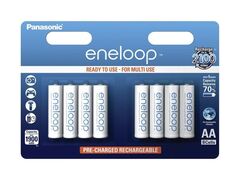
In that kit, a stash of spare batteries earns its place right next to a battery radio: primary lithium cells like Energizer Ultimate Lithium typically sit on a shelf far longer than a standard alkaline, a real advantage for a kit you hope to rarely open. Rechargeables like Panasonic Eneloop are a solid alternative if you would rather maintain a kit you recharge and check periodically than a stash that just sits there.
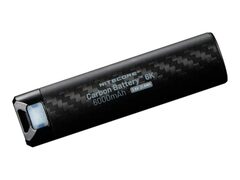
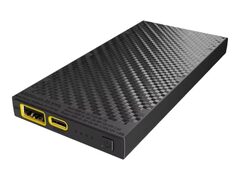
For the electronics themselves, a compact, rugged power bank like the Nitecore Carbon 6K, or a more everyday option like the Nitecore NB10000, covers the essentials: enough to recharge a phone or a radio several times over without depending on an outlet that might not come back on right away. The right habit, already covered in our SHTF scenario feature: keep a dedicated unit permanently stored inside the Faraday cage, rather than the one you use every day and would not think to grab in time anyway.