The Bug Out Bag: A Category of Its Own
The bug out bag (commonly known by its acronym BOB) answers one precise question: what do you need to be able to grab in minutes, on your back, if you have to leave home in a hurry? A prolonged power outage, an evacuation order, a natural disaster: FEMA and most U.S. emergency management agencies converge on the same reference window, 72 hours, the time usually needed before organized outside help arrives.
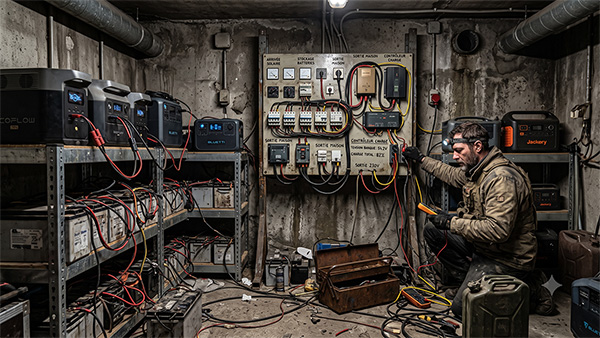
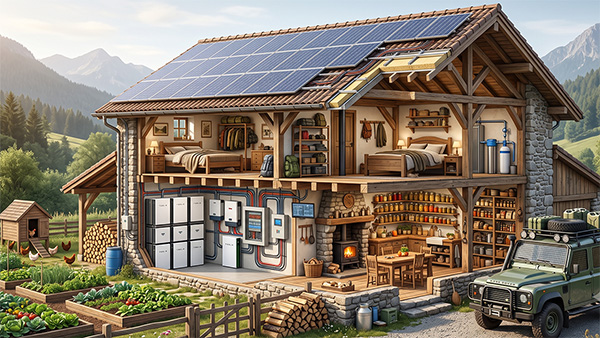
It is a category of its own, not to be confused with the other two scales of preparedness we cover elsewhere on this blog. Our guide on energy independence for an SHTF scenario reviews the crisis scenarios themselves, from the most likely to the most extreme. Our guide on off-grid homestead energy covers a fixed location built for long-term self-sufficiency. The bug out bag sits at the other end of the spectrum: not a scenario, not a homestead, but a single, ready object, carried on foot. That physical constraint changes everything, energy included, arguably energy above all.
Why a Power Station Does Not Belong in a BOB
The temptation is understandable: a 1,000 Wh power station is reassuring, with its household outlets and generous capacity. The problem is not the capacity, it is the weight. A unit in that range typically weighs 22 to 29 lb (10 to 13 kg) on its own, before a cable or a panel to recharge it (26.5 lb / 12 kg for a 1,024 Wh EcoFlow Delta 2, 23.8 lb / 10.8 kg for a 1,070 Wh Jackery Explorer 1000 v2, both real examples from our own catalog). The most widely used rule of thumb for a backpack carried over distance caps total load at 10 to 20% of body weight, water and food included. For a 154 lb adult (70 kg), that leaves 15 to 31 lb (7 to 14 kg) for absolutely everything: shelter, water, food, first-aid kit, spare clothing, documents. A single power station would swallow the entire budget, sometimes more.
This is not specific to energy: it is the whole philosophy of a bug out bag pushing against that of a fixed base. An off-grid homestead is sized to keep reproducing energy indefinitely, and can afford to be heavy because it never moves. A BOB is sized to last a bounded window, 72 hours, while being carried the entire time. The two logics are not comparable, they are complementary: the BOB is what you grab on the way out, the homestead is what you reach if the situation drags on.
The Realistic Watt-Hour Budget for 72 Hours on Foot
Before buying anything, size the real need, not an imagined one. Over 72 hours, in emergency use (not everyday comfort use), a BOB's power draw almost always comes down to three items:
- A smartphone, for communication and information: two to three full charges over 72 hours are plenty in frugal use (airplane mode unless needed, reduced brightness), roughly 30 to 45 Wh depending on the model.
- A headlamp or lantern, LED, a few hours a day: draw stays very low, around 5 to 10 Wh over 72 hours for reasonable use.
- A portable radio to follow official instructions: a few extra Wh depending on the model and listening time.
The total most often lands around 40 to 80 Wh for the full 72 hours, safety margin included. A compact 10,000 mAh power bank delivers roughly 24 to 26 Wh of usable output once conversion losses are accounted for (the same gap detailed in our pocket mini power bank comparison): enough to cover the lower end of that range on its own. To cover the upper end without recharging anything, either step up to a 20,000 mAh model (48 to 52 Wh usable) or pair the compact power bank with a small folding panel, which closes the gap in a few hours of sun exposure.
| Profile | Kit | Usable energy available | Total weight |
|---|---|---|---|
| Minimalist | 1 power bank, 10,000 mAh | ≈ 24 to 26 Wh (low end of the range) | ≈ 5.6 to 7.1 oz (160 to 200 g) |
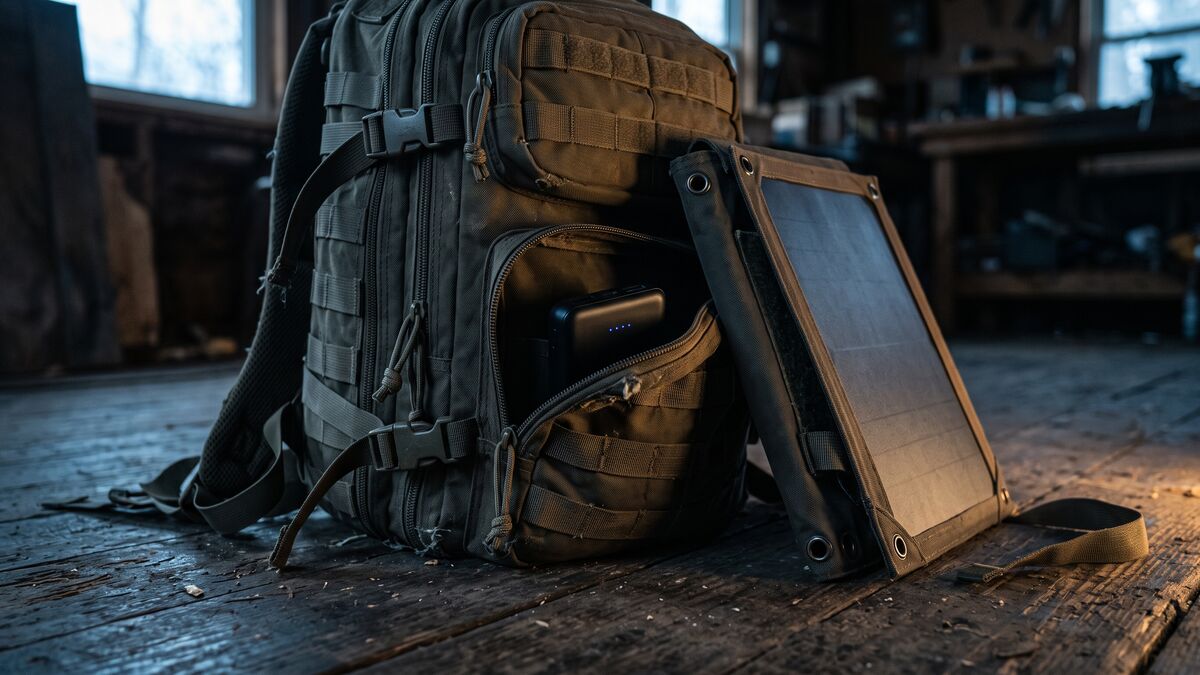
| Balanced (recommended) | 1 power bank, 10,000 mAh + 1 folding panel, 20 to 28 W | ≈ 24 to 26 Wh + solar top-up in 3 to 4h of full sun | ≈ 1.9 to 2.2 lb (850 g to 1 kg) |
| Extended reserve | 20,000 mAh power bank + panel + spare lithium AA cells | ≈ 48 to 52 Wh + solar top-up + backup cells | ≈ 2.2 to 2.6 lb (1 to 1.2 kg) |
The Balanced profile remains, in the vast majority of cases, the best trade-off between real-world autonomy and carried weight.
What You Actually Pack: The BOB Power List
On the ground, four items cover the power side of a well-thought-out bug out bag.
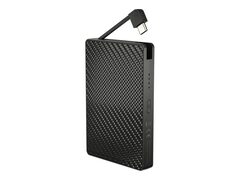
A compact, rugged power bank. No need to chase the biggest capacity available: a Nitecore Pocket 10000, 10,000 mAh in 5.6 oz (160 g) inside a carbon-fiber shell, fits a side pocket and shrugs off knocks far better than a thin plastic model. For anyone who wants to shed even more weight, at the cost of a tighter capacity, the Anker Nano A1653 (3.5 oz / 100 g, built-in USB-C plug, no cable to hunt for in the dark) remains a solid pick, covered in our pocket mini power bank comparison. A model with a built-in plug or cable is a genuine advantage in a bug out bag: a misplaced cable, in the dark, under stress, is exactly the kind of detail that makes the whole thing useless at the worst possible moment.
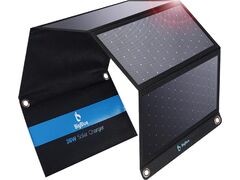
A small folding or flexible solar panel. The BigBlue 28W (1.5 lb / 680 g folded) is a good illustration of the right trade-off for a BOB: enough output for a real top-up in full sun, light enough not to weigh on a shoulder strap. Our portable solar panels range covers other folding and flexible formats, some dropping under 11 oz (300 g) for anyone who prioritizes weight over raw output.
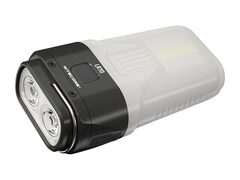
A light that doubles as a power bank. Merging functions is the number-one trick for lightening a BOB. The Nitecore LR70 combines a flashlight, a lantern and a 10,000 mAh power bank in a single 9.6 oz (271 g) unit: one fewer item to pack, one fewer item to fumble for in the dark.
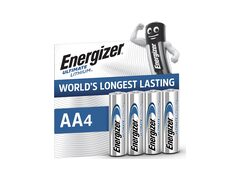
Spare batteries, for whatever does not charge over USB. A backup radio or headlamp running on plain AA cells deserves a sealed spare set in the bag, independent of any electrical recharge. Lithium primary cells such as Energizer Ultimate Lithium are the right call for this specific role: they keep for up to fifteen years without self-discharging, weigh roughly a third less than equivalent alkaline cells, and hold onto most of their capacity in cold weather, where a standard alkaline cell loses output fast below 32 °F (0 °C). Our batteries and cells range covers the other formats available.
Do You Really Need a Solar Panel in a 72-Hour Bag?
Fair question: if the real need tops out at 80 Wh and a single power bank already delivers 24 to 26 Wh usable, more with a higher-capacity model, is a solar panel essential for a strict 72-hour window? Honestly, not always. A bag checked and charged to 100% right before zipping it shut covers a good share of a three-day need on its own, especially if the phone spends most of that time in airplane mode.
The panel earns its place the moment either of two situations applies: the evacuation risks running past 72 hours (which happens more often than most people assume, see our guide on SHTF scenarios), or no outlet recharge is guaranteed for the whole stretch. In either case, a few ounces and a modest price tag remove the uncertainty.
The Ready-to-Grab Rule: Upkeep and Availability
A bug out bag checked once a year protects no one: the same logic that applies to a generator that has never been test-started, covered in our guide on SHTF scenarios, applies to its power kit too. Three simple habits keep the bag genuinely ready.
- Top up the power bank every two to three months, not only when you happen to remember the bag exists. A lithium battery stored full and never revisited loses capacity over time, and a half-charged power bank in a bug out bag is worth nothing on the day it actually matters.
- Never borrow the bag's power bank for everyday use, even just this once. That is the classic way a bug out bag ends up quietly emptied of anything useful.
- Check the expiration date on spare batteries and the condition of the charging cable twice a year, alongside the rest of the kit (water, food, first-aid supplies).
A bug out bag is never a one-off purchase left at the back of a closet: it is a small living system, only as good as its last check.
BOB, Off-Grid Homestead, SHTF: How It All Fits Together
These three ideas complement each other rather than compete, and it helps to place them against one another before closing this guide.
- The SHTF scenario is the starting point: what event are you actually planning for, and at what scale? Our guide on energy independence for an SHTF scenario breaks each one down, from a prolonged outage to a solar storm, and what it concretely demands.
- The BOB, covered here, is the immediate, portable answer: what you grab on the way out, built for 72 hours, not a day more.
- The off-grid homestead is the long-term answer, for anyone with a fixed fallback location: our guide on off-grid homestead energy covers full sizing, season by season.
Ideally, the three cascade into each other: the BOB buys the time needed to reach a homestead or a safe location, whose own autonomy was sized in advance around the most plausible scenarios. A well-built BOB power kit does not need to be exhaustive, it just needs to be reliable, light and ready.
If your evacuation plan relies on a vehicle rather than walking, the scale of the problem changes: our guide on bug-out vehicle electrics covers the reliability to aim for on that side.