What is an off-grid homestead or bug-out location?
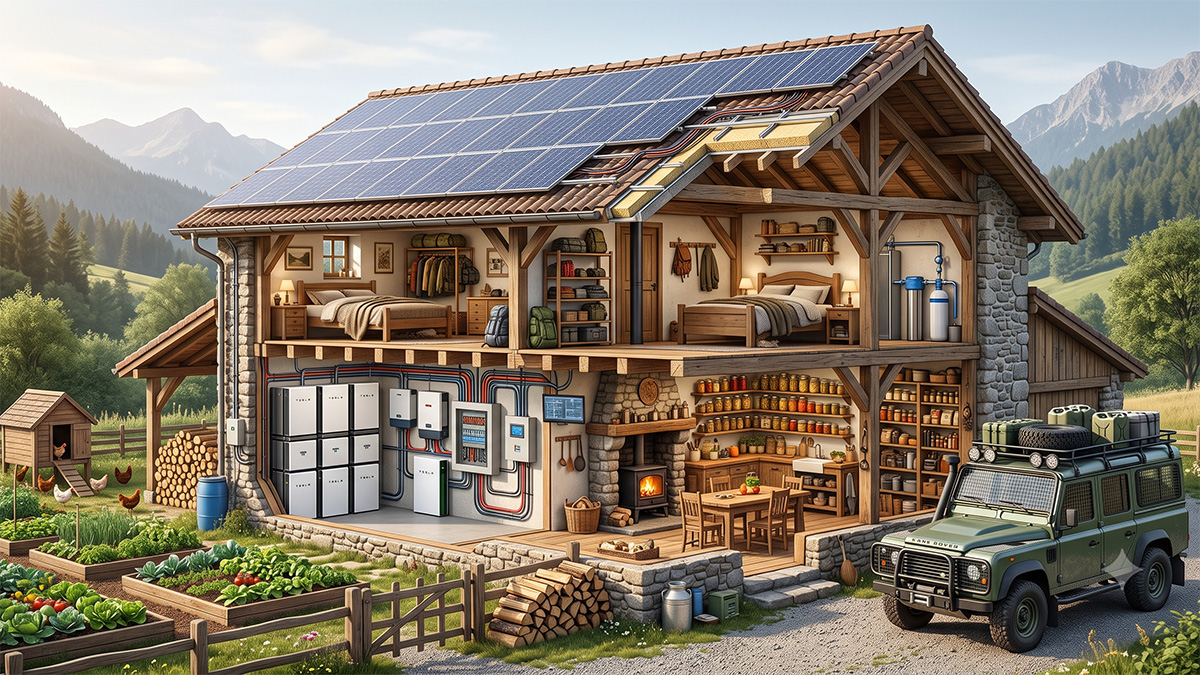
The French term BAD, for Base Autonome Durable, came out of francophone preparedness circles and was popularised by authors such as Piero San Giorgio, but the idea reaches far beyond crisis planning. An off-grid homestead is a place designed to run in partial or total self-sufficiency: an isolated house, a mountain cabin, a hardened country property, a long-term van conversion or a plot with a fixed structure. Water, food and energy form the vital triangle of any serious setup. This article concentrates on the third corner: electrical energy.
What separates it from a simple survival kit is the time horizon. A bug-out bag is measured in hours, a household kit in days, a homestead in months or years. That shift changes every technical trade-off: what matters is no longer the capacity you carry but the capacity to reproduce the energy you consume, day after day, with no outside resupply. A 2,000 Wh station with no way to recharge is just a tank draining down, whereas a 200 W panel backed by 600 Wh of storage can run indefinitely.
If your concern is the crisis scenarios themselves rather than the location, our companion article on energy independence for an SHTF scenario works through them one by one, from grid-down to solar storm.
Why energy is the foundation of self-reliance
Without electricity, you lose communications (radio, satellite phone), food preservation (refrigeration), night lighting and the ability to recharge modern gear. A PMR radio, a rechargeable headlamp, an electric water pump, a UV filtration system: all consume power. An off-grid homestead without a reliable energy system is not truly self-reliant.
The three pillars of off-grid energy
Off-grid energy rests on three inseparable elements: generation, storage and management. Neglect one and the other two become useless. A 200 W solar panel with no meaningful battery does nothing at night. Two thousand watt-hours of storage with no generation to refill it lasts only so long.
Generation: solar first
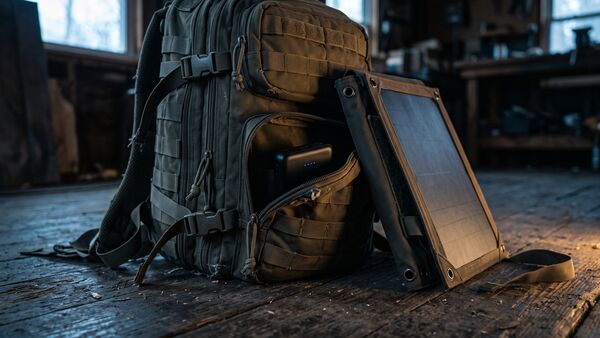
For a fixed location, solar photovoltaic is the most reliable, quietest and most durable answer. One or two rigid 100 to 200 W panels cover the basic needs of a two-person setup. Rigid is not a comfort detail: it produces 10 to 15 per cent more than a folding panel of the same rating, it is warranted for 25 years against 5 to 10, and it costs less per watt. Folding only earns its place if you have to store it, carry it on foot or reorient it often. For a mobile setup, that flexibility becomes decisive. Micro wind can supplement solar in poor-sunshine regions, but its cost and maintenance make it a supplement, never a foundation.
Storage: LiFePO4, without hesitation
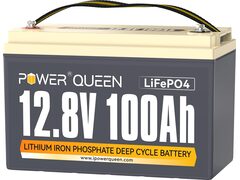
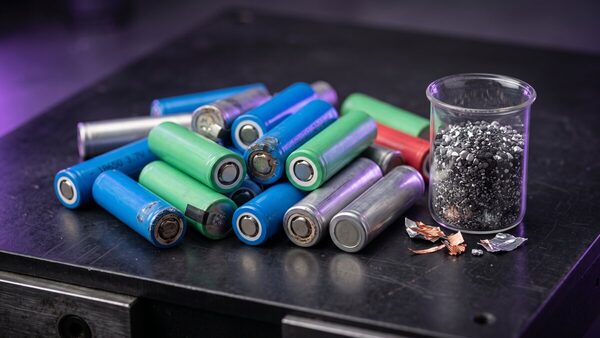
LiFePO4 (lithium iron phosphate) is the reference chemistry for this use. Unlike the NMC cells found in portable gear, LFP cells tolerate 80 to 90 per cent depth of discharge without accelerated degradation and last 3,000 to 5,000 cycles, up to 6,000 with some makers, against 500 to 1,000 for NMC. Above all they are far safer: their thermal runaway threshold sits around 518 °F (270 °C) against 302 °F to 410 °F (150 °C to 210 °C) for NMC, and their cathode does not release oxygen as it breaks down, which makes a runaway much harder to start and far less violent. The risk is not zero, no lithium chemistry is, but it is of a different order entirely. For a two-person setup, 600 to 1,000 Wh of storage is the serious minimum.
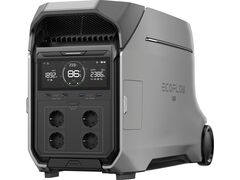
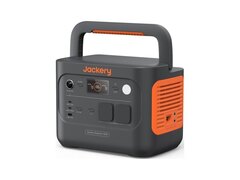
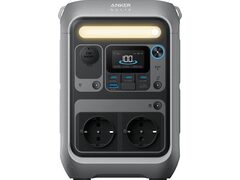
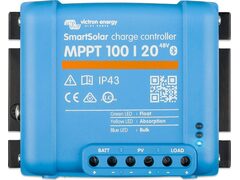
Modern portable power stations package that chemistry with a BMS, AC and DC outputs and a native solar input. A classic 12 V build, battery plus MPPT controller, remains markedly cheaper for the same capacity, at the price of wiring it yourself.
Sizing your homestead energy system
You need to cover daily consumption in Wh, with a 20 to 30 per cent safety margin for sunless days and the unexpected. Worked example for two people:
- LED lighting (4 h/day, 10 W): 40 Wh
- Charging two phones (1 h, 15 W): 30 Wh
- Radio and communications (2 h, 5 W): 10 Wh
- 12 V fridge (continuous, 40 W average): 240 Wh
- Water pump and sundries: 20 Wh
- Daily total: about 340 Wh
With a 30 per cent margin, aim for 440 to 500 Wh of daily generation and at least 600 to 800 Wh of storage. That storage is not a luxury: it absorbs consumption peaks and covers a full day with no generation at all.
Which leaves the question that decides everything: how much does a panel actually produce? The peak rating printed on the back is measured in a laboratory at 77 °F (25 °C) under 1,000 W per square meter. In the field, heat, angle and dust bring the yield down to 60 or 75 per cent of nominal, and useful daylight varies fourfold between June and December.
| Period | Useful hours | Output per day | Covers the 340 Wh need? |
|---|---|---|---|
| June to August | 5 to 6 h | 700 to 900 Wh | Yes, comfortably |
| April and September | 4 to 5 h | 550 to 700 Wh | Yes |
| March and October | 3 h | 350 to 450 Wh | Only just |
| November to February | 1 to 2 h | 150 to 300 Wh | No |
The conclusion is stark and rarely stated: a system sized on the annual average leaves a homestead in the dark all winter. December must set the size of the installation, not July.
Configurations by setup type
Fixed homestead
A 1,000 to 2,000 Wh station paired with two 200 W panels makes a solid base. Expandable models, which reach 3,000 to 5,000 Wh by adding a battery without rethinking anything, spare you from buying twice when needs grow. The 12 V alternative, LiFePO4 battery plus MPPT controller plus inverter, comes in markedly cheaper per watt-hour and can be repaired part by part, but you have to wire it yourself.
Mobile or semi-mobile setup
A van or a movable camp demands compactness and light weight. A 300 to 500 Wh station paired with one or two 100 to 160 W portable panels covers the essentials. This is the one case where a folding panel genuinely earns its keep.
Emergency setup: the 72 hour to 30 day kit
A compact 256 to 512 Wh station is enough for communications, lighting and charging medical equipment. What matters is that the system is ready, charged, and that everyone in the household knows how to use it.
| Criterion | Emergency kit | Mobile setup | Fixed homestead |
|---|---|---|---|
| Storage | 256 to 512 Wh | 500 to 1,000 Wh | 2,000 Wh and up |
| Generation | 100 W folding | 100 to 200 W folding | 200 to 400 W rigid |
| Time horizon | 3 to 30 days | A season | Unlimited |
| Main constraint | Ready and charged | Weight and bulk | Winter generation |
| Expandable? | Pointless | Desirable | Essential |
What it really costs
Budget for an off-grid energy system reads in tiers, and the gap between the two technical routes is wider than most people expect. Rather than quote figures that date within months and differ by market, here is the ratio that matters and does not change.
For the same usable capacity, a 12 V build (LiFePO4 battery, MPPT controller, separate inverter) comes to roughly a third of the price of an equivalent all-in-one station. In exchange it asks you to wire it, choose an inverter separately and commission it yourself. The station wins on simplicity, portability and a single warranty. For a genuinely fixed installation, one you will never move, the 12 V route is almost always the better pound spent.
The three tiers, in ascending order, are a compact 288 Wh station with a 100 W rigid panel for a 72 hour kit, a 1,000 Wh expandable station with a 200 W portable panel for a mobile setup, and either a 100 Ah LiFePO4 bank with an MPPT controller and two rigid panels, or a 4,000 Wh expandable station, for a fixed homestead. The first tier costs a fraction of the third, and the jump between them is where most of the money goes.
Classic mistakes to avoid
- Starting too small: a 100 Wh station is a toy, not a foundation. One 500 Wh unit beats five 100 Wh ones.
- Sizing on summer: the costliest mistake of all. A system calculated in July drops to a quarter of its output in December, exactly when nights are longest and lighting demand peaks.
- Charging in freezing weather: below 32 °F (0 °C), a LiFePO4 cell destroys itself silently while charging. Check that your gear handles that cut-off, or insulate the space.
- Ignoring overcast recharging: plan an alternative (vehicle 12 V socket, backup generator) for extended sunless spells.
- Overlooking conversion losses: an inverter burns 5 to 15 per cent per conversion, and its own standby draws a few watts continuously. Favor native 12 V appliances and switch the inverter off when it is idle.
- Never measuring real consumption: a plug-in power meter costing a few pounds beats hours of estimating. The surprises almost always come from forgotten standby loads.
- Forgetting redundancy: a serious setup always has a backup energy source, and has tested it at least once.
Energy: a strategic pillar of self-reliance
Civil protection bodies working on population resilience and the preparedness community agree on one point: energy is the dependency that governs all the others. Electricity conditions communication, water pumping and treatment, keeping medicines and food cold, and the ability to hold an organized rhythm of life under pressure.
Sized properly, calculated on the worst month and built on proven technology, a homestead's power supply can run indefinitely with no reliance on the grid. Sized badly, it gives an illusion of autonomy that evaporates in the first winter. The difference is not budget, it is method.
To go further into the situations that justify this preparation, our article on energy independence for an SHTF scenario works scenario by scenario, from extended outage to solar storm, through what each one actually demands in energy terms.
Making the system last
An off-grid system is not a purchase, it is something that ages. Three habits preserve its value.
Do not store it full. A lithium battery left at 100 per cent for months loses capacity irreversibly. For backup gear that is rarely used, the ideal state of charge sits between 50 and 70 per cent, with a wake-up every three months. It feels counterintuitive for emergency equipment, but a pack held at half charge and topped up at the first warning lasts far longer than one kept permanently full.
Run the equipment. An inverter that has never started, a controller never configured, a station never taken down to empty: each has a real chance of failing on the day it counts. One full test per season, under real conditions, is worth every manual.
Clean and check the panels. A dusty panel loses 5 to 15 per cent of its output, more after pollen or sand. A rinse with clean water twice a year is enough. While you are there, check the junction box and the MC4 connectors, which fail long before the cells do.