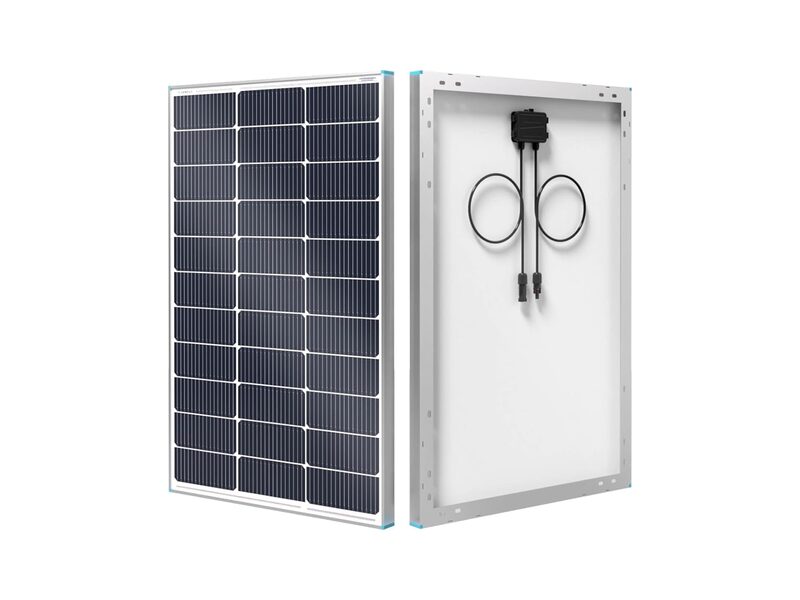
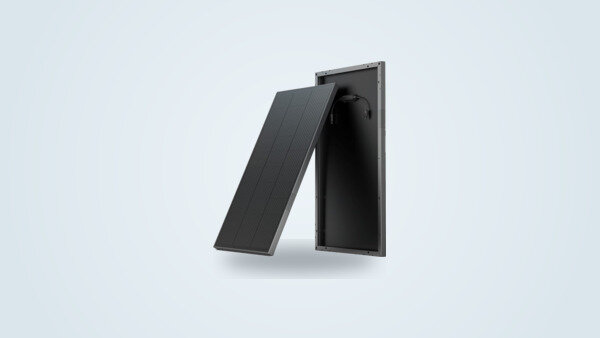
Renogy 100W Rigid Panel
(2 reviews)
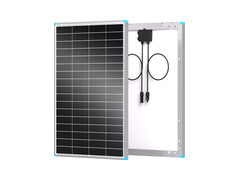
100W monocrystalline with N-type cells at 25% cell efficiency and a rugged aluminum frame: Renogy's rigid panel anchors any fixed solar setup.
Buy at AmazonAs an Amazon Associate I earn from qualifying purchases.
Characteristics
- Power: 100W (N-type 16BB monocrystalline)
- Efficiency: 20% module, cells up to 25%
- Frame: Corrosion-resistant aluminum, tempered glass
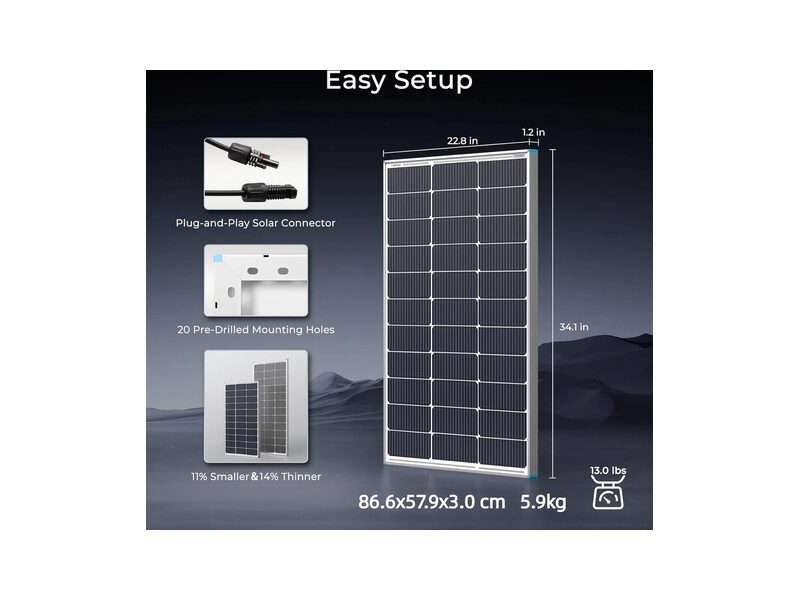
- Format: Rigid, about 13 lbs, 34.1 x 22.8 in
- N-type cells, 20% module efficiency, rugged frame
Detailed overview: Renogy 100W 12V N-Type monocrystalline solar panel
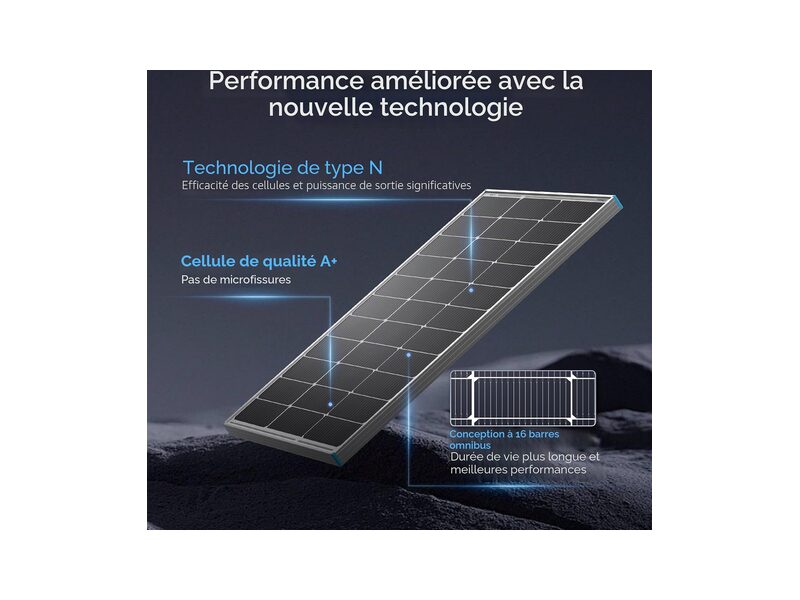
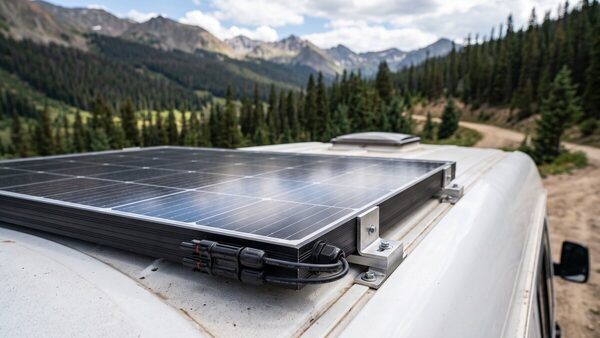
The Renogy 100W 12V rigid solar panel is a natural fit for the base of a fixed solar setup: an RV roof, a converted van, a cabin, a boat, or a small off-grid system. This generation is built around N-type 16BB monocrystalline cells, a technology Renogy rates at up to 25% cell efficiency, for a 20% module efficiency, among the best in its class.
That higher efficiency means it produces more electricity than a conventional PERC panel on the same footprint, a real advantage when roof space is limited, as on most vans and trailers. N-type cells also tend to tolerate heat better and degrade more slowly over the years than older panel chemistries.
On the build side, it focuses on durability: a corrosion-resistant aluminum frame and tempered glass rated to withstand wind loads up to 2400Pa and snow loads up to 5400Pa, built for an install meant to stay outside for decades. It stays relatively light for a rigid panel, around 13 pounds, which makes roof mounting easier for one person. It connects through standard MC4 connectors, compatible with nearly every solar charge controller on the market.
Its limits are the same as any fixed panel: it needs mounting hardware and an MPPT charge controller, both sold separately, and a bigger setup means wiring multiple panels together. Output also depends heavily on orientation and available sunlight. But for the base of a reliable, high-performing, long-lasting solar kit, the Renogy 100W rigid panel remains a proven, widely trusted choice backed by a 10-year product warranty and a 25-year power output guarantee.
Full specifications
Detailed characteristics
Panel
| Peak power?Rated panel power in full sun (STC conditions). | 100 W |
|---|---|
| Cell technology?Cell type; monocrystalline offers the best efficiency, flexible CIGS tolerates shading better. | Monocrystalline |
| Conversion efficiency?Share of solar energy converted to electricity; higher means a more compact panel for the same power. | 20 % |
| Panel type?Foldable (portable), rigid framed (fixed install) or flexible (curved surfaces). | Rigid (framed) |
| Bifacial?Also captures reflected light on its rear side, for extra output. | No |
Electrical specifications
| Voltage at max power (Vmp)?Voltage at the maximum power point. | 19.97 V |
|---|---|
| Current at max power (Imp)?Current at the maximum power point. | 5.01 A |
| Open-circuit voltage (Voc)?Open-circuit voltage; check against your station/controller MPPT input range. | 22.79 V |
| Short-circuit current (Isc)?Maximum short-circuit current. | 5.31 A |
Outputs and connectors
| Output connectors?Output socket type(s) (MC4, XT60, Anderson, DC, USB…); determines compatibility with your station. | MC4 |
|---|
Durability and format
| Ingress protection?Water and dust resistance (IP rating). | IP65 |
|---|---|
| Adjustable kickstand?Kickstand or support to angle the panel toward the sun. | No |
| Weight?Weight of the panel. | 13 lb (5.9 kg) |
| Unfolded dimensions (L × W × D)?Footprint when unfolded, in millimetres. | 34.1 × 22.8 × 1.2 in (865 × 578 × 30 mm) |
Warranty
| Warranty?Length of the manufacturer's warranty. | 10 years |
|---|
☀ How fast does this panel recharge a power station?
The Renogy 100W Rigid Panel panel (100 W) recharges une Jackery Explorer 1000 v2 (1070 Wh) in ~15h or une EcoFlow Delta 2 Max (2048 Wh) in ~29h, in full sun.
| Compact / mid | Recharge |
|---|---|
| Allpowers Volix P300 (256 Wh) | ~3h40 |
| Bluetti EB3A (268 Wh) | ~3h50 |
| Jackery Explorer 500 v2 (512 Wh) | ~7h20 |
| EcoFlow River 2 Pro (768 Wh) | ~11h |
| High capacity | Recharge |
|---|---|
| Anker Solix F2000 (2048 Wh) | ~29h |
| Allpowers R3500 V2 (2880 Wh) | ~41h |
| Jackery Explorer 3000 v2 (3072 Wh) | ~44h |
| Allpowers R4000 (3456 Wh) | ~49h |
Estimate in full sun (ideal conditions). In practice, count on 3 to 5 hours of truly useful sunlight per day, so a full recharge may span several days depending on weather and orientation.
Compatible power stations
A selection of power stations whose solar input accepts this photovoltaic panel, best match first.


Comparison
How does the Renogy 100W rigid panel compare with rival fixed panels sold in the US?
| Criterion | Renogy 100W N-type | Victron BlueSolar 115W | HQST 100W |
|---|---|---|---|
| Power | 100W | 115W | 100W |
| Efficiency | 20% (module) | About 21% | About 21% |
| Frame | Aluminum | Aluminum | Aluminum |
| Weight | About 13 lbs | About 19 lbs | About 16 lbs |
The Renogy 100W rigid panel stands out for its N-type 16BB cells, rated up to 25% cell efficiency, and its relative lightness at about 13 pounds. Its 20% module efficiency sits in the middle of the category. The Victron model delivers a bit more raw power at 115W but weighs considerably more. For a setup where weight and easy mounting matter, Renogy remains the more practical pick.
Related video
Video: Renogy 100W Solar Panel Review | Full Demo of my Off-Grid Power Setup - Published on 31/08/2025
Our tester's review: Julien De Jurquet
The Renogy 100W rigid panel is a classic fixed-solar building block, and this N-type version is a real step up. Its 20% module efficiency, with cells rated to 25%, shows in practice: on an equal footprint, it pulls in noticeably more power than an older PERC panel, which matters when roof space on a van or trailer is tight. The aluminum frame and tempered glass feel built for years outside, and it stays relatively light for a rigid panel at around 13 pounds, easier to lift onto a roof solo than most framed panels this size. Real output naturally depends on sun and angle, but aimed well, it keeps a leisure battery topped off through an MPPT controller without drama. The only real planning needed is around installation, mounting hardware, MC4 wiring, and a charge controller sold separately, plus wiring multiple panels together for a bigger setup. For the base of a dependable, long-lasting solar system, it remains a safe, well-reviewed pick.
In-depth review Renogy 100W Rigid Panel N-Type: our full review 4.1/5 Read our full review → Efficiency 4.1 Portability and size 4.0 Weather resistance 4.1 Output ports 4.0 Capacity and expansion not measured Solar input and MPPT not measured Control and smart features not measured Installation and compliance not measured Build and endurance 4.2 Battery compatibility not measured Safety and protections not measured Storage battery compatibility not measured Control and smart features not measured Compliance and grid connection not measuredFrequently asked questions: Renogy 100W 12V N-Type monocrystalline solar panel
Well aimed at the sun, it produces roughly 400 to 500 watt-hours a day depending on sunlight. Real output depends on your region, the season, and how the panel is oriented and tilted.
Yes. A solar panel always needs to connect to a battery through a charge controller, ideally MPPT, which is not included. The panel itself connects using standard MC4 connectors.
N-type 16BB cells offer higher efficiency, up to 25% at the cell level, better heat tolerance, and slower degradation over time than conventional PERC cells, for more output on the same footprint.
Yes. Its aluminum frame and tempered glass are built for fixed mounting on an RV, van, or boat roof. Relatively light at about 13 pounds, it is manageable to install and rated to handle real weather.
Need help choosing?

Other products in the "Fixed solar panels" category
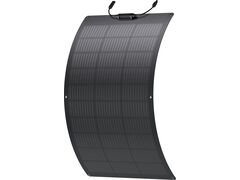
EcoFlow 100W Flexible Solar Panel
$199.00
Ultra-light at 5.1 pounds and flexible up to 258°, it hugs the roof of a van, a boat, or an RV: a discreet solar panel that disappears once mounted.
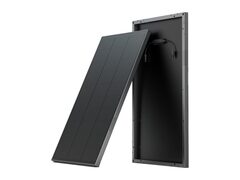
EcoFlow Rigid solar panel 100W (x2)
$319.00 (10)
Two 100 W rigid panels to mount once and forget: 23% efficiency, IP68 tempered glass and mounting feet supplied to equip a van or a roof.
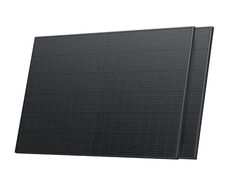
EcoFlow Rigid Solar Panel 400W (x2)
See price (4)
Fit two EcoFlow 400W rigid solar panels at home or on your RV: 23% efficiency, IP68 rating and long-lasting weather resistance built to last.
Renogy 16BB 175W Panel
See price (3)
The same watts on less roof. N-type cells at 25% efficiency and 16 busbars, in a shorter format than the average 175 W panel.
Published on 02/09/2026