Brand: Renogy

Renogy

Renogy has been equipping vans, boats and cabins since 2010 with a full range, from panel to controller by way of the battery and the alternator charger.

The appeal of the brand lies in its coherence: panels, Rover MPPT controllers, LiFePO4 batteries and DC-DC chargers are designed to work together, which avoids the voltage and connector surprises that come with assembling a kit piece by piece. We measure the real output of the panels, often 60 to 75 per cent of nominal in field conditions, and check the maximum voltage each controller accepts, since that sets how many panels you can wire in series.

12 products in the catalogue.

Our Renogy products
Rover 20A Renogy Rover 20A MPPT charge controller
Promo

Renogy Rover 20A

See price and availability (20)

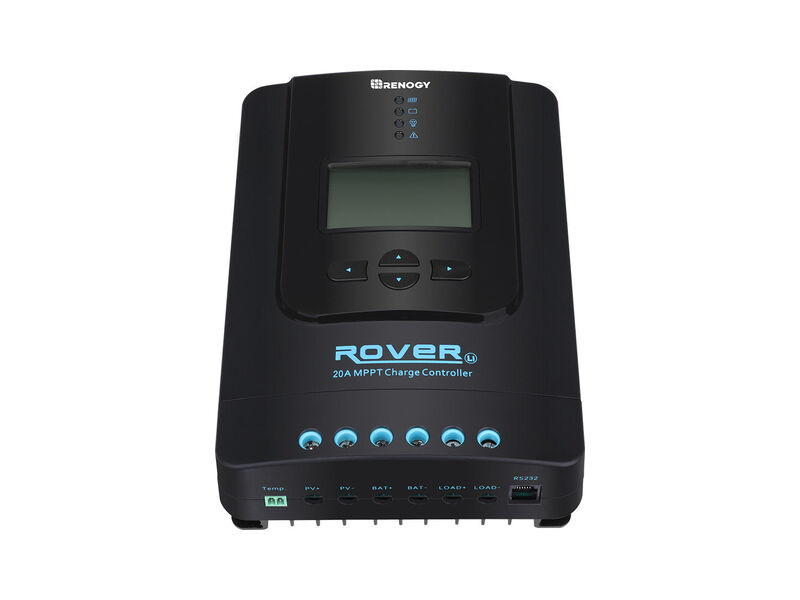
20A of charge, 100V input and up to 99% tracking efficiency, with an LCD screen: the Renogy Rover 20A handles small 12/24V solar setups.

  • Max PV voltage: 100V (12/24V auto)
  • Charge current: 20A
  • Tracking efficiency: Up to 99% (MPPT)
  • Screen: LCD, Bluetooth optional
  • 20A and LCD screen for a compact 12/24V setup
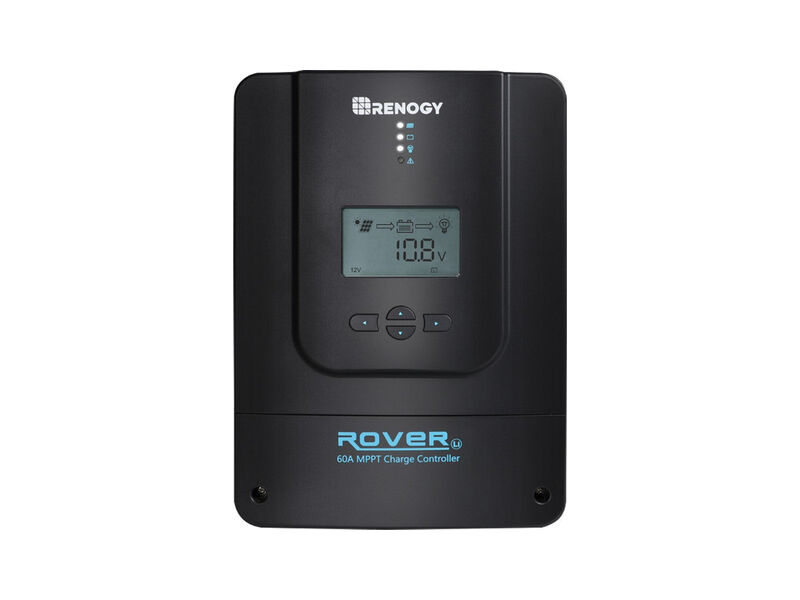
The Renogy Rover 20A is a compact MPPT solar charge controller, designed for medium-sized 12V and 24V setups. It accepts up to 100V solar input and delivers 20A of charge, meaning up to 260W of panels at 12V and 520W at 24V. Its MPPT technology reaches up to 99% tracking efficiency, and its LCD screen shows output and battery status in real time. Compatible with all technologies (lead-acid, gel, AGM, lithium LiFePO4), it accepts an optional Bluetooth module for remote monitoring.
In-depth reviewRead our full review → 3.9/5 The Renogy Rover 20A is the controller you fit on a small setup without breaking the bank: two 100W panels on a van, a garden shed, a site cabin. For this kind of use, it does exactly what is asked of it. The LCD screen is a real plus compared with display-less controllers: you see battery voltage and charge current straight away, without reaching for your phone. Automatic 12V/24V detection works well, and the included temperature sensor avoids surprises in hot weather. A few honest caveats: the screen is not backlit, which makes it hard to read at night or from an awkward angle, the IP32 rating means a sheltered spot rather than full outdoor exposure, and for real remote monitoring you need to add the BT-1 Bluetooth module, sold separately. Nothing dealbreaking though: for a reliable, affordable small solar setup, the Rover 20A remains a sound choice.
View product page
Rover 60A Renogy Rover 60A MPPT charge controller
Promo

Renogy Rover 60A

See price and availability (12)

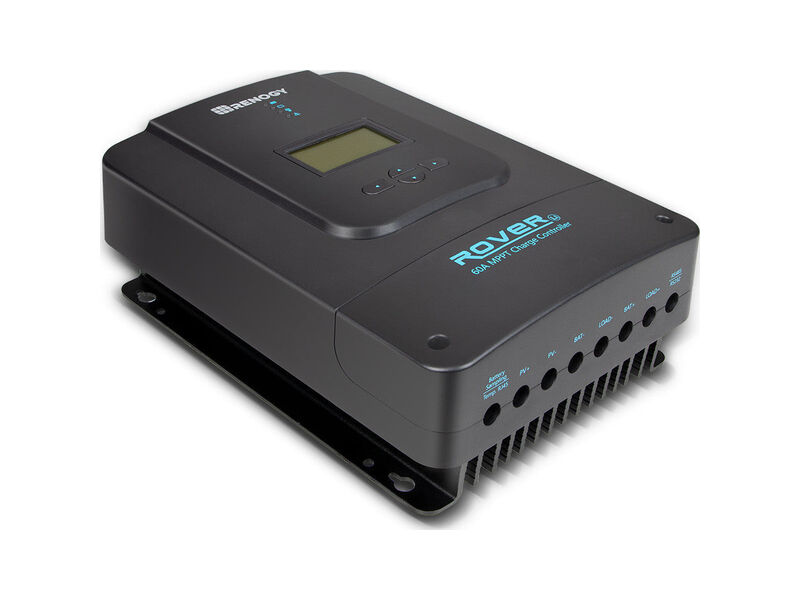
60A of charge, 150V input and automatic 12/24/36/48V detection: the Renogy Rover 60A MPPT handles the most demanding solar setups.

  • Max PV voltage: 150V (12/24/36/48V auto)
  • Charge current: 60A
  • Tracking efficiency: Up to 99% (MPPT)
  • Screen: LCD, Bluetooth optional
  • 60A, 150V and 12-48V auto for large setups
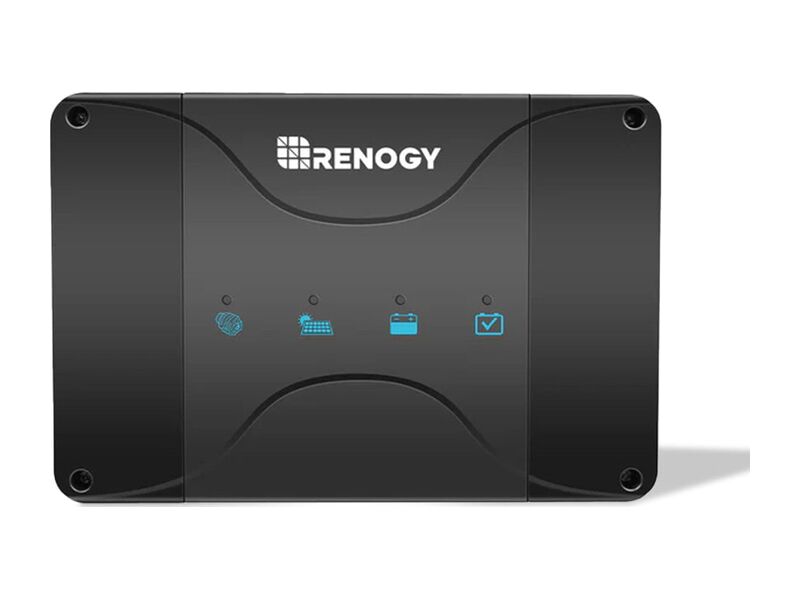
The Renogy Rover 60A is a premium MPPT solar charge controller, designed for 12V, 24V, 36V and 48V setups. It accepts up to 150V solar input and delivers 60A of charge, meaning up to 3200W of panels at 48V. Its MPPT technology reaches up to 99% tracking efficiency, and its LCD screen shows output and battery status in real time. Compatible with all technologies (lead-acid, gel, AGM, lithium LiFePO4), it accepts an optional Bluetooth BT-1/BT-2 module for remote monitoring.
The Renogy Rover 60A is built for solar setups that have outgrown a small controller. Tested on a 24V system with close to 1000W of panels, it never seemed to struggle: the 60A charge current leaves real headroom, and the auto-detection up to 48V is handy if the setup ever moves to a higher voltage. The LCD screen is clear and readable in full sun, showing voltage, current and charge status directly without needing a phone. Switching to lithium was painless thanks to the configurable user mode. The only real drawbacks: Bluetooth stays optional (you need to add a BT-1 module for remote monitoring), and there is no fan, everything relies on the aluminium heatsink, which is plenty in normal use but runs a bit warm at peak output in summer. For a large setup that has outgrown a 40A controller, this is a solid choice, and a far more complete one than the Rover Lite.
View product page
DCC50S Renogy DCC50S 50A MPPT DC-DC charger
Promo

Renogy DCC50S

See price and availability (12)

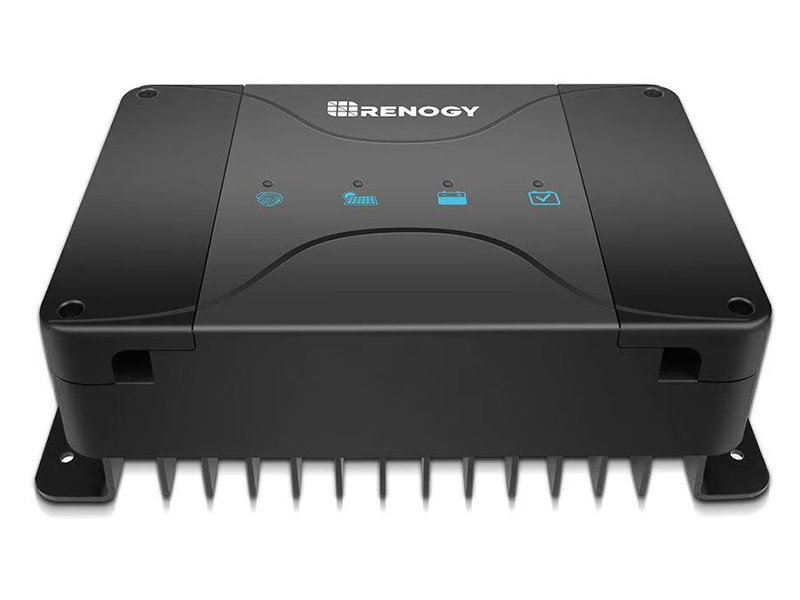
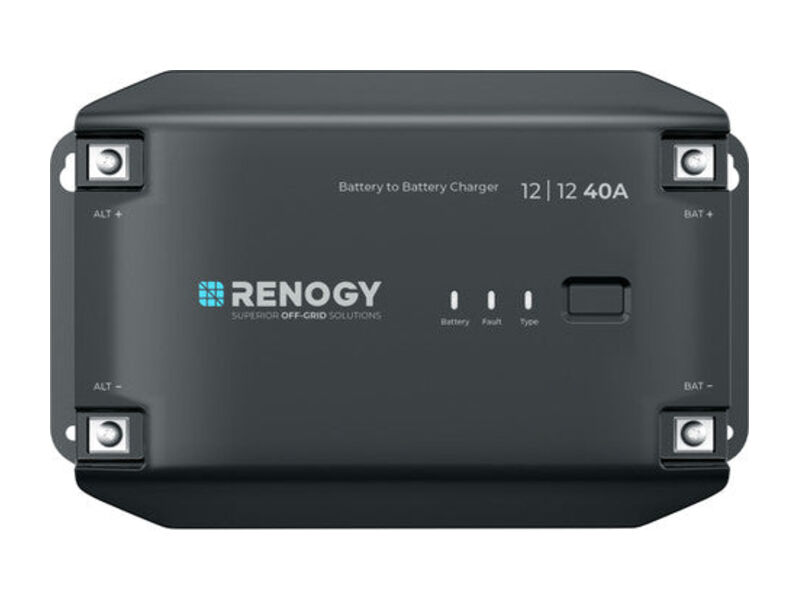
Recharge your house battery while driving AND from the sun: the Renogy DCC50S packs a 50A DC-DC charger and MPPT solar controller in one unit, built for vans.

  • Charge current: 50A (12V)
  • Inputs: Alternator + solar (built-in MPPT)
  • Power / efficiency: 660W, up to 94%
  • Compatibility: Lead-acid (flooded, gel, AGM), lithium LiFePO4
  • 50A DC-DC charger and solar MPPT in a single unit
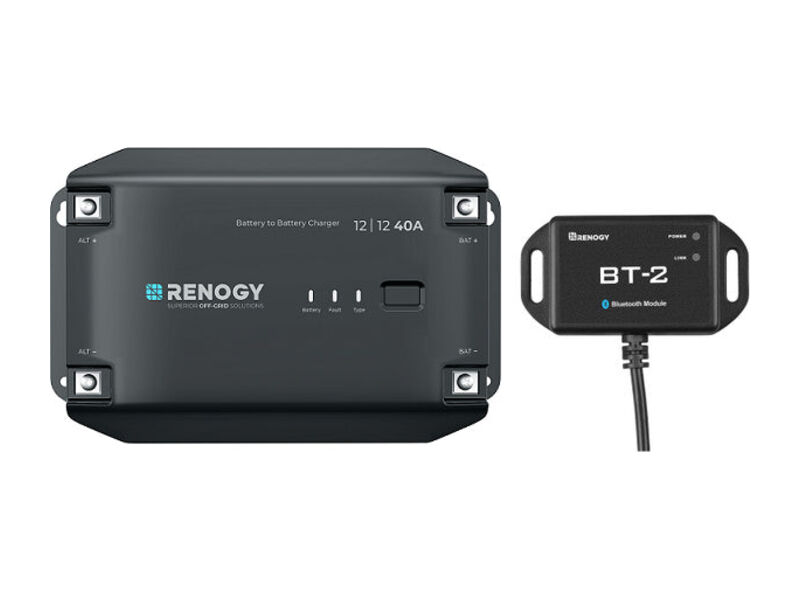
The Renogy DCC50S is a 12V dual-input on-board battery charger delivering 50A. It recharges the auxiliary (house) battery of a van or camper from the vehicle's alternator and/or from solar panels, thanks to a built-in MPPT controller. With 660W of power and 94% efficiency, it works with lead-acid (flooded, gel, AGM) and lithium LiFePO4 batteries. Its voltage-sensitive relay (VSR) isolates the two batteries, and an optional Bluetooth module allows monitoring through the app.
The Renogy DCC50S is one of the key pieces of gear in a converted van, and in use it delivers on its promises. We installed it to recharge an auxiliary lithium battery, with one input from the alternator and another from roof-mounted solar panels. The result is impressive: while driving, the house battery recharges at 50A, far faster than with a simple battery isolator, and once parked, the MPPT controller takes over with solar. Having both functions in a single unit greatly simplifies the install and the wiring. The voltage-sensitive relay cleanly isolates the starting battery, so you are not staring at a dead battery the next morning. Adding the optional Bluetooth module lets you monitor charging from the app, which is genuinely handy. Points to plan for: you need to size the cables properly, since 50A is a lot of current, and set the correct battery profile, and on a smart alternator an ignition wire is required. But for a serious van or 4x4 build, this is a safe bet.
View product page
Rover 40A Renogy Rover 40A MPPT charge controller
Promo

Renogy Rover 40A

See price and availability (8)

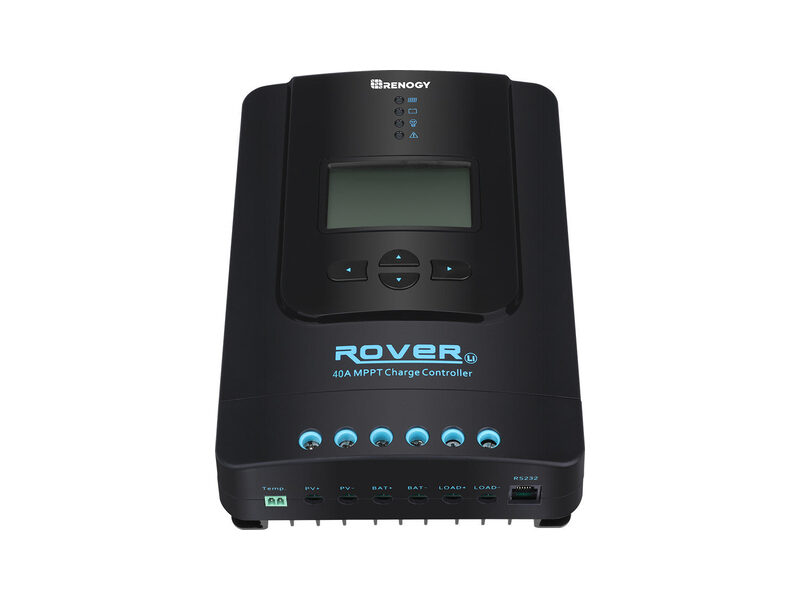
40A of charge, 100V input and up to 99% tracking efficiency, with an LCD screen: the Renogy Rover 40A handles the most generous 12/24V solar setups.

  • Max PV voltage: 100V (12/24V auto)
  • Charge current: 40A
  • Tracking efficiency: Up to 99% (MPPT)
  • Screen: LCD, Bluetooth optional
  • 40A and LCD screen for large 12/24V setups
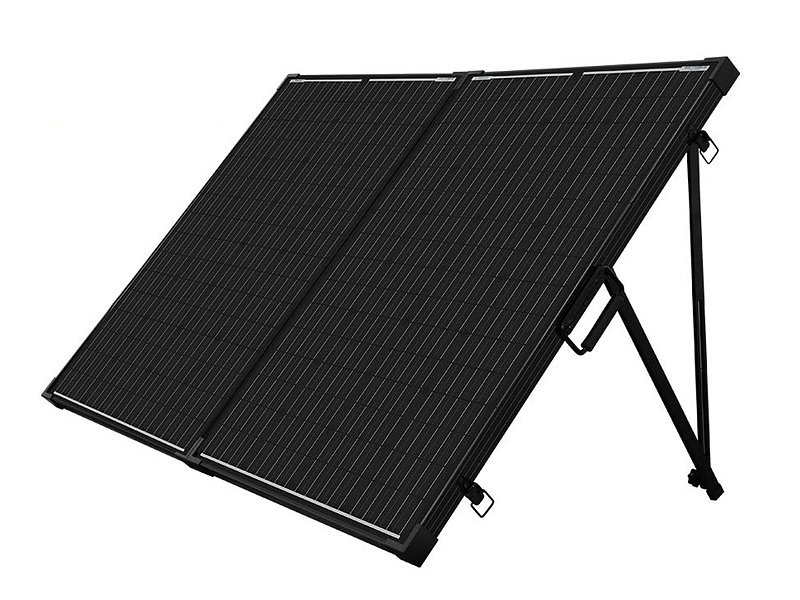
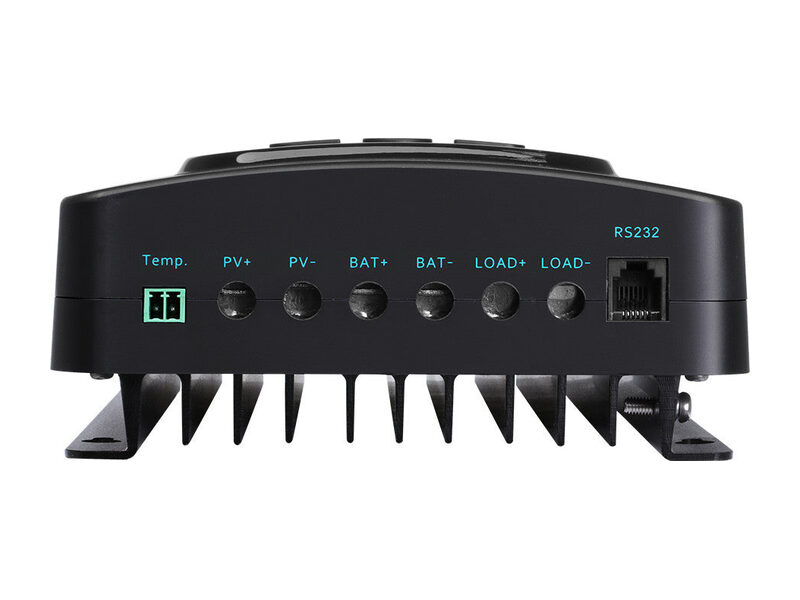
The Renogy Rover 40A is a premium MPPT solar charge controller, designed for 12V and 24V setups. It accepts up to 100V solar input and delivers 40A of charge, meaning up to 520W of panels at 12V and 1040W at 24V. Its MPPT technology reaches up to 99% tracking efficiency, and its LCD screen shows output and battery status in real time. Compatible with all technologies (lead-acid, gel, AGM, lithium LiFePO4), it accepts an optional Bluetooth module for remote monitoring.
The Renogy Rover 40A is the controller you choose when your solar setup starts getting serious. Its 40A charge current lets it handle large panel arrays, up to 520W at 12V and double at 24V, where a 20A controller would quickly saturate. Its MPPT technology really gets the most from the panels, with tracking efficiency that climbs very high. We really like the built-in LCD screen, which shows output, voltage and charge status directly without needing a phone, while still allowing you to add a Bluetooth module for remote monitoring. It handles all battery types, including lithium, via configurable profiles. The only things to plan for are the price, above a small controller, and the Bluetooth not being built in as standard, unlike some rivals. But for a robust, reliable 12/24V setup, it is an excellent controller.
View product page
Solar Suitcase 200W Renogy 200W foldable solar panel with charge controller
Favorite

Renogy Solar Suitcase 200W

See price and availability (7)

Plenty of solar power, portable anywhere: two 100W panels on a folding frame, with a built-in controller and a carry case, ready to charge your batteries.

  • Power: 200W monocrystalline (2 x 100W)
  • Controller: Built-in Renogy Voyager 20A
  • Weight / Transport: 16.3 kg, semi-rigid case
  • Output: Pre-wired MC4 cables
  • Built-in controller, adjustable folding frame, rugged
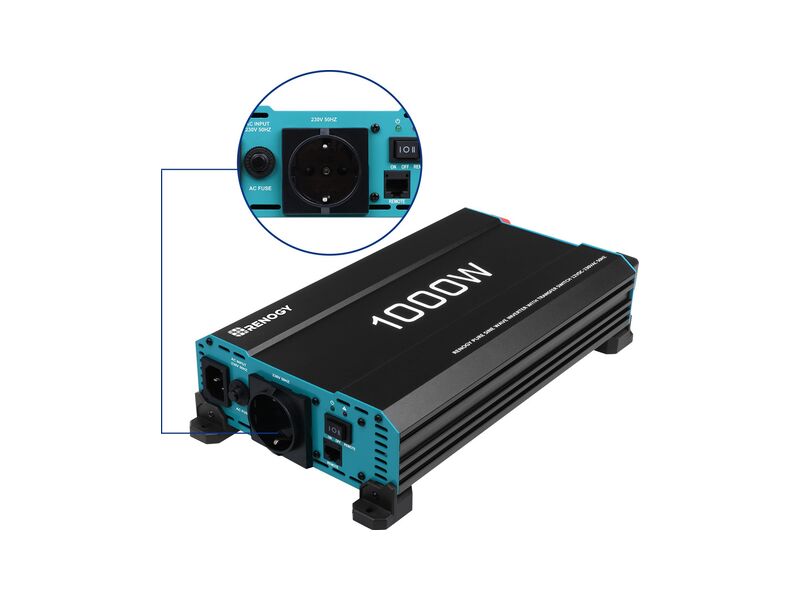
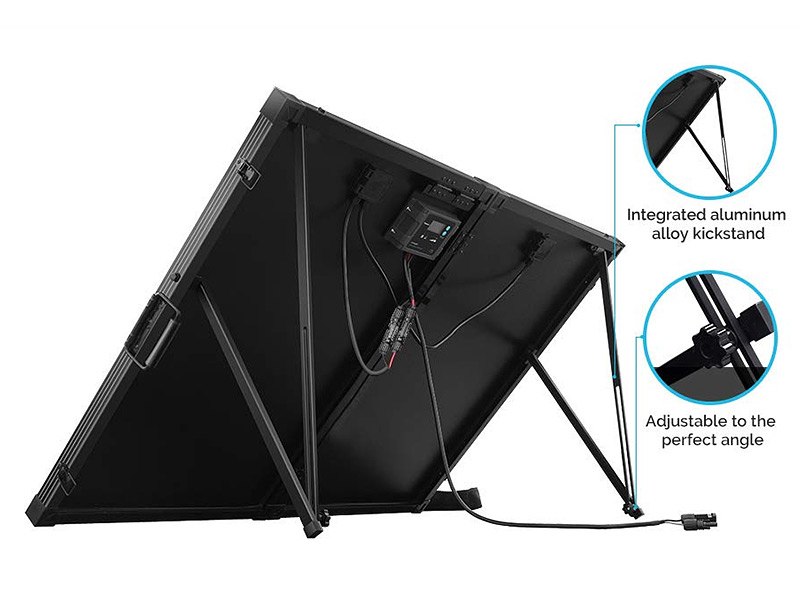
When a small foldable panel lacks power and a fixed panel is too bulky to move, the solar suitcase is the ideal solution. Renogy's brings together two 100W monocrystalline panels on a folding steel frame, pre-wired with a Renogy Voyager 20A charge controller and MC4 cables, so it is usable straight away. Rugged and well designed, supplied in a semi-rigid carry case, it easily charges a 12V battery or a power station in a motorhome, a van, on a boat or at an off-grid site.
View product page

Renogy 1000W/2000W power inverter

$230.17 $148.93 (6)

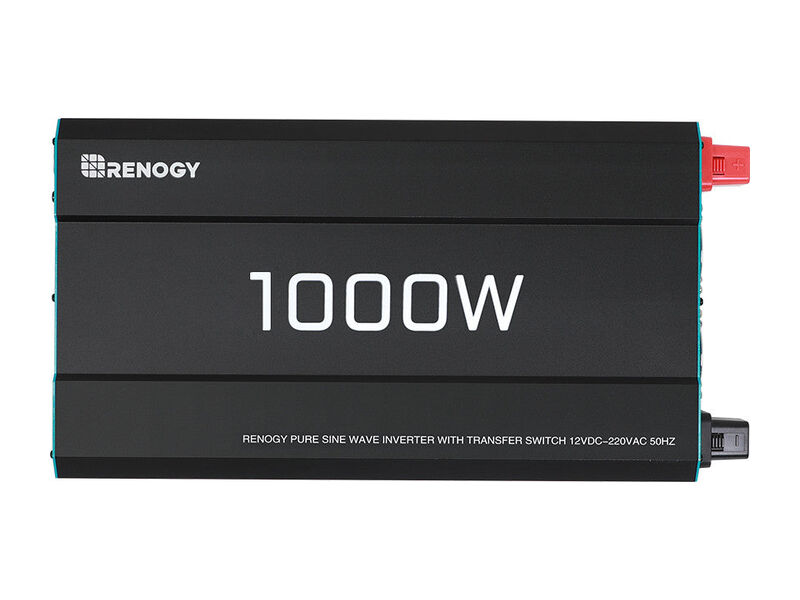
From cigarette lighter to a real mains socket: the Renogy inverter keeps sensitive electronics powered, with an automatic mains transfer switch in 50ms.

  • Power: 1000W continuous, 2000W surge
  • Waveform: Pure sine wave, 220-240V
  • UPS function: Mains/battery switch in 50ms
  • Format: 2.6kg, wired remote included
  • True pure sine wave with automatic mains switch
The Renogy 1000W/2000W inverter turns a battery's 12V into 230V pure sine wave AC, clean enough for sensitive electronics such as laptops, medical devices or small appliances. Its UPS function automatically switches between mains and battery power in under 50 milliseconds, a genuine asset in a motorhome, on a boat, or as home backup power. Compact at 2.6kg, protected against overload and overheating, it also comes with a wired remote control.
You would expect a lot from an inverter priced around $148.94 and this one mostly delivers. The genuine pure sine wave causes no issues with a laptop, a power tool charger or a small kettle, unlike modified sine models that make some appliances hum. The UPS function is the real selling point: wire the AC input to your motorhome's shore power and let the unit switch itself over on a power cut, no scrambling to swap plugs. A couple of honest caveats. The rated idle draw (about 1A, or 12W) is higher than a Victron in ECO mode, which matters on a setup left plugged in for weeks. The supplied battery cable is decent but no more: consider upgrading it if you plan to draw the full 1000W continuously. For the price, well below an equivalent pure sine inverter with a built-in transfer switch, it is a genuinely good compromise for a reliable 230V socket without breaking the bank.
View product page

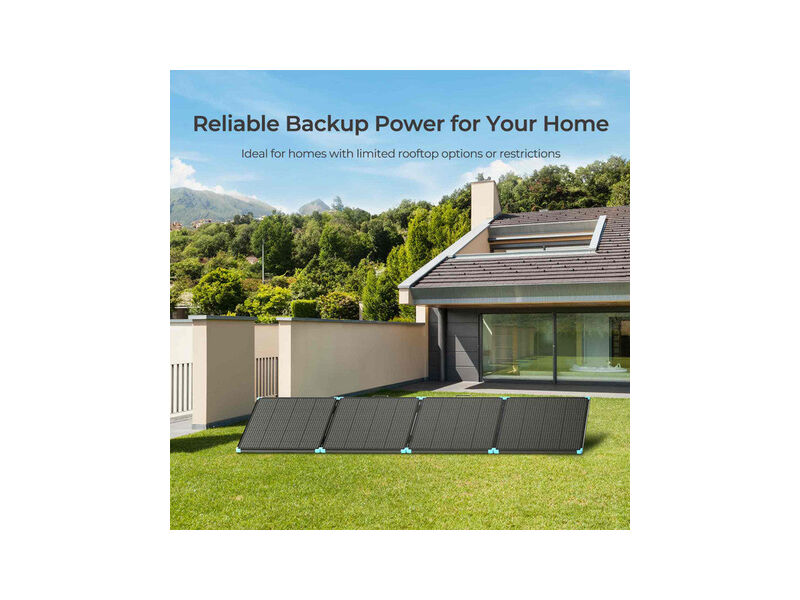
Renogy Lightweight solar suitcase 400W

See price and availability (3)

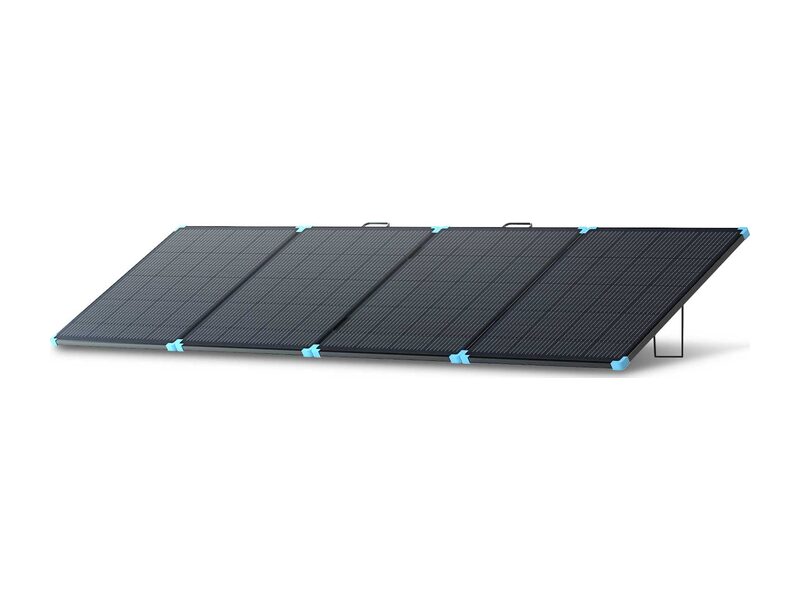
400 W of portable output in a 13.7 kg suitcase: four folding panels, reinforced ETFE coating and solid kickstands to refill a power station in one day.

  • Power: 400 W (4 folding panels)
  • Efficiency: 23% (monocrystalline cells)
  • Weight: 13.7 kg (fibreglass ETFE)
  • Durability: IP67, adjustable kickstands, MC4
  • 400 W portable for 13.7 kg, folds into a suitcase
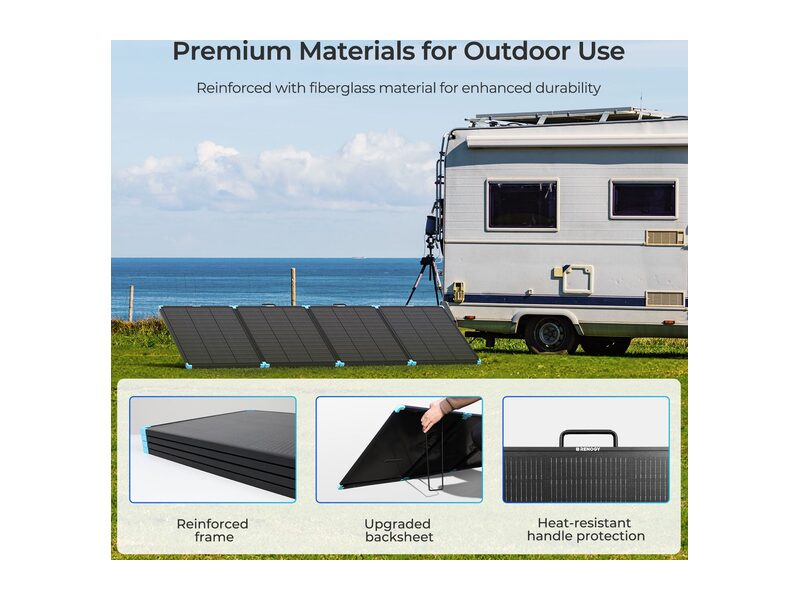
The Renogy 400 W solar suitcase is for those who want serious power without a fixed installation. Its four panels unfold in seconds and post 23% efficiency, enough to recharge a 1 kWh station over a day. Where most 400 W units exceed 20 kg, this one weighs just 13.7 thanks to a fibreglass-reinforced ETFE coating, far lighter than tempered glass. IP67 certified and fitted with sturdy kickstands, it sits on the ground facing the sun, folds back into a suitcase with a handle and follows a motorhome, a van or an off-grid trip.
We took this Renogy 400 W suitcase in a motorhome for three weeks, and it is the power-to-weight ratio that strikes you first. A 400 W suitcase that weighs only 13.7 kg can be carried one-handed over a few dozen metres, where an equivalent tempered-glass model would have wrecked our backs. Unfolding the four panels takes about thirty seconds, the kickstands hold well even on uneven ground, and you only need to reorient it two or three times through the day to stay near peak. On a fine July day, we filled a 1 kWh station between morning and mid-afternoon without straining. The fibreglass-reinforced ETFE coating inspires confidence: it takes knocks and scratches far better than a glass panel, and the IP67 rating lets you leave it out in a shower without stress. Two caveats: unfolded, it takes up a fair amount of ground, so you need space in front of the vehicle, and the 47.2 V open-circuit voltage means checking your station's input range before buying. For serious portable use, it is one of the most convincing suitcases around.
View product page

Renogy ShadowFlux 200W

See price and availability (3)

A roof vent, an aerial, a branch: on a campervan roof, partial shade is expensive. This panel is built to keep producing when part of its surface is covered.

  • Power: 200 W, N-type cells (25% efficiency)
  • Anti-shading: 28 bypass diodes, up to 85% more output in shade
  • Module efficiency: 20.7%
  • Format: 1262 x 764 x 30 mm, 10.81 kg
  • Keeps producing when part of the panel is covered
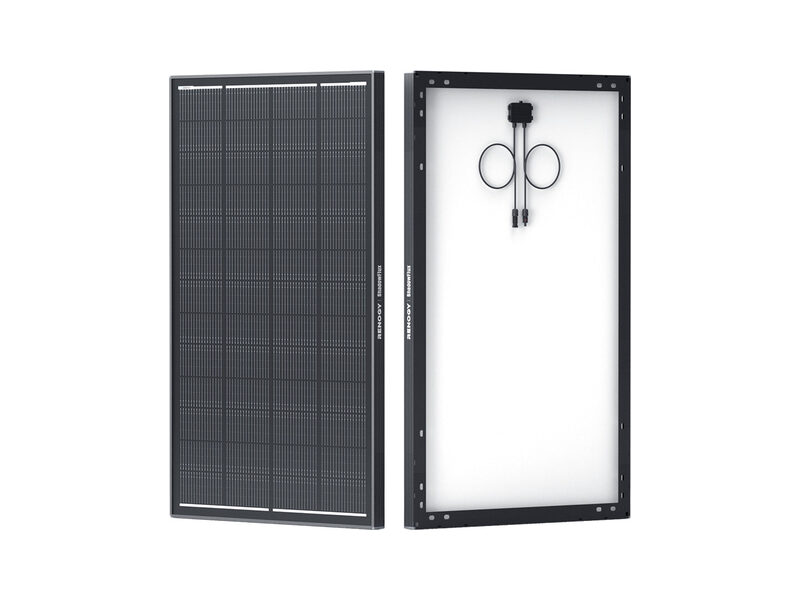
On a conventional panel, a single shaded cell drags down its whole string: that is the structural weakness of solar on a cluttered roof. The Renogy ShadowFlux splits the module into 28 sections, each protected by its own bypass diode, where an ordinary panel has three. Renogy claims up to 85% more output under partial shade. The rest follows: N-type cells at 25% efficiency, 16 busbars, 20.7% module efficiency, IP67 rating and 10.81 kg for 1262 x 764 mm, a more compact format than the average 200 W panel.
Partial shade is the problem you discover after fitting, never before. On a van roof there is always a vent, an aerial or a rack casting a shadow at some point in the day, and on a conventional panel that shadow does not cost you the covered area: it collapses the entire cell string involved. That is exactly what this ShadowFlux tackles, with 28 bypass diodes instead of the usual three. Each zone keeps working on its own account. The claimed 85% gain obviously applies in the manufacturer's best case, but the principle is sound and checkable: the finer the electrical subdivision, the less a local shadow penalises the whole. The rest of the spec sheet holds up, with N-type cells that age better than PERC and a format 7% more compact than the average 200 W, which matters when fitting three panels between two roof vents. Two reservations: the materials warranty runs five years where some rivals offer ten or twelve, and 10.8 kg on a van roof calls for proper bonding or serious brackets. If your roof is completely clear, a standard panel will do just as well for less.
View product page

Renogy 16BB 175W Panel

See price and availability (3)

The same watts on less roof. N-type cells at 25% efficiency and 16 busbars, in a shorter format than the average 175 W panel.

  • Power: 175 W at 12 V, N-type cells (25% efficiency)
  • Module efficiency: 20.6%
  • Footprint: 1110 x 764 x 30 mm, 7 to 10% less than typical 175 W panels
  • Weight: 9.6 kg
  • The best watts-per-centimetre-of-roof ratio in our selection
On a van roof the constraint is almost never budget: it is space. The Renogy 16BB 175 W answers exactly that, with a 1110 x 764 mm format quoted 7 to 10% more compact than other panels of the same rating, for 9.6 kg. The density comes from N-type cells at 25% efficiency, a newer generation than PERC, and from 16 busbars that cut resistive losses. Module efficiency 20.6%, 175 W at 20.88 V, IP67-rated MC4 connectors.
When fitting out a van you do not think in pounds per watt but in watts per metre of roof. Between vents, rack and aerial, usable area is counted in centimetres, and that is where this 175 W stands out: Renogy quotes 7 to 10% less area than other panels of the same rating, which can be enough to fit a third module where two looked like the limit. The gain comes from N-type cells, more efficient than PERC for a given area, and from 16 busbars collecting current at more points. Two secondary benefits deserve a mention: N-type degrades more slowly over time, and it loses less efficiency as the panel heats up, which is daily life on a summer roof. At this price that is a rare performance-to-footprint ratio. The only limit is positioning: without the anti-shading subdivision of its bigger ShadowFlux sibling, it remains vulnerable to a cast shadow, like any conventional panel. Clear roof, it is the best pick in our selection; cluttered roof, look at the ShadowFlux.
View product page

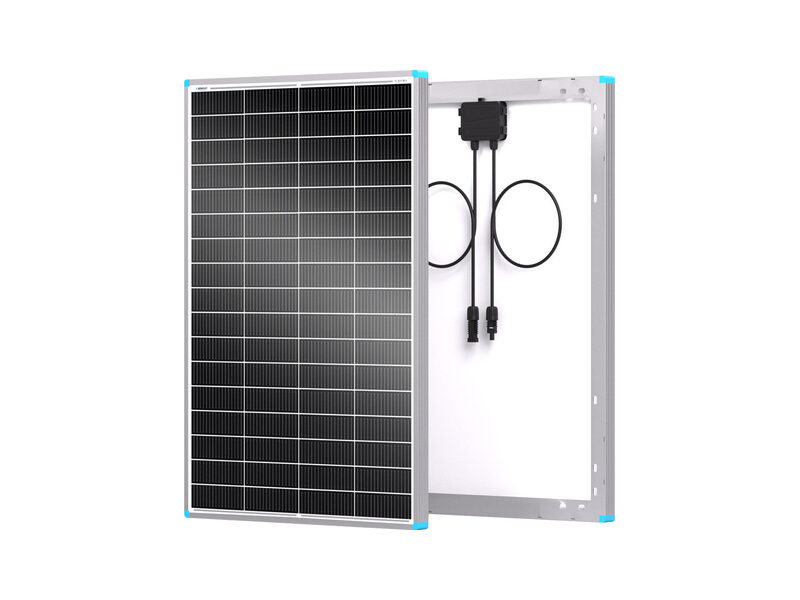
Renogy 100W Rigid Panel

See price and availability (2)

100W monocrystalline with N-type cells at 25% cell efficiency and a rugged aluminum frame: Renogy's rigid panel anchors any fixed solar setup.

  • Power: 100W (N-type 16BB monocrystalline)
  • Efficiency: 20% module, cells up to 25%
  • Frame: Corrosion-resistant aluminum, tempered glass
  • Format: Rigid, about 13 lbs, 34.1 x 22.8 in
  • N-type cells, 20% module efficiency, rugged frame
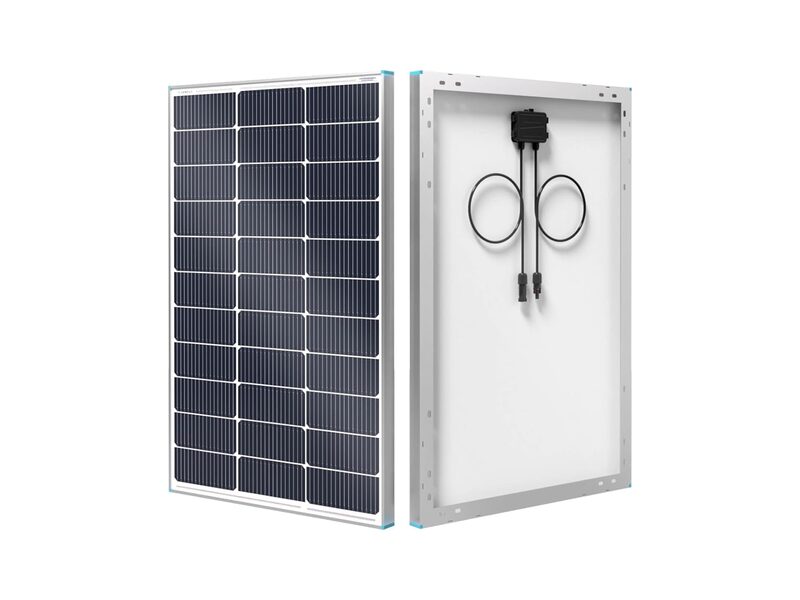
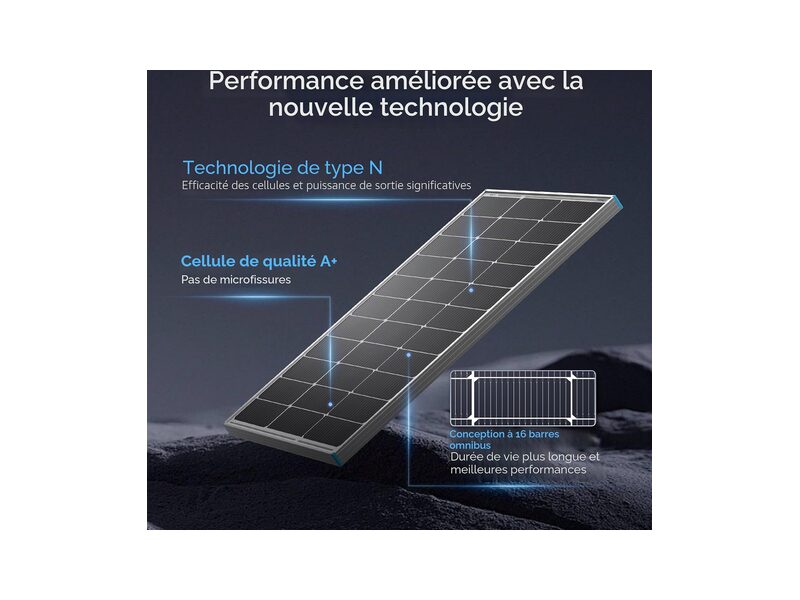
The Renogy 100W 12V rigid solar panel is a monocrystalline module built with N-type 16BB cells, rated up to 25% cell efficiency for a 20% module efficiency, among the best figures in its class. Its corrosion-resistant aluminum frame and tempered glass hold up to years of outdoor exposure, wind loads up to 2400Pa and snow loads up to 5400Pa, for a fixed install on an RV roof, a van, a cabin, or a boat. Light for a rigid panel at about 13 pounds, it ships with a 10-year product warranty and a 25-year power output warranty.
The Renogy 100W rigid panel is a classic fixed-solar building block, and this N-type version is a real step up. Its 20% module efficiency, with cells rated to 25%, shows in practice: on an equal footprint, it pulls in noticeably more power than an older PERC panel, which matters when roof space on a van or trailer is tight. The aluminum frame and tempered glass feel built for years outside, and it stays relatively light for a rigid panel at around 13 pounds, easier to lift onto a roof solo than most framed panels this size. Real output naturally depends on sun and angle, but aimed well, it keeps a leisure battery topped off through an MPPT controller without drama. The only real planning needed is around installation, mounting hardware, MC4 wiring, and a charge controller sold separately, plus wiring multiple panels together for a bigger setup. For the base of a dependable, long-lasting solar system, it remains a safe, well-reviewed pick.
View product page
100Ah 12V Battery Renogy LiFePO4 100Ah 12V Bluetooth battery
Promo

Renogy 100Ah 12V Battery

See price and availability

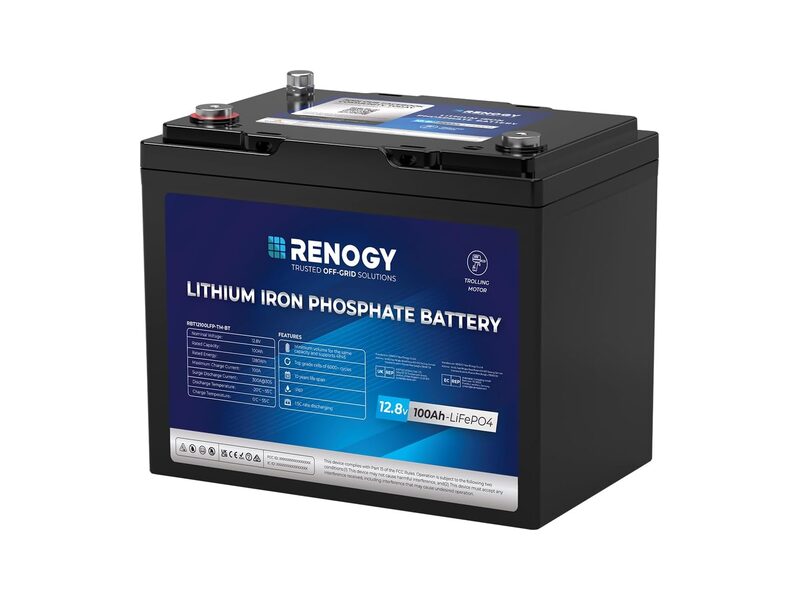
1280Wh of lithium storage with a 150A BMS, 6000 cycles and Bluetooth monitoring: the Renogy 100Ah 12V battery is the ideal heart of a solar kit, RV or boat.

  • Capacity: 100Ah / 1280Wh (12V LiFePO4)
  • BMS: Up to 150A discharge
  • Lifespan: Over 6000 cycles
  • Monitoring: Bluetooth (Renogy app), IP67
  • 100Ah lithium, 6000 cycles and Bluetooth monitoring
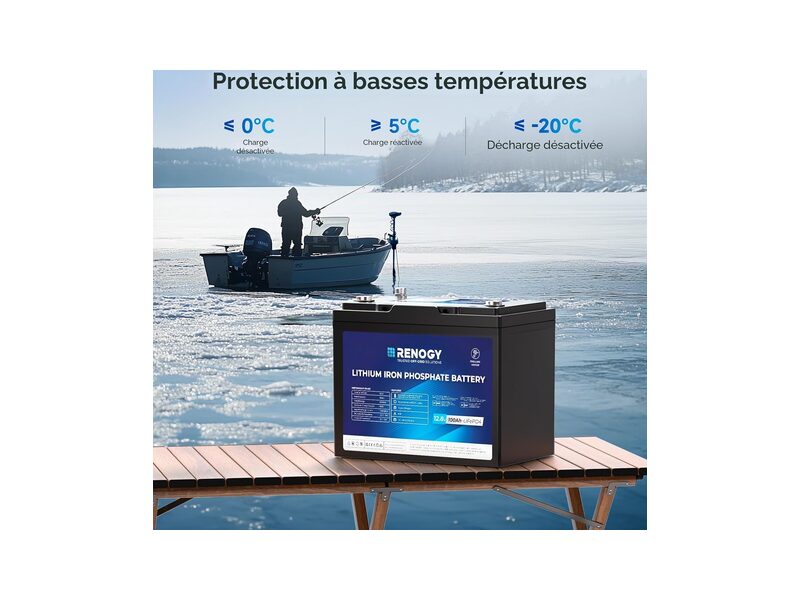
The Renogy 100Ah 12V battery is a 1280Wh LiFePO4 lithium battery, designed for energy storage in a solar installation, RV, van, boat or trolling motor. Its built-in BMS handles up to 150A discharge, and its LiFePO4 chemistry ensures over 6000 cycles, a lifespan of several years. IP67 waterproof, it resists splashes and dust, and is monitored remotely via Bluetooth with the Renogy app. A reliable, durable battery for any 12V setup.
The Renogy 100Ah 12V battery is one of those lithium batteries that made off-grid and solar energy genuinely accessible. In a van or RV setup, its 1280Wh offer a solid reserve, and above all its LiFePO4 chemistry lets you discharge it almost fully without harming it, unlike old lead-acid batteries. Its 150A BMS is a real asset: it allows high power peaks, enough to run a beefy inverter. We really like the Bluetooth monitoring via the Renogy app, which lets you keep an eye on the charge level and battery health from your phone, along with the reassuring IP67 rating on a boat. The only downsides are the weight (a 100Ah battery is still heavy) and a price above lead-acid, quickly offset by the lifespan. For the heart of a reliable solar kit, it is a safe bet.
View product page

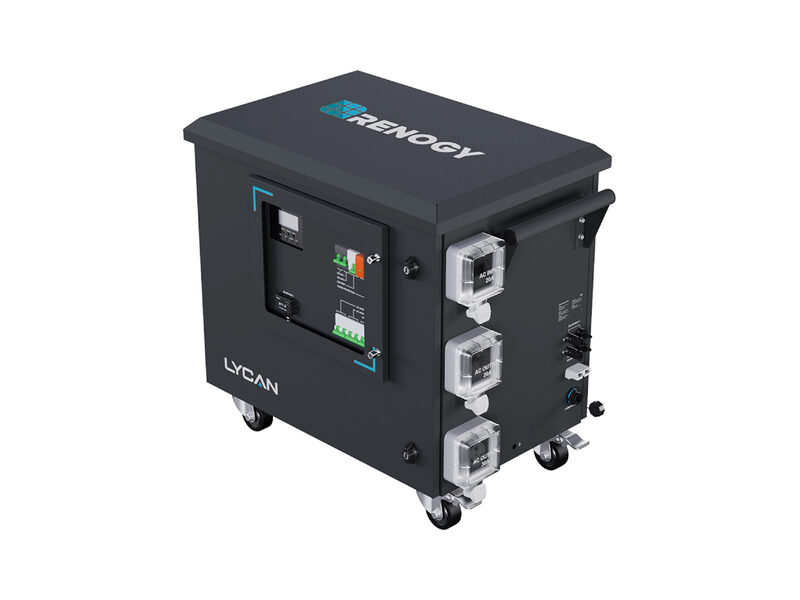
Renogy Lycan 5000

$5787.20

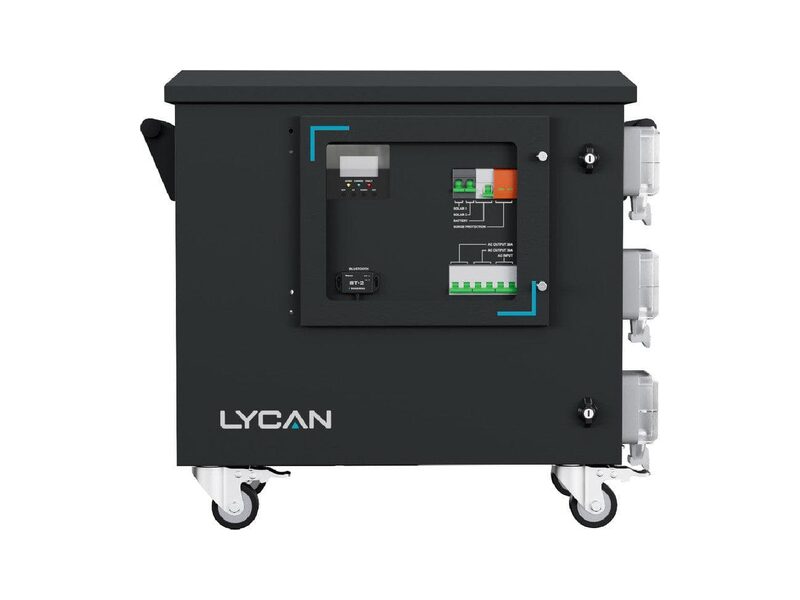
4800Wh and 3500W in an all-in-one solar backup system on wheels: the Renogy Lycan 5000 powers a whole home and recharges from solar.

  • Capacity: 4800Wh (48V LiFePO4 battery)
  • Power: 3500W continuous, 7000W peak
  • Backup: UPS function (instant switchover)
  • Solar: Built-in MPPT solar input
  • All-in-one solar backup system on wheels
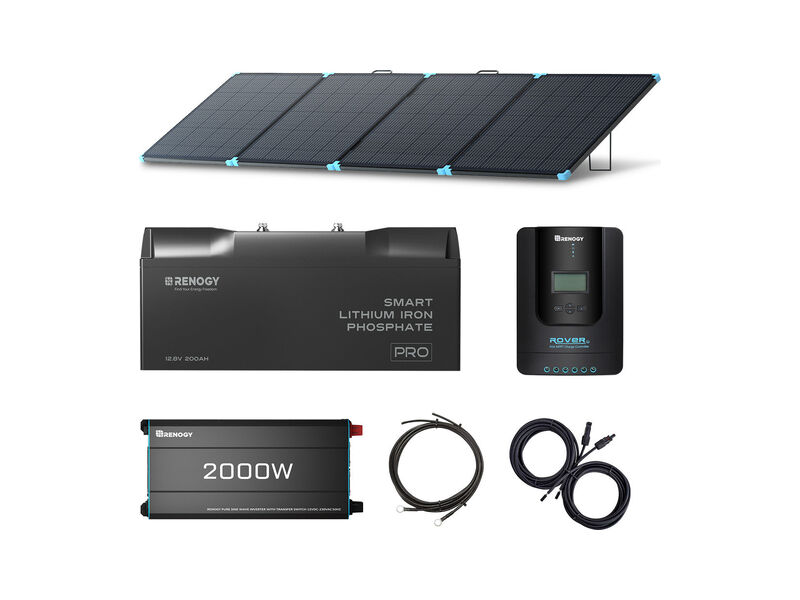
The Renogy Lycan 5000 Power Box is an all-in-one solar storage and backup system of 4800Wh with a LiFePO4 battery, delivering 3500W continuously (7000W peak). Designed as residential backup power, it includes a UPS function to switch over instantly during an outage, an MPPT solar input to recharge from solar, and plenty of outputs. Mounted on rugged wheels, it moves despite its heavy weight. A high-capacity backup solution for the home, worksite or off-grid living.
The Renogy Lycan 5000 does not play in the portable-station category: it is a genuine residential backup system, designed to take over from the grid during an outage or to live off-grid. Its 4800Wh and 3500W let it power the essentials of a home, and its UPS function switches over instantly, fast enough to interrupt nothing. We like its all-in-one approach: built-in MPPT solar controller, inverter, LiFePO4 battery and wheels, all in one box, which simplifies installation compared with a modular system to assemble. In return, it is a heavy, expensive product, mostly distributed on the North American market, which makes it hard to obtain in Europe and raises the voltage question (originally 120V). For serious residential use and solar charging, it is nonetheless a rugged, complete solution.
View product page

← All brands

Compare