How we chose
A power inverter (the terms inverter and converter are used interchangeably in this space) turns the 12V DC from your RV or van battery into 120V AC, exactly like a household outlet. Handy for running a laptop, a small appliance or light tools far from any shore power. But not every model is equal, and the wrong pick can disappoint, or even damage a sensitive device. Our criteria:
- Real power, not the headline peak figure: add up the draw of every device you will run at the same time, then add roughly 20 % headroom. Peak (surge) power only matters for absorbing the brief start-up spike of a motor or compressor, for a few seconds.
- Waveform type: pure sine or modified sine. Sensitive electronics (switch-mode chargers, delicate gear) want pure sine; lighting or a resistive heater tolerate the cheaper modified sine.
- Safety: protection against reversed polarity, overload, short circuits and overheating. Non-negotiable on a device that draws dozens of amps continuously.
- Versatility: USB ports, a transfer-switch (UPS-style) function that switches to shore power when available, a status display.
Four different profiles, from the occasional fix to a proper fixed installation in a converted van or RV.
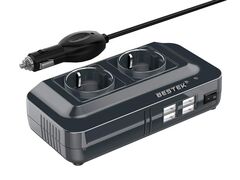
1. The compact pick for small devices: Bestek 200W
With 200W continuous (500W peak), the Bestek covers the basics: charging a laptop, a cordless tool, a small electric cooler or a car vacuum. Its four USB ports, including one fast-charge port, let you top up several devices at once without tying up the single AC outlet.
Light, compact and affordable, it is the obvious pick for an occasional fix, with no fixed installation and no big budget. Its power stays limited: no kettle, no hair dryer.
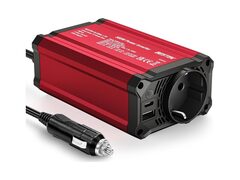
2. The versatile road-trip pick: Bestek 500W
Twice as powerful as its little sibling, the Bestek 500W covers a wider range of needs on the road: a laptop charger, a small appliance, light tools, with a comfortable surge margin to absorb a start-up spike. A cooling fan and the usual electronic protections (overload, overheating, short circuit) still come standard at this price point.
A solid compromise for an occasional RV or van trip, as long as the devices you plug in tolerate a modified waveform. For genuinely sensitive electronics, see the pure sine models below.
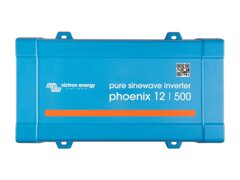
3. The compact, reliable pure sine pick: Victron Phoenix 12/500
With 400W continuous and a true pure sine wave output (identical to a household outlet), the Victron Phoenix 12/500 targets devices that budget models sometimes struggle with: switch-mode chargers, small motors, measuring or medical equipment. Its ECO mode drops standby draw to around 1 watt, a real win on an RV battery where every amp-hour matters.
Pricier than the Bestek units, it earns that premium through brand reliability, a five-year warranty and VE.Direct monitoring to check battery voltage from an app. The pick for anyone installing hardware once and expecting no surprises afterwards.
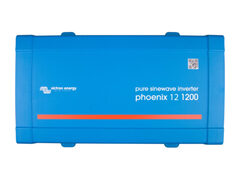
4. The high-power premium pick: Victron Phoenix 12/1200
For bigger needs (a powerful microwave, professional power tools, several devices running together), the Victron Phoenix 12/1200 delivers 1000W continuous and up to 2200W peak, still in pure sine. Same five-year warranty, same ECO mode and the same VE.Direct monitoring as the 12/500, but with the power headroom that demanding installations need.
Sizing and installing your inverter safely
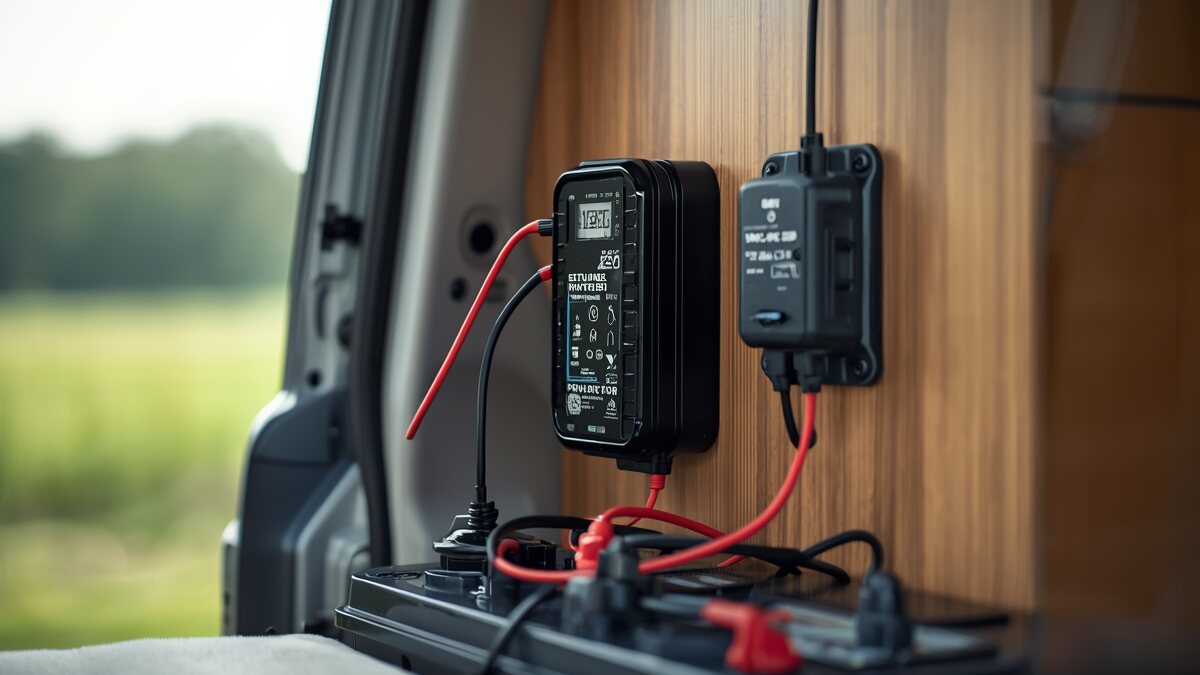
A high-power inverter draws very high currents on the 12V side, sometimes several hundred amps: a sloppy install runs hot, and a cable running hot can start a fire. Two simple benchmarks, documented by the manufacturers themselves.
The fuse, as close to the battery as possible. Renogy recommends placing the positive-side fuse within 20 cm (7.9 in) of the battery terminal, and sizes it from the device's power divided by the system voltage: for a 12V, 1000W inverter, that works out to roughly a 150A fuse. The cable itself must always handle more current than the fuse rating, never the other way round.
Built-in protections. Serious inverters, like Victron's Phoenix range, build in protection against reversed polarity (wiring it backwards will not damage the unit, it simply refuses to start), a cutout on overheating, and protection against battery voltage that runs too low or too high. Check for these protections before buying a bargain-bin model.
Finally, keep battery cables as short as possible: the longer they run, the bigger the voltage drop on a 12V circuit, which cuts into the power actually available on the 120V side. See also our guide to sizing a nomad solar setup for related wiring advice.