Belkin BoostCharge 67W 3-Port: our full review

Three USB-C ports, a power split published in black and white (25W + 20W + 20W), and an explicit 2-year manufacturer warranty: the BoostCharge 67W plays a transparency card that many chargers avoid.

Our rating
4.2/5
Safety and protections: 4.0 out of 5 (weighting 20%)Safety4.0Build and endurance: 4.1 out of 5 (weighting 15%)Build4.1Actually delivered power: 4.3 out of 5 (weighting 25%)Power4.3Multi-port power sharing: 4.4 out of 5 (weighting 20%)Sharing4.4Protocol compatibility: 4.5 out of 5 (weighting 12%)Protocols4.5Size and technology: 3.7 out of 5 (weighting 8%)Size3.7

How is this rating calculated?

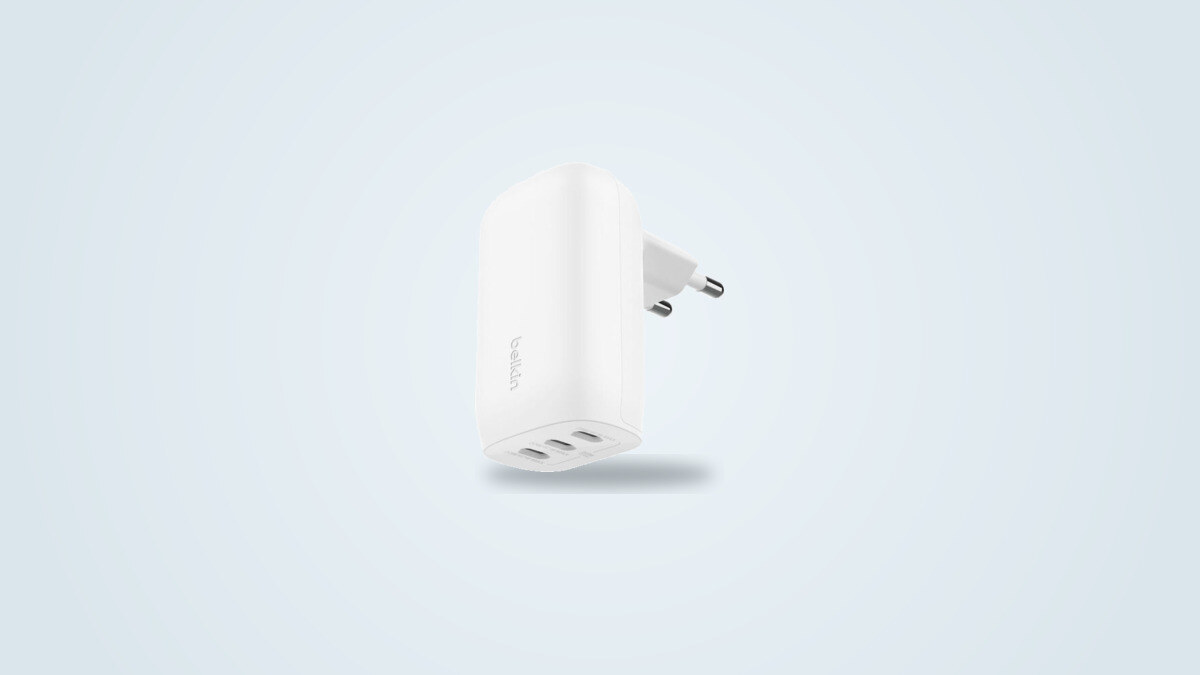
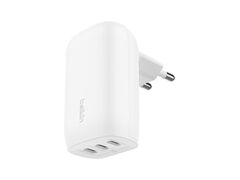
Belkin BoostCharge 67W wall charger with three USB-C ports

The essentials

The BoostCharge 67W stands out on a quality rare in this segment: transparency. Belkin publishes in black and white the exact split across its three ports (25W + 20W + 20W with three devices plugged in), a numeric table most rivals don't provide. Protocol compatibility is the widest observed in this comparison (PD 3.1, PD 3.0, PPS, and Samsung Fast Charge 2.0), and the 2-year manufacturer warranty stays explicit, unlike several rivals silent on the point. It doesn't use GaN technology, though, which makes it slightly less compact than its most recent rivals, and the case heats up noticeably when powering a laptop at full charge according to usage reports. For an all-USB-C household wanting a charger transparent about its real specs, it's a safe bet.

Strengths

  • Power split explicitly published (25W + 20W + 20W with three devices), rare in this segment
  • Widest protocol compatibility in this comparison: USB PD 3.1, PD 3.0, PPS, and Samsung Fast Charge 2.0
  • Explicit 2-year manufacturer warranty, plus a connected-equipment warranty
  • 67W available on a single port, enough for most USB-C PD laptops
  • Case made from post-consumer recycled materials, plastic-free packaging
  • Published numeric benchmarks: Galaxy S23 Ultra 0 to 50% in 23 minutes, iPhone 14 Pro in 25 minutes

Limitations

  • No GaN technology claimed, unlike most recent chargers at this power level
  • The case heats up noticeably when powering a laptop at full charge, according to usage reports
  • No USB-A port, which may require an adapter cable for older accessories
  • USB-C cable not included in this version, a cable-included variant sold separately
  • No interchangeable plugs for travel, unlike some Ugreen rivals
Belkin BoostCharge 3-Port 67W: see the full details and price →

Three matching USB-C ports to replace several bricks

The Belkin BoostCharge 3-port USB-C charger with PPS 67W is built to replace several power bricks at once. With its three USB-C ports, it charges a smartphone, a tablet, and earbuds simultaneously with no juggling of outlets.

67 W
Max power on one port
3
Identical USB-C ports
2 yrs
Manufacturer warranty

Used alone, one port delivers up to 67W, enough to charge a MacBook Pro or another USB-C PD laptop.

25W + 20W + 20W: a sharing split published in black and white

This is the point that really sets this charger apart. As soon as a second or third device is connected, the total power splits automatically across ports following a scheme Belkin publishes explicitly: 25W then 20W and 20W, so each device gets the fastest possible charge.

Worth noting: most rival multiport chargers settle for announcing "smart sharing" without detailing the real watts per port. Here, the exact figure is public, letting you know precisely what to expect before buying.

The widest protocol compatibility in this comparison

The charger supports USB Power Delivery 3.1, PD 3.0, and PPS (Programmable Power Supply), which fine-tunes the delivered voltage for faster, gentler charging on the battery. On compatible devices, Samsung's fast-charging tech (SFC 2.0) is also recognized.

Two numeric benchmarks are published: a Galaxy S23 Ultra charges from 0 to 50% in 23 minutes, and an iPhone 14 Pro in the same time in 25 minutes over USB-C PD. This is the widest protocol compatibility observed among the chargers compared here.

Compact, but without GaN technology

The flat, compact design (71.4 x 42.5 x 29.7mm, 156g), with a wall plug that folds flat against the outlet, makes it particularly suited to family travel. Unlike most recent chargers at this power level, though, it's not advertised as using GaN technology, which explains a footprint slightly less optimized than its most compact rivals.

A 2-year warranty, but a case that heats up under full load

On reliability, Belkin offers a 2-year warranty plus a connected-equipment warranty, a real plus for an accessory left plugged in almost constantly, and a length few rivals state as clearly.

The one real caveat noted in use: the case heats up noticeably when powering a laptop at full power. Nothing alarming according to reports, but it's warm to the touch, worth watching over extended use.

Against the Anker Nano II 65W and the Ugreen Nexode line

Around 65-67W and three simultaneous ports, the BoostCharge faces several sought-after multi-device chargers.

Belkin BoostCharge 67W against its main alternatives (observed data)
CriterionBoostCharge 67WAnker Nano II 65WUgreen Nexode 65W
Power (single port)67W65W65W
Ports3 x USB-C2 x USB-C + 1 x USB-A2 x USB-C + 1 x USB-A
Split at 3 devices25W + 20W + 20WNot detailedNot detailed
Interchangeable plugsNoNoYes (US/UK/EU)
Observed price$42≈ $30≈ $48

The Belkin stands out for its all-USB-C setup and slightly higher single-port power. The Anker Nano II remains the most affordable, and the Ugreen Nexode wins on travel versatility thanks to its interchangeable plugs, but neither publishes as detailed a power split as the Belkin.

Who the BoostCharge 67W is for

This charger suits an all-USB-C household that wants to charge a smartphone, tablet, and laptop without multiplying outlets, and that values a clearly stated power split over a vague promise.

For anyone needing interchangeable plugs for international travel or a USB-A port for older hardware, the Ugreen Nexode 65W remains an alternative worth considering.
The rating in detail

Our rating
4.2/5
Actual charging current not measured
Battery compatibility not measured
Safety and protections 4.0
Build and endurance 4.1
Cables and connectors not measured
Actually delivered power 4.3
Multi-port power sharing 4.4
Protocol compatibility 4.5
Size and technology 3.7
Format and chemistry compatibility not measured
Charging precision not measured
Display and control not measured
Belkin BoostCharge 3-Port 67W: see the full details and price →

The product and its alternatives

Belkin BoostCharge 3-Port 67W

Belkin BoostCharge 3-Port 67W

See price (9)

Three USB-C ports and PPS, up to 67W on one port: the Belkin BoostCharge charges your smartphone, tablet and MacBook at once, at home or on the road.

View product
Belkin BoostCharge Pro Qi2

Belkin BoostCharge Pro Qi2

See price (19)

Fast, well-aligned wireless charging: the Belkin BoostCharge Pro Qi2 magnetises your iPhone and charges it at 15W, with no cable to plug in.

View product
Belkin BoostCharge 30W

Belkin BoostCharge 30W

See price (17)

Fast charging with no compromise on safety: the Belkin BoostCharge 30W combines USB-C Power Delivery, PPS and USB-IF certification in a compact body.

View product

Frequently asked questions

Yes. Used on a single port, it delivers up to 67W in USB-C Power Delivery, enough to charge most MacBook Pro models and other USB-C PD-compatible laptops.

The three USB-C ports share available power (25W then 20W and 20W when all three are used), which stays fast for a smartphone or earbuds, but less than the 67W of a single port used alone.

Yes, thanks to PPS support and the Samsung Fast Charge 2.0 protocol, which charges a Galaxy S23 Ultra from 0 to 50% in 23 minutes, for example.

No, this "charger only" version doesn't include a cable. A "charger + cable" variant exists at some retailers.

Belkin states a 2-year warranty on the charger, plus a warranty on connected equipment in case of charger-related damage.