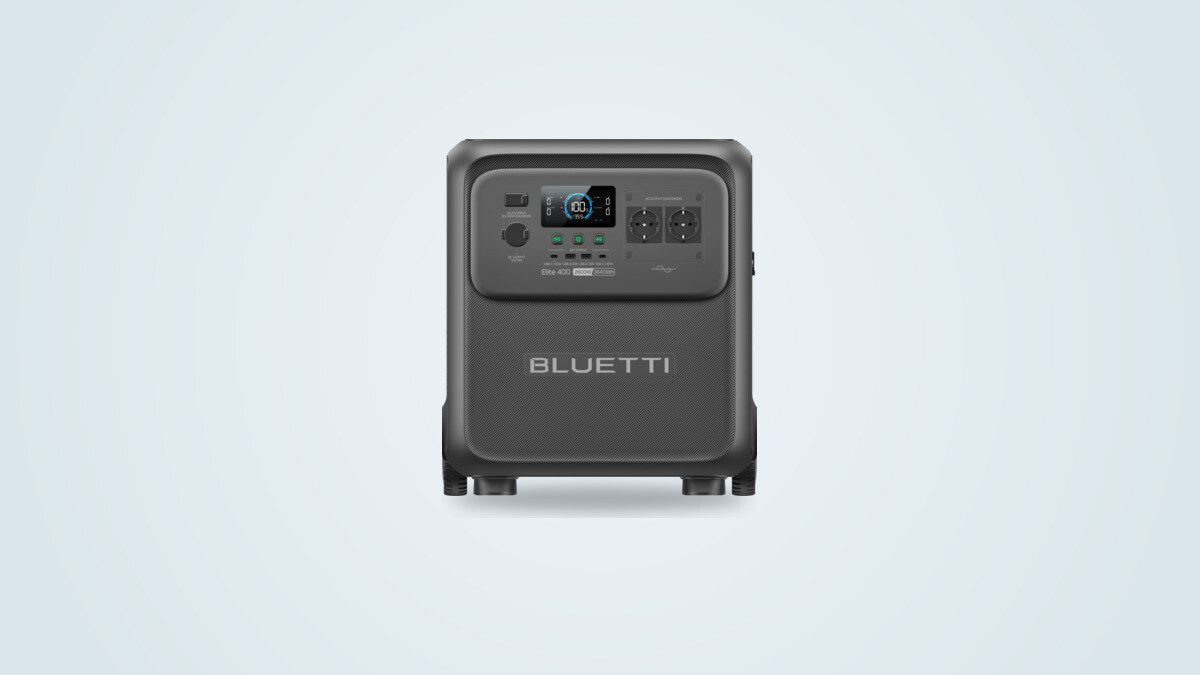
What the claimed 3,840Wh capacity is really worth
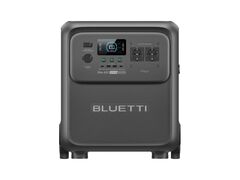
Bluetti rates the Elite 400 at 3,840Wh, a figure calculated from the LiFePO4 cells themselves, before the inverter takes its share. What actually reaches the outlets depends heavily on the load drawn: under a light load of around 250W, the station delivers roughly 3,130Wh, or about 82% of the rated figure. Under a heavier 1,800W load, efficiency climbs to 93%, or around 3,570Wh available.
The gap comes down to a simple mechanism: the inverter draws a near-fixed amount of power just to run, regardless of the load plugged in. On a small appliance, that fixed draw eats up a proportionally larger share of the total energy, which drags the displayed efficiency down; on a heavier load, the same fixed draw matters far less, and efficiency climbs.
For home backup duty, this changes the practical picture: a fridge, a home hub or lighting are light, steady loads, often well under 250W combined, which puts real-world use closer to the 82% floor than the 93% ceiling. A space heater or an electric kettle, on the other hand, benefits from the higher efficiency seen at heavier loads.
AC charging efficiency sits around 87%: filling the battery from empty takes roughly 4,400Wh drawn from the wall to store 3,840Wh of rated capacity. On standby, power draw ranges from about 3W with every output switched off to around 20W when the AC outlets stay live at all times, a gap worth knowing for anyone leaving the unit plugged in for months while waiting for an outage.
Does Power Lifting mode really deliver 3,900W?
On paper, the Elite 400 puts out 2,600W continuous, with a Power Lifting mode said to unlock 3,900W for demanding start-up surges, and a claimed 5,200W peak. In one documented case, the unit was pushed to 3,473W without engaging Power Lifting at all, right before its thermal protection kicked in: a comfortable margin above the rated continuous figure, showing the base promise holds up.
Power Lifting tells a different story on the European 230V version of this unit. Once switched on, available power in that same case topped out at around 2,700W, with voltage sagging to 200V instead of the nominal 230V, a drop of nearly 13%. In other words, the mode meant to unlock extra headroom delivered less than the unit had already reached without it. No equivalent reading has been found for the US 120V version, and power figures don't automatically carry over between the two: a similar shortfall on the 120V unit would show up as a different absolute voltage.
| Mode | Power reached | Voltage | What it means |
|---|---|---|---|
| Rated continuous | 2,600W | 230V | The threshold the unit must hold in everyday use |
| Without Power Lifting, just before shutdown | 3,473W | 230V | Comfortable margin above the rated continuous figure |
| With Power Lifting on (claimed: 3,900W) | about 2,700W | sagged to 200V | Lower ceiling than without the mode, degraded voltage |
This nuance is worth knowing before buying, on either voltage: the 3,900W figure on the spec sheet and the box shouldn't be read as a guaranteed output in every circumstance. The unit remains largely capable of covering demanding everyday home use, as long as buyers don't rely on Power Lifting to sustain more than 2,600W for long.
AC and solar charging: what the different modes actually give
AC-only charging reaches 100% in just over two hours in fast mode, drawing up to 2,300W. Combining AC and solar input at the same time, up to 2,800W total, gets the Elite 400 to 80% in just 60 to 70 minutes, a credible pace for a capacity close to 4kWh. The standard and silent modes, slower at 1,000 to 1,200W, take between 3.5 and roughly 4 hours for a full charge, a reasonable trade for quieter, gentler charging.
| Mode | Power | Time | Target |
|---|---|---|---|
| Turbo, AC only | up to 2,300W | about 2h to 2h30 | 0 to 100% |
| AC and solar combined | up to 2,800W | 60 to 70 minutes | 0 to 80% |
| Standard, AC only | 1,000 to 1,200W | about 3h30 to 3h52 | 0 to 100% |
| Solar only | up to 1,000W | about 6 hours | 0 to 100%, favorable conditions |
Solar input tops out at 1,000W (12 to 60V, 20A max), a modest ratio for a 3,840Wh capacity: a full solar charge from empty, in good sunlight, takes about 6 hours. For a station this size, also aimed at off-grid or RV use, a more generous solar input would have made better use of the available capacity. One more point worth knowing before buying: the cable needed to connect most solar panels on the market to the XT60 input isn't included in the box, and neither is the matching adapter.
Noise: quiet at rest, noticeably louder on fast charging
The Elite 400's noise level stays low in everyday use: around 30dB at one meter in standard and silent modes, close to the background hum of a quiet room. It climbs to 40 to 42dB at one meter in Turbo mode, during fast-charging phases at full power.
That gap roughly matches a doubling in perceived loudness, yet it still sits well below the 50 to 54dB seen on the Bluetti Elite 300, its smaller, more compact sibling, during fast charging. That's a notable result: a larger capacity doesn't translate into a noisier fan here, if anything the opposite. The data available covers charging only, though: no independent noise reading under heavy discharge has been found for this model to date.
Four AC outlets, one shared 2,600W circuit
Unlike the European version of this station, which ships with just two AC sockets, the US Elite 400 comes with four 120V AC outlets, arranged as two duplex receptacles. That's a real, tangible difference for anyone plugging in several devices at once: a fridge, a router and a laptop charger can each get their own outlet without reaching for a power strip.
The catch is that all four outlets still draw from the same 2,600W continuous budget (3,900W claimed in Power Lifting mode). Four sockets make everyday plugging easier, but they don't raise the total power available at any one time: two demanding appliances running together can still hit the ceiling just as fast as they would on a two-outlet unit. The rest of the port selection matches the wider lineup: two 100W USB-C ports, two USB-A ports and a 12V car outlet rated at 120W. The XT60 solar input accepts up to 1,000W. There's no RV-style outlet (TT-30).
UPS and home backup: the switchover in practice
The Elite 400's UPS function claims a 15-millisecond switchover during a mains outage, short enough that a Wi-Fi router, a home hub or a desktop computer shouldn't reboot. That's precisely the use case the station targets first: it sits permanently between the mains and sensitive equipment, and takes over the instant power is cut, with nothing to do on the user's part.
For a light medical device such as a CPAP machine, or to keep an internet connection alive through a prolonged outage, that fast switchover makes a real difference compared with a plain backup battery lacking a built-in inverter function. Standby draw, around 20W when the AC outlets stay permanently live to support this function, should still be factored in by anyone planning to leave the unit plugged in for months while waiting for an eventual outage.
The wheeled suitcase format: the real selling point
The format is the most frequently praised feature: with its wheels and telescoping handle, the Elite 400 moves like carry-on luggage rather than something to be carried by hand. At 86 lb (39 kg), it sits toward the heavier end of its category, but the difference shows up in daily use: getting it out of a garage, loading it into a trunk, or moving it between rooms doesn't require lifting the whole thing.
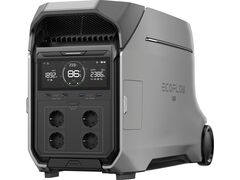
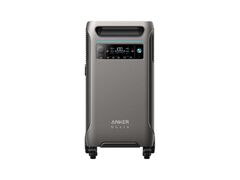
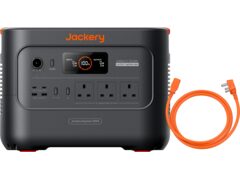
The comparison with its closest rivals by capacity favors it on this specific point: the EcoFlow Delta Pro 3 (4,096Wh, expandable) weighs around 95 lb (43 kg), and the Anker Solix F3800 (3,840Wh, expandable to 26.9kWh) is close to 132 lb (60 kg), both noticeably heavier to handle even though they also roll on wheels. The Jackery Explorer 3000 V2 (3,072Wh), by contrast, weighs only 60 lb (27 kg), but has no built-in wheels despite a shape that might suggest otherwise: a folding cart is sold as a separate accessory.
The Elite 400's wheeled suitcase format isn't just a marketing line, then: it's a genuine design choice, consistent with positioning it as home backup or a semi-fixed station rather than gear meant to be carried down a trail.
Against the direct competition: Delta Pro 3, Solix F3800, Explorer 3000 V2
Around the $1,900 to $2,000 mark, the Elite 400 faces a small group of stations with capacity close to 4kWh. Against the EcoFlow Delta Pro 3 (4,096Wh, expandable up to 12,288Wh in a single-unit setup), it gives ground on expandability and on discharge efficiency, between 92 and 98% depending on load against 82 to 93% for the Elite 400. It stays lighter and noticeably cheaper, though.
Against the Anker Solix F3800 (3,840Wh, expandable up to 26.9kWh, 6,000W continuous), the raw power gap is clear, but the F3800's full-cycle efficiency runs closer to 62% of the electricity drawn to recharge it, with an even steeper drop on light loads. On this specific point, the Elite 400 holds up better, with an 82% floor against notably lower figures for the F3800 under light use.
Against the Jackery Explorer 3000 V2 (3,072Wh, 3,600W, no built-in wheels), the Elite 400 offers more capacity and genuine wheeled mobility, for a limited price difference.
None of these three rivals shares its entire continuous output across as few circuits as the European Elite 400's two outlets; the US Elite 400's four outlets ease that specific constraint, though the shared 2,600W ceiling remains the same limiting factor across all four.
Reliability, warranty, and what's missing from the box
Bluetti rates the Elite 400 for 3,000 charge cycles down to 80% remaining capacity, a figure well below the 6,000 cycles claimed for the Elite 300 and Elite 200 V2, two smaller models in the same lineup launched around the same period. For a product positioned as a backup reserve kept for years without necessarily being used daily, this gap in claimed lifespan between siblings from the same brand is worth knowing before buying.
The manufacturer's warranty, on the other hand, sits at the top of the market at 5 years. No recall or safety incident specific to the Elite 400 has been found to date, a reassuring point for a unit of this capacity meant to stay permanently plugged in for its UPS function.
On the software side, the Bluetti app covers the expected functions (consumption tracking, scheduling, remote control over Wi-Fi and Bluetooth) but stays simpler than the apps offered by more recent rivals. One more point worth flagging: no solar cable, no adapter, and no built-in LED light ship with the station, features some rivals of comparable capacity do include.
Who the Elite 400 is really for
The Elite 400 is aimed first at anyone wanting a large home backup energy reserve with genuine ease of movement: its fast-switching UPS function, its capacity close to 4kWh, and its wheeled format make it a sensible choice for keeping a fridge, a router, lighting and several small appliances running through a prolonged outage, without having to carry it by hand.
It also suits RV or van-life use where range matters more than instant power, and event or professional use (markets, shoots, outdoor vendor stalls) thanks to its quiet everyday operation.
It suits buyers far less well if they need to run several large appliances at once at full power: its shared 2,600W ceiling across all four outlets and its Power Lifting mode, which underdelivers on real power in one documented case on the European version, both limit that use. It's also not a fit for anyone planning to grow their capacity over time: unlike some rivals at the same price point, the Elite 400 isn't expandable, and the B500K battery Bluetti launched alongside it isn't compatible with this model.
At a price close to $1,900 to $2,000, it remains a credible mobile energy reserve, provided buyers accept two deliberate trade-offs: a fixed 2,600W ceiling shared across its outlets, and a capacity fixed once and for all.