What PWM technology changes, and what it does not
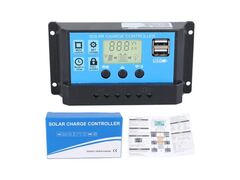
The LNEX CTM12-10 regulates battery charging through pulse width modulation (PWM): it connects the solar panel directly to the battery and chops the current to adjust charging, without ever actively hunting for the panel's optimal power point. The product's marketing name, which includes the term "intelligent regulator," does not change this technical reality: there is no MPPT tracking on this model, just as on the Thlevel 30A PWM already reviewed on this site.
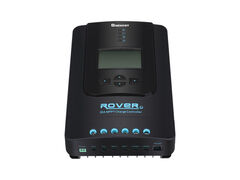
The manufacturer advertises a 15 to 30% charging performance gain compared with an unregulated setup, a comparison whose exact baseline is never detailed: the same figure appears identically across the brand's entire PWM lineup, from the 8A model to the 40A model. This number therefore says nothing about how the CTM12-10 compares with an MPPT controller such as the Renogy Rover 20A or the Victron units already reviewed on this site, which actively hunt for the maximum power point and structurally capture more energy than a PWM unit once panel voltage drifts from battery voltage.
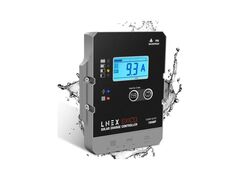
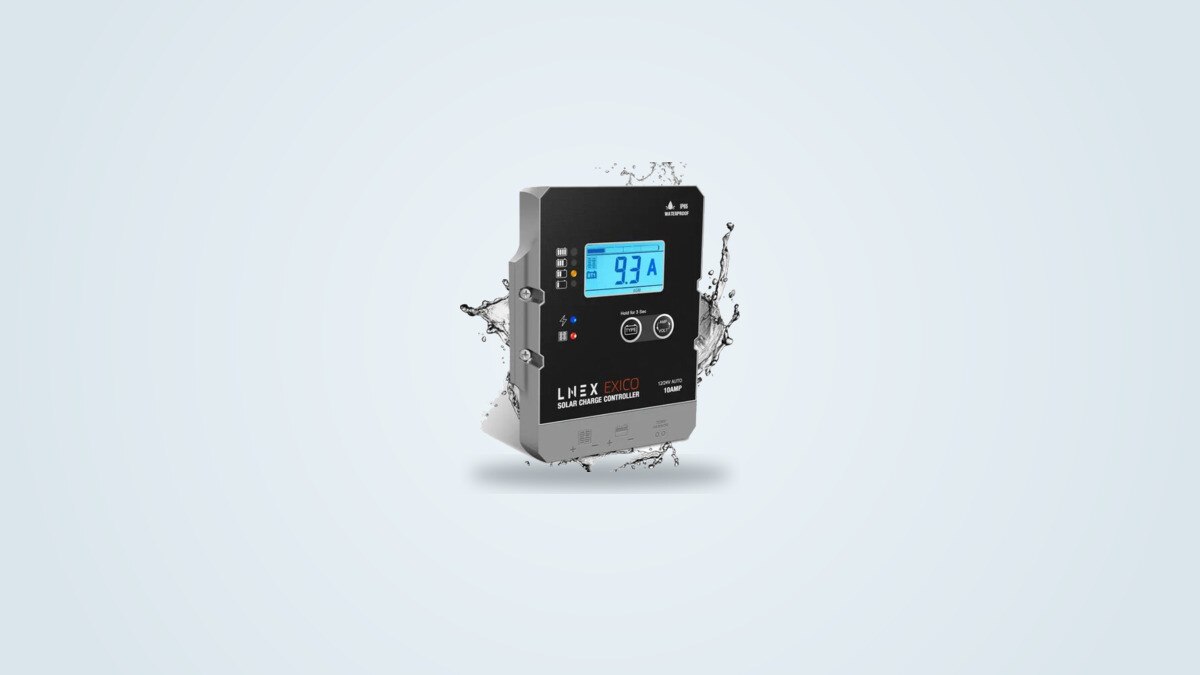
IP65 waterproofing and the ultra-thin housing: the real selling point
The CTM12-10's housing carries an IP65 rating, with a "waterproof" mark printed directly on the front panel. That is the highest rating of any solar controller reviewed on this site so far: the Renogy Rover 20A and 60A carry an IP32 rating, meant for a sheltered spot, and the Victron SmartSolar 100/20 and 150/35 carry an IP43 rating, which tolerates splashes but not direct exposure. The Thlevel 30A PWM, also reviewed, states no protection rating at all.
In practice, an IP65 rating protects against water jets from any direction, well beyond what a housing installed inside an RV or an electrical enclosure would ever need. It matters far more on a boat, a van with an outdoor bulkhead mount, or any installation exposed to sea spray or driving rain, where the IP32 or IP43 controllers already reviewed require a protected spot. The roughly 0.9 in (22 mm) thickness, advertised by the manufacturer as one of the slimmest on the market for this power class, backs up the same point: the housing fits into wall cavities or enclosures where a standard-format controller simply would not.
Battery compatibility: from lead-acid to lithium, real versatility
The CTM12-10 is advertised as compatible with six battery families: LiFePO4, AGM, Gel, flooded lead-acid, calcium and EFB, through smart 5-stage charging (soft start, bulk, absorption, float and equalization). For calcium and EFB batteries specifically, automatic equalization is scheduled every 28 days. That is a noticeably wider list than the Thlevel 30A PWM already reviewed, which is strictly limited to lead-acid, and comparable to the Renogy Rover and Victron units, which also handle both lead-acid and lithium LiFePO4.
Chemistry selection happens through the TYPE button on the front panel. The CTM12-10 offers no advanced diagnostic screen, no app and no Bluetooth, though: there is no way to check or adjust the exact thresholds (bulk, absorption, float) applied to each profile, unlike the Renogy and Victron units already reviewed, which expose those values through a Bluetooth module or an app. For a LiFePO4 battery with its own protective BMS, this point stays secondary: the BMS absorbs any imprecision in the charge profile. For a lithium battery with no BMS, or with a BMS whose thresholds sit very close to those of the applied profile, this lack of visibility into the settings is a genuine caveat worth knowing before buying.
LCD screen and local controls: simple, but incomplete
The CTM12-10's backlit LCD screen shows the charging current in amps and the battery voltage, backed up by two LED indicators (a lightning bolt for charge status, a battery icon for battery status). Two buttons, TYPE and AMP/VOLT, let you step through the settings with a three-second press. Wattage is never shown: to know it, you have to calculate it yourself from the current and voltage readings on the screen.
This fully local control scheme, with no Bluetooth or Wi-Fi, shares the same advantage as the Thlevel 30A PWM already reviewed: no reliance on a smartphone or an online service for day-to-day operation. It remains more basic than the Renogy Rover 20A, whose screen also shows live solar output, and than the Thlevel itself, which adds a light-triggered mode and a timer mode that the CTM12-10 lacks. With no history to consult, an initial setting poorly matched to the battery actually installed can also go unnoticed for longer than on a remotely monitored system.
Safety and protections: a comprehensive list, not independently verified
The manufacturer advertises a comprehensive list of electronic protections: over-temperature, over-voltage, over-current, overcharge, over-discharge, output overload and short-circuit. The brand also claims, across its PWM controller range as a whole, reverse-polarity protection, though this specific mention does not appear explicitly in the technical listing for the CTM12-10 consulted for this review.
A solar controller stays connected around the clock, often for years with no human intervention: the quality of these protections matters just as much as charging performance itself. As with the Thlevel 30A PWM already reviewed, the real robustness of these protections (behavior after repeated reverse-polarity events, resistance to a prolonged short-circuit) could not be confirmed by any independent source for this specific model. The IP65 rating of the housing does play a safety role of its own, separate from the electronic protections: it limits moisture ingress that could otherwise corrode contacts or eventually cause an internal short-circuit, a more concrete risk on the IP32 or IP43 housings of the controllers already reviewed whenever they end up exposed to the weather regardless.
No product recall was found for this model in the safety databases consulted.
Sizing your installation: the smallest capacity in the segment
With 10A of charge current, the CTM12-10 handles around 130W of panels on a 12V system and 260W at 24V. That is the lowest input capacity of any solar controller reviewed on this site so far, well behind the Thlevel 30A PWM (360W at 12V), despite sharing the same technology, and further still behind the MPPT controllers in the catalog.
This modest capacity fits the intended use: one or two small panels on a van, a boat or an off-grid cabin, not an extended panel array. As with any PWM controller, panel voltage needs to stay close to battery voltage to limit conversion losses: a panel designed for a 12V system (around 18V optimal voltage) is a good match, while a higher-voltage panel meant for series wiring would waste a significant share of its available power.
Build quality, mounting, and one practical detail to know
On the front of the unit, the branding shown is "LNEX EXICO," the name of LNEX's ultra-thin waterproof PWM controller line, of which the CTM12-10 is the 10A version. The black and gray housing includes screw mounting tabs and a dedicated connector for the included temperature sensor. Its compact footprint (4.3 x 0.9 x 5.2 in / 108 x 22 x 131 mm) and contained weight (10 oz / 283 g) back up the product's central pitch: fitting where a standard controller would not.
LNEX remains a brand that is still not well established in this specific solar controller segment, alongside a separate lineup of shunt-based battery monitors. Neither an independent teardown of the internal electronics, nor a clearly stated manufacturer warranty length, nor an operating temperature range are clearly advertised for this specific model, a caveat already flagged on the Thlevel 30A PWM also reviewed on this site. Reviews accumulated on general marketplaces remain plentiful, with no recurring build-quality issue found; that alone, however, does not replace a reliability track record built up over several years, the kind Victron or Renogy benefit from in this same segment.
Against the competition: Thlevel, the Renogy Rover 20A and the Victron units
| Model | Technology | Current / max PV (12V) | Waterproofing | Compatible chemistries |
|---|---|---|---|---|
| LNEX CTM12-10 | PWM | 10A / 130W | IP65 | Lead-acid and lithium LiFePO4 |
| Thlevel 30A PWM | PWM | 30A / 360W | Not stated | Lead-acid only |
| Renogy Rover 20A | MPPT | 20A / 260W | IP32 | Lead-acid and lithium LiFePO4 |
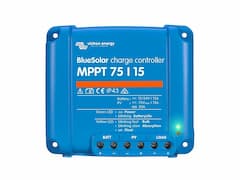
| Victron BlueSolar 75/15 | MPPT | 15A / 220W | Not specified | Lead-acid and lithium |
Against the Thlevel 30A PWM, the other PWM controller already reviewed, the CTM12-10 wins clearly on waterproofing (IP65 against no stated rating) and on battery compatibility (lithium included, where the Thlevel stays confined to lead-acid), but accepts a much lower PV power (130W against 360W at 12V) for a higher price.
Against the Renogy Rover 20A, the technology gap decides the matter: the Rover actively hunts for the panel's maximum power point and structurally captures more energy, with a higher input capacity and a more complete screen (current, voltage and output), all for a price that is actually lower than the CTM12-10 on this market. The CTM12-10 only closes that gap on waterproofing, well above the Rover's IP32. Against the Victron BlueSolar and SmartSolar units, positioned on an established brand reputation and, for the SmartSolar, built-in Bluetooth monitoring, the CTM12-10 remains a distinctly more modest choice on both reputation and efficiency, with its waterproofing, and depending on the Victron unit compared, its thinner housing, as its only real advantages.
Who this controller suits, and who it does not
The CTM12-10 fits a small installation directly exposed to the weather: a boat where the controller mounts near the deck or in a damp bulkhead cavity, a van with an outdoor mount, an off-grid cabin with no sheltered equipment space, or any site where waterproofing matters more than charging efficiency. Its lithium compatibility also makes it a workable option for fitting a small LiFePO4 battery in that same context, provided you accept the lack of visibility into the exact charge profile applied.
It is not a good fit, however, for anyone planning an installation beyond one or two small panels, or anyone chasing the best charging efficiency for a similar budget: the Renogy Rover 20A captures more energy thanks to its MPPT tracking and accepts higher PV power, at a lower price on this market to boot. It is also not suited to anyone who wants remote monitoring or a data history: this model offers neither an app nor Bluetooth.
Price and availability
The price observed sits around $40, well below the Renogy Rover 20A (around $88) on this market, even though the Rover is an MPPT controller with a higher input capacity; no price was found for the Thlevel 30A PWM on this specific market to make a three-way comparison. Reviews accumulated on general marketplaces remain plentiful, and the rating they produce sits noticeably above the one given here: an expected gap for a product that delivers on its basic promise (waterproofing, thinness, simple local controls) for a buyer who never measures actual charging efficiency or compares it with an MPPT controller, but a less telling signal about the structural limits detailed above. No product recall was found for this model in the safety databases consulted. As is standard practice in the United States, the price above excludes sales tax, which is added at checkout and varies by state.