A high-drain cousin of the NCR18650B, not a new chemistry
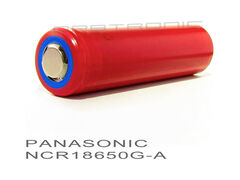
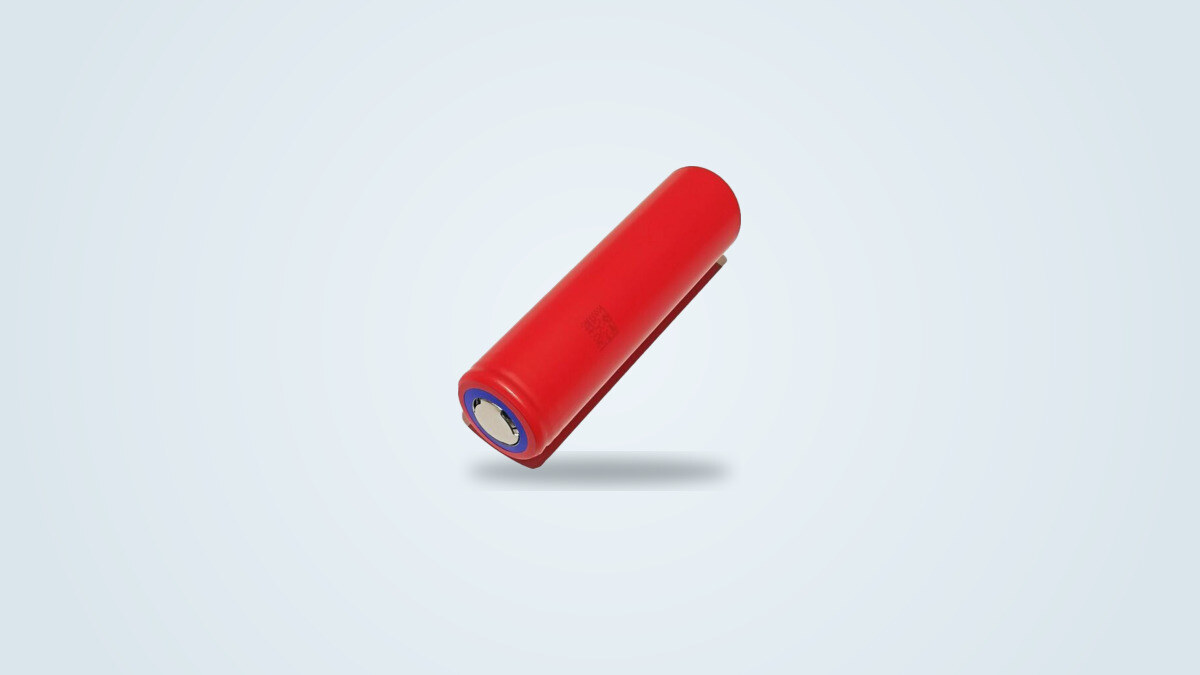
The Panasonic NCR18650GA is a bare cylindrical lithium-ion cell, in the same 18650 format as the NCR18650B already in our selection (0.72 in / 18.3mm in diameter, 2.57 in / 65.3mm long), but built for a different purpose. Where the NCR18650B targets pure capacity, the NCR18650GA targets a capacity/current balance: 3450mAh of typical capacity for a continuous discharge current Panasonic sets at 10A, more than double the NCR18650B's. It weighs 1.75 oz (49.5g), against roughly 1.59 oz (45g) for the NCR18650B, a construction difference consistent with its ability to handle more current.
The NCR18650GA code belongs to Panasonic alone: no other major brand (LG, Samsung, Sony/Murata) uses it, even though their own high-drain cells carry codes that can cause confusion (INR18650-MJ1, INR21700-30T, VTC6...). Some batches still carry a legacy "Sanyo" marking under the red wrap: the original factory, folded into Panasonic after it acquired Sanyo's battery division, is the same one, and this is not a sign of counterfeiting.
This review reuses the same rating grid as the rest of the site's Batteries section, but each axis is read here as a mirror of the NCR18650B, already at 4.0 out of 5 in our catalog.
Capacity that matches, and slightly beats, the NCR18650B
Panasonic rates the NCR18650GA at a typical 3450mAh, with a guaranteed minimum of 3350mAh, a touch above the NCR18650B's 3400mAh typical and 3250mAh minimum. The gap looks small on paper, but it confirms something real: unlike other high-drain cells that give up noticeable capacity for current (the Murata VTC6 drops to 3000mAh, the Molicel P26A to 2600mAh), the NCR18650GA gives up nothing against its capacity-focused cousin.
The NCR18650GA's discharge curves track the maker's claim closely, even at rates well above a simple flashlight's draw: a rare trait for a high-drain cell, where real capacity often disappoints once pushed outside the most favorable test window. The stated internal resistance, under 38 mOhm at 1kHz AC, helps explain this: the lower it is, the less voltage and apparent capacity the cell loses as drawn current rises, a mechanism that helps both capacity and behavior under sustained load.
10A versus 4.9A: the real difference with the NCR18650B
This is where the comparison really matters. Panasonic sets the NCR18650GA's continuous discharge current at 10A, against roughly 4.9A for the NCR18650B. Below that ceiling, both cells stay true to their rated capacity: the difference is not about measurement reliability, but about the range of uses each one covers. Under 2 to 3A, the two cells behave very similarly; beyond that, the NCR18650B starts heating up and sagging in voltage, while the NCR18650GA stays stable up to its own 10A ceiling.
That higher current opens uses the NCR18650B cannot cover: tactical flashlights rated at several thousand lumens, rebuildable sub-ohm vape mods at moderate resistance (roughly 0.15 to 0.3 ohm), or DIY packs and light e-bikes drawing sustained rather than occasional current. For anything that stays under 2 to 3A continuous (a regular flashlight, a model remote control, a pack sharing current across several cells), the NCR18650GA's extra current adds nothing concrete.
10A is a real ceiling: what happens beyond it
The 10A rating is not a cautious figure with a big safety margin built in: it is a real ceiling. Pushed to 15A, 50% above its rated current, an NCR18650GA's temperature climbs to 167 °F (75 °C) or 185 °F (85 °C) depending on the cell, beyond the 158 °F (70 °C) absolute maximum Panasonic sets before risking damage. That figure puts things in perspective: the NCR18650GA is not an unlimited-discharge cell, and its 10A rating should be treated as a limit, not a starting point to push further.
On ambient temperature, Panasonic sets the same window as for the NCR18650B: charging allowed between 50 °F and 113 °F (+10 °C and +45 °C), discharging between -4 °F and 140 °F (-20 °C and +60 °C). Neither cell is better or worse equipped for extreme cold or heat: the robustness gap between the two is entirely about drawn current, not ambient temperature. In a DIY pack combining several NCR18650GA cells in parallel, proper ventilation and a margin under 10A per cell remain the best precaution, especially in an already warm environment.
Endurance in line with the format, nothing more
On cycle life, the NCR18650GA sits in the same bracket as the NCR18650B: around 500 charge and discharge cycles at full depth before noticeable degradation, a figure in line with high-capacity Li-ion 18650 cells of this generation. Nothing sets the two Panasonic cells apart here: the NCR18650GA's high-drain design improves available current, not cycle-count endurance.
As with any 18650 lithium-ion cell, a partial discharge (staying between 20% and 80% charge rather than a full cycle every time) extends this lifespan considerably, a point that matters even more here since the NCR18650GA is often run at higher, more stressful currents. Self-discharge in storage stays low, in line with lithium-ion cells generally, without matching the specific strength of NiMH cells built purely for that one trait.
Powerful flashlights, sub-ohm vaping, DIY packs: real versatility
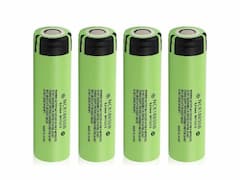
This is where the NCR18650GA gains the clearest edge over the NCR18650B. The unprotected Flat Top format (2.57 x 0.72 in / 65.3 x 18.3mm) is identical between the two cells, just as compatible with most holders, flashlights and home-built packs. But where the NCR18650B is limited to moderate-current uses, the NCR18650GA also covers the most powerful tactical flashlights, rebuildable sub-ohm mods at moderate resistance, and DIY packs or light e-bikes drawing sustained current.
This versatility has its own limits, not to be confused with the NCR18650B's. On one side, a device built for a 1.2 to 1.5V battery (a remote control, an alarm clock, an AA-powered toy) stays completely incompatible with this 3.6 to 3.7V cell, exactly as with the NCR18650B. On the other, for a mechanical mod or a very low resistance (under 0.15 ohm) that calls for more than 10A continuous, the NCR18650GA is no longer the right choice: an even more high-drain-focused cell such as the Murata VTC6 or the Molicel P26A becomes necessary, at the cost of noticeably lower capacity.
Build and safety: counterfeiting, once again, the top risk
The high-drain 18650 format is no less exposed to counterfeiting, quite the opposite: its reputation and slightly higher price than a pure-capacity cell make it an attractive target. The pattern seen on this specific format goes beyond the simple capacity under-rating already known on the NCR18650B: several cells bought as genuine NCR18650GAs have turned out to be re-wrapped, a second genuine-looking Sanyo or Panasonic wrap hiding a lower-quality cell underneath, once the outer film is removed.
Three checks help limit the risk, beyond the source itself. Weight first: a genuine cell of this model weighs around 1.75 oz (49.5g), noticeably more than a genuine NCR18650B (around 1.59 oz / 45g); a clear drop below 1.5 oz (42g) is a serious warning sign. The wrap next: the blue insulation ring around the positive terminal and a printed marking (often a small code square, visible without removing the plastic film) should be sharp and correctly placed, never blurry or misaligned. Finally, rated capacity: beyond roughly 3500mAh for an 18650 format, the claim exceeds what current lithium-ion chemistry allows in that volume, and almost always signals an outright fake, exactly as with the NCR18650B.
Buyers should also expect this cell to be sold only through specialized battery retailers rather than general marketplaces: major US platforms such as Amazon restrict standalone listings of bare 18650/21700 lithium cells under hazardous-materials shipping rules, so a dedicated retailer shipping it correctly (often ground service only) is the normal channel, not a red flag on its own. On handling, the precautions stay the same as for any bare, unprotected 18650 cell: a dedicated 3.7V lithium-ion charger, never a NiMH one, and avoiding any short circuit, overcharge, or loose storage without an insulating case. The higher current this cell can deliver makes a counterfeit riskier than on a pure-capacity model: a lower-quality cell mistakenly pushed toward 10A, on the assumption it is a genuine NCR18650GA, heats up and degrades far faster than a fake NCR18650B drawing only 2 or 3A in an ordinary flashlight.
Against the NCR18650B and even higher-drain cells
The table below sums up the technical gaps between the NCR18650GA and its capacity-focused cousin. Beyond these two Panasonic cells, even more drain-focused options exist: the Murata VTC6 (15A continuous, up to 30A peak, for 3000mAh) and the Molicel P26A (25A continuous, up to 35A peak, for 2600mAh). Their noticeably lower capacity only makes sense if the device genuinely draws more than 10A continuous, a threshold few consumer uses actually reach.
| Criterion | Panasonic NCR18650GA | Panasonic NCR18650B |
|---|---|---|
| Typical capacity | 3450mAh | 3400mAh |
| Guaranteed minimum capacity | 3350mAh | 3250mAh |
| Max continuous discharge | 10A | ~4.9A |
| Weight | 1.75 oz (49.5g) | ~1.59 oz (45g) |
| Terminal | Unprotected Flat Top | Unprotected Flat Top |
| Ideal use | Very powerful flashlight, moderate sub-ohm vaping, high-current DIY pack | Packs and flashlights at moderate current |
In short, the NCR18650GA costs next to nothing in capacity against the NCR18650B while doubling its available current: it is the more versatile default choice in Panasonic's high-capacity 18650 range as soon as a device can draw more than 2 to 3A. The NCR18650B still holds appeal for exclusively moderate-current use, usually at a very similar price. The Murata VTC6 and Molicel P26A stay reserved for mechanical mods and very low resistances, where their still-higher current becomes necessary despite the capacity trade-off.