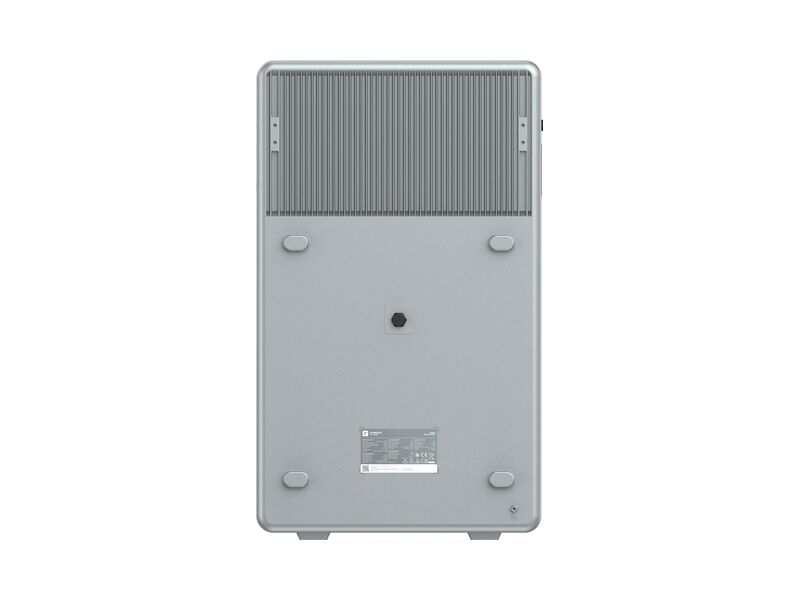
Samduo Nex E6000
(3 reviews)
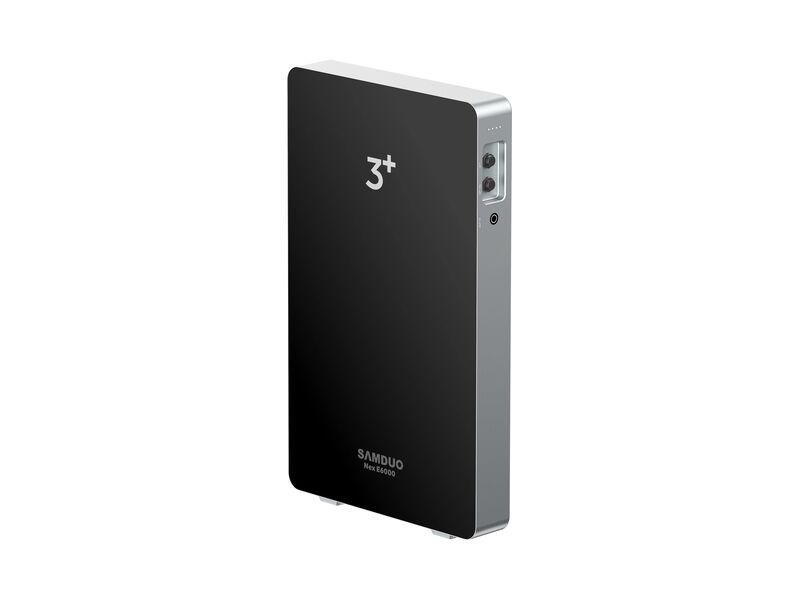
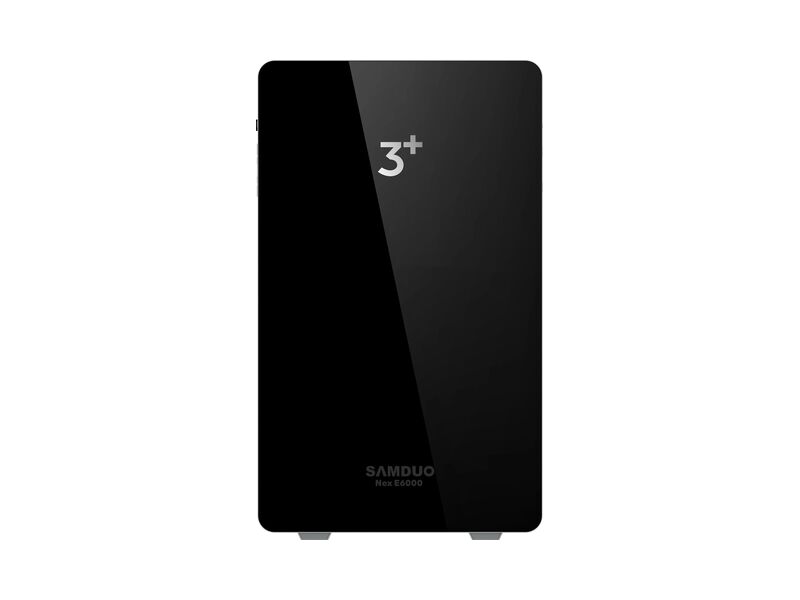
A 6 kWh battery that plugs into an outlet and sits flat against a wall: built-in inverter, 4.7 in (11.9 cm) thin and a backup port for outages.
Characteristics
- Capacity: 6028 Wh LiFePO4, up to 90 kWh with 15 networked units
- Power: 2600 W bidirectional, 800 W to the grid, 2600 VA backup
- Format: 4.7 in (11.9 cm) thick, 130 lb (59 kg), floor or wall mount
- Durability: IP65, -4 °F to 131 °F (-20 °C to 55 °C), 10-year warranty
- Flat 4.7 in (11.9 cm) case, 6 kWh, 2600 VA backup port
Detailed overview: Samduo Nex E6000 6 kWh AC-coupled plug and play solar battery
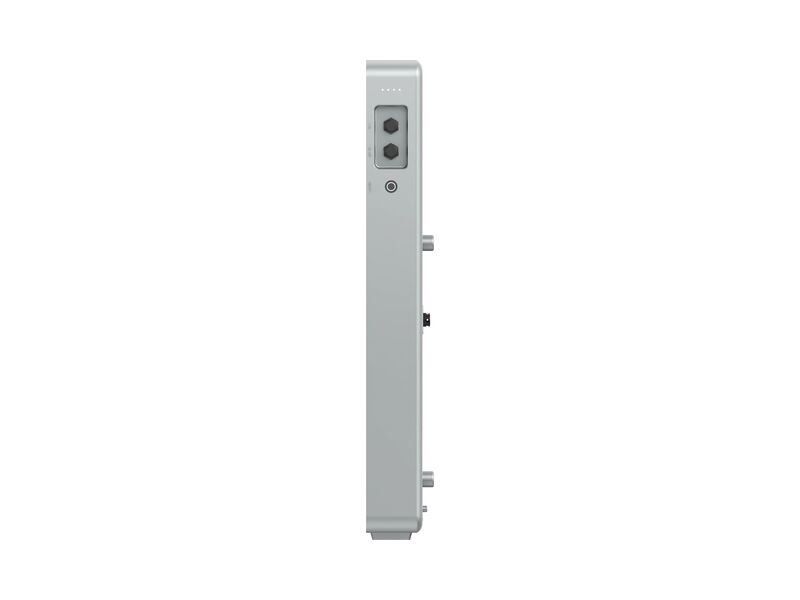
The Samduo Nex E6000 is a plug and play home battery coupled on the AC side. A LiFePO4 battery, a bidirectional inverter and battery management fit in a single case measuring 33.2 x 19.7 in (842.5 x 500 mm) and 4.7 in (11.9 cm) thick. It plugs into an outlet with the supplied 4.9 ft (1.5 m) cable and Schuko plug, a European 230 V design, and stores the surplus of an existing solar installation to release it later. There is no photovoltaic input: panels cannot be connected to it, it complements a system that is already tied to the grid. Samduo, a Chinese maker based in Shenzhen and a former white-label supplier, presents it as the slimmest residential battery on the market, a claim that is its own.
The 6028 Wh rest on LiFePO4 cells whose origin is not published, rated for at least 10,000 cycles, with a 10-year limited warranty that starts at activation. Charging reaches 2600 W from the AC side, but feed-in to the grid is limited to 800 W, the ceiling for plug and play systems. A dedicated off-grid backup port delivers 2600 VA continuously and 3640 VA for 10 seconds: appliances to keep running during an outage, such as the fridge, the router or the lighting, plug directly into it.
The Samduo app runs the system over 2.4 GHz Wi-Fi, Bluetooth or a network cable, with an RS485 port and an open API cited for Home Assistant and Homey. Optimization around dynamic tariffs is announced, but the manual says it will arrive through future updates. The Smart Meter, a meter fitted in the electrical panel, measures household consumption and aims at zero feed-in: it is not in the box of the battery alone and is ordered separately from the brand, though some offers include it. Up to 15 units can be combined through PowerMesh, giving 90 kWh.
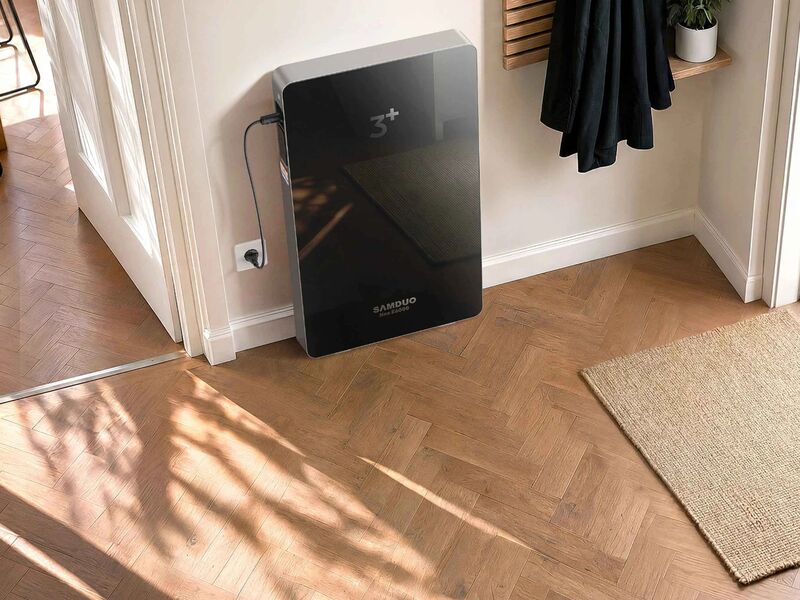
The unit stands upright, on the floor or on a wall with the supplied bracket, preferably brick or concrete, with 2 in (50 mm) of clearance in front, above and at the sides. It is IP65, rated from -4 °F to 131 °F (-20 °C to 55 °C), and Samduo quotes under 25 dB. Allow for 130 lb (59 kg) to be handled by two people and a connection to an external ground point required by the manual (cable not supplied).
Samduo publishes an EU declaration of conformity and grid connection certificates issued by Bureau Veritas on June 8, 2026 (EN 50549-1 for France, VDE-AR-N 4105 for Germany), all for European grids. Keep in mind a brand that is only starting out in Europe, an unpublished round-trip efficiency and, to our knowledge, no complete independent measurement to date.
Full specifications
Detailed characteristics
Battery
| Technology?Battery chemistry; LiFePO4 lasts far longer and can be fully discharged, gel/AGM is maintenance-free and cheaper. | LiFePO4 (lithium) |
|---|---|
| Nominal voltage?Battery voltage (12, 24 or 48 V). | 19.2 V |
| Capacity?Capacity in amp-hours; multiply by voltage to get energy in Wh. | 314 Ah |
| Energy?Stored energy in watt-hours. | 6028 Wh |
| Cycle life?Rated number of charge/discharge cycles, at the stated depth of discharge. | 10000 cycles |
| Expandable up to?Maximum capacity reachable with add-on modules. | 90420 Wh |
Power and protection
| Output power?Maximum power delivered (for storages with a 230 V output). | 2600 W |
|---|---|
| Built-in BMS?Battery management system protecting against overcharge, deep discharge, short-circuit and overcurrent (lithium batteries). | Yes |
| Low-temperature protection / heating?Cuts off or heats charging in cold weather to protect the lithium cells. | Yes |
Solar section
| Micro-inverter?Power of the inverter that feeds energy back into the home grid. | 2600 W |
|---|
Connectivity
| Bluetooth?Monitoring and settings via an app over Bluetooth. | Yes |
|---|---|
| Wi-Fi?Remote control and updates over Wi-Fi. | Yes |
Durability and format
| Ingress protection?Water and dust resistance (IP rating). | IP65 |
|---|---|
| Weight?Weight of the battery. | 130.1 lb (59 kg) |
| Dimensions (L × W × H)?Length × width × height, in millimetres. | 19.7 × 4.7 × 33.2 in (500 × 119.5 × 842.5 mm) |
Availability and warranty
| Market launch?Date the model first became available on the European market. Useful to place its generation: technology moves fast in this segment, and a device several years old may be at the end of its commercial life. | June 2026 |
|---|---|
| Warranty?Length of the manufacturer's warranty. | 10 years |
Comparison
Around $2200 to $2300, the Samduo Nex E6000 compares with plug and play solar batteries in the 5 to 6 kWh class, targeted by searches such as "Nex E6000 vs Venus E 3.0" or "6 kWh plug-in solar battery". Here is how it sits against three references from the catalog: the Marstek Venus E 3.0, the Anker Solix Solarbank 4 E5000 Pro and the EcoFlow Stream AC 5000.
| Criterion | Samduo Nex E6000 | Marstek Venus E 3.0 | Anker Solix Solarbank 4 E5000 Pro | EcoFlow Stream AC 5000 |
|---|---|---|---|---|
| Capacity | 6028 Wh (90 kWh with 15 units) | 5120 Wh (15.36 kWh with 3 units) | 5024 Wh (up to 30 kWh) | 5024 Wh (up to 15 kWh) |
| Direct solar input (MPPT) | No, AC-coupled | No, AC-coupled | Yes, 4 MPPT, 5000 W | No, AC-coupled |
| AC power | 2600 W charge and discharge, 800 W to the grid, 2600 VA backup | 2500 W bidirectional | 2500 W off-grid, 800 W fed in | Up to 3000 W, charge and discharge |
| Dimensions | 19.7 x 4.7 x 33.2 in (500 x 119.5 x 842.5 mm) | 18.9 x 6.0 x 24.6 in (480 x 153 x 624 mm) | 18.1 x 12.0 x 14.0 in (460 x 305 x 355 mm) | 11.6 x 11.3 x 19.3 in (295 x 287 x 489 mm) |
| Weight | 130 lb (59 kg) | 132 lb (60 kg) | 110 lb (50 kg) | 98 lb (44.6 kg) |
| Warranty | 10 years | 10 years | 10 years | 10 years |
| Observed price | $2235 (converted, not sold in the US) | ≈ $2288 | ≈ $2300 | Not sold in the US |
In short, the Samduo Nex E6000 stands out with its flat 4.7 in (11.9 cm) case and the highest capacity in the table, with 90 kWh possible across a network of 15 units. The Marstek wins clearly on price, the EcoFlow on weight and AC power, the Anker on direct solar input and expandability. In return, the Samduo is heavy at 130 lb (59 kg), comes from a brand that is only starting out in Europe, and is a 230 V European model with no US channel: a product to watch rather than an order-ready purchase.
Related video
Video: SAMDUO Nex E6000 Review ⚡ Red Dot Award Winner - But Is It Actually Good? - Published on 17/09/2026
Our tester's review: Julien De Jurquet
We have not had the Nex E6000 in hand: this opinion rests on the manufacturer's data sheet, its manual and the tests published so far, in video and in the specialist press, some of them made in partnership with the brand. On paper the idea is appealing: 6 kWh, inverter and battery management in a case 4.7 in (11.9 cm) thick, plugged into an ordinary outlet without touching the existing solar installation. One published test notes a quick setup, a pleasant app and discreet operation; Samduo claims under 25 dB, while one published reading puts it at 36.9 dBA against the casing. The reservations are real: a brand that has only just reached Europe and whose after-sales service is still to be proven, 130 lb (59 kg), no solar input, only 800 W to the grid, a Smart Meter to add depending on the offer, an unpublished round-trip efficiency and a price above a Marstek Venus E 3.0. It is also a 230 V European model with no US channel. A serious candidate for anyone who wants a slim, discreet unit, to be confirmed by independent measurements.
Frequently asked questions: Samduo Nex E6000 6 kWh AC-coupled plug and play solar battery
No. It is a fixed home battery coupled on the AC side, with no photovoltaic input: it plugs into an outlet, alongside a solar installation that is already tied to the grid. It is not a portable power station.
Samduo offers one to measure household consumption and aim at zero feed-in. It is not in the box of the battery alone (sold separately by the brand), but some offers include it. Fitting it in the electrical panel is a job for an experienced technician.
No: the manual gives 800 W to the grid, the ceiling for plug and play systems, while charging reaches 2600 W. Samduo publishes grid connection certificates (EN 50549-1, VDE-AR-N 4105), all for European grids; the steps required depend on your country and your installation.
A dedicated off-grid backup port feeds the appliances plugged straight into it, up to 2600 VA continuously and 3640 VA for 10 seconds: enough for a fridge, a router or lighting. Samduo does not state a switchover time in the documents we read.
Yes, with the supplied bracket, preferably on a brick or concrete wall; it can also stand on the floor. It weighs 130 lb (59 kg) and is 4.7 in (11.9 cm) thick: plan for two people, 2 in (50 mm) of clearance around it and an external ground connection, which the manual requires.
No. It is a 230 V European model, sold today only in France and Germany. The price shown here is converted from the European retail price at the October 12, 2026 ECB reference rate, for reference only.
Need help choosing?
Other products in the "Plug and play solar batteries" category
Allpowers BS2500 Pro
$1149.00
A capable 2600Wh plug-and-play balcony battery that has done well in Europe, but not yet sold through a US store or Amazon.com as of 2026.
Allpowers BS5000 Pro
$2124.00 (1)
A 5.2 kWh plug-and-play balcony battery with 2400W backup, but a 230V European model that Allpowers does not currently sell in the United States.
Anker Solix Solarbank 2 E1600 AC
$946.45 (7)
1.6 kWh of AC-coupled solar storage for your balcony: built-in 800W microinverter, dual MPPT, IP65 rating and a capacity expandable up to 9.6 kWh.
Anker Solix Solarbank 3 E2700 Pro
$1214.40 (7)
2688Wh of plug-and-play solar storage: 4 MPPT, a bidirectional 1200W microinverter and an AI that optimizes your self-consumption on its own. Balcony solar finally pays off.
Published on 12/10/2026