Why a voltmeter alone is not enough
A starting battery can show a perfectly normal resting voltage, 12.4 to 12.8 V on a multimeter, and still be unable to deliver the short, intense burst of current needed to crank the engine. This is especially true of AGM and EFB batteries, now common on vehicles with stop-start systems: they age differently from a classic flooded lead-acid battery and can fail suddenly, without the gradual voltage drop that used to serve as a warning.
That is exactly what a dedicated battery tester measures in addition to voltage: a real cold-cranking current (CCA) and a health percentage, in a few seconds and without discharging the battery.
CCA, SOH, SOC: what these devices actually measure
Three acronyms show up on every battery tester screen, and they do not measure the same thing:
- CCA (Cold Cranking Amps): the current the battery can deliver at 0 °F ( -18 °C) for 30 seconds without its voltage dropping below 7.2 V, under the SAE J537 standard, the American benchmark for starter batteries. Closely related thresholds exist in the European EN and Japanese JIS standards. This is the real measure of starting capacity, the figure printed on every new battery's label.
- SOH (State of Health): the percentage of CCA remaining compared with the original rated value. A SOH of 60 % means the battery now delivers only 60 % of the cranking current it had when new.
- SOC (State of Charge): the current charge level, as a percentage, independent of wear. A worn battery (low SOH) can still read 100 % charged (SOC) and start the car normally, until the cold, or a small parasitic drain, finally catches it out.
Consumer-grade testers do not open the circuit or discharge the battery to measure CCA: they use conductance testing, which sends a small electrical signal and measures the battery's internal resistance to infer its real capacity. It is fast, puts no stress on the battery, and is the method used by every model in this comparison.
Three tiers of tools, from basic to full diagnostic
Before comparing specific models, it helps to separate the three levels of equipment available:
- A plain multimeter: fine for a quick voltage reading, but unable to report a CCA or SOH figure. Not enough to really know whether a battery will survive the winter.
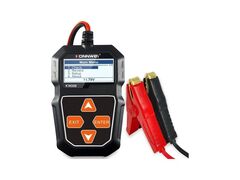
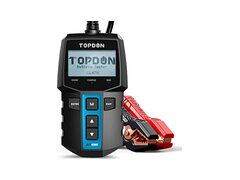
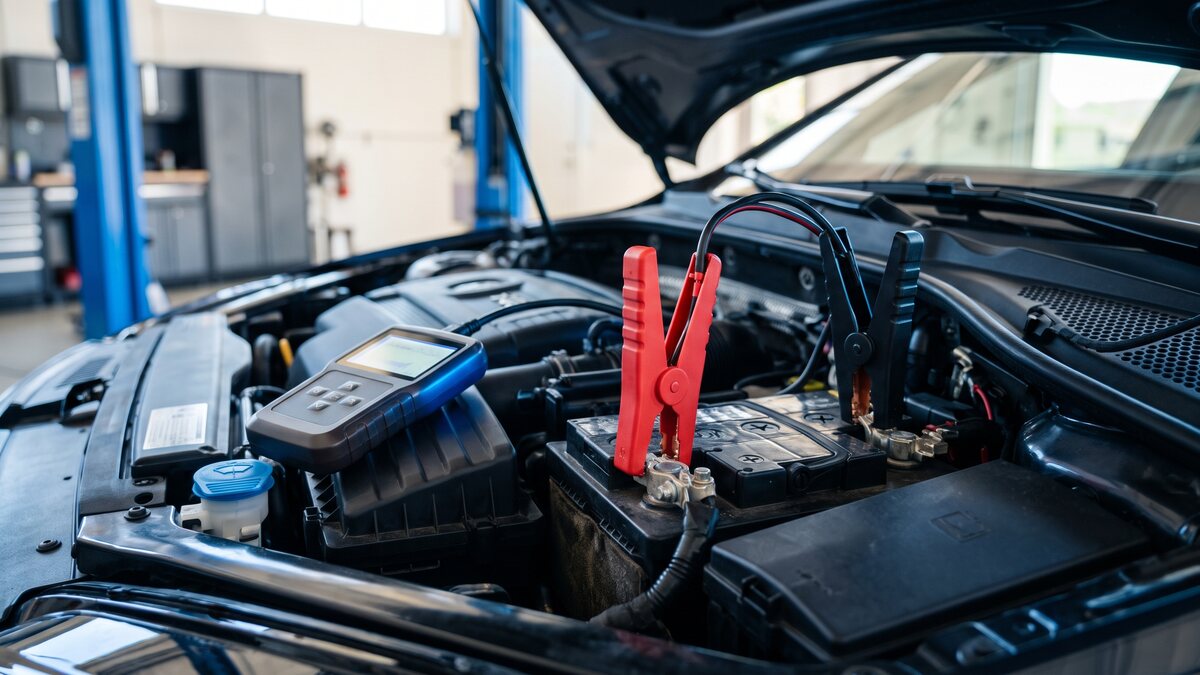
- A standalone clamp-on CCA tester: most consumer models (Motopower, Topdon, Konnwei in this comparison). Clamp the two terminals, run the test, and the LCD screen shows measured CCA, SOH, and usually a quick check of the starter and the alternator. Standalone, no app needed, instant result.
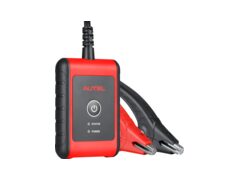
- A connected, shop-grade diagnostic tool: the same conductance measurement, but run from a Bluetooth smartphone app, with a history of past readings, an exportable report, and adaptive conductance algorithms that adjust the calculation for temperature and the exact battery chemistry (flooded, AGM, EFB, Gel).
Our comparison
| Model | Price | Test range | Features | Best for |
|---|---|---|---|---|
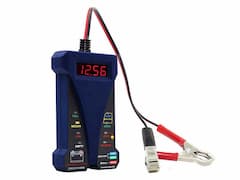
| Motopower MP0514B | $16.50 | 4 to 20 V | Simple, compact digital voltage tester | Occasional checks, tight budget |
| Konnwei KW208 | $25.99 | 100 to 2000 CCA | Battery, cranking and charging system, LCD screen | Best value, regular checks |
| Topdon BT100 | $47.19 | 100 to 2000 CCA | Same 3-in-1 diagnostic, 128x64 LCD screen | A close alternative to the KW208 |
| Autel MaxiBAS BT506 | $175.00 | 100 to 2000 CCA | Bluetooth app, adaptive conductance, exportable report | Professional use, fleets, tracking over time |
Which tester fits your needs
An occasional pre-winter check on a tight budget: the Motopower MP0514B will do for a plain voltage reading, as long as you accept not getting a real CCA figure.
A driver who wants a real diagnosis (CCA, SOH, starter, alternator) without paying shop prices: the Konnwei KW208 or the Topdon BT100, very close in features and price, make a clear difference over a plain voltmeter for only a little more money.
An enthusiast, a small shop, or a fleet manager: the Autel MaxiBAS BT506 adds adaptive conductance, tracking over time through the app, and an exportable report, useful to justify a warranty replacement or back up advice to a customer.
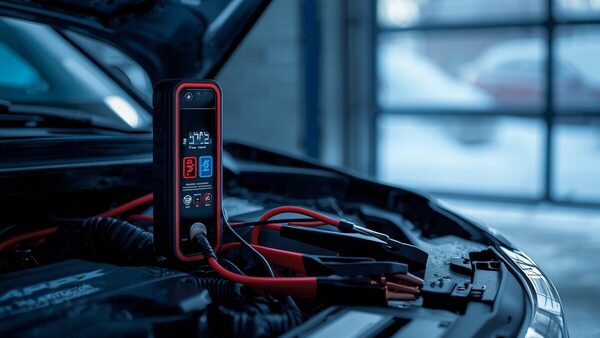
If the diagnosis reveals a battery too weak to start the car right away, a jump starter can get you moving again while you arrange a recharge or a replacement.
Using a tester correctly, in 4 steps
- Let the battery rest for at least an hour after the engine is switched off (and after any charging), for a reliable reading.
- Clean the terminals if needed, then clamp the red lead to the positive (+) terminal and the black lead to the negative (-) terminal, never the other way round.
- Run the test from the device's menu (or the app for a connected model) and note the measured CCA and the SOH percentage shown.
- If the vehicle starts normally, run a second check with the engine running: voltage should rise clearly above the resting value, a sign the alternator is charging the battery properly.