What the quoted 1024Wh is really worth
The Aferiy P180 packs a 1024Wh LiFePO4 battery, rated for more than 4000 cycles before dropping below 80% of its original capacity, with a path to grow well past that: Aferiy markets this US listing as expandable up to 5120Wh through add-on battery packs, and real buyers describe doing exactly that. Like any inverter-based station, part of the base unit's energy is lost in conversion before it reaches an outlet. No independent measurement specific to this model currently supports a precise real-world output figure for the base 1024Wh pack.
Comparable stations in its class, same 1024Wh rating and same pure sine wave inverter design, typically deliver between 83% and 92% of their rated capacity once conversion losses are accounted for. On that basis, the base P180 pack would sit somewhere around 850 to 880 usable Wh, a category-position estimate rather than a verified measurement.
Confirm exact expansion battery compatibility and pricing directly with Aferiy before planning a build-out around it: the add-on packs are a separate purchase, not included with the base unit.
1800W held up in practice, spread across four outlets
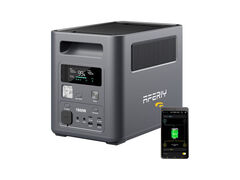
The number the listing leans on hardest, 1800W continuous and up to 3600W peak, holds up under a demanding load. Against a 3000W heating element throttled down to a compatible draw, the P180 outputs 1804W on the shared platform, a near-zero margin above the claim rather than a shortfall below it. On the US unit, that output is split across four AC outlets rather than the two found on the version sold elsewhere, verified directly on the unit's own rear panel labeling: useful for running several appliances from the same station at once, though the shared 1800W ceiling still applies across all four combined.
The 3600W peak rating mainly exists to absorb the inrush current of a motor or heating element starting up (fridge, compressor, power tool), not to feed a device continuously at that level. No independent figure confirms this peak ceiling to date, unlike the continuous rating.
Charging and the input switch: an idea rarely copied
On mains power, the current US listing quotes 0 to 80% in about 55 minutes on a standard wall outlet at full input. That figure runs a bit behind the 36-minute-to-80% claim documented for the shared underlying platform elsewhere, a gap worth knowing about rather than assuming either number applies without checking against a specific unit. Either way, a full charge lands within roughly an hour to ninety minutes in most real-world conditions, depending on ambient temperature and starting charge level.
Solar input tops out at 500W through a single MPPT tracker and an XT60 connector, verified on the unit's own rear panel labeling, across an 11.5 to 60V range. The station also charges from a car's 12V socket, and combining AC with solar speeds up the top-up further.
| Source | Max power | Time guide |
|---|---|---|
| Wall outlet (1000W) | 1000W | 0 to 80% in about 55 min quoted; full charge often an hour to 90 min |
| Limited AC input | 500W | useful on a weak circuit or a small generator |
| Solar (XT60, 1 MPPT) | 500W | heavily dependent on real sunlight |
| Car socket | 12V | a slower top-up option on the road |
The real standout is a physical 500W or 1000W input selector switch, visible right on the unit's own rear panel alongside an overload protection switch. Few rivals at this price point offer a hardware-level input power limit: it is a concrete answer to a weak household circuit, a thin extension cord, or a small generator that would otherwise trip its own protection.
The quoted sub-30dB claim: under exactly what condition
The manufacturer's own documentation for this platform puts noise under 30dB, presented as a peace-of-mind selling point for home or camping use. The important detail sits in the condition attached to it in that same documentation: this 30dB ceiling applies under a few hundred watts of load, a fraction only of the unit's maximum continuous output.
No independent figure covers this exact model's noise behavior beyond that threshold to date, particularly close to its full 1800W where the fan necessarily has to work harder to shed heat across four active outlets. A comparable station of the same capacity, for instance, shows a sizeable gap between its own sub-30dB claim under light load and a markedly higher figure at full power. Nothing suggests the P180 behaves the same way, but nothing rules it out either: it is an open question worth keeping in mind rather than a fault to hold against it.
Ports, screen and app: four outlets, a control app still finding its feet
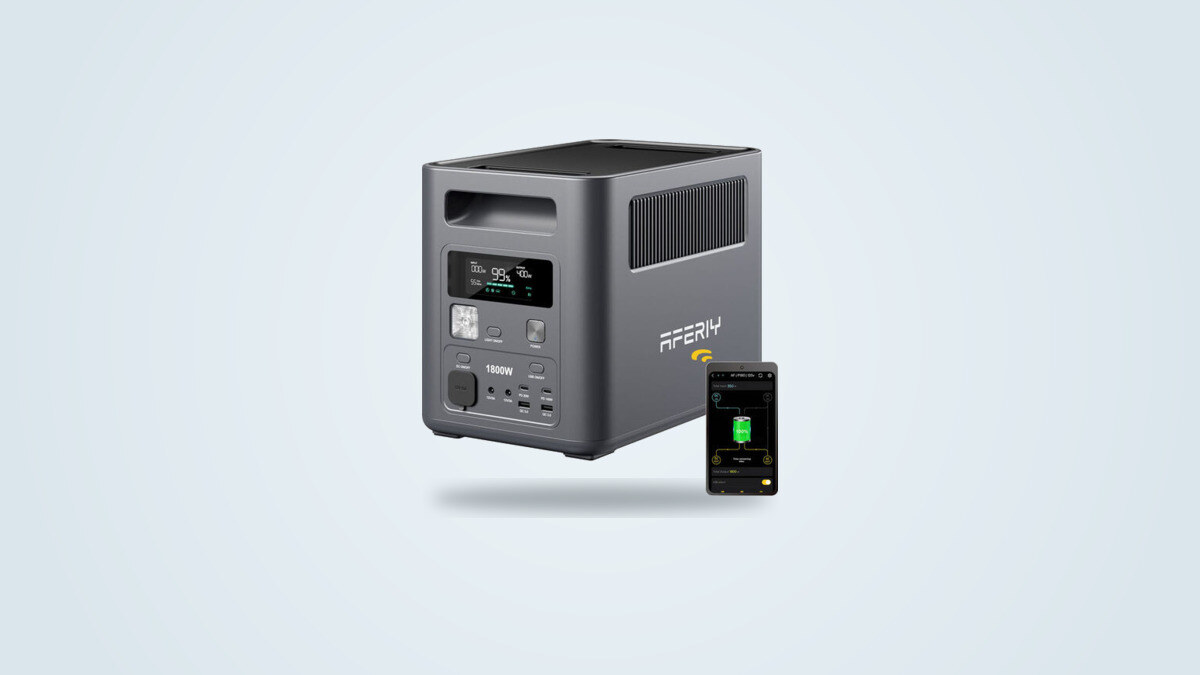
This US listing carries four AC outlets rather than the two found on the fixed-capacity version sold elsewhere, plus a 140W USB-C port, two USB-A ports, a 12V car-style output, and DC barrel outputs, all confirmed directly on the unit's own printed rear panel. Unlike the two USB-C ports (140W and 20W) on the non-expandable version, this configuration carries a single 140W USB-C port, still enough for full-speed charging on the vast majority of laptops on the market.
The front LCD screen clearly shows the charge percentage, input and output power, and fan status, a complete and legible display. The UPS function, rated under 10 ms, twice as fast as many standard units according to Aferiy, protects a router, computer or security camera properly through a brief outage.
The control app is the weakest link in the whole package by its own reviewers' account. Most report it working fine, but a handful describe it as unreliable, including one mention of intermittent WiFi noise, so leaning on remote app monitoring alone during an actual outage is not advisable. The physical power button also lacks the crisp tactile feedback some rivals offer, a minor but noticeable finishing touch on a recent product.
The 7-year warranty: what it actually requires
The 7-year figure, prominently featured on the product listing, does not apply automatically from the moment of purchase. Aferiy's own registration page describes a base period of 2 years, valid with no extra steps, plus a further 5 years that require a free online registration of the product within a set window after purchase. Aferiy's own materials also draw a line between ongoing "support" and a full parts warranty, a distinction worth confirming directly with the manufacturer before relying on the headline number for a specific repair scenario.
There is nothing unusual about this structure across the industry, but it is worth knowing before buying rather than discovering at claim time. Registering right after delivery is enough to lock in the extended coverage: the process is free, but the responsibility sits with the buyer, not the seller.
A young brand: what its other models suggest
Aferiy remains a recent name in the portable power station market, with a shorter track record than EcoFlow, Anker or Jackery. Overall brand sentiment on general review platforms stays decent, typically landing between 4 and 4.5 out of 5 across several hundred reviews spanning its whole catalogue, and the 109 ratings on this specific US listing average 4.6. One reported case stands out from that broader pattern: a unit in this product line arriving faulty, unable to charge, paired with customer service described as slow to respond by the buyer involved, an isolated but real experience to weigh against an otherwise largely positive picture.
The sustained-load voltage pattern flagged above on the P210 and P280 adds a further, reasonable note of caution: nothing points to a problem on the P180 itself, but a still-young brand with a wide catalogue and a fast release pace does not always have the time to prove out every single model as thoroughly as a longer-established player.
Against its direct rivals in the same class
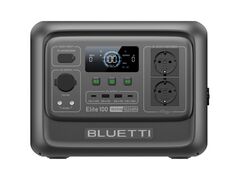
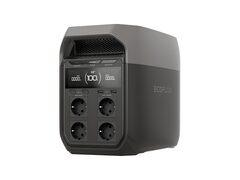
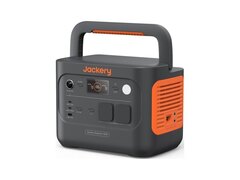
Around $500, the P180 comes up against three of the most-searched 1kWh-class stations sold in the US: the Bluetti Elite 100 V2, the EcoFlow Delta 3, and the Jackery Explorer 1000 v2. Against them, it plays a clear card: the most AC outlets of the group by a wide margin, and, uniquely here, a real path to expand past its base capacity.
| Criterion | Aferiy P180 | Bluetti Elite 100 V2 | EcoFlow Delta 3 | Jackery Explorer 1000 v2 |
|---|---|---|---|---|
| Capacity | 1024Wh (expandable to 5120Wh) | 1024Wh | 1024Wh | 1070Wh |
| AC outlets | 4 | 2 | 1 to 2 | 2 to 3 |
| Real-world output | ≈ 850 to 880 Wh (estimate) | 890 to 946 Wh | ≈ 860 Wh | not independently verified |
| Weight | 25.7 lb (11.64 kg) | 25.4 lb (11.5 kg) | ≈ 27.6 lb (12.5 kg) | ≈ 27 lb (12.2 kg) |
| Observed price | $499.97 | $499.00 | $599.00 | $499.00 |
The Bluetti Elite 100 V2 matches the P180 closely on price and has its real-world output backed by independent measurements the P180 still lacks. The EcoFlow Delta 3 charges fastest of the group but costs more and offers fewer outlets. For anyone wanting several AC outlets and room to grow, the P180 remains a compelling choice at this price, so long as the expansion batteries and warranty terms are confirmed directly with Aferiy first.
Do not confuse this US listing with the fixed-capacity, non-expandable version of the P180 sold in Europe and the UK, which runs on 230V with only two AC outlets and two USB-C ports. The two are built for different electrical systems and should not be assumed identical on specs.
Who it suits, who it doesn't
It suits anyone after home backup with room to grow, or a camping setup that might scale up over time, thanks to the real expansion path to 5120Wh. The four AC outlets and the physical 500/1000W input switch are concrete pluses for a busy household circuit, a shared job site, or a weak outlet. Taking the time to register the product online right after delivery helps secure the extended warranty coverage.
It suits less anyone after the most polished app ecosystem on the market, or a brand with several years of track record and a fully established reputation. For anyone who wants a verified independent efficiency figure before buying, or who plans to lean on remote app monitoring during an actual outage, a rival backed by published independent measurements and a more mature app may matter more than the added outlets.