
A GaN charger that shows what it is doing
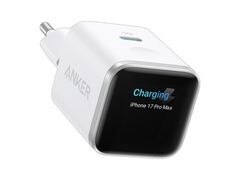
Most USB-C wall chargers are anonymous bricks with no feedback on what happens during a charge. The Anker Nano 45W changes that with a small built-in display that automatically recognizes the connected device and shows its charge live, while keeping the ultra-compact format typical of GaN technology.
The display, the product's real signature
The moment a recent iPhone (15 and later) or a compatible iPad is plugged in, the display automatically recognizes the device and shows its name along with its current charge percentage, genuinely useful for checking progress at a glance without picking up the phone. With other USB-C devices, it shows the power delivered live, the temperature and the active charging mode. A tap rotates the display so it stays readable regardless of plug orientation.
45W of GaN, from the iPhone to backing up a MacBook Air
The Nano's 45W quickly charges an iPhone, an iPad or earbuds, and can back up a MacBook Air on the go, without aiming for fast charging on a more demanding laptop. Anker highlights a three-stage charge: a fast ramp to 45W from 0 to 20%, a plateau around 30W from 20 to 80%, then a very gentle finish to 100%, to limit heat at the end of the cycle. This curve, disclosed by the manufacturer itself, explains why charging visibly slows on the display past 80%.
Care Mode, visible on the display
Switched on from the display, Care Mode goes further than the standard charge curve by reducing charging temperature even more near the end of the cycle, to protect the battery over time. The change in the display's animation pace makes this deliberate slowdown visible, rather than an unverifiable marketing promise: it is an acknowledged trade-off between charging speed and battery lifespan, not a hidden flaw.
PD and PPS, but no Quick Charge
The Nano 45W supports the USB Power Delivery and PPS protocols, which cover fast charging on recent iPhones, compatible iPads and most current Android devices with Power Delivery. Without Quick Charge, an older device that only supports that protocol will not get its maximum charging speed on this charger.
Compact body, but few details on protections
The body stays tiny despite the display, about 1.57 x 1.4 x 1.34 in (40 x 35.5 x 34 mm) for 3.17 oz (90g), with 180° foldable prongs handy for sliding flat into a bag or pouch. Care Mode acts as an active thermal safeguard during charging, but the product page does not detail a list of standard protections (overvoltage, overcurrent, short circuit) the way some other chargers in the lineup do.
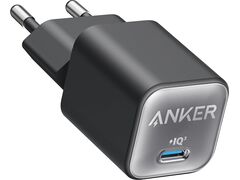
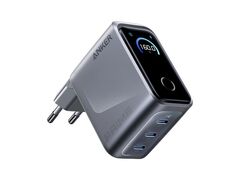
Against the Nano 3 30W and the Prime 160W
How does the Nano 45W display compare with its Anker siblings?
| Criterion | Nano 45W display | Nano 3 30W | Prime 160W |
|---|---|---|---|
| Power | 45W | 30W | 160W |
| Ports | 1 USB-C | 1 USB-C | 3 USB-C |
| Display | Yes, iPhone recognition | No | Yes, larger |
| Observed price | $39.99 | $15.99 | $149.99 |
The Nano 3 30W remains the cheaper option for simple use, but without a display or the extra 15W of the Nano 45W. The Prime 160W goes much further with three ports and a larger display, for a considerably higher budget and a multi-device use case the Nano 45W does not target. Between the two, the Nano 45W display suits anyone who wants a single-port charger that shows more than an anonymous brick, without paying for a multi-port station.
Who the Anker Nano 45W display is for
This charger suits anyone who wants to track charging at a glance and occasionally back up a MacBook Air, without needing multiple ports. For simple use on a tighter budget, the Nano 3 30W is plenty; to charge several devices at once with a fuller display, the Prime 160W is the natural choice.