Anker Prime 160W: our full review

With three USB-C ports at 140W each and a touchscreen showing real-time power draw, the Prime 160W turns a plain wall charger into a proper dashboard, at a price noticeably above the Prime 100W.

Our rating
4.2/5
Safety and protections: 4.2 out of 5 (weighting 20%)Safety4.2Build and endurance: 4.0 out of 5 (weighting 15%)Build4.0Actually delivered power: 4.3 out of 5 (weighting 25%)Power4.3Multi-port power sharing: 4.2 out of 5 (weighting 20%)Sharing4.2Protocol compatibility: 3.8 out of 5 (weighting 12%)Protocols3.8Size and technology: 4.3 out of 5 (weighting 8%)Size4.3

How is this rating calculated?

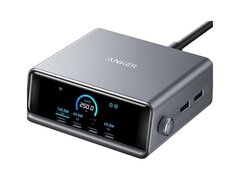
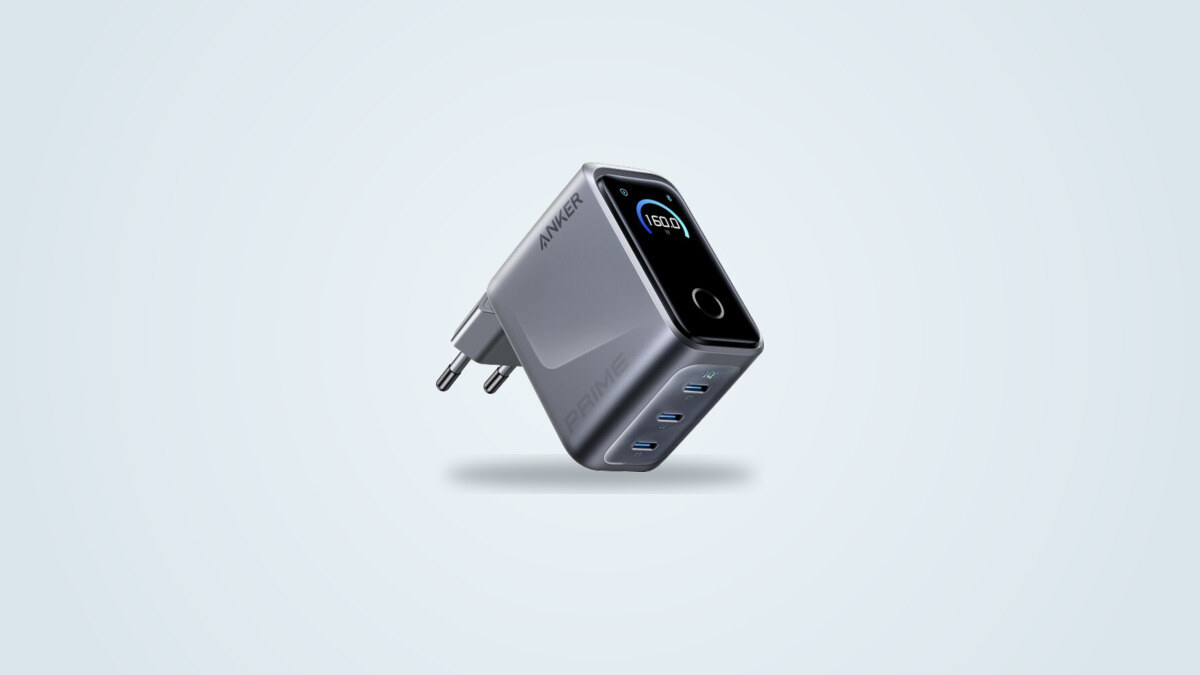
Anker Prime 160W wall charger with color touchscreen showing power draw

The essentials

The Prime 160W delivers on its core promise: three USB-C ports each capable of hitting 140W, a PowerIQ 5.0 sharing system that doesn't flinch when a laptop, a tablet, and a phone all share the outlet, and above all a color touchscreen that finally shows what's actually happening inside the box. The size stays impressively compact for this power thanks to GaN, but protocol support is limited to PD and PPS, with no Quick Charge. The real caveats are a touchscreen button that sometimes responds with a slight lag, and above all the price gap with the Prime 100W, which has neither a screen nor a third port but already covers most everyday needs. For anyone charging several power-hungry devices daily and wanting to actually see what their charger is doing, the premium is worth it.

Strengths

  • Three USB-C ports each capable of delivering up to 140W, for 160W combined in real-world use
  • Color touchscreen showing real-time per-port power, internal temperature, and the active sharing mode
  • PowerIQ 5.0 sharing that charges a laptop, tablet, and smartphone simultaneously with no visible stutter
  • Compact footprint despite the screen and three ports: 65 x 52 x 35mm for 220g thanks to GaNPrime 2.0
  • Nine claimed protections and over 10 million daily temperature checks according to Anker
  • Bluetooth app to customize charging priority between ports, on top of the automatic mode

Limitations

  • Protocol support limited to USB PD and PPS, with no Quick Charge unlike some rivals
  • Significant price gap with the Prime 100W for a power boost that not everyone needs
  • The touchscreen button sometimes responds with a slight lag, according to usage reports
  • USB-C cable not included, and a certified 5A cable is needed to reach 140W on one port
  • No manufacturer warranty length is stated on the product page
Anker Prime 160W: see the full details and price →

The new flagship of the Prime line

The Anker Prime 160W sits above the already-known Prime 100W: a third USB-C port, more power per port, and above all a color touchscreen that changes how you use a wall charger.

140 W
Max power on a single port
3
Independent USB-C ports
220 g
Unit weight

Each USB-C port can deliver up to 140W on its own, with combined output capped at 160W when several devices are plugged in at once, enough to charge a 16-inch MacBook Pro at full speed (0 to 50% in about 25 minutes, per Anker).

The touchscreen, the real argument over the Prime 100W

The color touchscreen shows live power delivered per port, internal temperature, and the active sharing mode (automatic, fixed, or custom via the Bluetooth app). A single tap switches modes without pulling out your phone.

It's a genuinely useful upgrade for anyone who wants to know what their charger is actually doing, not just a marketing gimmick: seeing "140.0W" displayed live while a laptop charges settles any doubt about whether fast charging is really working. One caveat noted in use: the touchscreen button sometimes responds with a slight lag.

PowerIQ 5.0: plugging in three devices without a second thought

Plugging in a laptop, a smartphone, and earbuds at the same time causes no trouble: PowerIQ 5.0 sharing adjusts with no visible stutter on the screen. Automatic mode is enough for daily use; the Bluetooth app only matters for anyone wanting to fine-tune priority between ports.

Worth noting: Anker doesn't publish a detailed port-by-port breakdown at 2 or 3 devices plugged in, unlike some rivals. The charger's own screen remains the only way to check the actual split at the moment of use.

PD and PPS, but no Quick Charge

The Prime 160W supports USB Power Delivery and PPS (Programmable Power Supply), enough for the vast majority of recent USB-C laptops, phones, and tablets, iPhone and Android alike. It doesn't mention Quick Charge compatibility, though, a protocol still found on some older Android devices.

In practice this gap matters little for anyone charging recent PD/PPS-compatible devices, but it's worth checking for use with older hardware.

Compact despite the screen and three ports

Despite its three ports and screen, the unit stays impressively compact thanks to GaNPrime 2.0: 65 x 52 x 35mm for barely 220g, about the size of a wireless earbud case. The wall plug folds flat for storage.

For 160W spread across three independent ports, this footprint sits toward the upper end of the most compact GaN chargers on the market.

Nine protections and continuous thermal monitoring

Anker states nine protections (overheating, overvoltage, short-circuit...) and more than 10 million daily temperature checks to keep charging safe. No independent measurement of these figures is available to date, but the screen at least offers a visual check on real-time temperature, a real plus over a charger with no display.

Against the Prime 100W and the Ugreen Nexode Pro 160W

The Prime 160W faces two different profiles: its own little brother, the Prime 100W, to measure the real value of this upgrade, and the Ugreen Nexode Pro 160W, the only other charger at this power level with a screen.

Anker Prime 160W against two direct alternatives (observed data)
CriterionPrime 160WUgreen Nexode Pro 160WAnker Prime 100W
Total power160W (140W max/port)160W (140W max/port)100W
USB-C ports32 + built-in cable2
Real-time screenYes, color touchscreenYes, TFTNo
Observed price≈ $150≈ $130≈ $48

The Prime 160W is the only one in this comparison to combine three independent 140W USB-C ports with a full color touchscreen. For simpler use with no need for a screen or a third port, the Prime 100W already covers the essentials at a much lower price.

Who the Prime 160W is for

This charger suits anyone who already owns a standard charger and is looking for a real step up: more power per port, a third USB-C, and visual feedback missing from every screen-less model.

For simpler use on a tighter budget, the Prime 100W remains plenty; the 160W targets those charging several power-hungry devices at once and wanting to actually see what their charger is doing.
The rating in detail

Our rating
4.2/5
Actual charging current not measured
Battery compatibility not measured
Safety and protections 4.2
Build and endurance 4.0
Cables and connectors not measured
Actually delivered power 4.3
Multi-port power sharing 4.2
Protocol compatibility 3.8
Size and technology 4.3
Format and chemistry compatibility not measured
Charging precision not measured
Display and control not measured
Anker Prime 160W: see the full details and price →

The product and its alternatives

Anker Prime 160W

Anker Prime 160W

See price (19)

The Anker Prime 160W charger shows, live on its touch display, the power sent to each port: up to 140W on a single USB-C, 160W in total across three.

View product
Anker Prime 100W

Anker Prime 100W

See price (11)

One charger for everything: the Anker Prime 100W GaN powers MacBook, iPad and iPhone at once across its 3 ports, in a foldable pocket body.

View product
Anker Prime Station 250W

Anker Prime Station 250W

See price (17)

250W and 6 ports to charge everything at full speed: the Anker Prime station powers laptops, phones and tablets from a single unit, with a screen and control dial.

View product

Frequently asked questions

Yes. A single USB-C port delivers up to 140W, enough to charge a 16-inch MacBook Pro from 0 to 50% in about 25 minutes according to Anker. The 160W combined output also allows charging two other devices at the same time.

It shows real-time power delivered per port, internal temperature, and the active sharing mode. A tap switches modes without going through the app.

The Prime 160W adds a third USB-C port, more power per port (140W versus 100W), and above all a real-time touchscreen, absent on the Prime 100W.

No, the charger works well on its own in automatic mode. The app just adds remote Bluetooth control and fine-tuned priority settings between ports.

No, the charger is sold on its own. To get 140W on one port, a certified 5A USB-C cable capable of handling that power is required.