Why the 5S550 exists: Eaton doesn't sell Ellipse ECO in the US
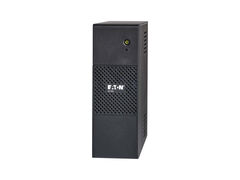
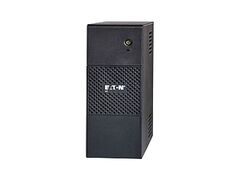
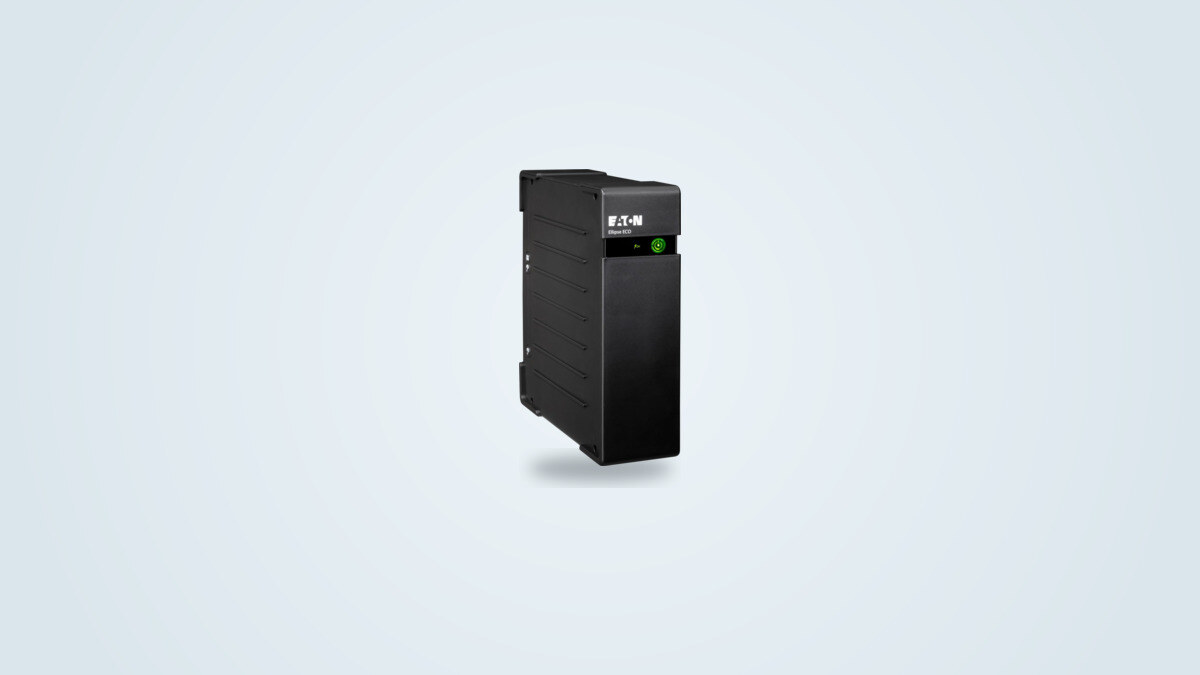
The Eaton 5S550 is Eaton's entry-level line-interactive UPS for the US market, rated at 550VA and 330W of continuous power, with 8 NEMA 5-15R outlets, 4 of them battery-backed. It exists because Eaton's quiet, off-line Ellipse ECO line, sold across Europe under the FR, DIN and IEC names, is not sold in the US at all: American buyers looking for an entry-level Eaton UPS end up with the 5S550 instead, a different product built on a different topology.
Against the step-up Eaton 5S700 (700VA / 420W, also 8 outlets with 4 battery-backed), the 5S550 sits at the bottom of the US 5S range, sized for a single router, modem or standalone NAS rather than heavier combined loads. Measuring 9.8 in x 3.4 in x 10.2 in (249 x 86 x 259 mm) and weighing about 12.3 lb (5.6 kg), it is noticeably heavier than the European Ellipse ECO 650 at 7.9 lb (3.6 kg), a difference likely tied to its line-interactive transformer and battery sizing. The naming split itself is deliberate on Eaton's part: rather than adapting the Ellipse ECO's off-line design with a NEMA outlet swap, the brand engineered the 5S line specifically for this market, with its own topology, outlet layout and feature set.
Runtime tells two different stories depending on the load
Eaton rates the 5S550 at about 12 minutes of runtime at half load and roughly 1 minute at its full 330W rating. Converted to watt-hours, that works out to about 33 Wh at half load (165W for 12 minutes) but only around 5.5 Wh at full load (330W for 1 minute), a much steeper drop-off than the European Ellipse ECO 650, which holds close to 33 Wh even at its own full-load point.
In practice, that split matters less than it looks: a router or a modem, the unit's main intended use, typically draws only 20 to 30W, nowhere near the 330W full-load point where runtime gets short. The 1-minute full-load figure only becomes relevant if you load the 5S550 close to its ceiling, in which case it buys just enough time for a clean shutdown trigger rather than to ride out a long outage. For that heavier scenario, the Eaton 5S700 rates more continuous power at a similar price.
Compared with the Eaton 5S700's own rated runtime, and with third-party units of similar power like the APC Back-UPS BE600M1 or the CyberPower CP550SLG, the 5S550's half-load figure holds up reasonably well; its full-load figure is the tightest of the bunch, worth planning around rather than treating as a defect.
A multi-bay NAS is the one common home-office device that can push well past the 20 to 30W a router or modem draws, since spinning drives add real load on top of the board itself. For that heavier case, checking the NAS's own rated power draw against the 5S550's runtime curve before buying is worth the extra few minutes, rather than assuming the half-load figure applies.
Line-interactive regulation, a real structural difference from the European model
Unlike the off-line Ellipse ECO sold in Europe, the 5S550 runs a line-interactive topology with automatic voltage regulation (AVR): it corrects minor sags and surges on the incoming line by adjusting a transformer tap, without ever switching to battery power. That protects the battery from being drawn down by routine voltage noise on an unstable circuit, extending both its runtime reserve and its working life.
Eaton has not published a specific millisecond switch-time rating for the 5S550, so this review does not put a number on it, but the practical benefit of AVR is well established: fewer battery cycles for ordinary voltage fluctuations, reserving the battery for genuine outages. That is a meaningful structural advantage the US 5S550 has over its European Ellipse ECO sibling, which relies on a simpler off-line design with no voltage correction at all.
The trade-off is a larger, heavier unit, evident in the 5S550's higher weight versus the Ellipse ECO 650, and the more complex electronics that go along with line-interactive regulation.
8 outlets, the most generous layout in this comparison
The 5S550's 8 NEMA 5-15R outlets split evenly: 4 battery-backed plus surge protection for the router, modem and NAS, and 4 surge-protection-only outlets for secondary gear like a monitor, a printer or a desk lamp. That is a generous count for this power class, matching the Eaton 5S700's own layout and beating both the APC Back-UPS BE600M1 (7 outlets, 4 battery-backed) and the CyberPower CP550SLG (5 outlets, 3 battery-backed).
Coax and phone/modem line surge protection is built in alongside the outlets, guarding against surges riding in on those lines as well as the power feed, a detail some budget competitors skip entirely. For a home office running a router, a cable or DSL modem and a small NAS, the 8-outlet layout means everything reasonably fits without needing a separate surge strip.
Eaton UPS Companion and Eco-Control's 30% savings claim
The 5S550's USB port pairs with Eaton's free UPS Companion software, which schedules an automatic, clean shutdown of a connected NAS or computer if an outage runs longer than the battery can cover, and reports runtime and load information. Eco-Control can cut standby energy use by automatically switching off the secondary, surge-only outlets once the device on the master outlet powers down, for savings Eaton rates at up to 30% compared with older-generation units, the largest Eco-Control-style figure among the Eaton units covered on this site (the European Ellipse ECO 650 rates its own version of this feature at up to 20%).
No LCD display is confirmed for this specific model in the documentation reviewed here; status reporting appears to rely on LEDs and the software rather than an on-unit screen. That puts it in the same tier as most budget line-interactive units in this class, none of which offer a real-time display either.
FR, DIN, IEC, 5S550: four different products under one brand story
Outside the US, Eaton sells the Ellipse ECO 650 in three regional versions built around the same off-line electronics: the « USB FR » with 4 genuine French type E sockets, the « USB DIN » with 4 Schuko type F sockets for Germany and Spain, and the « USB IEC » with 4 IEC C13 connectors for the UK and Italy. All three share identical electrical ratings (650 VA / 400 W) and the same fully passive, fanless design rated under 25 dB at one metre.
None of that lineup reaches the US. Eaton's American entry-level UPS lineup is the 5S range instead, built on different, line-interactive electronics rather than the European line's off-line design. That is a genuine product difference, not a relabeling: different topology, different outlet count and type, a different runtime profile, and a rated Eco-Control saving of up to 30% rather than the European line's 20%. Buyers comparing notes with a European Ellipse ECO 650 owner should expect a meaningfully different unit under the hood, not just a different plug.
Against the Eaton 5S700 and two budget rivals
How does the 5S550 stack up against the step-up Eaton 5S700 and two budget rivals in the same power class?
| Criterion | Eaton 5S550 | Eaton 5S700 | APC Back-UPS BE600M1 | CyberPower CP550SLG |
|---|---|---|---|---|
| Power | 550VA / 330W | 700VA / 420W | 600VA / 330W | 550VA / 330W |
| Outlets | 8 (4 battery-backed) | 8 (4 battery-backed) | 7 outlets (4 battery-backed) | 5 outlets (3 battery-backed) |
| Topology | Line-interactive | Line-interactive | Line-interactive | Line-interactive |
| Display | No, LEDs only | No, LEDs only | No display | No display |
| Observed price | $156.99 | $163.99 | approx. $80 | approx. $60 |
Against the two cheaper rivals, the 5S550 wins clearly on outlet count and on the added coax/data line protection neither competitor offers at this price point. Against its own step-up sibling, the 5S700, the price difference is small, about $7 at the prices observed here, for 90W more continuous power: anyone whose router, modem and NAS together approach 330W should size up to the 5S700 rather than risk running the 5S550 near its ceiling.
Reliability and what to expect from Eaton's US lineup
Eaton is a long-established name in UPS hardware, and the 5S line has been sold in the US for years as the brand's entry point for home and small-office protection. No recurring manufacturing fault or product recall turned up for the 5S550 at the time of writing.
Unlike the European Ellipse ECO 650, which its manufacturer now flags as nearing the end of its production run, the 5S550 carries no such notice, consistent with it being Eaton's current, actively sold entry-level UPS for this market rather than a line being phased out. That matters in practice for anyone thinking about replacement batteries down the line: a unit still in active production is far more likely to have parts and accessories in stock several years out than one already marked for phase-out.
Who the 5S550 suits, and who should size up
The Eaton 5S550 is aimed at protecting one fixed piece of electronics that cannot tolerate even a brief outage: a router, a cable or DSL modem, a Starlink dish tied to a residential solar setup, or a small standalone NAS. Its 8 outlets comfortably cover that scenario plus a couple of secondary devices on surge protection alone.
It suits less well anyone running gear that draws consistently close to 330W, where the roughly 1-minute full-load runtime leaves little margin; the Eaton 5S700, rated at 420W continuous for a similar price, is the better fit there. It is also not the pick for anyone specifically wanting Eaton's quieter, fully passive Ellipse ECO design: that line simply is not sold in the US, and the 5S550's line-interactive electronics, while not loud in normal use, are not built around the same fanless simplicity.
For a home already running on residential solar or off a Starlink connection, the calculus is the same as anywhere else: the 5S550 rides out the short dropouts and brief voltage sags that a solar inverter or a satellite modem can otherwise treat as a hard fault, without needing the battery to cover more than a few minutes at a time.