What the advertised 512Wh are really worth
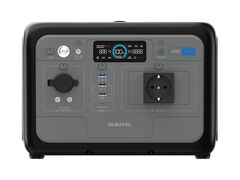
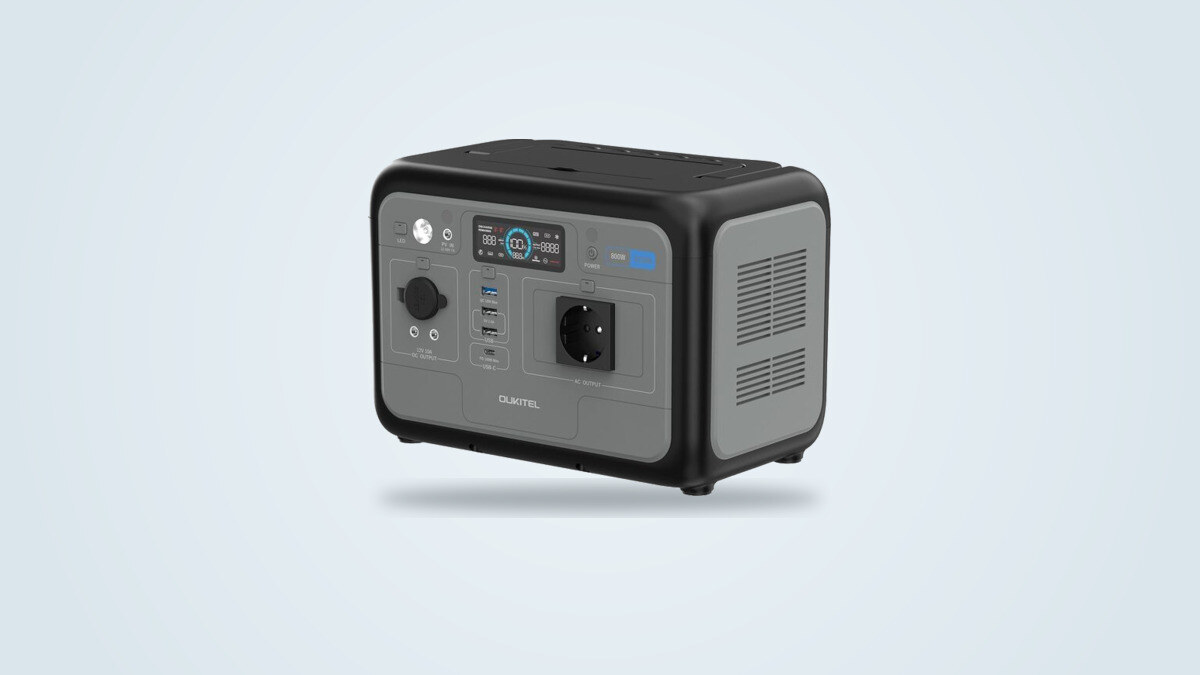
The Oukitel P800 packs a 512Wh LiFePO4 battery, a chemistry now common on this segment for its lifespan and thermal stability. The figure printed on the spec sheet, however, is not what the unit actually delivers at the output: as with any electrical conversion, part of the stored energy is lost as heat during charging and discharging.
On this specific point, the product's official documentation is unusually direct: it states that the actually usable capacity sits between 80 and 85% of the rated figure, roughly 410 to 435Wh, and specifies that this gap is normal for any power station with a built-in inverter. Few manufacturers spell out this loss so plainly, usually leaving buyers to discover it once the unit is in their hands.
This gap is not unique to the P800: it affects every station of this type. What sets this model apart is that the figure is published in plain terms rather than left for the buyer to discover. As a point of reference, 420Wh of actually usable energy is enough to recharge a smartphone several dozen times, or a laptop four or five times.
P800 or P800E: one and the same product under two names
One single unit circulates under two names that invite confusion. The manufacturer's site sells this model under the commercial name "P800", but its own internal spec sheet, its warranty claim form, and some of the reviews posted on that very page refer to the unit as the "P800E". The advertised specifications do not change from one name to the other: 512Wh, 800W continuous, 1600W peak, 13.2 lb (6 kg), the same ports and the same charging times.
This is therefore not two different products, but a naming inconsistency on the manufacturer's own part, also found at several resellers and in some demo videos. A shopper who comes across both names while researching is not looking at two different generations: it is the same power station. This looseness in naming is not merely a curiosity, it also muddies price comparisons: some very aggressive promo deals listed under the "P800E" name are, in reality, the very same unit sold elsewhere as the "P800" at a noticeably higher list price.
A mains recharge among the fastest in its category
Charging is the feature the manufacturer promotes the most, and it is also the point on which every source checked agrees without contradiction. On mains power alone, at a maximum input of 500W, the P800 reaches 80% charge in about 45 minutes and a full charge in one hour. Combining the mains input with a solar input can push the total input power up to 600W, which brings a full charge down to about 55 minutes.
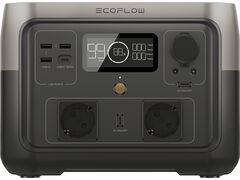
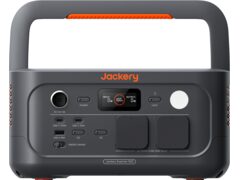
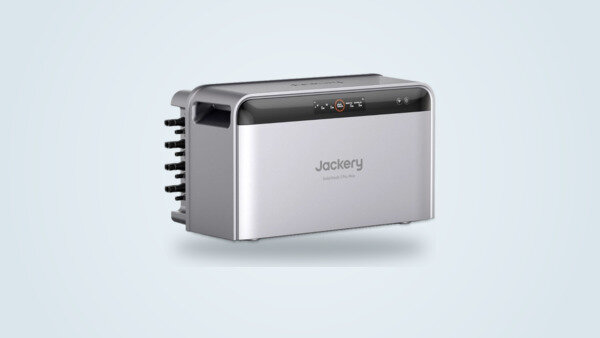
Against the two direct rivals cited on its own product page, this speed holds up well: the EcoFlow River 2 Max also takes about one hour for a full charge, while the Jackery Explorer 500 v2 needs closer to 1h20 to 1h30. The P800 therefore matches the faster of the two established references and clearly beats the other, at a strictly identical capacity of 512Wh.
This performance remains a manufacturer figure, consistent across every source checked (official spec sheet, resellers, product descriptions) but never independently timed. Nothing suggests an inconsistency or an overstatement on this specific point, unlike some other traits covered further down.
800W continuous: a real edge over compacts of the same capacity
At equal capacity, the P800 stands out with a higher continuous output than its direct rivals: 800W, with a 1600W peak at start-up, where most 512Wh stations cap out at 500W continuous. This design choice noticeably widens the list of devices that can be used without a second thought.
The official documentation even details a precise list of uses rather than a generic promise: a laptop (50 to 100W), a drone or camera (under 100W), a projector (up to 300W), a rice cooker or fan (up to 500W), and a coffee maker (up to 800W) can all run off this outlet. The manufacturer is just as explicit about the flip side: devices drawing more than 800W continuous, such as a space heater or a power drill, are not supported, since the 1600W peak only absorbs a brief start-up surge, not sustained use.
An automatic transfer switch between mains and battery, rated under 10 milliseconds, rounds out this profile: it is explicitly aimed at protecting devices sensitive to interruptions, a computer, a NAS, or light medical equipment, during a brief power outage. This figure remains a manufacturer claim, with no independent oscilloscope check, but it is in line with the usual range for this kind of feature on inverter-equipped stations.
App control: a promise that stays unclear
The P800 has an LCD screen that continuously shows charge level and input/output power: local control, on its own, raises no question. Things get murkier once remote app control comes into play. The documentation and some marketing material mention compatibility with a monitoring app, but the comparison chart published by the manufacturer itself explicitly excludes this model from the list of app-controllable references, unlike higher-end lines from the same brand.
This gray area is not new for this model: it is already flagged on the catalog's product page, which prefers to promise nothing rather than announce an unguaranteed feature. Nothing found in this research settles the question more firmly one way or the other: caution remains warranted for anyone who treats app control as a deciding factor.
3500 or 4000 cycles: the manufacturer's own communication contradicts itself
The battery's advertised lifespan varies depending on which official page is consulted, on the manufacturer's own site. The product's spec sheet states 4000 charge cycles before dropping to 80% of original capacity. That same page's FAQ, meanwhile, mentions "3,500-plus cycles" to justify an estimated ten-year lifespan based on one full charge per day.
The gap is not huge (about 12%), and both figures sit within the expected range for a decent LiFePO4 battery. But this inconsistency, within documentation meant to serve as a reference, calls for taking the more conservative figure (3500 cycles) rather than the more flattering one, and treating the ten-year estimate as a theoretical ballpark rather than a guaranteed number. At a rate of one full charge every two or three days, the typical nomadic or occasional backup use for this format, this difference has little practical consequence for many years regardless.
The manufacturer advertises a one-year warranty on this product, extendable to three years subject to registering the unit after purchase. No product recall or safety notice specific to this line of power stations has been identified to date.
13.2 lb on the scale: the real edge over the direct competition
The most differentiating figure on the P800 is neither its capacity nor its power, both already solid, but its weight. At 512Wh, most comparable stations exceed 15.4 lb (7 kg); the P800 stops at 13.2 lb (6 kg), between 2.9 and 3.7 lb (1.3 and 1.7 kg) less than the two direct rivals cited on its own product page.
| Criterion | Oukitel P800 | Jackery Explorer 500 v2 | EcoFlow River 2 Max |
|---|---|---|---|
| Capacity | 512Wh | 512Wh | 512Wh |
| Continuous power | 800W | 500W | 500W |
| Weight | 13.2 lb (6 kg) | ≈ 16.1 lb (7.3 kg) | ≈ 17 lb (7.7 kg) |
| Full mains recharge | ≈ 1h | ≈ 1.3h | ≈ 1h |
This weight gap is felt in practice the moment the unit has to come out of a trunk, get carried to a campsite, or slide into an already-full bag. A difference of several pounds on an object this size is far from trivial: it amounts to nearly a fifth of the total weight of the lightest of the three.
Solar and ports: a simple setup for basic nomadic use
The solar input accepts up to 200W, across a 12 to 50V range and a maximum current of 7A, through a single DC5521 connector wired to one MPPT controller. This single string is enough for one or two typical foldable panels, but it rules out more ambitious multi-orientation setups from the start, which require stations with two independent MPPT inputs.
On the output side, the unit stays modest: a single AC outlet (800W, pure sine wave), two USB-C ports (one at 100W Power Delivery, enough to charge a laptop, the other at 18W), two USB-A ports at 12W each, and a 12V output with a car-style socket. A single AC outlet can prove limiting against direct rivals of the same capacity that offer two, especially for anyone wanting to power several small mains devices at once without an extra power strip.
No wireless charging pad, no confirmed Bluetooth or WiFi connectivity: control is limited to the screen and the unit's physical buttons. For simple nomadic use, camping, occasional remote work, or backing up a few devices, this setup remains sufficient; it quickly falls short for anyone who wants to control or monitor their station remotely.
A brand still young on this segment
Oukitel is still best known for its rugged smartphones and tablets aimed at outdoor use, the segment on which the brand first built its reputation. Its power station line is considerably newer, and the P800 itself only launched in fall 2025: barely a year of track record at the time of writing, far too little to judge long-term reliability.
The harshest criticism of the brand's customer service concerns almost exclusively its smartphone division, a distinct product and service that cannot, therefore, be pinned on the power station line without caution. That line operates through its own dedicated storefront, with its own return and warranty policy. No product recall or safety notice specific to Oukitel power stations has been identified to date.
The stated temperature ranges remain typical for a LiFePO4 battery: charging allowed between 32 °F (0 °C) and 104 °F (40 °C), with a recommendation to store the unit somewhere cool and dry, and a top-up charge every three months advised for long-term storage. Nothing unusual here, but nothing that sets this model positively apart from its established rivals either.
Against the direct competition in the catalog
Against the EcoFlow River 2 Max and the Jackery Explorer 500 v2, the two alternatives the manufacturer itself cites on its product page, the P800 wins on three concrete points: weight, available continuous power, and, most of the time, street price. It loses, on the other hand, on brand longevity: both rivals benefit from a noticeably longer sales history and a more developed accessory ecosystem.
On charging speed, the P800 matches the EcoFlow and beats the Jackery. On ports, none of the three stands out clearly: each limits its mains output to one or two outlets at this capacity. The difference, then, mostly comes down to what the buyer prioritizes: an established brand with a more reassuring track record, or a more generous spec sheet on paper for a generally lower budget.
Who the P800 is for, and who it is not for
The P800 suits a buyer who prioritizes light weight and generous output power for this capacity, even if that means accepting a less established brand on this specific segment and the lack of reliable app monitoring. Light camping, occasional nomadic remote work, or backing up a few sensitive devices all fit its profile well: 512Wh covers a day or two of backup use, not an extended multi-day run without recharging.
It is less suited to anyone looking for reliable, clearly specified app control, a brand with several years of track record on power stations, or a more generous set of AC outlets for running several devices at once. For those specific needs, the two direct rivals cited above, heavier but more established, remain the safer picks.