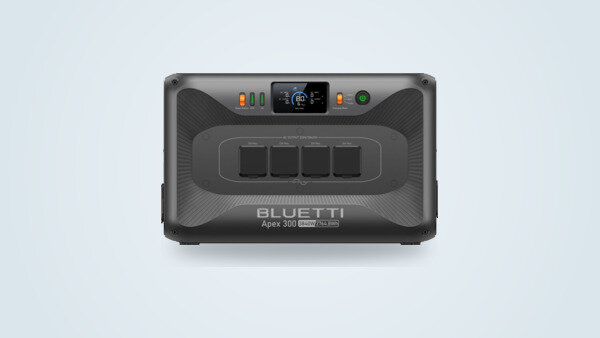
Bluetti Apex 300: our review
A 2,765Wh base unit that holds its 3,840W until the battery is empty and grows to 58kWh, but whose 3,840W charging and USB and 12V outputs all come as paid accessories.
 Published on October 9, 2026 by Christophe

Christophe Delpuech has been here from the very start, in 2011, and it is an understatement to say he knows the portable power market inside out. In charge of purchasing and sales, he is the first link in the chain: he decides which products make it into the catalogue and which never will. Needless to say, his opinion carries weight, and a manufacturer does not easily sell him a marketing pitch.
His method is known to the whole team: every charger, portable power station or generator he considers listing goes through a punishing test, pushed to the limit of its capabilities. Repeated charges, borderline power draws, behavior once the battery is warm, real accuracy of the advertised watts: Christophe looks for the gap between the spec sheet and reality, because that is always where the nasty surprises hide. With more than 75 product tests to his name, he has developed a rare instinct for spotting, within minutes, a device that will not live up to its promises.
His favorite line, repeated to the brands' sales reps, sums up the spirit of the house rather well: we don't want your best-seller, we want your best product. It is his buyer's choices, demanding and sometimes unpopular with suppliers, that guarantee the coherence of the catalogue and the trust of readers. The same filter applies on Au Frais, where he steers the selection of portable and fixed air conditioners as well as air purifiers with the same uncompromising eye.
Married and a father of two, Christophe recharges his own batteries out in nature: a tireless hiker, especially attached to the Gorges du Tarn, where he often tests in real conditions the runtime of a power station or a cool box during long family outings. A fairly logical way, for him, to check that a product holds up far from any power socket.
A 2,765Wh base unit that holds its 3,840W until the battery is empty and grows to 58kWh, but whose 3,840W charging and USB and 12V outputs all come as paid accessories.
Published on October 9, 2026 by Christophe
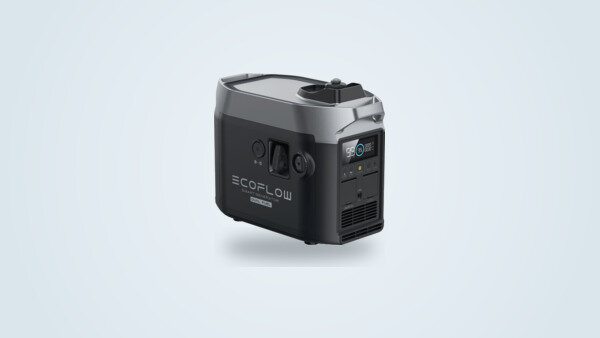
With 1800 W on gasoline and up to 20 kWh on a 20 lb propane tank, this inverter generator bets on automation and dual fuel rather than raw power, at the cost of a noise level higher than expected for the technology.
Published on September 30, 2026 by Christophe
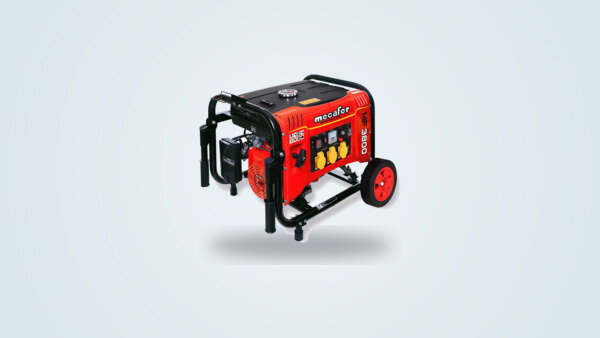
The most powerful generator, and the one that gets the most energy out of a full tank, among the six gas and dual-fuel generators already reviewed on this site, tarnished by an official 2022 safety recall that has since been fixed.
Published on September 22, 2026 by Christophe
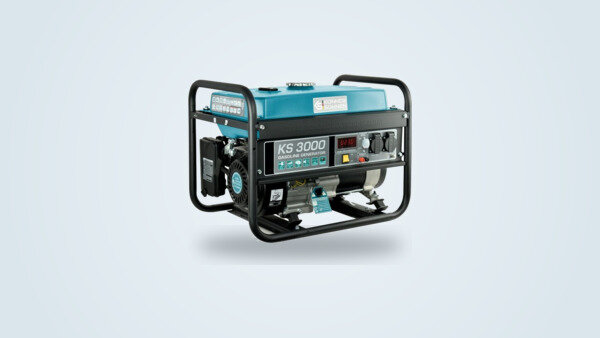
A conventional gas generator whose declared sound power of 93 dB sits below the identical 96 dB posted by the four other gas generators already reviewed on this site, with a deduced fuel burn of roughly one liter per hour at half load on a 15-liter tank.
Published on September 22, 2026 by Christophe
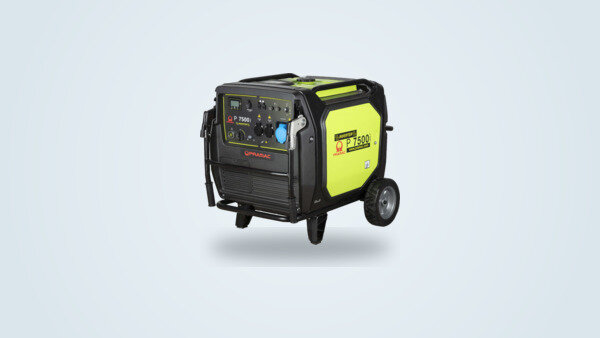
An inverter generator delivering 6500W continuous, an unprecedented output in this catalog's sub-category, with a noise level that stays level with much smaller units, though this European-voltage model's US buying path is unconfirmed at the time of writing.
Published on September 22, 2026 by Christophe
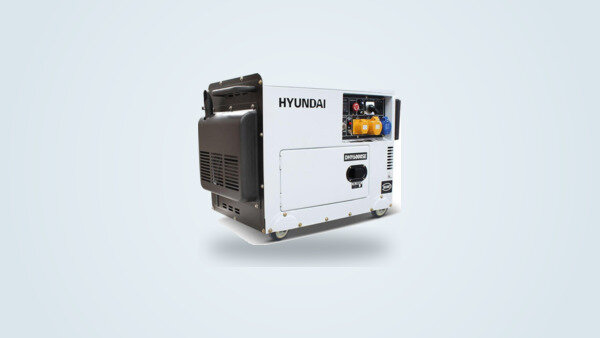
A single-phase diesel built for automated home backup power, with a continuous rating that already beats every other generator in this catalog. Its 330.7 lb (150 kg) and a noise level that a sound-insulated canopy does not fully turn into an advantage are worth knowing before buying, and no confirmed US retailer listing could be found for this exact model at the time of writing.
Published on September 22, 2026 by Christophe
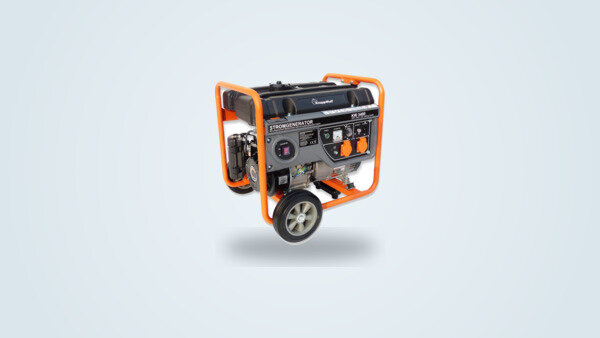
A conventional gas generator for under 350 dollars, with a 15-liter tank and solid wheels on ball bearings fitted as standard, but a guaranteed sound power of 96 dB(A) that is exactly the same as the three other conventional generators already reviewed on this site.
Published on September 17, 2026 by Christophe
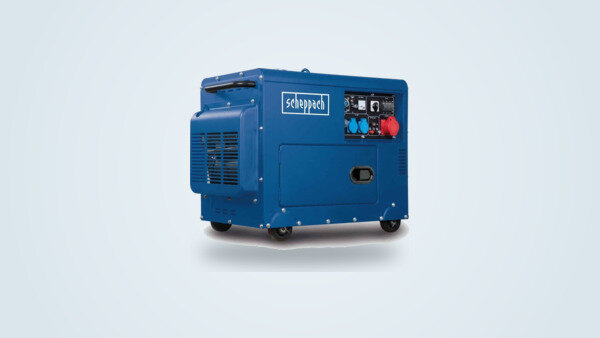
A job site diesel that opens up genuine three-phase 400V power for under $1,700, with fuel efficiency clearly ahead of an equivalent gas generator. But the sound power the manufacturer actually rates, 96.2 dB(A), does not match the 71 dB quoted elsewhere on this site for the same product, and its 326.3 lb (148 kg) make it a semi-permanent fixture rather than a portable generator.
Published on September 17, 2026 by Christophe
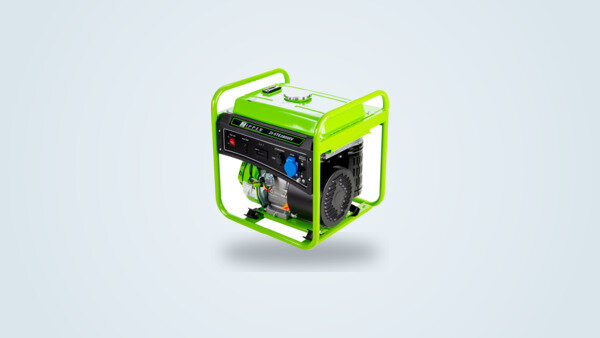
An inverter generator that claims 2800 W continuous from a 212 cc engine, the highest noise level and the most limited connectivity of any inverter generator already reviewed on this site, and no confirmed way to actually buy or run one in the US.
Published on September 17, 2026 by Christophe
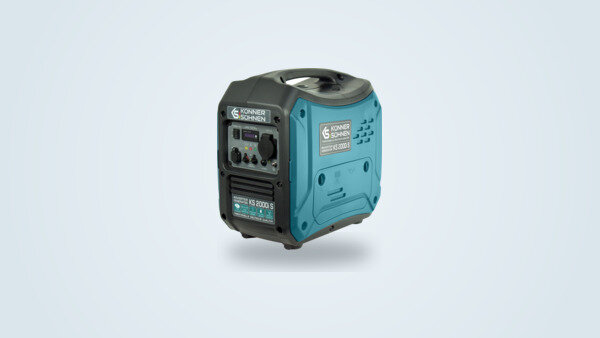
An inverter generator whose 2000 W peak and 1800 W continuous output check out to the amp on both the US and European spec sheets, backed on this market by a 3-year warranty and a built-in carbon monoxide sensor, but whose noise figure still swings between 57 and 64 dB depending on which official source you read, and whose price does not stack up against a direct rival with twice the power for close to the same money.
Published on September 16, 2026 by Christophe
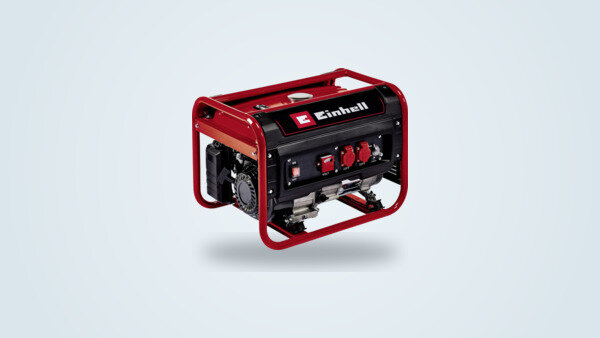
A small gas generator whose 15-liter tank, identical to its bigger sibling the TC-PG 35, gives it the best runtime in its segment, yet its guaranteed sound power of 96 dB(A) is just as high despite 500 W less output.
Published on September 16, 2026 by Christophe
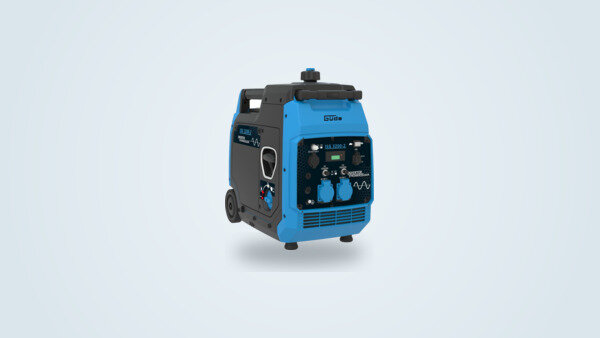
An inverter generator that delivers 3200 W continuous, consistent with the current it states itself, for a noise level close to that of its half-as-powerful little brother, though this German brand's US availability is unconfirmed at the time of writing.
Published on September 16, 2026 by Christophe
Updated on July 29, 2026