A premium PWM controller, not an MPPT
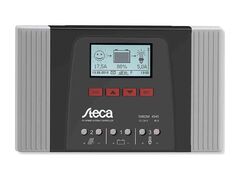
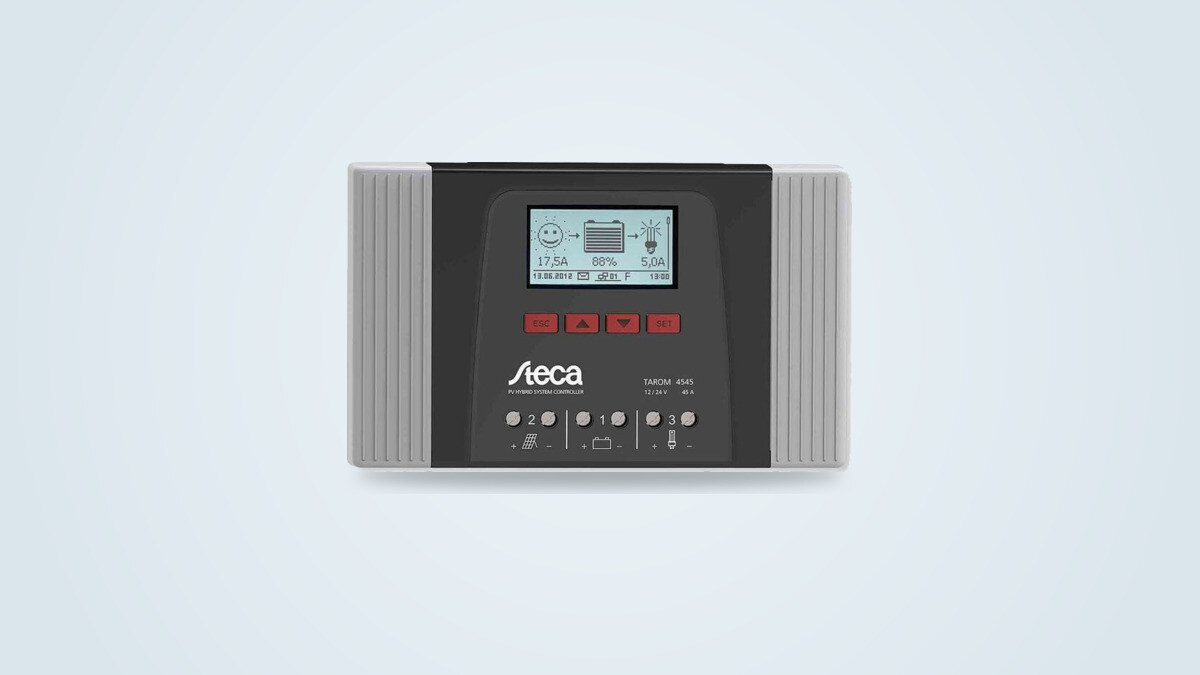
The Steca Tarom 4545 is a professional-grade solar charge controller from the German manufacturer Steca (now part of the Kontron/Katek group). This is the key thing to understand before buying: its technology is PWM (Pulse Width Modulation) with multi-stage charging, not MPPT.
A PWM controller links panel and battery almost directly, without converting voltage to chase the panel's maximum power point the way an MPPT does. That's a simpler and usually cheaper technology, which makes the Tarom 4545's pricing (around $233 in the US) all the more surprising next to MPPT controllers on the market sold at comparable or lower prices.
PWM versus MPPT: what it actually changes
The technical difference between PWM and MPPT isn't a marketing footnote. An MPPT controller continuously adjusts voltage to extract maximum power from the panel, a particularly clear gain in low light (morning, overcast sky) or when panel voltage runs well above battery voltage. A PWM unit settles for a near-direct connection, with a more pronounced efficiency loss under those same conditions.
| Criterion | Steca Tarom 4545 | Renogy Rover 40A | Victron SmartSolar 100/20 |
|---|---|---|---|
| Technology | PWM | MPPT | MPPT |
| Current | 45A | 40A | 20A |
| Screen | Built-in graphic LCD | Built-in LCD | None (Bluetooth) |
| Data logger | 12 years | None | 30-day history |
The Tarom partly makes up for this with a slightly higher maximum current (45A against 40A and 20A) and its long-term data logger, missing from both cited MPPT rivals. But on the most fundamental criterion, how much energy is actually pulled from the same panels, an MPPT does structurally better, at the same or lower price.
No lithium profile: a serious limitation in 2026
The Tarom 4545 can be set from its menu for various lead-acid profiles (flooded, AGM, gel), with optional temperature compensation via a separately sold probe. No LiFePO4 lithium charging profile is offered at all, which rules this controller out for any modern setup built around that now-dominant off-grid chemistry.
For anyone who already runs a lead-acid setup (flooded, AGM, or gel) with no plan to move to lithium, this limitation isn't one at all. But it's worth knowing before buying, especially given the price being asked.
LCD screen and 12-year data logger: the real strength
This is where the Tarom 4545 genuinely scores. Its backlit graphic LCD screen shows production, voltage, current, and battery charge as intuitive icons, with no smartphone or app needed, unlike several recent MPPT controllers that bet everything on Bluetooth.
The built-in data logger holds up to twelve years of production and consumption data, readable directly on screen or through Steca's open UART interface. Two programmable multi-function contacts, with up to four timers per day of the week, can automate dusk-triggered lighting, starting a backup generator, or switching on a load when there's surplus power.
This level of long-term automation and data tracking stays rare on controllers at this tier, MPPT units included. It's the strongest argument in the Tarom's favor, provided you actually have a use for it.
Who the Tarom 4545 is for
The Tarom 4545 suits a sizeable 12V or 24V setup (up to 1400W of panels at 24V), lead-acid only, where twelve-year data tracking and contact-based automation have real value: an off-grid cabin, an agricultural setup with automated lighting, or a system paired with a backup generator.
For a lithium setup, a modern MPPT is the obvious choice, no question. And even for a standard lead-acid setup with no need for advanced automation, an MPPT controller at a comparable or lower price, like the Renogy Rover 40A, objectively pulls more energy from the same panels. The IP31 housing also requires sheltered mounting (electrical enclosure, utility room, enclosed RV), never direct outdoor exposure.