Jackery Explorer 3600 Plus
(1 reviews)
3584 Wh and 3600 W on wheels: Jackery's high-capacity LFP station rolls like a suitcase and expands to 21.5 kWh with extra battery packs.
Characteristics
- Capacity: 3584 Wh LiFePO4, expandable to 21.5 kWh
- Power: 3600 W continuous, 7200 W peak
- Recharge: 80% in 1.5 h from a wall outlet, solar up to 1000 W
- Weight: 77.2 lb (35 kg), wheels and telescopic handle
- 3.6 kWh LFP on wheels with UPS in under 10 ms
Detailed overview: Jackery Explorer 3600 Plus power station 3584 Wh
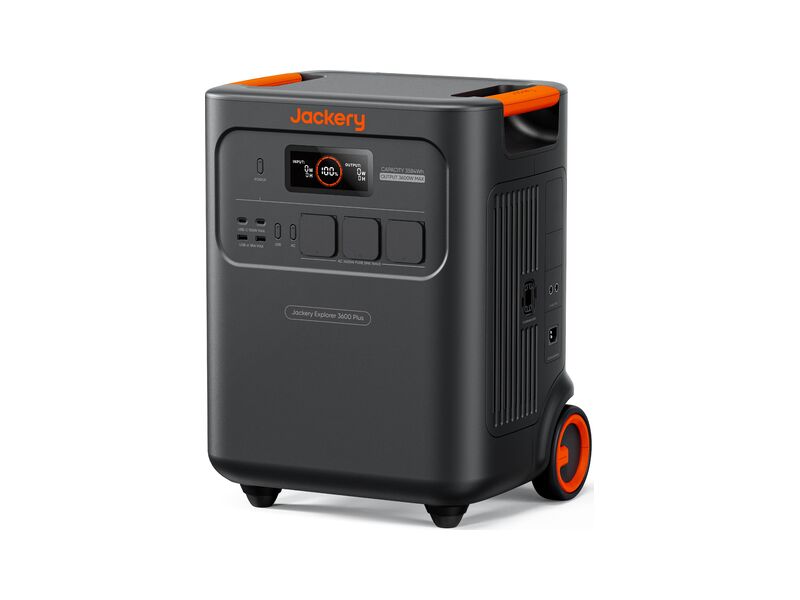
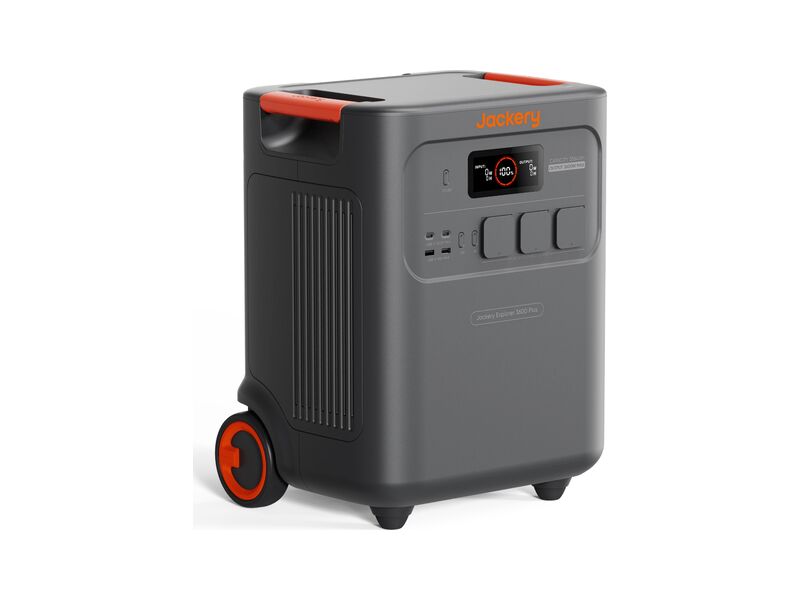
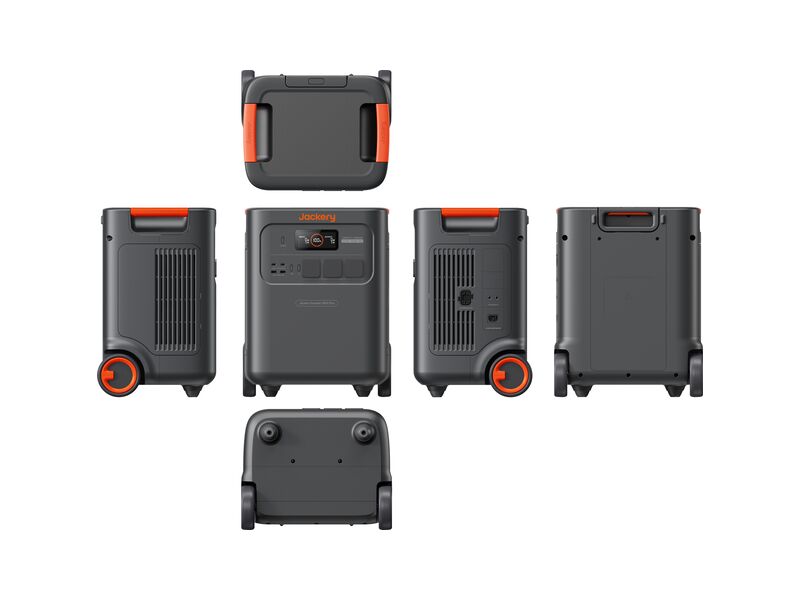
The Jackery Explorer 3600 Plus is the brand's new high-capacity power station, launched in October 2026: a 3584 Wh LiFePO4 battery and 3600 W of continuous power (7200 W peak) in a 77.2 lb (35 kg) case on wheels, with a telescopic handle and a carrying handle. Jackery describes it as 23% more compact and 33% lighter than LFP stations of similar capacity, a comparison made by the manufacturer against models it does not name.
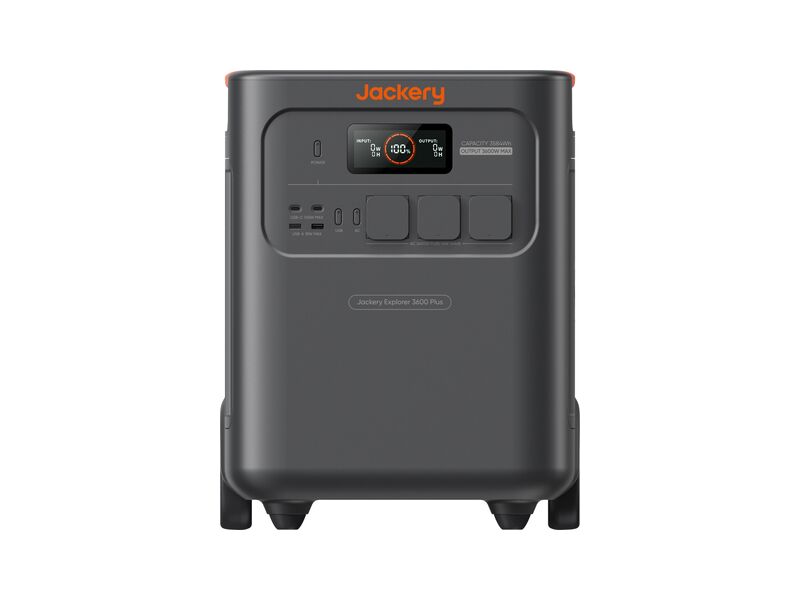
Outputs are three 230 V AC outlets (3600 W in total), two 100 W USB-C ports and two 18 W USB-A ports. There is no 12 V car socket output. According to Jackery the battery uses ceramic-coated LFP cells, is rated for 6000 cycles with 70% capacity remaining and works from -4 °F to 113 °F (-20 °C to 45 °C), both charging and discharging. The stated noise level is around 30 dB.
Recharging is from a wall outlet (220-240 V, 10 A maximum, up to 80% in 1.5 h according to Jackery), from solar (two DC8020 ports, 16 to 60 V, up to 1000 W, about 6 h) or from a 12 V socket with a cable sold separately. AC and solar charging can be combined, in which case the station gives priority to solar; Jackery quotes 1.6 h for combined charging.
For home backup, the UPS function switches to battery in under 10 ms when the grid fails. Jackery points out, however, that the switchover is not instant (not 0 ms): it suits a router, a computer or a NAS, not equipment that requires 0 ms, such as servers or workstations. Plugged into a wall outlet in bypass mode, the output is limited to 10 A. The Jackery app (Wi-Fi, Bluetooth) enables Self-powered mode, which favors stored solar energy, Energy Saving mode and charge scheduling around off-peak hours.
Capacity expands with up to five BP3600 expansion batteries of 3584 Wh each, weighing 55.1 lb (25 kg) apiece, for 21.5 kWh in total. The warranty is 3 years, extended by 2 years once the product is registered. Worth knowing before buying: a 1000 W solar input, lower than several rivals, a weight of 77.2 lb (35 kg), and no track record or independent test to date.
Full specifications
Detailed characteristics (EAN: 0810182243344)
Battery and capacity
| Rated capacity?Total stored energy in watt-hours. The higher the figure, the longer the runtime. | 3584 Wh |
|---|---|
| Max capacity (with extensions)?Total capacity reachable by adding extra batteries. | 21504 Wh |
| Expandable capacity?Whether capacity can be increased with add-on batteries. | Yes |
| Removable battery?The main battery can be removed or replaced by the user. | No |
| Battery chemistry?LiFePO4 (LFP) lasts far longer and is safer than NMC. | LFP (LiFePO4) |
| Charge cycles?Number of full charges before capacity drops to the stated threshold. | 6000 cycles (70 %) |
| Pack nominal voltage?Internal battery voltage; higher voltage helps deliver high power. | 44.8 V |
AC output
| Continuous AC power?Power the unit can sustain continuously on its 230 V outlets. | 3600 W |
|---|---|
| Surge power?Brief peak tolerated when starting motor or compressor devices. | 7200 W |
| Inverter type?A pure sine wave is essential for sensitive electronics and motors. | Pure sine wave |
| AC voltage / frequency?Voltage and frequency of the AC output (230 V / 50 Hz in Europe). | 230 V / 50 Hz |
| Number of 230 V AC outlets?Number of mains outlets available on the unit. | 3 |
| RV / TT-30 outlet?Dedicated 30 A outlet for North-American style RVs. | No |
Recharging
| AC charge 0-80%?Stated time to go from 0 to 80% on mains power. | 90 min |
|---|---|
| Max solar input?Maximum solar power accepted at the input (PV panels). | 1000 W |
| Accepted solar voltage?Panel voltage range compatible with the solar input. | 16 to 60 V |
| Max solar current?Maximum current accepted on the solar input. | 24 A |
| Vehicle charging (12/24 V)?Can be charged from a vehicle's cigarette-lighter socket. | Yes |
| Pass-through charging?The unit can power devices while charging (pass-through). | Yes |
Ports and connectors
| USB-C ports?Number of USB-C ports and the fastest port's power (laptops, phones). | 2 × 100 W |
|---|---|
| USB-A ports?Number of USB-A ports and maximum power (small devices). | 2 × 18 W |
| 12 V output (car socket)?12 V cigarette-lighter output and its power (coolers, pumps…). | No |
Portability
| Weight?Net weight of the unit, battery included. | 77.2 lb (35 kg) |
|---|---|
| Dimensions (L × W × H)?Overall size of the unit in millimetres. | 15.2 × 12.2 × 19.3 in (385 × 309 × 491 mm) |
| Form factor?Portable (hand-carried), transportable (heavy), or wheeled. | Wheeled |
| Wheels?Built-in wheels for moving the unit. | Yes |
| Telescopic handle?Retractable handle like a wheeled suitcase. | Yes |
Safety and environment
| Discharge temperature?Temperature range in which the unit can deliver power. | -4 to 113 °F (-20 to 45 °C) |
|---|---|
| Charge temperature?Temperature range in which the unit can be recharged. | -4 to 113 °F (-20 to 45 °C) |
Backup / UPS
| UPS / EPS mode?Automatic switch to battery on a mains outage (backup). | Yes |
|---|---|
| Switchover time (rated)?Delay before switching to battery; under 20 ms suits a PC or router. | 10 ms |
Noise and thermal
| Noise level (rated)?Manufacturer-stated noise; a quiet room is around 30 dB. | 30 dB(A) |
|---|---|
| Quiet mode?Setting that limits fan noise, often by capping charge power. | Yes |
Display and connectivity
| Display?Type of screen showing power, runtime and alerts. | LCD |
|---|---|
| Bluetooth?Bluetooth link for nearby control. | Yes |
| Wi-Fi?Wi-Fi connection for remote control and monitoring. | Yes |
| Mobile app?iOS / Android app to control the unit. | Yes |
| Solar connector?Connector type of the solar input (XT60, Anderson, MC4…). | DC8020 |
Availability and warranty
| Market launch?Date the model first became available on the European market. Useful to place its generation: technology moves fast in this segment, and a device several years old may be at the end of its commercial life. | October 2026 |
|---|---|
| Warranty?Length of the manufacturer's warranty. | 5 years |
User manual / Instructions for use (PDF)
⚡ How long will this power station run a device?
With 3 584 Wh, the Jackery Explorer 3600 Plus external battery runs a fridge (50 W) for ~61h or an LED TV (90 W) for ~34h.
| Home | Runtime |
|---|---|
| Fan (45 W) | ~68h |
| American fridge (150 W) | ~20h |
| Coffee maker (900 W) | ~3h25 |
| Induction hob (1500 W) | ~2h |
| Outdoor & workshop | Runtime |
|---|---|
| RV fridge (60 W) | ~51h |
| Nebulizer (100 W) | ~30h |
| Air compressor (1100 W) | ~2h45 |
| Pressure washer (1400 W) | ~2h10 |
Rough estimate: real consumption varies, and very power-hungry appliances (heating elements) must stay below the output power.
What is this power station best for?
-
Home & Power cuts Ideal
With 3584 Wh and 3600 W, the Explorer 3600 Plus can carry the essentials of a household through an outage: fridge, freezer, router, lighting, pump, induction hob or a spare heater can all run from one station, and its 7200 W peak absorbs motor start-ups. Its UPS switchover in under 10 ms keeps a router, a desktop computer or a NAS running; Jackery points out, however, that it is not instant and advises against equipment that requires 0 ms, such as servers. Plugged into a wall outlet, the output is limited to 10 A, with full power available on battery. Its stated noise level of around 30 dB lets you keep it in a living area, and up to five BP3600 batteries bring the reserve to 21.5 kWh for long outages. At 77.2 lb (35 kg) on wheels, it moves easily over a flat floor, less so up a staircase.
-
Job site & Tools Ideal
On a site or in a remote workshop, the Explorer 3600 Plus's 3600 W continuous and 7200 W peak start a circular saw, a grinder, a compressor or an electric chainsaw, and three outlets let you plug in several tools at once. Its 3584 Wh cover a good working day, and BP3600 expansion batteries extend the runtime when needed. The wheels and telescopic handle spare you from carrying its 77.2 lb (35 kg) from one station to the next, and the operating range of -4 °F to 113 °F (-20 °C to 45 °C) suits extreme seasons. The pure sine wave output delivers 230 V without the noise or fumes of a generator. Limits: no ingress protection rating is published, so keep it sheltered from rain and dust, and the 1000 W solar input recharges slowly on site.
-
Off-grid & Solar Suitable
Paired with SolarSaga 200 panels or other compatible modules, the Explorer 3600 Plus can serve as storage for a cabin, a workshop or a second home with no grid connection. Its two DC8020 inputs accept 16 to 60 V and up to 1000 W, about 6 h of charging according to Jackery, and the LiFePO4 battery is rated for 6000 cycles to 70%. Expansion to 21.5 kWh helps smooth out several days of bad weather. Self-powered mode favors stored solar energy when the station is also connected to the grid. That said, 1000 W of solar input is modest for recharging a large battery bank: several competitors accept double that.
-
Motorhome & Van life Suitable
For a camper van or RV, the Explorer 3600 Plus brings 3584 Wh and 3600 W: fridge, laptop, e-bike, induction hob or a small heater run without the engine or a generator, and the stated noise level of around 30 dB spares your nights. The wheels and telescopic handle help get it out of the vehicle, but its 77.2 lb (35 kg) and 15.2 x 12.2 x 19.3 in (385 x 309 x 491 mm) call for a dedicated spot. Note that it has no 12 V car socket output, so you need its 230 V outlets or USB-C ports. It recharges from a wall outlet, from solar panels or from a 12 V socket with a cable sold separately, though that last mode is slow (around 40 h quoted).
-
Events & Market stalls Suitable
For a market, a party or an outdoor shoot, the Explorer 3600 Plus powers sound, lighting, a payment terminal and small catering equipment without the noise or smell of a generator, with a stated noise level of around 30 dB. Its three 230 V outlets deliver 3600 W in total, its 3584 Wh cover a long day and its wheels make setup easy on a flat surface. If the load exceeds what one station can supply, BP3600 expansion batteries extend the runtime. Plan to shelter it from rain, since no ingress protection rating is published, and to be two people on steps: 77.2 lb (35 kg) is still heavy.
Our team's recommendations based on the model's capacity, output power and weight.
Comparison
How does the Jackery Explorer 3600 Plus compare with the other 3 to 4 kWh stations in the catalog, on searches such as "Explorer 3600 Plus vs Delta Pro 3" or "Explorer 3600 Plus vs Aferiy P310"? Here is how it stands against three references: the Aferiy P310, the Pecron E3600LFP and the EcoFlow Delta Pro 3.
| Criterion | Jackery Explorer 3600 Plus | Aferiy P310 | Pecron E3600LFP | EcoFlow Delta Pro 3 |
|---|---|---|---|---|
| Capacity | 3584 Wh (expandable to 21.5 kWh) | 3840 Wh (expandable to 11.5 kWh) | 3072 Wh (expandable to 15.4 kWh) | 4096 Wh (expandable to 12.3 kWh) |
| Continuous / peak power | 3600 W / 7200 W | 3600 W / 7200 W | 3600 W / 7000 W | 4000 W / 8000 W |
| Cycle life | 6000 cycles (70% remaining) | 4000 cycles (80% remaining) | 3500 cycles (80% remaining) | 4000 cycles (80% remaining) |
| Weight | 35 kg (wheels) | 40 kg (wheels) | 36 kg | 51.5 kg (wheels) |
| Maximum solar input | 1000 W | 2000 W | 2400 W | 2600 W |
| Warranty | 5 years (3 years + 2 after registration) | 7 years | 5 years | 5 years |
| Observed price | ≈ $2018 (converted) | $1199 | $999 | $2799 |
In short, the Explorer 3600 Plus is the lightest in this comparison at 77.2 lb (35 kg), against 79.4 to 113.5 lb (36 to 51.5 kg) for the others, and the most expandable (21.5 kWh), while keeping a UPS switchover in under 10 ms and 6000 rated cycles, though at 70% remaining capacity against 80% for the others. It gives ground on solar input (1000 W against 2000 to 2600 W), on warranty against the Aferiy P310 (7 years) and, depending on the market, on price against the Aferiy P310 and the Pecron E3600LFP. The EcoFlow Delta Pro 3 offers more capacity and power, but weighs 36.4 lb (16.5 kg) more. For mobile, expandable home backup, it is the most versatile option of the group.
Related video
Video: Jackery Explorer 3600 Plus overview: Power station for outdoor use and backup power - Published on 14/10/2026
Our tester's review: Christophe Delpuech
We have not had the Explorer 3600 Plus in hand and no independent test has been published yet (it launched on 14 October 2026): this opinion rests on the manufacturer's datasheet and manual. On paper the pitch is clear: 3584 Wh of LFP and 3600 W in 77.2 lb (35 kg), with wheels and a telescopic handle, plus expansion to 21.5 kWh with up to five BP3600 battery packs. The UPS switchover in under 10 ms is attractive for home backup, with one caveat: Jackery itself says it is not instant and advises against equipment that needs 0 ms, such as servers. The reservations are plain: solar input tops out at 1000 W while several rivals in our catalog accept 2000 to 2600 W, there is no track record on reliability or real-world efficiency, it is not sold in the US at the time of writing, and the weight is still heavy on stairs. A serious contender for anyone who wants a mobile, expandable station, to be confirmed by independent measurements.
Frequently asked questions: Jackery Explorer 3600 Plus power station 3584 Wh
Yes. The station connects to up to five BP3600 expansion batteries of 3584 Wh each, weighing 55.1 lb (25 kg) apiece, through its DC expansion port and a dedicated cable, for 21.5 kWh in total. All units must be switched off before connecting them.
The station switches to battery in under 10 ms when the grid drops, which should be enough for a router, a desktop PC or a NAS. Jackery states that the switchover is not instant (not 0 ms) and advises against equipment that requires it, such as servers. Test the compatibility of your devices first.
Two DC8020 inputs accept 16 to 60 V, up to 1000 W. Jackery recommends its SolarSaga panels (200 W), with at most two panels per input and the same voltage on both inputs. Panels from other brands are possible within that voltage range, but Jackery accepts no responsibility for them.
No. This is the European 230 V version, and Jackery has no US listing for it at the time of writing, so this page has no buy button. In the US, Jackery sells a related model called the HomePower 3600 Plus (120 V / 240 V), with its own specifications. The price shown is the European price converted into dollars.
The 3600 Plus offers more capacity (3584 Wh against 3072 Wh), expansion to 21.5 kWh that the 3000 v2 does not have, 6000 rated cycles against 4000 and a UPS switchover in under 10 ms against 20 ms, plus wheels. The 3000 v2 remains lighter, at 59.5 lb (27 kg) against 77.2 lb (35 kg), and cheaper to date.
Need help choosing?
Other products in the "Very high-capacity & expandable" category
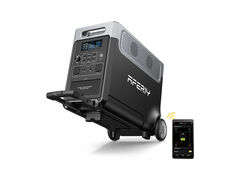
Aferiy P310
$1199.00 (8)
3840Wh expandable to 11520Wh, 3600W across 5 outlets, UL/FCC certified with a 7 year warranty: Aferiy's case for accessible high-end power.
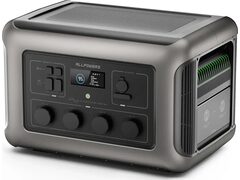
Allpowers R3500
$1424.00 (3)
3168Wh and 3200W (6000W peak) with a 30A RV outlet: the expandable home backup station that recharges in about 2 hours and doubles to 6336Wh.
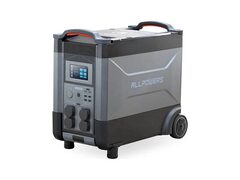
Allpowers R4000
$1899.00 (5)
3456Wh and 3600W on wheels: the big US station that backs up the home, recharges to 100% in about 2 hours and is controlled by app or voice.
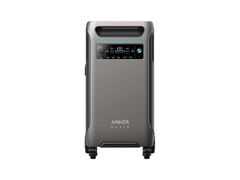
Anker SOLIX F3800
See price (11)
3840Wh, true 120V/240V split-phase 6000W output through NEMA 14-50 and L14-30 outlets, expandable to 26.9kWh: the Anker station built to back up a whole home.
Published on 20/10/2026