9,000 or 18,000 mAh: the same 66.6 Wh battery
The Tronsmart Bang 2's spec sheet circulates in two forms that seem to contradict each other: a capacity of 9,000 mAh, or a capacity of 18,000 mAh. Both figures actually describe the exact same battery, expressed under two different voltage conventions. The internal pack pairs cells wired in a 7.4V configuration: at that voltage, its capacity reads as 9,000 mAh. The same energy, converted to the 3.7V nominal rating of a single lithium-ion cell (the more common convention among power bank makers), comes out to 18,000 mAh. Either way, the total available energy is identical: 66.6 Wh (9,000 mAh x 7.4V, or 18,000 mAh x 3.7V).
To put that capacity into perspective: 66.6 Wh comfortably beats rival speakers that also carry a secondary power bank function. It's a sizeable energy reserve, but how useful it is in practice depends entirely on what it can actually charge through a single port, a point covered further down in this review.
90W: 66W for the central woofer, 12W for each tweeter
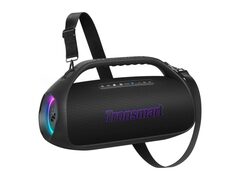
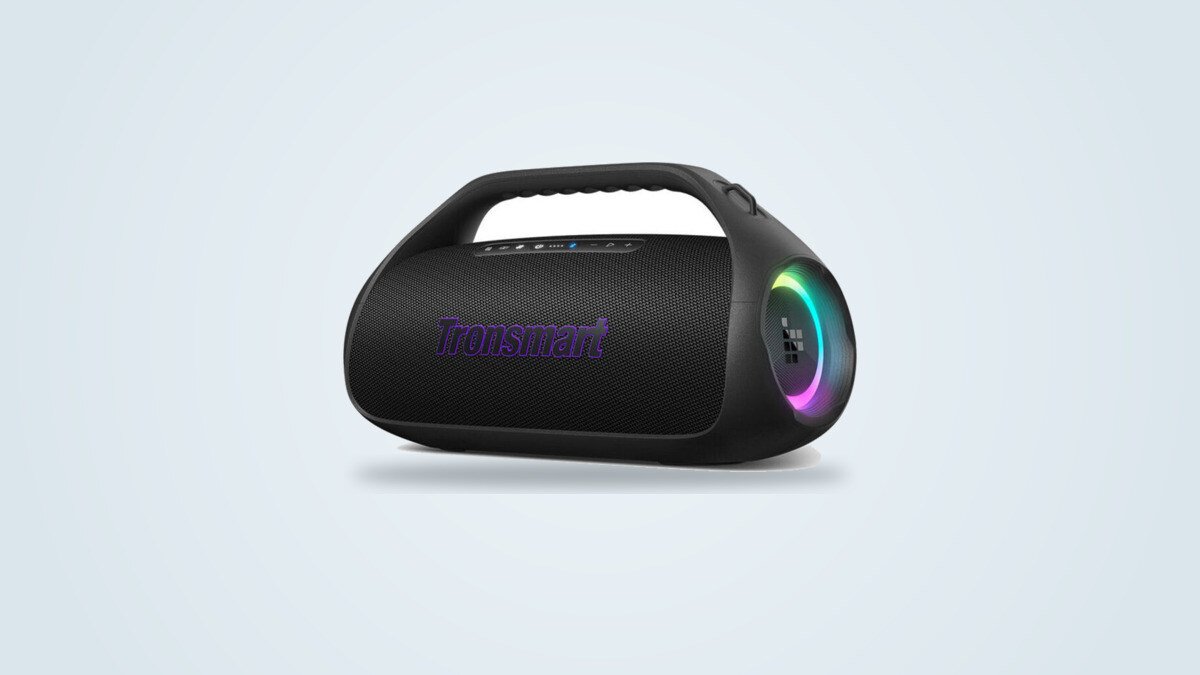
Tronsmart rates the Bang 2 at 90W total, a 50% jump over the original Bang's 60W. The manufacturer's official documentation details this split: a single racetrack-shaped central driver handling the mid-bass, rated at 66W, and two dedicated treble tweeters at 12W each. Two side-mounted passive radiators round out the system to reinforce the bass, without drawing any power of their own.
This split, with more than two-thirds of the total power reserved for the single central driver, explains the speaker's overall sound signature: prominent, assertive bass carried by one powerful transducer, rounded out by more understated treble. The maximum sound level rated by the manufacturer reaches 105 dB, a spec-sheet figure that has not been cross-checked against a fixed-distance measurement available at the time this review was written.
What breaks down past roughly 70% of the volume range
Past roughly 70% of the available volume range, the Bang 2's sound noticeably deteriorates: the treble turns harsh and unpleasant, and the bass loses control to the point of bleeding into the midrange. Below that threshold, the signal stays clean, with present bass and vocals that remain intelligible.
Conversely, below roughly 40% of the available volume, the bass becomes more subdued and the bass-boost feature loses impact. At low volume, when that boost stays switched on regardless, the sound briefly cuts out repeatedly, before returning to normal at higher volume. The speaker's real comfort zone sits somewhere between 40% and 70% of its volume range: suited to indoor use or moderate-distance outdoor use, rather than being pushed flat out.
26 hours announced, down to just 7 in party mode
Tronsmart rates runtime at up to 26 hours, at 50% volume with the lights off. That figure drops sharply once sound output and the RGB lighting come into play: at full volume with the LEDs on, announced runtime falls to 7 hours. It's the lighting and the bass-boost circuit, far more than volume alone, that drive that drop: at low volume but with the RGB lighting and bass boost switched on, total runtime settles at around fifteen hours, less than the runtime announced at 50% volume with the lights off.
| Configuration | Runtime |
|---|---|
| 50% volume, lights off | 26 h |
| Low volume, RGB lighting and bass boost on | about 16 h |
| 100% volume, RGB lighting on (party mode) | 7 h |
The mechanism is the same as with any nomad speaker carrying built-in lighting: the RGB LEDs and the bass-boost circuit draw a constant current, independent of output volume. On a session where the lighting runs continuously, it becomes the single biggest power draw, ahead of the sound output itself.
The power bank function: a big reserve, a modest port
The Bang 2's large battery gives it a second role: acting as a power bank to recharge a smartphone or small device, through its single USB-C port. It's the same port that both charges the speaker and delivers power out to an external device: no dedicated port separates the two uses.
Output power on that port is capped at around ten watts, with no recognized fast-charging protocol. Out of the battery's 66.6 Wh, and with a typical USB conversion efficiency of around 80 to 85%, the energy actually transferable comes out to roughly 53 to 57 Wh. A current smartphone typically carries between 11 and 20 Wh depending on the model: the Bang 2 can therefore, in theory, fully recharge one several times over, far more than a party speaker with a more modest secondary battery. This figure is derived from the battery's known specifications and a typical conversion efficiency, not from a measurement of the number of charges actually delivered.
In practice, drawing heavily on that reserve to charge a phone means sacrificing a meaningful chunk of the speaker's own runtime: the sensible use case remains occasional emergency top-ups, not replacing a dedicated power bank.
Charging: 4.5 hours to fill 66.6 Wh
A full recharge of the Bang 2 takes 4.5 hours, through the same USB-C port, with input capped at 20W (9V / 2.22A). The original Bang recharged in the same time (4.5 hours), but with half the input power (10W, 5V / 2A) for a battery of only around 40 Wh. The Bang 2 therefore charges a battery 67% bigger in the same time, thanks to doubled charging power.
No fast-charging protocol beyond this fixed 9V / 2.22A profile is announced: no Power Delivery or Quick Charge negotiation at higher power. For a battery this size, a 4.5-hour charge time is decent, without being fast in the sense that recent fast-charging USB-C power banks are.
IPX6 waterproofing, weight and portability
The Bang 2 is IPX6 rated: it withstands powerful water jets and driving rain, but that rating does not cover submersion. Unlike an IPX7 or IPX8 rating, it should not be dunked in water, even briefly.
The housing pairs a rigid shell, a tough fabric grille and rubber port covers. The built-in handle is solid, and a detachable strap makes it easier to carry over the shoulder, although depending on how it sits, it can make the speaker swing awkwardly during transport.
At 5.8 lb (2.63 kg) and 15.3 x 8.2 x 6.2 in (389 x 208 x 158 mm), the Bang 2 remains firmly a boombox-class object: something to carry by hand or over the shoulder for short distances, not something you drop in a bag for daily use. That's about 1 lb (450 g) less than the original Bang (6.8 lb / 3.08 kg), despite a larger housing and a bigger battery, a genuine gain in mechanical efficiency from one generation to the next, though it doesn't shift the device into a different weight class. For the power bank function covered earlier, this weight and bulk stay far removed from the standards of a power bank you'd carry for that purpose alone.
Bluetooth 5.3, TWS and multi-speaker broadcasting
Wireless connectivity relies on Bluetooth 5.3, with an announced range beyond 49 ft (15 m). The baseline audio codec is SBC, with no high-resolution codec such as aptX or LDAC: a real limit on stream quality compared with newer speakers equipped with those protocols.
Two Bang 2 units can pair in stereo (TWS) mode to split left and right channels. Beyond a pair, the speaker can also broadcast its audio stream and synced lighting to more than 100 compatible units from the brand, to cover a larger event. A microSD slot and a 3.5mm auxiliary input round out the connectivity, alongside a USB-A port able to play audio files directly from a FAT32-formatted USB drive.
Against the previous generation and direct rivals
The Bang 2 succeeds the original Bang, launched with a noticeably more modest spec sheet. A direct, figure-by-figure comparison shows just how much progress this second generation brings.
| Criterion | Bang 2 | Bang (1st generation) |
|---|---|---|
| Power | 90W | 60W |
| Battery | 66.6 Wh (9,000/18,000 mAh) | about 40 Wh (10,800 mAh) |
| Announced standard runtime | 26 h | 15 h |
| Announced party-mode runtime | 7 h | 4 h |
| Full recharge | 4.5 h (20W) | 4.5 h (10W) |
| Weight | 5.8 lb (2.63 kg) | 6.8 lb (3.08 kg) |
| Waterproofing | IPX6 | IPX6 |
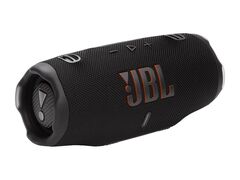
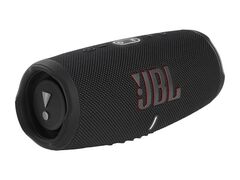
Against direct rivals among party speakers with a power bank function, the Bang 2 stands out mainly through the sheer size of its battery: the JBL Charge 6 carries 34 Wh, the JBL Charge 5 27 Wh. The Bang 2 comfortably beats both figures, while still relying on a single USB-C port capped at around ten watts of output, a limit it shares with both those speakers.
Reliability, ergonomics and usage friction
Construction pairs a rugged shell, a fabric grille and rubber port covers, for a build quality that feels solid given the device's accessible price. No recall or widespread manufacturing defect has been identified to date for the Bang 2, on sale since July 2025.
A few usage frictions do stand out. The power-on, power-off and volume-adjustment beeps are fairly loud, to the point of being intrusive in a quiet setting. The app also needs reopening every new session to restore certain settings, a repetitive annoyance rather than a structural flaw. At low volume, when bass boost stays switched on, the sound briefly cuts out repeatedly, before returning to normal at higher volume.
Contractual warranty length is not communicated consistently across sales regions: worth double-checking with the retailer at the time of purchase rather than taking for granted.
Who it suits, and who it doesn't
It suits anyone after a big, portable party speaker able to fill a garden, a beach or a campsite for an entire evening, who appreciates having a sizeable energy reserve on hand to bail out a dead phone along the way.
It doesn't suit anyone after a dedicated, portable power bank first and foremost (the device's weight and bulk make no sense for that use alone), nor anyone after flawless sound quality at full volume or high-resolution Bluetooth codecs.