What the advertised 74Wh are really worth
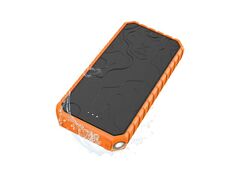
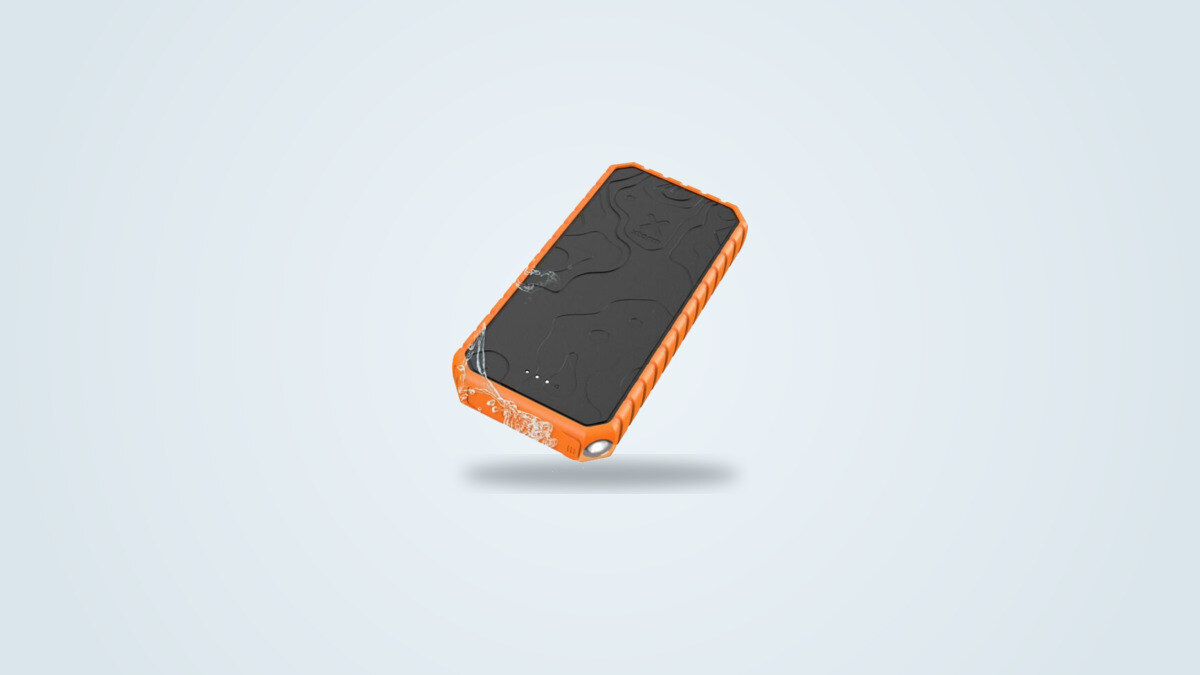
The Xtorm XR202 packs a 20,000mAh lithium-polymer cell, or 74Wh according to the manufacturer's official conversion. That conversion assumes a nominal cell voltage of 3.7V (74,000mWh / 20,000mAh = 3.7V), a standard figure for this chemistry and consistent with the technical documents available, with no sign of the advertised figure being artificially inflated.
No independent measurement of the actual usable capacity (real output, with a measuring instrument) was found for this specific model. On comparable power banks already covered elsewhere on this site, the gap between rated capacity and actually usable energy typically runs 5 to 20 percentage points, a normal consequence of voltage conversion in the output circuitry. Without data specific to the XR202, its 74Wh should be read as a ceiling rather than a guarantee, no more optimistic or reliable a priori than the average for its category.
The real cost of a full recharge: 3.5 hours for what efficiency?
Xtorm rates a full recharge of the battery at 3.5 hours with a 35W charger plugged into the main USB-C port, the only one that works as both input and output on this model.
Dividing the rated capacity (74Wh) by the maximum input power (35W) gives a theoretical minimum of 2 hours and 7 minutes if charging happened at a constant rate from start to finish. The rated 3.5 hours runs 65 minutes longer, about 65% more time than that theoretical minimum. The gap comes from two combined mechanisms: the tapering charge rate at the very end of a charge cycle (the so-called CV phase, normal for any lithium battery and not specific to this model), and a share of conversion losses in the charging circuit. Nothing available today allows these two causes to be split out precisely, but the overall figure, 3.5 hours for 74Wh through a single 35W port, lines up with what comparable power banks on the market show.
What really sets the XR202 apart in the Xtreme Series lineup: no solar panel at all
Xtorm's Xtreme Series, the Dutch brand's outdoor lineup, includes several products that look alike on paper thanks to a shared rugged design and ingress protection rating. Two of them, though, do carry a solar panel: the XR104 (10,000mAh, IPX4, a small fixed solar panel) and the XR203 (10,000mAh, IP65, a folding three-panel solar array). The XR202 has none of that: no panel, no sunlight indicator, no kickstand to angle anything toward the sun.
That is not an oversight, it is a deliberate lineup decision. By dropping solar entirely, Xtorm focuses the XR202 on two different strengths: double the capacity of the XR104 (20,000mAh versus 10,000) and noticeably higher output power (35W versus 20W). Anyone specifically after a solar top-up, even a small one, should look at the XR104 or the XR203 instead: the XR202 is the lineup's capacity-and-power model, not its solar one.
This distinction is worth knowing before buying, since all three share a very similar rugged look (orange and black casing, reinforced handle) that can easily cause mix-ups on a plain retail thumbnail.
Four devices at once: the promise, and an undocumented physical limit
The XR202 offers four outputs: a 35W USB-C Power Delivery port (the same one that handles input), a second USB-C at 15W, and two USB-A Quick Charge 3.0 ports at 18W each. The manufacturer states all four ports can be used at the same time, powering up to four devices at once.
Add those four maximum outputs together and they total 86W. Neither the manual nor the official product page mentions any combined power ceiling separate from those individual per-port maximums. A 20,000mAh lithium-polymer cell feeding a compact conversion circuit, though, is not built, in this form factor, to deliver 86W continuously across every output at once: nearly every power bank in this class shares out a total power budget once several ports draw current together, even when the exact split is never published.
The main friction point: output power that falls short of today's market
The XR202's main port tops out at 35W. That is enough to fast-charge a recent smartphone or tablet over USB Power Delivery, the main use case Xtorm markets this model for. It is a long way, though, from current standards among high-capacity power banks.
The direct consequence: the XR202 cannot fast-charge a recent laptop, most of which need at least 60 to 65W for a normal charge, and more for a fast one. Xtorm itself never claims laptop use in its marketing for this model either: its listed use cases stop at smartphones, tablets, cameras, GPS units and drones, unlike the XR204 or the Fuel Series 5 from the same brand.
IP65: a genuine rating, with a precise scope
The XR202's IP65 rating breaks down into two standardized digits. The first, 6, means total protection against dust. The second, 5, means protection against water jets sprayed from any direction, but not against submersion.
In practice, the XR202 shrugs off a rain shower, a spilled water bottle, or an accidental splash while crossing a stream. It is not, however, built to sink to the bottom of a river or sit through prolonged heavy rain with no shelter at all: nothing in the IP65 rating covers that scenario, unlike an IP67 or IP68 rating, which would add resistance to brief submersion.
It is a genuine, standardized rating (IEC 60529), not a vague marketing claim of being water resistant with no number attached. Its precise scope, though, is worth knowing before relying on it beyond what it actually covers.
Four LEDs instead of a display: an inevitably rough reading
The XR202 shows its charge level through four LED indicators, each representing roughly a quarter of the remaining capacity. That is an inevitably coarse reading: going from four lit LEDs to three signals anywhere between a 1 and 25 percentage point drop, with no way to narrow it down further.
The XR204, pricier and more powerful in the same Xtreme Series lineup, offers a display that shows the exact charge percentage and the instantaneous power drawn from each port. The XR202 offers neither. For anyone tracking remaining runtime precisely before a multi-day hike, or trying to time a recharge exactly, that is a real limitation to factor in, even though it does not get in the way of everyday use.
Versus the competition: capacity and ruggedness against power and display
In the rugged, high-capacity power bank segment, the XR202 runs into several very different profiles, both inside Xtorm's own catalog and among direct rivals.
| Criterion | Xtorm XR202 | Xtorm XR204 | Elecom Nestout 15000mAh | Anker A1695 |
|---|---|---|---|---|
| Capacity | 20,000mAh (74Wh) | 40,000mAh (154Wh) | 15,000mAh (54Wh) | 25,000mAh (90Wh, 74Wh delivered) |
| Max power | 35W (USB-C PD) | 100W (USB-C PD) | 32W (USB-C PD) | 165W (100W max/USB-C port) |
| Waterproofing / ruggedness | IP65 | IP64 | IP67 + MIL-STD-810G | Not rated |
| Display / lighting | 4 LEDs + flashlight | Smart display + 4-mode flashlight | None | LCD display, no flashlight |
| Weight | 1.19 lb (540 g) | 1.78 lb (809 g) | 0.80 lb (364 g) | 1.31 lb (595 g) |
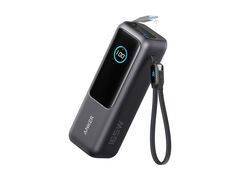
Against its own XR204 sibling, the XR202 loses on every raw metric (capacity, power, display), but stays noticeably lighter and more compact. Against the Elecom Nestout 15000mAh, a direct rugged rival, the XR202 wins on capacity and power, but the Elecom's IP67 rating combined with MIL-STD-810G shock resistance goes further on pure drop and brief-immersion resistance. Against the Anker A1695, the catalog's high-power generalist reference, the power gap is huge (35W versus 165W): the Anker actually delivers 74Wh out of its 90Wh rated capacity, which happens to match the XR202's entire rated capacity, at a similar weight (1.31 lb / 595 g versus 1.19 lb / 540 g) but with no waterproofing rating at all.
Build quality, warranty and reliability
The XR202's shell combines ABS and polycarbonate around the lithium-polymer battery, with a reinforced bumper at the corners and the thick handle already mentioned, built to thread a cord or carabiner through. The manufacturer builds in standard protection against overcharging, short circuits and overheating.
Xtorm rates this model for a base two-year warranty, extendable to three years (2+1) through free product registration within three months of purchase, a step worth not skipping to get the full benefit. No safety recall applies to this model as of this writing.
Xtorm is a Dutch brand with an established presence in the European market for more than a decade. Its US distribution, though, remains more limited than that of mainstream references such as Anker or Ugreen: few independent lab comparisons cover this exact model. That is a gap in available track record worth knowing about, not a fault in the product itself.
Who it's for, and who it isn't
It's a good fit for anyone who hikes, camps, or works regular outdoor job sites and wants a power bank that shrugs off rain, dust, and everyday knocks without a second thought, with a flashlight always within reach. It also suits anyone who wants a home energy backup for power outages, without needing an extreme capacity or a fancy display.
It's not a good fit for anyone who needs to fast-charge a laptop on the go (the XR204 from the same lineup, or a power bank rated at 65W or more, fits better), anyone specifically after solar charging even in a small way (the XR104 or the XR203 cover that, not the XR202), or anyone who prioritizes light weight above all for everyday city use, where a compact power bank with no IP rating will do just as well for less money.