Watts, Watt-Hours, and Amps: What They Actually Mean
Watt, watt-hour, amp, volt: four terms that get tangled up on every spec sheet. Here is the plain-English breakdown so you can shop for a charger, power bank, or power station with confidence.
The latest addition to the team, back in 2017, Yoni Marchal-Laporte is also one of its most active writers. A traffic manager by training, he handles audience acquisition and search optimization, but it is above all as a writer that he has made his mark: he authors a good share of the blog's in-depth features and comparisons. His dual profile, technical and editorial, makes him a writer apart, able to grasp both what a search engine is looking for and what a reader hesitating between two products expects.
His real strength is synthesis: taking a tangled subject (a new battery chemistry, a European regulation, a feud between brands) and drawing from it a clear, well-ordered, immediately useful answer. He is not an engineer, and makes no secret of it: he is a researcher at heart, cross-checks the data, hunts down false marketing promises and always puts himself in the buyer's shoes. It is his articles, such as "What are the advertised mAh really worth?" or "Anker vs Ugreen", that most concretely help visitors decide.
A young dad and keen cyclist, he devours the roads of Lozère at the weekend, a solar charger tucked into his jersey pocket. His colleagues tease him about his mania for archiving his comparison tables with obsessive rigor, but no one complains the day they need to dig up a three-year-old benchmark in thirty seconds.
One last detail, which he insists on pointing out himself and without the slightest embarrassment: he is the one who writes the profiles for the whole team, his own included. You have therefore just read a portrait written by its own subject, which no doubt explains the "as talented as he is modest" that still, mysteriously, lingers in his original bio.

Watt, watt-hour, amp, volt: four terms that get tangled up on every spec sheet. Here is the plain-English breakdown so you can shop for a charger, power bank, or power station with confidence.
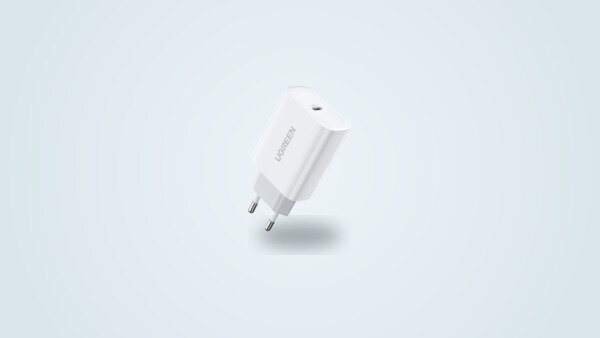
This small GaN wall charger puts everything behind a single USB-C port: the protocol compatibility and compactness promises hold up, and the single-port simplicity costs something elsewhere.
On September 17, 2026, KLM flight KL735 turned back over the Atlantic after a power bank caught fire in business class. It belonged to the Dutch airline's own former CEO, who was charging it at his seat, a practice explicitly banned under KLM's own rules: a case worth learning from.
Throughout 2026, the US Federal Trade Commission has stepped up enforcement of its Green Guides, the rules governing environmental marketing claims. Terms like 'carbon-neutral', 'recyclable' and 'biodegradable' have shown up in recent settlements when brands couldn't back them up. Here is what the FTC's Green Guides actually require, and what it means when you're shopping for a battery, a power station or a solar panel.
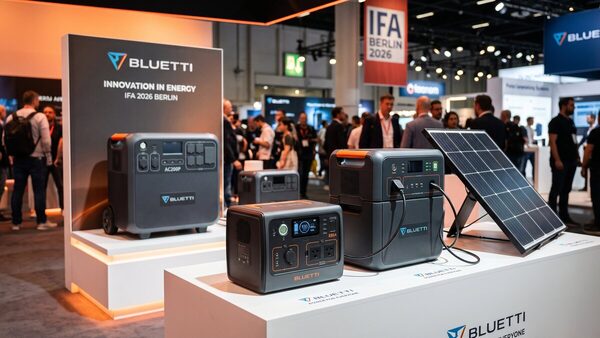
From September 4 to 8, 2026, at IFA Berlin, Bluetti unveiled its biggest product announcement of the year: the Elite mini series, the Balco 500 (5,024 Wh of home solar storage), the Pioneer 5000 generator and the BlueBot AI assistant. So far, only the Elite 100 mini is available, and only in the US.
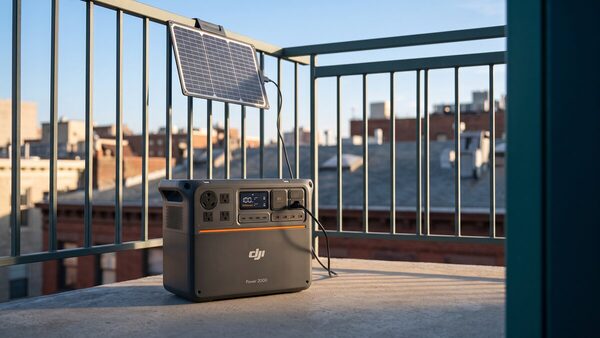
DJI turned its Power 2000 power station into a plug-in balcony solar kit at IFA 2026 in Berlin, launching first in Germany, France and Spain. Here's how it works, and why American owners of the same station won't get the grid-tied feature anytime soon.
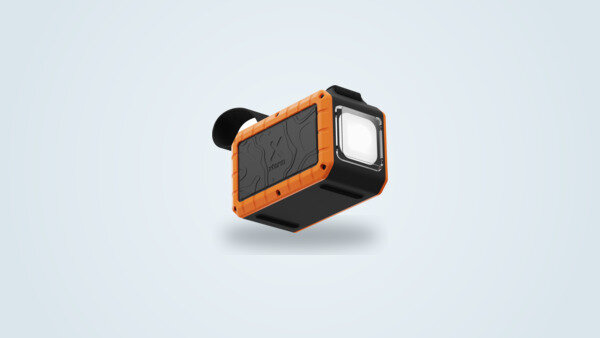
154Wh of real capacity, a main port that delivers 100W as long as it's the only one in use, a four-mode flashlight, and an IP64 shell: the Xtorm XR204 delivers on its promise of a big outdoor power reserve. How it splits power across its three ports, though, is tighter than the box lets on.
On one side, Anker, the pioneer turned benchmark. On the other, Ugreen, the challenger shaking up the market with fast charging and aggressive pricing. We tested 19 power banks from the two brands: here is what the measurements really say, backed by the figures and by model-by-model head-to-heads.
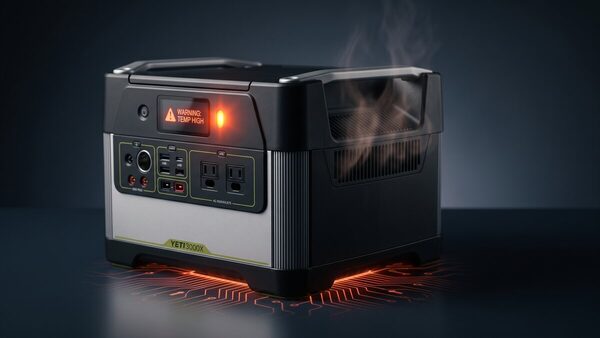
The US CPSC and Goal Zero have recalled about 46,200 YETI 3000X power stations after several overheating reports. A free firmware fix is available: here's how to check your unit and install it before using it again.
This summer’s alarming headlines are aiming at the wrong target: your power bank is not banned from aircraft. What changed is that, since 27 March 2026, an ICAO rule forbids using it or recharging it in flight, and caps you at two per passenger.
From 18 August 2026, every battery placed on the EU market must carry a standardized label: chemistry, capacity, weight, place and date of manufacture, critical raw materials. One short line of regulation that will change a great deal when you stand in front of two power banks, or two packs of AA cells.
20,000 mAh on the label, but barely two smartphone charges: normal, or a scam? The capacity advertised on a power bank and the energy you actually get back are two different things. This feature explains why, how to read the real figures, and above all how to spot inflated capacities.
Updated on July 29, 2026